
This expansive backyard has plenty of room but required a thoughtful design to incorporate all the clients’ wish list elements in a cohesive and intimate way. The existing site sloped left making it inhospitable to playing ball – an important consideration for this young family. The clients had previously had some evergreen trees installed along the perimeter, however the spacing did not effectively screen the neighbors, another high priority for the family. Green Jay Landscape Design assessed the site and set off to design a series of cozy garden rooms that expanded the habitat from nearby open space. A native evergreen screen now encircles the backyard. Incorporating stonework and paths to improve circulation throughout the property ties all the garden rooms together.
This project is number two in our countdown of the Best Landscape Design Projects of 2025! Catch up on #3 in the series here.
Developing a Landscape Design Plan & Design Concept
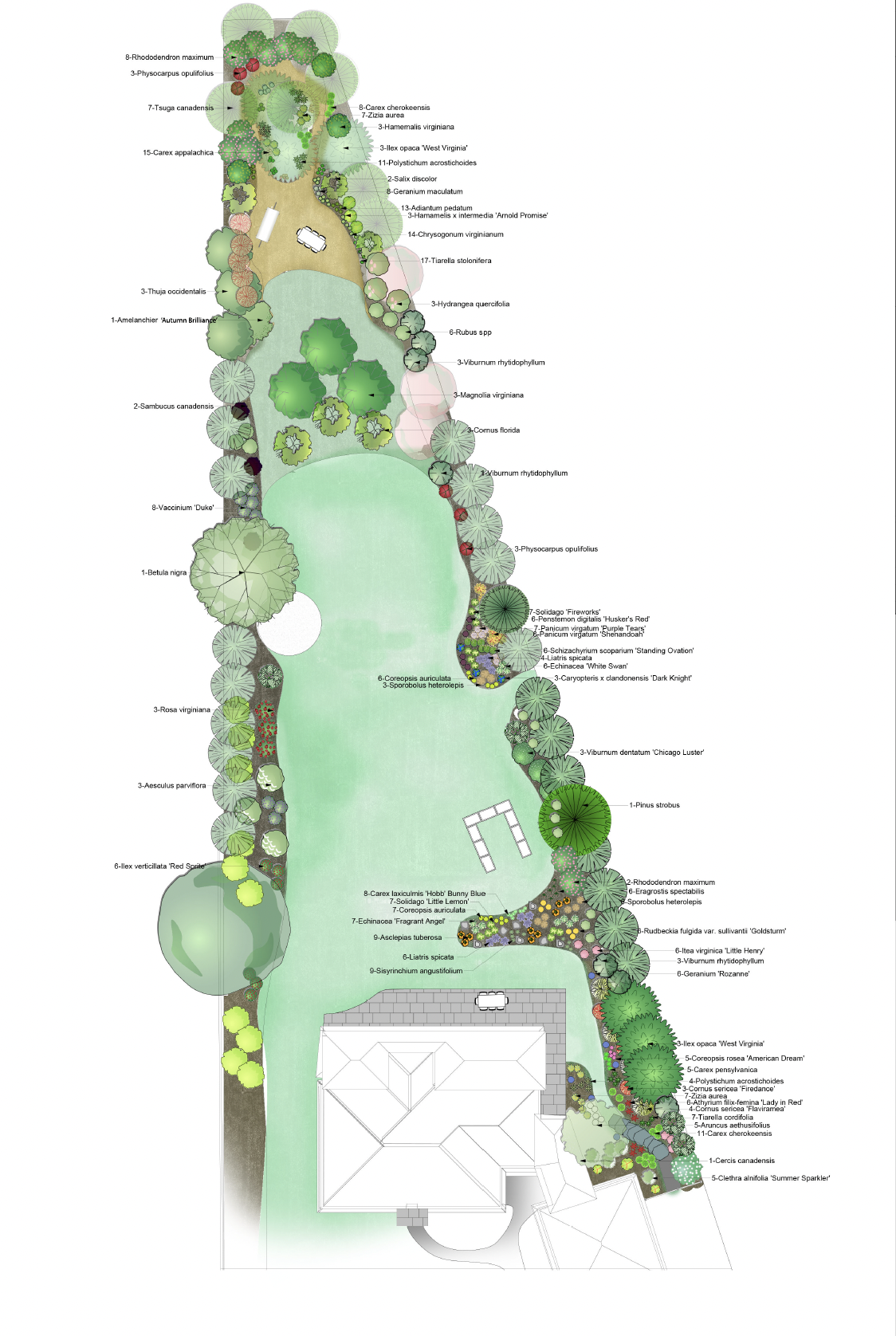
The design concept helps transport you to the space:
Nestled within the gentle embrace of whispering willows, the Willow Wood Retreat unfolds as a sanctuary of tranquility, where nature and design entwine like old friends. The landscape is sculpted with care, regraded to invite effortless movement, ensuring that every step feels instinctive and secure. Along the property’s edge, a layered tapestry of trees, shrubs, and native understory forms a natural screen, softening the presence of the nearby trail while preserving the melody of the wind and birdsong. This living boundary offers both shelter and seclusion, a gentle veil that nurtures privacy without severing connection to the land beyond.
At the heart of this woodland escape, an intimate refuge awaits – where hammocks sway in rhythm with the breeze and picnic tables rest beneath the shelter of rustling leaves.
Thoughtfully nestled at the end of the property, this secluded alcove becomes a world apart, shielded from passing footsteps yet open to the embrace of the forest. Willow and woodland meld seamlessly, forming a retreat both grounded and ethereal, a space where solitude and sanctuary become one, hidden yet alive with the presence of nature.
Native Evergreen Screening
This Westchester County, New York property has adjacent undesirable views: a parking lot and neighbors’ homes. Evergreens are generally slow growing, so to achieve an instant screening effect, the planting design must be layered. The property had some existing Arborvitae along the perimeter, but they sparsely planted and left many gaps in the desired screen.
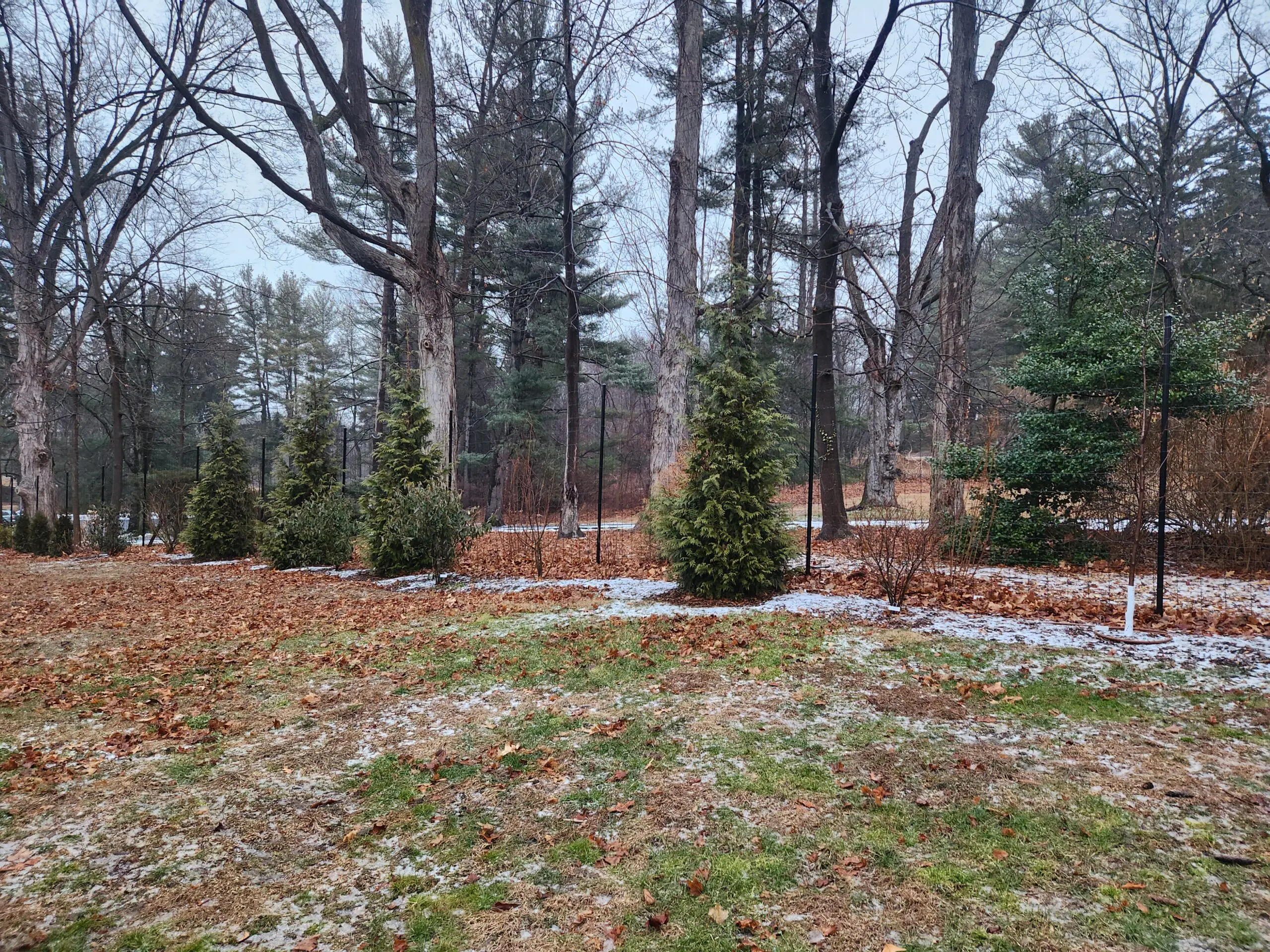
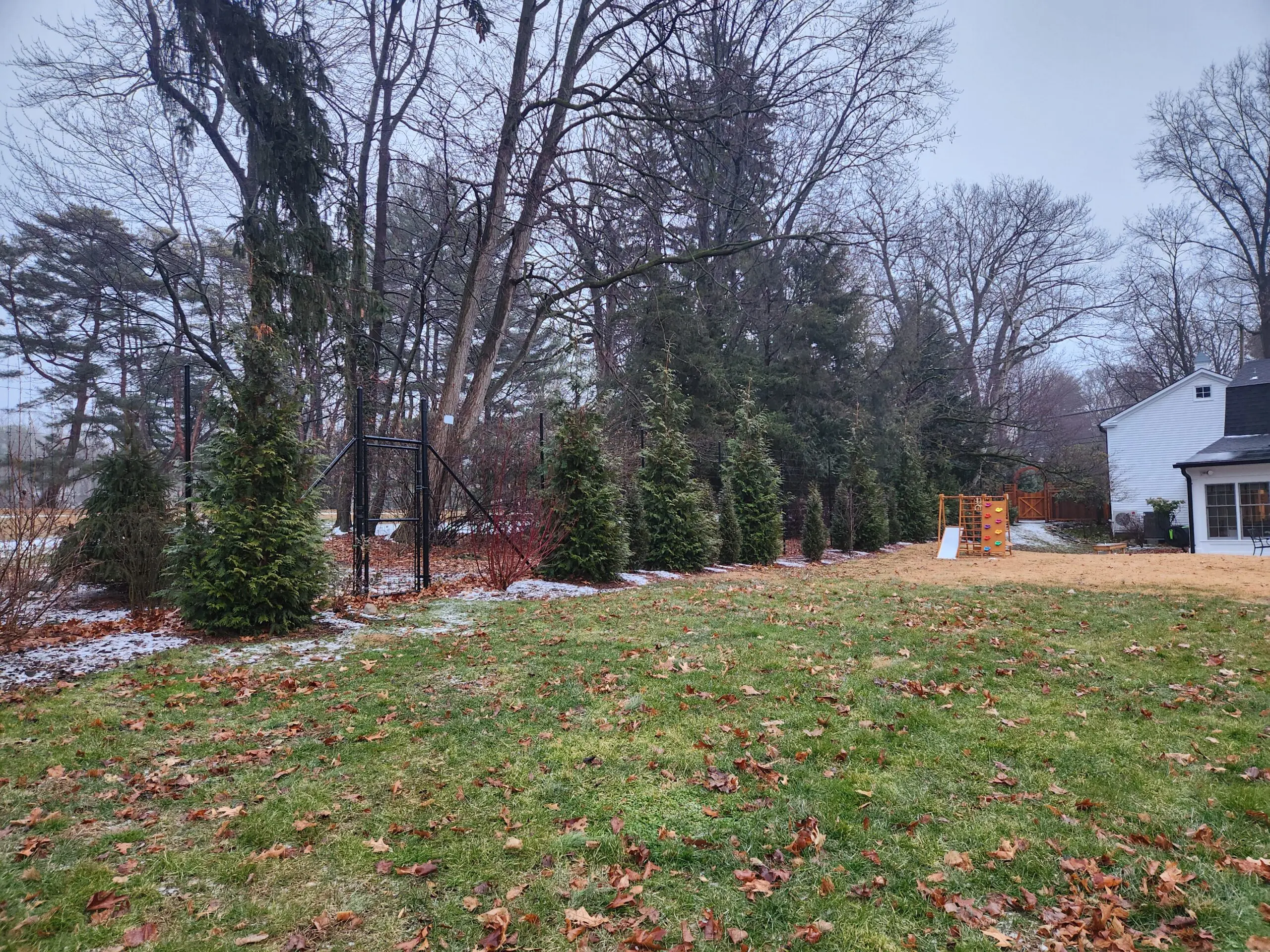
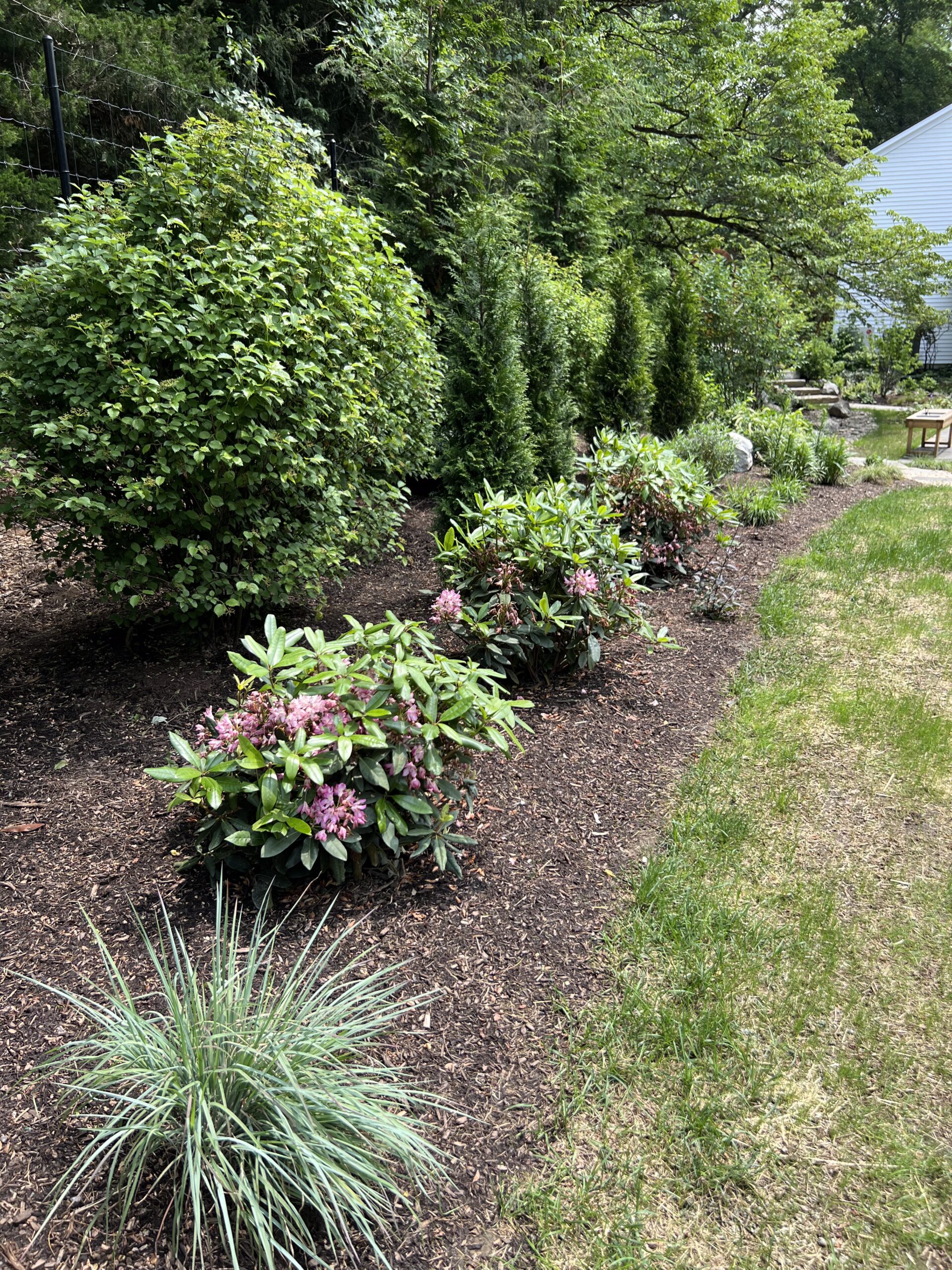
Green Jay designed a mixed evergreen border with native shrubs and trees including Hemlocks, White Pines, American Hollies, and Rosebay Rhododendron. Leatherleaf viburnum, a non-native, semi-evergreen shrub that holds its leaves until early spring, then drops them and pushes out fresh leaves, is another GJLD favorite for screening. Not only does layered screening create visual obstruction, but it also acts as a sound barrier, softening the commotion from the nearby parking lot and trail.
Leveling Play Areas & Creating Focal Points
The existing patio was an appropriate square footage, but its long and narrow shape made it appear smaller, a feeling amplified by the sloped lawn surrounding it. GJLD cut some of the slope out from around the patio, creating a level lawn border around the patio that effectively made it seem larger.
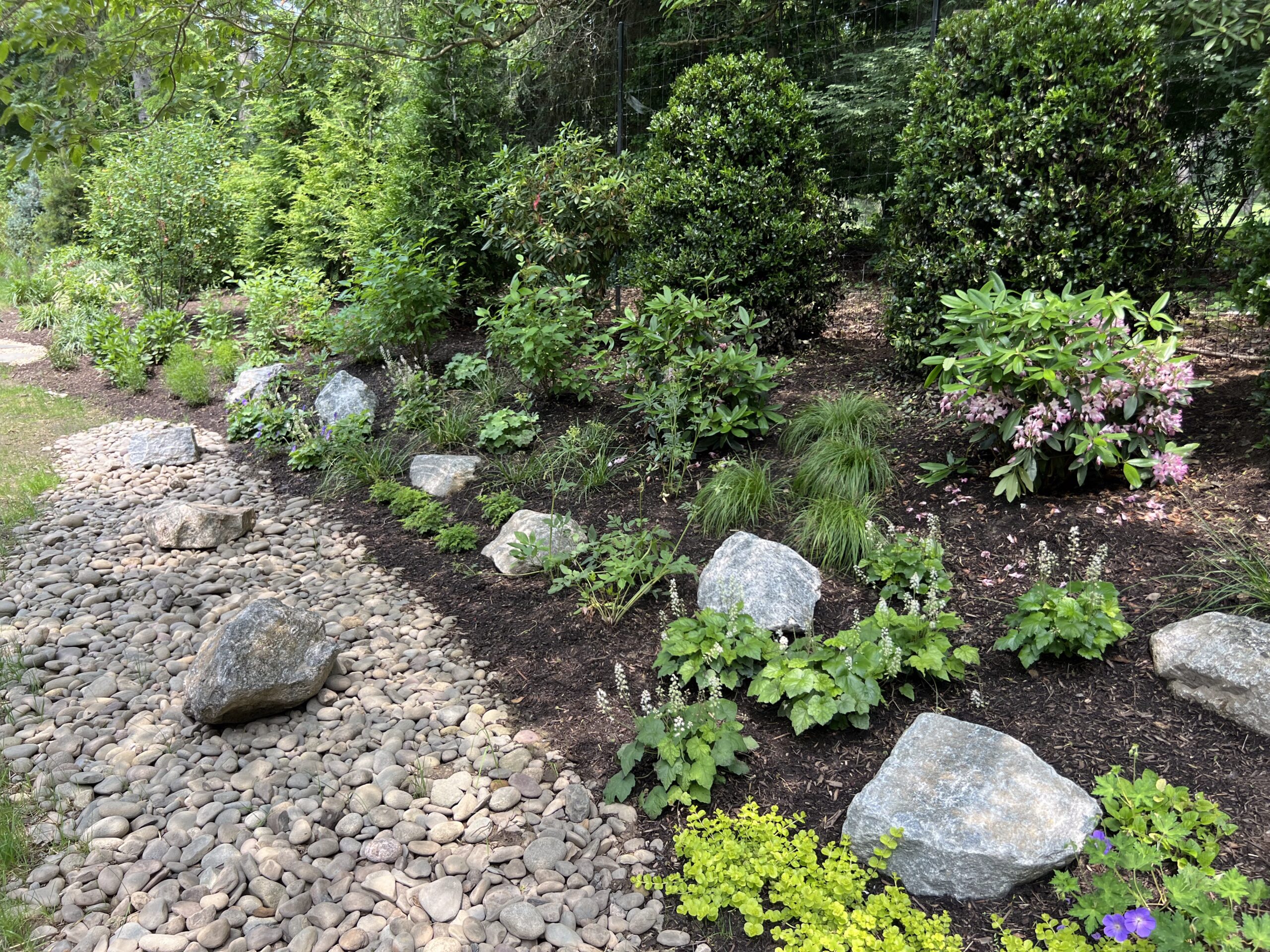
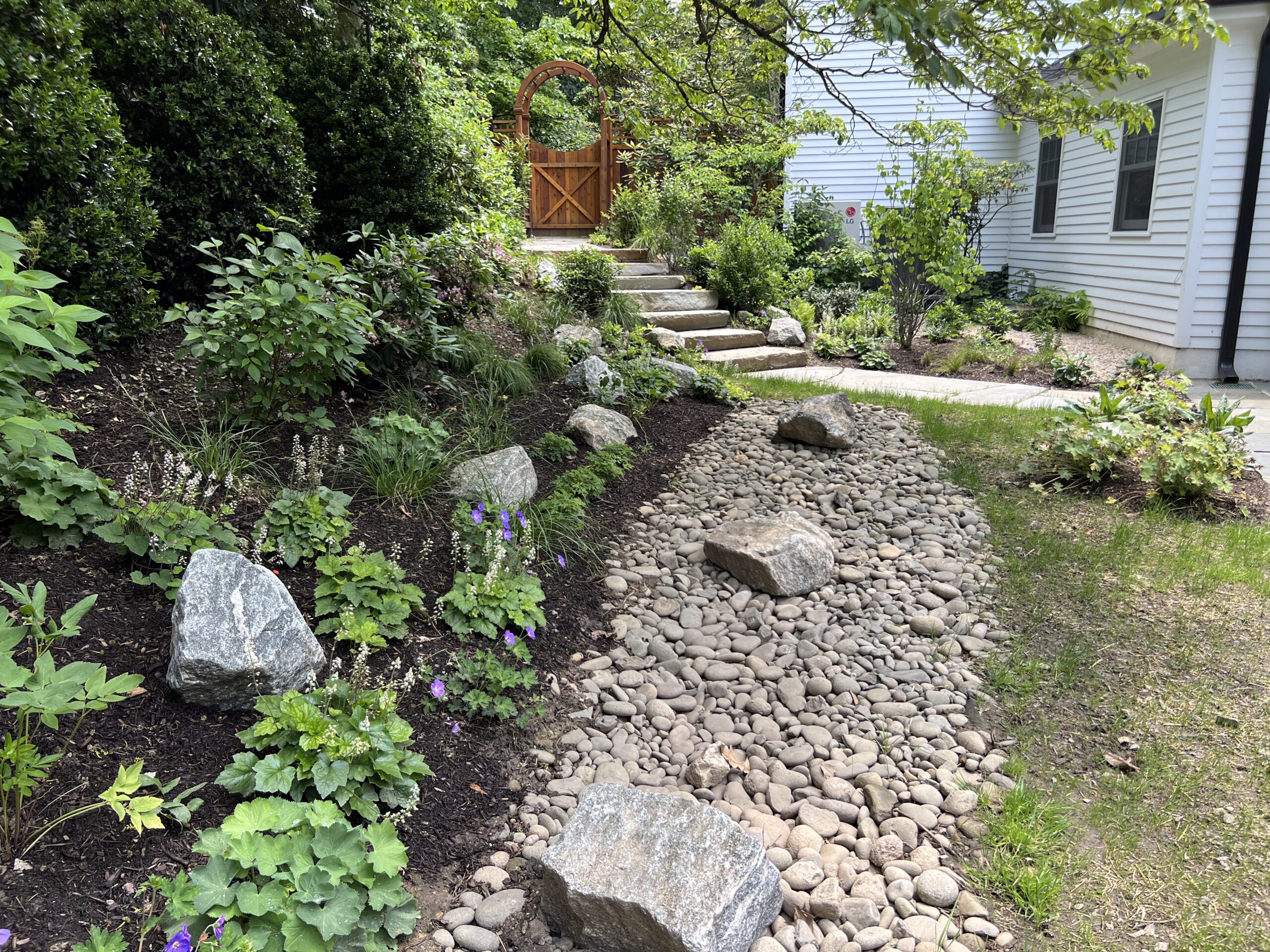
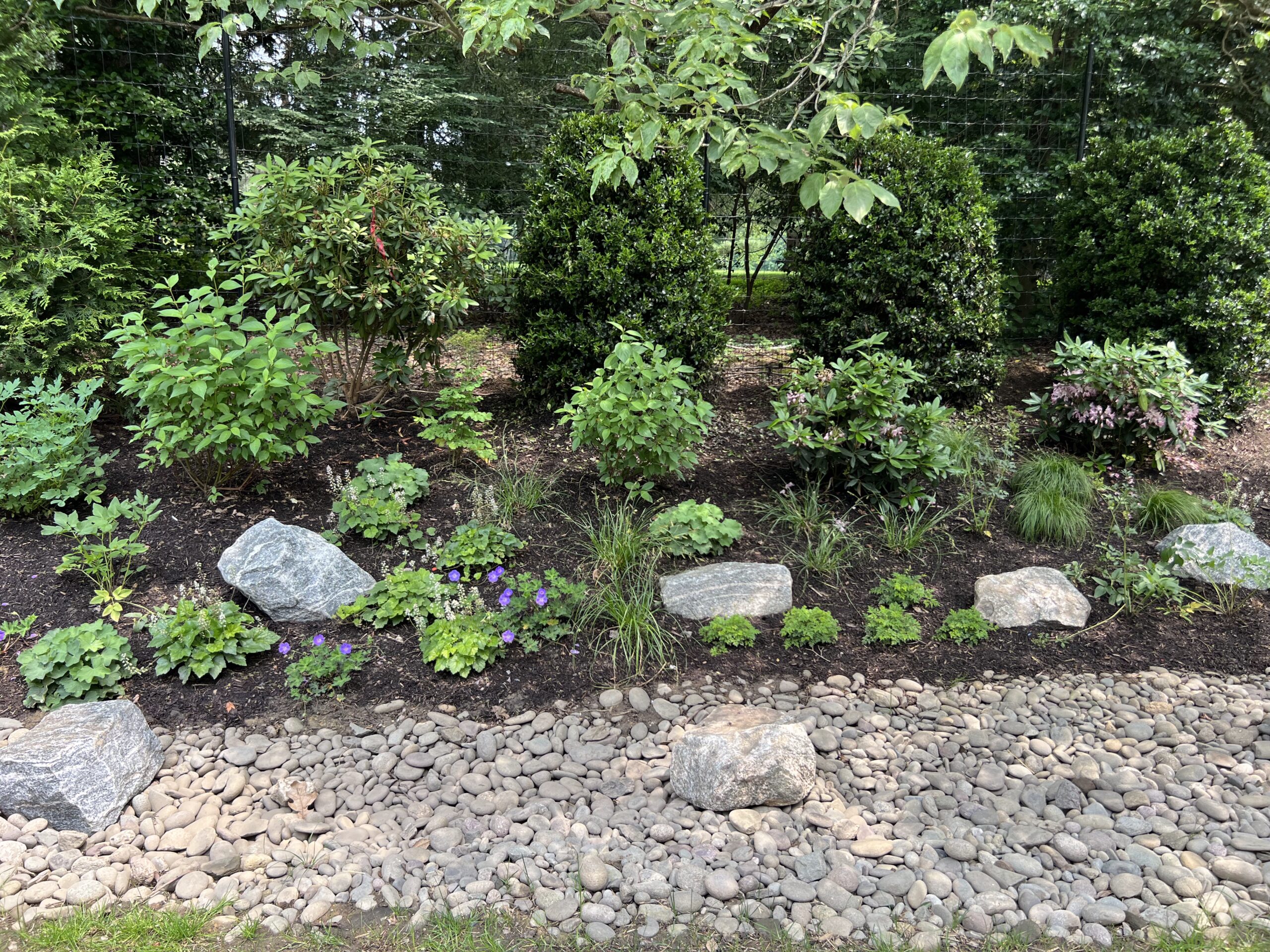
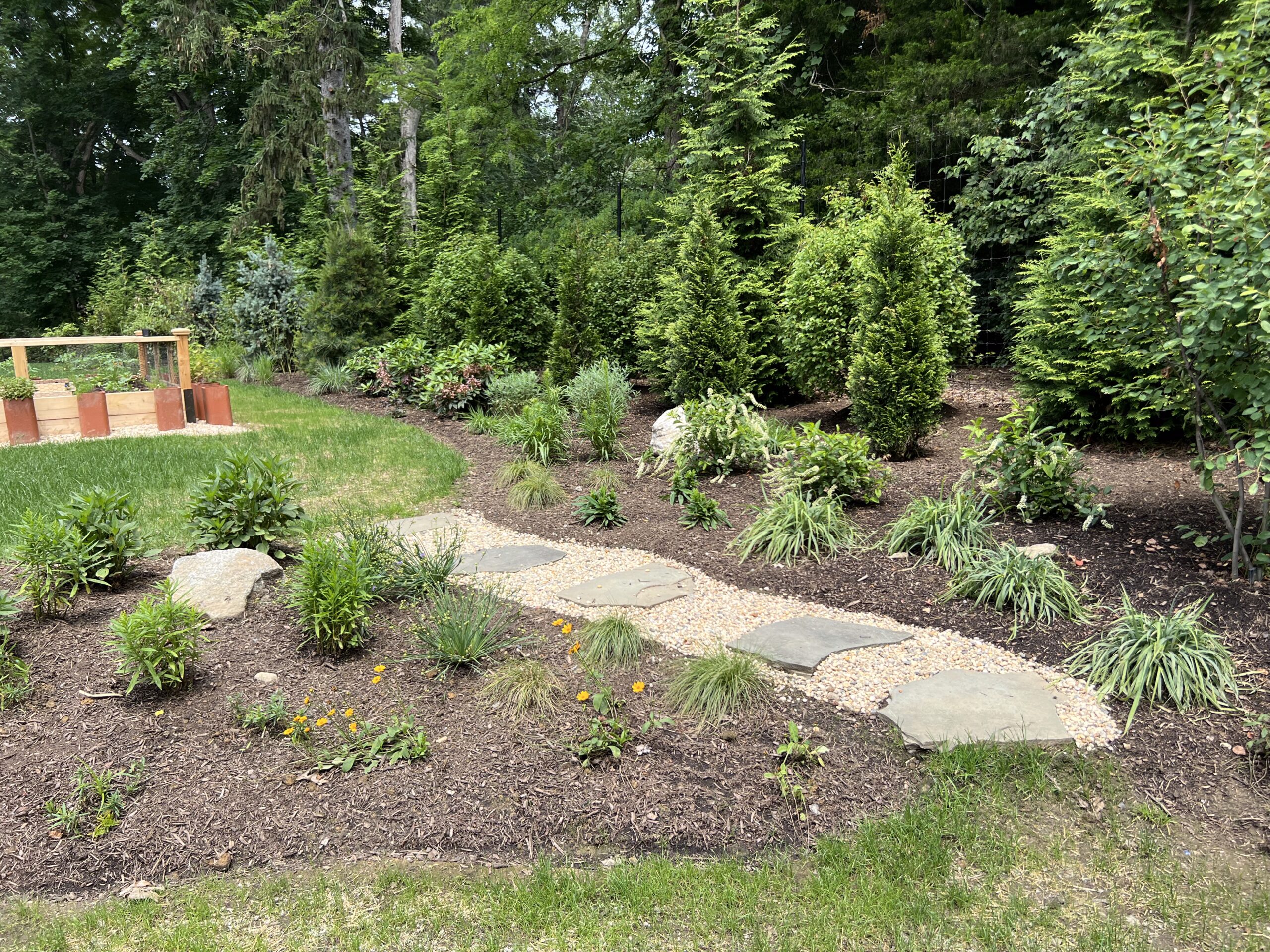
We installed boulders and planted the right slope for stability. A new river rock border with accent boulders in the front border of the slope helps to interrupt and evaporate runoff. That spot had previously had a tile drain but the lawn around it remained soggy and did not grow well.

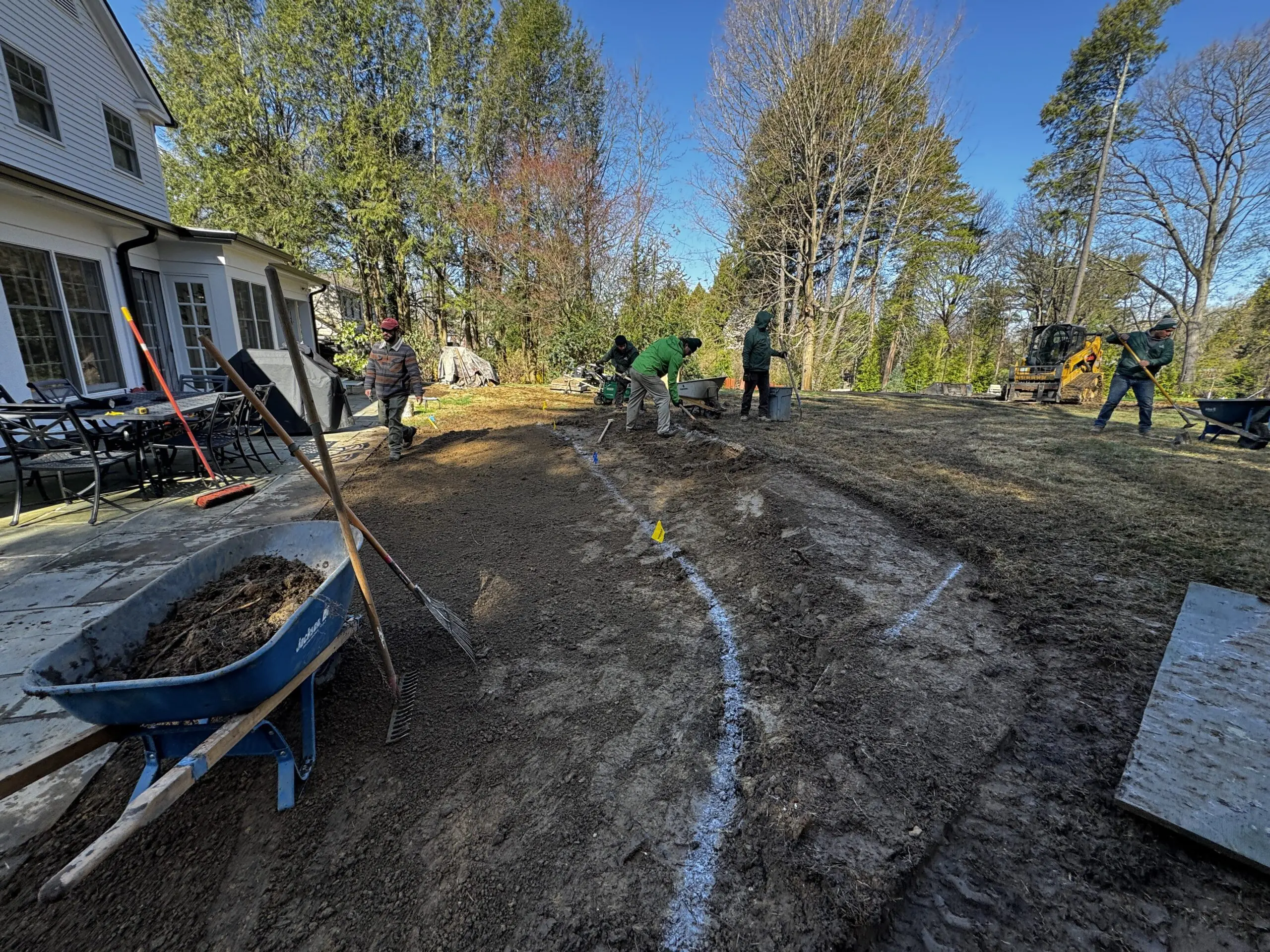
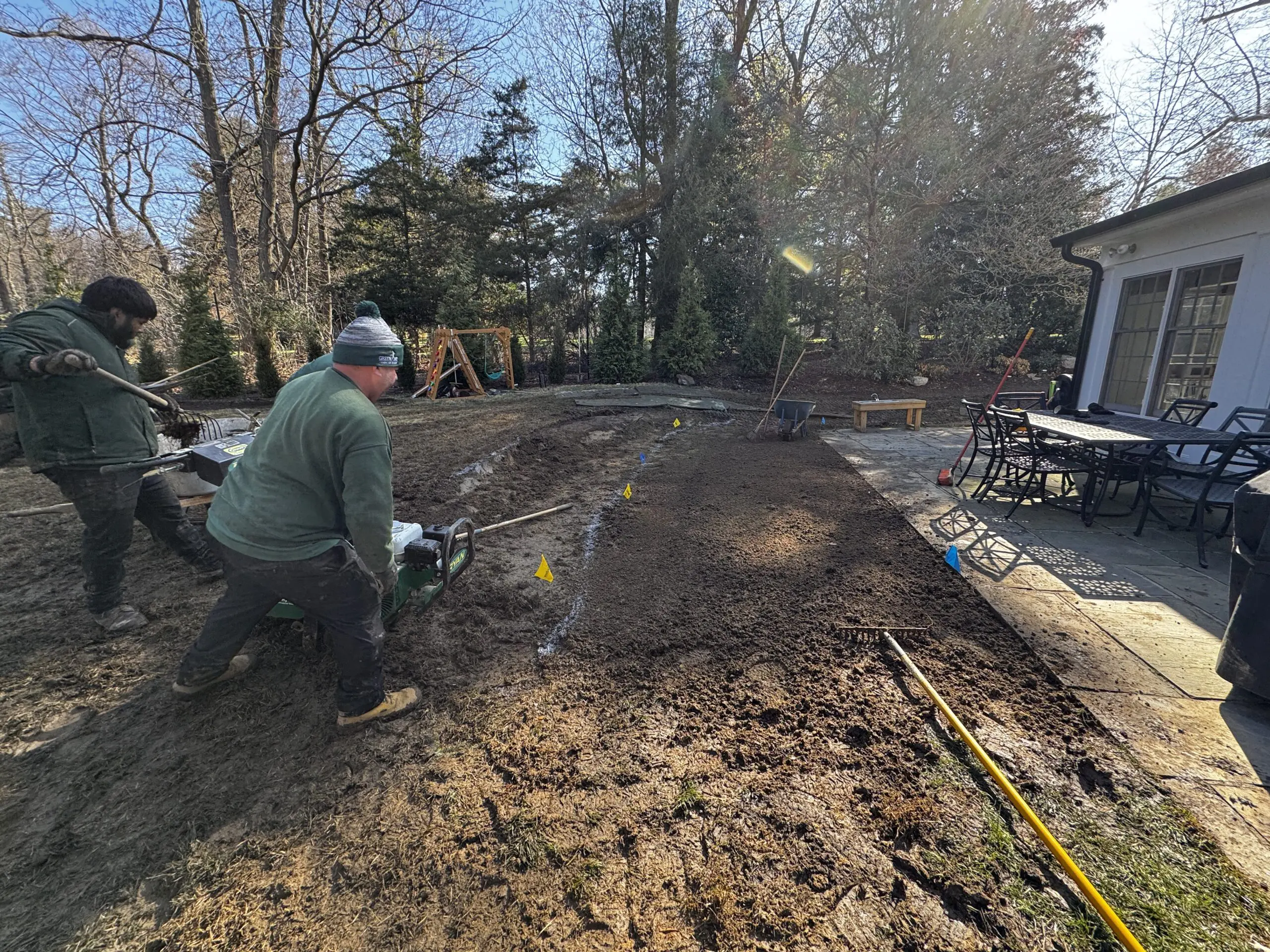
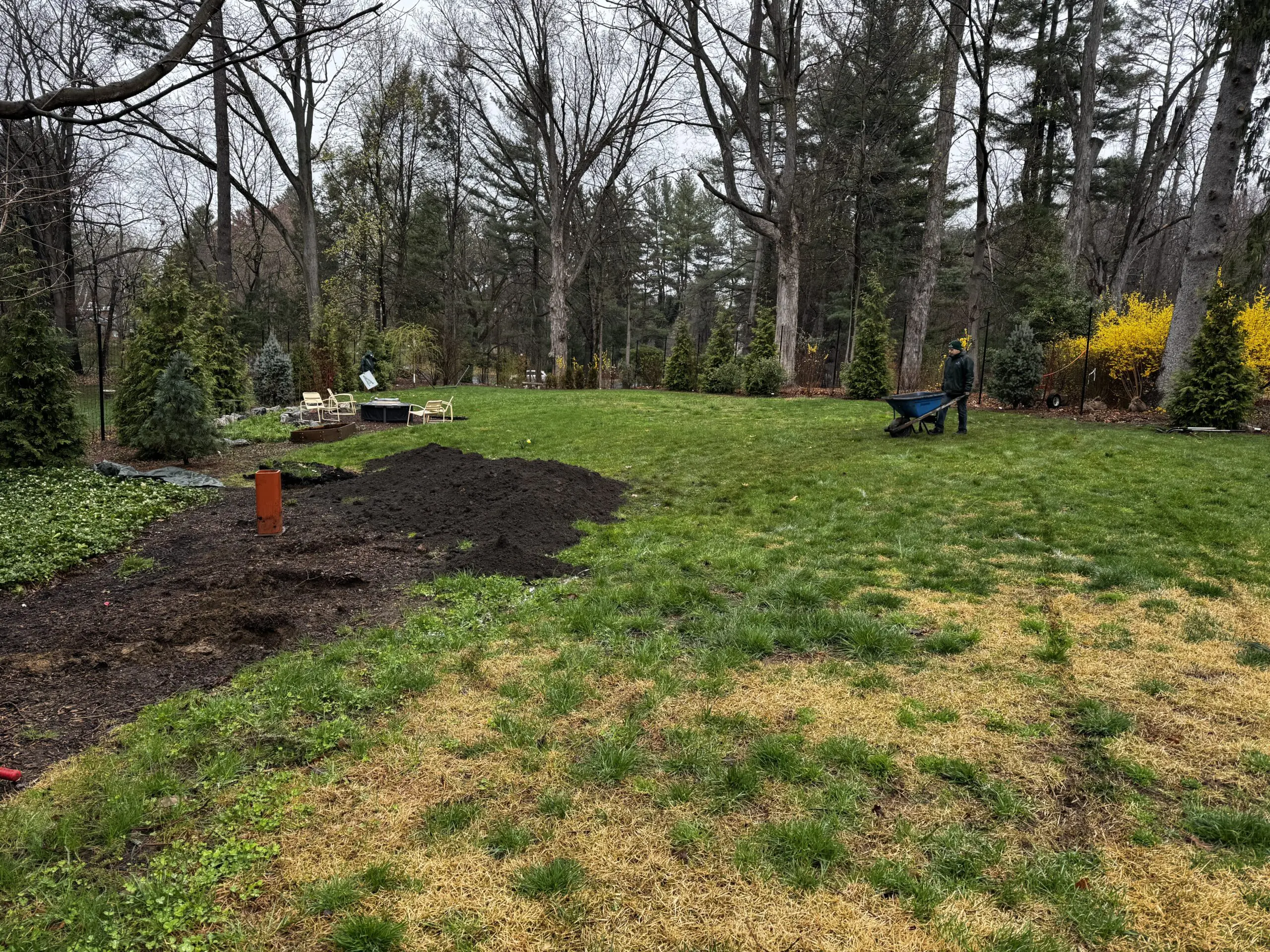
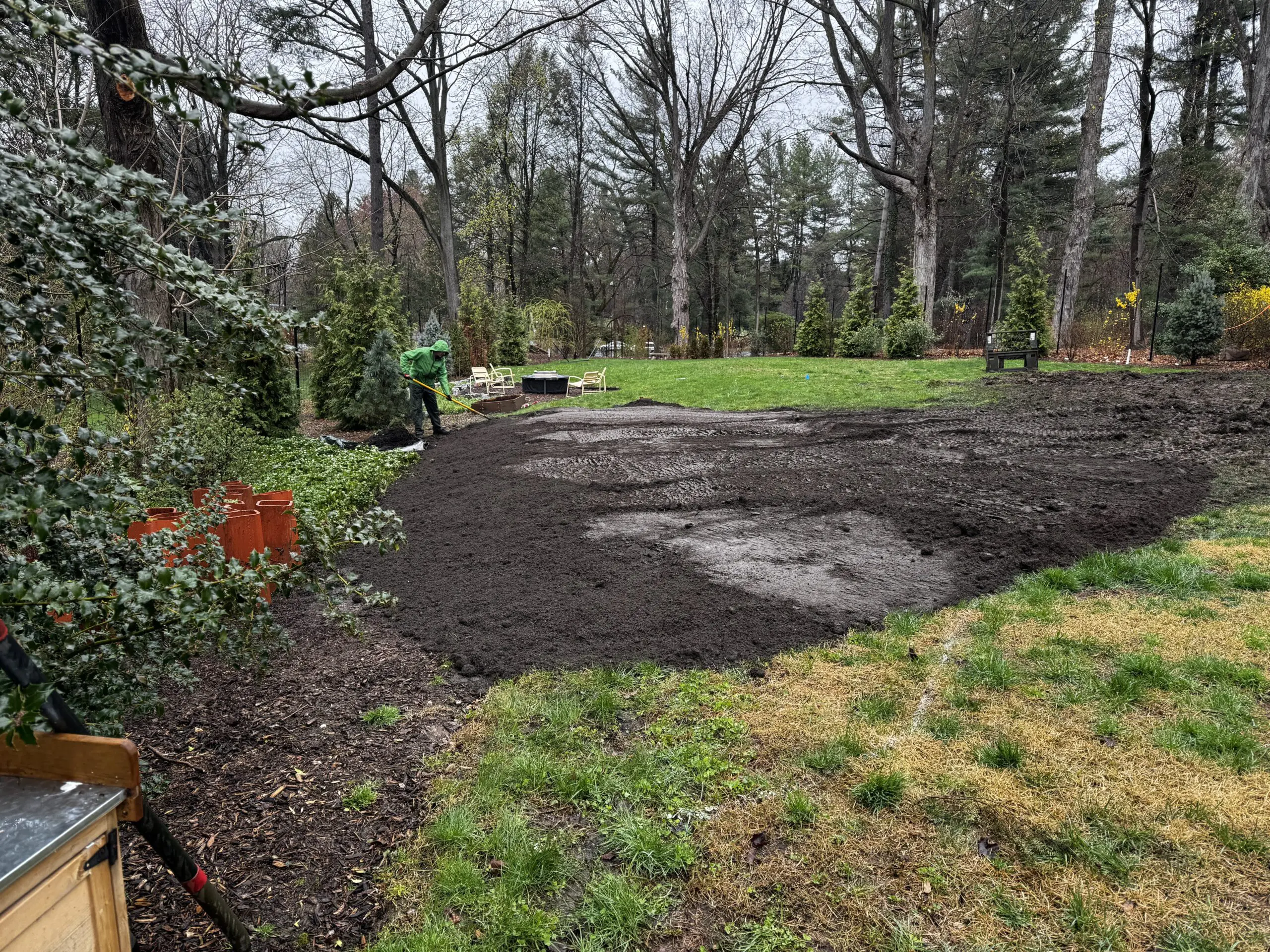
The lawn just beyond that patio, in the main part of the backyard, also sloped toward the left, making it an awkward space for play. GJLD brought it approximately sixty yards of topsoil to level the lawn grade and fill in existing divots and low spots throughout the property.
Across from the patio, we constructed a slight berm and planted the area with native pollinator-attracting plants. This “pollinator berm” became the focal point from the patio and kitchen, drawing the eye to the nearby colorful habitat instead of towards the rear of the large property. The pollinator berm effectively creates a garden room around the patio, which is the main entertaining space.

Coordinating Material Staging with Fencing Partners
Since this project required large amounts of material (many yards of soil, palettes of stone, many large B&B trees and shrubs), efficient access to the site was critical to staying on budget. We worked with the clients’ fence company to coordinate an area of fencing to be left open while GJLD crews accepted and staged the materials. After each day of work, GJLD crews closed the gap in the fencing with temporary deer fencing. Once all of the materials were staged on site, the fence company promptly returned and installed the permanent fence to close the gap. This timely coordination ensured that the permanent deer fencing protected the new plantings at the earliest stage. This method also increased GJLD crew efficiency, for the path through the fence was much easier to navigate than going down the stone steps from the front yard.
Designing Garden Rooms
Midway back in the property there was an existing gravel patio to house the fire pit area. Surrounded by an existing perennial planting, this space feels intimate and secluded despite being in the middle of the property. We designed layered border around the perimeter of the property that made the existing planting feel less isolated and more anchored to the landscape.

GJLD crews also helped site the new vegetable garden (not constructed by GJLD) to be close to the house / patio and maximize sunlight in the backyard. The client was interested in growing some niche herbs, including stinging nettle, chocolate mint, and other medicinals.
Mini Native Grove Creates Habitat Corridor
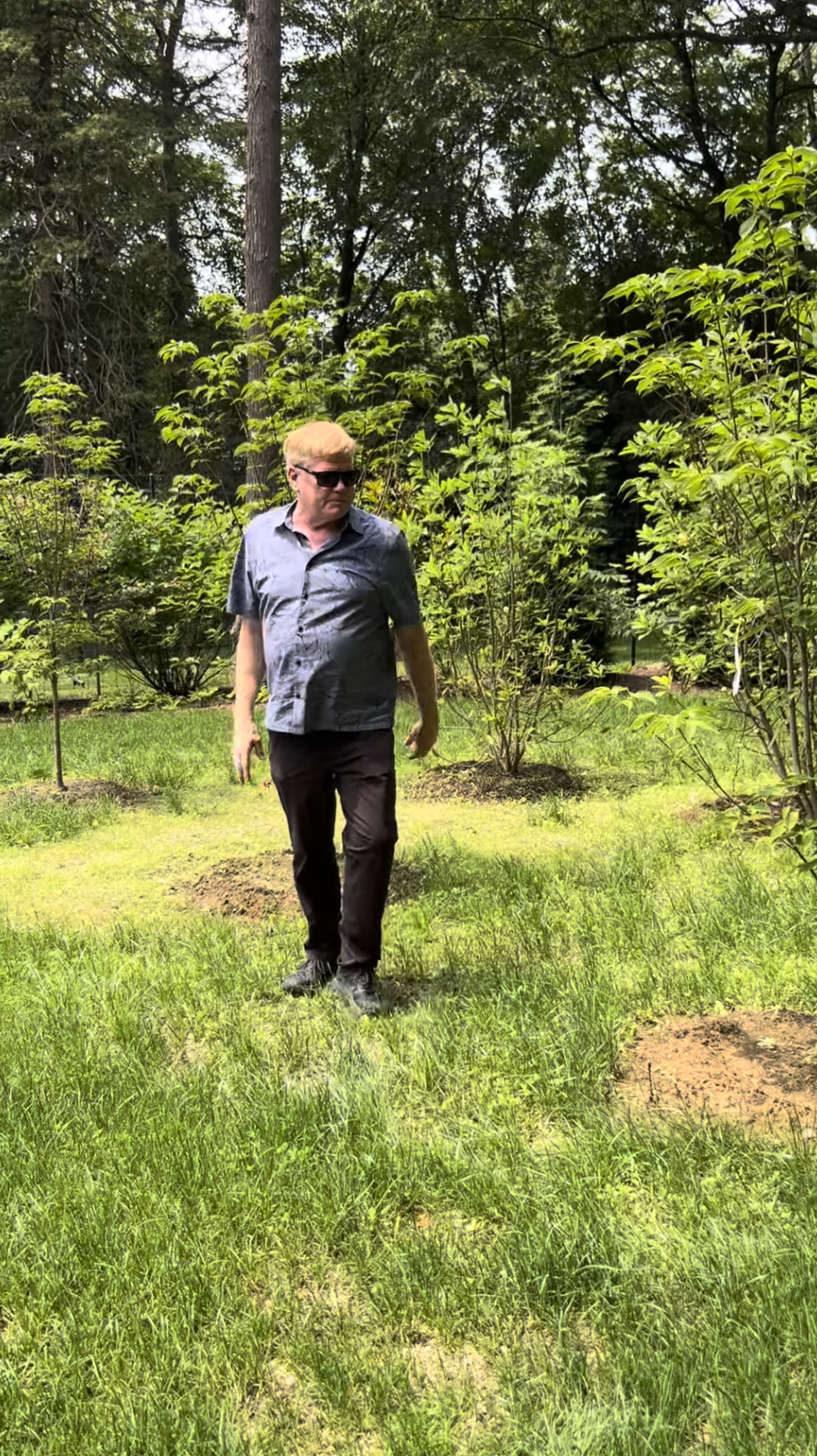
Since the property is long and tapers at the back, the eye naturally wants to settle at the farthest point. GJLD designed a mini grove of native magnolia trees and flowering dogwood trees towards the rear of the property and seeded the area beneath it with a native grass and wildflower mix. This combination of ground-level pollen and nectar producing plants, with clustered trees for nesting space or nesting materials above, provides a valuable habitat corridor for birds and insects. They can approach the property from the side, take cover in this grove in the middle, and continue to the other side of the property. It is important to not just relegate habitat areas to the borders of your property as this limits where wildlife feel safe to travel.
Willow Wood Garden
At the rear of the property, where screening was especially important and conditions were shadier, we designed a woodland understory planting with a semi-circular wood chip trail around it. Trails are one of our favorite design strategies – they encourage an experience with the landscape that is much different from the one perceived from a patio. This mini trail will create both active play space for the children and a path to walk slowly and contemplate the landscape and its visitors.
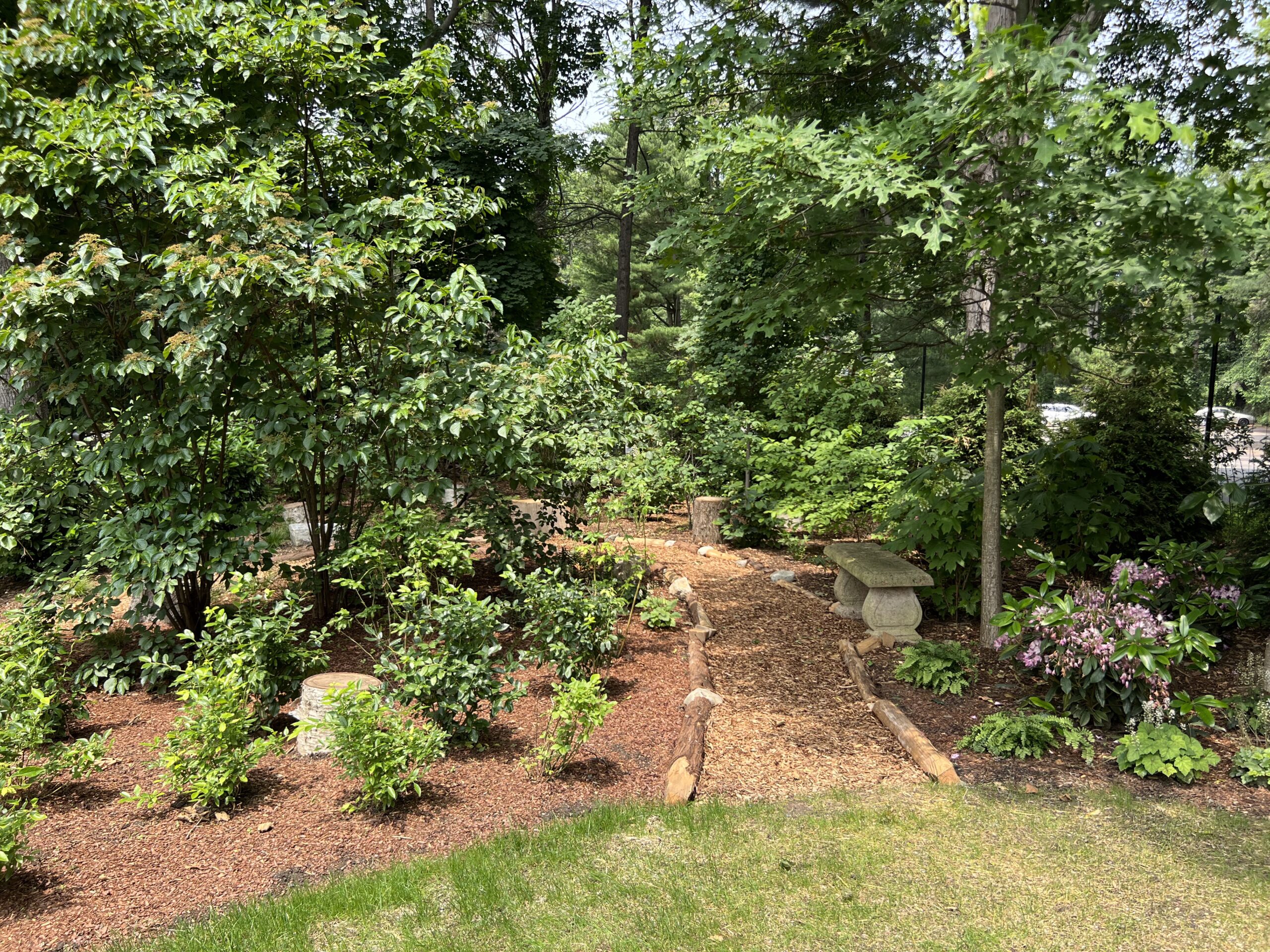
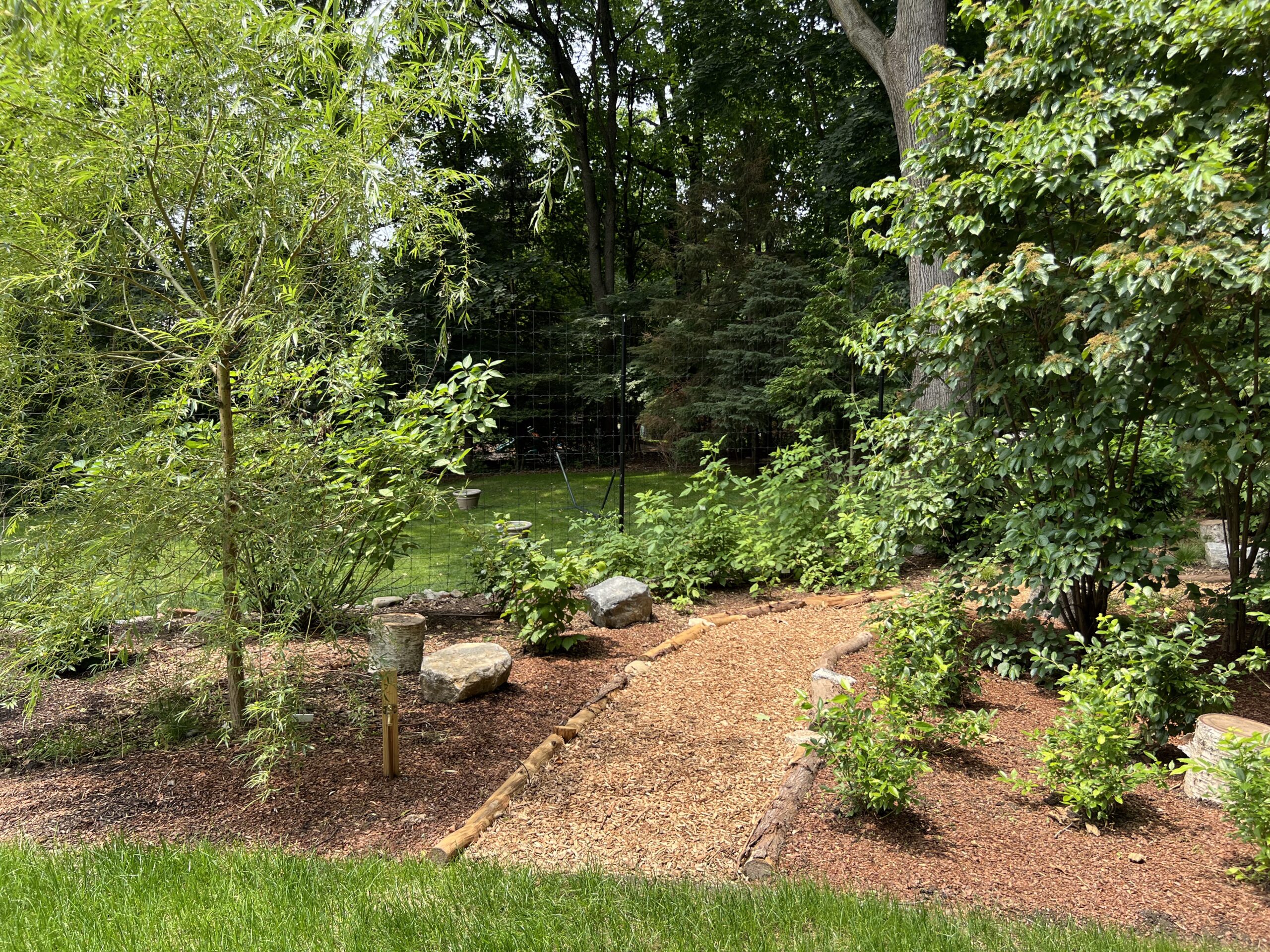
The understory features native willows, witch hazel, oak leaf hydrangea, ferns and sedges. The wood chip path is lined with cedar posts and fieldstone for naturalistic border. We installed sitting boulders and birch stumps within the garden for an immersive resting experience.
Natural Stone Staircase, Trash Can Landing
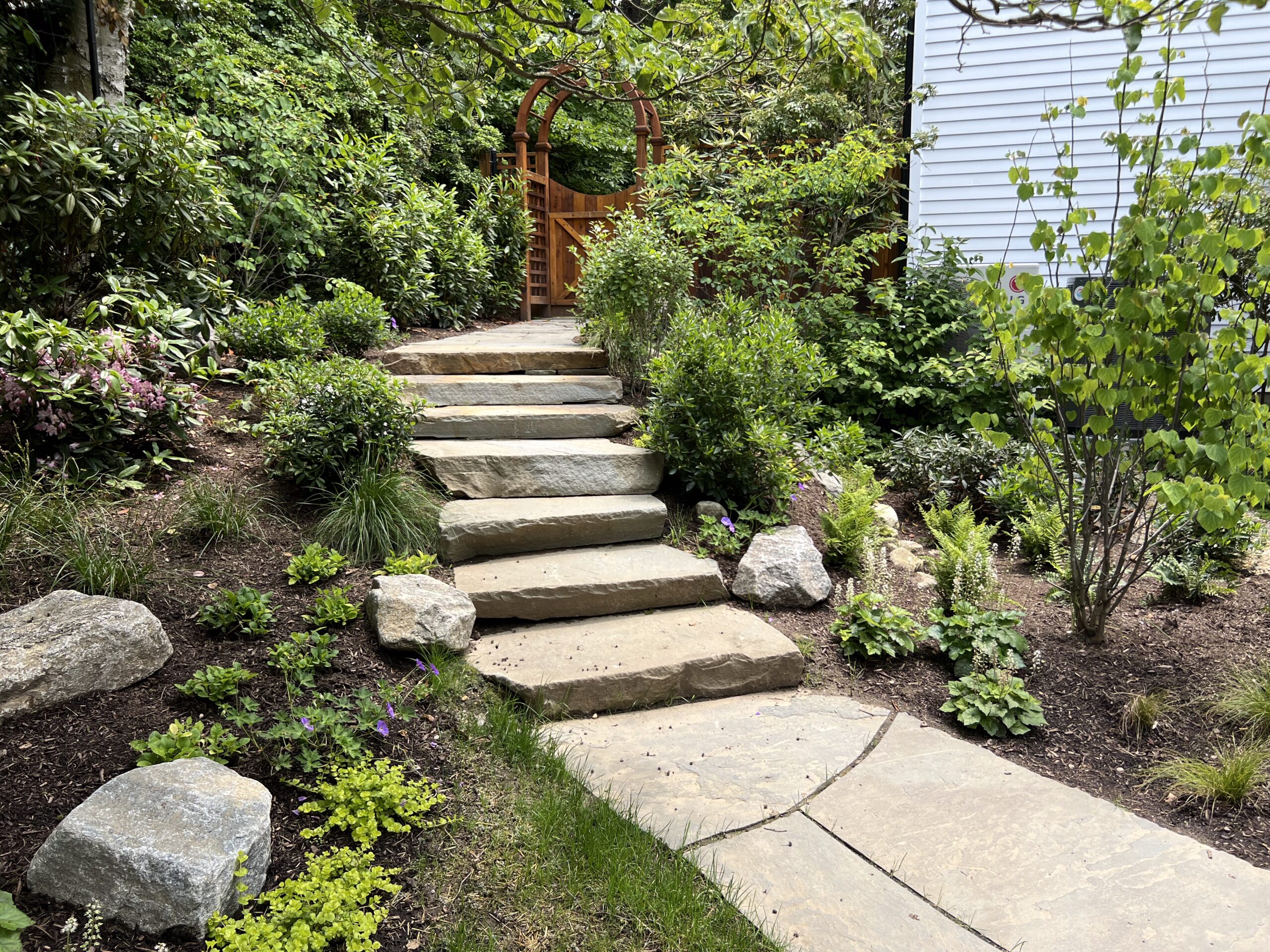
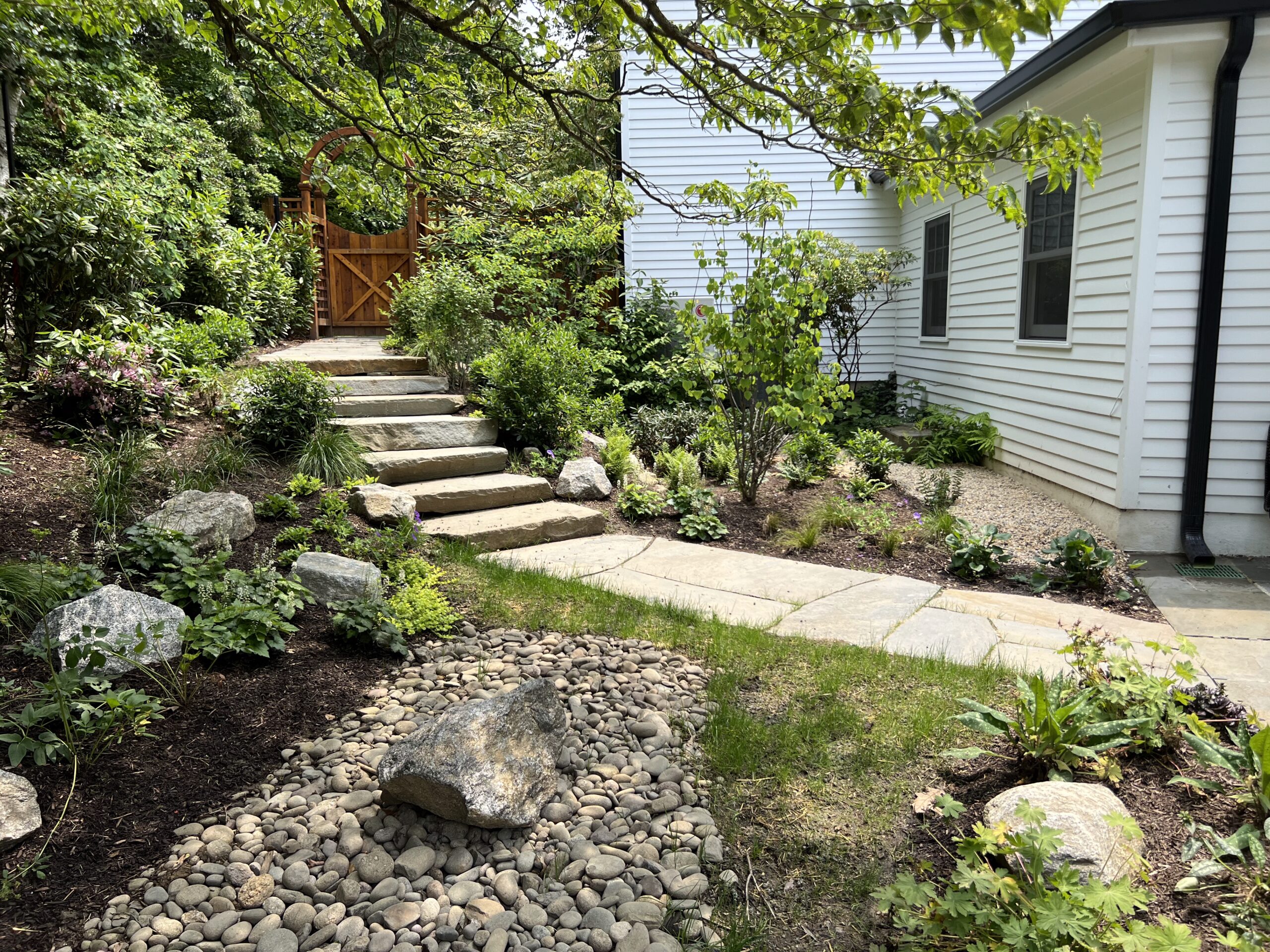
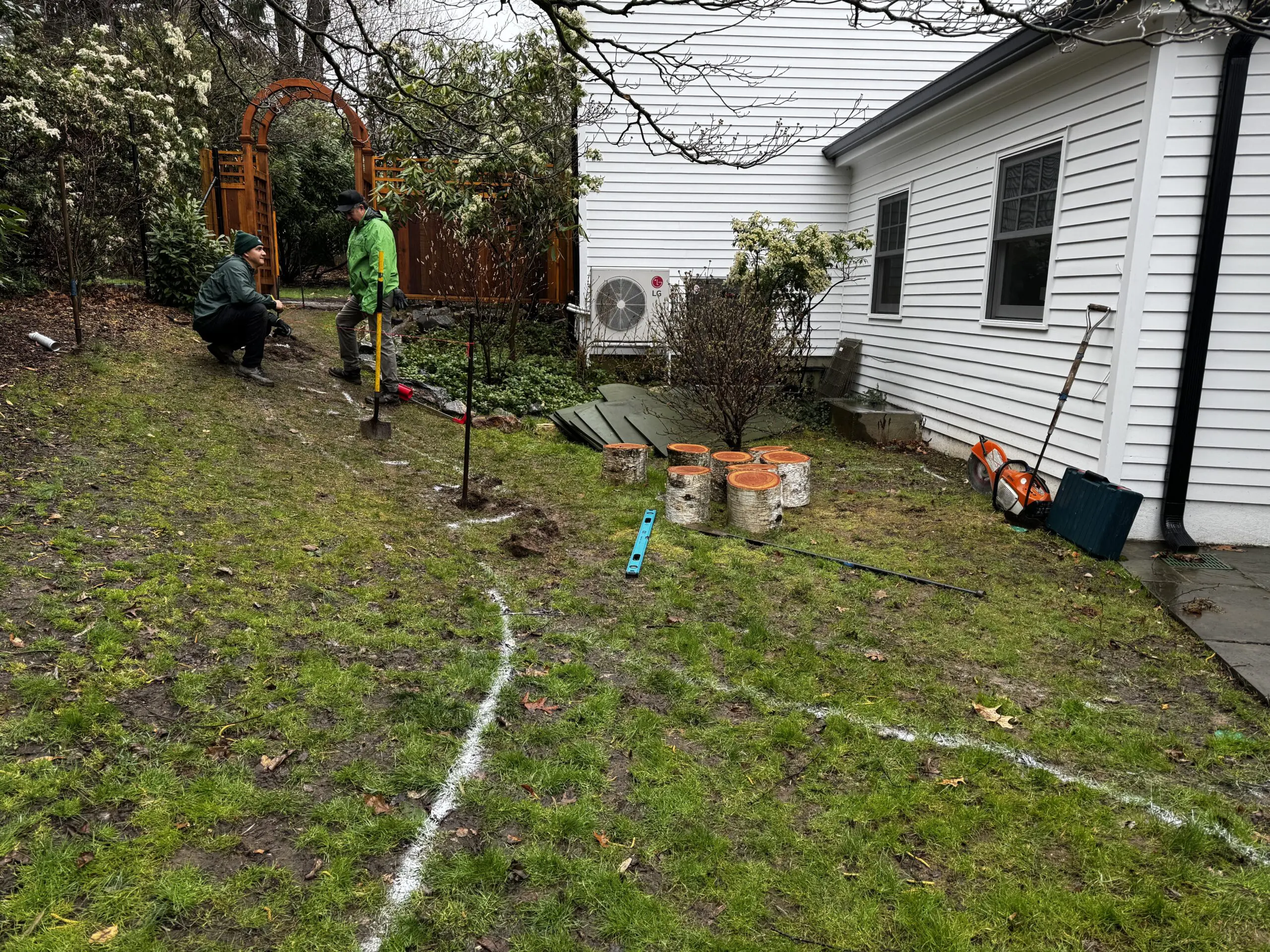
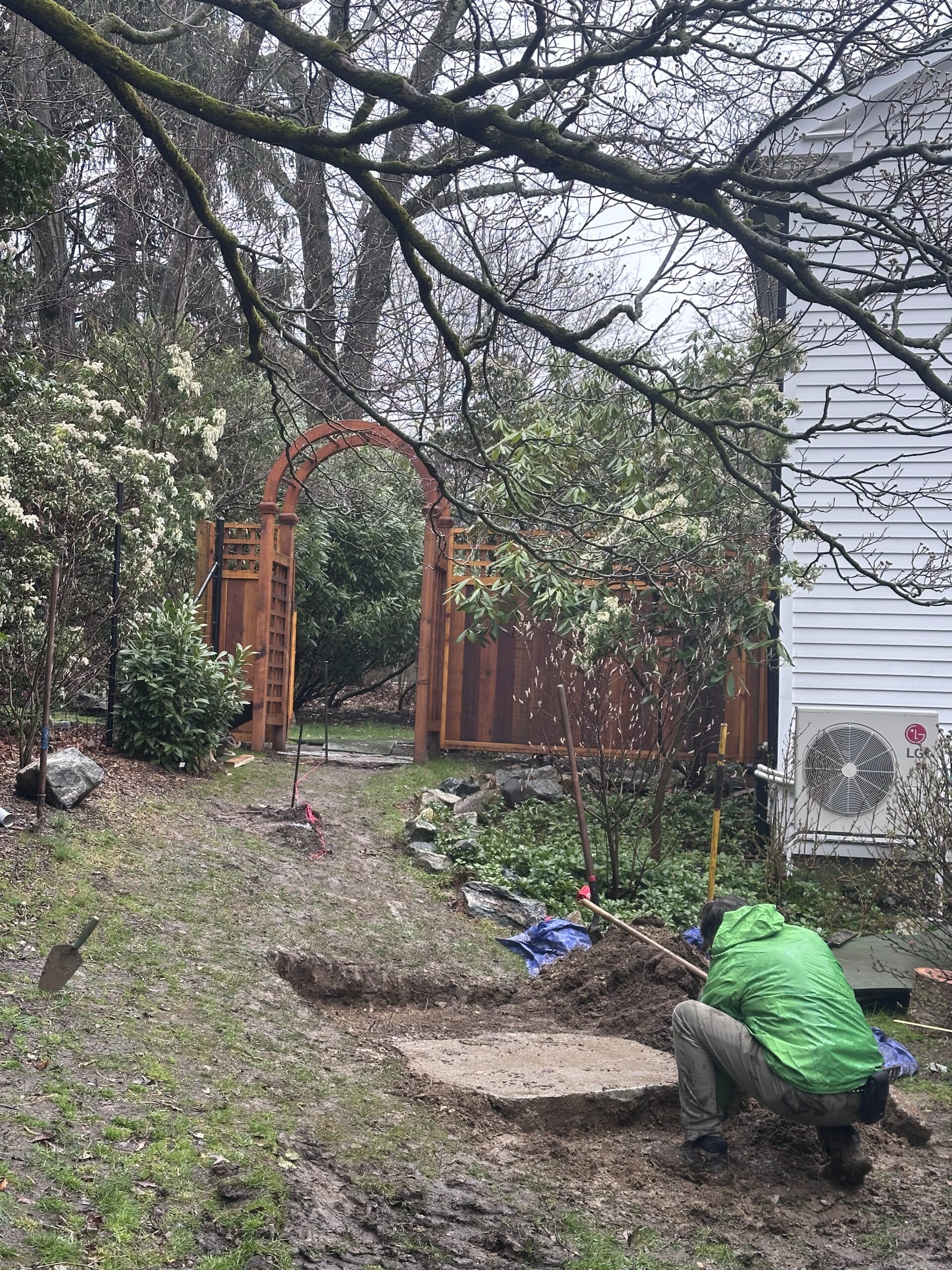
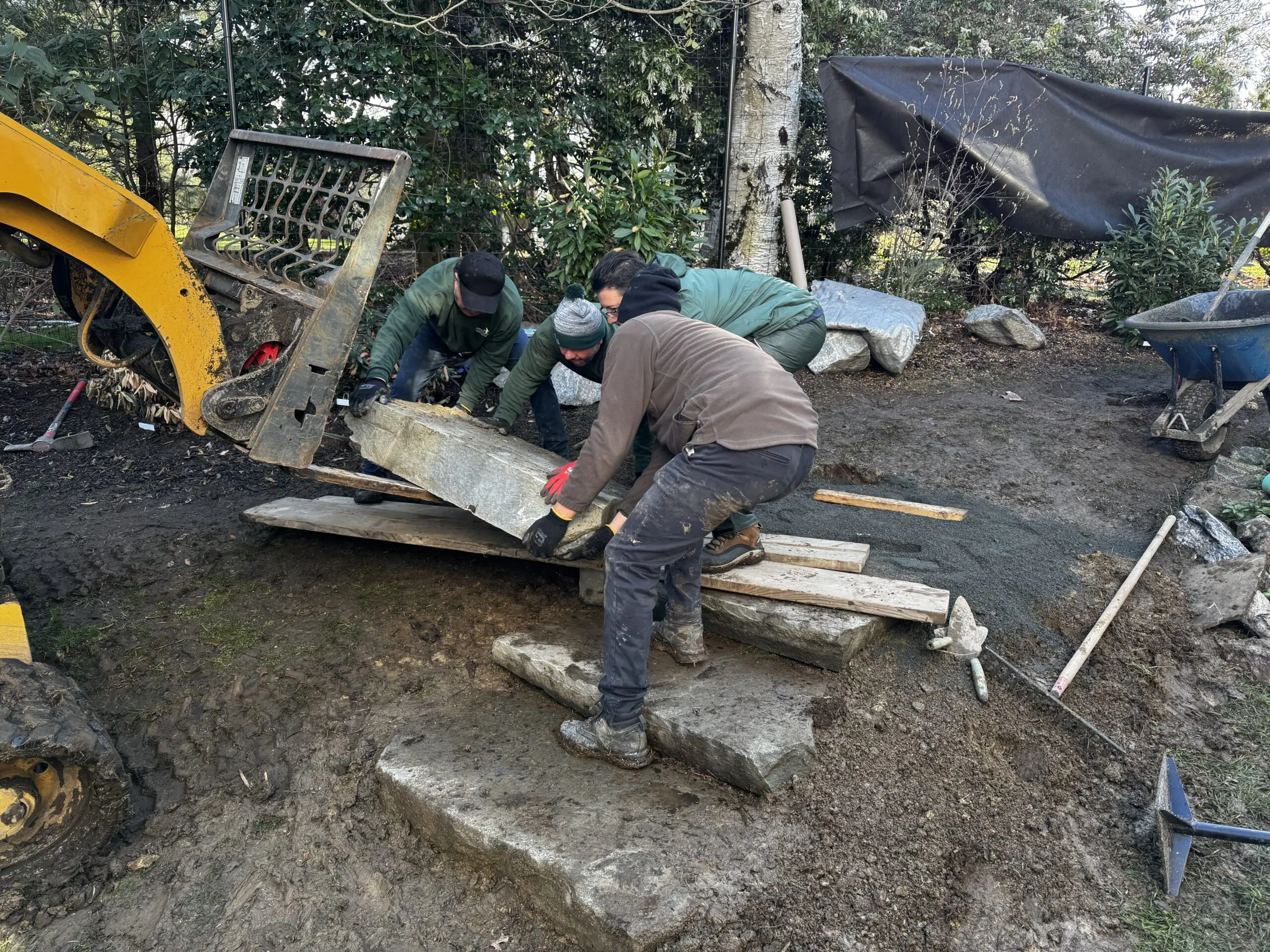
When we arrived on site there was no designed circulation to navigate from the front yard, down the slope to the backyard. GJLD masons constructed a staircase and landing using irregular flagstone and large natural stone steppers (from Prospero Nursery). We also installed a gravel apron around the house to improve air circulation and evaporation.
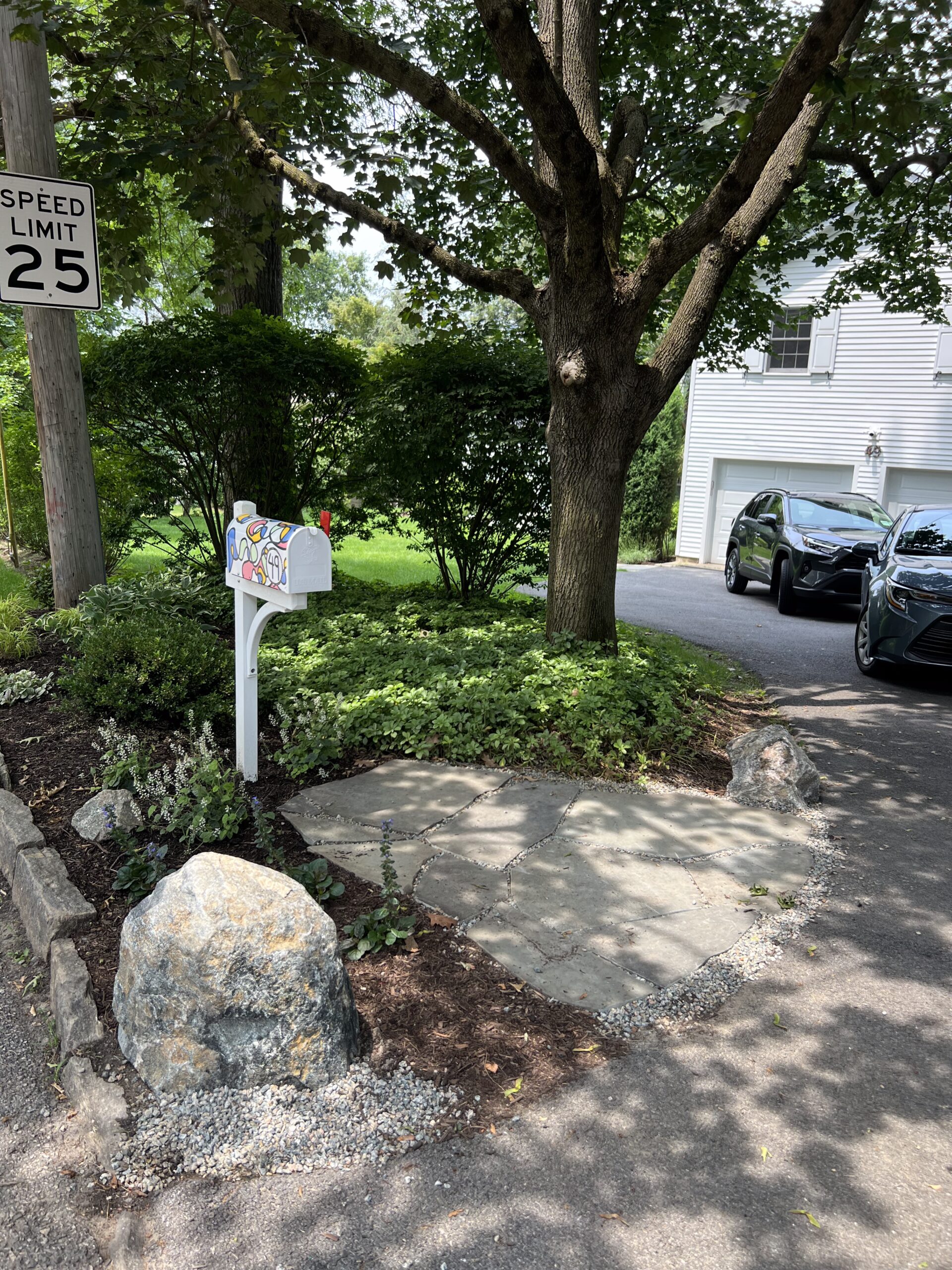
In the front yard, a mini-irregular flagstone landing by the mailbox created the perfect space to bring the trash cans out for pick up. A large boulder at the driveway corner helps delineate the drivable area from the landing.
Feeling inspired? Contact us to start your landscape design project! Winter designs will be prioritized for spring and early summer installations.