The English cottage garden is an iconic style of garden design that emerged as a response to the formal and strictly manicured estate gardens of the nineteenth century. Cottage gardens championed perennial plantings mixed with edible plants for the kitchen, while the estate landscapes of the era relied on formal evergreen hedges for structure and huge amounts of annual flowers planted every year. The cottage garden’s soft edges with dense perennial plantings were organized chaos with baked in practicality, a more approachable garden style that has remained a fixture in the landscape design world to this day. For these Scarsdale, New York clients, blending the cottage garden style with today’s ethic of planting native to enhance habitat and ecosystem services was essential for their landscape renovation. They also wanted to enhance the layout and flow of the property, especially in the side yard which felt disjointed from the rest of the space. The front yard needed a boost in curb appeal, and the backyard needed shady spots to rest, more screening, and more flowering plants. We are so thrilled with how this design and installation turned out—we had to crown it our BEST project of 2025!
This blog is part of our countdown of the Best Landscape Design Projects of 2025! Read all about our #2 project hereand our #3 project here.
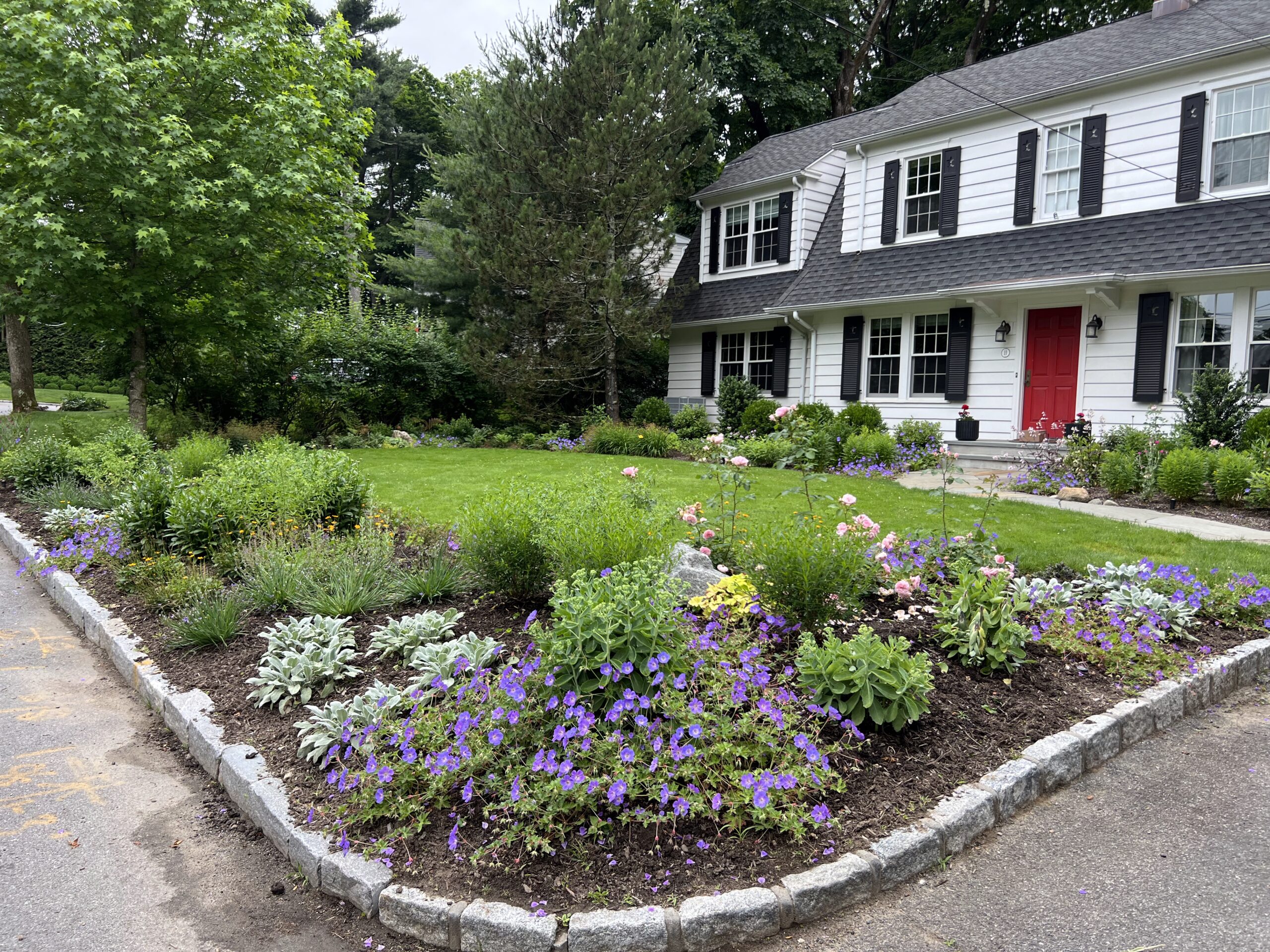
Cottage Garden Beds Frame the Front Yard
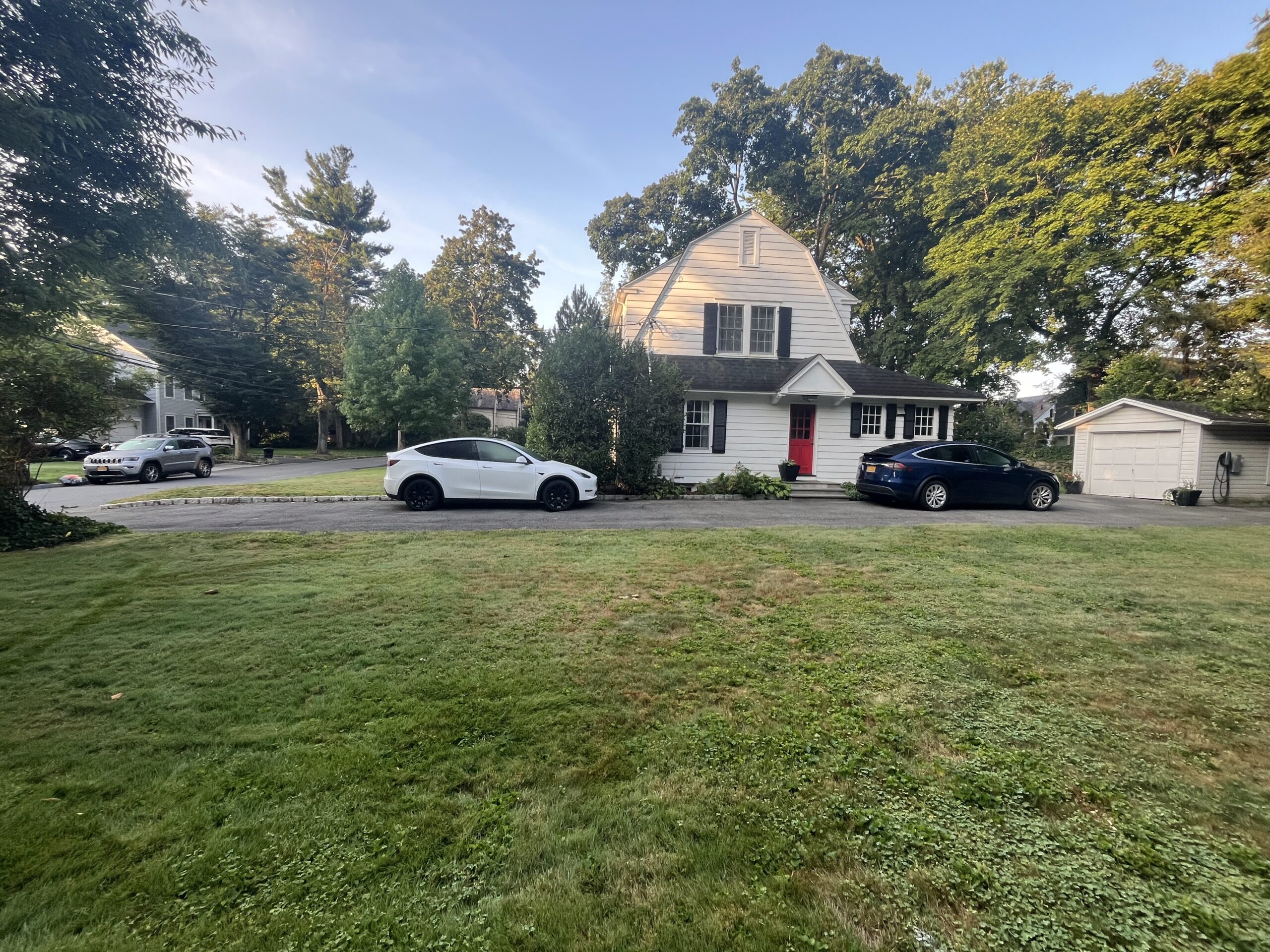
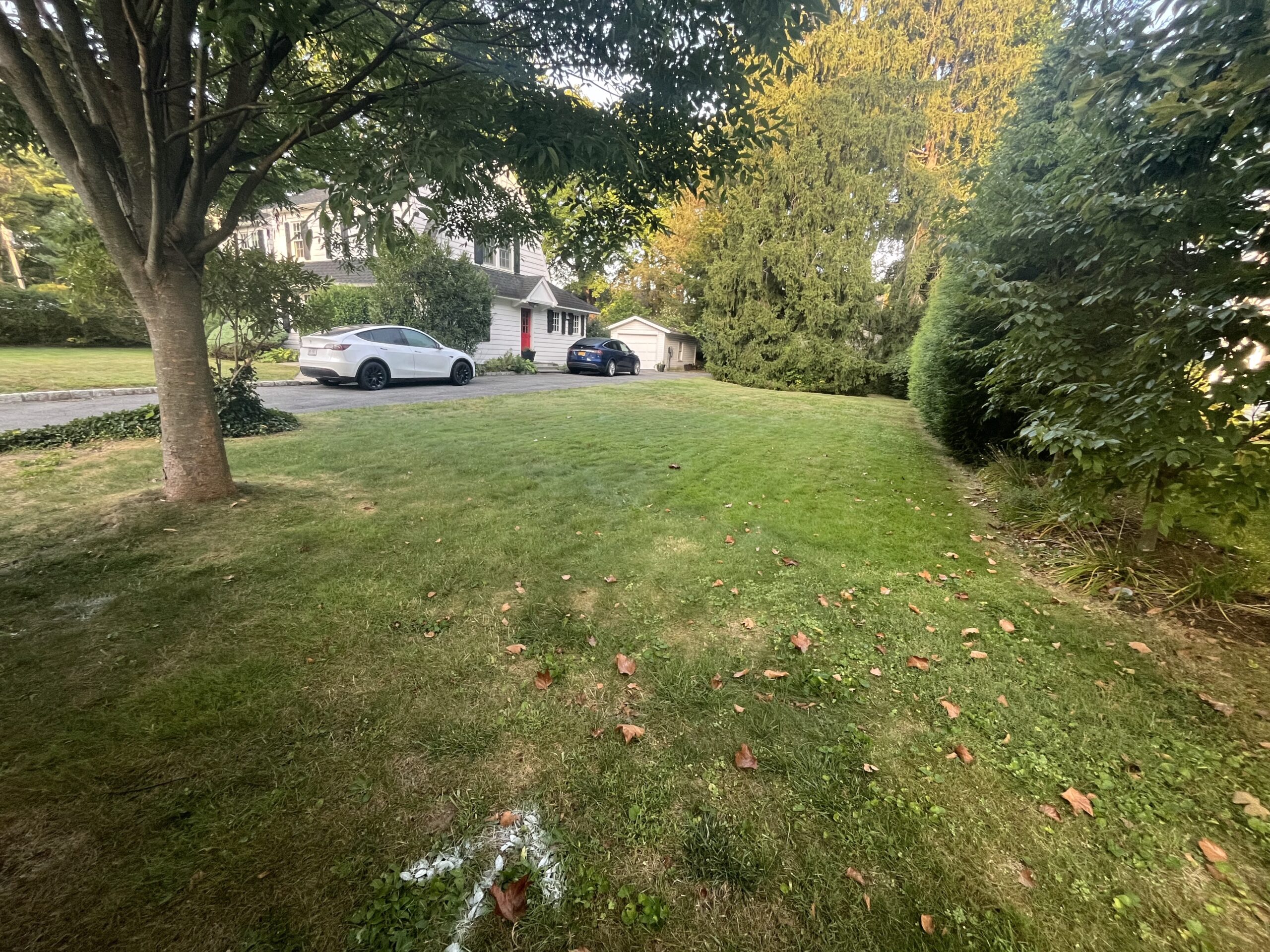
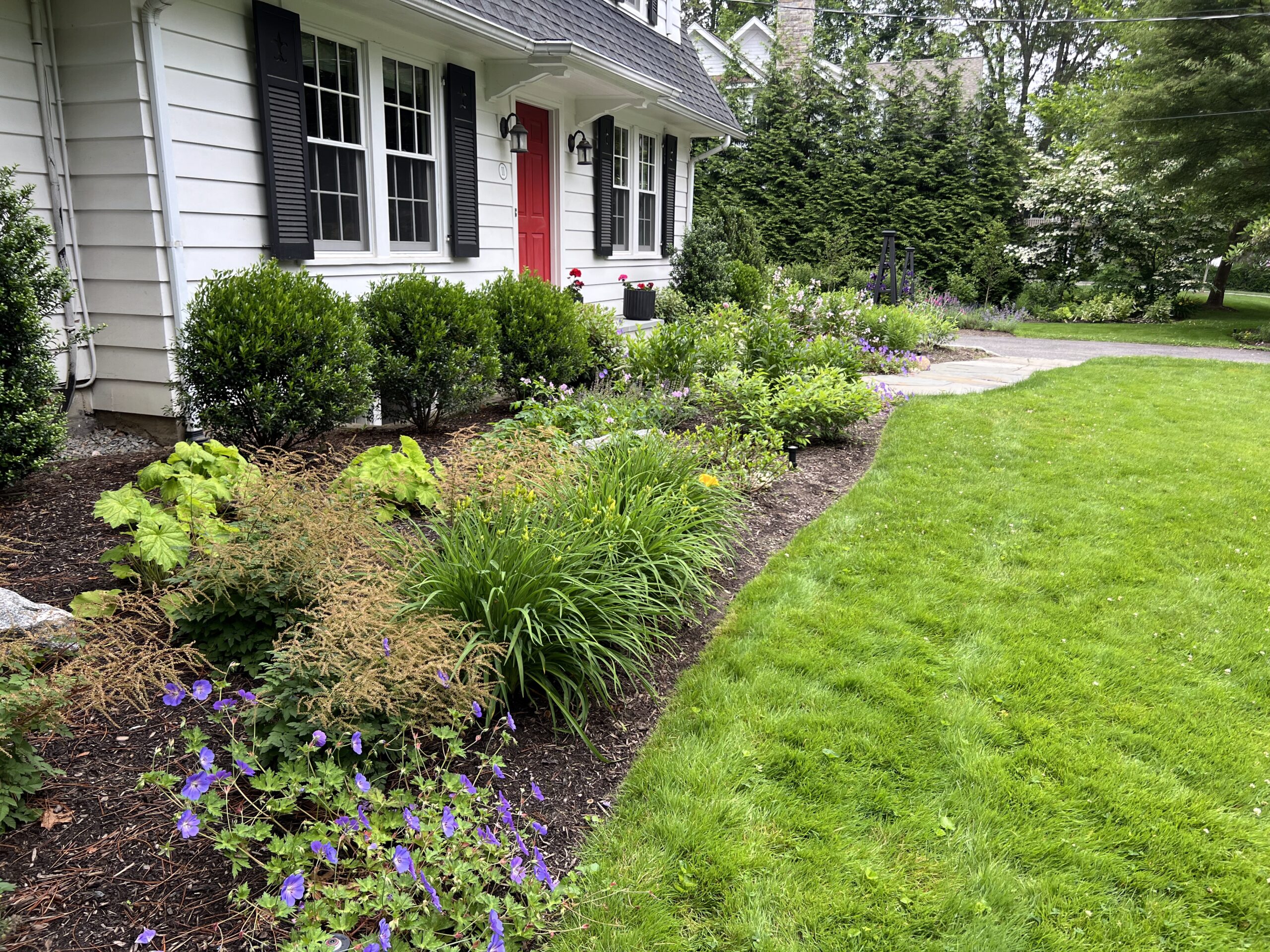
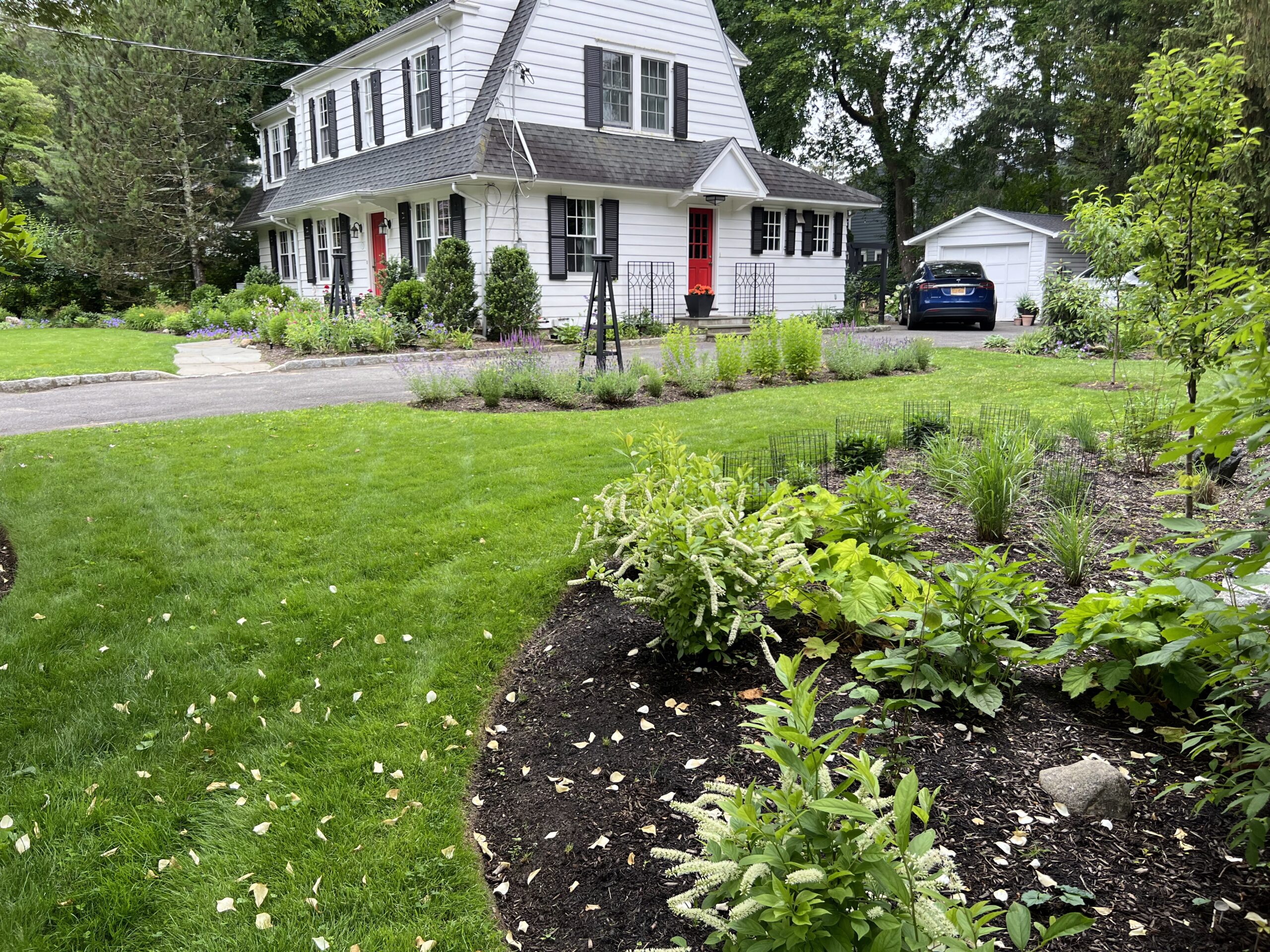
The existing front yard landscape consisted of a row of boxwoods in the foundation, lawn, some arborvitae along the side property lines, and Japanese cherry trees along the front border. The problem with only landscaping the border of your properties and the foundation of the house is it reinforces linear lines and doesn’t make the home feel integrated or nestled within the landscape. By creating new landscape beds that encircle the front lawn, connect to the foundation, and are echoed in pocket beds across the driveway, we’ve added enough biomass to ground the architecture. The plantings are large enough to relate themes across each other, creating a rich and wild tapestry that feels alive rather than manufactured and static.
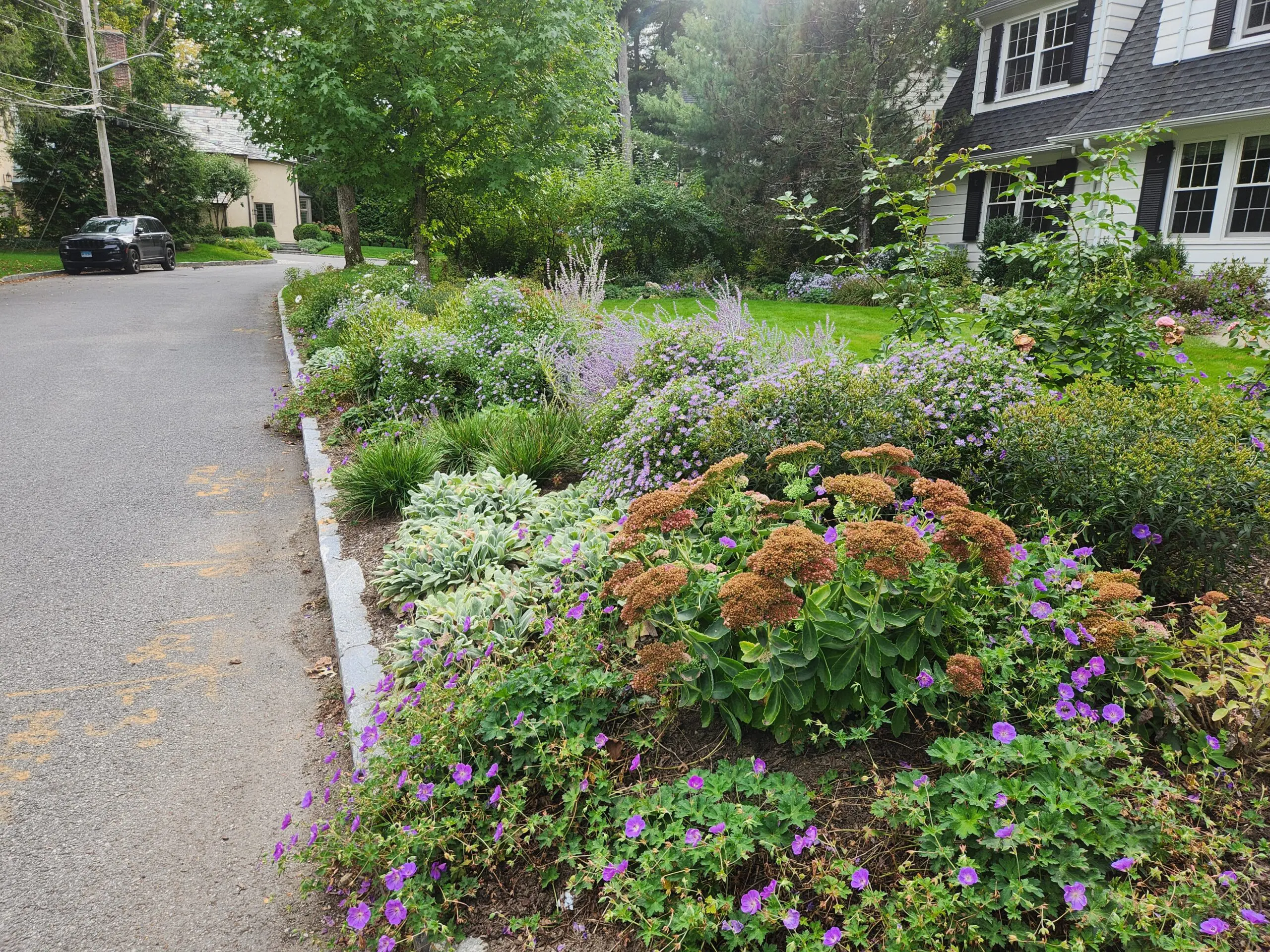
The new garden beds not only add color, texture and habitat value, they also shape how you exist within the landscape. The far side of the driveway, where before was just an expanse of lawn and a row of arborvitae, felt like an empty lot to the clients, instead of an integrated piece of their property. We added a border bed along the length most of the driveway, which became a fragrant-themed bed with plants such as Nepeta, Agastache, Rosemary, Lavender, and Thyme. Behind that bed, asymmetrical curvilinear beds frame how you enter and move through the space.
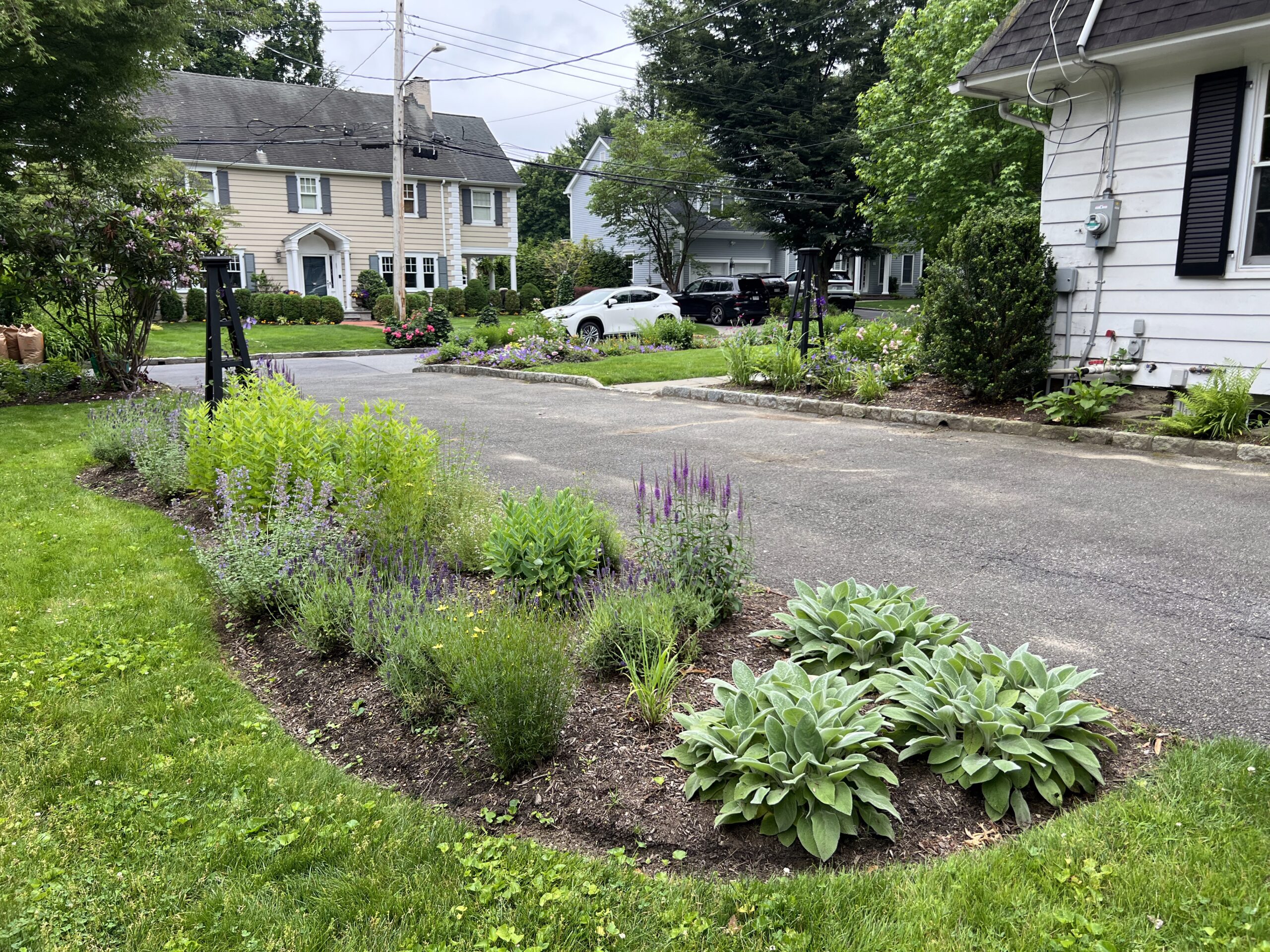
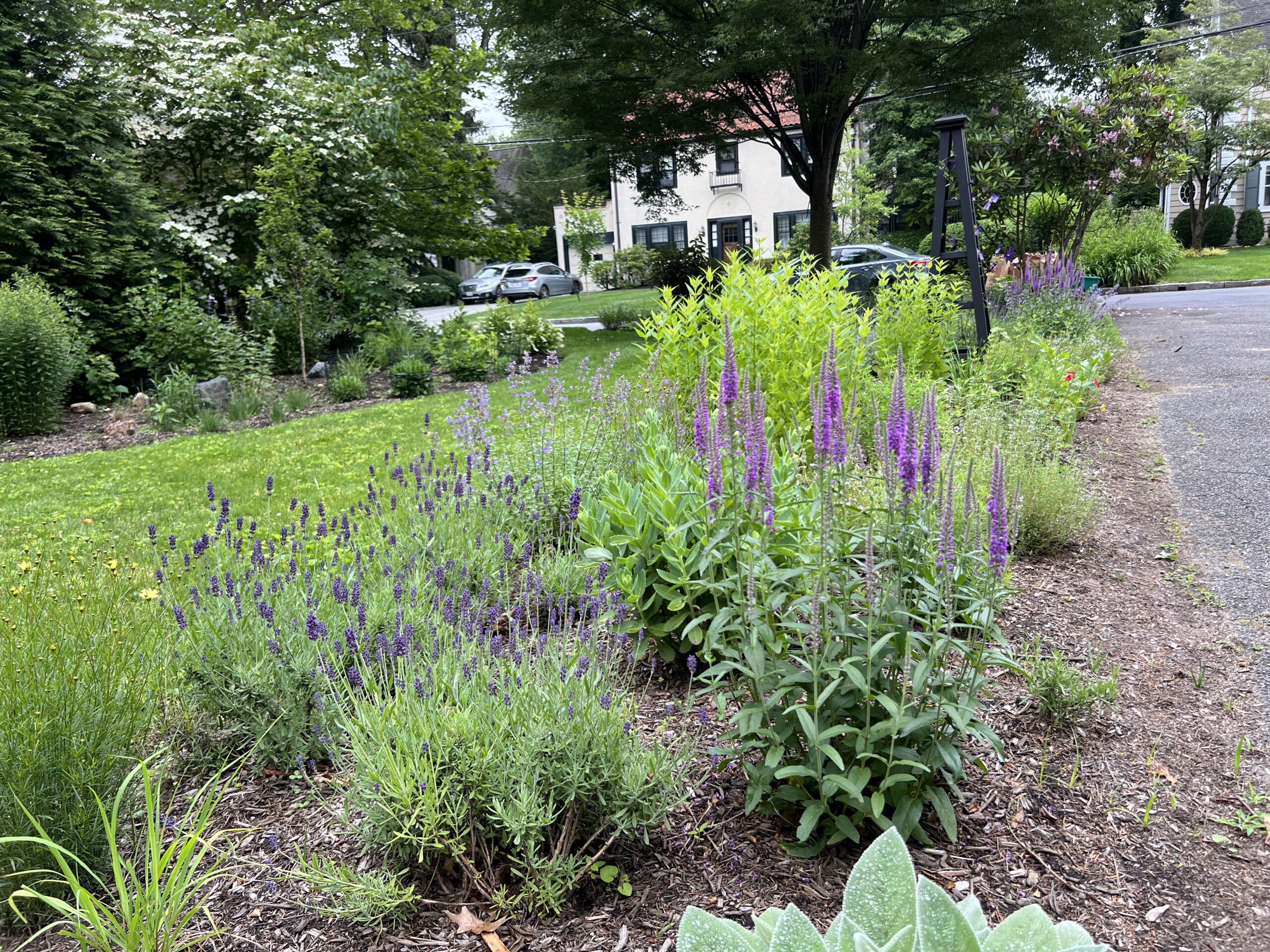
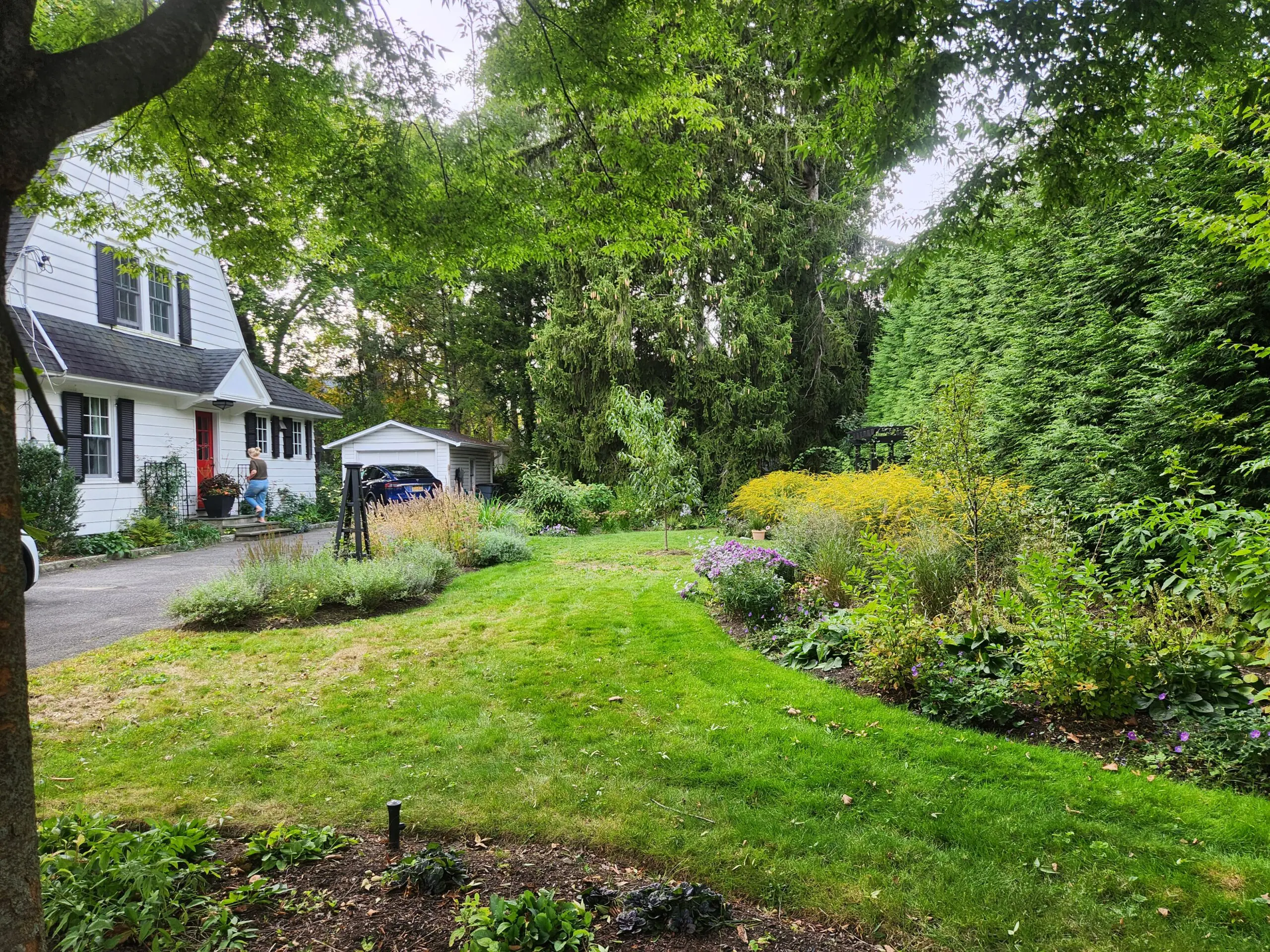
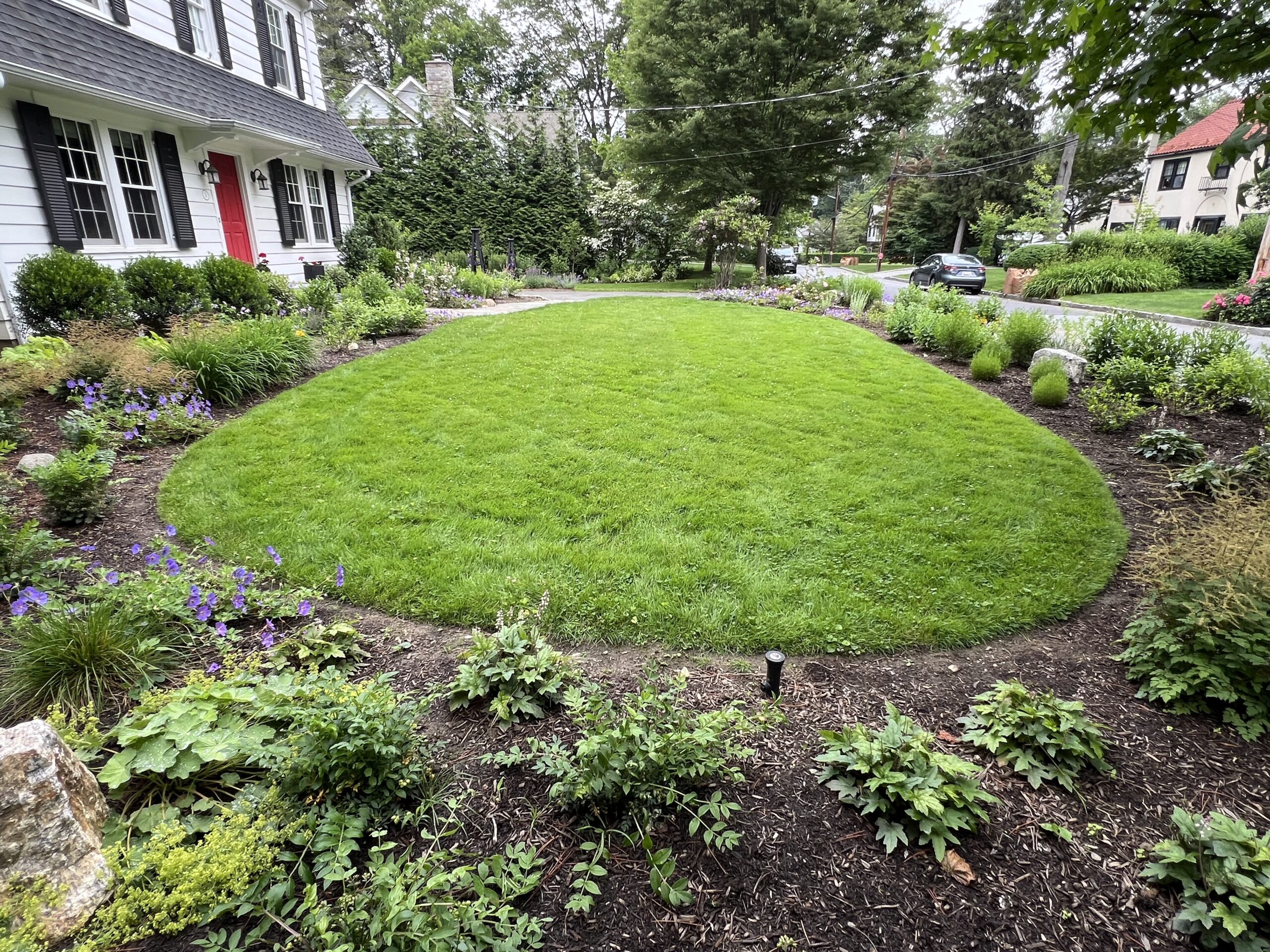
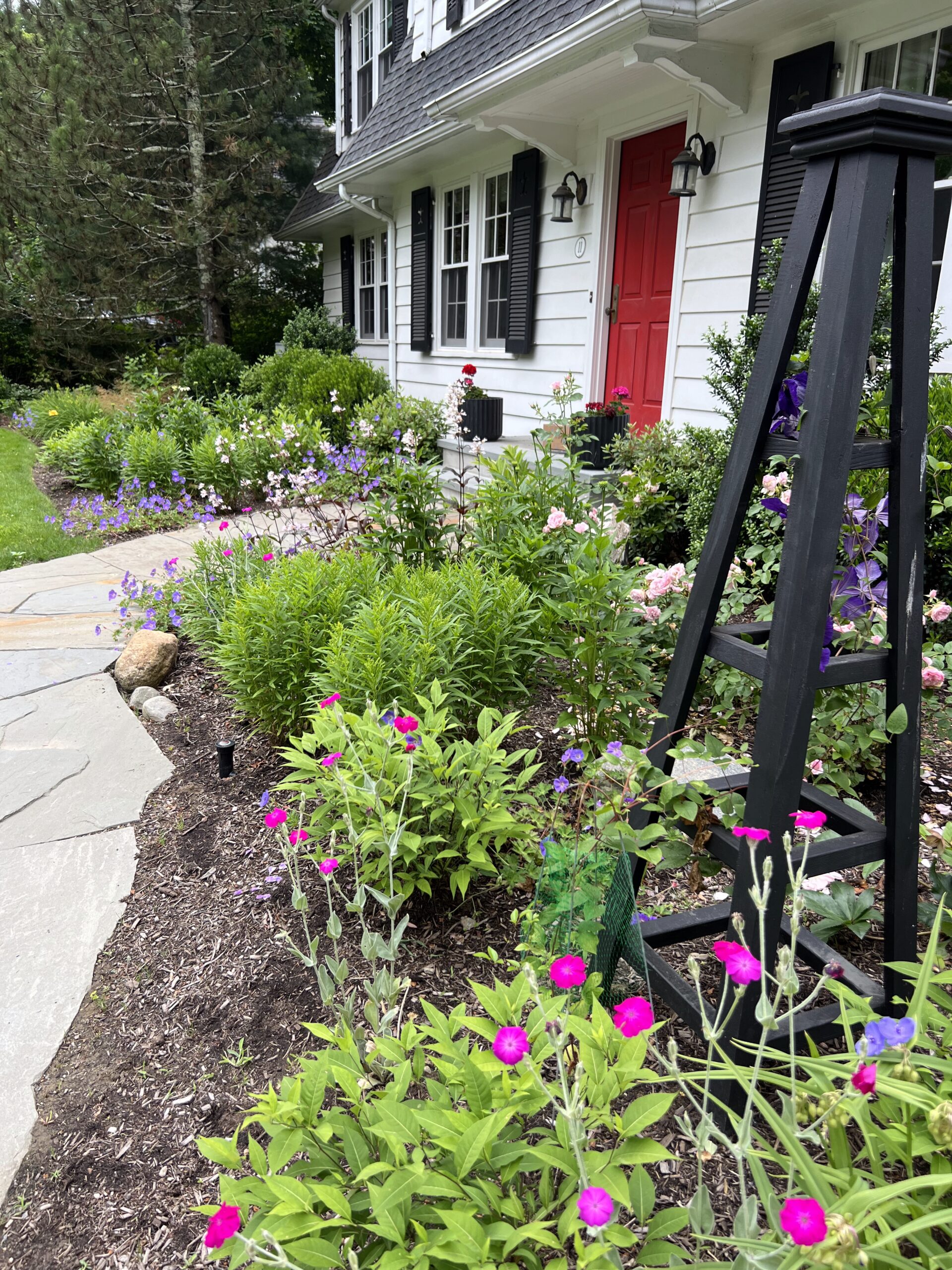
The plant palette for the front yard incorporated some classic English garden plants – roses, lady’s mantle, day lily, lamb’s ear, rose campion – with some of our native favorites: geranium, coreopsis, penstemon, goldenrod, tiarella, jacob’s ladder. The microclimate around the driveway was full sun, but the left side of the front yard trended shadier, making for a diverse plant palette.
Natural Stone Walkway for a Cottage Style Front Entrance
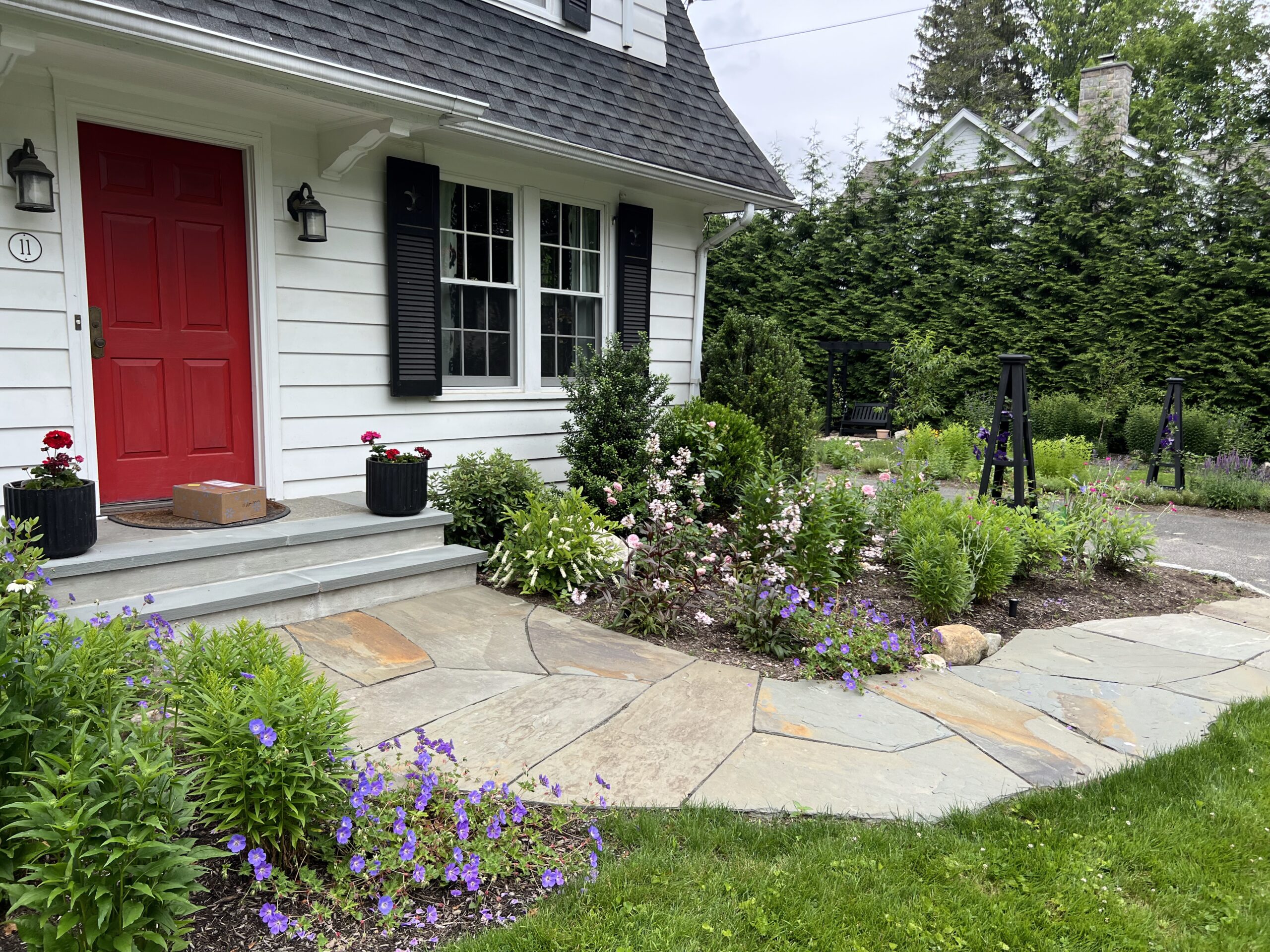
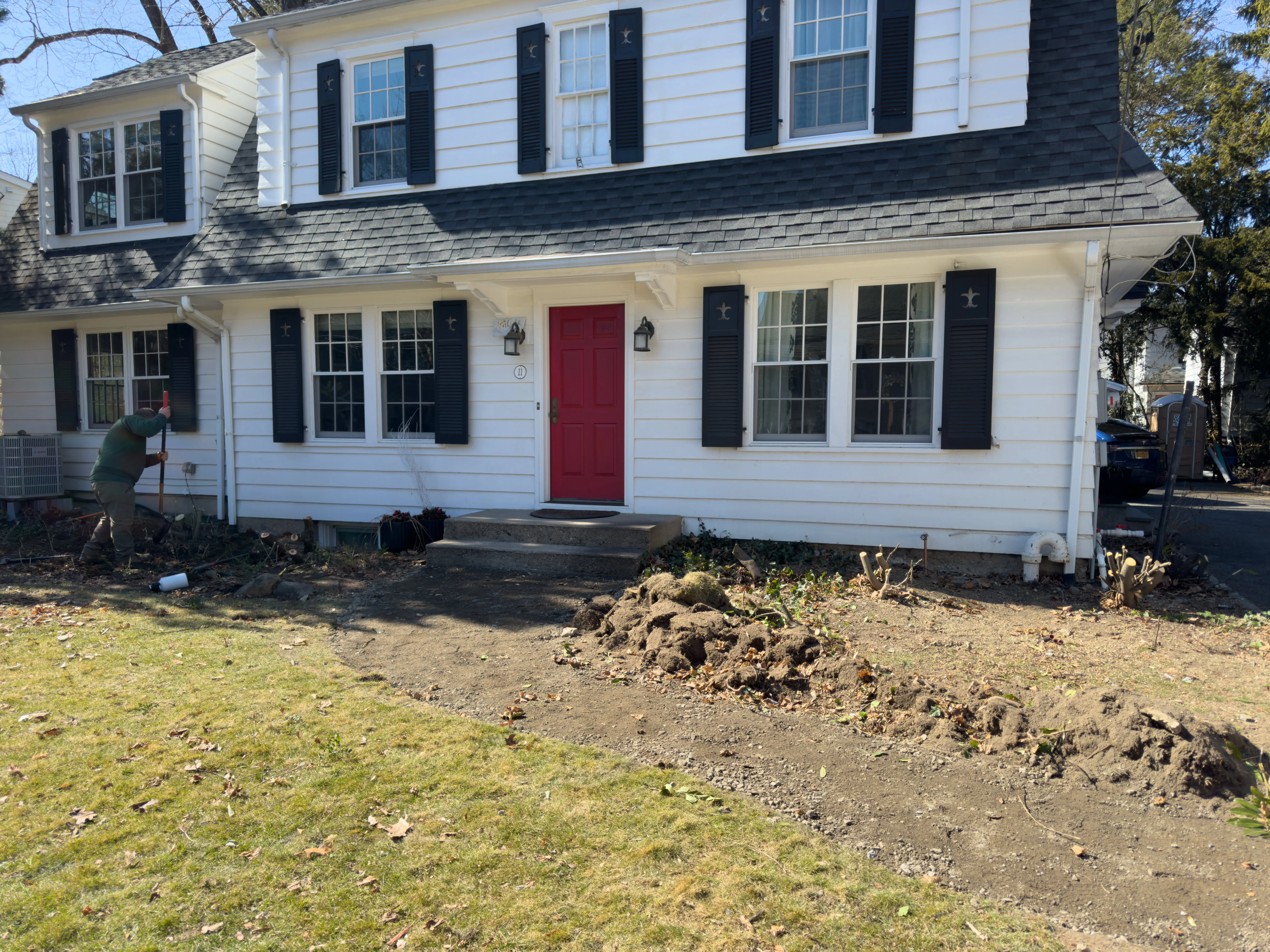
The existing front walk was crumbling, as were the tread stones on the steps up to the front door. We couldn’t upgrade the landscaping and leave the front walk as it was – it would completely distract form the garden. GJLD stoneworkers resurfaced the concrete steps with bluestone treads and constructed an irregular flagstone walkway. We prefer natural stone walkways to paver walkways, stepping stone paths or gravel path for the front walk, because walkways have the most formal aesthetic, and natural stone is the most durable and timeless material you can use. It is important to make sure that the footprint of the front walk is far enough out away from the house. If it is too close to the house, you feel as if you are in the shadow of the home and too close to appreciate the architecture in full. Bring the front walk out and extend the landscape for a more inviting approach to the front door.
Seating Areas, Surprises, and Garden Accessories
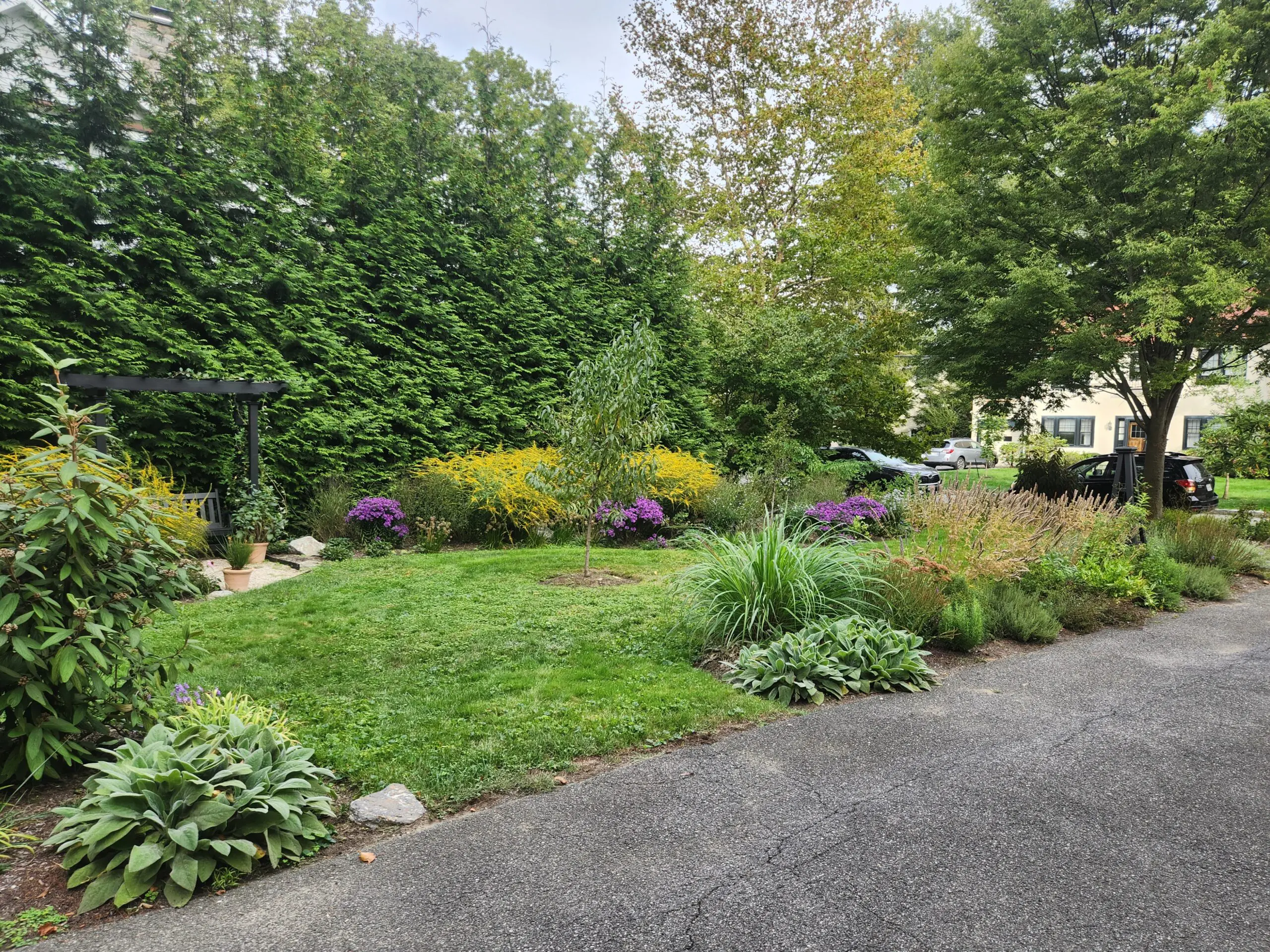
Reclaiming the front side yard involved not only linking the gardens thematically to those in the main front yard but also shaping the space to make it more inviting. The garden beds frame two entrances into the space, where you can stroll along the amorphous garden beds and take in their intricacies. Toward the end of one bed is a gravel seating area with an arbor and swinging bench. This feature was a client request, and it works perfectly sited here, enveloped in the garden and positioned to view the side yard, front yard and backyard landscapes. Front yards can often feel like display pieces, for looking at but not residing in, so we love an opportunity to reclaim a front yard into a functional space.
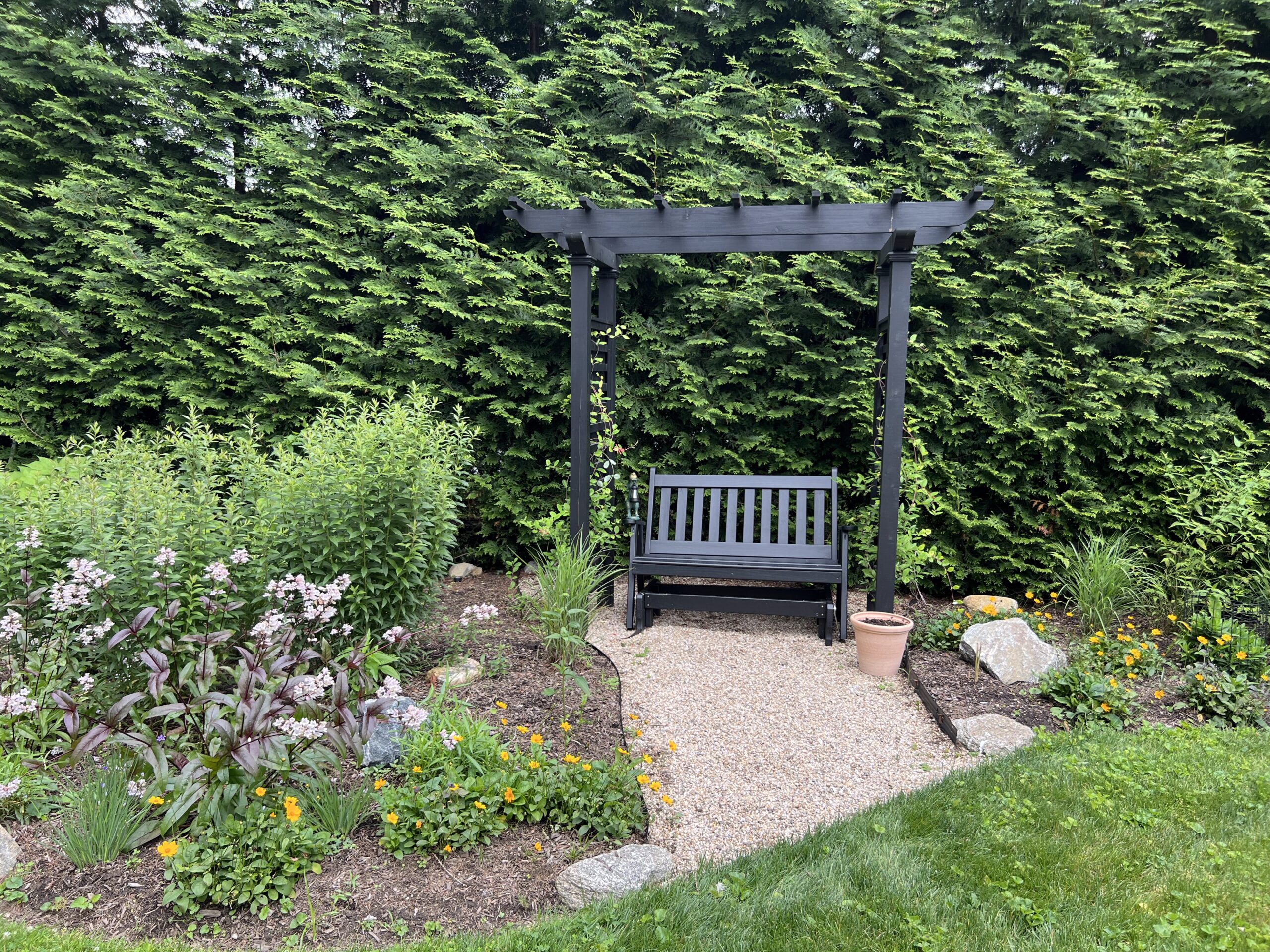
The arbor and bench are painted matte black to coordinate with the obelisks positioned throughout the garden for vining plants, as well as the couch cushions in the backyard, and the trellises for the climbing roses along the side foundation. Fortunately, these clients were a pleasure to work with and had a clear vision for the style of garden accessories they were drawn to. These functional and architectural elements help unify the design across all sides of the property.
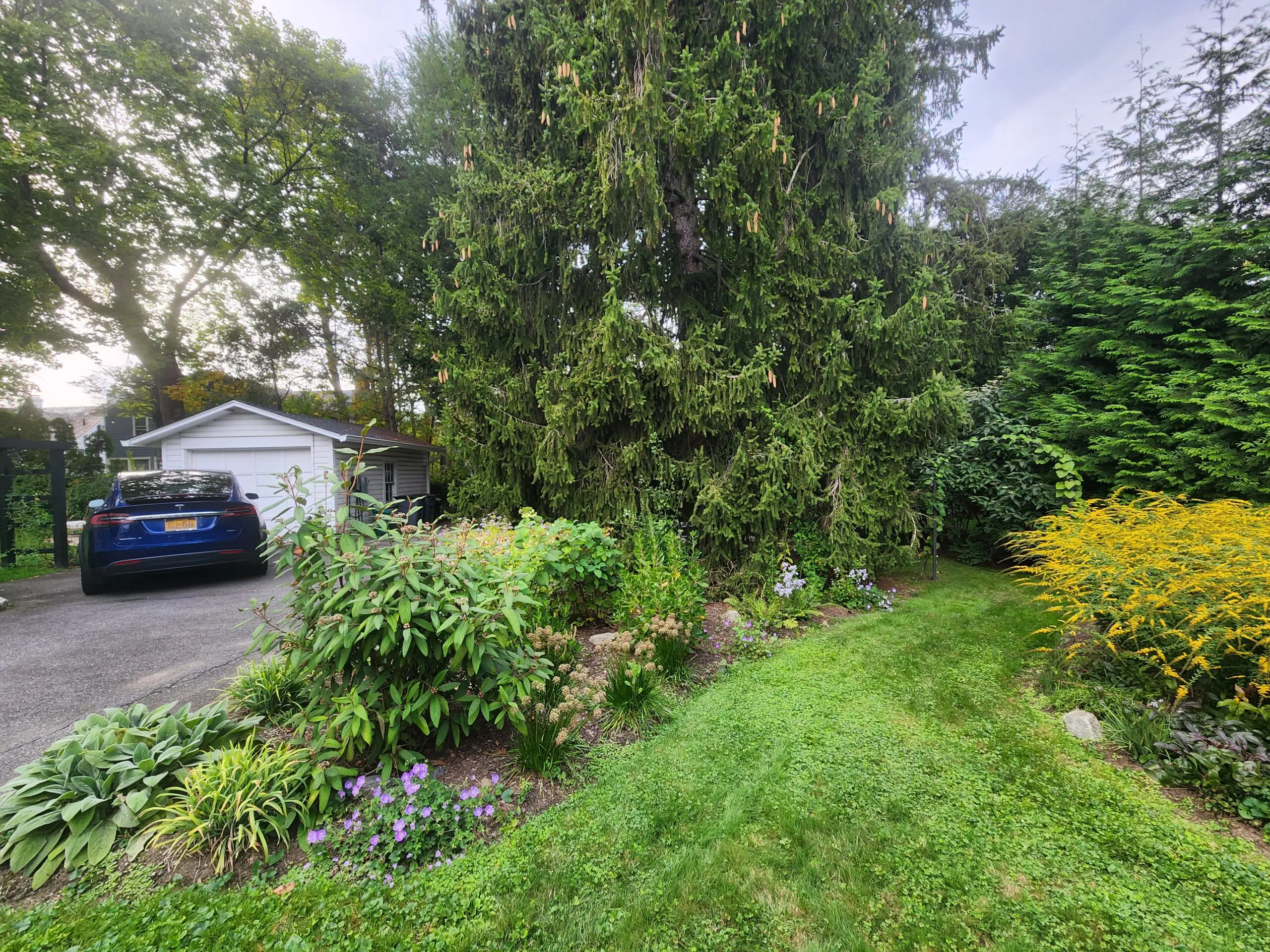
Behind the arbor, another pair of asymmetrical garden beds direct you behind a mature spruce to a secret shade garden. Transplanted azaleas and an understory of sedges and ferns makes this surprising hideout feel lush and inviting.
Backyard Drainage, Border Planting
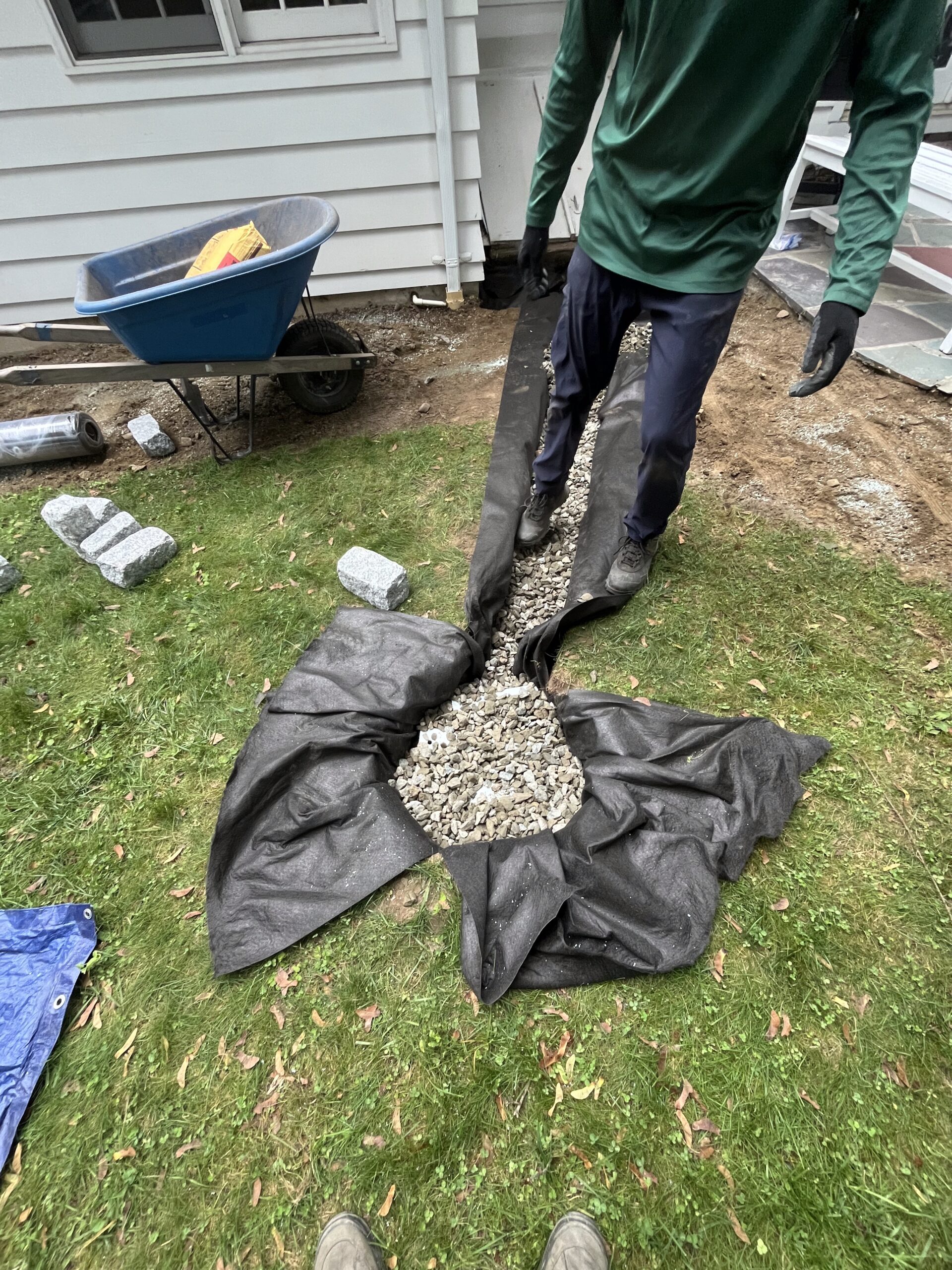
In the backyard, where an old pathway was, the ground was very compacted and as a result, pooled stormwater that sat uncomfortably close to the foundation. GJLD connected a pipe to the gutter leader to direct stormwater out into a dry well, to help manage stormwater in extreme events. We also expanded the foundation planting and regraded it to pitch away from the house. Lifting the lawn slightly allowed us to direct runoff away from the home. We eliminated a step off from the patio by grading the lawn up to the patio grade, which also helped it to shed stormwater.
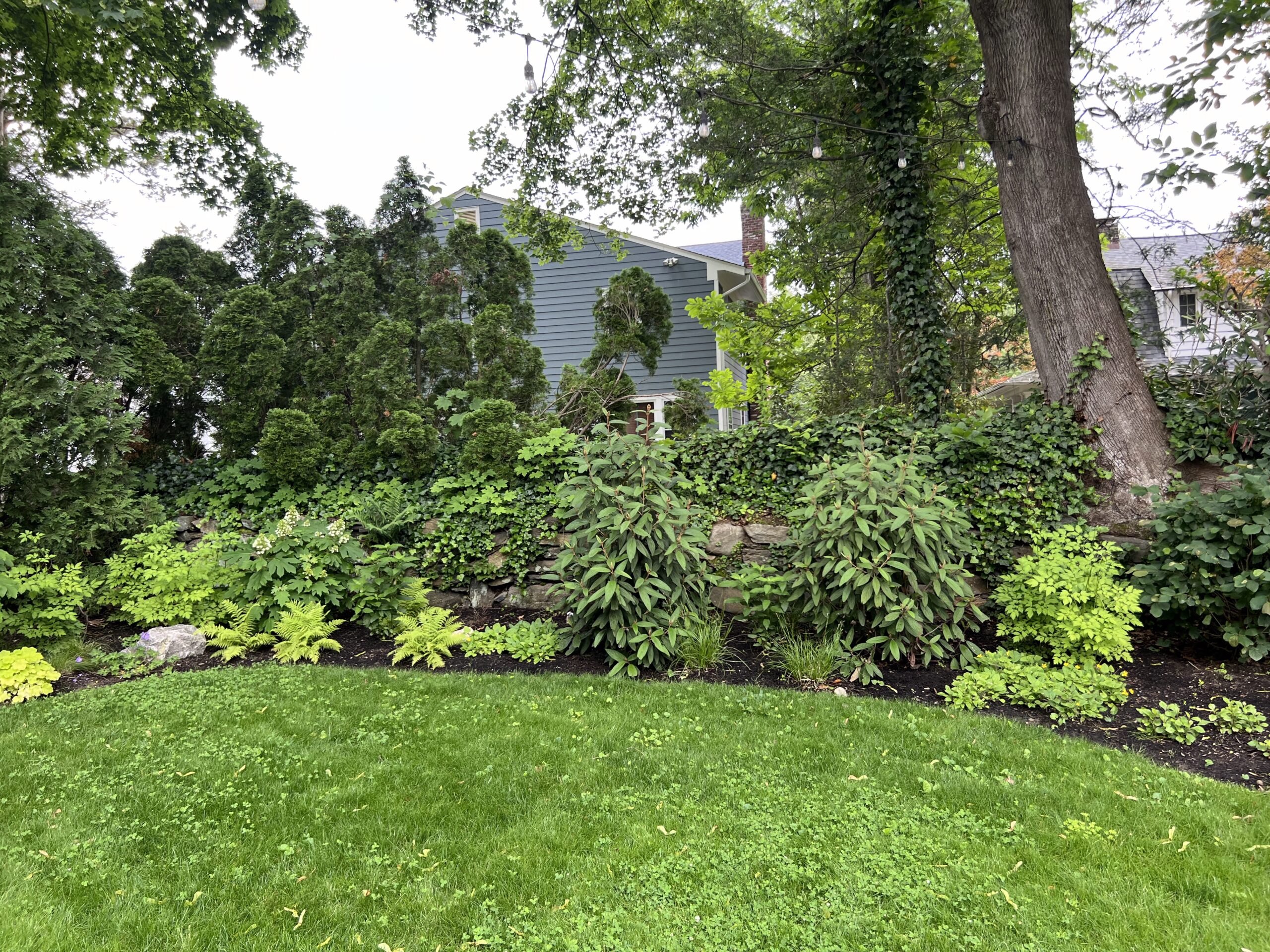
The new backyard landscape includes leatherleaf viburnum for screening, native oak leaf hydrangeas for summer color and sedges, asters and heuchera for herbaceous underplantings.
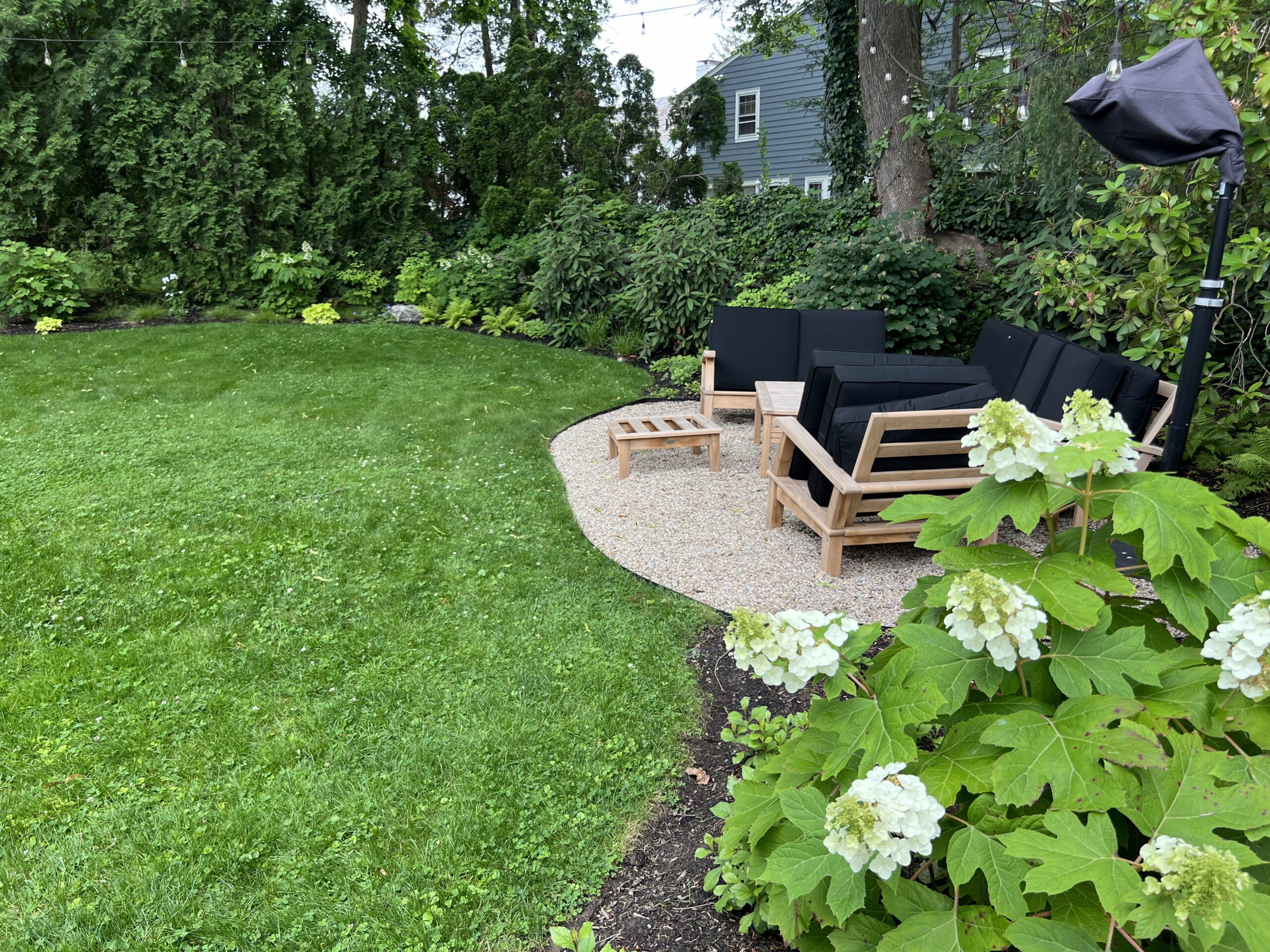
The existing patio off the house was too hot and in too much direct sun during peak summer. We constructed a secondary gravel patio, integrated into the landscape beds, which offers a shadier respite. Aluminum edging helps keep the gravel tidy instead of migrating into the turf or mulch.
Feeling inspired? Contact us to start your landscape design and installation project!