
Frequently Asked Questions - FAQs
Ecological Landscape Design
Ecological design is a framework for design that seeks to improve the health of our environment and maximize ecosystem services. Ecological design works toward sustainable longevity of landscapes, by selecting beneficial species in both plant and animal life to increase biological diversity and ensure resilient landscapes that are adaptable to changing conditions.
Simply put: "the benefits people derive from ecosystems." The definition arose from the United Nation's Millennium Ecosystem Association's need to evaluate the effects of ecosystem change on human society and to better quantify the value of ecosystems in human terms, in order to curb environmental degradation. Ecosystem services can be divided into four major categories. (Derived from The Economics of Ecosystems & Biodiversity.)
Regulating Services
- Air Purification and Temperature Regulation – This is provided by trees and vegetation – particularly valuable in urban environments to mitigate Urban Heat Island Effect.
- Carbon Sequestration and Storage – Carbon is sequestered and stored by vegetation, particularly trees and prairie grasses – extremely important in our fight against climate change.
- Water Filtration – Wetlands are our natural water treatment systems, protecting water quality and absorbing water during storm events.
- Erosion Control – Plants with established root systems help stabilize soil, preventing erosion. This is extremely important as it can take hundreds of years to create just one inch of top soil!
- Pollination – This is essential for food production and maintaining both plant and animal biodiversity.
- Biological Control – A healthy ecosystem can regulate pests and diseases with adequate populations of predators and parasites.
Provisioning Services
These include material outputs from the environment, such as:
- Food
- Water
- Raw materials (lumber, biofuels, oils, fibers)
- Medicinal plants
Habitat Services
- Adequate food, water, and shelter to support a diversity of species. The more biodiverse an ecosystem, the more resilient, healthy and valuable it is.
Cultural Services
- Space to recreate
- Nature tourism
- Artistic inspiration
- Spiritual experiences
- Create habitat to support a diversity of insects, pollinators, and animals. Support threatened species and create a healthier ecosystem through biodiversity. The National Wildlife Federation certifies habitat gardens based on their provision of food, water, shelter, places to raise young, and sustainable land practices.
- Treat and reuse water on-site. Reduce impermeable surfaces and implement water treatment / recycling systems such as rain gardens, rain water harvesting, and passive irrigation.
- Implement layered planting with a mix of trees, shrubs, perennials, and ground cover to regulate climate and temperature, sequester carbon dioxide, and filter air pollutants. Reduce your lawn area to accommodate more garden beds and reduce maintenance emissions.
- Grow your own food – reduce the energy and emissions associated with food production by growing your own locally!
We have extensive documented experience in landscape design and construction throughout the tri-state area. Jay Archer has over thirty years’ experience designing and constructing ecological landscapes, honing his expertise in holistic stormwater management, steep slopes, wetland restoration, and native plant habitat gardens.
All plants secrete carbon dioxide from the atmosphere through photosynthesis, but soil microbes are the key player in converting that CO2 to organic matter and storing it in the soil. Thus, fostering a healthy soil microbial community is essential in creating 'carbon sinks' on your property. Soil microbes evolved alongside our native plants; some microbes are specialists and are only hosted on the roots of specific local plants. Other microbes are generalists and can forge a relationship with a variety of plants. Landscape chemicals like synthetic fertilizers and pesticides are known to kill soil microorganisms and are therefore never used in Green Jay Landscape Design land management. Instead, we amend the soil with organic compost and biochar to inject microbes into the soil, boost plants' immune systems, and improve the soil's water-holding capacity, thereby reducing overall resource use. Among the many native plant choices, trees secrete by far the most carbon dioxide (given their size), and prairie grasses are the second-best option due to their deep root systems. To summarize, to make your landscape carbon-positive, choose native plants that are suited to your site conditions and maintain your property organically.
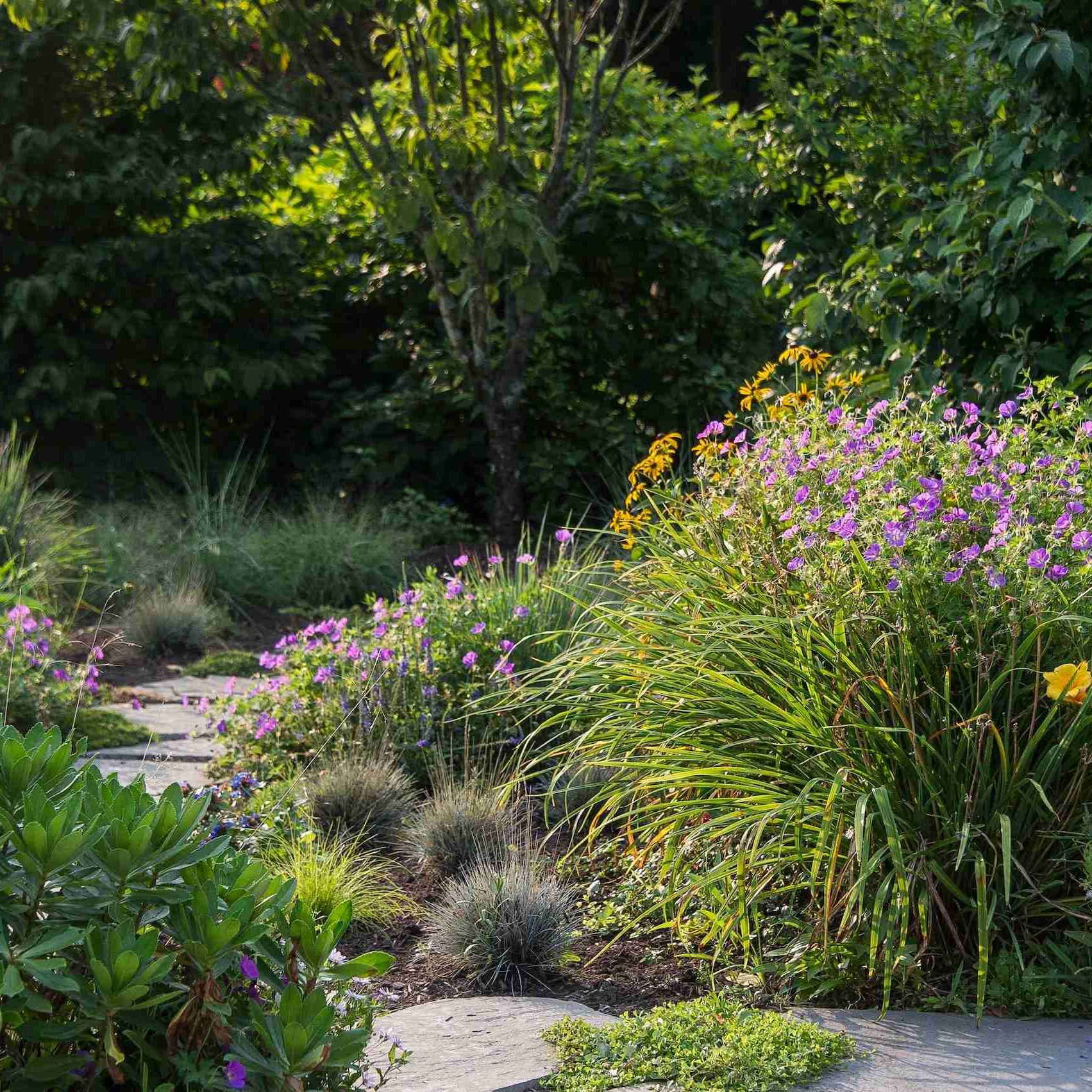
Landscape Design Master Plans (LDMP)
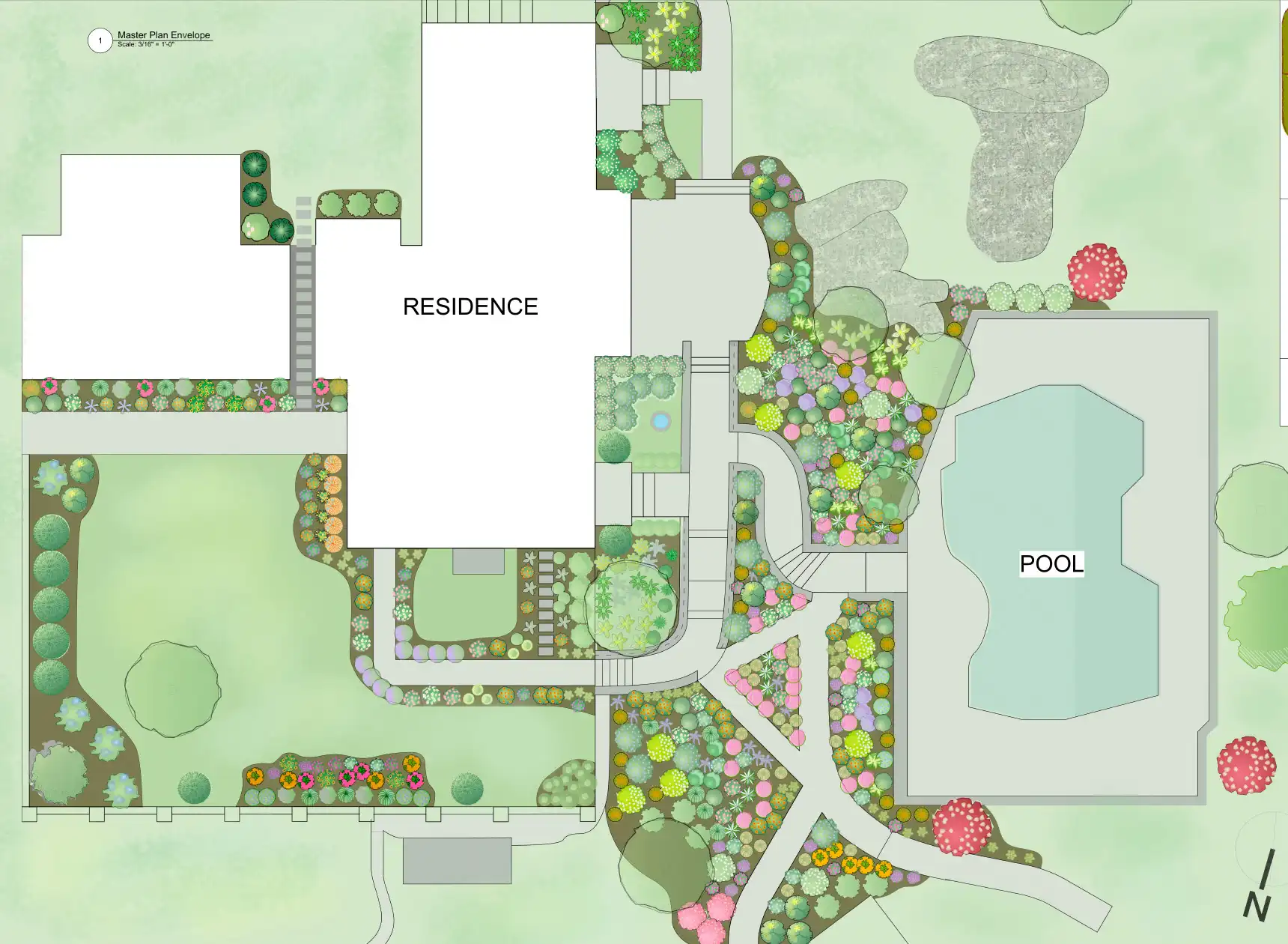
Landscape Design Master Plans are full color, labelled planting plans for the entire property. They include layouts for stonework, stormwater management, and grading. LDMPs come with a Proposal with scope of work, plant lists, and pricing, as well as a Plant Palette to visualize the gardens, Hardscape reference photos, a Plant Matrix indicating bloom time and color, and a Beneficials poster detailing what wildlife and insects your new landscape will attract. For examples of design plans, see our blog.
If you are interested in working with us, please fill out the form on our Contact Page. A member of our team will contact you for your free 15-minute Discovery Call to understand your landscape goals and assess if our company is a good fit. If we align, we’ll schedule a professional consultation at your property ($300). The purpose of the consultation is to assess existing conditions of the property, determine the scope of work for the design, and understand client priorities, timelines, budget, and capacity for landscape management. GJLD will then send an Ecological Landscape Design Agreement (ELDA), our contract for designing your landscape. We complete additional site visits during the design phase to gather measurements, site data and photos. Once the design is complete, we present to you in person or virtually.
Design time typically ranges from 6-8 weeks from receipt of signed design contract and payment. The timeline depends on our design queue, but we always offer a current design time estimate when sending an Ecological Landscape Design Agreement (ELDA). If the design involves coordination with architects, engineers, permitting, or other contractors, that may complicate and lengthen the time for completing the design.
Yes, if the partial zone is large or complex enough to meet our $25,000 project minimum. We generally discourage a piecemeal design approach, but we are open to phasing design and project work to meet our clients’ needs.
One set of revisions is included in the design fee.
Installation
Requirements vary by town but often projects that require building permits may need additional plans completed by a licensed landscape architect or engineer. This often includes stormwater management plans, especially if the floor-area-ratio is exceeded, or if the development is on a steep slope or near a wetland. Permanent structures (which include decks, pergolas, and fences) require permits and architectural services. Retaining walls taller than four feet require permits and engineering. GJLD can connect our clients with our Preferred Partner network of architects, landscape architects and engineers.
We are happy to assist with permitting on a Time & Material basis. Permitting is not included in our Ecological Landscape Design and Build Agreements. Additional professionally stamped plans from architects, landscape architects or engineers may be required.
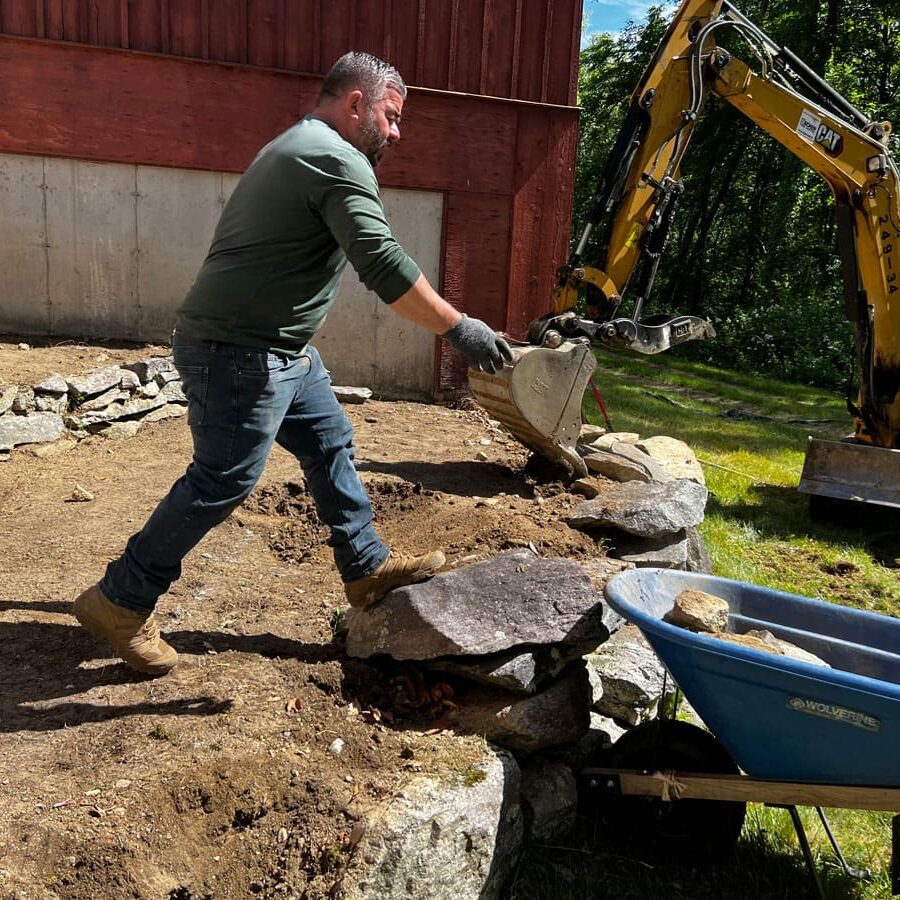
Green Jay Landscape Design installs all aspects of the new landscape, including: site development (clearing, grading, amending soil), natural stonework (patios, walkways, paths, steps, boulders), planting and lawn installations. We have a Preferred Partner network of companies for irrigation, lighting, fencing, carpentry, and architectural services that prioritize GJLD clients.
Site development is the process for preparing the landscape for the new design. Site development often includes clearing vegetation or trees, grading topsoil to create more level surfaces or adequate planting depth, and constructing stonework such as patios, walkways and steps. Site development can be completed year-round and is most efficiently done in fall and winter, preparing the landscape for a spring installation and months of enjoyment through the summer and fall.
We exclusively use natural stone for our hardscaping work. Natural stone looks timeless and, when installed correctly, holds up better than any concrete paver. Natural stone can be repurposed, if necessary, while concrete products just end up in the landfill. We construct our stonework with a compacted crushed stone and stone dust base, not cement. Avoiding cement allows us to reduce exposure to the carcinogenic element silica.
We recommend and coordinate with premium service providers for irrigation, lighting, fencing, tree work and carpentry, who contract directly with the client (no subcontracting).
We do our best to anticipate everything needed to complete an installation, from access to material staging to material sourcing. Yet, there are often surprises under the soil or in the weather forecast. If our plans need to change, we communicate the change, including price, with the client before initiating any new work. Change of Work Order contracts are our standard operating procedure.
Installation time depends completely on the project size and complexity. We include estimated start and end dates in the Proposal and continue to update the client on the timeline as the install progresses. Most projects are installed in 1-4 weeks.
Yes! Many of our clients chose to complete their landscape installation in phases and we are happy to accommodate your timing and budget.
8 AM – 3 PM, Monday – Friday.
Yes, we are licensed and in good standing in three states, New York, Connecticut and New Jersey. We are insured.
Pricing
Our Ecological Landscape Design Agreements range from $4,000-$8,000. In some cases, a design might require a Retainer Agreement, upon which hours are tracked at a $125/hour rate, and billed as so once the initial Retainer amount is exceeded.
Our installations range from $25,000 - $200,000+. For more information on what certain features might cost, visit our pricing page.
Yes, our minimum project cost is $25,000. In some exceptions, we may accept smaller projects and bill on Time and Material. Our fee schedule is available upon request.
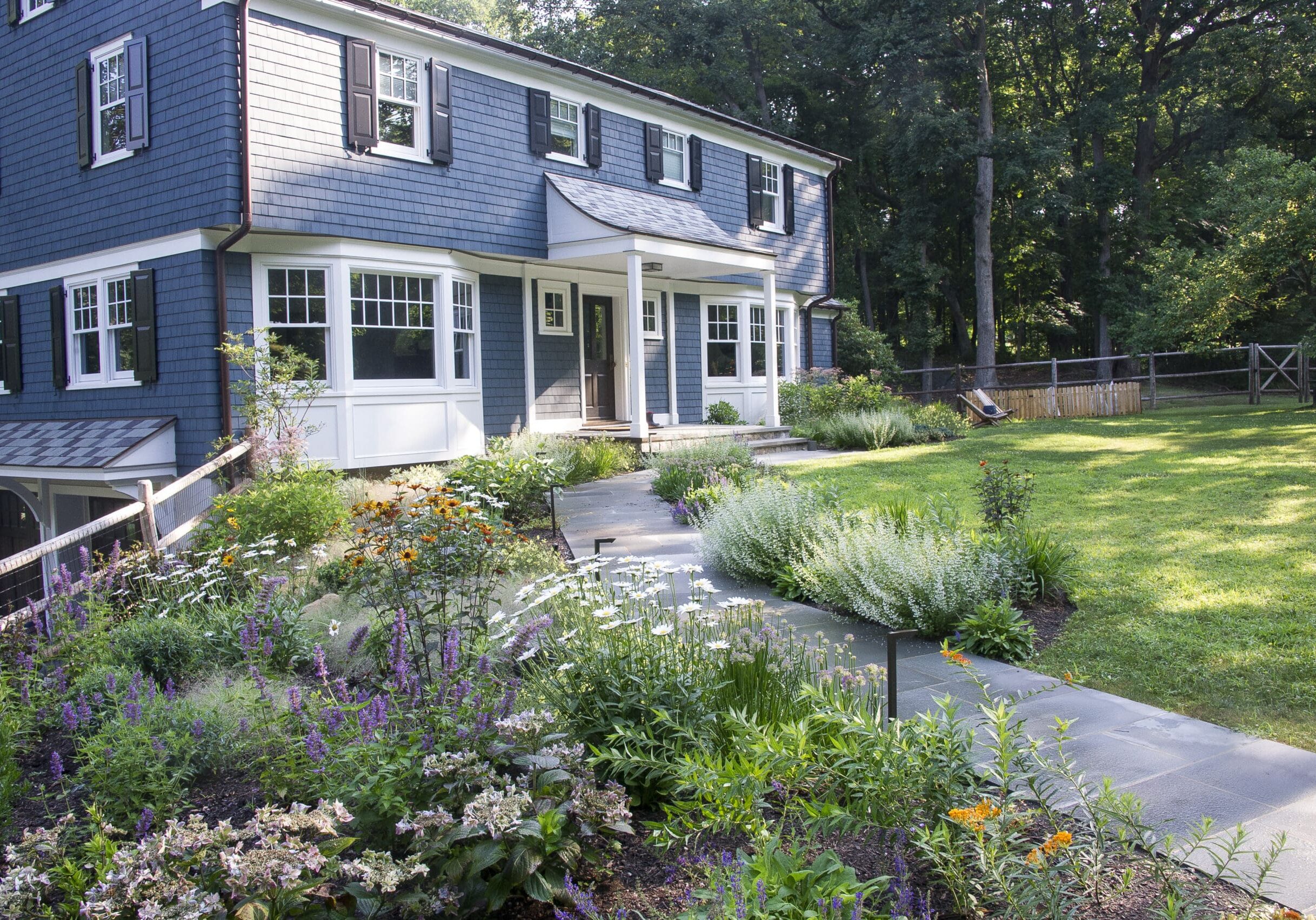
Maintenance
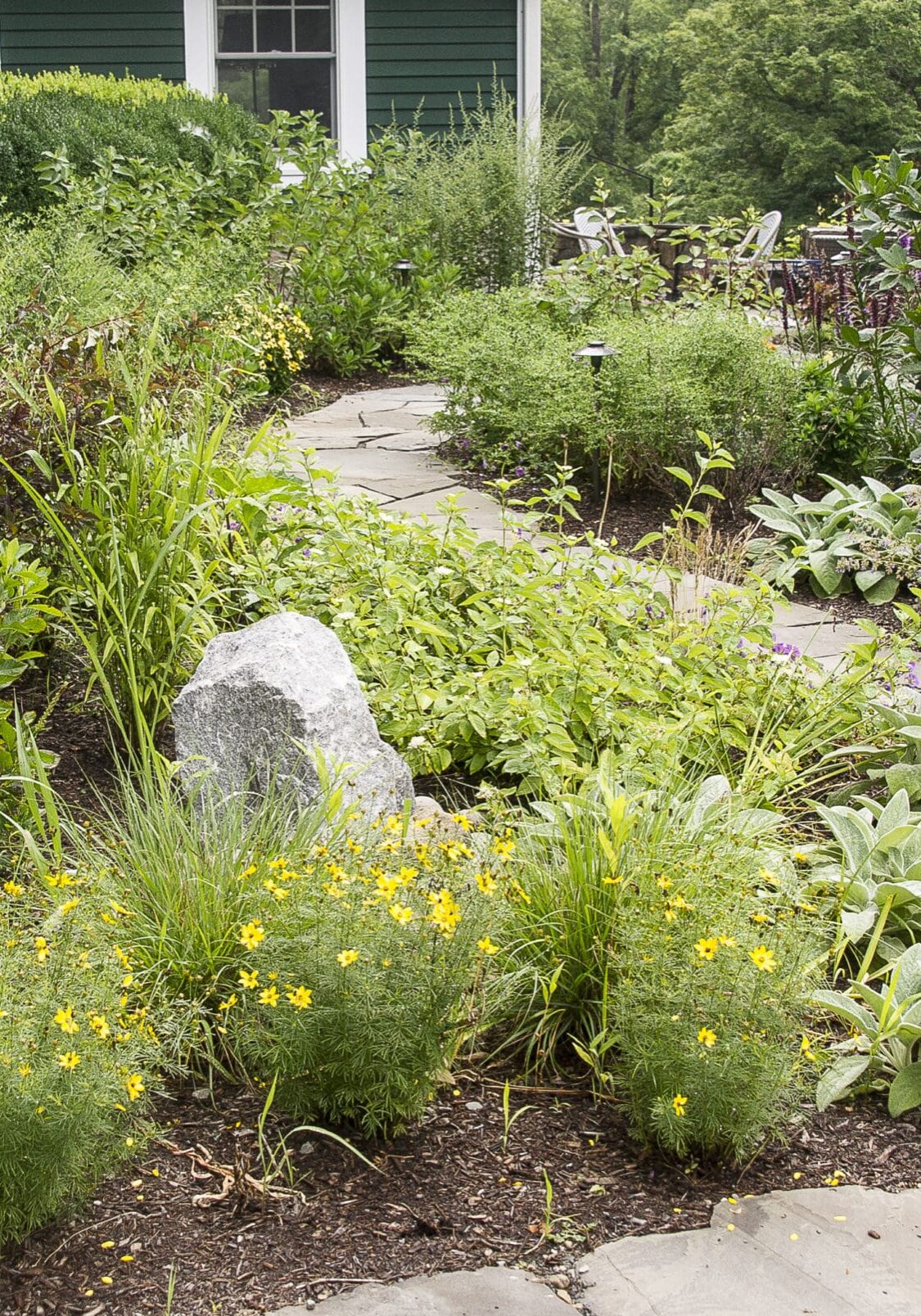
All landscapes require some kind of maintenance; ecological landscapes require a different kind of maintenance. The goal is to reduce the amount of maintenance required and at the same time conserve resources, including water, labor, and financial resources. We provide limited maintenance but guidance, counseling and consulting, in addition to working with qualified service providers.
We offer a one-year plant guarantee on woody plants, as outlined in our contracts.
Residential Sustainable Stewardship is our holistic land management program for properties of 5 acres or more. Services may include: woodlot management, species assessment, understory regeneration, invasive species control, and wetland restoration. Learn more here.
GJLD no longer offers grounds maintenance services. We have a network of recommended partners for maintenance in our service area. For properties of five acres or more, we offer Residential Sustainable Stewardship.
Use the winter months to reflect on how your landscape functioned over the fall, summer and spring. Did it meet your entertaining needs, survive an extreme storm event, bring you joy and excitement? If not, winter is the best time to start the landscape design process! We offer professional consultations year round. Once the design goals are established with the client, we prepare a Landscape Design Proposal with the design concept, scope of work, plant list, installation phases and price. Depending on the scale and nature of the project, we often recommend an AutoCAD drawings (typically a Landscape Design Master Plan of the entire property). We always supply images of the plants and design elements to help communicate our vision for the property. Contact us to schedule a consultation.
An ecological fall landscape clean up looks different than traditional garden maintenance.
- Leave perennials standing, especially hollow-stemmed perennials, as they provide overwintering habitat for insect galls.
- Rake leaves into a pile, shred them with a mulch mower, and apply a light layer of leaf mulch to your garden beds. Many northeast properties produce too many leaves to use entirely in your garden beds - they won't break down in time and can inhibit next spring's growth. Make a pile with the rest of the leaves somewhere out of sight on your property where they can compost over time.
- Apply an anti-dessicant to evergreen trees and shrubs to prevent winter burn and deter deer over the winter.
- Have your irrigation company flush the irrigation system before the first frost
Pollinators & Biodiversity
Towns in New York and Connecticut along and between the Hudson and Housatonic Rivers are working together in engaging homeowners to establish pollinator-friendly habitat and food sources for bees, butterflies, hummingbirds, and other pollinating insects and wildlife, thus creating continuous pollinator-friendly and wildlife corridors. The Pollinator Pathway initiative is significant because of its scale and ability to link larger habitats together, for example inland forests with coastal areas, thereby reducing habitat fragmentation and revitalizing threatened species.
For over a decade, bees have been on the decline. Charismatic indicator species like Monarch butterflies have also faced extreme fluctuations, with populations dropping 44% in 2013. Stressors that pollinators face that negatively impact their populations include: pesticide use; loss of habitat due to land fragmentation; climate change, which is disrupting synchronization between flower bloom time and pollinator emergence; air pollution; and light pollution. According to NRCS, three-fourths of the world's flowering plants and about 35% of the world's food crops depend on animal pollinators to reproduce. Some scientists estimate that one out of every three bites of food we eat exists because of animal pollinators like bees, butterflies and moths, birds and bats, and beetles and other insects.
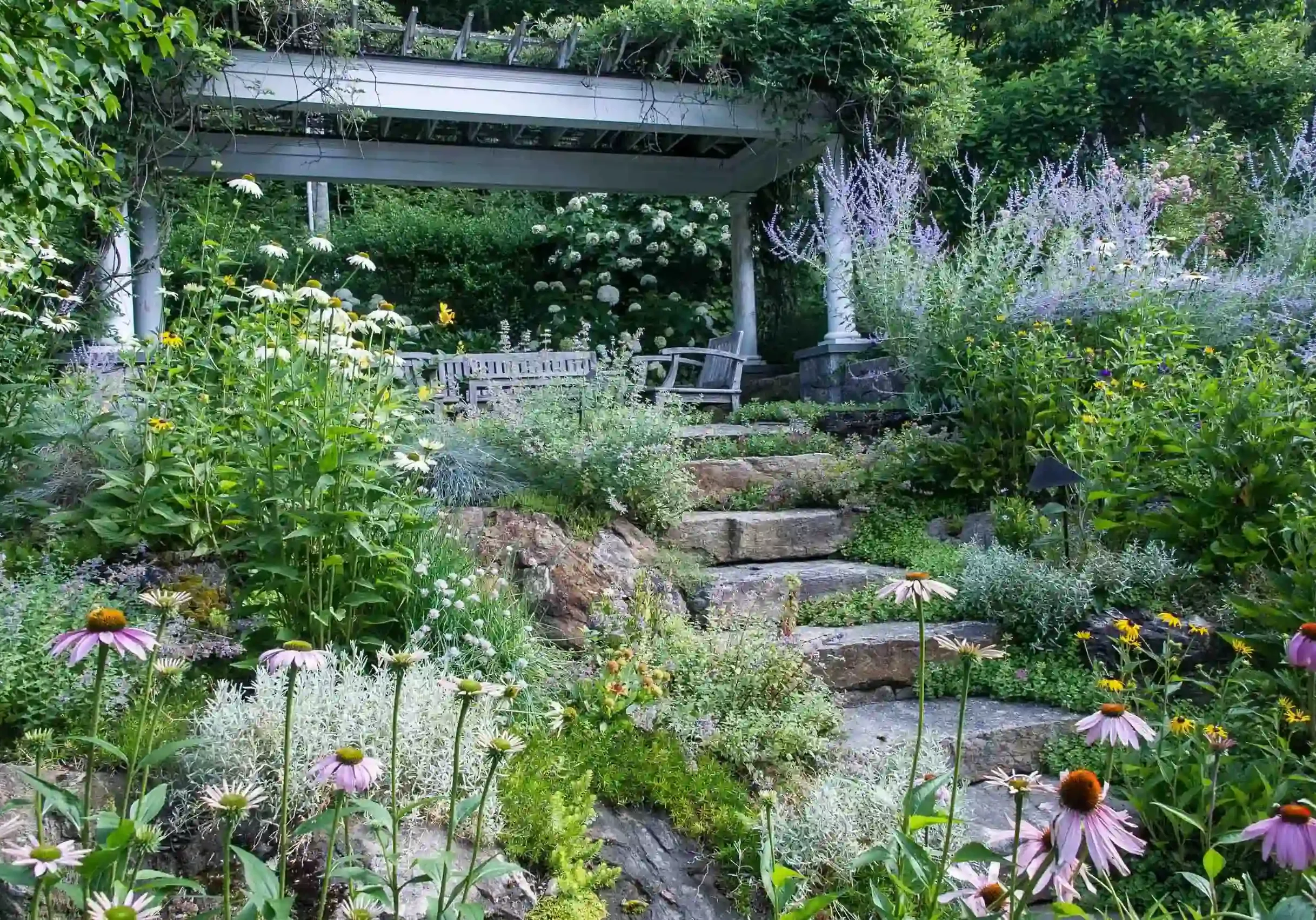
Organics
- No synthetic chemicals (pesticides, fertilizers, insecticides, fungicides).
- No cedar oil, neem oil, or horticultural oils – they are indiscriminate in their impact on all insects, pest and beneficial alike.
- No mosquito control or tick control applications – these are ineffective towards their target and end up harming beneficial insects.
- Only Natural-Source Earth Products.
We are NOFA Accredited Organic Land Care Professionals. We also follow standards promoted by the Ecological Landscape Alliance, Bedford 2030 Healthy Yard Program, NWF Certified Wildlife Habitat, the Rye Healthy Yard Program, and the H2H Pollinator Pathway project.
Absolutely. With proper planting and an organic maintenance program, our organic properties are just as lush, colorful, and thriving as traditional properties. The only difference you will notice is the plethora of pollinators and birds that can safely visit your organic property.
Start with the soil. We take a soil chemistry test of the garden beds and lawn for all of our properties and then determine what organic soil amendments and applications may be necessary. Cultivating a soil microbial community will greatly improve the health of your landscape. Plant a diversity of plants that attract beneficial insects, such as parasitic wasps and syrphid flies. These insect populations naturally respond to plant pest problems like aphids, gypsy moths, and spider mites, eliminating the need to use pernicious chemicals.
There are many factors, but a few signs that you have a rich, nutrient-dense soil include:
- Soil color is darker and crumbles easily off plant roots.
- Soil organisms are present as they aerate soil.
- Good water infiltration where water drains within five seconds of pouring water in an area.
- Soil structure shape is retained when pressure applied.
- No compaction is present. Compacted soils reduce circulation of water and nutrients and beneficial organisms to move around roots.
- Root development is healthy.
- Plant leaves are rich in color and growing.
Yes. All of the products and applications we use are derived from natural-source earth materials. They are harmless to pets, children, elders, and any landscape visitor. Unlike traditional chemical programs, our organic products do not persist in the environment, and they have no risk of being tracked indoors (where they cannot break down because of the lack of UV radiation and are more likely to be trapped in carpets and furniture).
Native Plants & Invasives
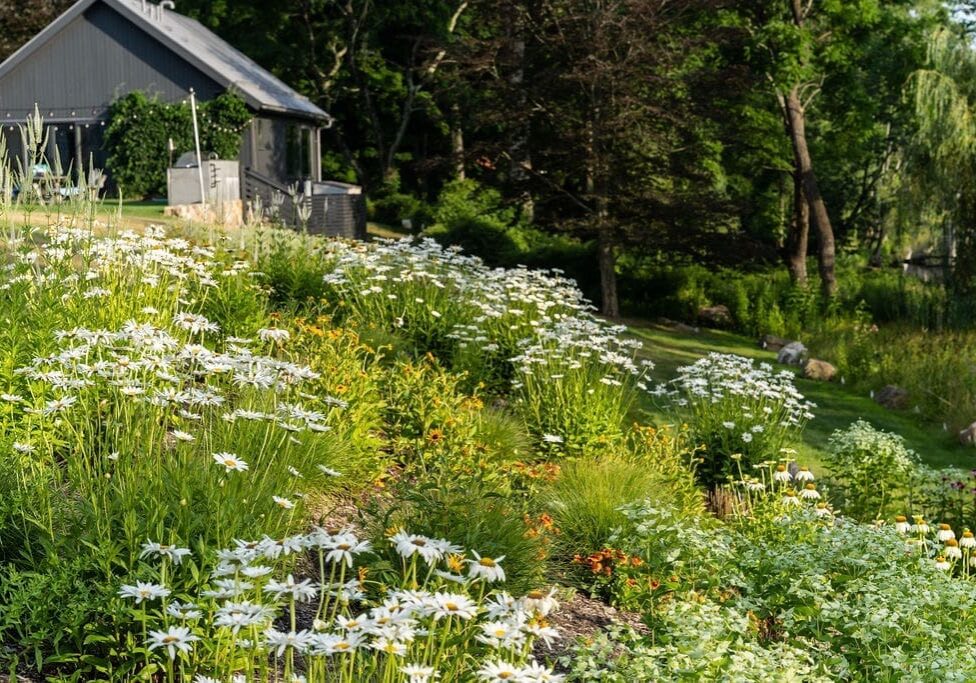
Native plants have co-evolved with wildlife in our local environments for thousands of years. They are well-adapted to live in our local site conditions and provide immense habitat for insects and wildlife. Native plants create rich biodiversity that make our ecosystems more resilient to stress and change.
That depends on the plant and the site! We have several strategies including cutting at the base, removing from the root, spot treating with organic herbicides and burning.
Yes! As plant people, we know the sentimental value plants can hold! Please communicate any heritage plants you would like to keep, and if they are non-invasive, we can incorporate them into your new landscape.
Stormwater, Slopes & Erosion
Stormwater management improves water quality by reducing runoff of rainwater from roofs, patios, driveways, and roads into waterways like streams, lakes, and oceans. Instead, stormwater is filtered and absorbed into the soil, replenishing aquifers and avoiding contamination of fresh water bodies. Stormwater management is a blanket term that includes many strategies including: rain gardens, bioswales, reducing impermeable space, passive irrigation, rain water harvesting, permeable hardscapes, and more. For more information, visit our Stormwater Management page.
A rain garden is designed to temporarily hold rainwater runoff from impermeable surfaces such as roads, driveways, roofs, or lawns during and after a rainfall. These gardens consist of a mixture of native plants in a natural downward slope or depression and drain within one to three days of the rainfall. They are much more effective in filtering water into the soil and removing pollutants and chemicals in the runoff than a conventional lawn. The US EPA estimates that pollutants carried by rainwater runoff account for 70% of all water pollution.
There are many tools for landscaping steep slopes. Depending on the severity of the slope, we may use boulders and compostable socks to construct terraces. Terraces create room for planting, and form undulations in the slope that slow the flow of runoff, reducing erosion in the process. We might also rebuild a slope with mineral soil to hold the structure and integrity of the slope. At planting time, we often plant directly into jute netting, which acts as a soil stabilizer while the plant roots become established and secure the slope further.
Excess water may often appear in areas that are not draining properly. Inspect your property and check for:
- standing water or pooling after rainfall
- pooling water from downspouts
- soggy ground
- soil scouring or erosion
- water in basement
- sump pumps running often or always
There can be various causes for drainage issues. For solutions, see our Stormwater Management page.

Low-Impact Development, General Contracting, Residential Sustainable Stewardship, and More
We specialize in regenerative landscape design and full-service installation. Through our trusted network, we work with multiple designers, engineers, and specialty contractors that we can refer you to, helping complete complex projects with clear coordination and communication. Take a closer look at what we can do for you:
Landscape Design
Our ecological landscape design and eco consulting services result in exceptional outdoor spaces that meet your vision for your landscape while supporting the natural world. Visit our Landscape Design page for more information.
Native Gardens
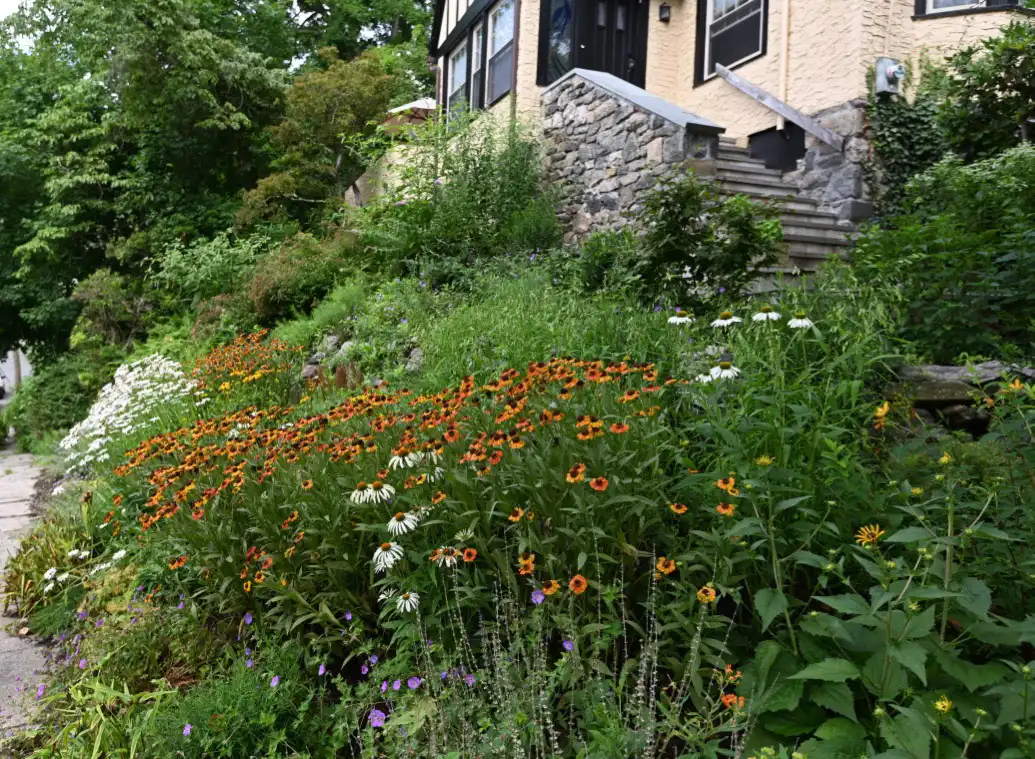
We prioritize using native plants in all of our garden designs. Whether you’re looking for a pollinator garden, a wildflower meadow, a permaculture landscape, or new foundation plantings, our seasoned designers can craft your naturalistic landscape.
Landscape Installation & Site Development
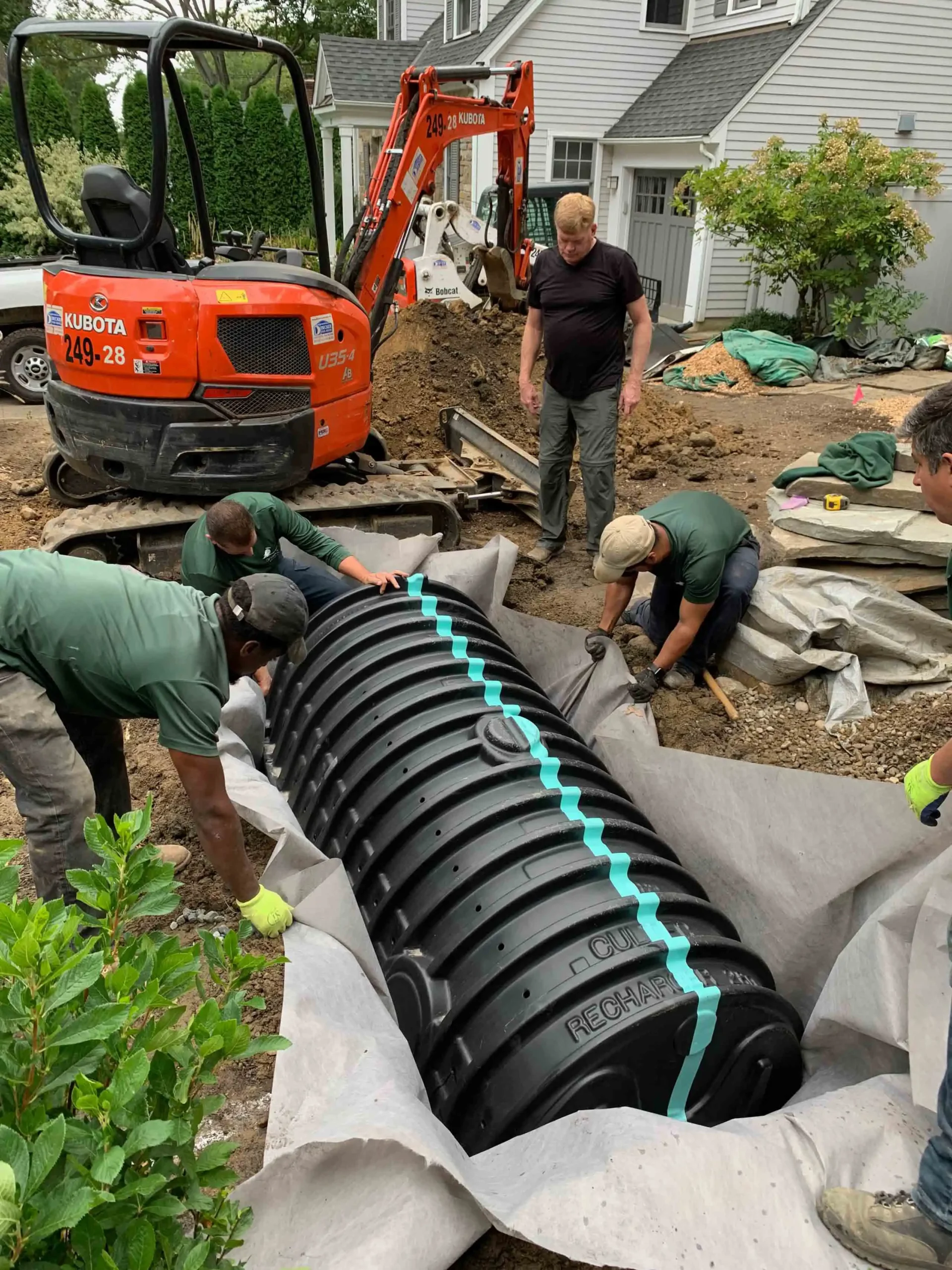
We build what we design. From initial site development to crafting custom landscape features, we focus on quiet installations following the Sustainable SITES Initiative.
Artistic Stonework & Hardscape
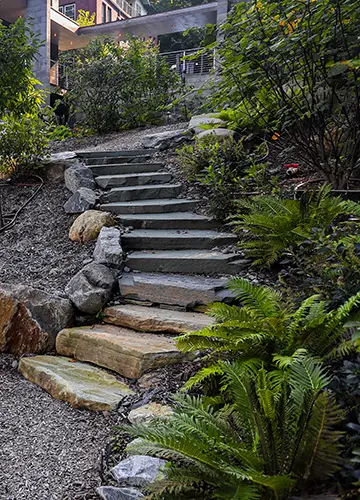
We can install a variety of hardscaping ranging from natural stone walkways, paths and steps to patios and boulder retaining features.
Stormwater Management
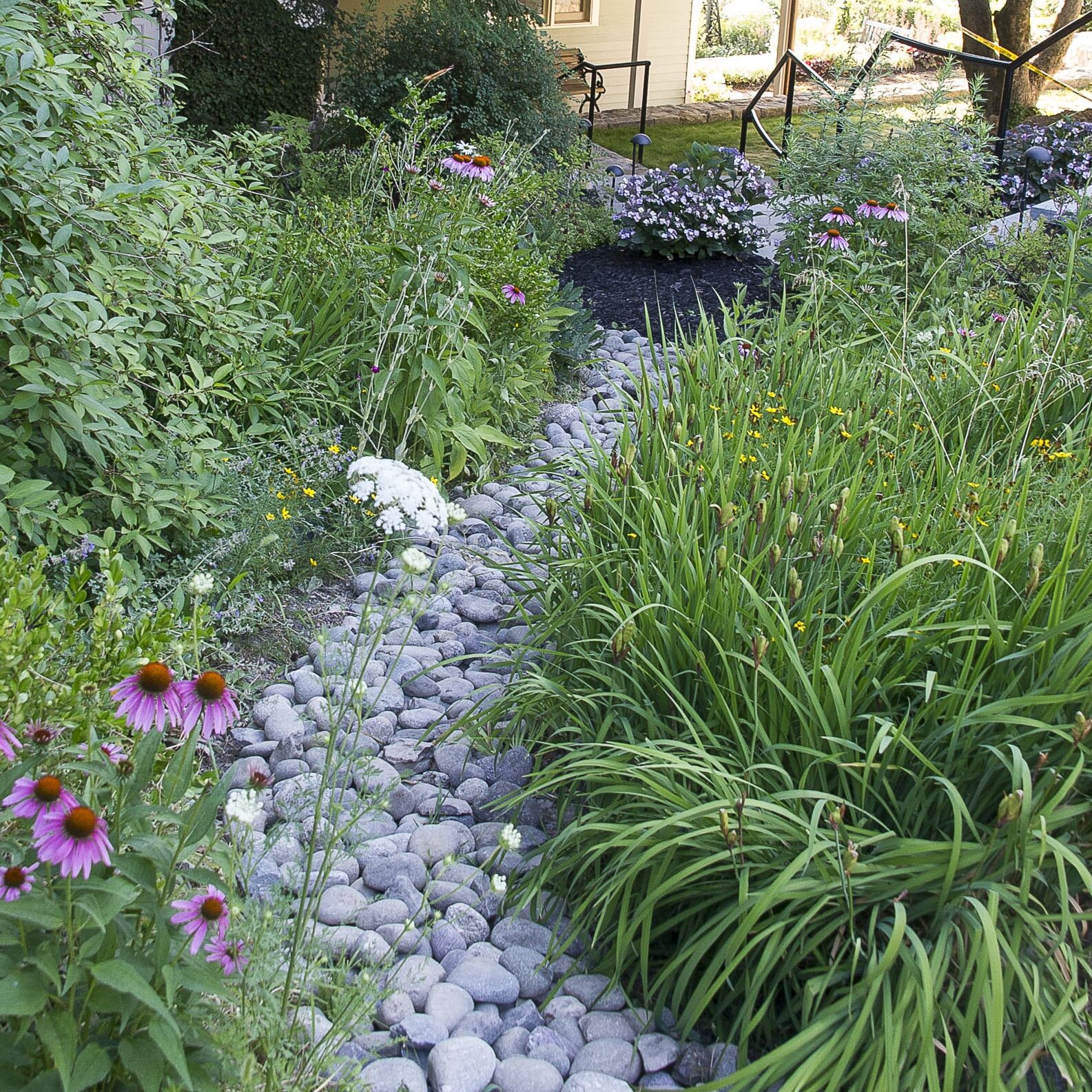
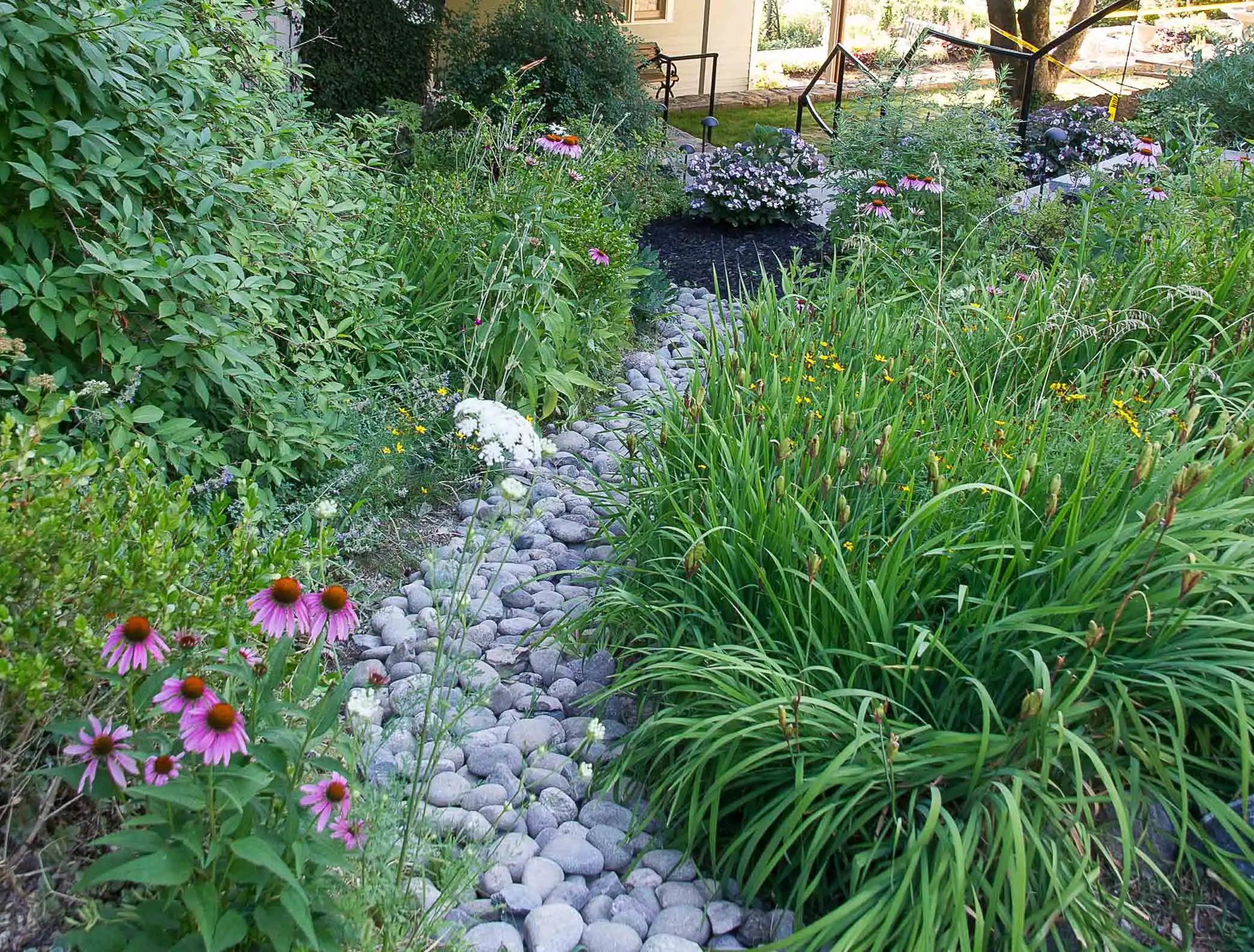
Erosion control is essential for the protection of your soil, plants, buildings, and hardscaping. Our stormwater management solutions include bioswales, rain gardens, dry streams, and more, customized to the needs of your property.
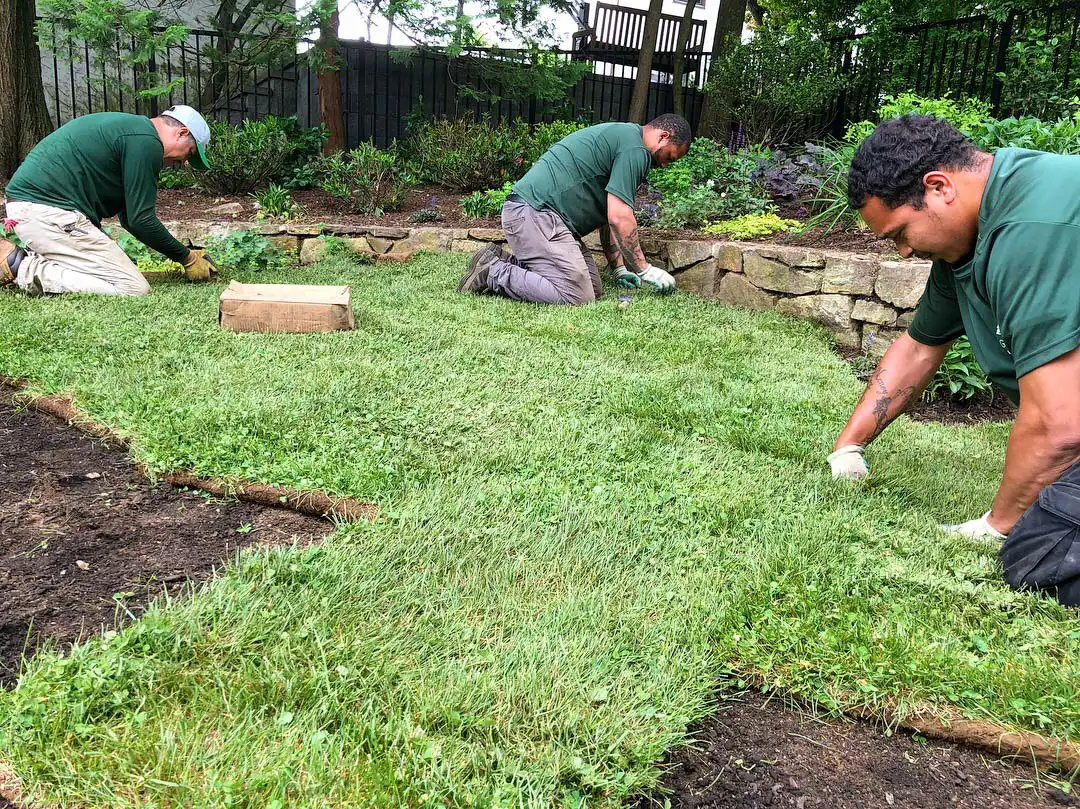
Organic Sod and Turf
From soil remediation to compost and sod installation, we can reinvigorate a tired yard and create a healthy natural space for you and your family to enjoy.
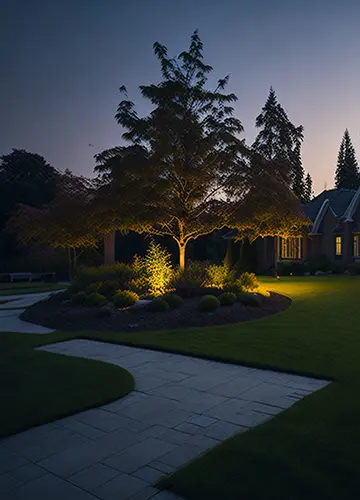
Irrigation, Lighting & Sound
We can refer you to quality irrigation system providers for design and installation based on planting zones to maximize water conservation and efficiency. Service providers can add custom lighting and sound to further enhance your outdoor living space.
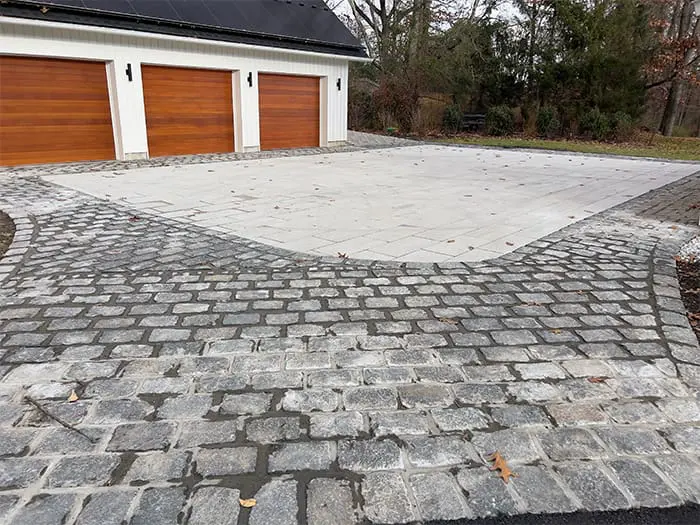
Driveways
We’ll coordinate driveway resurfacing and stone driveways with service providers in the Westchester County, New York area to help you create a welcoming entrance to your home.
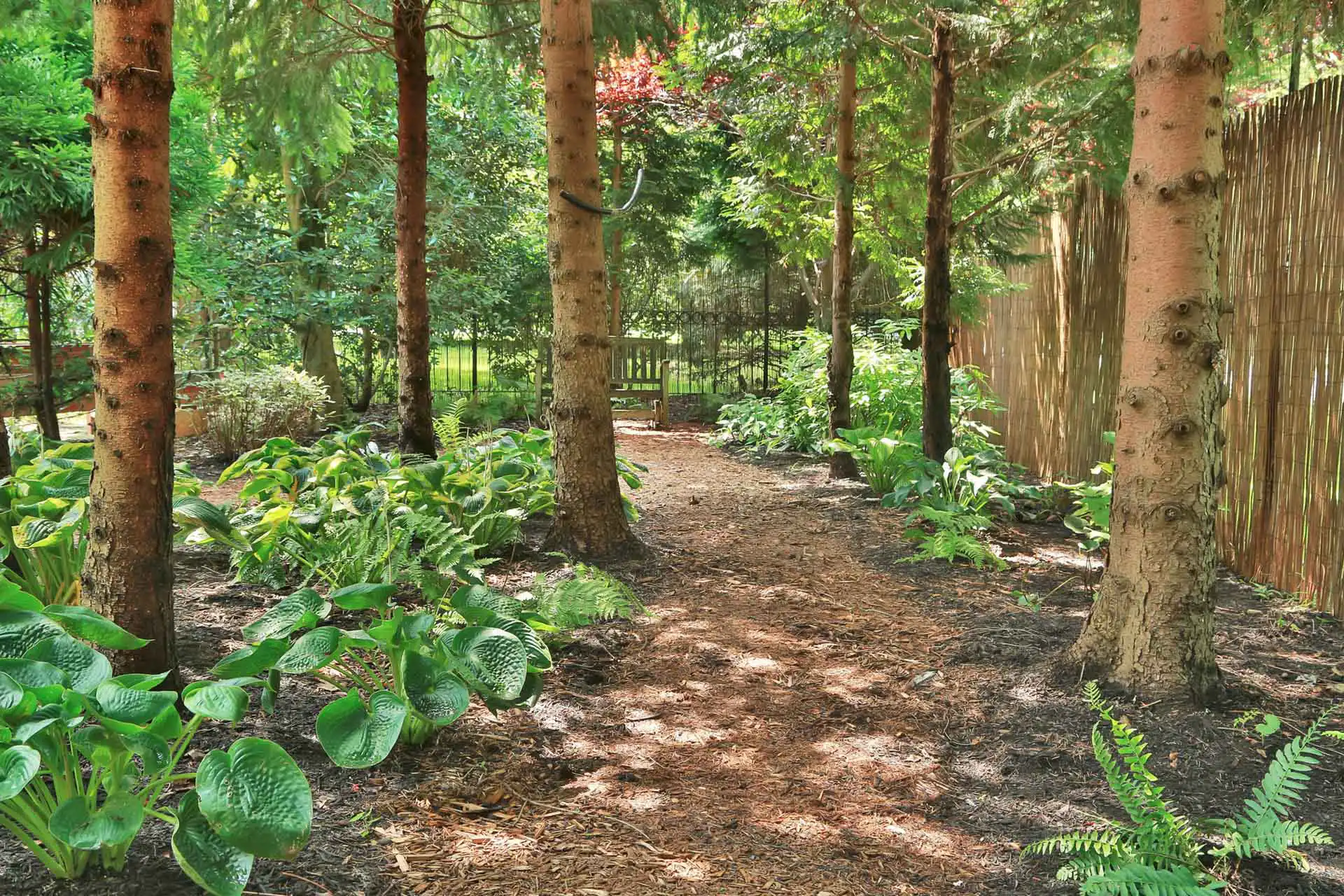
Tree Services
Ensure the trees on your property are healthy and contributing to the ecosystem. We can plant new ones for you or refer you to service providers to remove those that are sick, damaged, or threatening to interfere with buildings or underground cables.
Setting the Standard for Ecologically Responsible Landscaping Companies in Westchester County, NY, and the Tri-State Area
We offer regenerative design and ecological restoration in the Eco-Region 59, the Northeast Coastal Zone, which includes communities in Westchester County, New York, and within an approximate 50-mile radius of White Plains. Below is a selection of the towns we work in. For a more detailed list, visit our Service Area page:
Westchester County, New York
- Bedford, New York (including Bedford Hills)
- Chappaqua, New York
- Croton-on-Hudson, New York
- Dobbs Ferry, New York
- Hastings-on-Hudson, New York
- Katonah, New York
- Irvington, New York
- Larchmont, New York
- Lewisboro, New York
- Mamaroneck, New York
- North Castle, New York
- Pound Ridge, New York
- Rye, New York
- Scarsdale, New York
- South Salem, New York
Bergen County, New Jersey
Essex County, New Jersey
Fairfield County, Connecticut
- Fairfield County
- Greenwich, Connecticut (and surrounding neighborhoods)
- Darien, Connecticut
- New Canaan, Connecticut
- Ridgefield, Connecticut
Putnam County, New York
Expand Your Knowledge and Earn Competitive Pay as You Work to Create Beautiful, Sustainable Landscapes
We offer excellent career opportunities for passionate, hardworking professionals who have a love of nature and a desire to work outdoors. Expand your knowledge and grow as a landscaping expert with paid training and education, as you help us improve the environment and encourage interaction with the natural world. Visit our Careers page to learn more and apply today.

Ready to Begin Your Garden Design Project?
Your property deserves more than quick fixes or ornamental plantings. It deserves a thoughtful plan that heals the soil, conserves water, and reawakens the natural beauty of your land. Green Jay Landscape Design creates restorative gardens that enhance your home’s value, reduce long-term maintenance, and reconnect you with nature every day.
If you’re ready to explore a design rooted in stewardship and guided by artistry, our team is ready to help. Request a design consultation to start planning your ecological garden in Briarcliff Manor, NY. Together, we’ll create a living landscape that endures for generations.