• Skip to main content
  • Skip to footer
Green Jay Landscape Design

Green Jay Landscape Design

Green Jay Landscape Design

(914) 560-6570
  • Design
  • Installation
  • Portfolio
  • Pricing
  • About
    • Service Area
    • Meet Our Team
    • Our Process
    • Our Promise
    • Mission, Vision, & Core Values
    • FAQ
    • Press & Events
    • Blog
    • Reviews
    • Careers
    • Affiliations
  • Contact

greenjayadmin

Welcome back to Part Two of the BEST Native Perennials for NY, CT & NJ. These are often our go-to plants (provided the right site conditions!) because they all contribute majorly to the landscape ecology. All of these selections are regionally native plants that attract pollinators, birds and/or beneficial insects. Many of these native perennials also perform extra ecosystem services like absorbing excess rainfall, filtering out pollutants in the soil & water, stabilizing soil from erosion, and sequestering greenhouse gases. If you missed out on Part One of our Favorite Native Perennials, get caught up on our previous blog.

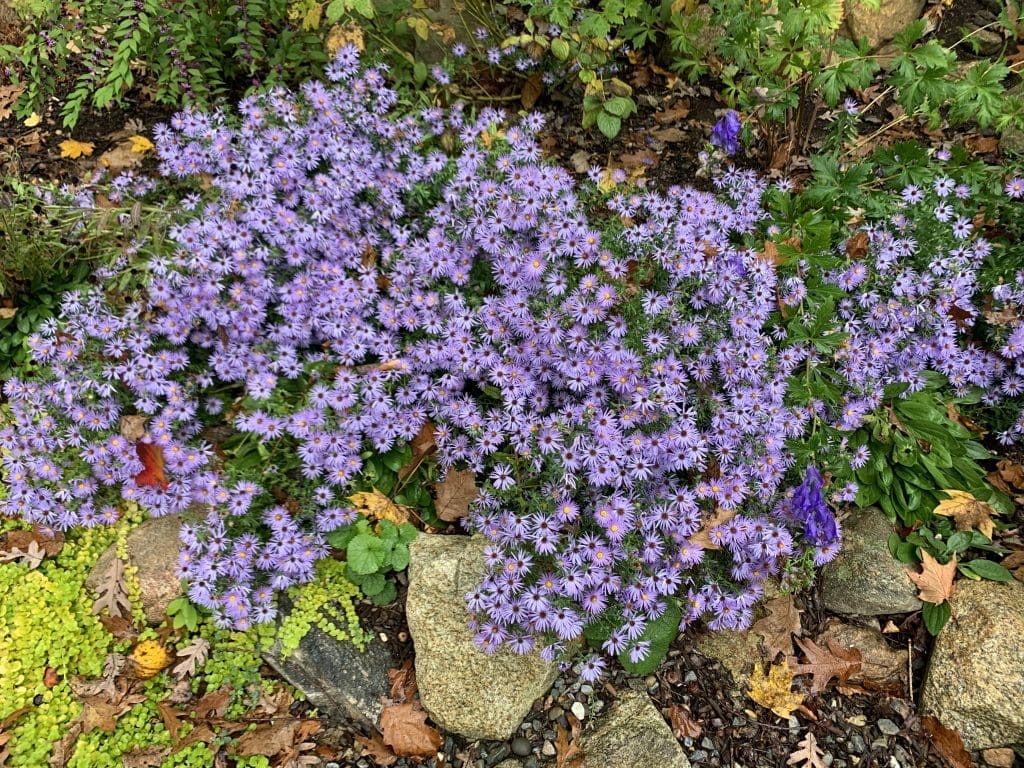
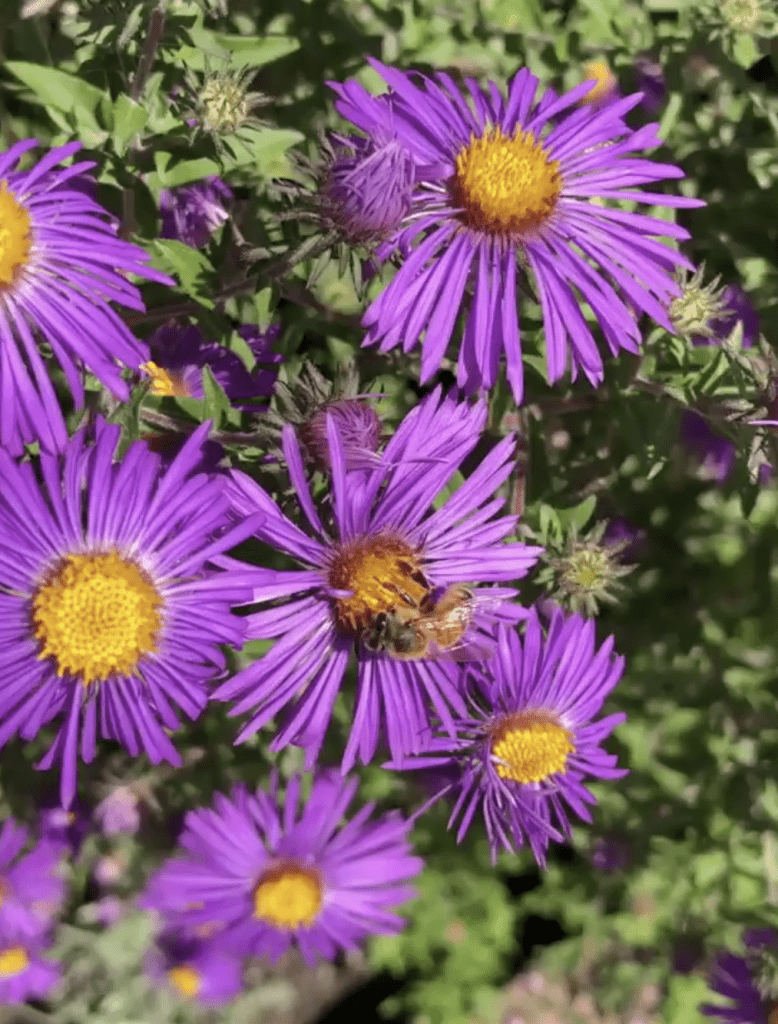
New York & New England Aster

Symphyotrichum novi-belgii & symphyotrichum novi-angilae

NY Aster (first photo) is 2-4’ tall and more compact in form; NE Aster is 2-5’ tall.

Dry to moist, lean soil is ideal for both. Full sun (for more blooms) to part shade. NY Aster leaves are smooth, compared to hairy New England Aster. Flower color is also paler blue/purple/pink. 

Both bloom late summer thru fall & are important late-season pollen / nectar sources!

Douglas Tallamy ranks Asters as the second most important herbaceous plant for Lepidoptera! Attracts butterflies including the Pearl Crescent and Silvery Checkerspot, among others. 

Both flowers are absolute magnets for native bees & honeybees. Swipe for video! Syrphid flies — natural predators of aphids, and pollinators themselves — area also attracted to Asters.

NY Aster is naturally found along the coast at lower elevations. NE Aster is found in fields, along roadsides, in woodlands and savannas.

All parts of the aster — roots leaves and flowers — were used in medicinal ways by Native American tribes. Flowers and foliage were burned for use in sweat lodge ceremonies (Inipi).  Tea was drunk for earaches, stomach aches, congestion and fever. Flowers were also smoked and used as a snuff.

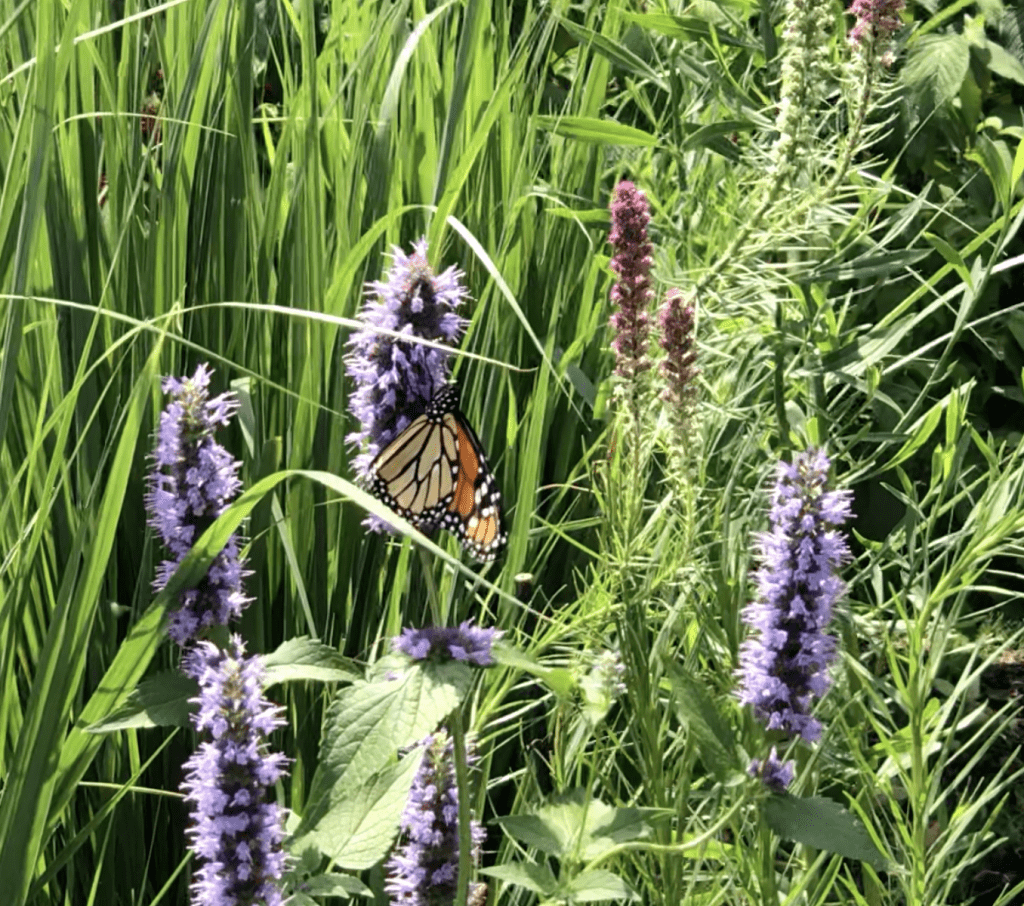
Anise Hyssop

Agastache foeniculum

Agastache is incredibly floriferous for many weeks AND low-maintenance (our fav combo!). The tall flower spikes make it great for the rear of a garden bed; we love combining with native ornamental grasses! Plant Agastache in your garden and let the locals feast!

2-4’ Tall

Full sun to part shade. Dry to average soils. Naturally found in prairies, dry upland forests, meadows and disturbed areas. Native from the eastern US, west to Colorado and south to Kentucky.

Blooms June to September.

Attracts: hummingbirds, monarch butterflies, swallowtails, native bees, and honey bees.

Fast-growing member of the Mint family (Lamiaceae)

Foliage is fragrant, similar to licorice / star anise (making it deer resistant!). Agastache has several culinary applications. Leaves can be made into a fragrant tea or jelly.  Seeds are often added to baked goods. Leaves can be incorporated into salads.

Traditionally, an tea or infusion of Agastache leaves was used to treat fevers and colds.

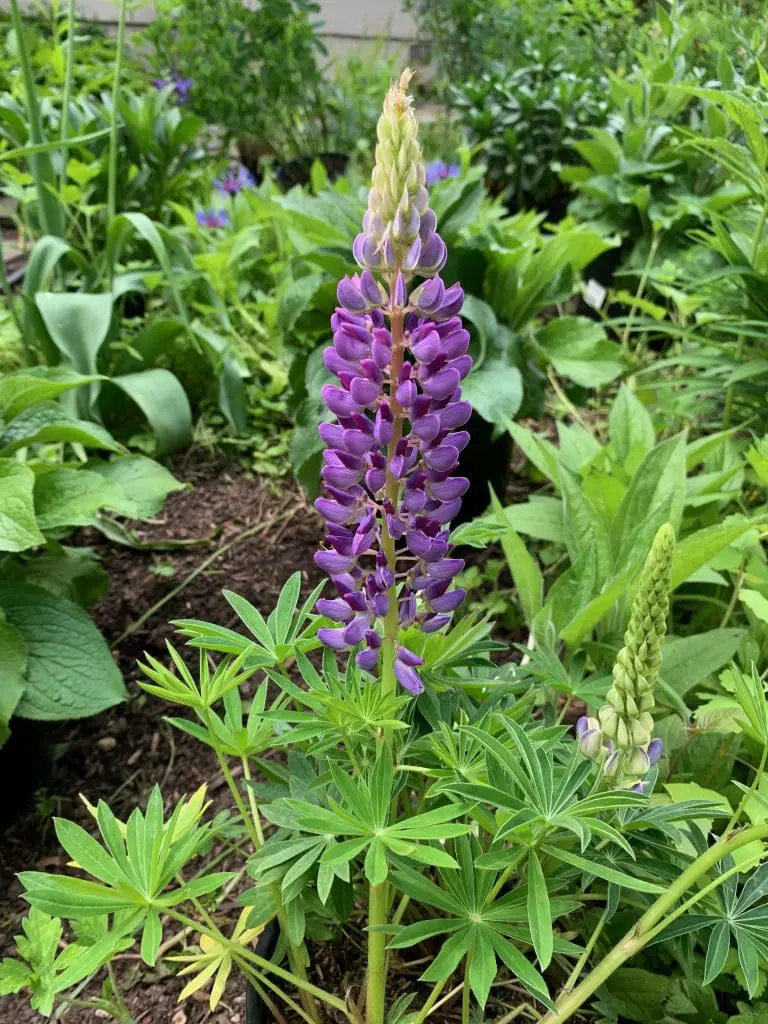
Lupine

Lupinus spp.  

So many beautiful and unique features to this native perennial! Lupine is one of those plants that could never flower and would still look amazing in your garden.

1-2’ Tall

Blooms June – July

Full sun (best) to part shade. Well-drained, lean, dry to medium soils. Naturally found in prairies, meadows, coastal sandy soils, and dappled woodlands. Lupine is an early succession species, meaning it is quick to colonize disturbed environments.

Member of the Pea / Legume family (Fabaceae), meaning Lupines fix nitrogen in the soil! As such, they are great companion plants to “heavy feeders” in a vegetable garden like cucumbers, squash, broccoli & cabbage.

Flower spikes can be up to 8” tall and open successional from the the bottom. Color ranges from purple to pink and red.

Beautifully distinctive palmately compound foliage (leaflets radiate around a single point) is also superhydrophobic. Instead of absorbing droplets of water, they sit atop the leaves like glistening orbs.

Once turning to seed, the pea-shaped seed pods create a lovely rattling sound in the wind!

Attracts BEES including bumble bees, eastern carpenter bees & honey bees. 

BUTTERFLIES that feed on Lupine include Black Swallowtails, Clouded Sulphurs and the endangered Karmer Blues, for which Lupine is a host plant!

Other pollinators of Lupine: ants, beetles & thrips. Hummingbirds are known to feed on the nectar.

Lupines have a taproot and should not be transplanted. However, this makes them excellent plants for erosion control.

No recommended medicinal uses for Lupine due to its toxic & potentially fatal alkaloid D-lupanine. Some Native American tribes did  consume a Lupine tea to treat nausea and hemorrhaging.


Note: Lupinus perennis is the wild lupine native to the east coast.  Lupinus polyphyllus, Large Leaf Lupine, is native to the northwestern US.  In some areas, like Maine, L. polyphyllus is crowding out the regional native with its aggressive colonization. Although both are valuable to pollinators & for soil conservation, choose the endangered L. perenniswhenever possible for Northeast landscapes! It is estimated that L. perennis wild populations have declined by 90% since 1900.

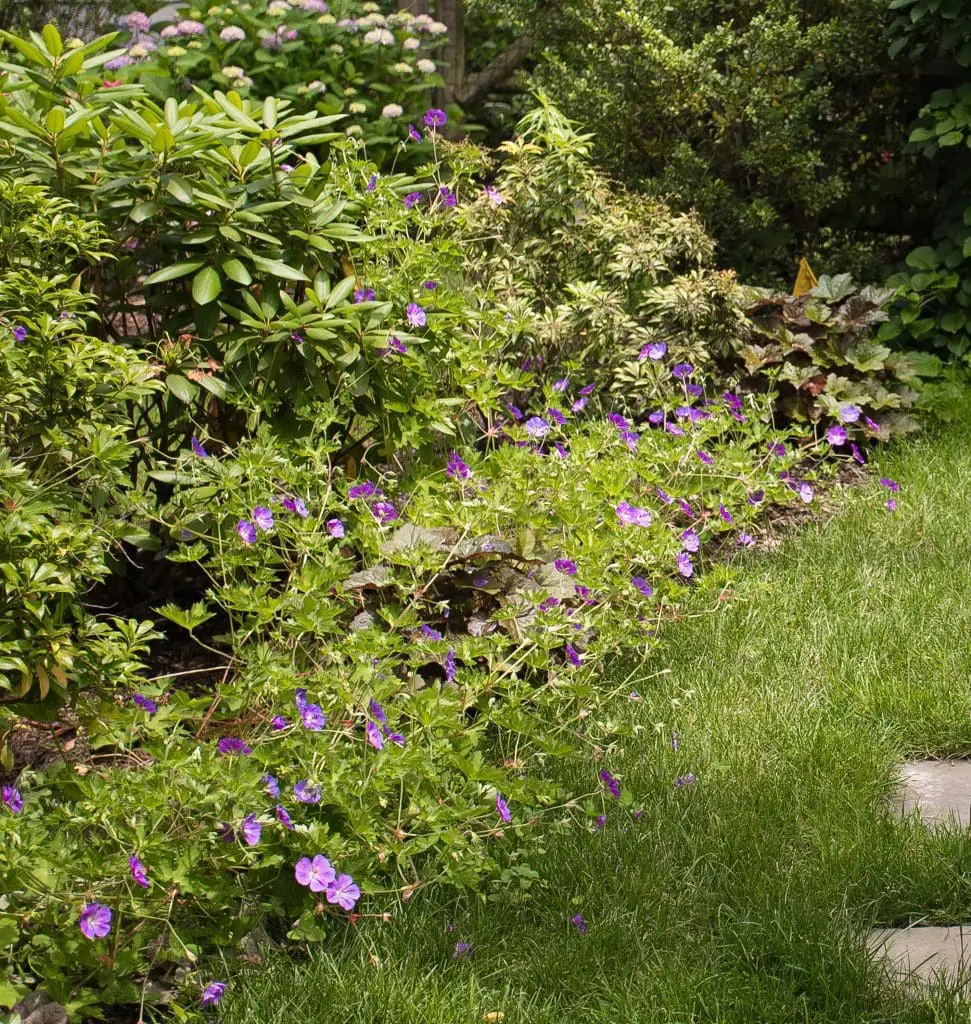
Geranium

Geranium maculatum

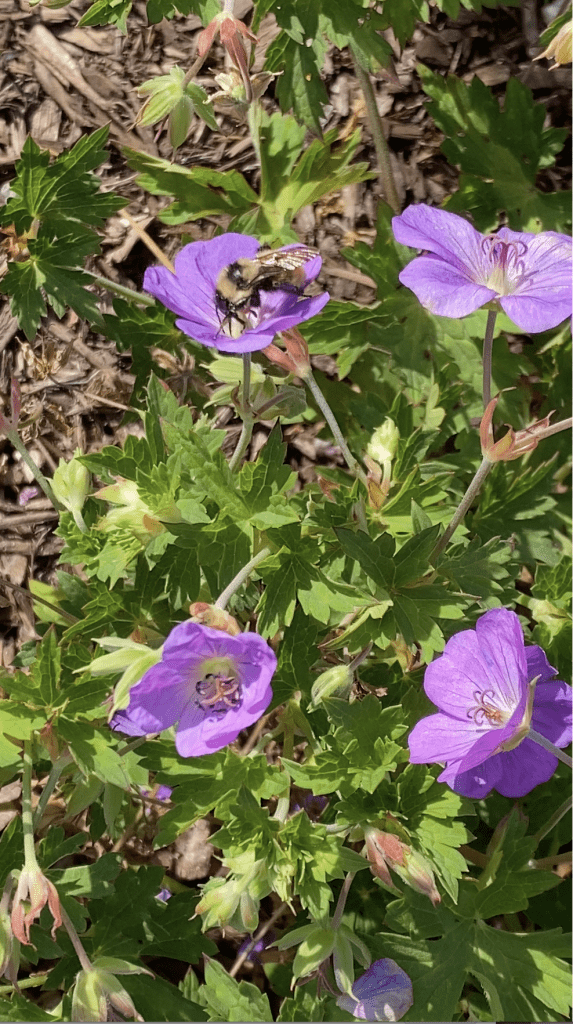
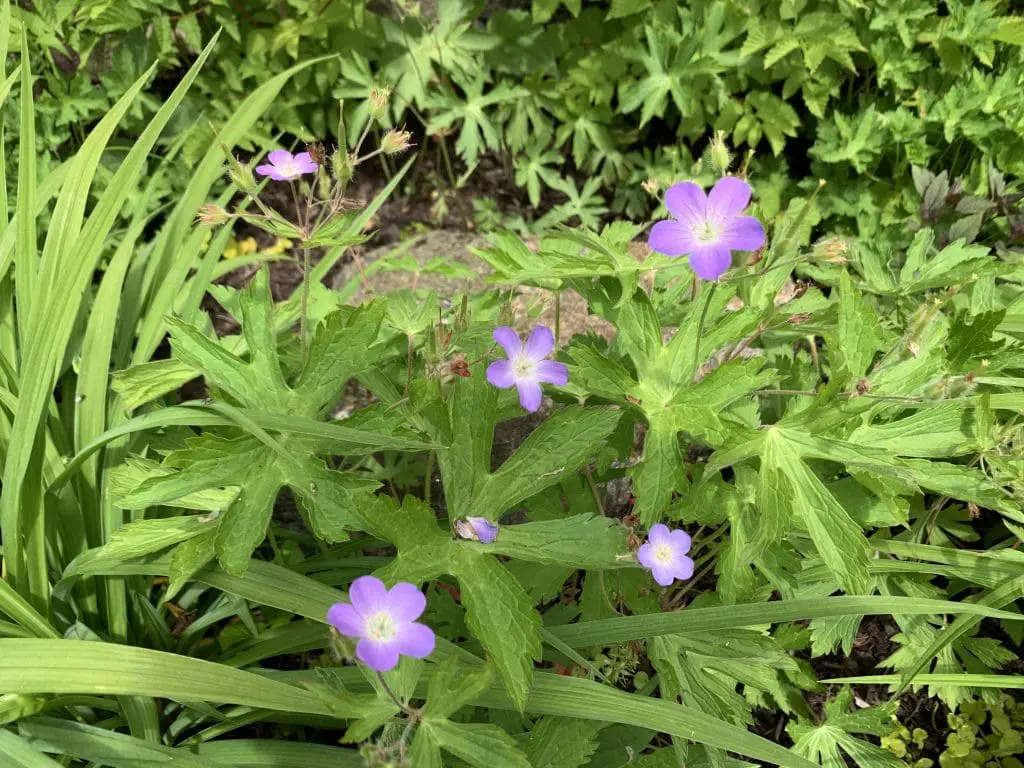
There is no better front border native perennial than Geranium! Interesting foliage, LONG bloom time, fills in quickly, and attracts tons of beneficial insects & pollinators. Need we say more?

1-2’ Tall 

Full sun to part shade. Naturally grows in mesic deciduous forests, meadows, savannas, and stream banks. Average soils. Drought-tolerant.

‘Rozanne’ is a well-loved cultivar (pictured) that has an incredibly long bloom time (June – October!!) and violet colored blossoms.

ATTRACTS:

Beneficials: syrphid flies, lacewings, ladybugs and parasitic wasps.  (All natural predators to garden pests, and essential to attract in an organic landscape!)

Bees: bumblebees, mason bees, halictid bees, android bees, namadine cuckoo bees, miner bees & more.

Butterflies & Moths: skippers

Other Pollinators: ants, beetles, March flies

Songbirds eat the seeds in fall

Geraniums depend on insect pollination. Once achieved, seeds are produced in a fruit and flung into the landscape via “explosive dispersal.” Essentially catapulted from flower to soil. Seeds have a tail shape that drives them into the soil for germination.

Foliage is palmately compound and deeply cut.  In fall it turns a lovely red to yellow.

Native Americans employed geraniums to treat diarrhea, wounds, and sores. Geraniums contain tannic and gallic acids that work as an astringent, helping blood to clot.

Blazing Star

Liatris spicata

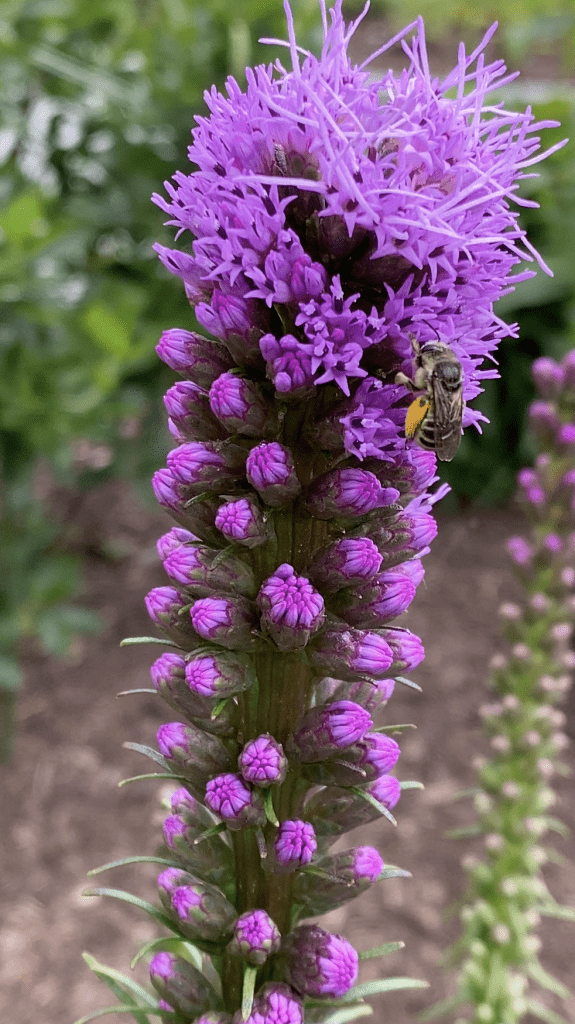
What’s not to love? Huge flower spikes up to 2.5’ long, delicate grass-like foliage, and sturdy stems that look great thru fall and winter. And that’s just the aesthetics!

3-4’ Tall

Blooms in August – September

Liatris has unique phytoremediation properties. It can grow in cadmium contaminated soil and actually uptakes the heavy metal and stores it in its tissues as a non-toxic compound! A great option for remediation projects.

Full sun preferred but tolerates part shade. Well-drained soil is best but can also withstand moisture — L. Spicata’s other common name is Marsh Blazing Star.  It is naturally found in lowland prairies and is native to Eastern & Central US. L. Spicata is a good option for a rain garden!

Butterflies frequent Liatris including monarchs, swallowtails, skippers, and eastern commas.

Native bees (bumble bees, leaf-cutters), beetles and hummingbirds also visit Liatris for nectar, and songbirds will eat the seeds in fall.

Cherokee tribes used Liatris to treat pain, digestive issues, congestion and as a stimulant.

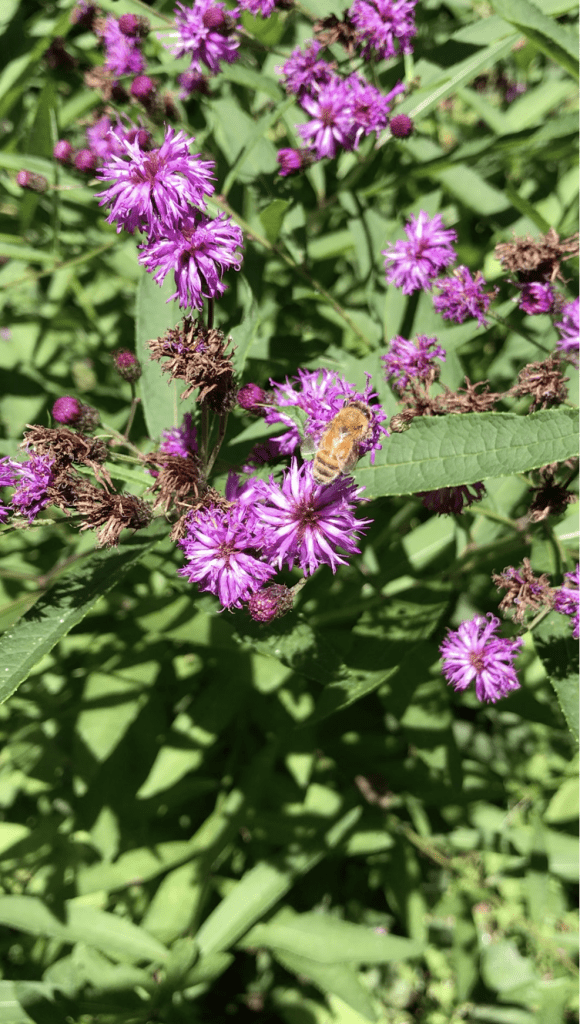
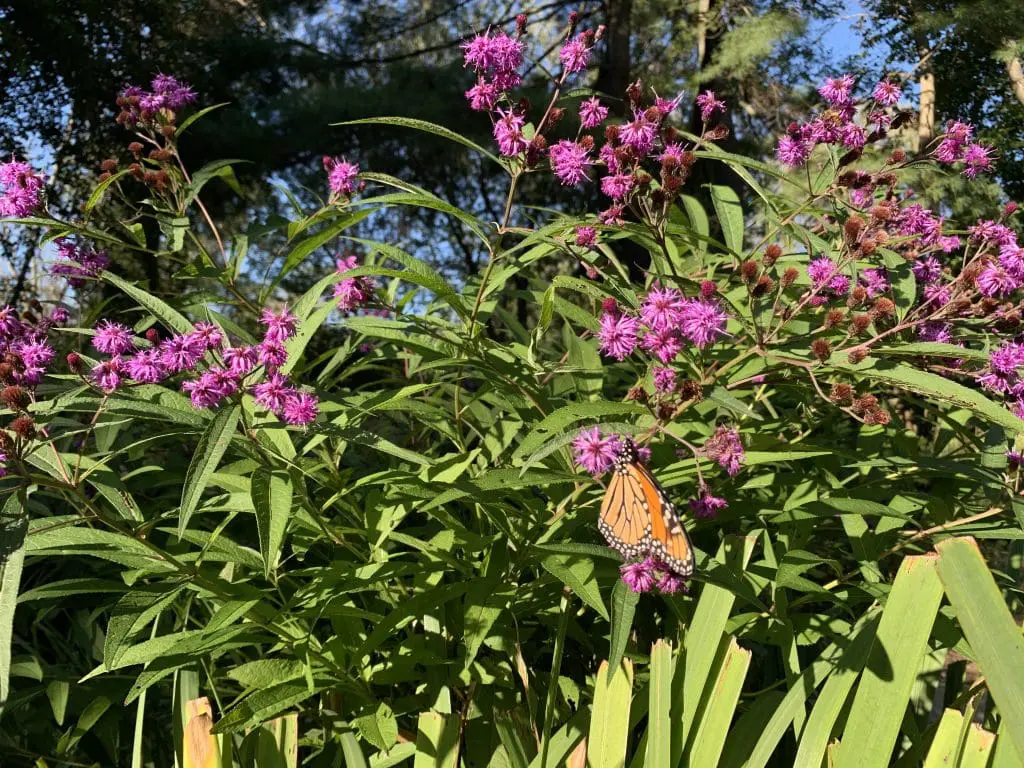
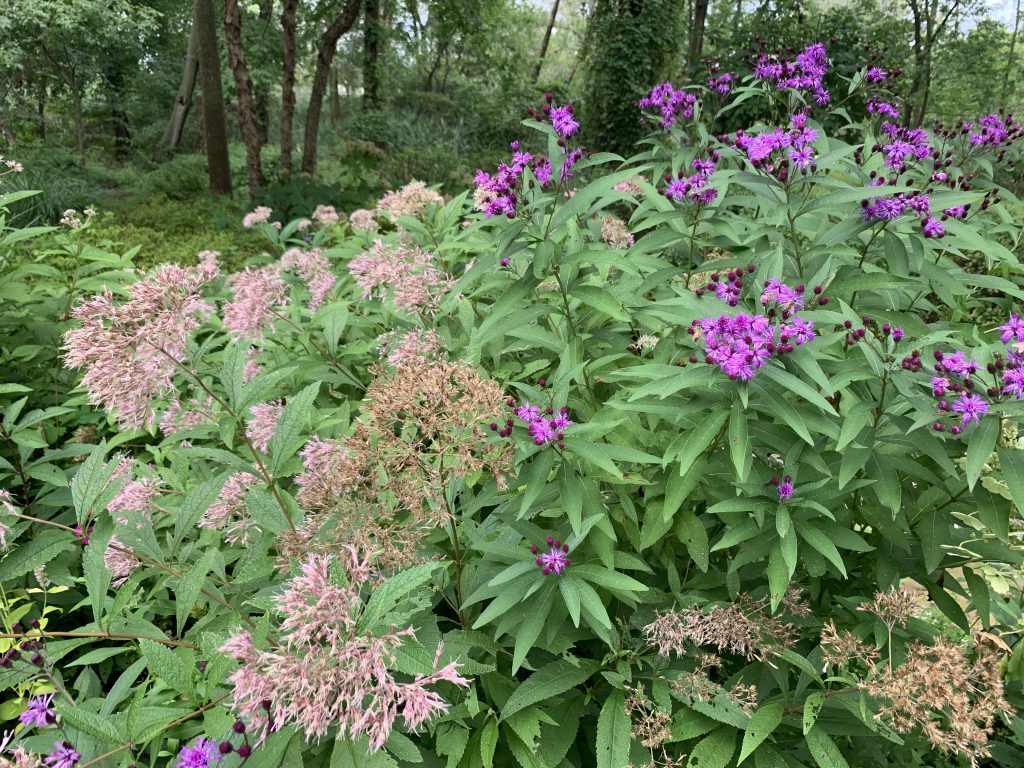
NEW YORK IRONWEED

Veronia noveboracensis

This native perennial holds a special play in our hearts — it “volunteered” into Jay’s landscape from the adjacent wetland in 2015 when they converted their rear lawn to garden, and has supported a wealth of wildlife ever since.

4-6’ tall, but can grow up to 8’!

Blooms July to September, 6 weeks!

NY Ironweed is naturally found in low-lying prairies, grasslands, dappled woodlands, disturbed areas.  It prefers wet/moist soils but can tolerate drought. Full sun to part shade.

Veronia is quick to spread via rhizomes and grows quickly.  We often find ourselves “editing” this tallboy out of the front of garden beds and in walkways, but it makes a fabulous rear border and has incredibly strong stems that don’t require staking (unlike most tall perennials!).

A great plant for meadows, larger naturalized gardens, and erosion control projects.

ATTRACTS an abundance of pollinators including: monarchs, swallowtails, fritillaries, painted ladies, skippers, native bees and beneficial insects. Songbirds will eat the seeds in fall.

Master designer Piet Oudolf lists NY Ironweed ‘Iron Butterfly’ as one of his *Must Have Plants* — he has planted it en masse on the NYC’s Highline and in Chicago’s Lurie Garden.

Ironweed has a host of traditional medicinal applications. Native Americans used it to treat stomach ulcers, pain from childbirth, hemorrhaging and for tooth pain.

Stay tuned for Part Three of our Favorite Native Plants – Perennials Edition. Coming soon!

Green Jay Landscape Design

Where Design Meets Ecology

914-560-6570
Filed Under: Ecological Education Tagged With: ecological landscape design, ecological landscaping, Fairfield county landscape design, healthy yards, landscape designer, native garden, native landscape design, native landscaping, native perennials, native plant garden, native plant landscaping, native plants, organic landscape, pollinator garden, pollinator pathway, Westchester county landscape design

It’s no secret that we at Green Jay Landscape Design firmly believe in restoring and designing native landscapes. Planting native plants has SO many ecosystem benefits –these ancestral plants adapted to difficult site conditions, provide critical soil stabilization, and of course, co-evolved with our local wildlife as the foundation of the food chain! We take a deep dive into our FAVORITE native perennials for the tri-state area (NY, NJ & CT). All of these native perennials are low maintenance, attract beneficial insects or birds, and look fabulous in landscapes of any size!

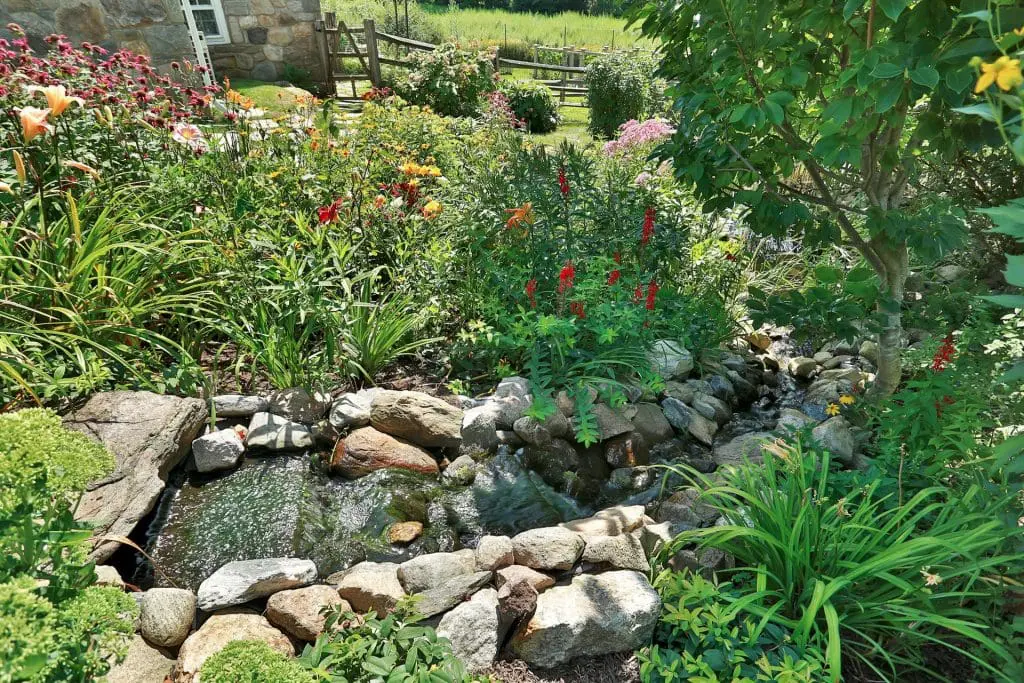
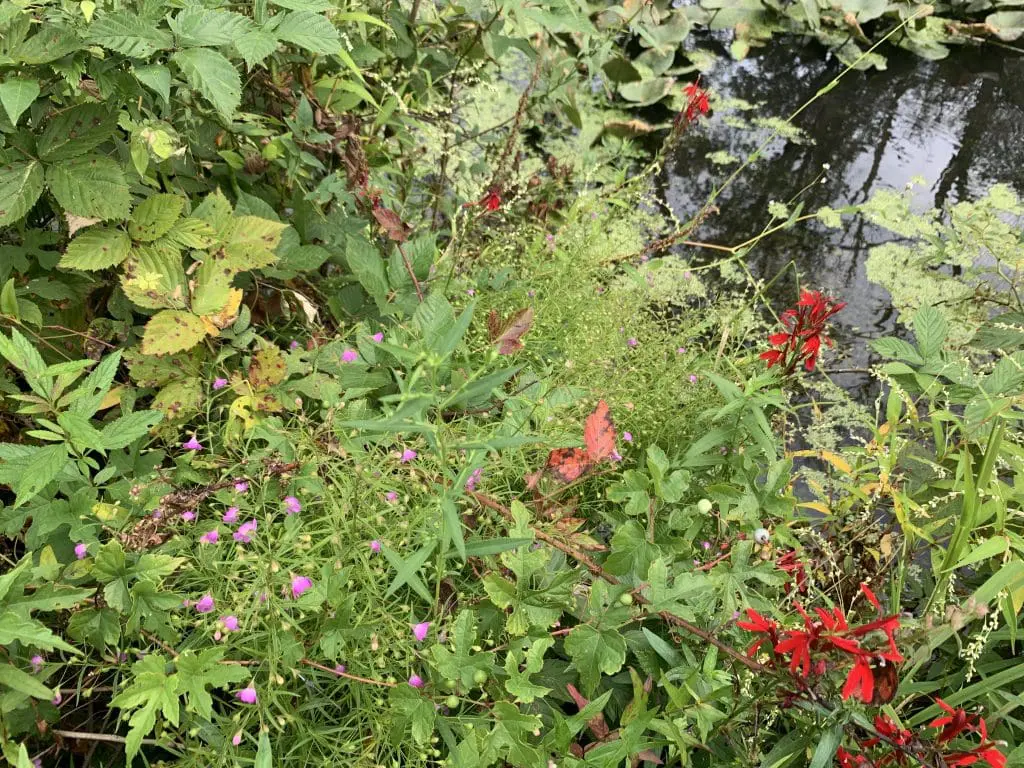
Cardinal Flower, Lobelia cardinalis, thriving along a constructed stream / waterfall in New Canaan, CT.

Cardinal Flower

Lobelia cardinalis

We’re going in rainbow order (obviously) and starting off with one of the best and brightest native wetland perennials!

Vibrant RED blossoms on 2-4’ spikes. Flower shape is tubular and called a two-lipped corolla. 

Blooms July – September.

Naturally grows in North American wetlands, marshes, stream banks, low woods & wet meadows. We love to plant along ponds, streams & waterfalls, as in this photo! 

As a Marginal Wetland Plant, Lobelia helps filter pollutants and excess nutrients from waterways. 

Cardinal flower paired with geranium in a pond border planting.

Important food source for Hummingbirds, which are attracted to red blossoms & have long tongues especially adapted to tubular flowers.

Also attracts butterflies (Black Swallowtail, Spicebush Swallowtail, Pipevine Swallowtail), moths, bees and other pollinating insects and bird.

Grown best in full sun to light shade. Can take moist soil conditions up to (~2”) standing water, avoid letting the roots dry out!

Herbal Medicine: used by Iroquois to treat fevers & upset stomach and by the Delaware to treat typhoid & syphilis. Other tribes used it in tobacco ceremonies and as a love potion.

Bellflower Family (Campanulacea)

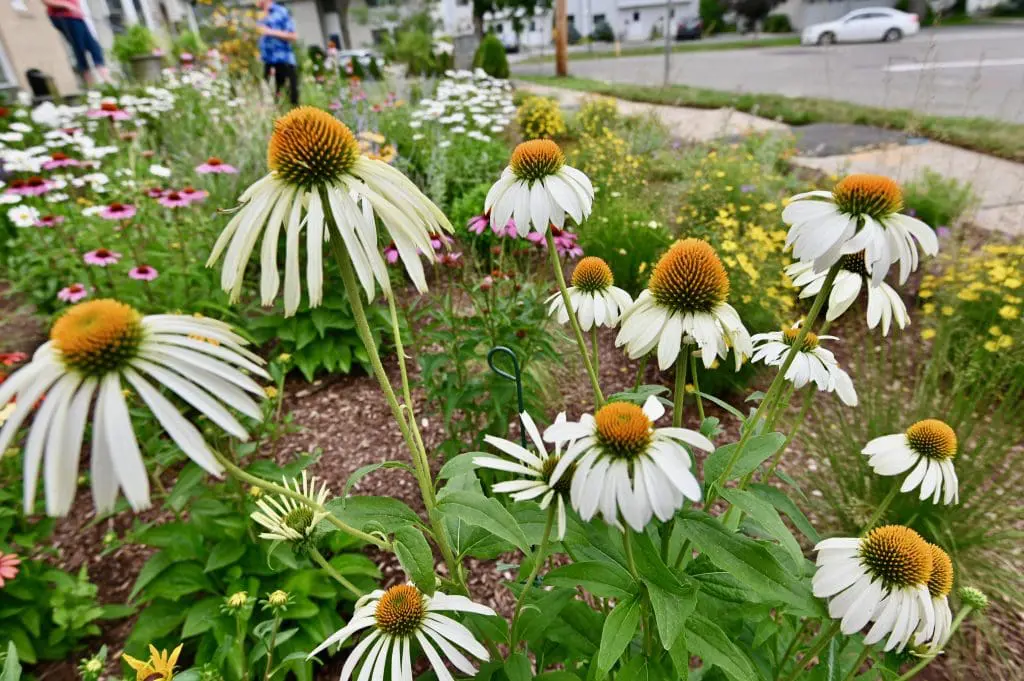
Coneflower

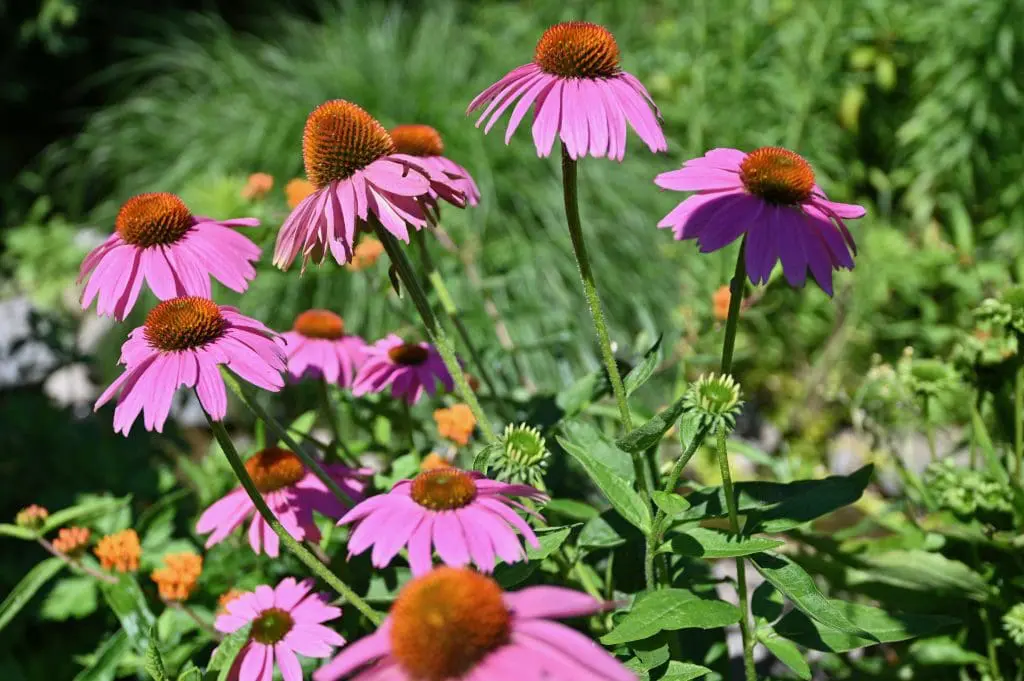
Echinacea purpurea

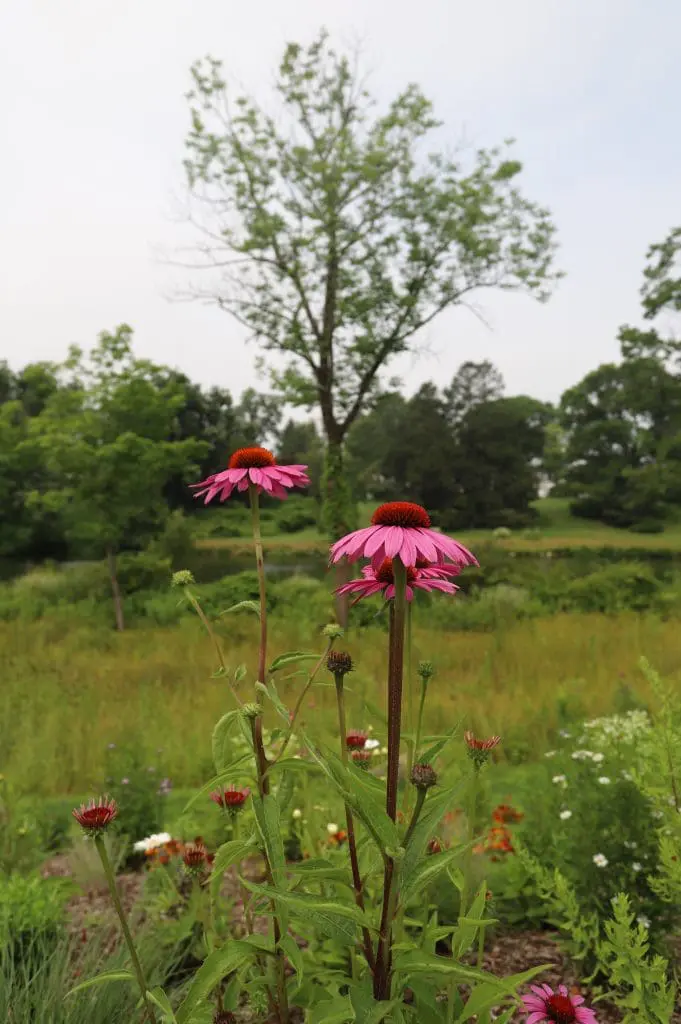
Perhaps the most recognized native plant! Hailing from the central prairies to meadows & woodland edges along the east coast, Coneflower is easily grown, long blooming, and a FAVORITE of pollinators. Plus, it comes in many cultivars (

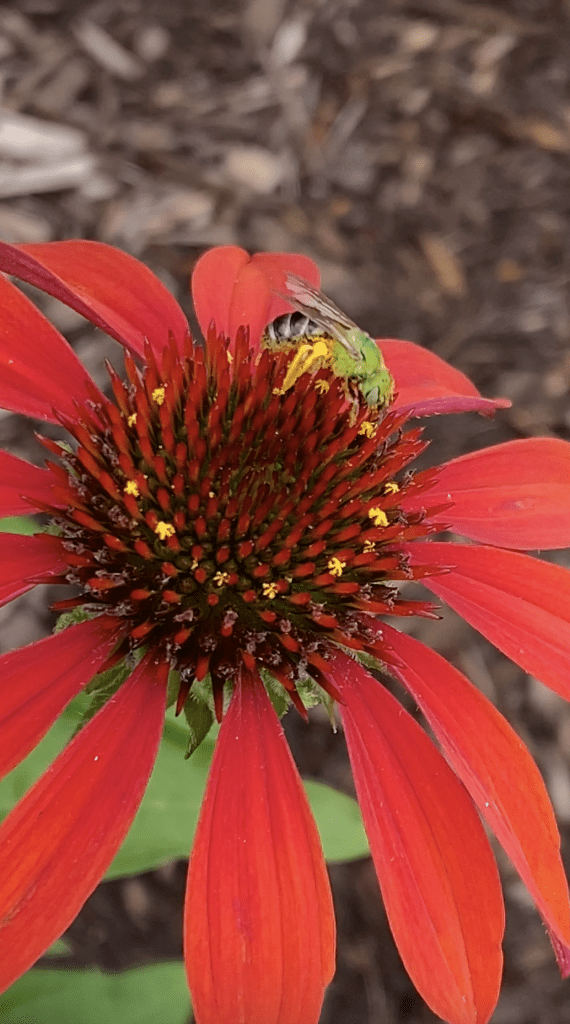
Sweat bee on a red Echincea cultivar.

Attracts BEES including: sweat bees (first video), bumble bees, wasps, mason bees, leaf cutting bees & more. 

Monarch butterfly feeding on Coneflower (Echinacea) in a front yard pollinator garden in Stamford, CT.

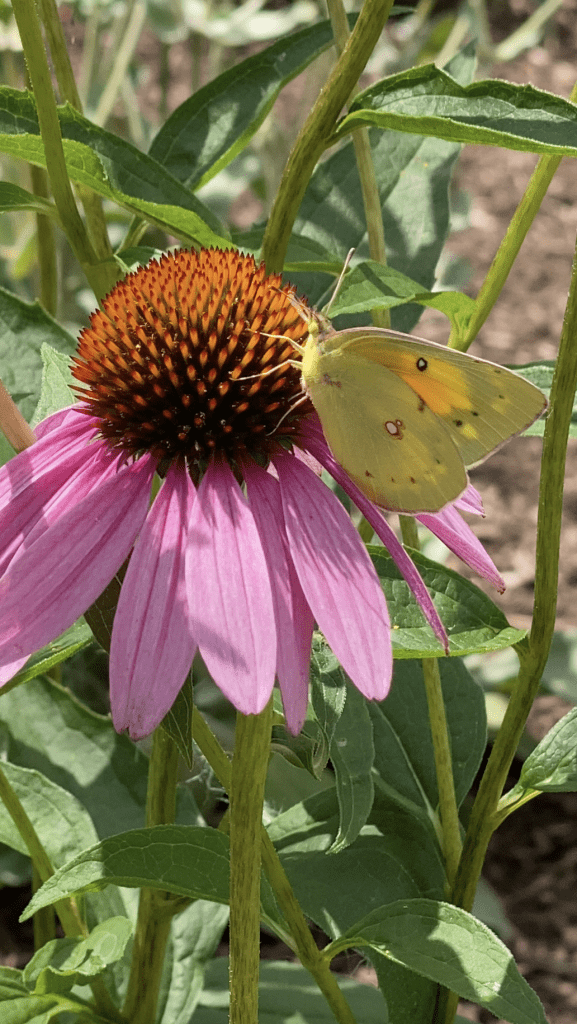
Attracts BUTTERFLIES including: fritillaries, monarchs, painted ladies, skippers, viceroys, American ladies, painted ladies, & swallowtails.

Clouded Sulphur butterfly feeds on Echincaea. 

Attracts BIRDS including: goldfinches, blue jays, cardinals & hummingbirds. Leaving Coneflowers up through winter provides an important fall & winter food source (seeds) for birds.

Blooms June – August.

1.5 – 3’ Tall. 

Coneflower is composed of RAY flowers (petals) and hundreds of DISK flowers in a center cone shape, it’s namesake. 

Full Sun (best) to Partial Sun. Medium moisture. Lean soils — go easy on the compost and no need to fertilize!

ETHNOBOTANY: Used by Native Americans for sore throats, quenching thirst, stomaches, toothaches, tonsillitis, & pain relief. Believed to be the most harvested & used medicinal plant of the Great Plains! Today it is still drank as a tea to support the immune system and reduce inflammation.

**A Note on Cultivars**

There’s been much debate about the place for cultivars in a native landscape, whether they serve the same benefits as the true native species. From our research, double-petaled cultivars are usually sterile or have inaccessible nectar/pollen— not beneficial for pollinators! AVOID DOUBLE PETALS. 

A white cultivar of Echinacea is a wonderful compliment to a colorful palette.

Other claims of nutrient deficiencies in single petal cultivars have simply not been studied enough. In our personal field experience, we see plenty of bees, butterflies & birds on the white, red & slightly larger coneflower cultivars we’ve planted throughout the years. What we plant is greatly based on local availability, and cultivars of perennials are often more common than the true natives in nurseries. 

We welcome more research on the topic, the intersection with pollinators, and more transparency in breeding!

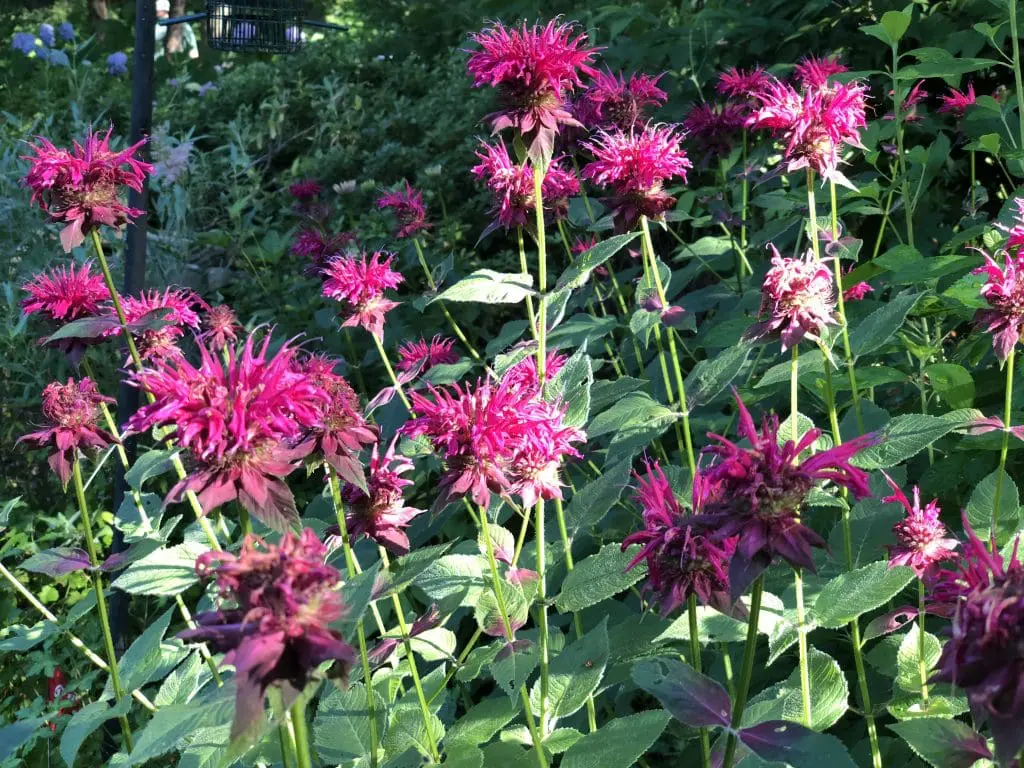
Bee balm (Monarda didyma) is a low maintenance perennial adaptable to a wide range of growing conditions. As the common name suggests, it is a pollinator powerhouse!

Bee Balm & Wild Bergamot

Monarda didyma & Monarda fistulosa

The Monarda genus is known for its distinct “mophead” flowers ranging from scarlet red to hot pink to lavender. Monarda is a cult favorite #nativeplant because it is a bird and pollinator MAGNET, a repeat bloomer, deer resistant & has culinary uses!

Full Sun to Part Shade

2-4’ tall.

M. didyma naturally grows along stream banks and in lower, wetter environments. Wet to Medium soils.

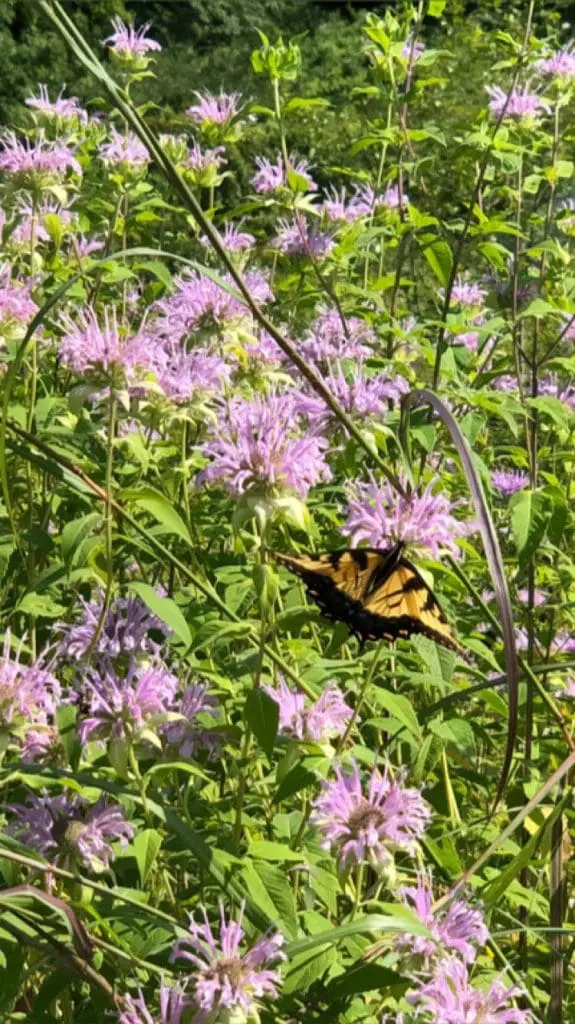
Swallowtail on M. fistulosa in a meadow planting.

M. fistulosa’s native habitat includes parries, dry rocky areas, and roadsides. Dry to Medium soils. 

Attracts: BEES (sand wasps, sweat bees, bumble bees) BUTTERFLIES (monarchs, swallowtails), MOTHS (hummingbird moths, sphinx moths, grey marvel) & BIRDS (sparrows, goldfinches, hummingbirds)

Deadhead or prune part of the plant for repeat blooms but leave the final round of blossoms up through fall and winter! Monarda flowers produce a “nutlet” that birds such as sparrows and goldfinches feed on over winter.

Mint family — can be aggressive.

M. didyma nearing the end of its bloom. It pairs fabulously with other summer favorites: Echinacea, Heleopsis, Rudbeckia.

Wild Bergamot (M. fistulosa) foliage has a similar flavor to Earl Grey Tea and can be used in baking. M. didyma foliage has a savorier flavor, comparable to oregano and used in similar applications.The common name Bee Balm actually refers to the Native Americans use of monarda leaves in a poultice to treat bee stings.

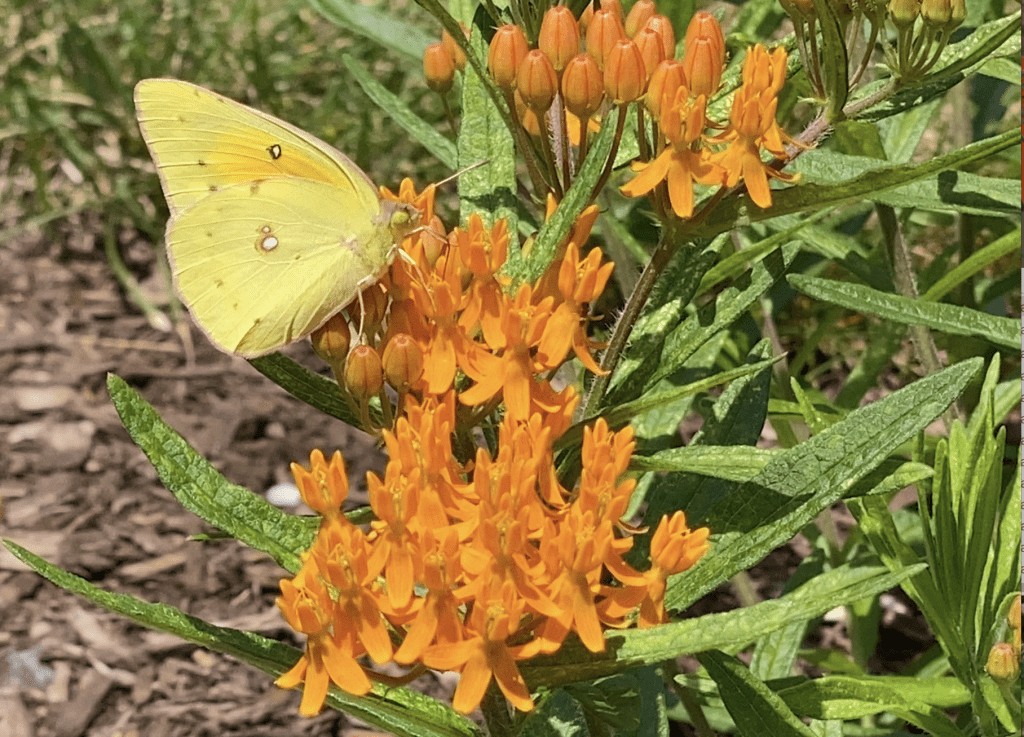
Clouded Sulphur butterfly feeds on Butterfly Weed (Ascelpias tuberose).

Butterfly Weed

Ascelpias tuberosa

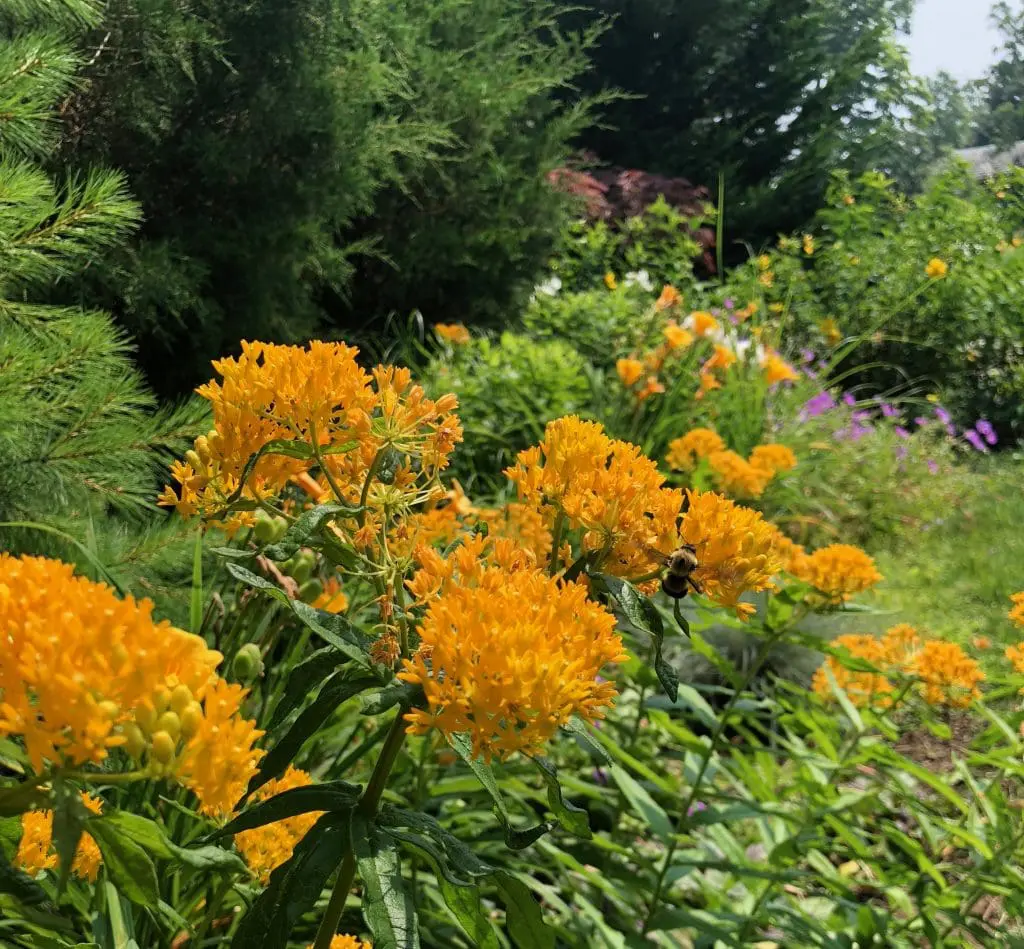
Native to all of the US except for the Northwest, butterfly weed is a fabulous low-maintenance, long-lived perennial that has co-evolved with many specialized wildlife species to provide critical habitat.

1 – 2.5’ Tall. Full sun to part shade.  Dry to medium soils. Great rain garden plant!

ATTRACTS POLLINATORS:

  • Monarch, Grey Hairstreek, swallowtails and Queen butterflies.
  • Large milkweed bug, common milkweed bug, red milkweed beetle, blue milkweed beetle, Long-tongued bees
  • Moths
  • Hummingbirds 

Monarch butterflies will ONLY lay their eggs on Ascelpias leaves. Monarch caterpillars feed on the leaves because the cardiac glycosides compounds they contain act as a chemical defense predators avoid the caterpillars because of their foul tasting flesh.

A Bumble Bee visits Butterfly Weed.

Butterfly Weed has a rich history of medicinal and ethnobotanic uses

Fibers  such as rope, yarn and fabric

Used to treat swellings, rashes, diarrhea, blindness, for mothers to produce breast milk, snake bites, and as a contraceptive

The uncooked roots and green pods were eaten by the Pueblo tribes. However, cardiac glycosides are now known to be poisonous to both humans and livestock.

Avoid transplanting your butterfly weed plants. They have a tap root that is difficult to dig up and transplant successfully.

Member of the Apocynaceae or dogbane family.

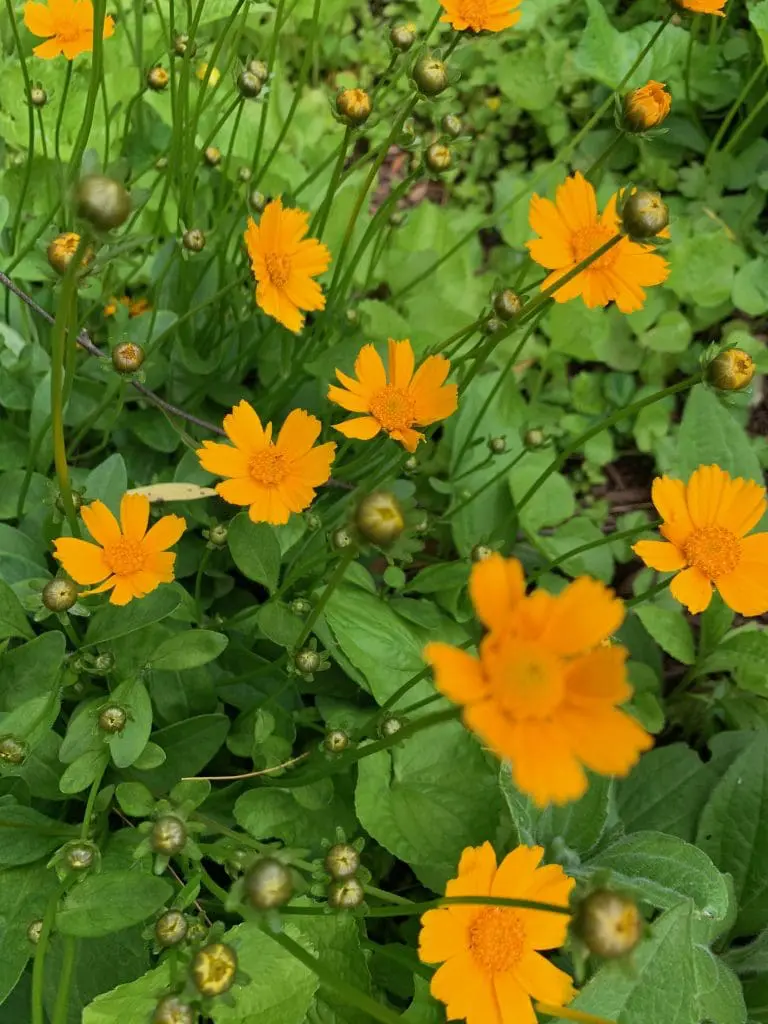
An orange cultivar of Coreopsis brings lovely warm hues and many beneficial insects to the garden.

Tickseed

Coreopsis spp.

A staple in many of our native plant gardens! Coreopsis is a repeat bloomer and very drought tolerant, aka, it looks fabulous all summer and into fall! We love to use it in front as a border with other low-growing natives like Geranium and Gallardia. Here’s what else we love about this native perennial:

1-3’ tall. Full Sun. Dry to Medium soil moisture.

Attracts many “beneficial insects” that naturally predate on garden pests. The natural pest control comes from: pirate bugs, parasitic wasps, hover flies, soldier beetles, syrphid flies, lacewings, and spiders.  Check out Attracting Beneficial Bugs by Jessica Walliser for more info!

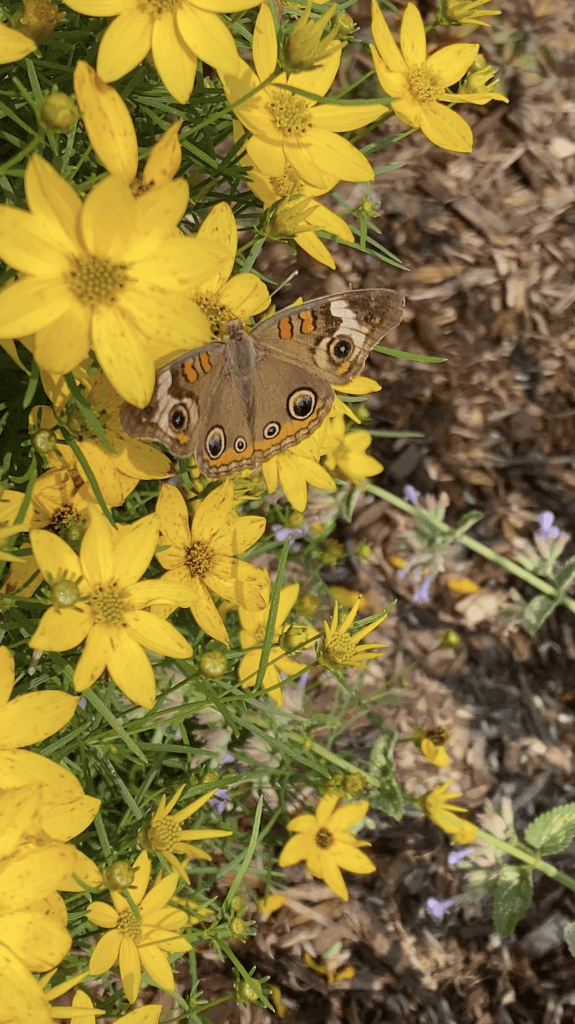
Common Buckeye butterfly visits Coreopsis.

Nectar plant for butterflies including: Monarch, Common Buckeye, Eastern Tailed-Blue.

Pollen source for both native bees (long-tongued bees, short-tongued bees, wasps) and honey bees.

BLOOMS: mid-summer to Fall.

Beautiful, unique needle-like folliage, especially Coreopsis tripteris.

DEER TOLERANT!

Coreopsis lanceolata self-seeds / naturalizes easily, making it great for meadows and larger regeneration projects.

Ethnobotany: Used by Native Americans to treat many maladies including internal pain (boil flowers and drank as tea), diarrhea (root tea), and as an emetic. Flowers were also used to make yellow and red dyes.

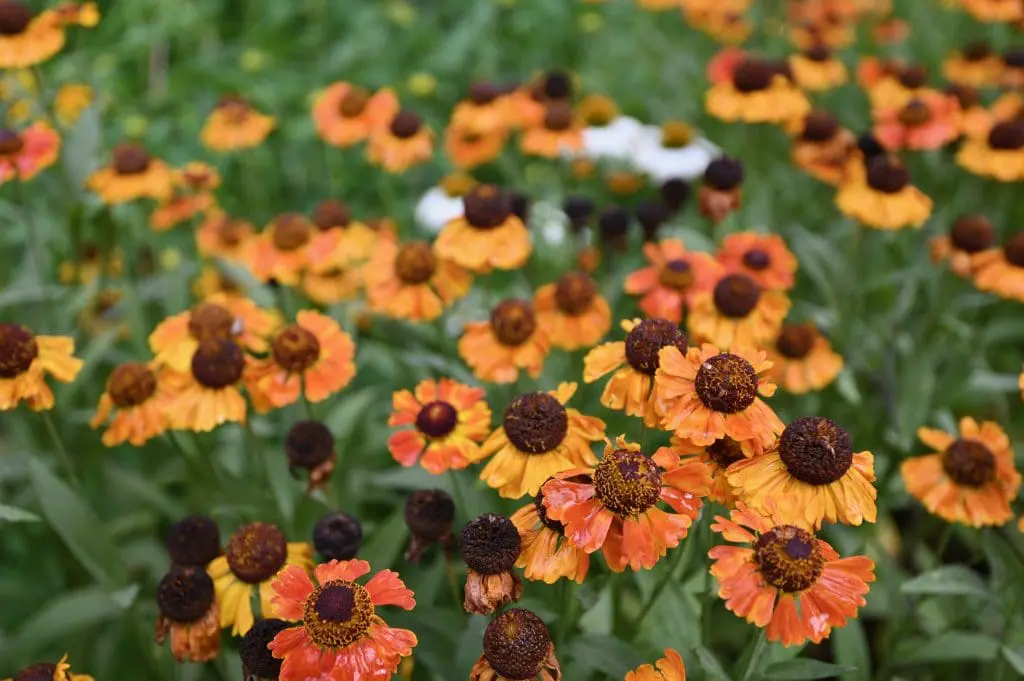
Helenium in a poolside pollinator & ornamental grass garden.

Sneezeweed

Helenium autumnale

Happy to report the namesake of this native perennial beauty does not refer to allergies or hay fever! In fact, dried sneezeweed flowers were traditionally used to induce sneezing. Sneezes were thought to aid head colds as well as dispel evil spirts from the body. 

Plus, Helenium is insect-pollinated, not wind-pollinated.  It is the airborne pollen of wind-pollinated plants like ragweed that tend to induce hay fever symptoms. 

What pollinators are attracted to Helenium?!

Countless pollinators & beneficial insects including: halictid bees, bumble bees, sweat bees, wasps, honey bees, syphrid flies, hover flies, ants, skippers, and sulphur butterflies (host plant). Many birds feed on Helenium seeds in late fall and winter.

Full sun to part shade. Dry to medium moisture.

2-3’ tall.

Blooms late summer – early fall.

Helenium in a part-shade garden at a woodland border in Rye. NY.

Helenium refers to Helen of Troy. Legend has it these flowers appeared where her tears fell.

Leaves and flowers are poisonous to humans if eaten in large quantities, because of chemicals called sesquiterpene lactones. These compounds also make helenium DEER & RABBIT RESISTANT!

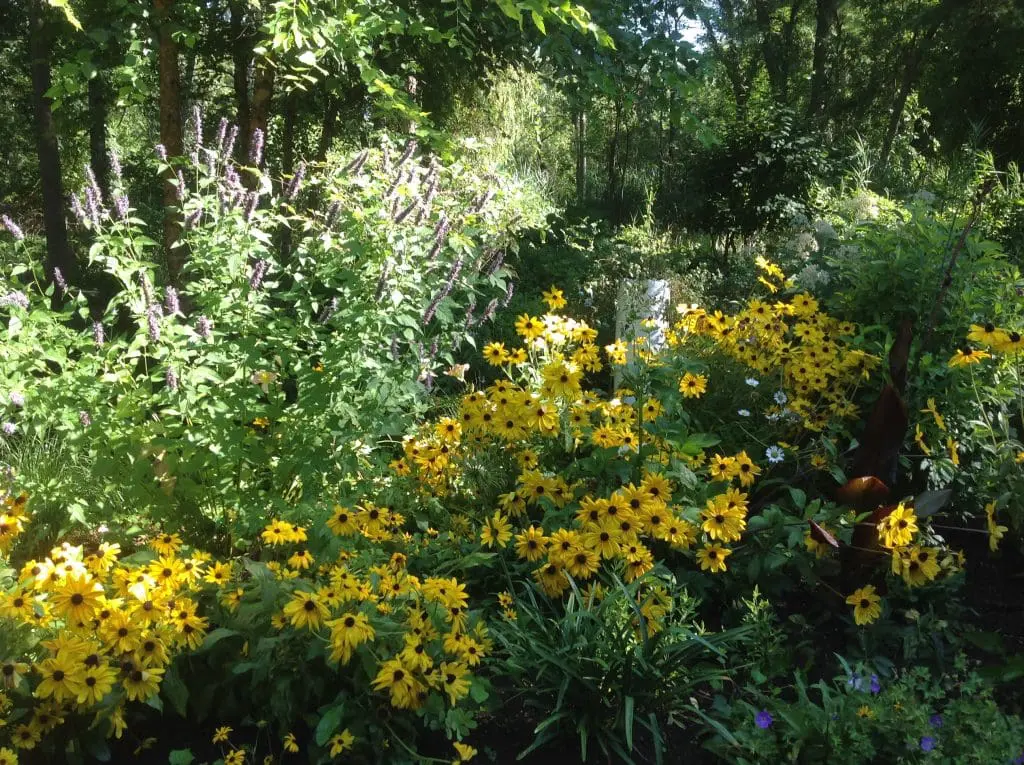
Black-eyed Susan in a part-shade garden paired with Agastache.

Black-eyed Susan

Rudbeckia spp.

An ICON in the native plant world, Rudbeckia can do it all! Its tolerant of a range growing conditions, is fast growing and low maintenance.

Plus, Rudbeckia is one of the longest-blooming perennials we know (!!), providing essential nectar and pollen from July to October. When the spent flowers turn to seed, its feasting time for many species of native birds. (Exactly why we insist on leaving native perennials up thru fall and winter!)

Rudbeckia in a full sun pool landscape in Westchester, NY.

Rudbeckia looks fabulous with Echinacea, Agastache, Monarda, Asters, Switchgrass and countless other native perennials & grasses for a high-impact ecological landscape.

2’ -3’ Tall & fast growing.

Full sun (preferred) to part shade. Dry to Moist/Wet soils = great rain garden plant!

BIRDS that feed on Rudbeckia seeds include: American Goldfinch, Black-Capped Chickadee, Northern Cardinal, White-Breasted Nuthatches, Sparrows, and Eastern Towhee.

Black-eyed Susan vegetative border along a pond in South Salem, NY.

BUTTERFLY host plant for the Silvery Checkerspot  caterpillar. Many other native Lepidoptera (butterflies & moths) visit Rudbeckias for nectar.

BENEFICIAL INSECTS are attracted to Rudbeckia, including Syrphid Flies, spiders, Ambush bugs, and Scolid wasps.

TRADITIONAL MEDICINAL Rudbeckia has a long herbal history for Native American tribes. Flower petals were boiled into a tea and used as a diuretic, and to treat edema, cardiovascular problems, and worms. Root “juices” were used to treat earaches. Topically, it was used as a wash on snakebites, burns, and wounds. Today, Rudbeckia tonics and teas are still consumed as an immune-booster.

OXEYE SUNFLOWER / FALSE SUNFLOWER

Heliopsis helianthoides

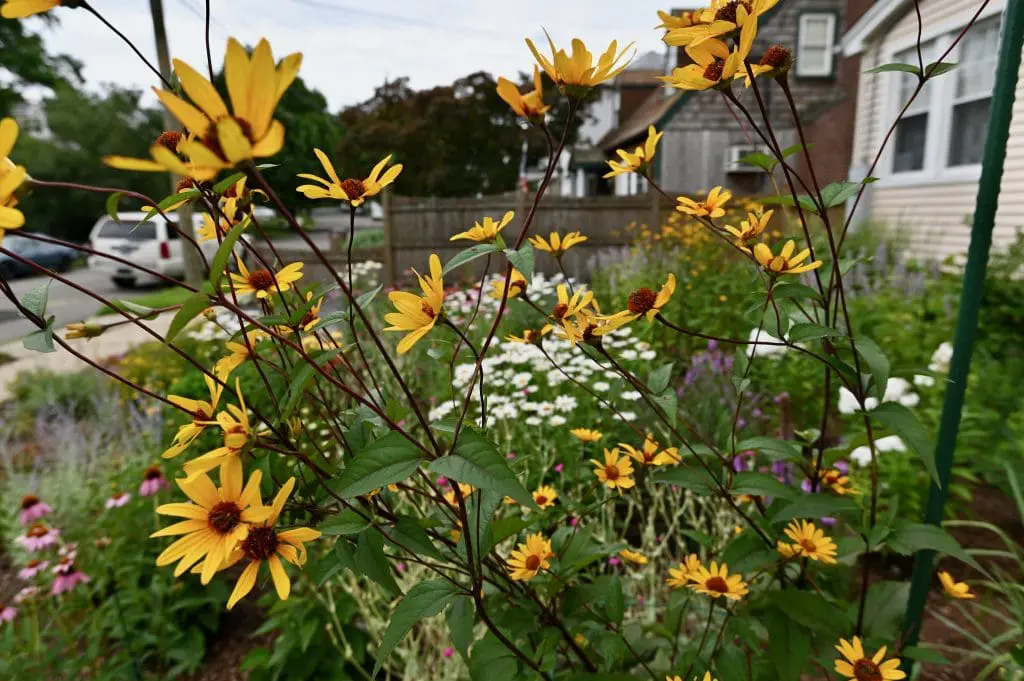
We love the elegant branching structure of Heliopsis and its high ecological impact — from habitat building to erosion control!

3-6’ tall

Dry to medium soil.  Full sun is best, but can tolerate part shade—and may require staking.

Blooms July to September/October.

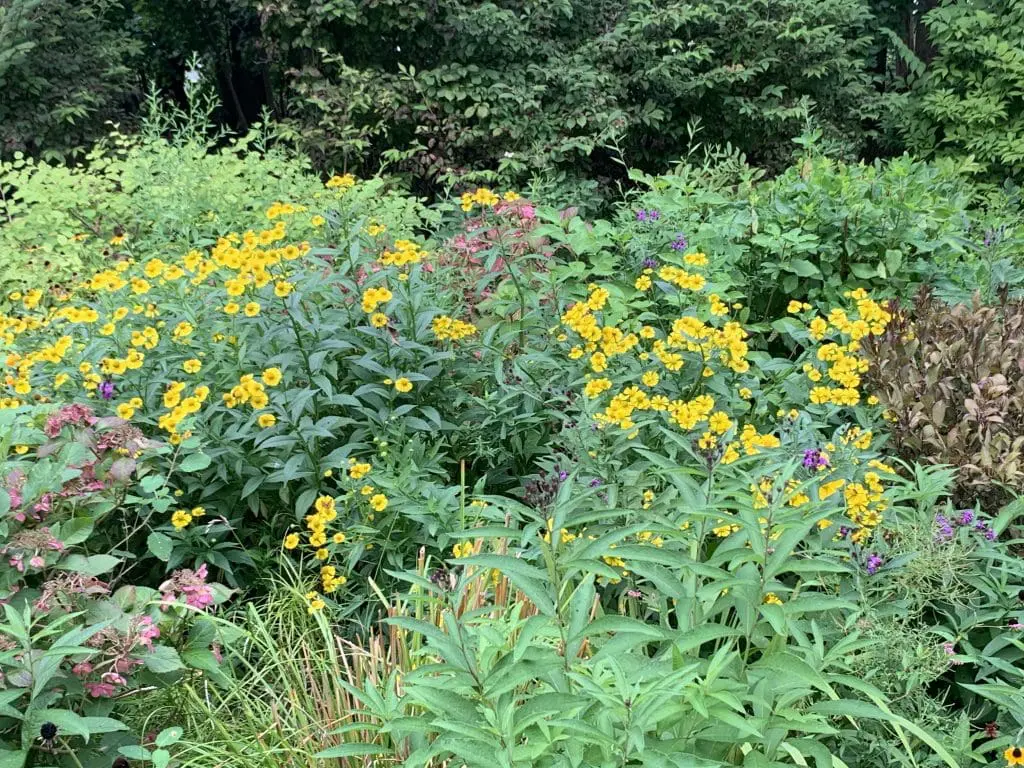
Tall Heleopsis is perfect for a rear border. Its fast growing nature provides erosion control for the slope.

Fast growing & naturalizing, Heliopsis is ideal for soil stabilization on slopes, as seen in the above photo. This garden drops off abruptly and is susceptible to erosion. We removed the existing invasives and planted a mass of Heliopsis behind native flowering Viburnum shrubs.

Native to eastern & central US. Naturally found in prairies, fields and forest edge.

ATTRACTS POLLINATORS including:

Bees – bumblebees, miner bees, carpenter bees, digger bees, honeybees, cuckoo bees, leaf-cutting bees, halictid bees & goldenrod solider bees

Butterflies – Painted ladies, rigid sunflower borer moth & more

Birds – hummingbirds, finches, sparrows and juncos

Many beneficial insects overwinter in the stems of the Heliopsis. Leave your perennials up!

MEDICINAL Traditionally, Heliopsis has been brewed into a tea or tonic to treat lung ailments, fevers and colds. The stems have been used to treat malaria.

Asteracea, the Sunflower family.

GOLDENROD

Solidago spp. 

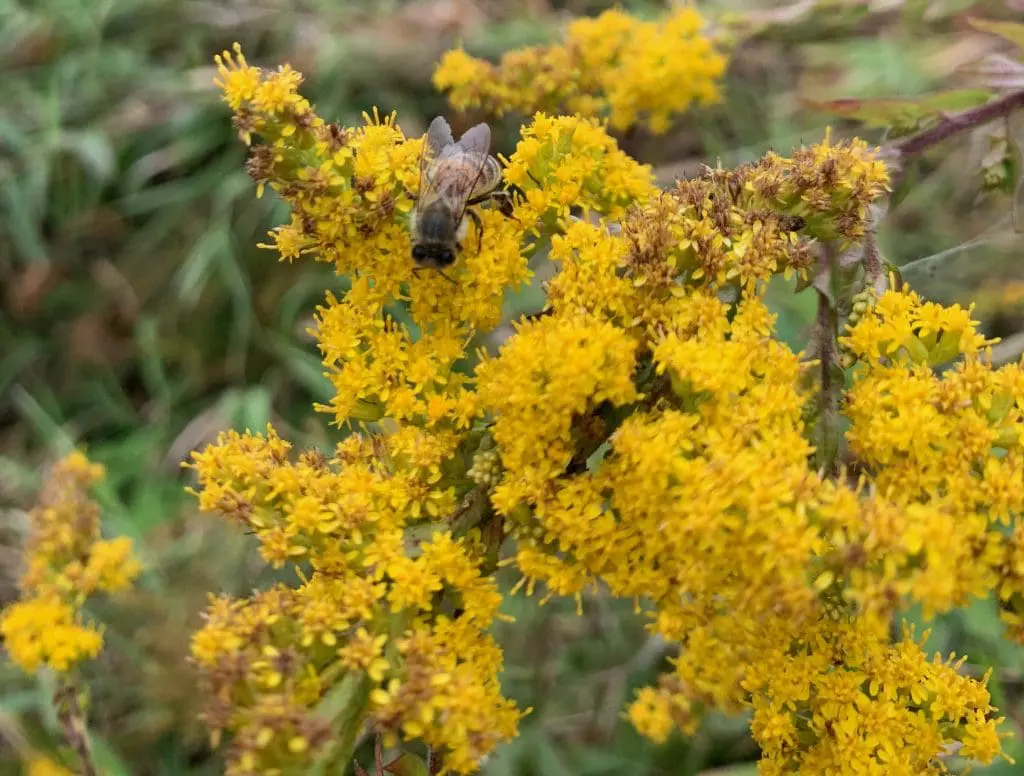
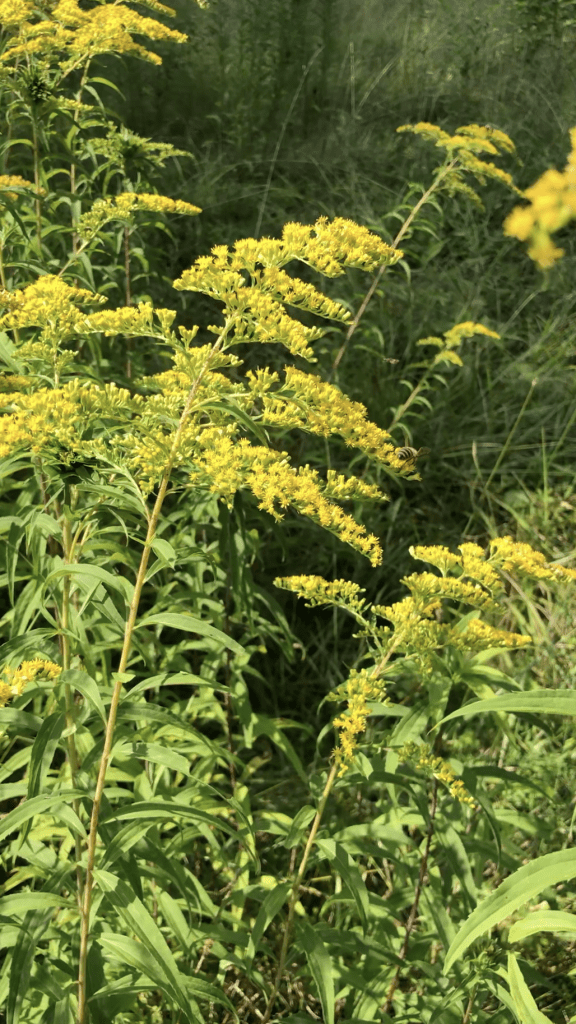
Pollinators attracted to goldenrod (a sampling of many): sphinx moths, hummingbird moths, honey bees, native bees, wasps, monarch butterflies, red-banded hairstreak butterflies, and beneficial insects such as ants, spiders and praying mantises!

For shadier areas try S. caesia (Wreath Goldenrod) or S. flexicaulis (Zigzag Goldenrod)

Goldenrods have a rich ethnobotanic and medicinal history. Some Native American tribes like the Lenni Lenape used goldenrod in sweat lodge ceremonies. Ojibwa used it to treat fevers, ulcers, boils and cramps. The Blackfoot employed it for congestion and sore throats.

Many people misattribute goldenrod as their seasonal allergies.  As discussed previously, insect-pollinated plants do not have airborne pollen that triggers allergies! Ragweed is generally the culprit and blooms at the same time as goldenrod.

All goldenrods are yellow except for S. bicolor which is white!

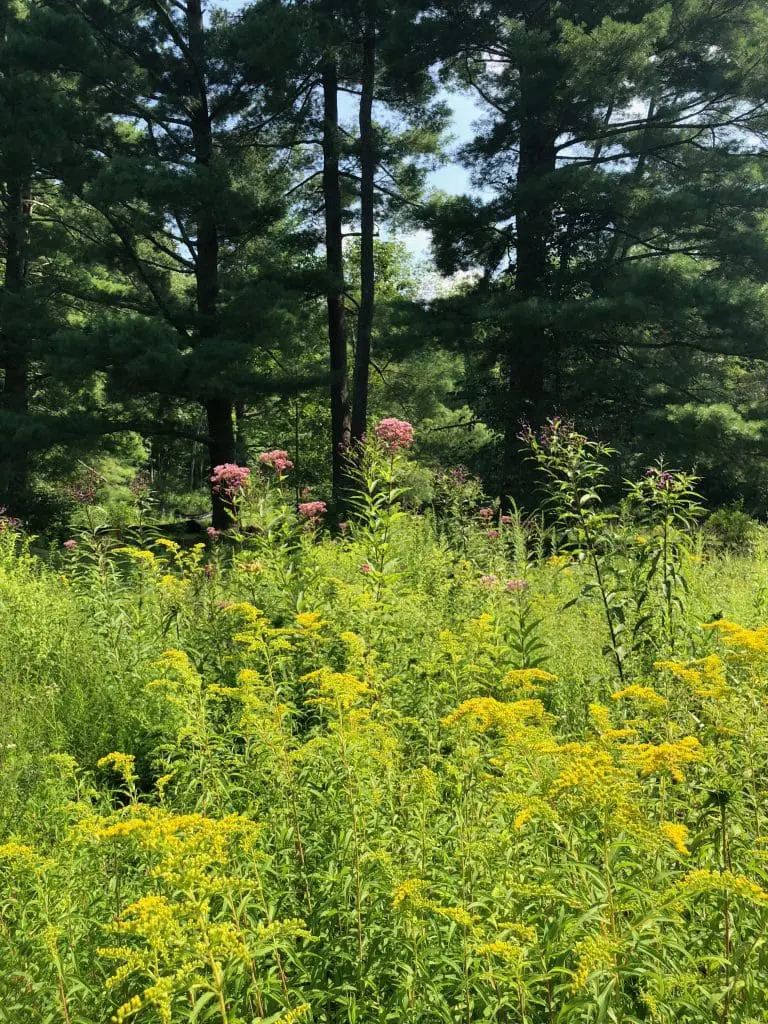
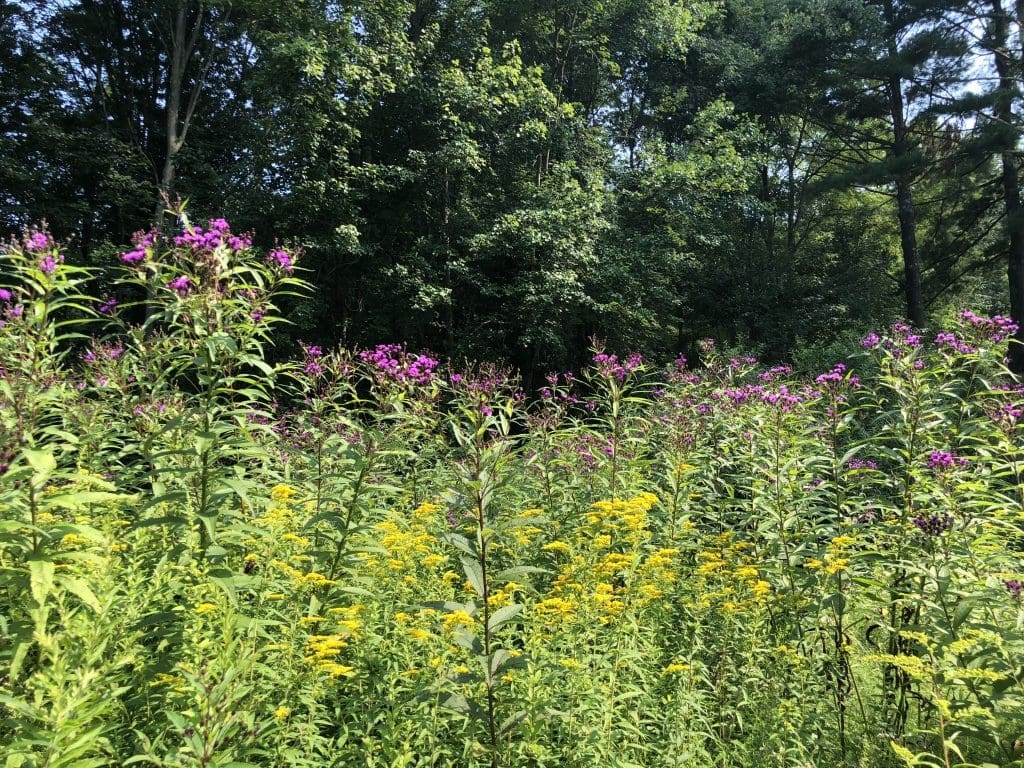
The above photos were taken at a wet meadow we manage in South Salem.  It was previously a lawn until we stopped mowing and let the native seed bank do its thing. Always worthwhile to see what Mother Nature pairs together.

Stay tuned for more of our favorite native perennials for the northeast in Part Two of the blog – coming soon!

—

Green Jay Landcaping

914-560-6570
Filed Under: Ecological Education Tagged With: ecological landscape design, ecological landscaping, healthy landscape, healthy yard, landscape design, landscape designer, landscape ecologist, national park at home, native landscaping, native perennials, native plant garden, native plant month, native plants, natural landscaping, nature preserve, pollinator garden, pollinator pathway

We are lucky to have established ourselves as a business in the very competitive pool of landscape designers serving Westchester County. Landscape design, build, and maintenance are demanding industries with the majority of make-or-break business occurring in six months of the year. There is often a high turnover among both staff and companies that can preserve. Jay Archer has worked in landscaping in Westchester and Fairfield Counties for decades. In this blog, he reflects on what separates the cream from the crop – why certain landscape designers thrive, and others fail.

Design Point of View

Like any artist, a landscape designer should have a clear point of view when designing. Much of this may be informed by the Design Program – the criteria for the design, a wish list from the client, or a set of problems to solve – but the designer’s own expertise, talent and design style will also inform their design point of view. Without a strong point of view, the design will lack coherency and lose the special details that make a landscape unique. 

At Green Jay Landscape Design, we are an ecological landscape design and build firm.  Jay’s point of view as a landscape designer draws heavily from natural landscapes. He seeks to design habitats that perform many ecosystem services. Nearly all of our designs include pollinator gardens, rain gardens, or aquatic habitats. They are carbon net positive. Jay gravitates towards diverse, meadow-like perennial gardens and designed woodland understories for a wild, naturalistic, yet composed aesthetic. You are unlikely to find a European-style parterre in our designs. You will find productive, layered designed ecosystems that feel like your own private nature preserve at home. 

Integrity & Communication

Integrity is the most important tenet for any business owner.  It is a value we instill in our employees from day one. We respect the utmost privilege of working at each client’s home. Job sites are kept neat and tidy. Jay is always available by phone or for a site visit to review the landscape together. Strong communication goes hand in hand with integrity. We strive to keep clients updated through every step of the design and installation process. In our industry, weather can disrupt work schedules, and plant inventory can change suddenly. Communication with our valued clients through every step of the process is essential.

Logistical Organization

Designing an excellent landscape is one thing. Building that landscape is a different skill set entirely. At Green Jay Landscape Design, we execute everything in-house, allowing us to control every critical step in the landscape installation. Our crews follow horticultural guidelines with Green Jay’s own organic planting and maintenance processes. Green Jay executes everything from hand-selecting the plants from the nursery to removing unwanted vegetation, precise landscape grading, soil preparation, irrigation, planting and masonry. Coordinating these installs, which can take anywhere from a few days to a few months, requires obsessive organization, connections with local vendors, and know-how when navigating local permits. 

Inspiration

As mentioned above, a strong design point of view is what elevates great designers from mediocre designers. Point of view is formed, in part, through inspiration.  Jay finds no shortage of inspiration in the natural world.  Long before becoming a landscape designer, he travelled the country by way of national park, spending weeks on end backpacking in the woods. Jay has spent much time observing natural ecosystems, plant combinations and local fauna. His years as a naturalist are constantly informing his design decisions. Jay’s designs use many native plants, many modeled after combinations he observes in the field. Every plant choice, native or not, serves an ecological purpose — from habitat creation to erosion control to phytoremediation to producing a harvestable food crop. Jay other great inspiration is water; he has designed and built waterfalls, ponds and streams in many of his designs. 

Investment in Long-Term Outcomes

Organic landscaping’s success relies on 1) creating the right growing environment for each plant and 2) designing with plants that attract natural predators to common garden pests. Our entire design and installation process is centered around creating a landscape that can succeed long-term, starting with our custom organic soil amendments and professional irrigation installation. We offer a one-year plant guarantee where proper maintenance is performed. For select clients we offer our full-service organic estate management.

We hope this blog provided some food for thought on what to consider when hiring a landscape designer. Try to find a designer who’s style and point of view align with yours. Look at reviews and for referrals from past clients to suss out important values like integrity, communication and timeliness. To schedule a consultation with Green Jay Landscape Design, contact us.

—

Jay Archer

Green Jay Landscape Design

Where Design Meets Ecology

914-560-6570
Filed Under: Landscape Design Tagged With: backyard design, design inspiriation, design point of view, ecolandscaping, estate management, Fairfield County Connecticut, Fairfield county landscape design, green landscaping, integrity, landscape design and build, landscape design inspo, landscape design master plan, landscape designer, landscape ecologist, Westchester County NY, Westchester NY landscape design

We have noticed a trend over the last year: a growing appreciation for natural areas, time spent outside, and of course, a hyperawareness of our personal health. Undoubtedly influenced by the COVID-19 pandemic and a realization that a healthy environment contributes to human health, our clients are seeking the benefits of a nature preserve, in the privacy of their own backyard.

A client’s mature woodland in Bedford Hills, NY was incorporated into the design with seating areas and walkways immersed throughout.

Beyond the usual landscape design requests — foundation plantings, leveling, screening — these clients want to emerge themselves in an environment that feels natural, alive, safe, and therapeutic. 

Not so coincidentally, these are our favorite types of landscapes to design! In this post we’ll explore how to create these wild and vibrant spaces on your own property.

Landscaping vs. Designing Landscapes

Too often people think of landscaping as an accessory to the house – how best to accentuate an entrance, hide an air conditioner, screen a neighbor’s home – instead of the actual value the landscape itself can provide. Ecological landscaping recognizes that each plot of land, no matter how small, can impact the local ecosystem. 

A mostly-native, part shade landscape in Rye, NY featuring a naturalistic waterfall, stream & pond system.

Designing with plants that are regionally native, that have evolved over thousands of years with local insects, birds and other wildlife has a direct, noticeable effect.  As soon as the plant delivery arrives, we see the bees, butterflies and moths delighting in their new pollen and nectar sources. 

Swallowtail butterfly on Monarda, one of our favorite native perennials!

These insects are integral in the plants’ reproduction – spreading pollen from plant to plant, enabling seed production and dispersal – and foundations in the food chain for higher up wildlife like birds and mammals. Picking the right plants is the first step in creating a vibrant and lively landscape ecosystem.

A note from a client. We designed a bird and butterfly garden in prominent view for their young children to observe.
Email from a client whom we designed a Bird Sanctuary for. This was only a week after our installation.

Nothing brings us more joy than notes like these from clients. Seeing more birds on their property than ever before. Using their pollinator garden as a teaching opportunity to explain metamorphosis – the beautiful transformation from caterpillar to butterfly – to their children. Or the client that takes on amateur entomology, determined to identify every new insect that now arrives on their landscape.

Butterflyweed (Asclepias tuberosa) is a host plant for the Monarch butterfly caterpillar; its nectar attracts many other Lepidoptera as well.

Designing Access: Pathways & Viewing Areas to Enjoy Your Nature Preserve

Hidden patios and walkways. Mixing natural hardscape materials to delineate spaces and seamlessly blend in with the wild aesthetic.d

Our design philosophy is simple: create natural landscapes that invite both wildlife and human engagement. A static landscape viewed from afar is simply boring! 

A simple rectilinear flagstone pathway leads from front yard to backyard.

We always strive to integrate meandering garden paths that allow our clients to slow down, take a stroll, notice the changes in their surroundings, listen to the sounds, smell the scents and reconnect to their own wild nature.

A central patio with naturalistic fire pit invites respite and relaxation in your landscape.

Some of our favorite ways to invite human interaction with the landscape are garden stroll walkways, woodland paths, hidden seating areas with framed viewpoints, and unexpected gathering spots – like a firepit, fountain or swing nestled into the nature preserve.

Designed waterfall with shallow areas provides critical water and bathing areas for birds. Nectar & pollen-rich perennials line the stream.
Stairs leading to a small patio to observe the fish, turtles and pollinators in this designed pond ecosystem.

Reduce Your Lawn Area

If this type of landscape environment sounds appealing to you, wonderful!! As mentioned earlier, properties of any size can be designed to emulate your own private nature preserve. However, don’t expect to achieve dazzling results if you restrict your design area to typical foundation plantings surrounded by huge expanses of lawn.  Not only is this intimidating to birds, pollinators and other wildlife, it restricts the number, size and diversity of plants we can work with.  

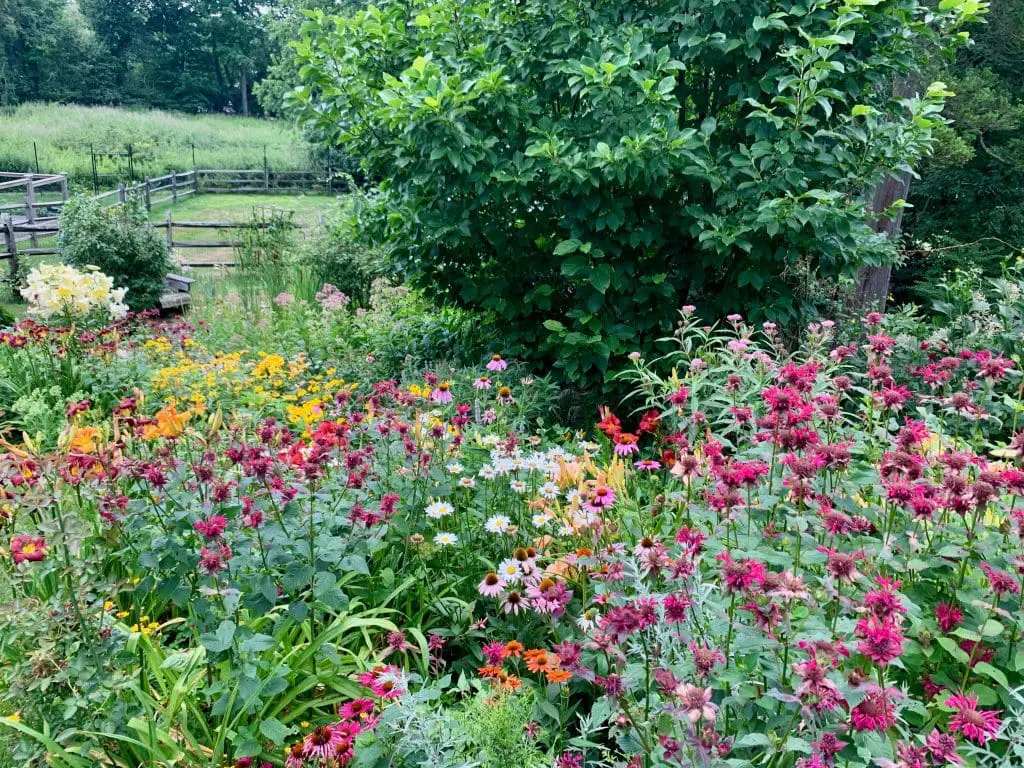
Plant diversity at its finest! An explosion of color, nectar and pollen for our essential pollinators.

Pollinators are both specialists and generalists. Some can feed on many pollen/nectar sources, others are highly evolved to feed and reproduce on only certain plants. Both specialists and generalists need consistent food sources throughout the seasons. That means a strategic planting plan that achieves successive blooms during the growing season, followed by seed and berry production for the fall and winter months. Diversity of plants is key!

Monarch butterfly on native Agastache.

So, we always encourage clients to think hard about what they actually use their lawn for.  Does it a serve a specific purpose, like a play area for children? Or is it really just landscape filler? Reducing your lawn area allows us to develop a layered plant composition, from native trees to berry-producing shrubs to pollen-rich perennials and groundcovers. Design, plant, and the wildlife will come!

Learn more about designing your own private nature preserve by scheduling a consultation with us. We offer free 15-minute discovery calls and paid professional, on-site consultations. 914-560-6570.

—

Green Jay Landscape Design

Where Design Meets Ecology

Filed Under: Landscape Design Tagged With: designing a nature preserve, ecological landscape design, ecological landscaping, garden design, landscape design, landscape designer, national park at home, private nature preserve

We LOVE our native ferns. There is something so soothing about a colony of ferns – the texture, the form, the smell – they are an iconic symbol of forests of the Northeast. Ferns do not produce flowers—no nectar or pollen for pollinators—and their foliage does not provide much food for wildlife.  However, colonies of ferns provide essential cover and nesting sites and nesting materials for wildlife.  Ferns can also grow in inhospitable environments – deep shade, wet soils, and soils with extreme pHs – playing an important role in soil stabilization where not many other plants can succeed.

We consider native ferns essential to any shade garden or woodland garden — we feature native ferns in nearly all of our ecological landscape designs! Below we explore our favorite go-to ferns for landscape installations in the tri-state area.

Lady Fern

Athyrium filix-femina

2-5’ Tall

Deciduous

Native to the continental US and Alaska, Lady Fern naturally grows in wet meadows, moist woodlands, and (less commonly) swamps. It is considered a pioneer or early succession species.  In the mountainous parts of the country, Lady Fern fronds are a food source for Grizzly Bears and Elk. Distinguishable by the darker green to purple stems and delicate lacey foliage. Cultivar ‘Lady in Red’ has red stems and light green fronds.

New York Fern

Thelypteris noveboracensis or Parathelypteris noveboracensis

1-2’ Tall

Deciduous

New York Fern can tolerate a range of habitats, from full sun to part shade, dry to wet soils (a facultative plant, great for rain gardens!). Naturally found in dappled sunlight in mixed forests, swamps and riverbanks.

Caterpillars that feed on New York Fern foliage include Pink-shaded Fern Moth, and American Angle Shades, Closebanded Yellowhorn Moth.

Distinguishable by its tapering fronds – instead of a triangular shape, NY Fern fronds are widest in the middle and tapered at both ends.

Christmas Fern

Polystichum acrostichoides

1-3’ Tall.

Evergreen!

Distinguishable by its darker green, leathery foliage and stocking-shaped pinnae (leaflets). Fiddleheads that emerge in spring are silver. Can take dry to moist soils and does well in part shade to full shade. Grows in a clump, fountain-like shape.

Cinnamon Fern

Osmundastrum cinnamomeum

2-3’ Tall. Up to 5’ tall in ideal conditions!

Deciduous

Cinnamon fern is distinguished by its central, cinnamon-colored spikes – new fronds that quickly turn brown.  These fibers are actually used to pot orchids! Plus, the fiddleheads of Cinnamon Fern are edible! Average to wet soils; rich in organic matter is best. Part shade to Full Shade. In the winter, fronds are eaten by ruffed grouse and wild turkeys.

Maiden Hair Fern

Adiantum pedatum

1 – 1.5’ Tall

Deciduous

Maiden Hair Fern has uniquely wide, fan-shaped and scalloped leaflets. Stems are wiry and thin. Red fiddleheads. Native to Eastern & Central US. Grows well in part shade in rich moist soils. 

Marginal Wood Fern

Dryopteris marginalis

1-2’ Tall

Evergreen

Naturally grows on rock outcroppings in forests. Fronds are leathery in texture and grey-green in color. Grows best in slightly acidic, rich, moist soils in part shade to full shade. Often found in the understory of oak trees – genus name originates from the Greek word dryas meaning oak. 

Royal Fern

Osmunda regalis

2-3’

Deciduous

Grows well in wet to medium soils. Part shade to full shade. Prefers slightly acidic, rich soil. Can reach up to 6’ tall in ideal growing conditions! Pinnae are large and well-separated. Brown clusters at the end of the fronds hold the spores. A great fern for stream edges, ponds, bogs, and wetlands.

Ostrich Fern

Matteuccia struthiopteris

3-6’

Deciduous

Naturally grows in moist soil along streams and riverbanks. Grows fast and colonizes quickly through rhizomes. Best in medium to wet soils, rich in organic matter, in part to full shade. Namesake comes from the large, feathery-textured fronds, not unlike those of an ostrich. The fiddleheads are edible and considered a delicacy! 

Filed Under: Ecological Education, Landscape Design Tagged With: eco-friendly landscaping, ecolandscaping, ecological landscape design, ecological landscaping, ecology, environmental landscaping, ferns, forest ecology, healthy yards, native ferns, native plant garden, natural landscaping, organic landscape, organic landscaping, plant native, rain garden, shade garden, wetland, wildlife garden, wildlife habitat, woodland, woodland garden

As a mission-based landscape company, we aim to support all players in the natural, native, ecological landscaping realm.  Unfortunately, ecological landscaping is still the minority.  Through collaboration, cross-promotion, referrals and knowledge exchanges, we hope to build this minority industry into the standard for land care and design. As such, we’ve compiled a list of our favorite sustainable landscape players in NY and CT. Leave us a comment if we left anyone out!

Native Plant Nurseries 

NATIVE: A Native Plant Nursery 

Fairfield, CT

NATIVE is a retail plant nursery located in Fairfield, CT that supplies regionally-native trees, shrubs, perennials, grasses, ferns and vines. They offer delivery, basic design services and installations. The nursery is the sister company of William Kenny Associates, a well-known ecologically-based landscape architecture firm specializing in wetlands.

Earth Tones Native Plants 

Woodbury, CT

Earth Tones is owned by Lisa and Kyle Turoczi, whose collective education and experience spans from landscape design to resource management, restoration and horticulture. Kyle has an MS in Resource Management & Conservation and Lisa has a degree in Landscape Architecture. They started Earth Tones nursery because sourcing native plants for their design projects was difficult. Read their full story here.

Native Landscaping

Pawling, NY

Native Landscaping is both a garden center for native plants and a design build company, run by Pete Muroski. Native Landscaping has been in business for nearly forty years! Pete is a lifelong environmentalist and outdoorsman, and it’s reflected in is naturalistic, ecological designs. 

Ecological Landscape Design & Maintenance Companies

PLANitWILD

Westchester, NY

Of course, we love PlanitWild’s mission of rewilding residential and commercial properties to create more habitat and sequester more carbon. We’ve collaborated with co-founder Amanda Bayley before and can vouch for her ecological knowledge and design talent. Amanda has amassed a team of diverse specialists at PLANitWILD and they have already made waves in the design and public outreach realm!

Reflections of Nature

Dutchess County, Columbia County, Northern Westchester County NY and Western Fairfield County, CT

Michael Gulbrandsen, of Reflections by Nature, designs beautiful landscapes that honor the magical connection between humans and nature.  Michael is known for his walking trail designs and use of native plants. Having worked with Michael before, we can attest to his talent and effectiveness as a designer! Learn more 

Hudson Valley Native Landscaping

Hudson Valley, Dutchess, Ulster, Columbia, Greene and Orange Counties, NY

Hudson Valley Native Landscaping specializes in woodland restoration, invasive species removal, native landscaping and tree care.  They approach everything ecologically and aim to restore local woodland habitats and support pollinators through native landscaping. Started by John Messerschmidt in 2009, they are leaders in ecological landscaping serving Dutchess, Ulster, Columbia, Greene and Orange counties in New York.

Thanks to all of these entrepreneurs for leading the way in ecological landscaping and responsible land stewardship. It takes a village!

—

Green Jay Landscape Design

Where Design x Meets Ecology

Contact Us

914-560-6570

Filed Under: Ecological Education Tagged With: CT native landscapers, Dutchess County, ecological landscape design, ecological landscaping, environmental landscaping, Fairfield County Connecticut, Hudson valley NY, landscape design, landscape designer, native landscaping, native plant garden, native plant nurseries, native plants, natural landscaping, naturalistic landscaping, NY native landscapers, Westchester County NY

  • « Go to Previous Page
  • Page 1
  • Interim pages omitted …
  • Page 15
  • Page 16
  • Page 17
  • Page 18
  • Page 19
  • Interim pages omitted …
  • Page 60
  • Go to Next Page »

Footer

Mailing Address: 222 Purchase Street, #144 Rye, NY 10580
Shop Address: 369 Bradhurst Ave, Hawthorne, NY 10532
(914) 560-6570
  • Facebook
  • Instagram
  • LinkedIn
  • Pinterest
  • YouTube
  • Houzz
  • Slide Share
  • Installation
  • Portfolio
  • Pricing
  • About
  • Contact

Copyright © 2025 · Green Jay Landscape Design. All Rights Reserved · Privacy Policy · Website and Local SEO by Ramblin Jackson