• Skip to main content
  • Skip to footer
Green Jay Landscape Design

Green Jay Landscape Design

Green Jay Landscape Design

(914) 560-6570
  • Design
  • Installation
  • Portfolio
  • Pricing
  • About
    • Service Area
    • Meet Our Team
    • Our Process
    • Our Promise
    • Mission, Vision, & Core Values
    • FAQ
    • Press & Events
    • Blog
    • Reviews
    • Careers
    • Affiliations
    • Newsletter Sign-up
  • Contact

greenjayadmin

This is Part Two of the Designing a Bird Sanctuary series. Catch Part One here!

This project, dubbed ‘Their Place’ is part of our 2019 Green Jay Landscape Design Design Highlights series (#1!).  Check back for a discussion of the rest of our favorite projects of 2019! Read about projects 2, 3, 4 and 5. 

The Design Intent

A place for the birds, the caterpillars, the butterflies and the bees – the displaced species of our native habitats – Their Place. This design needed to be an authentic, functional habitat for both native species and migrating birds.  It also needed to be a beautiful and inviting space for the client to enjoy in harmony.

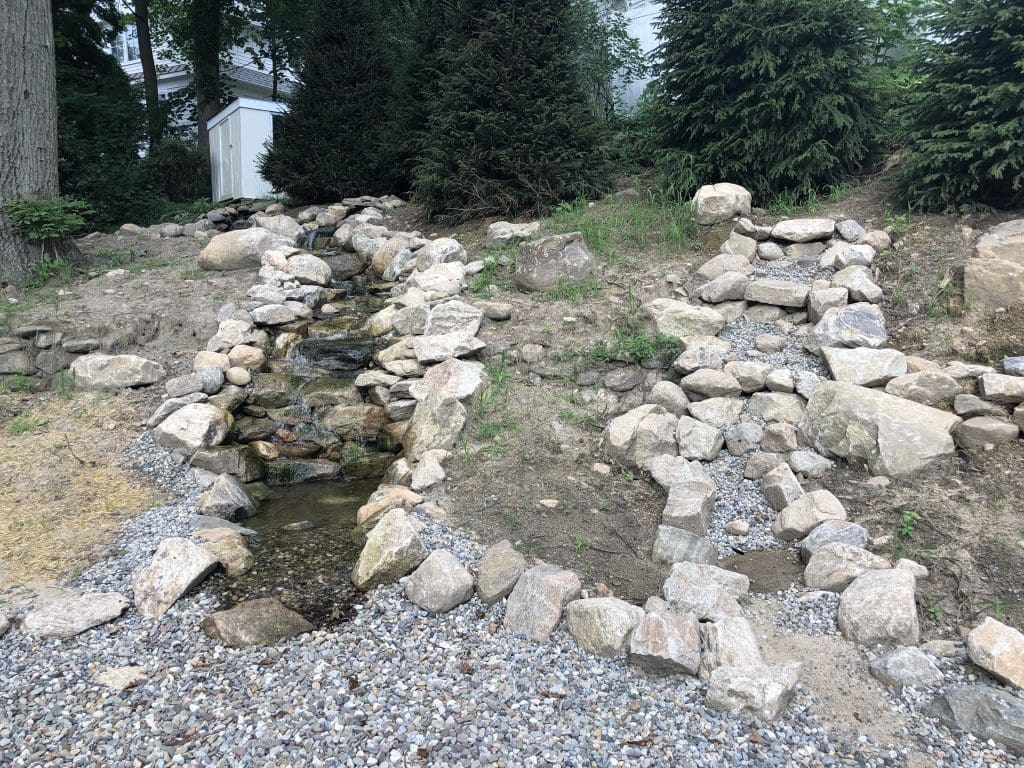
We came into the project with a fairly blank slate, with the exception of the dual-waterfall stream, which culminated in a pond-less gravel area with a firepit.  We used these well-constructed bones as the foundation of the design.  The first step was to map out circulation paths and viewing areas, and to use our site analysis to determine the existing planting microclimates.

We identified five distinct planting microclimates and garden types: full sun perennials, sun/shade perennials, sun/shade rain gardens, sun/shade woodland slope, and a shaded woodland.

Above: AutCAD drawing of Their Place design.  This design presentation was a huge collaborative effort for our entire design team. 

Layout

Circulation guided this design, in a series of sweeping paths that guide you through the different garden zones, to various viewing platforms, and to the central area of activity.

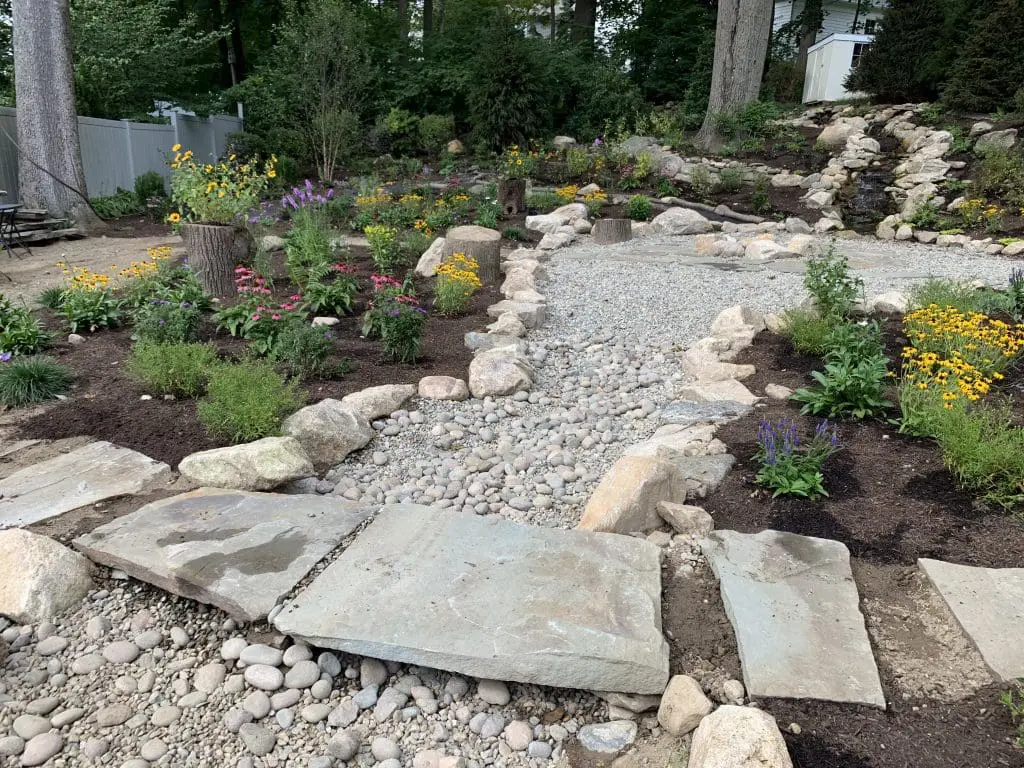
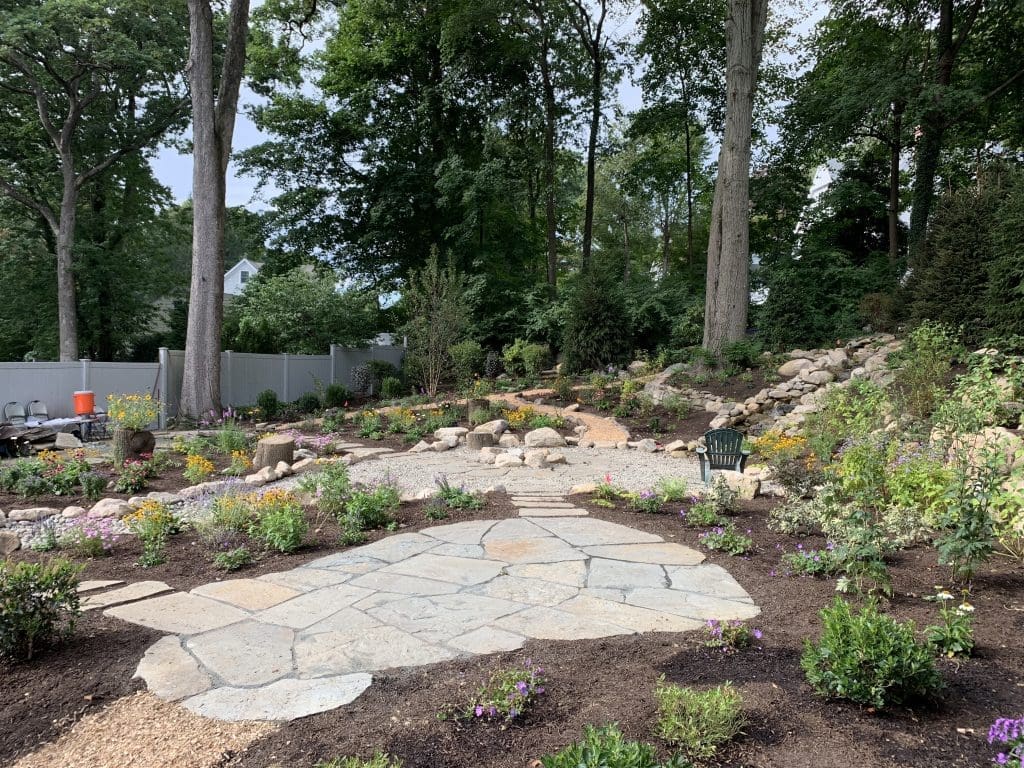
On a grand flagstone path, you enter the sanctuary with an option to travel left, towards a viewing platform, or right to meander through the rain garden.  The left path also diverges off through a Bird & Butterfly garden and toward the central entertaining area: the streamside firepit, which we stylized by adding a flagstone surround to anchor the pit in the otherwise gravel patio.
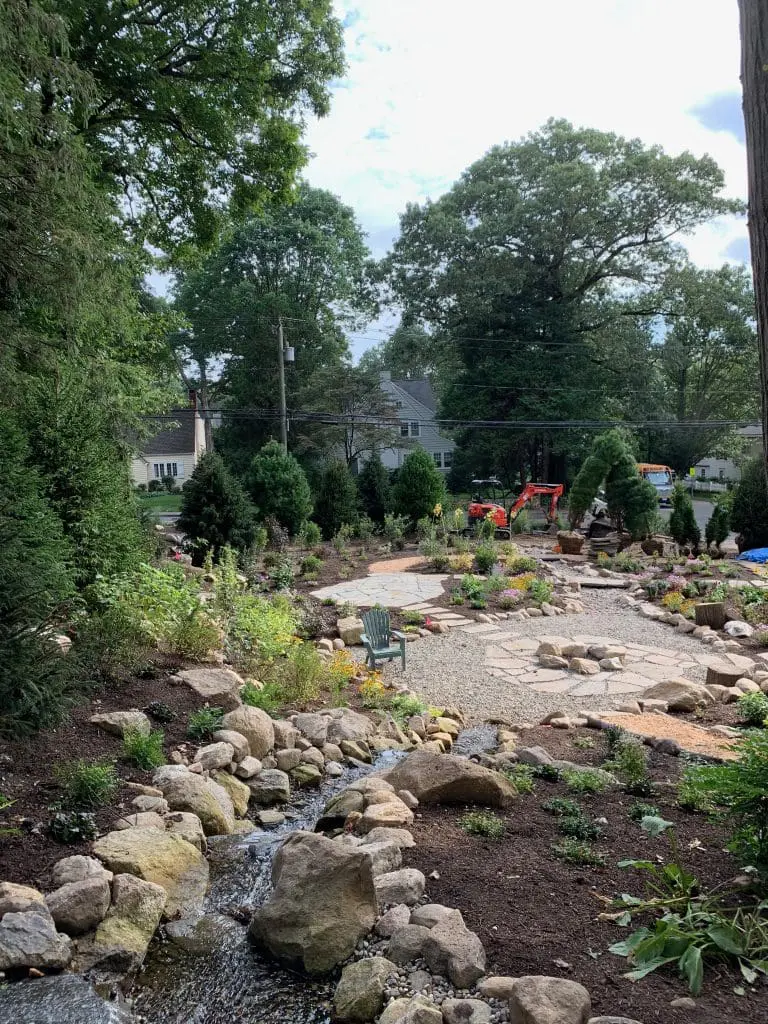
From this central patio, you can enjoy the waterfall, the firepit, and the range of microclimates and designed habitats around you. Two flagstone viewing platforms were installed northeast and southwest of the property, offering different viewpoints and intimate seating areas.
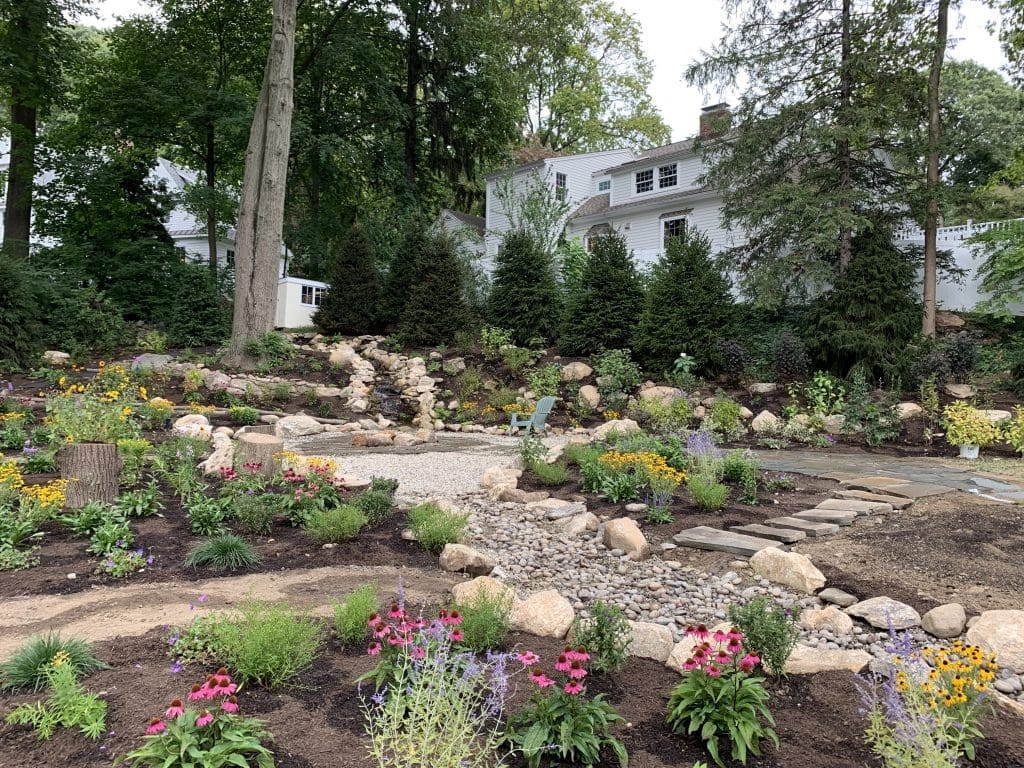
This design is a model of natural stonework.  We always prefer to use natural, locally sourced materials in our projects over synthetic ones. These patios and walkways are made of local flagstone on a soft, stone-dust base, which allows water to percolate through the joints. Hard bases – cement – do not allow for storm water infiltration. What’s more cement production is responsible for a startling 8% of global carbon dioxide emissions! Synthetic hardscape materials, like concrete pavers (cement is a main ingredient of concrete), usually cannot be recycled or repurposed, and end up in a landfill.
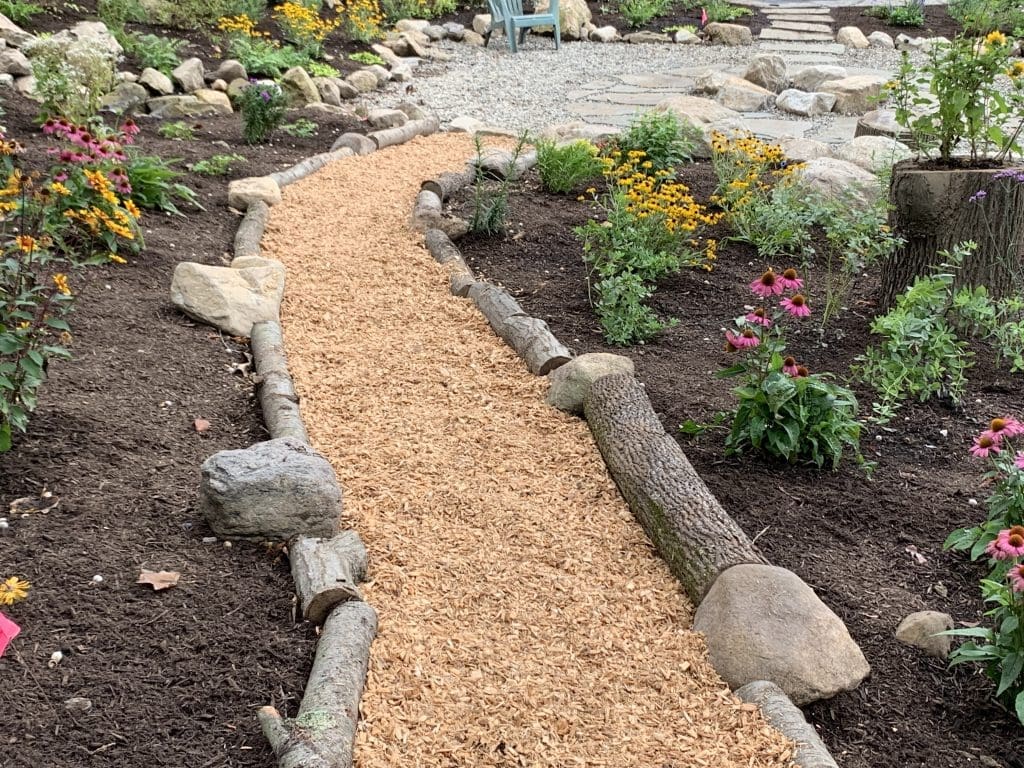
Secondary paths were constructed of woodchips and lined with fallen logs.  Woodchips are a great path material because they allow for infiltration and are relatively inexpensive and easy to maintain.

Picking Plants

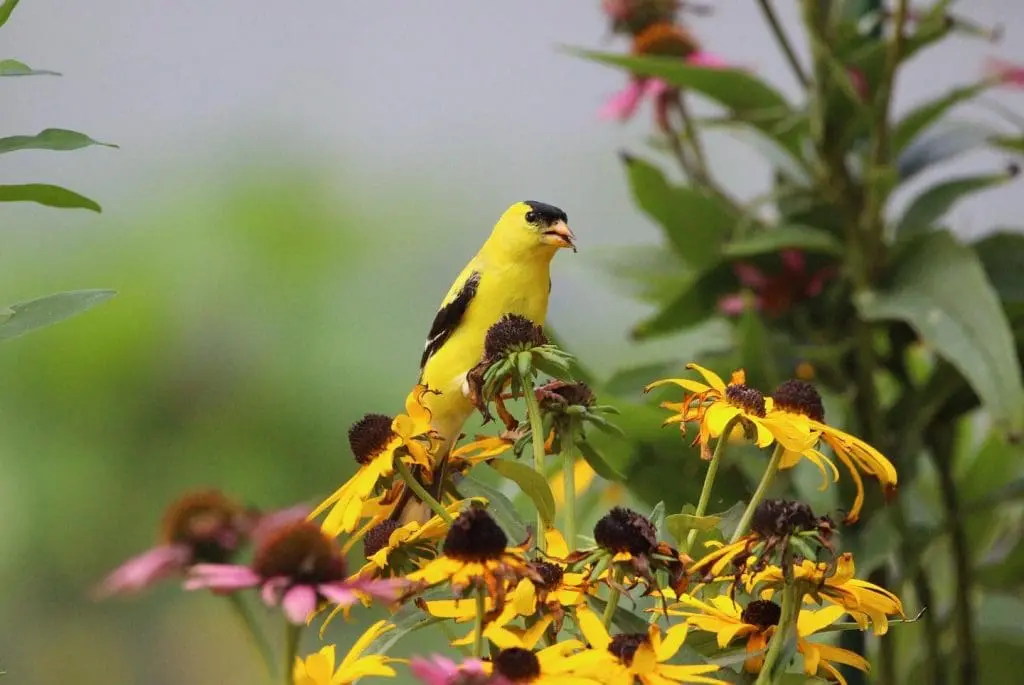
GJL chose the plant pallet specifically for the beneficial insects each species would attract – beneficial for both their plant pollination capacity and as a food source for local birds.  Iconic entomologist Doug Tallamy estimates that one clutch of chickadees requires 6,000 – 9,000 caterpillars to raise to maturity! The first step in recovering our bird populations is to boost insect populations.  And if you don’t think bird populations are something to worry about, think again.  The Audubon society estimates that North America has lost 3 billion birds since the 1970s – more than one in four birds.

Another important consideration in plant selection is the sequence of blooms, seeds and berries.  Not only is it aesthetically interesting to have something occurring throughout the year, not just during peak growth in spring / early summer, but it is essential in creating a functional habitat!  Two weeks of pollen does not a habitat make! What’s more, berry-producing shrubs and the seeds of some native perennials provide essential food sources in fall and winter.

We also incorporated a number of native and non-native shrubs to develop a woodland scrub-shrub habitat, an area with enough coverage and woody material to make a suitable shelter for many bird species.  Behind the scrub shrub garden is a serpentine planting of large evergreens, creating both privacy screening and nesting habitat.

Selections from our Plant List

Scrub-Shrub

Blueberry (Vaccinium)

Summersweet (Clethra)

Chokeberry (Aronia)

Bird & Butterfly

False Sunflower (Heleopsis)

Aster

Bee Balm (Monarda)

Lupine

Woodland

Ninebark (Physocarpus)

Shrub Honeysuckle (Lonicera tatarica)

Ivory Halo Dogwood (Cornus alba)

Red & Yellow Twig Dogwood (Cornus)
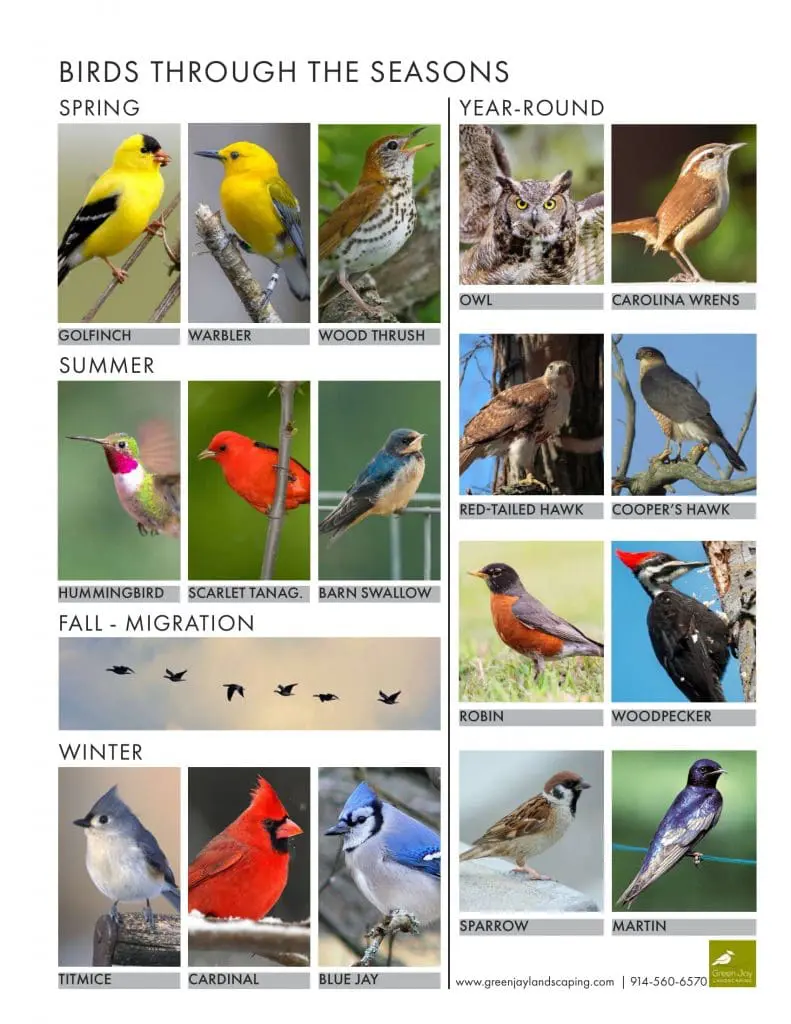
Above: We created this visual guide of what birds Their Place will provide habitat for, based on our plant selections. 

Shelter, combined with a water source for bathing, as provided by the existing constructed stream, together fulfill two of the five categories of the National Wildlife Federations Certified Wildlife Habitat program.  The full five include:

  • food sources
  • water sources
  • cover / shelter
  • places to raise young
  • sustainable practices (soil/water conservation, invasive species control and organic maintenance).

With diverse and successional plant selection for pollen, nectar and berries, coupled with the structural habitat elements, this property no doubt qualifies as a Certified Wildlife Habitat.

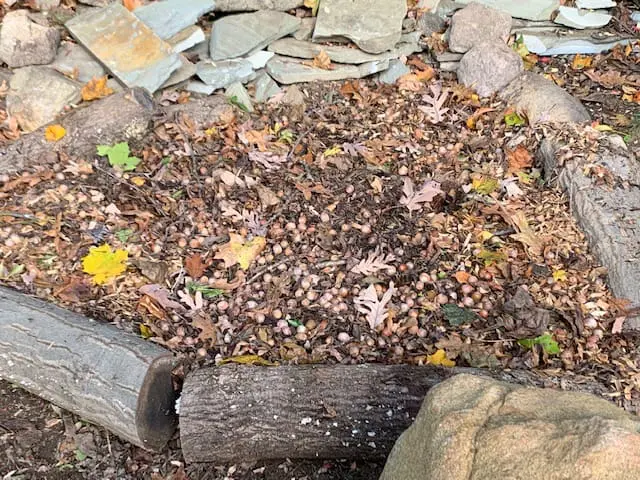
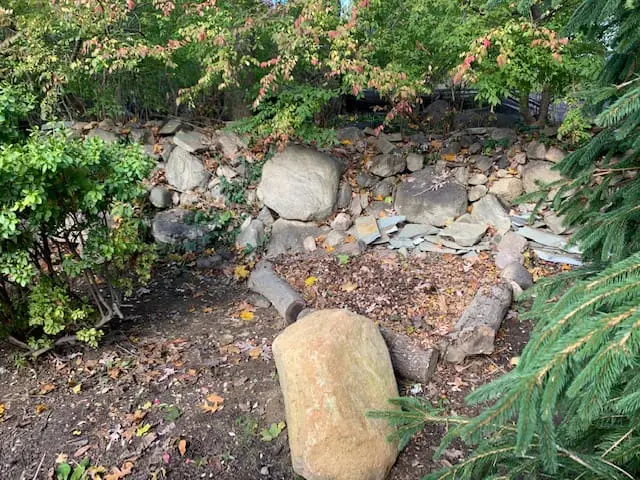
In terms of sustainable practices, we will be maintaining this property under our Organic Property Management Program.  Since there is no lawn whatsoever, we will design a custom maintenance program for the property.  This fall–a mast year for acorns—we created an acorn storage area out of repurposed wood and stone.  The acorns needed to be collected to avoid sapling germination in the spring, and storing them for squirrels, chipmunks, and birds such as jays, pigeons, crows, ducks, mallards turkeys and bobwhite quail is an added habitat service.
GJL also implemented numerous stormwater management solutions (read about the structural storm water management elements in Part One of our blog).  Two rain garden areas were designed with native shrubs and perennials with facultative wetland status, meaning they can withstand both flooding and drought, and successfully absorb excess storm water in storm events.

Rain Garden Plant Selections:

Serviceberry (Amelanchier)

Spicebush (Lindera)

Cardinal Flower (Lobelia)

Cinnamon Fern (Osmundastrum)

Even before the design installation was complete, we received fabulous feedback from the client. Below, an email from the client delighting in how many birds were already on the property!

 

We can’t wait to see this design grow, evolve and flourish. It is a true example of designed habitat, ecological landscaping, and certainly qualifies as Pollinator Pathway of Darien.  Follow us on social media for more photos as this garden grows! @greenjaylandsaping.


—

Green Jay Landscape Design

914-560-6570
 

Filed Under: Featured Work, Hardscaping & Stonework, Landscape Construction & Installation, Landscape Design, Water Features Tagged With: bird and butterfly garden, bird sanctuary, bird-scaping, certified, designed habitat, ecological landscape design, ecological landscaping, landscape design master plan, landscape designer, landscape ecologist, native plant landscaping, natural landscaping, no lawn, organic gardening, organic landscape, plant native, pollinator garden

Sometimes you really do get your dream client and dream job. For Green Jay Landscape Design, that dream job manifested itself this fall in the form of an entire property designed as a BIRD. SANCTUARY.

This project, dubbed ‘Their Place’ is part of our 2019 Green Jay Landscape Design Design Highlights series (#1!).  Check back for a discussion of the rest of our favorite projects of 2019! Read about projects 2, 3, 4 and 5. 

The Site

A true nature lover, this client bought a 75’ x 150’ lot and set out to create a private bird sanctuary and natural habitat. The client wanted the project to be fully ecologically responsible, with the goals of attracting many kinds of bird species into a tranquil landscape where they could be seamlessly observed and enjoyed. Neighboring a busy road, the design also needed screening to create private intimacy.

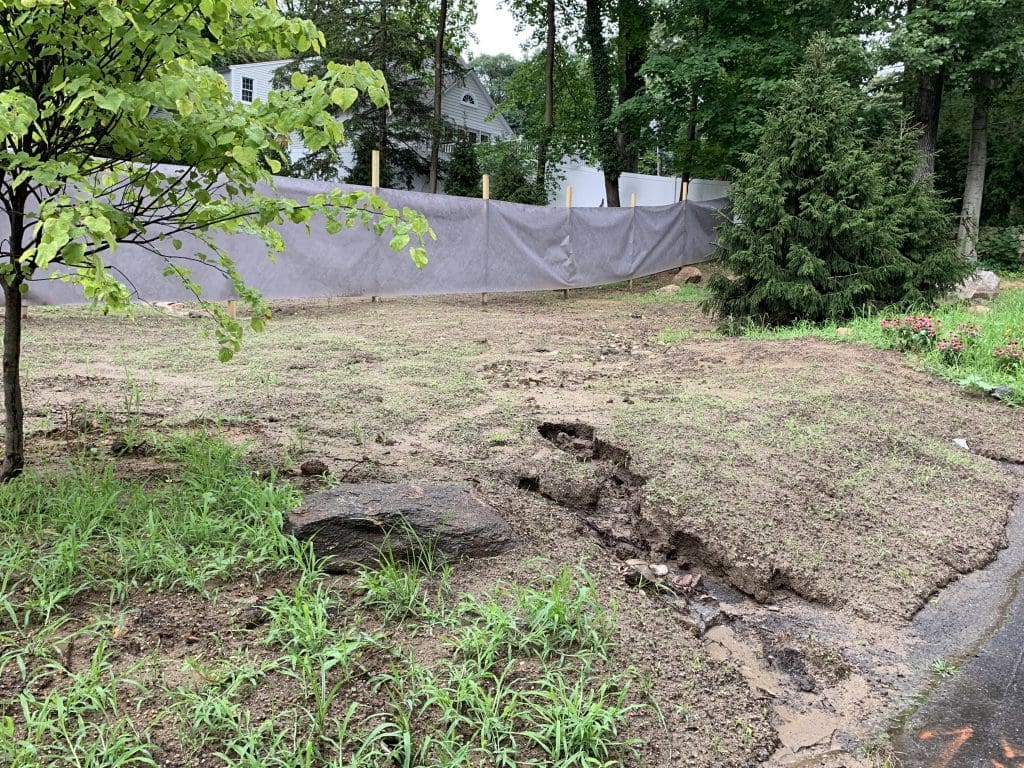
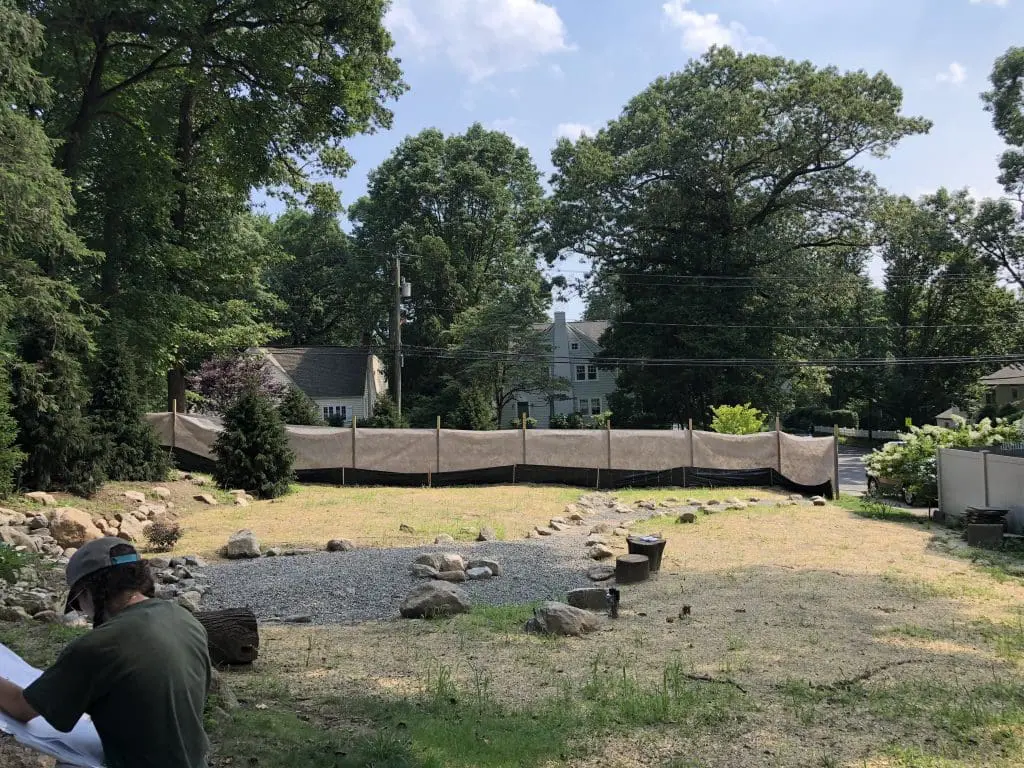
There were some challenges from the get-go. GJL joined the picture after initial work had been done: the creation of a naturalistic, disappearing waterfall, some border tree planting, and a few gravel paths that were roughly installed. The bare soil that remained on much of the lot suffered serious erosion during several storm events, causing the gravel to migrate as well.

Below: BEFORE PHOTOS 

Large ruts of eroded soil tore through the property. Furthermore, the fence installed by the previous contractor started about a foot above soil level, allowing the storm water / sediment mix to runoff into the street.

The storms were particularly damaging to this property because the topography to the north slopes up, meaning the client’s property would collect sheet flow (surface rainwater runoff) from all of the upslope neighbors. One such neighbor was in the process of building a new patio and pool… a huge increase in impervious space and, you guessed it, sheet flow!  Positioned as the “drain” of the neighborhood, we felt extra-extra impetus to collect, filter and infiltrate storm water in as many ways possible, to benefit the local watershed and aquifer.

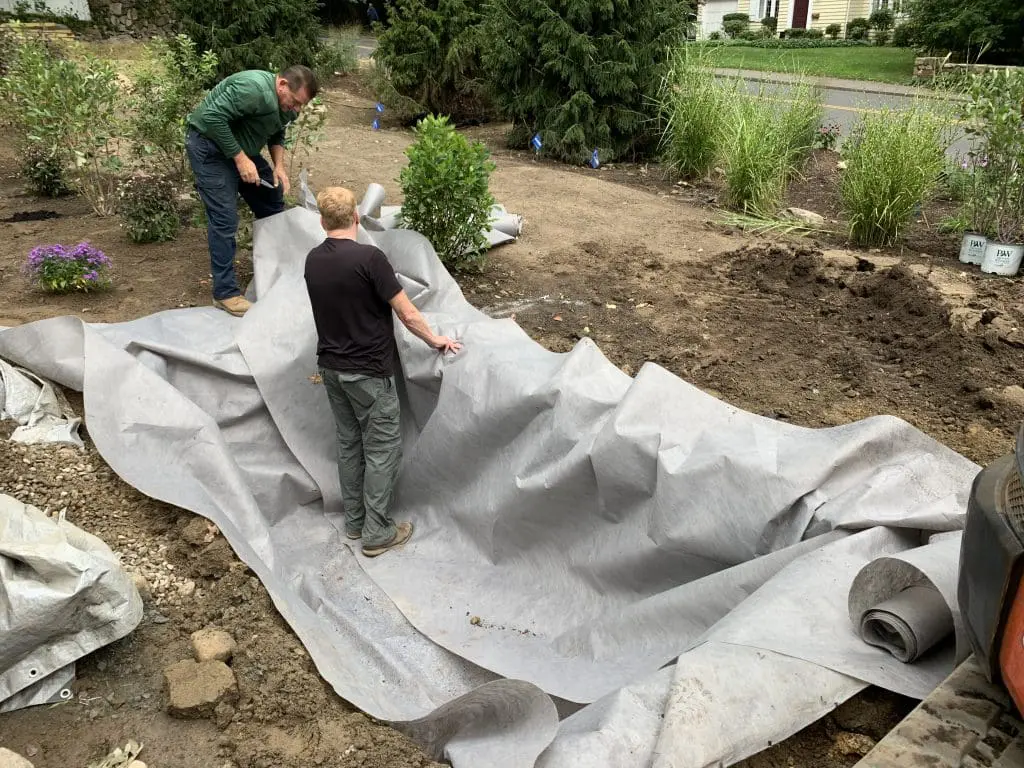
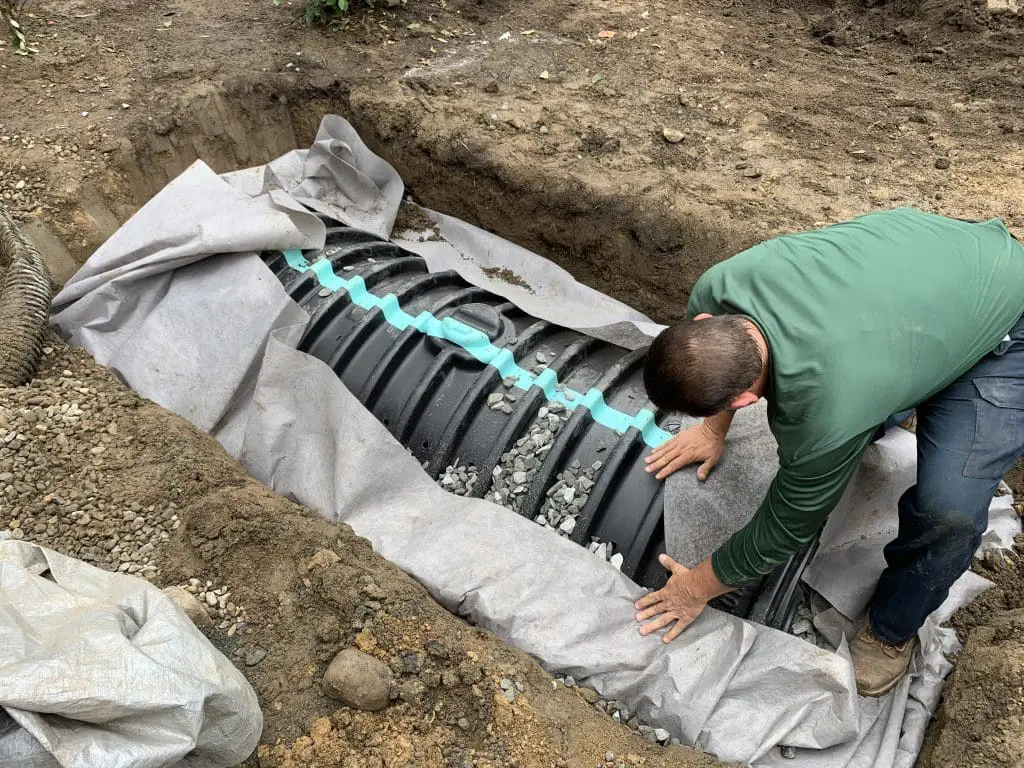
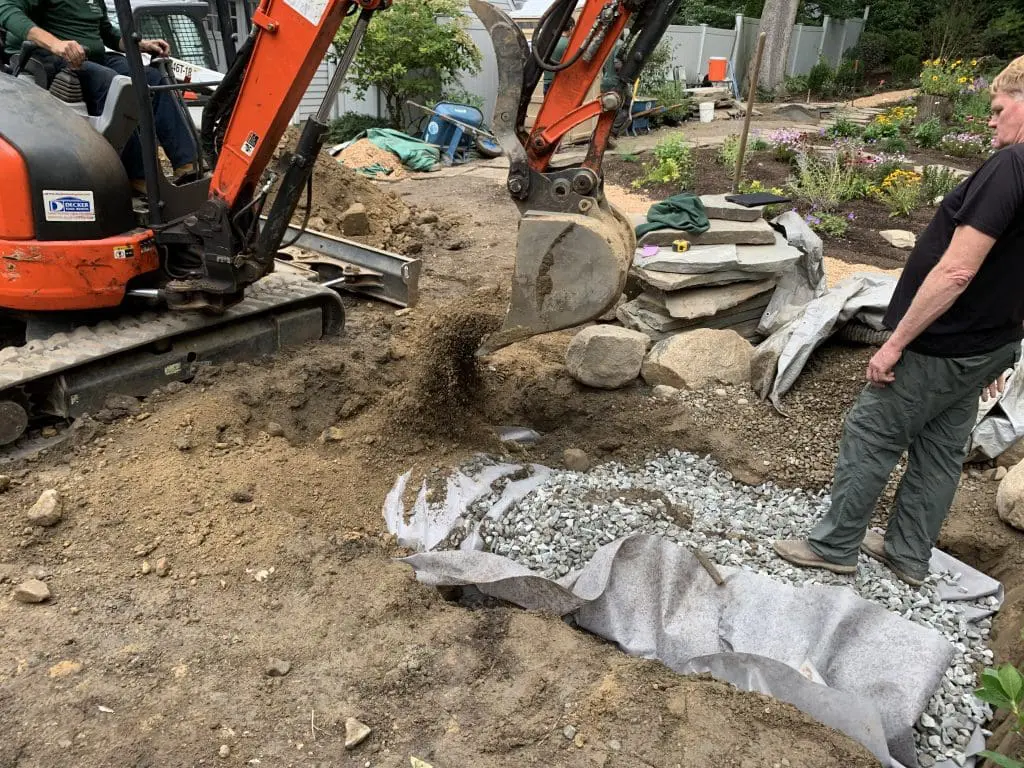
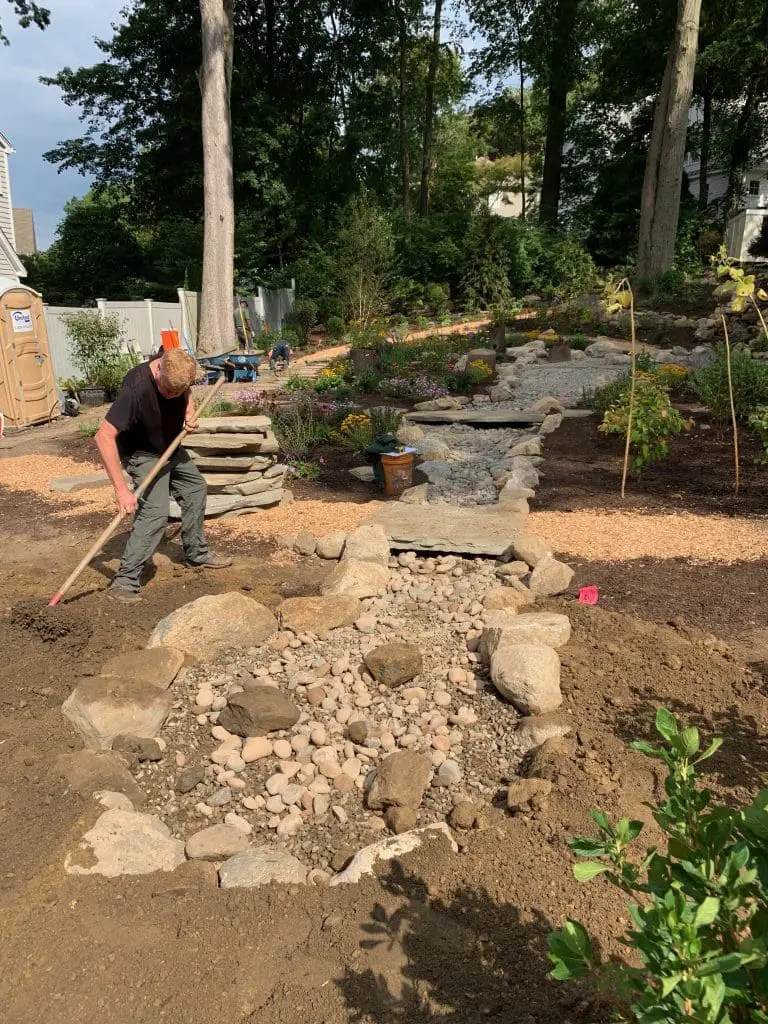
It was evident that a Storm Water Management Plan had to be implemented for any design to be sustainable. We incorporated gravel bioswales into the design, stylizing them as faux streams crossed by stone bridges, while their pitch and placement conducts stormwater from the hillside and allows it to percolate through the gravel.  At the base of the bioswales, we installed a Cultec 280HD Storm Chamber. This essentially allows storm water to collect in a large perforated chamber underground, and slowly infiltrate out into gravel that surrounds it.  The storm chamber has a surface armored forebay for ease of maintenance.

We also designed several rain gardens as part of the Storm Water Management Plan.  Check out our pervious blog post Rain Gardens for Storm Water Management to learn all about the benefits and beauty of a native plant rain garden.

Above: Before Photo.

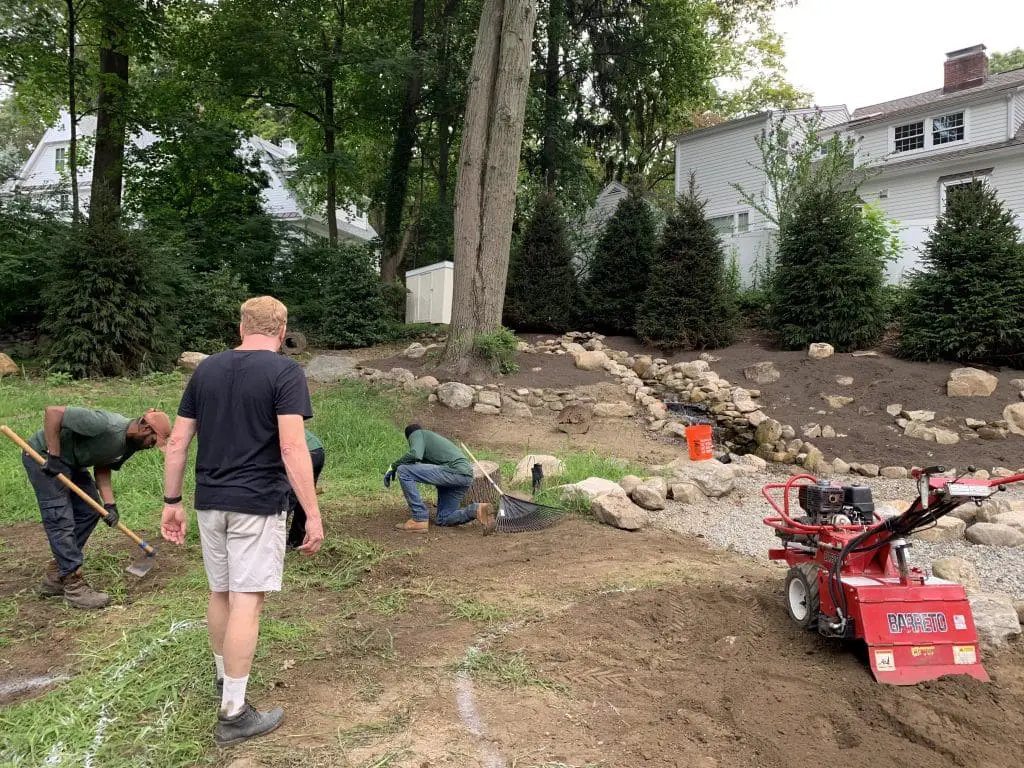
With the bare soil, it was evident that we needed to develop and install a design with immediacy to both stabilize the soil and to beat the inevitable migration of weeds and invasive species.

Above: Process Photo 

We’ll dive deep into our design choices in the next blog, Part Two of the Designing a Bird Sanctuary series!

Filed Under: Featured Work, Landscape Construction & Installation, Landscape Design Tagged With: bird and butterfly garden, bird sanctuary, bird-friendly garden, certified wildlife habitat, designed habitat, disappearing waterfall, ecological landscaping, habitat, native plant landscaping, natural landscape, natural landscaping, plant native, pollinator garden, scrub shrub garden, water feature

One part landscape grading, one part organic lawn renovation and one part ornamental grass and perennial pollinator garden, this was an incredibly satisfying project that allowed us to flex many unique skills in our landscape design and construction tool box.

This project, dubbed ‘Above the Fields of Grass’ is part of our 2019 Green Jay Landscape Design Design Highlights series (#3!).  Check back for a discussion of the rest of our favorite projects of 2019! Read about projects 4 and 5. 

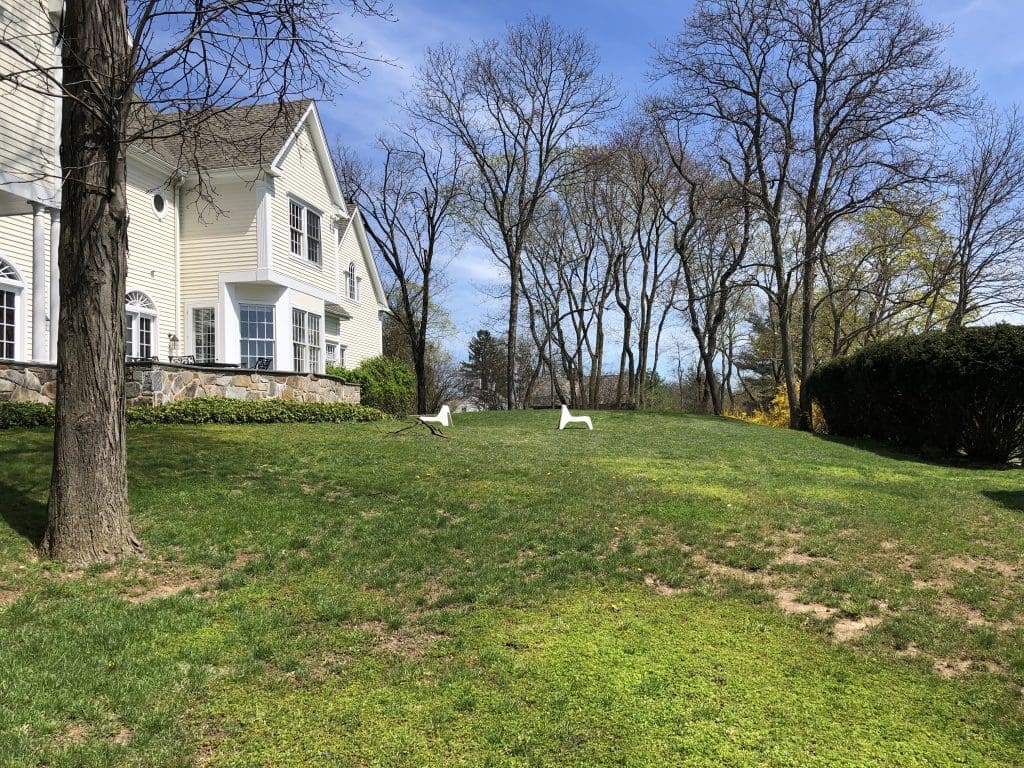
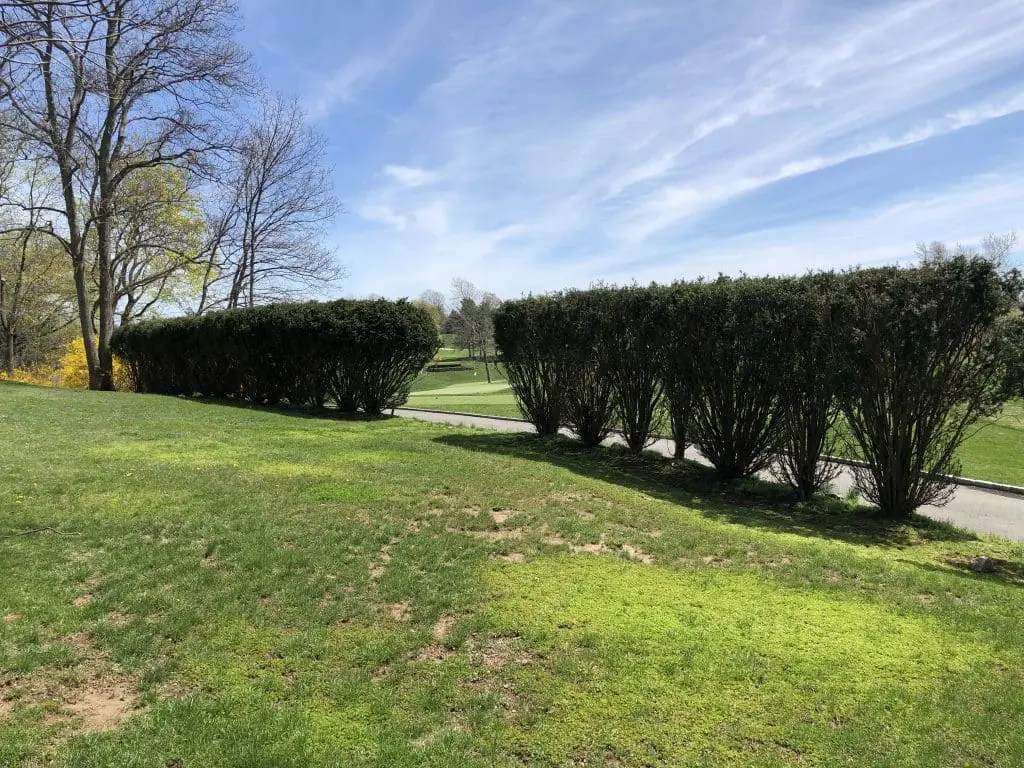
The client has a young family and the main reason they booked a consultation with us was because their yard, at a significant slope, created a pesky and somewhat dysfunctional play area for their children.  Playing ball almost certainly lead to loss of the ball to the slope, and likely across the path into the golf course that abuts the backyard. What’s more, the row of yews that lined the southern edge of the property had grown so that the dense part of the shrub blocked the rolling green hills and skyline, while the yews’ thin trunks revealed the road behind and golfers’ legs in a most frustrating way.  To top it off, the previous owner, apparently a golf fan, had left a ten-foot gap in the center of the yews, so that he could watch the golfers tee off! From the back patio!

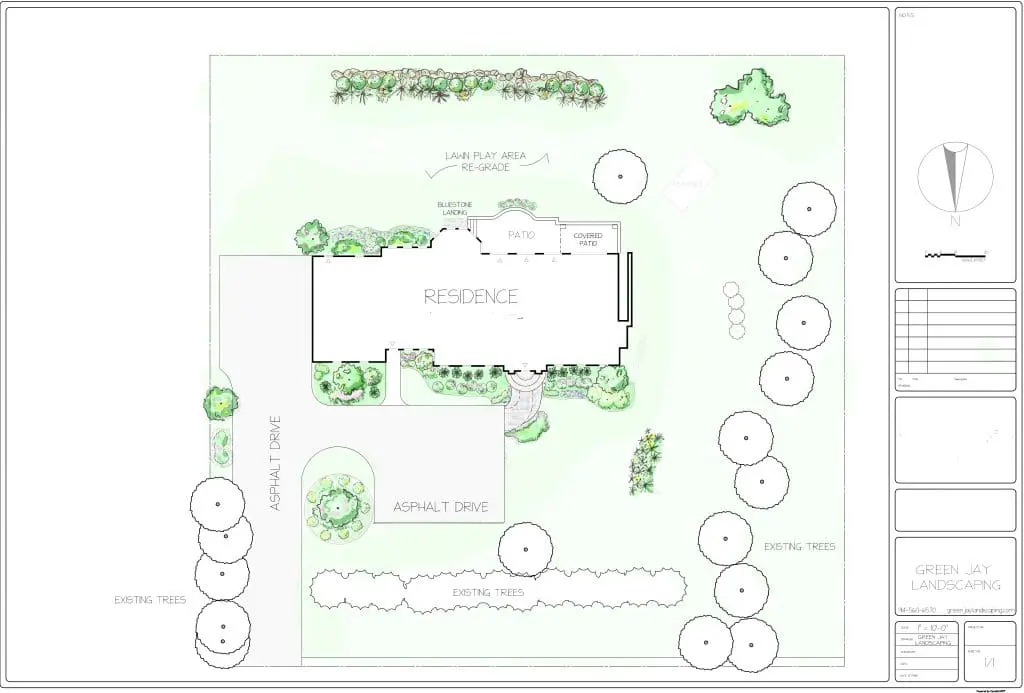
Clearly this was not an example of modern, family-friendly, inviting and intimate, ecological landscaping!  We had a large task at hand but were up for the challenge!  The client signed on for a Landscape Design Master Plan that included the entire property.  The front foundation landscaping was dated, overgrown, and created confusion between the front entrance and secondary entrance. We created an AutoCad drawing and provided plant photo visuals to render our vision. The client ultimately decided to move forward with the backyard design and construction in 2019, with the intention of completing the front yard as phase two in 2020.


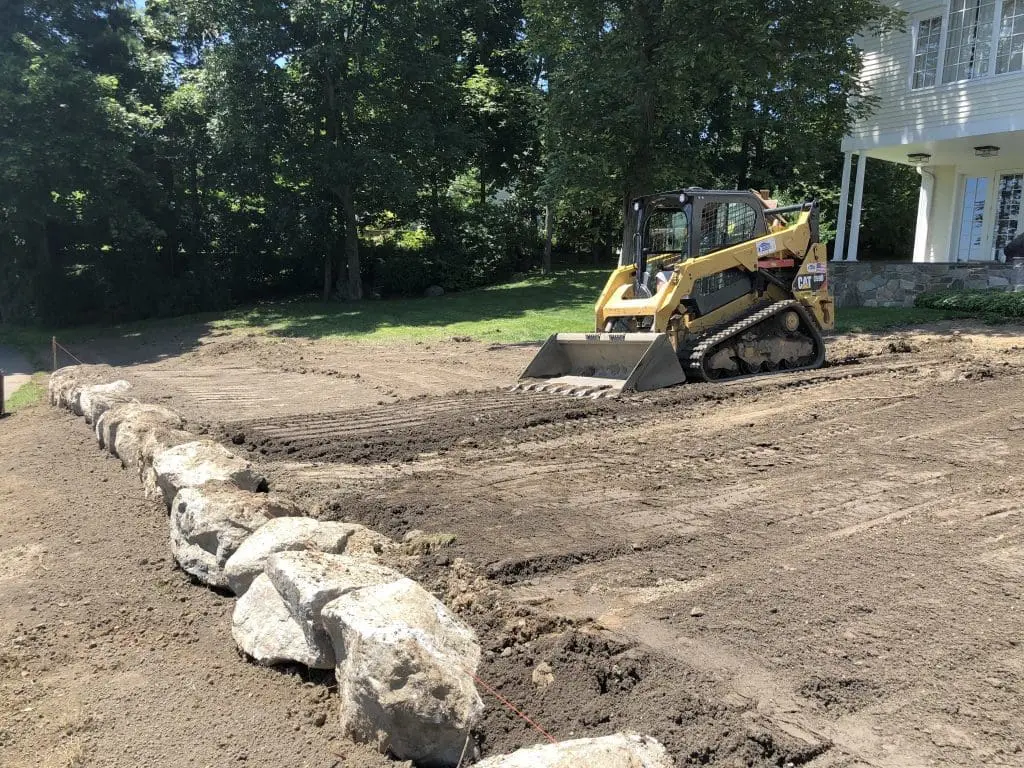
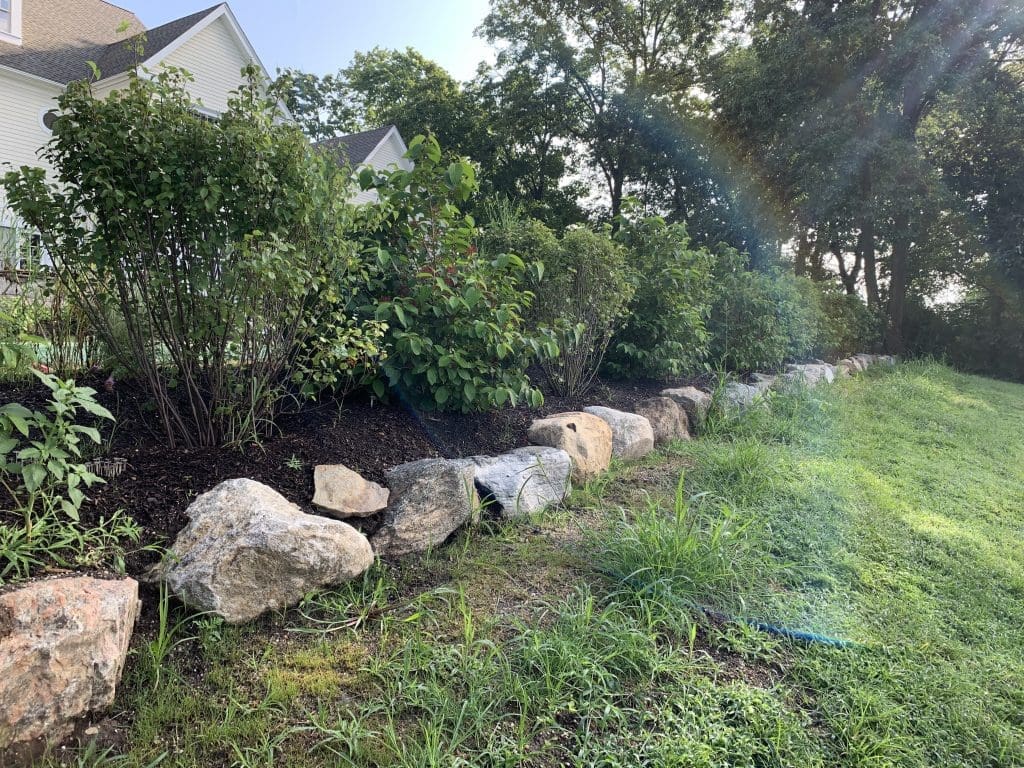
To solve the slope issue, without completely blowing the client’s budget, we proposed a rip-rap retaining wall constructed of large boulders that supported a two-tier, terraced planting bed that effectively lifted the overall grade of the backyard around three feet.  We brought in premium topsoil by the truckload, and graded with a machine and by hand.

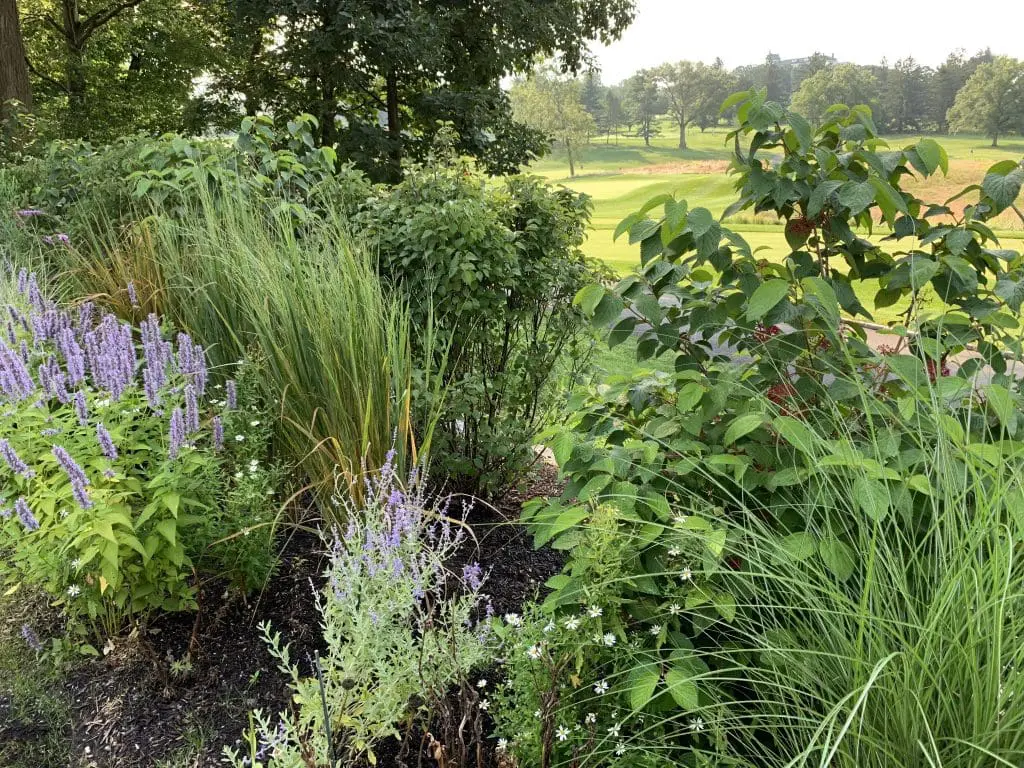
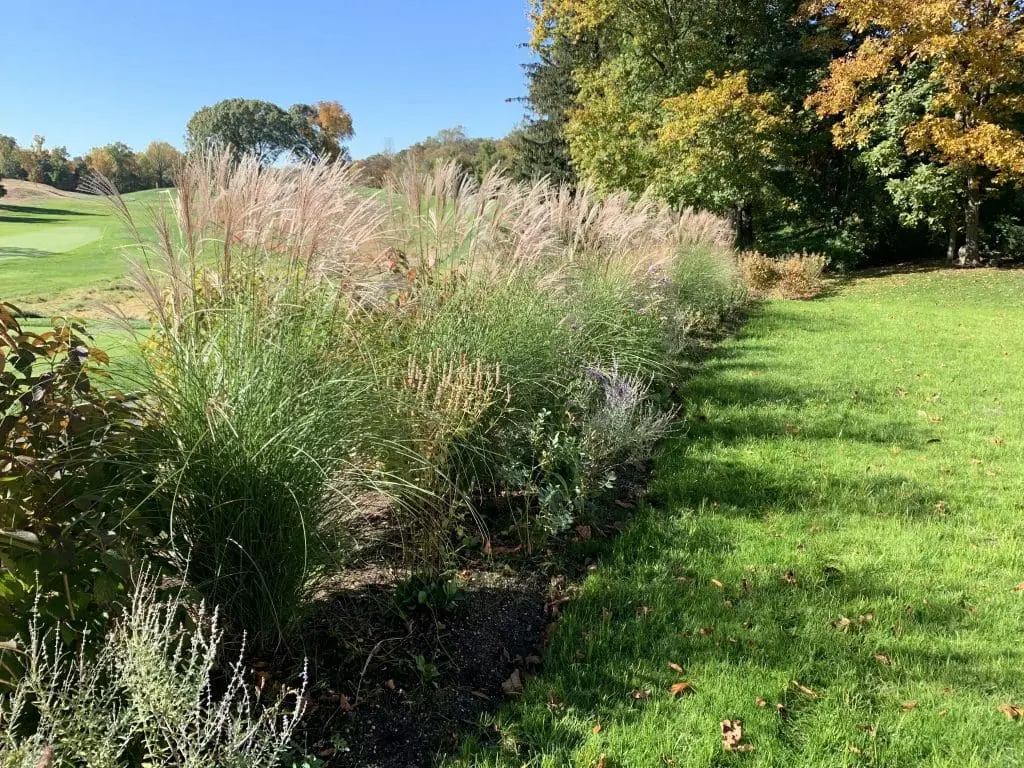
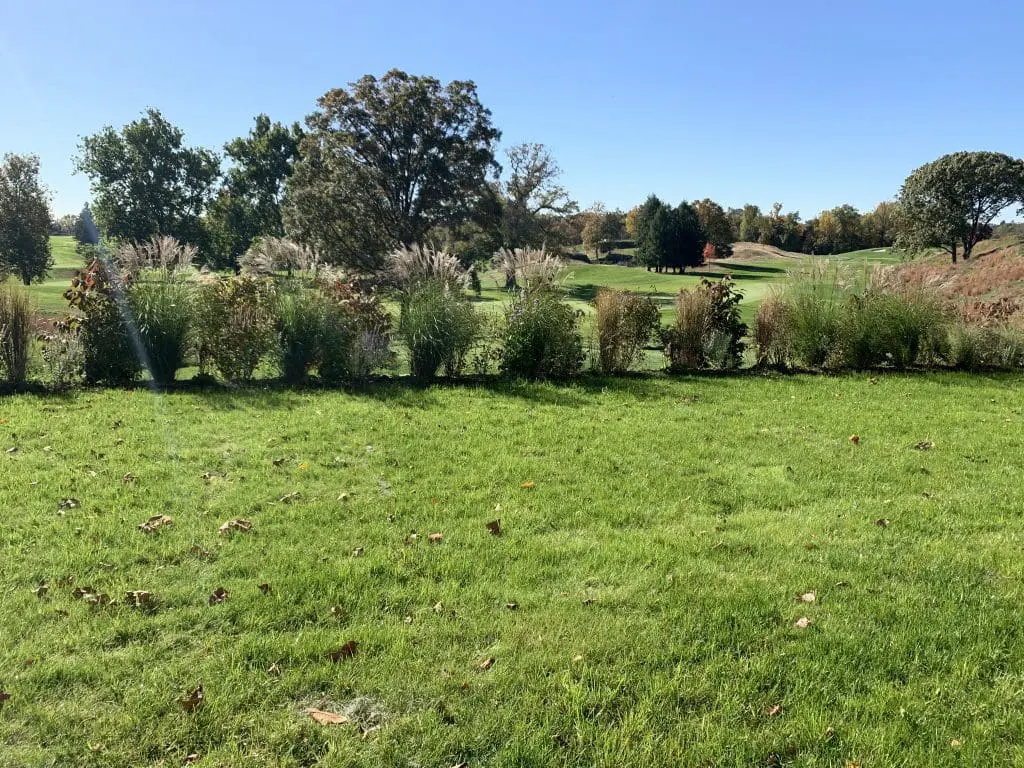
The rear terrace was to be planted with assorted viburnum shrubs – the dense, deciduous shrubs would provide necessary screening during golf season, and open up the expansive views in the winter. The second, front terrace was to be planted with ornamental grasses and pollinator-attracting perennials.

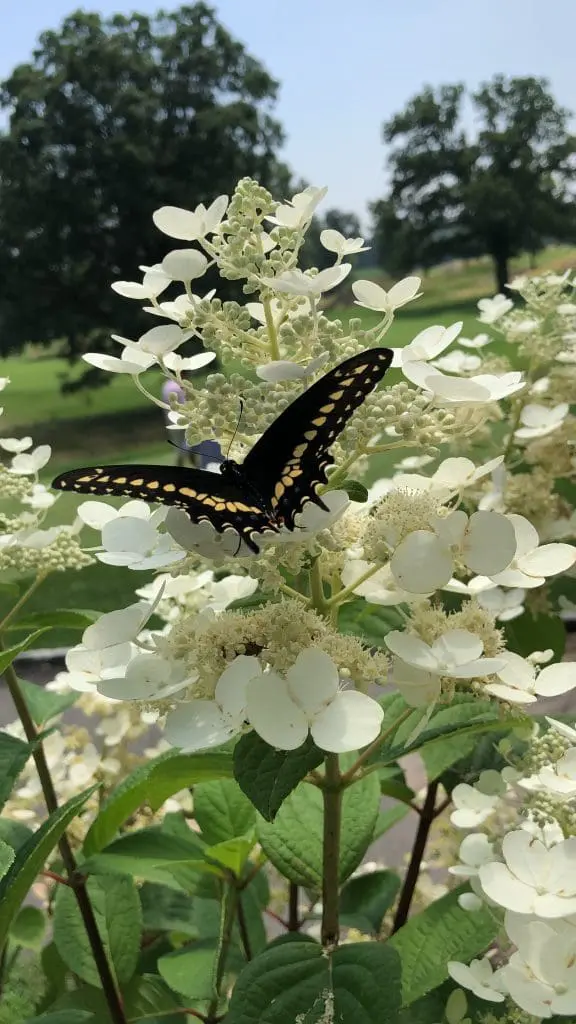
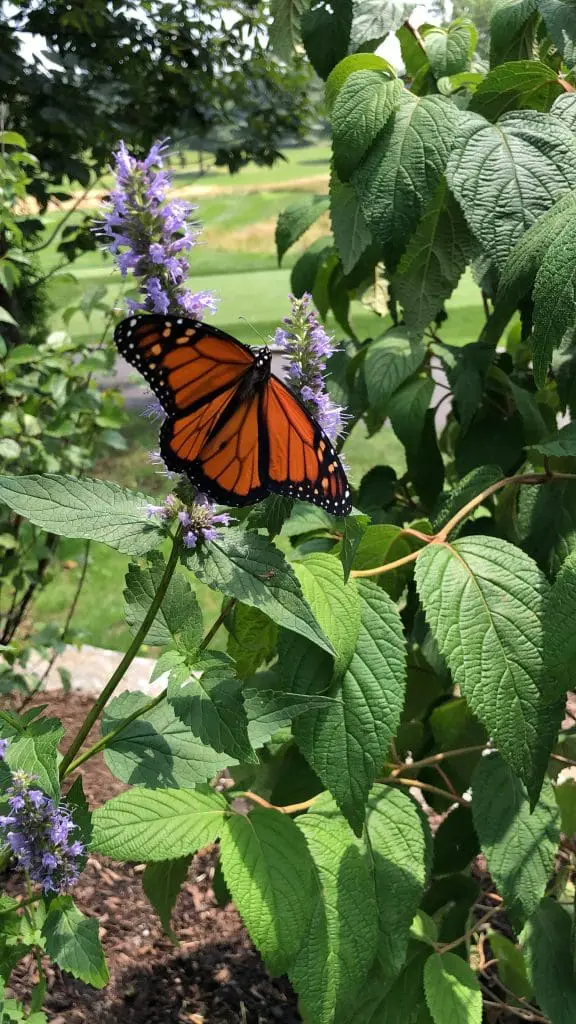
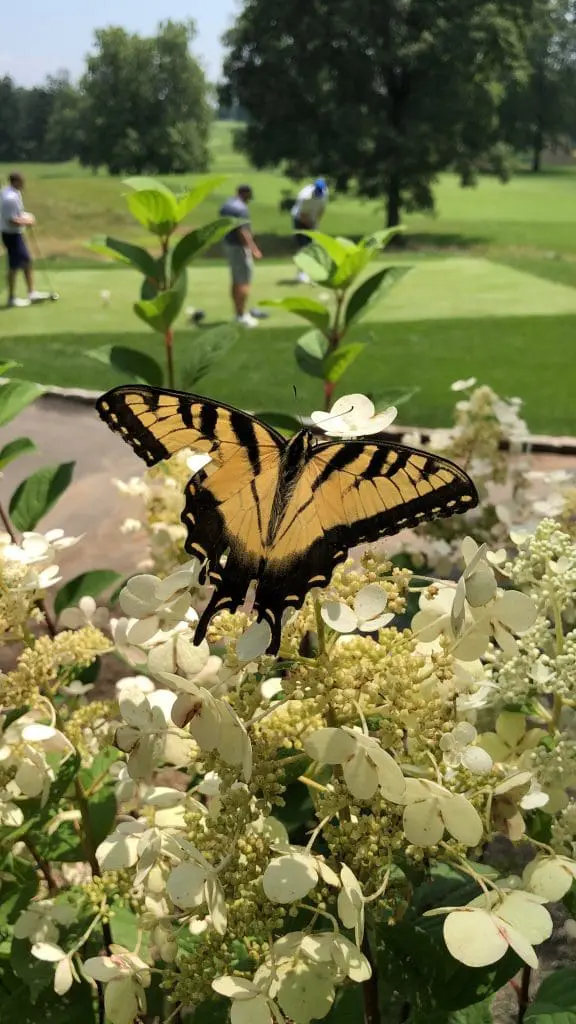
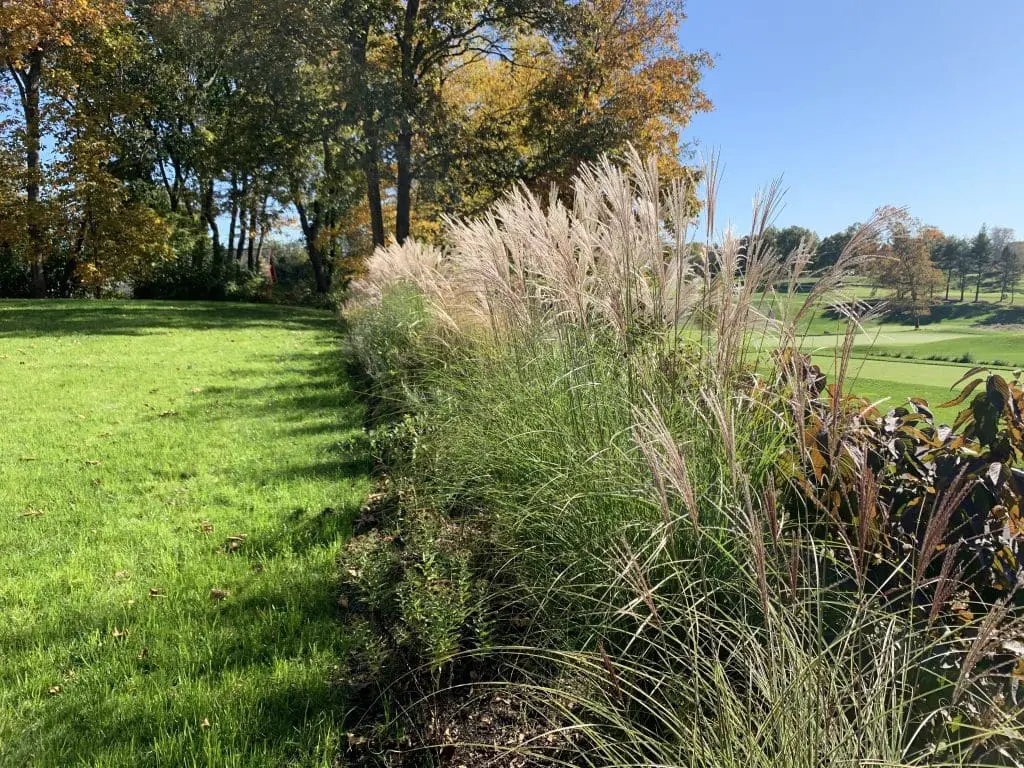
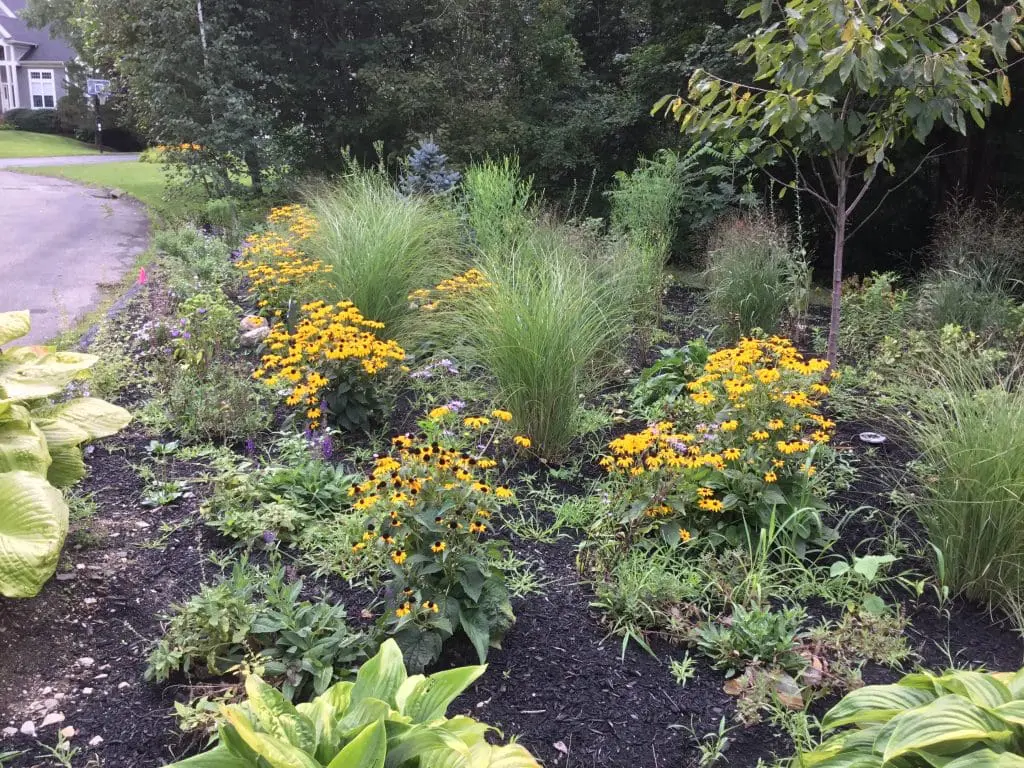
Since the garden bed is in full sun with a southern orientation, perennials that like hot dry environments were a no-brainer (think prairie perennials like Echinacea and Agastache).  The seed heads of Miscanthus ‘Morning Light’ and native Pannicum ‘Northwinds’ provide incredible texture and movement from summer through winter!  (t is a common misconception that all Miscanthus are invasive.  The straight species can be, but cultivars like the ones in this garden are sterile!) Tardiva Hydrangea replaced a stretch of yews on the lower lawn, and between those and the perennials, the property was absolutely filled with butterflies!

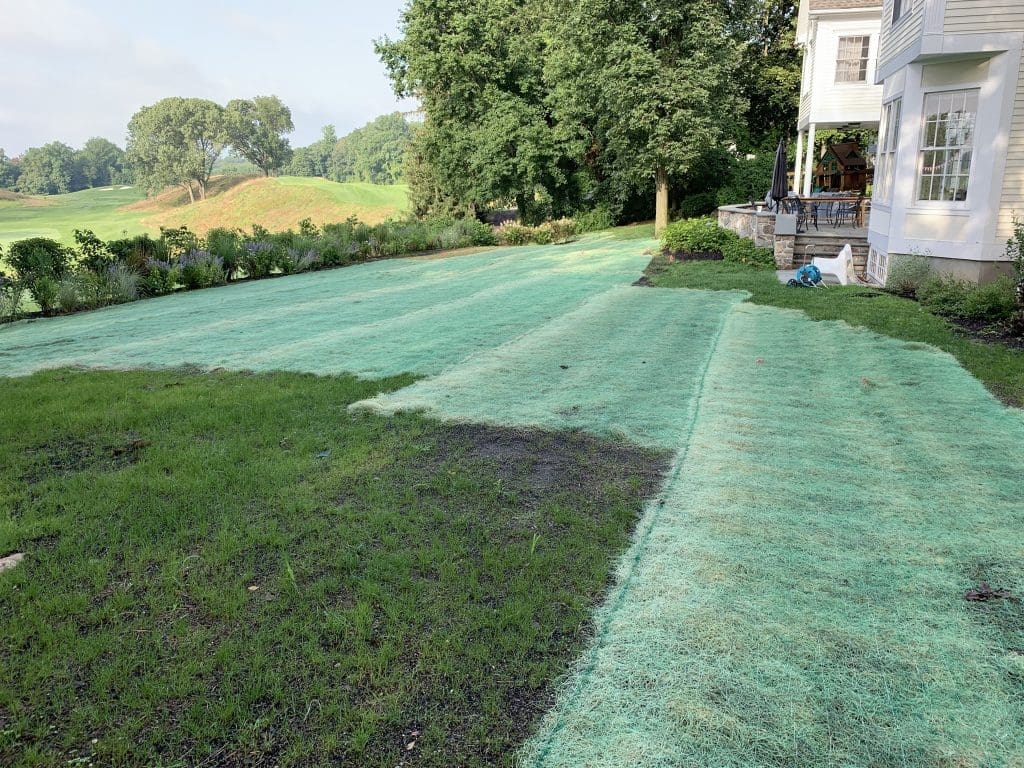
The organic lawn installation required installing hay blankets on top of the seed for stabilization during the germination phase.  This installation took place in July, and a series of intense rain events demanded that we take extra precautions with the bare soil.

The client was thrilled with their newly level, lush, organic lawn and playspace.  Thanks to modern landscaping, they now have the privacy, beauty and excitement they deserve, in the form of a living border of shrubs, grasses and flowers that attract a host of birds, bees and butterflies for their family to admire, learn from and grow alongside.

#LandscapesForBetterLiving

Green Jay Landscape Design

914-560-6570


Filed Under: Featured Work, Landscape Construction & Installation, Landscape Design, Organics - Lawn, Tree & Shrub Care Tagged With: healthy yard, landscape grading, lawn renovation, level lawn, organic lawn, ornamental grass garden, playscape, playspace, pollinator garden, pollinator pathway, terrace garden, terraforming

This project, dubbed ‘Farmhouse New Native’ is part of our 2019 Green Jay Landscape Design Design Highlights series (#4!).  Check back for a discussion of the rest of our favorite projects of 2019!

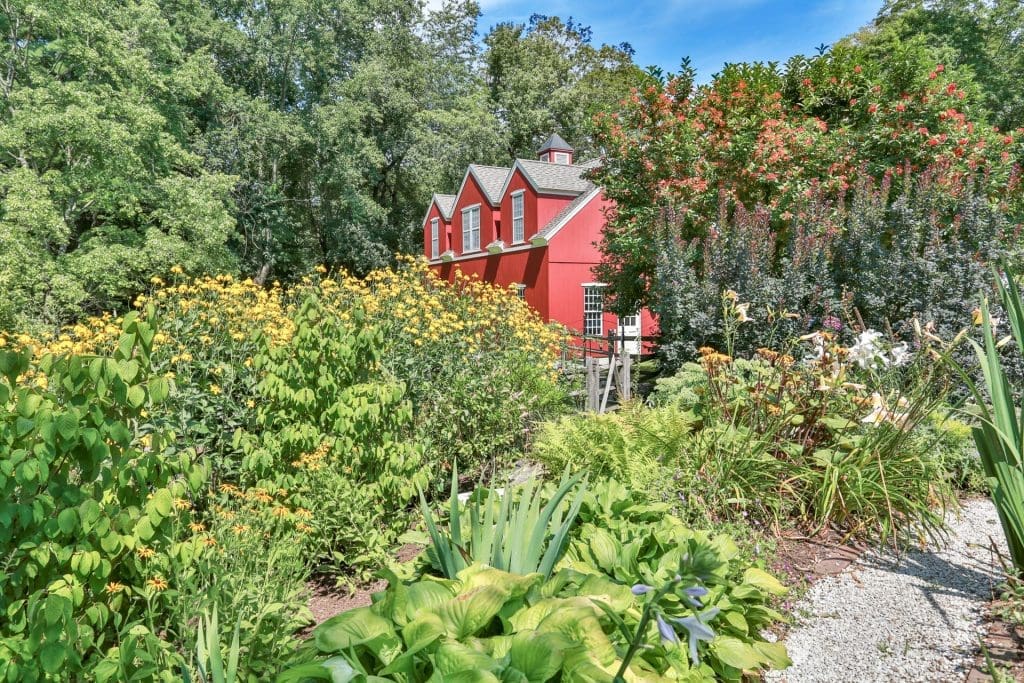
 We had the pleasure of returning to this New Canaan residence in 2019 for Phase Two of Landscape Design and Development.  In 2018, we completed Phase One: a stream construction project, water quality improvements on an existing fishpond, and a pollinator garden planting to compliment the new water feature.  Read all about Phase One on the blog.

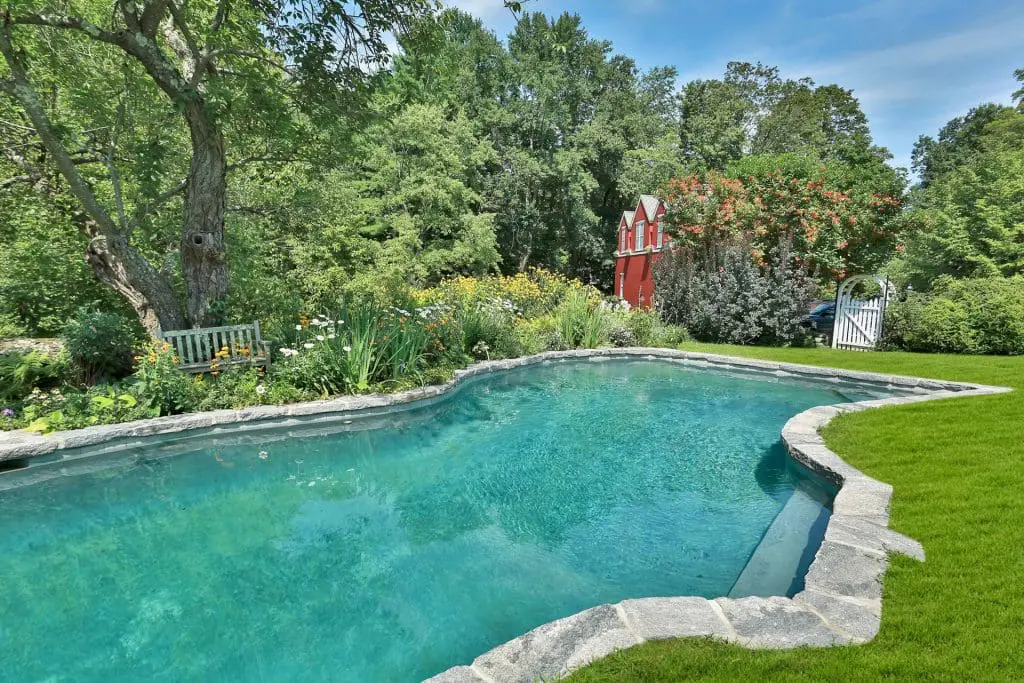
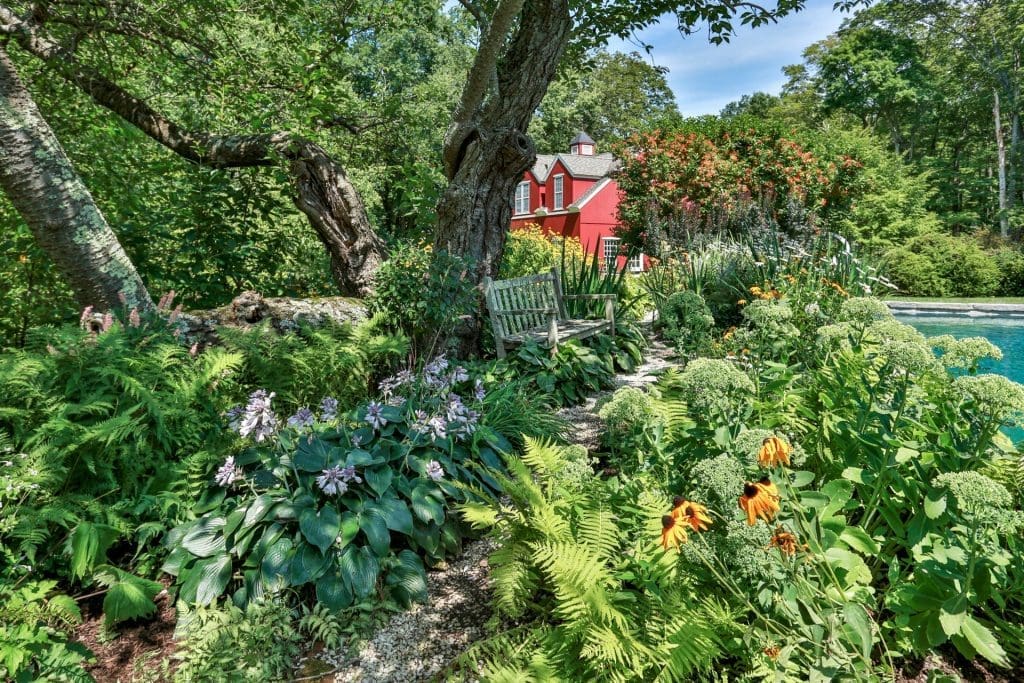
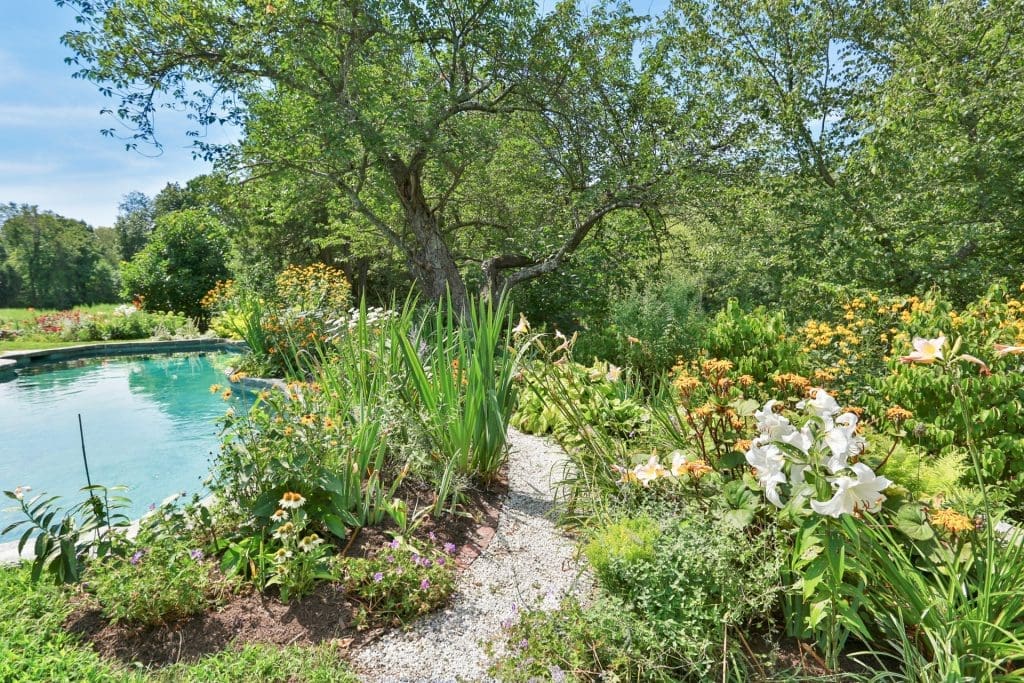
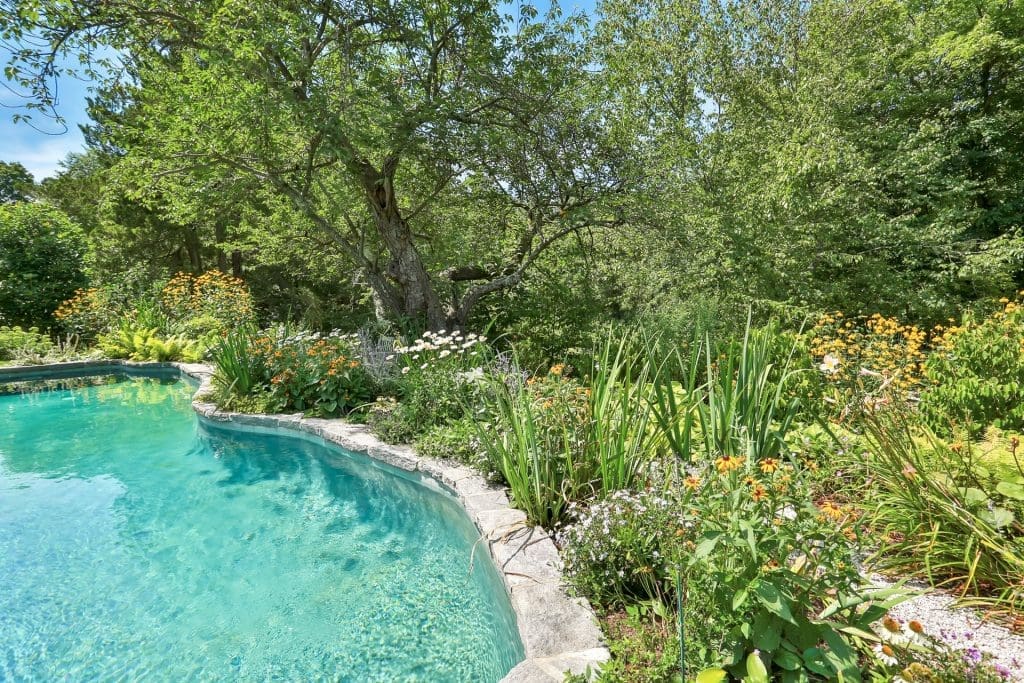
Phase two of the project had several components.  The client has a gorgeous pool, framed by a 70+ year old cherry tree and a lovely part shade / part sun garden beneath it, complete with gravel walking paths. The garden at this point received yearly plantings of annuals and had a few exotic and rare perennials – the collection of Asiatic lilies is beautiful, and so fragrant! (Pollinators seem to enjoy them too!).  Just beyond the pool garden, the topography slopes down steeply; bare soil and invasives contributed to the slope eroding, and it was in dire need of stabilization.

We were hired to revamp the poolside garden with pollinator-attracting perennials that would complement the existing heritage perennials. Star players were Nepeta, Rudbeckia, Echinacea for sun to part sun, and native ferns for the shaded section. The slope was designed with a mix of native Viburnums – an incredible genus for lepidoptera and bird habitat and food — and taller native perennials like Heleopsis (False Sunflower).

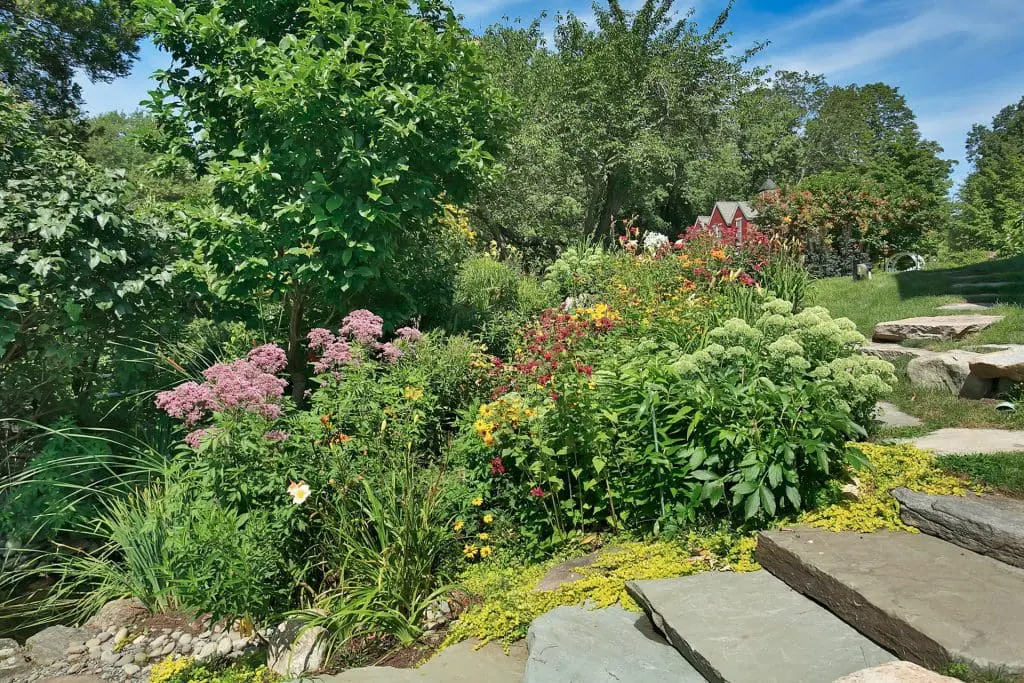
The streamside slope, which we had planted Phase One of last year need some editing of plants that had become too happy, and filling-in with others. Gardening is a process and editing allows us more creative freedom with color, texture and overall aesthetic.  We offer a one-year guarantee on plants that are maintained properly.

The client’s daylilies, which we had repurposed in Phase One, had become too dominant, and some invasive vines found their way in.  We weeded and thinned the daylilies and replaced with some of our favorite plants for bees and butterflies:

  • Monarda (Bee Balm)
  • Echinacea (Coneflower)
  • Eupatorium (Joe Pye Weed)
  • Lobelia (Cardinal Flower)
  • Hypericum (St John’s Wort)

When we returned to have the property photographed in mid-summer, there was an insane amount of activity! I spotted four different types of butterflies, countless bees and moths…it was a pollinator mecca!

Plant it and they will come…!

—

Green Jay Landscape Design

914-560-6570
 

Photos by PS Fotography


Filed Under: Featured Work, Landscape Construction & Installation, Landscape Design

What happens when a woodland property with Asian influences gets a native, ecological makeover? GJL designed a woodland sanctuary for pollinators and birds that fit the client’s lifestyle and hobbies.

This project, dubbed ‘Lonesome Dove, Surrounded by Love,’ is part of our Green Jay Landscape Design 2019 Design Highlights series (#5!).  Check back for a discussion of the rest of our favorite projects of 2019!

These clients were a dream to work with! They wanted to turn their wooded backyard into a designed, usable space that would also create habitat.  Avid birders and nature photographers, they wanted a space to enjoy the myriad of creatures in upstate Pawling, NY.

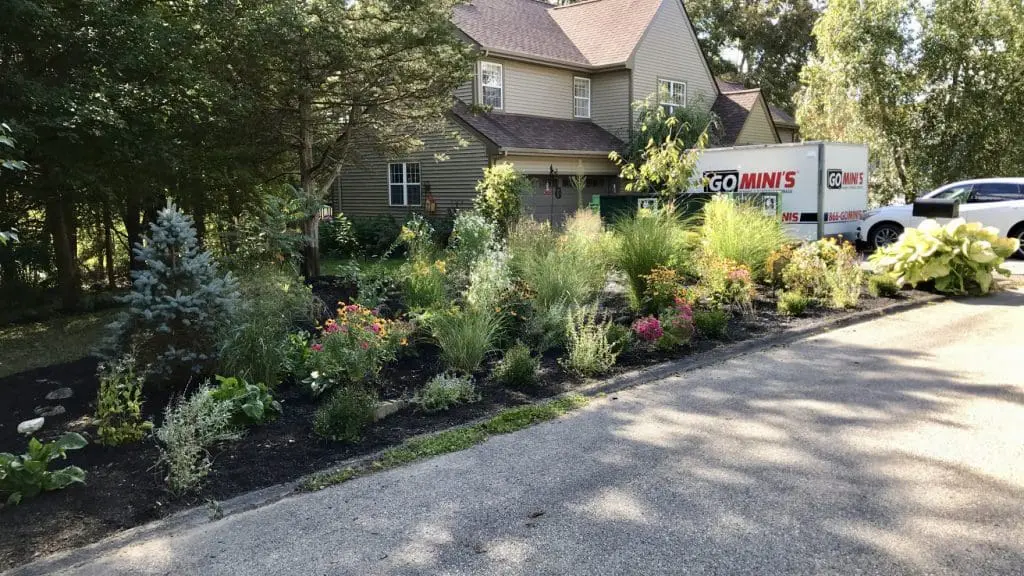
The project had four distinct components: the front yard ornamental grass and perennial pollinator garden (which replaced a huge swath of front lawn!), the backyard woodland area, the sunny backyard lawn, which was to be renovated as a low-mow eco-blend lawn, and masonry revamp.

1)Front Yard Bird & Butterfly Garden

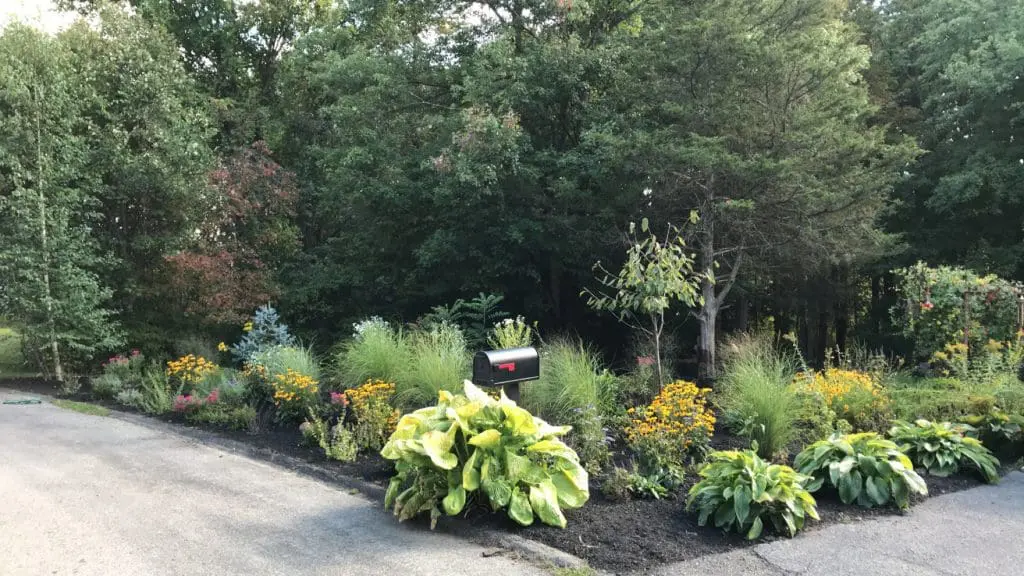
Aside from the wild and magically natural beauty of the ecological composition, this front yard is a oasis for wildlife. Abundant with a diverse variety of beneficial life, from healthy soil microbes to birds, butterflies and insects, this little peace of paradise is happiness incarnate.

Below is an excerpt from the client’s Landscape Design Development Proposal:

Your stunning summer grass and perennial garden will serve as a Pollinator Pathway paradise, encouraging and attracting migrating songbirds, butterflies, and supplying food (host plants), habitat and shelter during the critical growing season. This beautifully colorful garden will provide a parade of successional flower blooms from spring to fall, featuring eco-beneficial enjoyment for all.

Below: BEFORE photo

This kind of landscaping takes effort, resources and expertise in ecology. The overall effect is stunning! This weedy, do nothing lawn contributed very little to the culture and economy of the community. This nascent, vibrate, rich, living landscape contributes much as a model for the New Frontier in Ecological Landscaping.

Full Sun Pollinator Garden | Planting Palette Examples

  • ‘North Wind’ & ‘Shenandoah’ Switchgrass (Panicum)
  • ‘Morning Light’ Maiden Grass (Miscanthus)
  • Butterfly Weed (Asclepias tubersoa)
  • Gay Feather (Liatris spicata)
  • Blackeyed Susan (Rudbeckia)
  • Coneflower (Echinacea)
  • Dwarf Golden Rod (Solidago speciose or Solidago sphacelate)
  • Cat Mint (Nepeta)

The entire left front lawn was dethatched and rototilled.  We applied a lean mix of organic compost and soil amendments, for the planting pallet of mostly native plants prefer a lean (not rich) soil. This project was planted in early August under intense temperatures; we have found that soil drenching with microbes and a wetting agent effectively reduces planting stress during high summer temperatures.

2) Woodland Stroll Garden w. Pond & Faux Streams

The dappled shade woodland will express and exert an Eastern influence over a naturally serene landscape environment. We will create and establish dual faux river stream beds to reflect the potent energy and duality of the male and female. This will be accomplished by creating pathways of positive chi, encouraging you to wander and linger throughout the blissfully still woodland walkway. This in essence captures the feeling of a Japanese cup garden. An assortment and variety of native woodland perennials, ferns and ground cover will harmonize the simple melody to produce the ultimate karmic resonance.

Much of this design was inspired off the existing conditions and natural woodland setting. Beneath the mature trees were some patchy clumps of grass and the remnants of various DIY gardening projects. The property hosted a small, disfucntional pond with a Japanese-style bridge and other Asian garden adornments. GJL revamped the pond, adding a circulating waterfall/stream that gave the pond the grandeur and energy it deserved!

Below: BEFORE photo of backyard. 

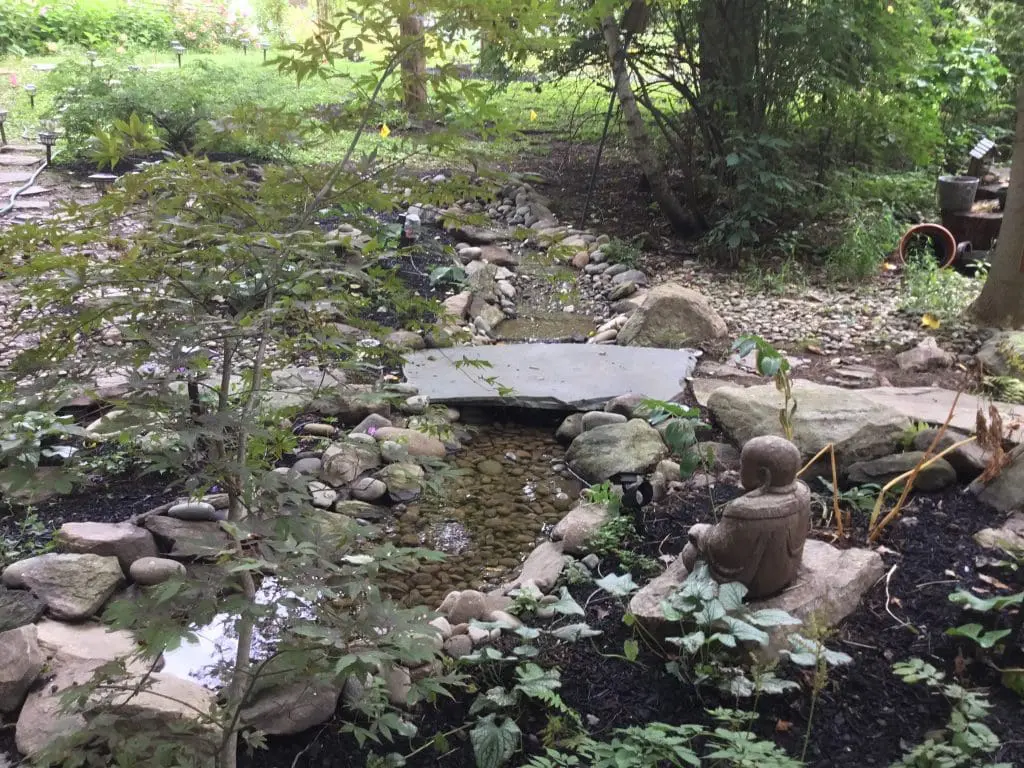
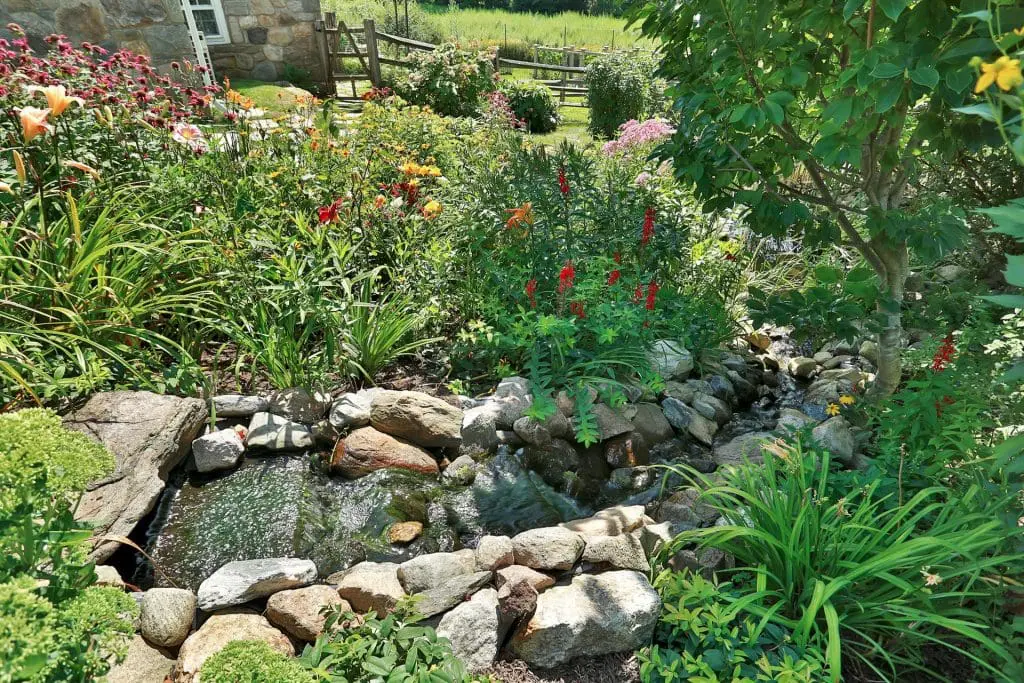
Below: Newly constructed naturalistic stream adds a lovely sound, energy and bathing spot for birds!

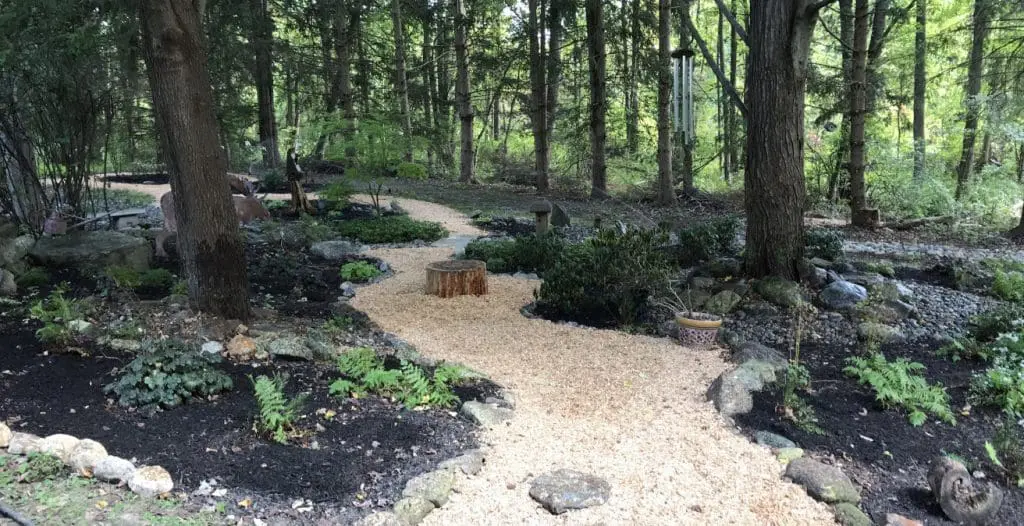
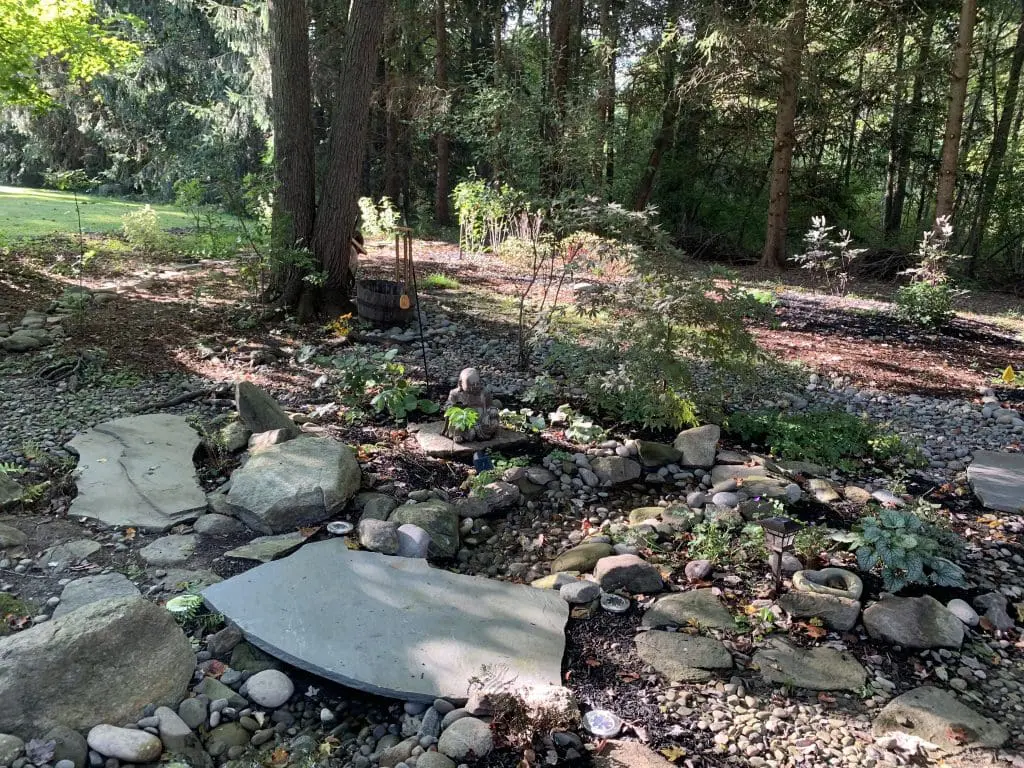
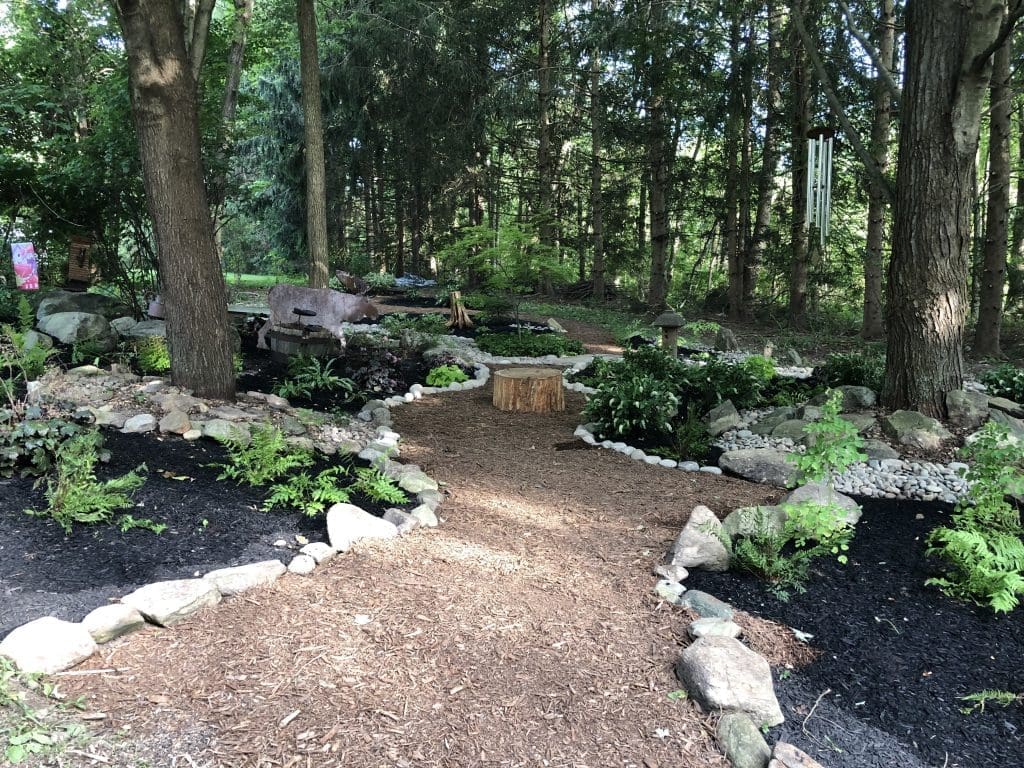
Drawing on the Asian theme, we designed various cup gardens of woodland shrubs and perennials, each of which can be visited and admired along the winding garden paths. The two faux river streams described above are navigated across with stone bridges, as part of the meandering woodchip stroll paths.  Using two different types of woodchips to differentiate the garden beds from the garden path is a simple but powerful design decision.  We lined the path with boulders found on-site, crafting a simple rustic style that also effectively kept the mulches in place through numerous storms.

We chose a mix of native woodland shrubs and perennials, with a splash of non-natives from similar ecoregions. Ground cover is key for filling in between plants and lessening weed pressure.

Woodland Garden | Sample Plant Pallette

  • Ivory Halo Dogwood (Cornus alba)
  • Chokeberry (Aronia)
  • Summersweet (Clethra alnifolia)
  • Goats Beard (Aruncus dioicus)
  • Black Cohash (Actea racemosa) 
  • New York Fern (Thelypteris noveboracensis)
  • Christmas Fern (Polystichum acrostichoides)
  • Lady Fern (Athyrium filix-femina)
  • Woodtoothed Fern (Dryopteris carthusiana)

3) Low-Mow Eco Lawn

Your doggy-friendly low-mow eco-lawn will provide a safe and healthy playground to ensure ease of care / maintenance and enduring longevity. Your landscape environment will respect and honor all your natural resources while supplying year-round interest for your own enjoyment now and always.

Below: BEFORE photo

The other half of the backyard was a sunny and rather neglected lawn.  We re-graded the lawn with premium topsoil, followed by a layer of organic compost and biochar. The eco-blend includes grass seed varieties that are more adapted to our native climates and require less maintenance – mowing about once a month as opposed to every week. Since the client had large dog, a toxin-free, organic landscape was of the utmost importance.

4) Walkway & Patio Renovation

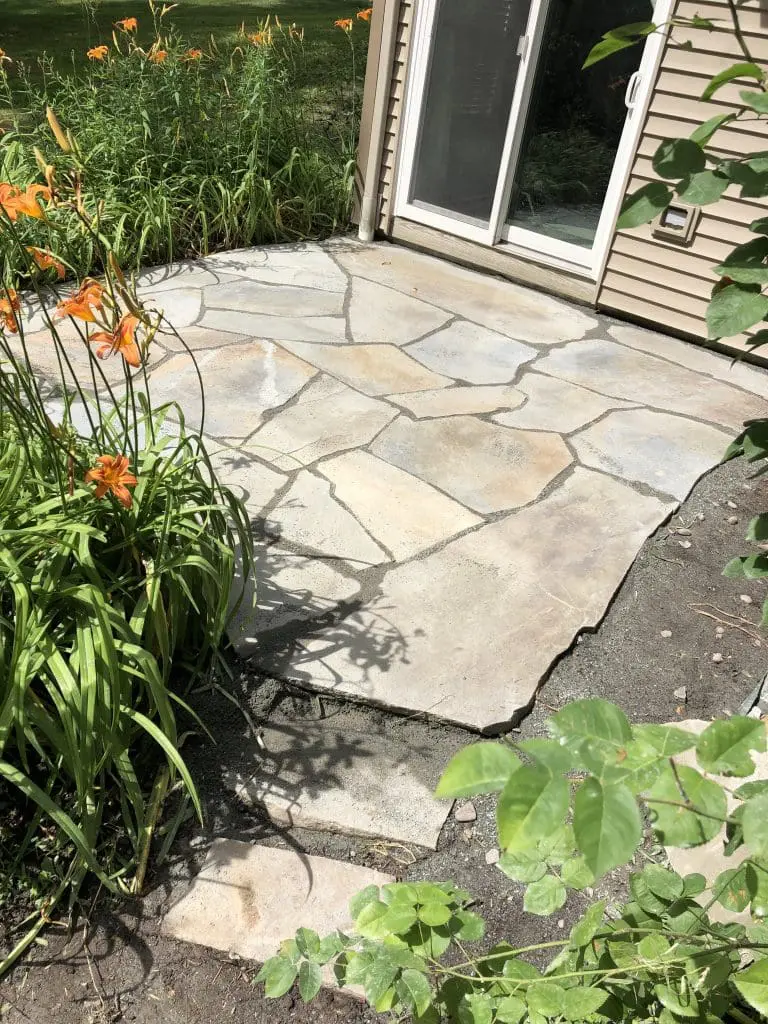
 The existing front walk and backyard patio were constructed of unilock – a man-made concrete paver block.  The client wanted to update the style, and we knew irregular flagstone would give it the timeless elegance of natural materials.  Plus, with what we now know about the carcinogenic component of concrete, silica dust, we try to avoid using concrete wherever possible.

The Guardian wrote a powerful article on the impacts of concrete and silica:

“Then there’s silica. Naturally present in the Earth’s crust in sand and quartz, this material assumes its lethal form of respirable crystalline silica (RCS) dust during heavy industrial processes like cutting, drilling, blasting and demolition. Independently of silicosis, RCS can also lead to asthma, chronic obstructive pulmonary disorder, tuberculosis and kidney disease.”

We found it was extremely difficult to find a center to recycle the used unilock blocks, especially given our somewhat remote location.  They unfortunately ended up in the landfill.

Instead of using a concrete base, we installed the new stone on a soft base of stone dust, item 4 and gravel. The soft base allows storm water to infiltrate through the joints to the soil and aquifer below.

The clients were thrilled with the outcome of their landscape renovation.  They now have infinite birds and insects to photograph, and their property is a living example of designed habitat


“Every day is a journey

And the journey itself

Is Home”

— Basho


Filed Under: Featured Work, Landscape Construction & Installation, Landscape Design Tagged With: eco-lawn, ecological landscaping, front yard garden, landscape designer, landscape ecologist, low-mow lawn, native garden, native plants, organic landscape, plant native, pollinator garden, woodland garden, woodland habitat

Naturalist and Landscape Ecologist Jay Archer takes us on a tour of a twenty-two acre wetland that abuts his property. Jay observes the wetland daily and notices the ebbs and flows of the area day to day and season to season. In this video, filmed in August 2019, Jay describes the impact of a heavy rain year on plant communities (both native and non-native) and on animal behavior throughout the wetland. The display of multi-colored swamp rose was “one of the most naturally stunning aspects of the island habitat.”

Filmed in Rye, NY.

Filed Under: Ecological Education, Events & Garden Tours Tagged With: natural wetland, naturalist, nature tour, wetland, wetland conservsation, wetland plants, wetland tour, wildflowers

  • « Go to Previous Page
  • Page 1
  • Interim pages omitted …
  • Page 31
  • Page 32
  • Page 33
  • Page 34
  • Page 35
  • Interim pages omitted …
  • Page 61
  • Go to Next Page »

Footer

Shop Address: 369 Bradhurst Ave, Hawthorne, NY 10532
(914) 560-6570
  • Facebook
  • Instagram
  • LinkedIn
  • Pinterest
  • YouTube
  • Houzz
  • Slide Share
  • Installation
  • Portfolio
  • Pricing
  • About
  • Contact

Copyright © 2026 · Green Jay Landscape Design. All Rights Reserved · Privacy Policy · Website and Local SEO by Ramblin Jackson