• Skip to main content
  • Skip to footer
Green Jay Landscape Design

Green Jay Landscape Design

Green Jay Landscape Design

(914) 560-6570
  • Design
  • Installation
  • Portfolio
  • Pricing
  • About
    • Service Area
    • Meet Our Team
    • Our Process
    • Our Promise
    • Mission, Vision, & Core Values
    • FAQ
    • Press & Events
    • Blog
    • Reviews
    • Careers
    • Affiliations
    • Newsletter Sign-up
  • Contact

greenjayadmin

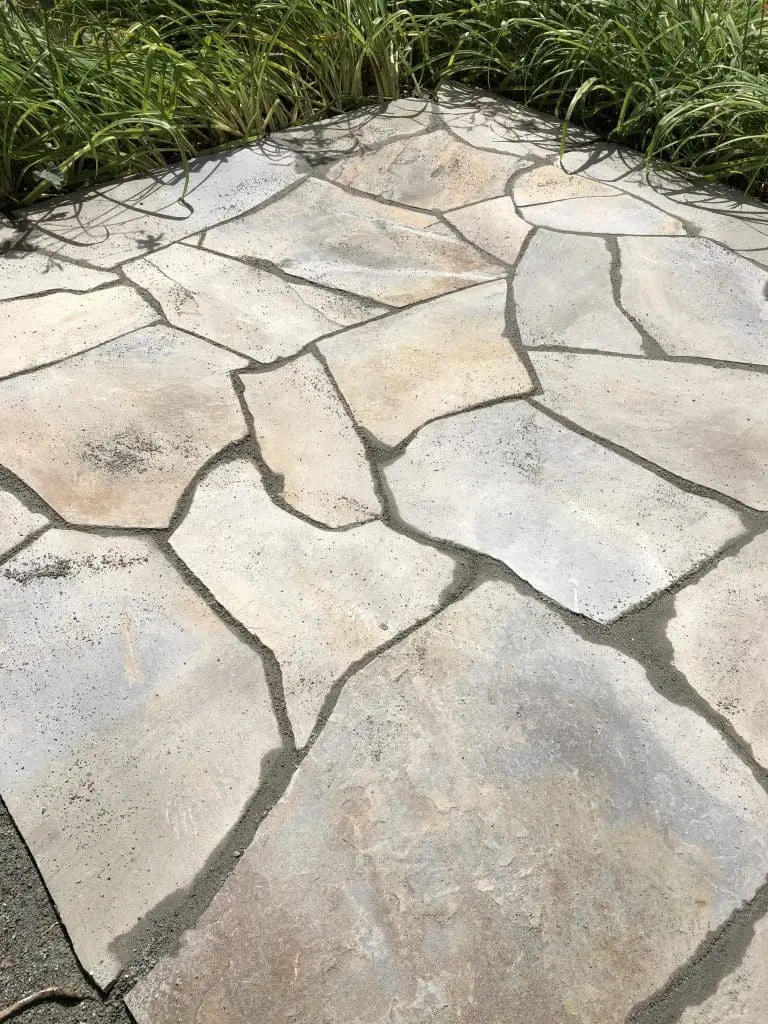
In an effort to respond, as opposed to react to climate change and storm water management, this wonderfully unique and highly functional design allows for and encourages casually directed foot traffic around garden beds, while an interesting, random pattern of repurposed brick in a gravel base substrate allows for maximum on-site infiltration of storm water. Talk about the best of both worlds!

This not only fulfills the legal permit requirements gracefully, it avoids creating more impervious space, and avoids sending the brick to a landfill. This is, in essence, the principle of permaculture: to design with stacked or multiple purposes in landscape features. Using bioengineering to install permaculture landscape features is awesome cool! Kudos to Brooklyn Bridge Park for exceptionally creative and progressive thinking and landscape design.

—

Jay Archer

Landscape Ecologist, Designer, President

Green Jay Landscape Design

914-560-6570
Filed Under: Events & Garden Tours, Hardscaping & Stonework, Wetland Restoration & Storm Water Tagged With: brick walkway, Brooklyn Bridge Park, custom masonry, drainage, garden tour, landscape architecture, landscape design, landscape drainage, permaculture, repurposed materials, storm water management plan, sustainability, upcycle, walkway design

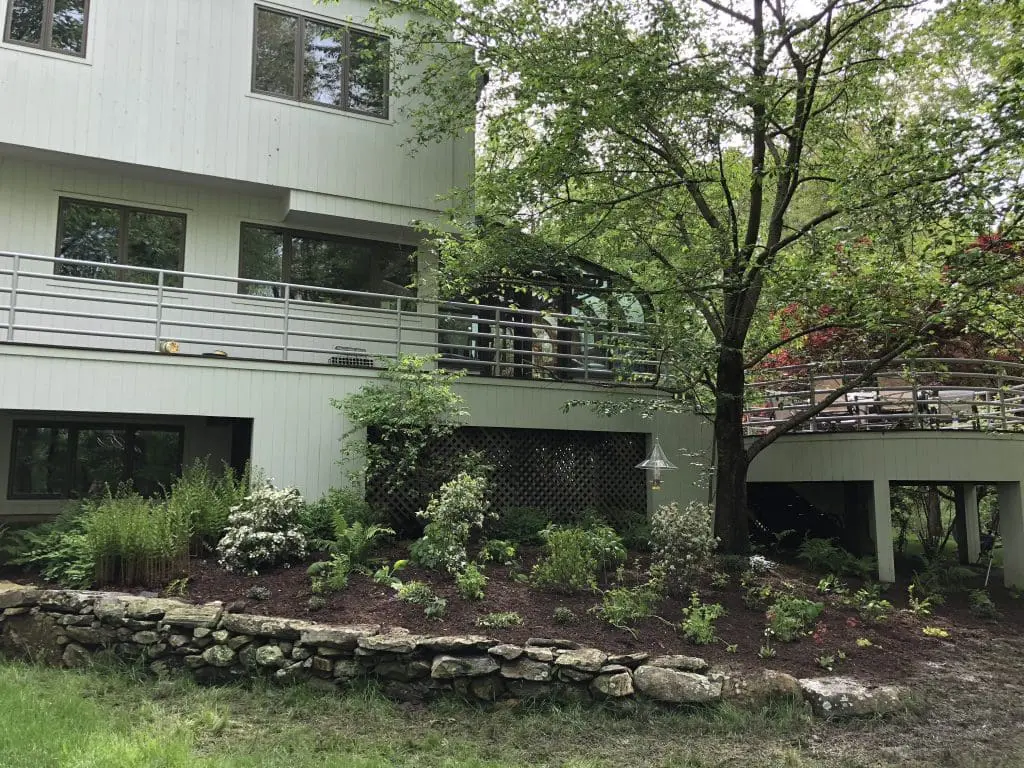
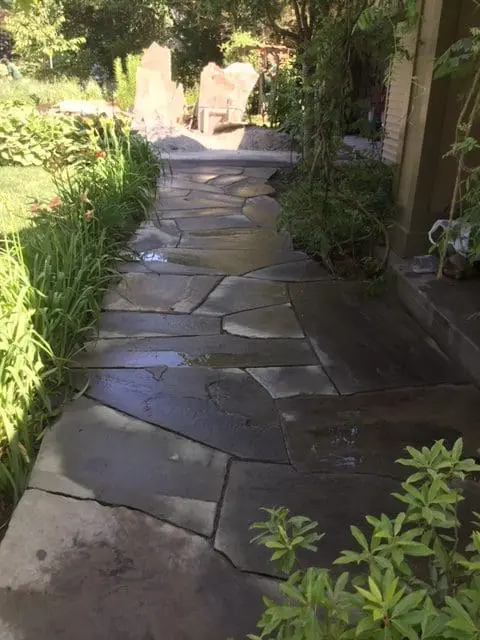
Landscape architecture and design involves examining all aspects of the property and home.  Considering changes in the existing landscape can improve the functionality and appearance of the site.

Ecological values include evaluating the natural and financial resources available to create a more sustainable and resilient landscape environment.

These goals are not mutually exclusive. They are desirable and compatible to produce the greatest, high value outcome.


For instance, natural stone, hardwood mulches, native plants and water features contribute greatly to the structural enhancement, functionality and attractive appearance while providing excellent value in resource conservation and financial management.

Landscapes take on many facets: art, capital improvement, quality of life, health and lifestyle enhancement.

All good art, all good compositions, find genesis in an idea, a vision.

This could be a visual image, a text or a suggestion. The work is in the becoming.

—

Jay Archer

Landscape Ecologist, Designer, President

Green Jay Landscape Design

914-560-6570
Filed Under: Landscape Construction & Installation, Landscape Design, Uncategorized Tagged With: custom masonry, ecological landscape design, ecological landscaping, landscape architecture, landscape design, masonry, natural landscaping, natural stone masonry, patio, patio design, Patterson new york, stone patio, stone terrace, terrace

Topography, flow paths and sheet flow, surface, subsurface, French drains, perimeter drains, berms, bioswales, perk and infiltration rates are all important physical considerations to developing any substantial landscape architecture or garden design plan.

In consulting we often see the negative effects of lack of design planning and storm water engineering, like the ponding in the above photo. This occurred at the bottom of a slope, and nearby to a pool and patio that, upon examination, had insufficient drainage for its impervious surface area.

Mistakes like these often occur when several different contractors with mismatched skill sets and levels of competency are involved in a home improvement construction project on a property, instead of one unified design plan, project manager, and installation crew.

Soils and water table play a major role here, also the effects of development on adjacent properties. For example, water will pond faster in clay soils and/or with a high existing water table; if neighbors have a lot of impervious space and insufficient drainage, the sheet flow can be directed to your property.  Proper drainage begins at the height of land, not the bottom of a slope. Locating, examining and inspecting all existing drainage utilities on a site should be an early priority. If ponding occurs, the area quickly becomes a mosquito breeding habitat — a nuisance and a human health risk.

Just as there are many ways to skin a cat, as they say (I don’t know why), there may be options to improving drainage depending on the degree of the drainage problem. Identifying water issues with infrastructure is a start. This means identifying water in the basement, existence of sump pumps, and examining gutters and leaders. Check out our FAQ How Do I Know If I have a Drainage Issue for tips. Often times, we can solve a landscape drainage issue with a multi-functional design feature such as a rain garden, an attractive garden feature with facultative native plants and the proper soil medium and depth to allow rainwater to collect and slowly percolate, while simultaneously providing pollen and berries for local wildlife.  Check out our previous post on Rain Gardens.


If you have a water, drainage, or storm water problem, it is always better to address it sooner rather than later – contact us.

The past two years have produced unprecedented rainfall events especially in increased volume and frequency.  If this is the new normal as a result of climate change, we are in for one hell of a ride! Plan for the future with a Storm Water Management plan.

—

Jay Archer

Landscape Ecologist, Designer, President

Green Jay Landscape Design

914-560-6570
Filed Under: Uncategorized, Wetland Restoration & Storm Water Tagged With: catch basin, Darien Connecticut, drainage, drainage plan, dry well, impervious space, landscape drainage, landscape flooding, landscape ponding, rain garden, stormwater management, stormwater plan

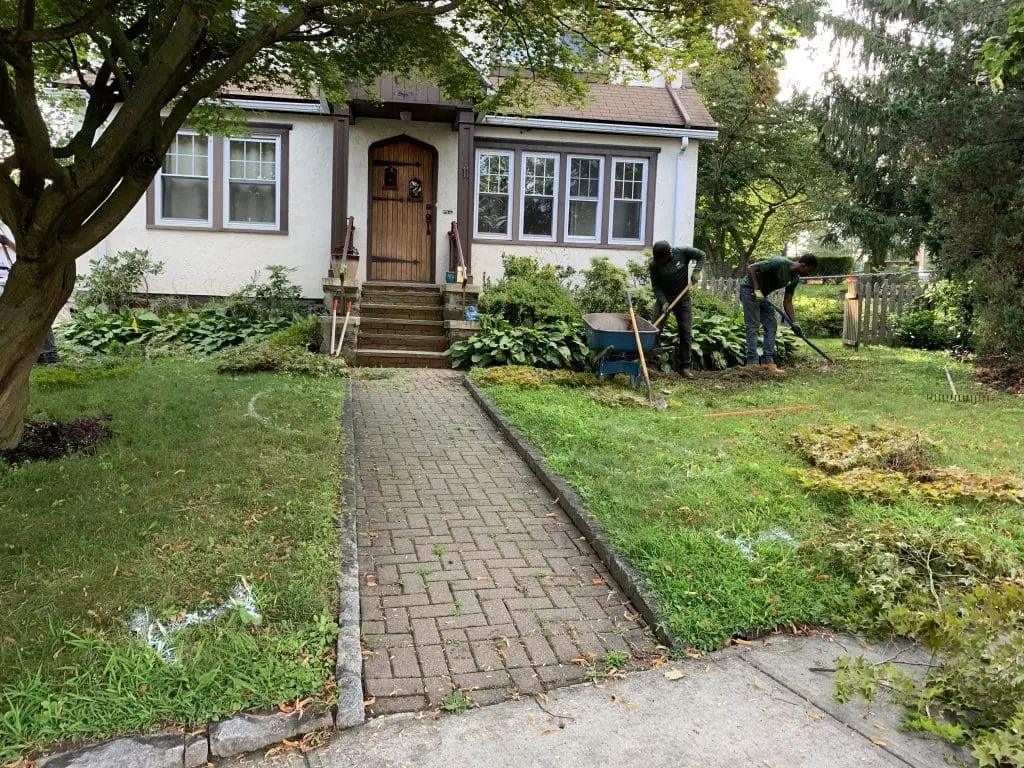
Consider how you can benefit from removing your lawn and replacing it with a vibrant, flowering, ecologically friendly landscape.  If your landscape consists of a lawn which you mow, water and fertilize regularly, a couple of trees and shrubs, and basically nothing else of interest, consider change. Consider elevating your landscape for your human health, wildlife, and aesthetic beauty.

Below: Before Photo of this Port Chester Property. 

Whether this describes your private residence or your business office, entertain reimagining a more interesting, exciting and low maintenance landscape.

Why not visualize a landscape with flowers and shrubs which continually offer interest throughout the seasons?

Ecological landscaping is an indication of a progressive mindset. Regardless of your politics, you are living in a dynamic period in our world and culture. We are surrounded by diversity in our society, yet our landscapes rarely reflect our acceptance and embracing of diversity in our aesthetics, ecology and biology. We need more nature, elements of wild nature for biological human health. We desperately need healthy landscapes and ecosystems which provide ecosystem services and conserve resources.

Make the change. Start with a plan, a budget…a vision of ‘Landscapes for Better Living’.

About the Landscape Design

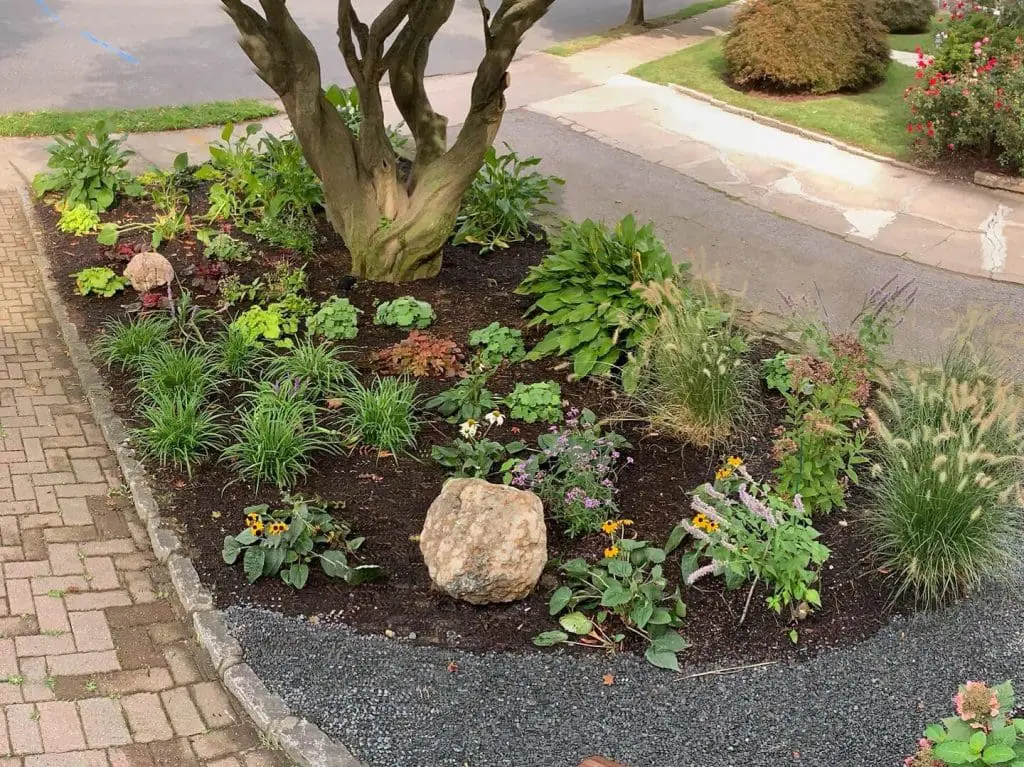
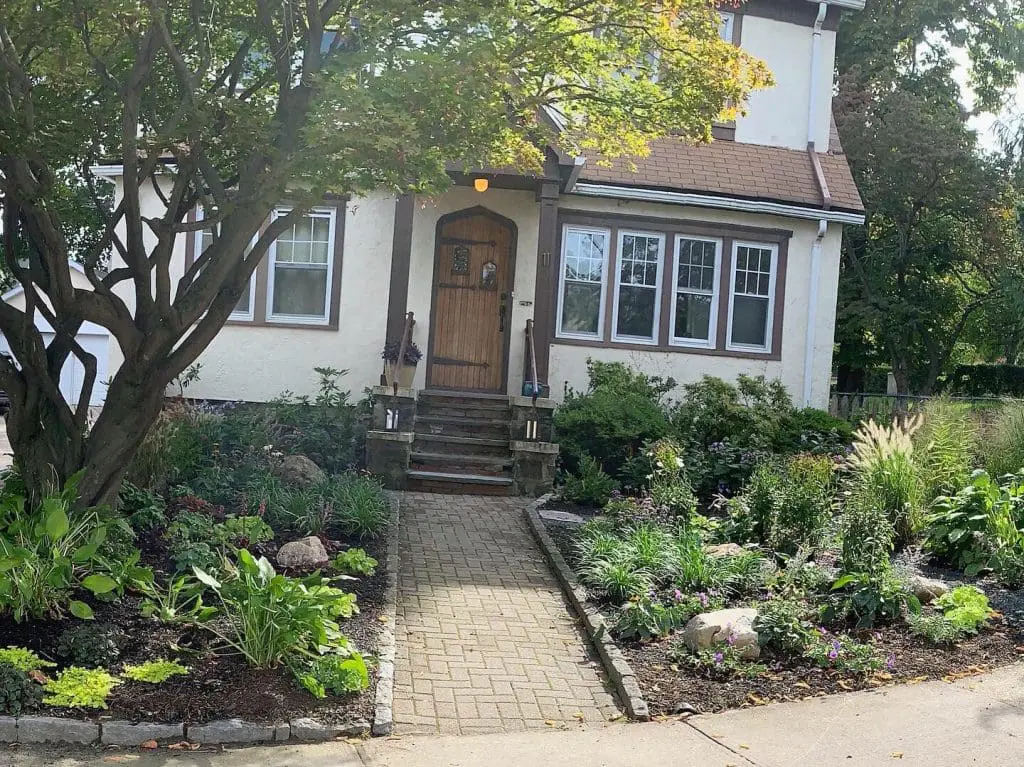
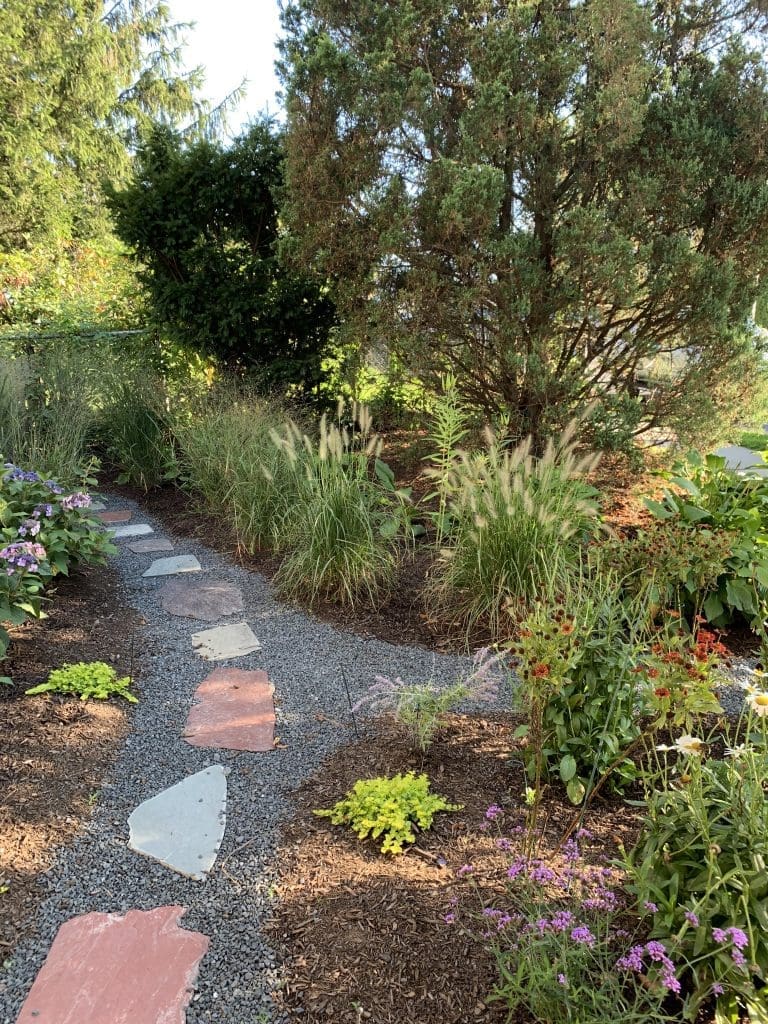
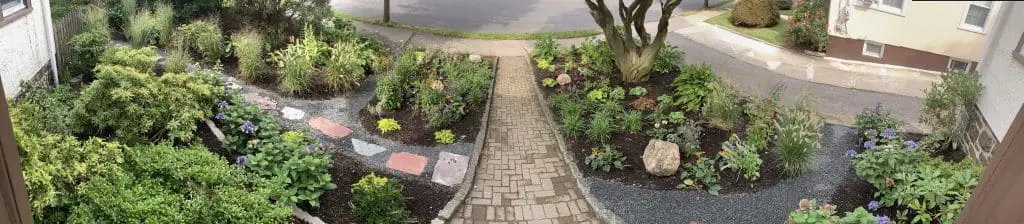
For this property, which is actually a home and a chiropractor office, it was important to create a visually stimulating and vibrant front yard garden.  We removed the lawn and dug up the foundation hostas for transplanting. After analyzing the sun patterns and hydrology of the property we decided to create a shade garden on the left side, beneath the shade of the mature Japanese Maple, and a part to full-sun garden on the right side.

We incorporated boulders throughout and created a meandering gravel and flagstone walkway way that allows you to enjoy both sides of the garden, and cross from the driveway to the rear yard. The backyard was renovated to include a no-mow, eco-friendly lawn.

We chose Hydrangea and ornamental grasses as easy-low maintenance plant choices with high flower impact and delicate movement, respectively. Spreading ground covers will also help alleviate weed pressure and fill in attractively over the brown mulch.


Contact us about your Landscape Design project!

—

Jay Archer

Landscape Designer, Landscape Ecologist, President

Green Jay Landscape Design

914-560-6570
Filed Under: Featured Work, Landscape Construction & Installation, Landscape Design Tagged With: eco-friendly landscaping, ecological landscape design, ecological landscaping, environmental landscaping, healthy yard, native landscape design, native plant garden, natural landscape, natural landscaping, organic landscape, organic landscaping, port Chester landscape design

Flowering plants give us pleasure and enjoyment. They also provide critical ecosystem services in our landscape environment. This lovely cottage style garden in downtown White Plains serves as a precious sanctuary for pollinators and a tremendous variety of migrating birds. Developing Westchester’s green spaces / native plant corridors are valuable to many life forms from the soil microorganisms to the tree tops.

It Starts with the Soil

For example, we start every installation with organic, natural source soil amendments including premium compost with biochar.  The biochar provides a host for microbes and the organic matter provides a food sources for the microbial communities to grow. Biochar also helps with water retention and aeration, creating more hospitable soil environment. Check out Organic Mechanics and Organic Plant Magic, two of our favorite sources for ecological gardening products!

Naturalistic perennial border in mid summer.

Habitat Requirements

An important component of true environmental landscape design is providing food, water and shelter for wildlife throughout the year. It is especially necessary to provide native plants that bloom from early spring through fall. To accomplish this feat requires shrub habitat, berries, flowers and trees. The National Wildlife Foundation has created a checklist for designing habitat gardens, to fulfill their Certified Wildlife Habitat program, learn more here.

In this garden,  plant selections included:

Agastache (Blue Giant Hyssops)

Digitalis (Foxglove)

Coreopsis (Tickseed)

Leucanthemum (Daisies)

Nepeta (Catmint)

These pollinator attracting perennials, plus the all-organic landscape maintenance program also qualify this property as a Pollinator Pathway of White Plains and broader Westchester County.

This landscape is always changing and evolving with the seasons, and we look forward to continuing to develop it in accordance with the changing climate.

—

Jay Archer

Landscape Designer, Landscape Ecologist, President

Green Jay Landscape Design

914-560-6570
 

Filed Under: Featured Work, Landscape Design Tagged With: bird and butterfly garden, butterfly garden, eco-friendly landscaping, ecological landscape design, ecological landscaping, environmental landscaping, landscape designer, native landscaping, native plant garden, native plants, natural landscaping, pollinator garden, sustainable westchester, Westchester county landscape design, white plains New York landscaping

Opportunities abound! Each landscape has the potential to serve as a model for educating ourselves, our children and the community about the importance and value of nature, resource conservation and environmental education.  Uniting our communities, organizations, non-profits, and land trusts to promote ecologically responsible land stewardship is imperative for preserving the beautiful diversity of our planet for future generations.

For myself, working for and with groups like Nature Conservancy, Audubon International, Grassroots Environmental Education, and Bedford 2020 has been a blessing and expanded my knowledge and reach as an ecological landscape designer.

I was fortunate to study a variety of related disciplines, from Ethnobotany with Barrie Kavasch at The Museum of Natural History, Nature Awareness with Tom Brown Jr. at The Tracker School, Organic Horticulture at The Nature Lyceum with Jeff Franks, Environmental Education at Sheldrake Environmental Center with Mary Davis, Permaculture with Claudia Joesph, and Ecological Restoration and Wetlands with Dr. Steven Handel and Bill Young at Rutger’s Center for Urban Ecology. This diverse education continues to inform my design process, and I am continually learning how to reach ecological objectives through landscape design and responsible construction, installation, and maintenance procedures.

I have been fortunate to work with and for many fabulous people, organizations, municipalities and communities in and around New York City, New York State and Connecticut.  My work has enabled me to make a positive impact, from wetland restoration projects, to rain gardens for Westchester County, and a private bird sanctuary for a Fairfield County client.  Landscape designers must use their skills to solve our pressing environmental and ecological problems!

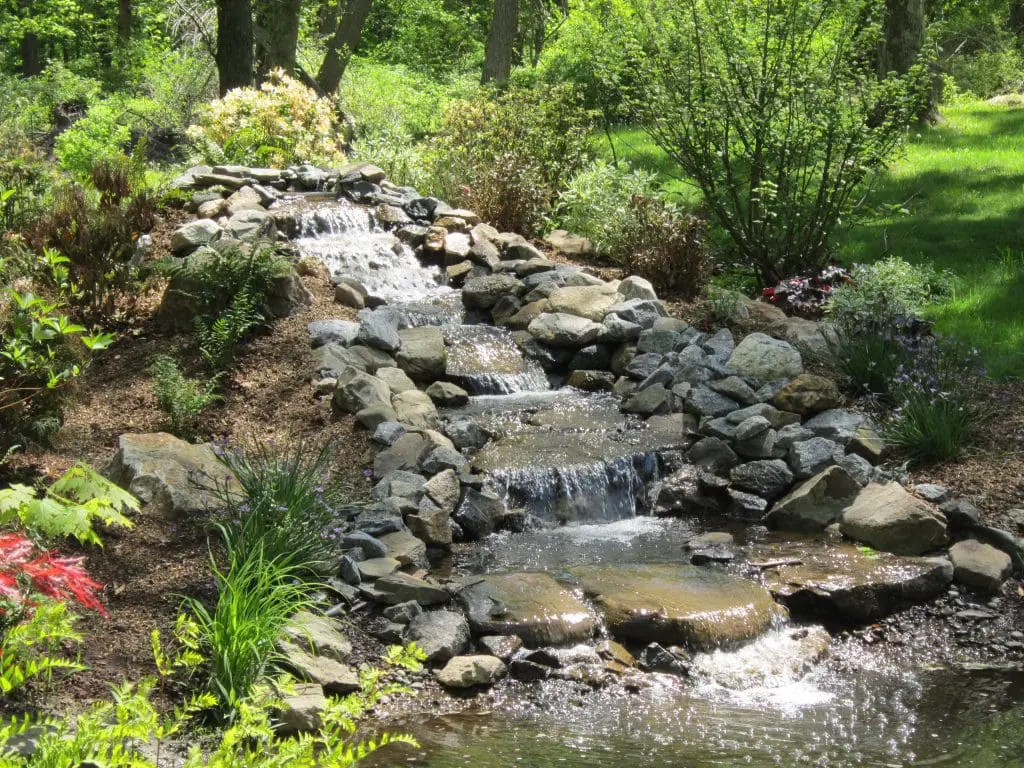
I am thankful for decades-long client relationships, like with the owner of the property in the above photo. This Bedford, NY landscape has been fully ecological and organic for over ten years! It is a true habitat for birds, pollinators and local wildlife. The client has endowed great trust and creative freedom to myself and my team to work within the natural woodland setting and create resilient habitats and livable spaces.

There is so much we can do to improve our relationship with nature and the natural world!
So much to learn …so much we still don’t know!

What we do know is that we don’t have time to repeat the same mistakes (indiscriminate use of toxic chemicals, our addiction to fossil fuels, and our ignorant impact on clean water and clean air…).

We need to work together…design new solutions that will inform our future as a species in our beautiful world.

We can only succeed in our collective efforts to improve our quality of life, healing the waters and caring for the land as true stewards of our children’s future by finding the courage to change…take chances…be creative…use our gifts for the benefit of all.

—

Jay Archer

Landscape Ecologist, Designer & President

Green Jay Landscape Design

914-560-6570
Filed Under: Ecological Education, Featured Work, Landscape Design Tagged With: Audubon international, Bedford NY, ecological education, ecological landscape design, environmental education, horticulture, landscape architecture, landscape design, landscape design and build, landscape designer westchester, native landscaping, native plant gartden, native plant landscaping, natural landscaping, naturalist, New York Botanical Garden, organic gardening, permaculture, permaculture design, Rutgers center for urban ecology, sheldrake environmental center, the tracker school, urban ecology

  • « Go to Previous Page
  • Page 1
  • Interim pages omitted …
  • Page 27
  • Page 28
  • Page 29
  • Page 30
  • Page 31
  • Interim pages omitted …
  • Page 61
  • Go to Next Page »

Footer

Shop Address: 369 Bradhurst Ave, Hawthorne, NY 10532
(914) 560-6570
  • Facebook
  • Instagram
  • LinkedIn
  • Pinterest
  • YouTube
  • Houzz
  • Slide Share
  • Installation
  • Portfolio
  • Pricing
  • About
  • Contact

Copyright © 2026 · Green Jay Landscape Design. All Rights Reserved · Privacy Policy · Website and Local SEO by Ramblin Jackson