• Skip to main content
  • Skip to footer
Green Jay Landscape Design

Green Jay Landscape Design

Green Jay Landscape Design

(914) 560-6570
  • Design
  • Installation
  • Portfolio
  • Pricing
  • About
    • Service Area
    • Meet Our Team
    • Our Process
    • Our Promise
    • Mission, Vision, & Core Values
    • FAQ
    • Press & Events
    • Blog
    • Reviews
    • Careers
    • Affiliations
  • Contact

greenjayadmin

We all know the end of the year is a time for reflection and resolution making. However cliché, this is healthy and productive tradition that allows us to take stock of the past year, learn from our actions, and put forth new intentions. In that spirit, for the next seven days, we’ll provide you with Three Ecological Resolutions for 2018, grounded in a recap of environmental news and events of 2017.

2017 was definitely a rough year for the environment. With a climate change denier as Commander In Chief, and the Environmental Protection Agency’s biggest critic now at its helm, the stage was set for a year of assaults on the environment at a time when we need to protect it the most. In twelve short months, the Trump administration, upended 60 environmental regulations, approved the controversial Keystone XL and DAPL pipelines, and drastically reduced the size of national monumentscreated in the Obama administration while opening them up to private mining, extraction and ranching interests.

But fear not! Revolution starts in thy own backyard. There is so much we can do at the community and individual level to preserve and protect the environments we so cherish.

THE ISSUE: STORM WATER RUNOFF

It is no surprise that population growth and the associated development of once rural lands are impacting our environment. How and where we build matters. This year, Houston suffered the worst flooding in history, in part from record rainfalls from Hurricane Harvey, but also from urban sprawl, weak zoning regulations, and a disjointed storm water management strategy that failed to absorb some of storm surge.

Impervious surfaces are those that do not allow water to infiltrate into the soils (asphalt, concrete, roofs, etc); rather, they increase the flow rate of storm water by two to three times compared to vegetated areas.

In wake of the natural disaster, Texas A&M professor and flood plain management expert, Sam Brody lamented to CNN, “We need a broader strategy that protects areas with natural infrastructure like wetlands, which are still the best system we have to hold, store and slowly release floodwaters.”

Brody is right. Wetlands are an essential ecosystem from a biodiversity standpoint and a storm water management and remediation perspective (see our latest SlideShare for more on the value of wet meadows). If your property includes or borders a wetland, protect it. If not, there are landscape design solutions that can combat runoff and build ecological value.

THE SOLUTION: RAIN GARDENS & BIO-RETENTION

Bio-retention is a land-use strategy that employs the properties of plants, microbes and soils to control the quality and quantity of water on a landscape (Dunnet & Clayden, Raingardens 2007). Carefully selected plants are natural sponges: their root growth prevents soil compaction through aeration, allowing for greater water infiltration; microbial communities in the soil help plants’ roots uptake water and nutrients.

For the homeowner, bio-retention often takes the form of a rain garden. A rain garden is designed to gather water during a high storm event and allow it to dissipate into the soil. Otherwise, run-off collects pollutants such as oil, gasoline, pesticides, fertilizers, animal feces, sediments, heavy metals and bacteria along the way. Much of our current storm water systems are designed to collect water quickly and funnel it away from development, often into rivers, streams and oceans, or costly water treatment plants. This is a classic example of man vs. nature. Instead of maximizing nature’s own system of checks and balances, we pave and pipe our own ineffective ones. In 2018, let’s do better.

DESIGN CONSIDERATIONS

If you experience flooding or ponding on your property, a rain garden might be right for you. Rain gardens are typically dug 6” deep and planted with a selection of native plants that can tolerate flooding and drought. Rain gardens are not water gardens! This is a common misconception. Your rain garden should drain in 6 – 24 hours, depending on the storm event; rain gardens are not ponds, and will not encourage mosquito breeding (mosquitos need much longer to lay and hatch eggs in water).

Construction of a rain garden at WCC’s Native Plant Center.

Uconn has a great resource for determining the impervious surface area of your property and calculating the rain garden area needed to absorb run-off. Your rain garden should be located in the path of run-off, such as near a gutter or downspout. However, if you have a basement, do not design your rain garden within ten feet of the building.

Test the infiltration rate of the soil in your desired location before going any further. Sandy soils drain the fastest, and clay soils are nearly impermeable. An infiltration rate of 1-2 inches per hour is ideal for a rain garden. Soil amendments such as gypsum and soil surfactant can aid in absorption. Often gravel or river rock are employed to prevent erosion near the run-off inflow and bordering over-flow areas.

Plant selection should consist of species that flourish in mesic soils – those that are neither excessively wet or dry. Generally herbaceous plants and grasses work best, but you can experiment with trees, shrubs and annuals too, as suits your design aesthetic. Natives are always preferable when possible – but more on that later in this series.

If you need assistance designing your rain garden, or a broader assessment of drainage on your property, call us to speak with our team of landscape ecologists about a consultation.

—

Green Jay Landscape Design

Where Design Meets Ecology

914-560-6570

Filed Under: Ecological Education, Wetland Restoration & Storm Water Tagged With: bio-retention, eco-resolutions, ecological landscape design, rain gardens, storm water management

I attended the Westchester County Government’s Pond and Lake Management Workshop at the start of the month and learned about the important work of the DEC in overseeing our public water bodies. Pond and lake management is a complicated issue that impacts many facets of the environment and our lives.

You may have heard about the Harmful Algal Blooms (HABs) that closed eleven Hudson Valley lakes this summer, including two in Westchester. HAB describes a dense concentration of cyanobacteria, creating a distinctive, thick, blue-green muck on the surface of lakes. Cyanobacteria can be toxic and non-toxic, posing a risk to drinking water, human health, wildlife, and affecting lake recreation activities.

HABs are symptomatic of larger ecological imbalances, most significantly, nutrient overabundance that causes eutrophication. As with most environmental issues, treatment projects vastly outweigh prevention efforts in difficulty, cost, and effectiveness.

WHAT IS EUTROPHICATION?

You might remember learning this term back in EnviSci class… but here’s a refresher:

  • Eutrophication refers to an increased rate of organic carbon production, caused by increased primary productivity (plants and algae photosynthesizing).
  • It occurs in lakes after excessive inflow of nutrients, mainly phosphorus and nitrogen, which greatly boosts phytoplankton, aquatic plant, and cyanobacteria populations.
  • Just one pound of phosphorus can create 1,000 lbs of algae!
  • Eutrophication represents a huge ecological shift: only species tolerant of limited oxygen, warm temperatures, and high nutrient concentrations can survive.
  • Toxins produced by cyanobacteria can disrupt the nervous system, liver, skin, and eyes. Pets are also at risk.

Image courtesy of: Socratic.org

Main Types of HAB Cyanobacteria:

Microcystis Produces Microcystin toxin; can be highly toxic Forms late summer – fall
Anabaena Produces Microcystin, Anatoxin; mid-level toxicity Forms in spring & summer
Aphanizomenon Produces Anatoxin and others; low-level toxin Forms in spring & summer
Oscillatoria Produces Microcystin, Anatoxin Forms spring – fall


Three Main Toxins from HABs:

Microcystins

*Most common toxin in New York

Impacts liver Produced by: Microsystis, Anabaena, Oscillatoria
Anatoxins Impacts nerves; potentially fatal to dogs Produced by: Anabaena, Aphanizomenon, Oscillatoria
Lipopolysaccharides Skin irritants and allergens Produced by most cyanobacteria


Maps courtesy of NY DEC.

WESTCHESTER COUNTY HAS THE LARGEST CONCENTRATION OF LAKES, PONDS AND STREAMS OF THE ENTIRE STATE!

That’s 620 beautiful, life-giving water bodies that we must actively protect. Eutrophication management practices can take years and require precise monitoring along the way to gage effectiveness and allow for modifications in the plan of action. Current solutions include:

  • Artificial circulation
  • Dredging
  • Chemical algacides (copper)
  • Chemical inactivants
  • Fish stocking
  • Other potential solutions, such as using barley straw as a physical barrier, are not legal in New York state.

WHAT SHOULD YOU DO IF YOU SEE A HARMFUL ALGAL BLOOM?

  • Stay out of the water!
  • Keep pets away from the water Contact Department of Health if there is a beach
    • harmfulagae@health.ny.gov
  • Contact the Department of Environmental Conservation
    • habsinfo@dec.ny.gov (518)-402-8179
  • See if the bloom has already been reported or sampled: http://www.dec.ny.gov/chemical/83310.html
  • You should also be aware of the Aquatic Invasive Species (AIS) plaguing Westchester water bodies. Check out that presentation by Catherine McGlynn, and learn to recognize the infamous Hydrilla, Water Chestnut and more.

BE PROACTIVE! LET’S REVERSE THE TREND.

In 2017, we halved the number of HABs in Westchester County, the first decrease since 2012. Keep it up! Let’s avoid the costly and invasive, symptomatic solutions to HABs & AIS. Prevention is our best bet here, before HAB toxins leech into our watershed. Here are some steps you can take at the household & community level:

  1. ?Reduce water use – ease pressure on your septic tank!
  2. Repair leaky pipes
  3. Install a double flush toilet & low flow showerheads
  4. Don’t flush any trash or items down the toilet.
  5. Reduce your nutrient footprint. Eliminate synthetic lawn fertilizers – we can transform your yard from toxic to organic.
  6. Plant vegetation buffers along shorelines.
  7. Rain water harvesting & recycling back into your landscape.
  8. Fight Mud! Stormwater management on your property is essential
  9. Plant more plants for erosion control. Install a Rain Garden to absorb storm water and beautify your property.
  10. Report any suspicious sitings in your local lakes and ponds to the DEC and/or DOH.

If you need assistance with storm water drainage on your property, give us a call! (914-560-6570) We would be happy to design a beautiful and functional solution.

A huge thanks to all the wonderful presenters – Stephen J. Souza, Catherine McGlynn, Scott Kishbaugh, Jeremy Farrell – and to the DEC for organizing!

Jay Archer

President

914-560-6570

Filed Under: Ecological Education, Wetland Restoration & Storm Water Tagged With: ecological consulting, ecological landscaping, eutrophication, Harmful Algal Blooms, lake conservation, lake restoration, oligotrophic lake, organic landscaping, prevent water pollution, water conservation, water pollution, water quality, Westchester County Lakes

You may have seen us use the hashtag #WhereDesignMeetsEcology recently on our social media posts (and if you’re not following us on Facebook, Instagram and YouTube, you should be!) We’d like to take a moment to explain what exactly we mean, what sets us apart, and why you should care.

First, some context: for the past fifty years standard landscaping practices were short-sited, compartmentalized, and largely unimaginative. A formula developed for every house on the block: foundation plantings of mostly evergreens and uninterrupted, immaculate lawn everywhere else! Landscapes were designed for viewing from afar, not for interacting with daily. How boring, and what’s more, what a wasted opportunity!

WE BELIEVE THAT EVERY LANDSCAPE HAS GREAT POTENTIAL ON MULTIPLE LEVELS.

Yes, overall attractiveness, cohesiveness with the built architecture, and general curb appeal are all valid objectives for designing a landscape. We can do that, and more.

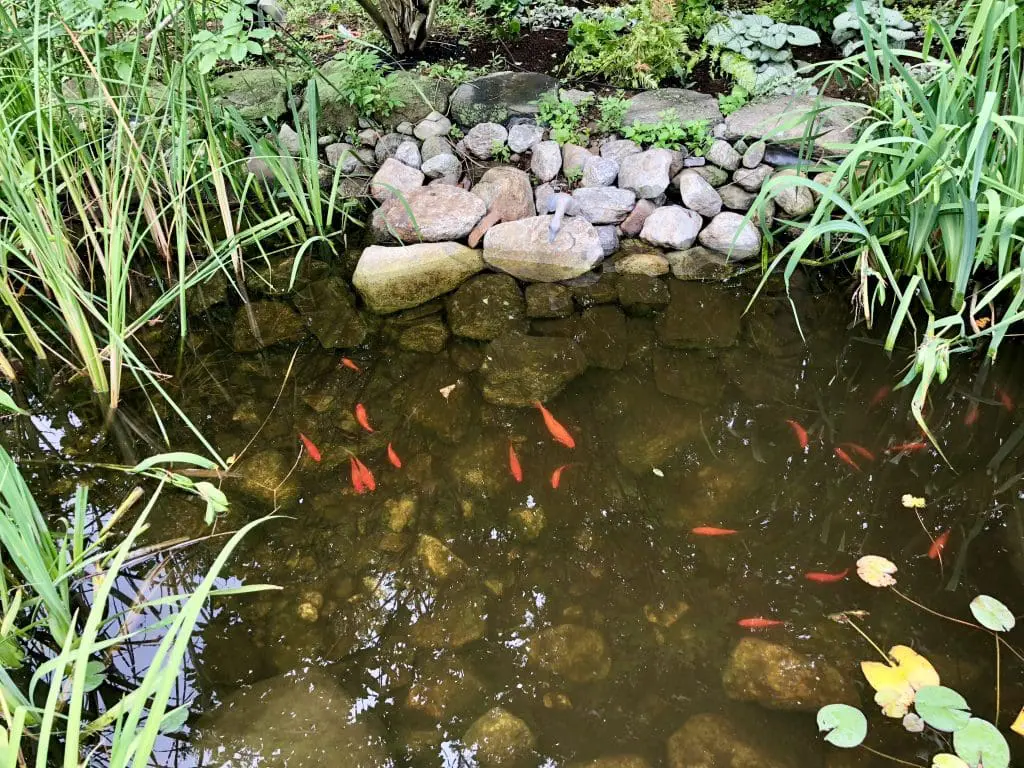
We can create habitats for vital insect species that are rapidly dropping in numbers; for birds, bats, bees, moths and butterflies. In a world of constant development, your backyard can be a safe haven for nature’s biodiversity. It doesn’t stop at the plants either! We specialize in Natural Stone Ponds, which can be filled with fish, frogs, turtles and other wildlife, or made larger for swimming. The water is always purified through bio–filtration by bog plants.

We can preserve our watersheds through responsible pond, stream and wetland management. Unchecked, wetlands can become monopolized by invasive species (Phragmites) and algae; stagnant water becomes a breeding ground for mosquitos and ticks, posing public health risks. Instead, we can use landscaping to improve our watersheds, by leveraging the natural bio-filtration and erosion control effects of wetland plants.

The importance of cultivating healthy soils cannot be overlooked. We start with a soil analysis, which informs our soil enrichment program. GJL uses only natural-source, non-toxic products; our aim is not to kill one life form to enable another. We work holistically, steeped in ecological principals, to produce soils rich in microbiology. A healthy soil supports happy plants that thrive, photosynthesize, sequester carbon dioxide and improve our air quality. They are essential in our fight against global warming and air pollution.

By eliminating the use of synthetic fertilizers, pesticides, herbicides and insecticides, we enrich local biodiversity. At GJL, we reject the old school of thought, where trees and shrubs were sprayed blindly with gallons of “preventative” chemicals every year, with no regard for the effects on habitat and water quality.

HOWEVER, DETOXIFYING YOUR LANDSCAPE REQUIRES FAR MORE THAN JUST A PRODUCT SWAP.

Instead, we design landscapes from an ecological perspective: nature has its own checks and balances for every pest, blight, and wily plant out there. Thoughtfully designed plant communities with rich layers of biology have natural immune responses. They respond and thrive together. Biodiversity is key.

Our aim is not just to increase your property’s species count. We want to enhance your experience with the landscape. Don’t just eye it from afar –go outside and experience nature! Watch a Monarch butterfly drink from a Monarta flower, hear the vibrations of the neighboring bees (it’s not called Bee Balm for nothing!), see the migrating birds stop by for a berry.

How many times have you gone outside to interact with your lawn? Reconnect with your wild nature. Know that your yard is safe for your children, your pets, and generations to come.

Our goal is to best manage your resources with the least disruption to the natural environment. The challenge is to create landscapes that can flourish in a time of climate change, seasonal irregularities, and weather extremes. Together, we can reimagine our land use to benefit ourselves and the environment: Where Design Meets Ecology.

Filed Under: Ecological Education, Landscape Design, Organics - Lawn, Tree & Shrub Care Tagged With: ecological landscape design, ecological landscaping, habitat garden, healthy yard, landscape ecology, organic garden, organic landscapes, our promise, where design meets ecology

For most of our readers, November probably conjures up images of warm-toned foliage, leaves scattering to the ground, dark evenings and the first biting temperatures. As your resident Landscape Ecologist, I’m here to remind you that November meansspring color!

IT’S BULB SEASON PEOPLE!

Bulbs are a fabulous plant group because of their beautiful early-spring flower blooms (before most plants even have foliage!) and relative low maintenance. They are a must for a landscape with four-season interest!

Spring-flowering bulbs require a wintering period to develop roots and gather nutrients for a successful bloom.

Therefore, they must be planted in the fall, before the ground is frozen. November is Bulb Season!

Examples of bulbs include: daffodils, tulips, hyacinths, alliums, lilies, chinodoxas, and snow drops. Corms behave similarly to bulbs but are botanically different; they include crocus, gladiolus, and autumn crocus. Check out the gallery below for the incredible color variety available!

DESIGN CONSIDERATIONS

Since bulbs can flower from early spring (as early as February!) to late spring, depending upon the species, it is important to design your planting in accordance with the bloom schedule. Successive blooms ensure a vibrant, beautiful garden all season long. Foliage development of deciduous shrubs and perennials should also be taken into account. Bulbs can provide color in the foreground of a bare shrub in early spring, or the colors can compliment and enhance the beauty of early-blooming perennials.

Bulbs look the most stunning in dense plantings. The average home gardener might plant dozens or a few hundred throughout their landscape. A Green Jay Landscape Design planting numbers several thousand!

Thankfully, bulbs come in various heights and sizes—creating layers of heights and textures creates a dramatic visual display.

Tall late blooming bulbs including ornamental garlic and nodding onions are a great compliment to ornamental grass gardens, which are cut down in March creating space for bulbs. After the bulbs bloom, the bed will fill with beautiful waves of grasses, blowing in the breeze.

Post-bloom, the foliage of bulb plants begins to droop and yellow. Succession with larger, later-blooming bulbs is a good way to hide the dying early-bloomers. It’s important to resist cutting down the near-dormant plants too early – they need their photosynthesis factories (leaves) to create and store sugars for dormancy.

HAPPY PLANTS = BEAUTIFUL BLOOMS

Each species and cultivar of bulb prefers a particular planting depth and spacing. Prepare the soil before planting with an organic fertilizer such as bone meal. Consider rodent repellant. When first planted, bulbs may attract the interest of neighborhood rodents. As with all plantings, a proper irrigation schedule can make or break a plant’s success.

Bulbs are perennials, meaning they will go dormant in the summer and will begin to develop roots in late fall in winter, in time for the next spring’s bloom. They repeat this cycle every year. Fertilization throughout the bloom period will help the bulb in the over-wintering process.

Now that you’ve envisioned the delightful bursts of color emerging from your barren winter landscape in just four short months…it’s time to order your bulbs and schedule your planting!! Call us for design, installation and maintenance.

Jay Archer
President
Green Jay Landscape Design
914-560-6570


Filed Under: Gardening & Grounds Maintenance, Landscape Construction & Installation, Landscape Design Tagged With: alliums, bulb design, bulbs, crocus, daffodils, fall landscape preparation, fall landscape to-do list, spring flowering bulbs, spring flowers, tulips

Fall comes to our landscapes. The leaves gently falling, soft rain, clean and sweet aromas of soil, crisp cool nights and bright clear daylight. Our landscapes recover and regenerate.

After the heat and humidity of summer things change. The days shorten, nights cool, rain comes… we hope…! Plants naturally conserve their resources, already planning ahead to the next growing season.

A time for rest and recharging spent energy.

Instead of energy going into producing leaves, flowers, and fruit, root development dominates.

Migrating birds who rely on berries and fruiting vines return to their distant homes to aid in propagation and pollination of our flowers and food crops. Frogs and insect-eating amphibians prepare for hibernation beneath stream bottom mud. These amphibians are essential to keeping life in balance naturally, far more so than Mosquito Squads indiscriminately killing beneficial species along with their target pests. Be careful to identify the true vector of our environmental problems…be sure it’s not really us!

How can we help improve our own health while conserving resources?

In essence: Do No Harm! Treat our landscapes with kindness and respect!

The first steps to better ecological landscape practices begin right here and now!

Jay’s Principals of Ecological Design: Fall Clean Up Edition

1) The leaves that fall are a precious gift!

Composting your leaves from your own trees to return to your property’s lawns and beds is a great practice. Don’t pay to throw away natures life, biology and fertilizer.

Plan on mulching leaves into the lawn with a mulching mower (mulching blades and closed shoot adaption).

Alternatively, rake instead of blowing. Enjoy the exercise and fresh air–what’s good for you is good for the soil! Indiscriminate blowing disturbs and removes soil particles and biology necessary for growth. There is a micro-world of life at the surface of your lawn and plant beds…do not destroy it!

Most landscape companies, unfortunately, do not provide adequate training and supervision to their crews and employees in regard to proper use of leaf blowers. We are, after all, just guys who love our tools and machines. We can’t help it…we love to blow!

2) Let microorganisms do your dirty work. Dethatching and removing dead grass in an organic lawn is unnecessary and counter-productive. The bacteria and microorganisms, the decomposers, will do just that, naturally!

3) Everybody needs to eat! Feed your plants!!

How would you like if someone planted you and forgot to water, feed and prune you?

You might suffer from neglect…

Show your landscape plants some love!

Use compost and natural source organic fertilizer for your lawns, shrubs, and trees.

Avoid guessing what your landscape needs by conducting a soil test each year. Soil amendments should be precise in their application; you can have too much of a good thing!

4) Let your perennials stand tall all fall!

Don’t cut down your perennials after they’ve bloomed. Leave them alone for overwintering insects! This is essential habitat.

They will add organic matter and protect the fragile topsoil layer.
Shredding leaves with a leaf shredder and applying them as a mulching layer to beds is even better!
You should also leave the tall ornamental grasses up through winter.

This shifts the effort to spring, which is a much better time to cleanup and prepare beds.

5) Reflect on how your garden faired this season.

Now is the time to reimagine your landscape: your own experience with nature, right here in your own backyard! Create a sanctuary of biodiversity! Plant a few new things that attract the birds, the bees, and the butterflies.

Pick three of the top ten native plants and you will encourage a chain of events. Watch a profound biological shift unfold and realize a healthier, happier world within your landscape.

Who doesn’t want to see a hummingbird at home?

Learn to appreciate the wasps, the flies… all of natures creations and their absolutely essential place in our landscape environment!

It doesn’t take much to enrich, enhance and beautify your ecological landscape.

Contact us for assistance in design & implementation – we love creating
Landscapes for Better Living. 914-560-6570
Jay Archer
President

Filed Under: Ecological Education, Gardening & Grounds Maintenance Tagged With: compost, fall gardening, fall landscape observations, landscape development, leaf mulching, naturalist, organic gardening, soil ammendments

The Monarch butterfly may be North America’s most prized insect. Orange wings with black veins like stained glass and white dots highlighting the edges make the Monarch strikingly beautiful and recognizable by all. I remember learning about Monarchs back in elementary school, when I first learned how caterpillars metamorphasize into butterflies. Aside from their esteemed beauty, Monarchs (Danaus plexippus) have an immense ecological value as well: they are considered indicator species.

WHAT IS AN INDICATOR SPECIES?

Indicator species are so named because their population’s presence, absence, or alteration are said to reflect changes in environmental conditions. Lichen, for example, are very sensitive to heavy metals and thus considered an indicator species for pollution and changes in air quality. Lichen often grow on the barks of trees in the forest, where air pollution is lower than in urban environments.

Monarchs are considered indicators for a number of reasons. As adult butterflies, Monarchs live only three to four weeks. Because of their short lifespan, environmental changes impact the Monarchs quickly, and changes within and between generations are more visible to ecologists. Second, the species distribution is wide: summer habitats in North America range from New England, to the Great Lakes region, north to Canada and west to the Rocky Mountains and California. In late fall, they migrate 2,000 – 3,000 miles to the Sierra Madre mountain range in Central Mexico to spend their winter months. Tens of thousands gather on single trees, making the forest glow and flutter orange.

(Photo Source: Black Point Group)

The World Wild Life Fund describes this behavior as the “most highly evolved migration pattern of any known species of butterfly or moth and perhaps any known insect.” The migration is particularly staggering because of the short life span: it will take 3-4 generations for the Monarchs to migrate from Mexico to the US and Canada. Scientists still do not understand how new generations know to continue the migration.

WHY SHOULD I CARE?

Aside from being America’s Bald Eagle of insects, Monarchs drink the nectar of a variety of wildflowers, pollinating them in the process. They are a food source for birds and larger insects, making them a vital link the food chain.

In recent years, Monarch populations have declined. The area they populate in Mexico “the butterfly hectare” reached a 20-year low in 2013, dropping from seven hectrares to three, a 43.7% decrease. In 2004, an estimated 550 million Monarch migrated to Mexico, while in 2013 just 33 million did.

WHAT CAN WE DO?

In two words: plant milkweed! Milkweed and Monarchs have co-evolved together. There are several types of milkweed species, but it is the only plant that Monarchs will lay their larvae eggs on. The larvae hatch and immediately start eating milkweed leaves. Most animals are sensitive to the toxicity in milkweed, but Monarchs can store the cardenolides in their bodies as a defense to ward off predators.

Milkweed (Asclepiadacea) is native to north America and naturally found in meadow borders along forests. Recently, milkweed populations have declined from the spread of synthetic pesticides from nearby landscapes, and the increase of glyphosate-resistant corn and soybeans on farmlands. By planting more Milkweed in our yards and communities, we can help create a corridor for migrating Monarchs. Planting Milkweed in a meadow with other wildflowers is ideal for conservation efforts, because it provides a food source as well as a habitat.

Feeling inspired? Check out how we converted a traditional monoculture lawn into a mecca of biodiversity for pollinators, including the Monarch, in our latest video: Good Witches Garden Part 6 – Finale. You can watch the journey from the beginning on our YouTube channel— subscribe to stay updated!

Need help transforming your yard? Call our team of experienced landscape ecologists for a consultation! 914-560-6570.

Filed Under: Ecological Education Tagged With: ecological education, ecology, indicator species, landscape ecologist, Lepidoptera, monarch butterfly, North American butterflies

  • « Go to Previous Page
  • Page 1
  • Interim pages omitted …
  • Page 38
  • Page 39
  • Page 40
  • Page 41
  • Page 42
  • Interim pages omitted …
  • Page 60
  • Go to Next Page »

Footer

Mailing Address: 222 Purchase Street, #144 Rye, NY 10580
Shop Address: 369 Bradhurst Ave, Hawthorne, NY 10532
(914) 560-6570
  • Facebook
  • Instagram
  • LinkedIn
  • Pinterest
  • YouTube
  • Houzz
  • Slide Share
  • Installation
  • Portfolio
  • Pricing
  • About
  • Contact

Copyright © 2025 · Green Jay Landscape Design. All Rights Reserved · Privacy Policy · Website and Local SEO by Ramblin Jackson