• Skip to main content
  • Skip to footer
Green Jay Landscape Design

Green Jay Landscape Design

Green Jay Landscape Design

(914) 560-6570
  • Design
  • Installation
  • Portfolio
  • Pricing
  • About
    • Service Area
    • Meet Our Team
    • Our Process
    • Our Promise
    • Mission, Vision, & Core Values
    • FAQ
    • Press & Events
    • Blog
    • Reviews
    • Careers
    • Affiliations
  • Contact

greenjayadmin

We are extremely proud to announce a new service offering for 2022, the Sustainable Stewardship Program. The offering is a holistic management program for clients with large properties (five acres or more) across Westchester, Putnam, Fairfield, and Morris counties. Beyond estate-level grounds maintenance, the program seeks to evaluate the unique environments within each property from an ecological perspective, aiming to improve biodiversity, ecosystem services, natural resource management, and the overall health and safety of the landscape over multi-year phases.

We felt driven to create this program because properties of scale can have a significant impact on ecosystem services that directly affect human health. These landscape environments can become models for climate resilience, stormwater management, clean air, and incubating essential biology that contributes to our own healthy microbiome. Human health is inextricably intertwined with our local environment.

Estate Environmental Observation & Analysis

Each Sustainable Stewardship Property has unique site conditions, stages of degradation or restoration, and criteria for improvement based on the client’s needs and desires for their landscape. The program starts with an on-site consultation where we can discuss program goals, conduct an initial observation and analysis of the existing conditions.

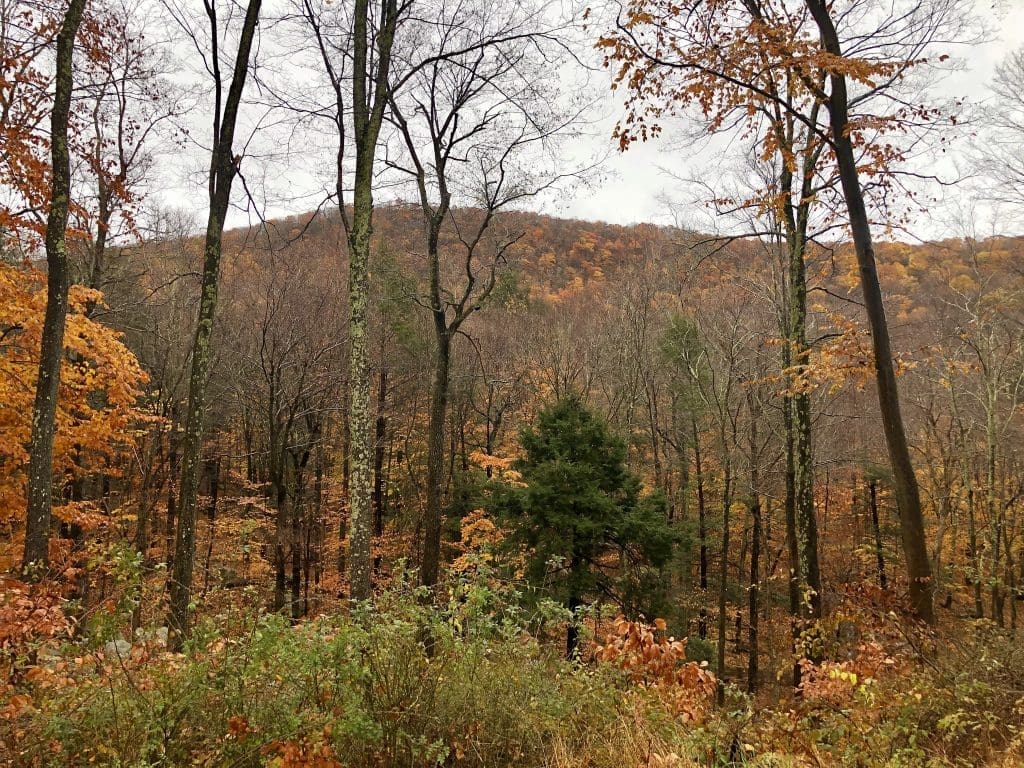
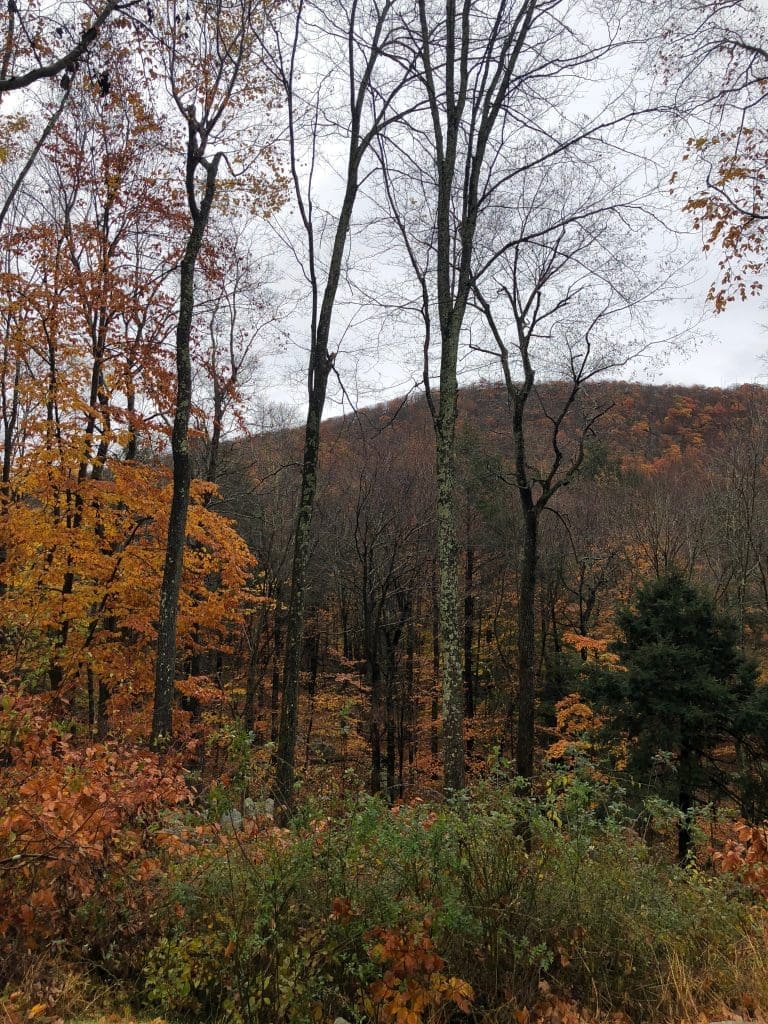
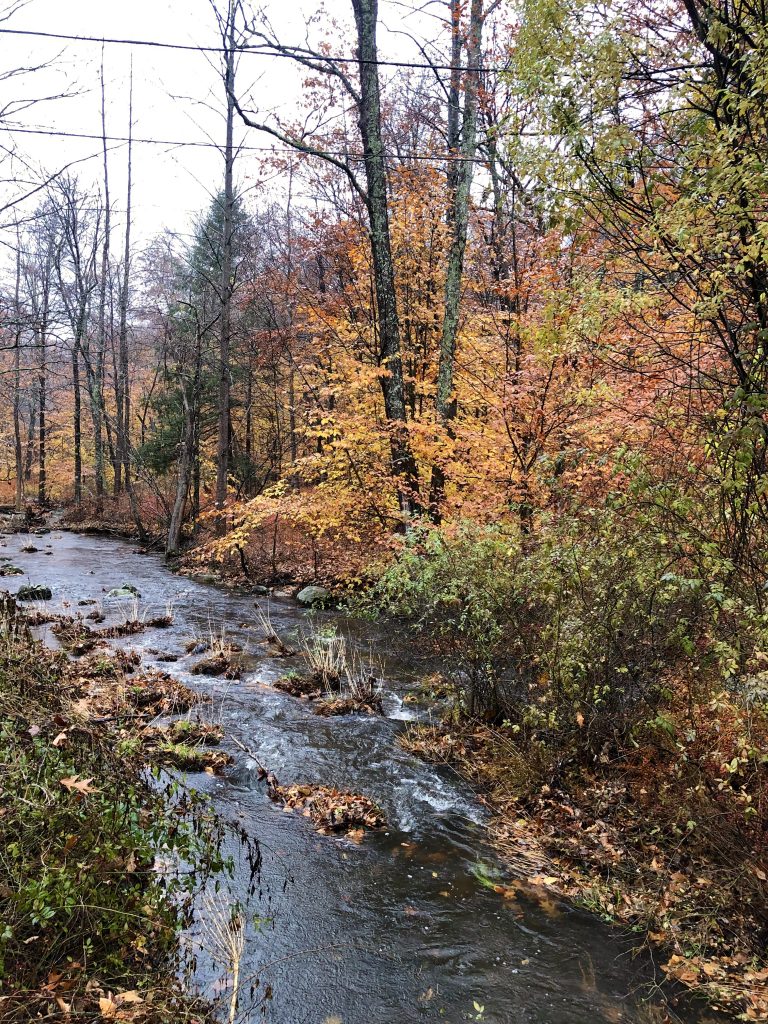
For example, one client in Putnam Valley has sixty-acres of mixed hardwood forest, nestled between steep hills, old logging roads and a stream. A major component of the project is to re-establish accessible hiking trails so that the family can enjoy the expansive nature of their backyard.

At the same time, we will be evaluating the health of the forest ecosystem by inventorying the flora and fauna including presence of keystone and indicator species and their trophic relationships. For example, are healthy fox populations helping to reduce the rodent population, thereby reducing tick populations and the presence of Lyme disease – if not, what can be done to encourage fox populations? What is threatening them in the first place?

GJL will also be examining dominant plant species, forest succession, native understory diversity, and invasive species presence.  We plan to survey erosion rates and nutrient loading as it pertains to the stream and wetland areas. Relevant historical land use – was the land farmed, logged, managed or abandoned – will likewise inform our solutions. 

Sustainable Stewardship Goals & Deliverables

The goal after observation and analysis is to explore potential design solutions or cultural Best Management Practices (BMPs) to optimize ecosystem and human health. 

Privately owned woodlands, fields, and wetlands have immense potential for habitat restoration and climate change resilience if properly managed. Our management standards of the past – extracting resources and then abandoning the land to invasive species rule — will not serve us well in the future. It is time to change the ethic towards responsible, forward-thinking land stewardship.

Participants in the Sustainable Stewardship Program will receive site-analysis and management plans for the forests, meadows, fields, wetlands, and waterways on their property. Where necessary, we partner with industry experts such as wetland scientists, soil scientists, foresters, and conservation biologists for more extensive testing and analysis. 

Depending upon the site analysis, management plans might include invasive vegetation removal, pruning, biological soil amendments, erosion control, and restoration planting plans. We understand how complex ecosystems are, so our Sustainable Stewardship Programs are designed to be implemented over several years.

Are you a candidate for the Sustainable Stewardship Program? Contact Us to schedule a consultation. 

Filed Under: Ecological Education, Featured Work Tagged With: biodiversity, conservation, conservation biology, ecological consultant, ecological consulting, ecological landscape design, ecological landscaping, ecosystem services, environmental consulting, estate management, forest, healthy landscapes, healthy yards, indicator species, keystone species, land steward, land stewardship, land trust, landscape designer, meadow, natural landscaping, nature preserve, organic landscape, preservation, private nature preserve, restoration, safe landscape, site analysis, site observation, sustainable, sustainable stewardship, toxin-free, wetland, wetland restoration, wildlife, woodland, woodlot, woodlot management

The front entrance of a home is like the cover of a book — its the first impression, sets the aesthetic tone, and can either encourage or discourage one to enter… Beyond basic calls for “curb appeal,” we believe the front entrance of a home should be beautiful, location-relevant, functional, and inviting.

This particular landscape design project needed to solve a host of circulation issues (access from the driveway, garage, front door, guest house), yet we still wanted the front landscape to be meandered through and enjoyed, especially under the idyllic mature trees! The end result involved multiple custom masonry designs — walkways, patios, staircases– along with significant grading and construction of boulder-retained planting beds.

The landscape installation & construction took weeks, but we’ve compiled it for you into sixty seconds. Please enjoy the video below!

To learn more about the project, read our previous blog post: Defining Outdoor Spaces Through Circulation, Custom Masonry & Native Gardens

Need help with your front entrance? Schedule a consultation with us!

Landscape Design & Construction: Green Jay Landscape Design

Natural Garden Path Stone & Stone Steppers: Prospero Nursery

River Rock & Gravel: Bedford Gravel

Soil, Boulders: Lawton Adams

Filed Under: Landscape Construction & Installation Tagged With: before and after, custom masonry, front entrance, front entrance garden, front entrance walkway, front entry, front entry garden, front yard garden ideas, front yard landscaping, hardscape, landscape construction, landscape designer, landscape installation, masonry, natural stone, natural stone walkway, outdoor staircase, pathway, patio, patio design, process video, video install

On larger properties with multiple dwellings, circulation paths are critical to the experience of the landscape and help define each space. This cabin-style new build in Cold Spring, New York called for a custom masonry design that incorporated the front entrance, garage entrance, guest house entrance, boat house access, lakefront access and a lakefront patio.

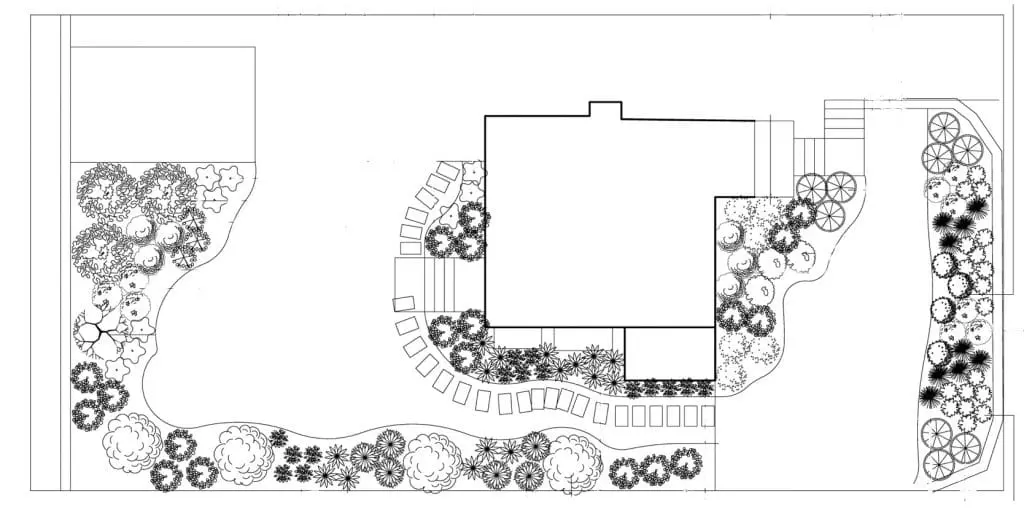
Landscape Plan for new natural stone masonry walkways, stairs and foundation plantings.

The existing hardscape consisted of decaying railroad ties.  The landscape and front entrance lacked the grandeur that the beautiful home’s architecture deserved. Given its setting, nestled in a hardwood forest in Cold Spring, with enviable lakeside views, we knew the hardscape had to have a similar rustic, natural feel that accentuated the natural environment.

Bold yet natural front entrance integrates the home with the forest environment.

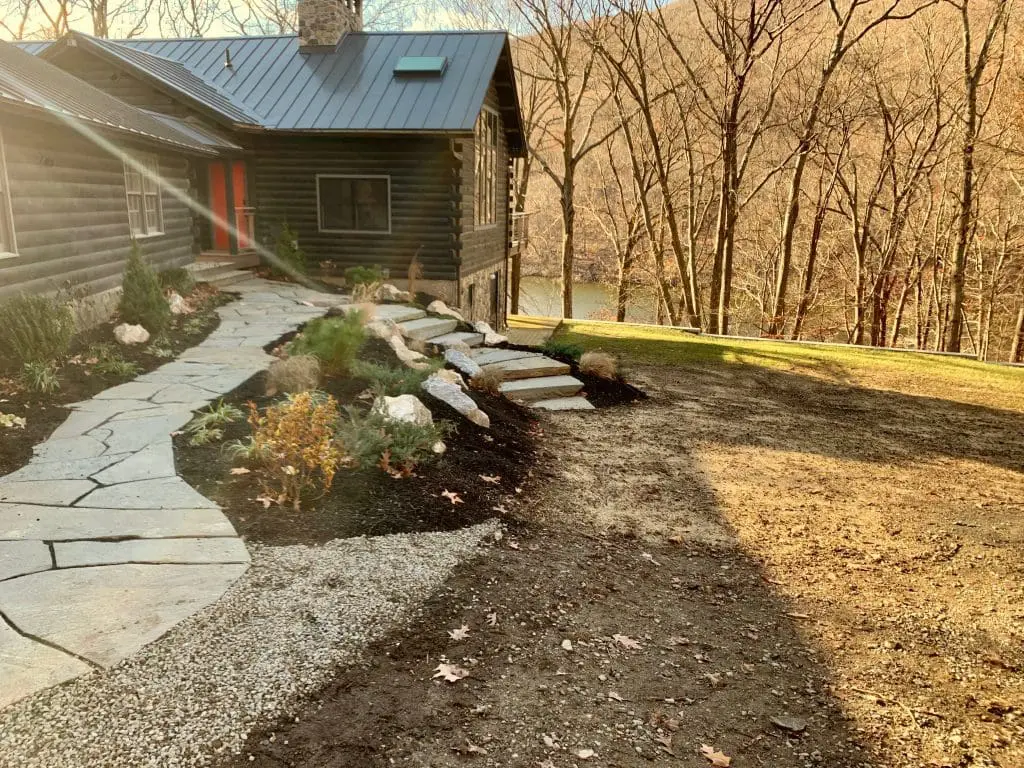
We designed three custom masonry pathways to the front door: one directly from the driveway, one from the garage, and a stone staircase leading to the lower lawn. Since the property sits on a slope, the staircase enables easy access to the house from the play and entertaining areas below.

Process shot of custom masonry construction, grading the slope and incorporating the boulders.
Finishing touches: dark chocolate mulch and gravel apron at the end of the fieldstone walkway

Custom Masonry: How its Made

To construct the stone staircase, we used large fieldstone steppers (from Prospero Nursery). We graded the slope around the staircase using artfully placed boulders  and engineered soil (from Lawton Adams). Playing with the grade allowed us to expand the front entrance planting bed beyond the basic foundation into a garden that can be travelled through and appreciated daily.

Winding natural stone staircase connects front door to the lower lawn, by way of the native garden.

All of the masonry was constructed as natural stonework and dry-laid. We opt for this installation method because it avoids the use of cement, which has numerous health and environmental implications.

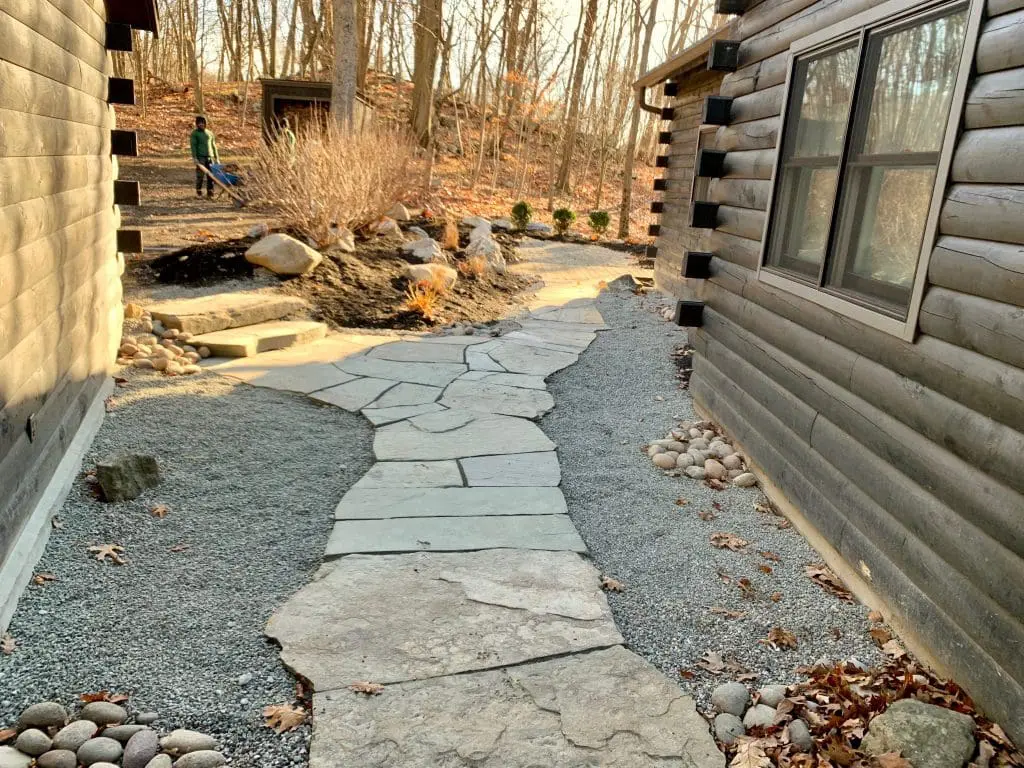
Decorative gravel and river rock border for the shadiest section of the walkway.

The pathway from the garage is shaded on both sides by the home, so we opted for decorative river rock and gravel (from Bedford Gravel) to line the fieldstone walkway.

The garage area included a berm native shrub planting and steppers to connect to the driveway’s height.

When designing the plant palette, we knew we would be drawing from plant communities that naturally exist in our native forests. The gardens needed to be site-appropriate, mostly-native and very low-maintenance – this is a second home for our clients, so minimal maintenance and maximum outdoor enjoyment was paramount. As Jay says, the landscape should transport you to a tranquil solace of quietude which regenerates and restores the body, heart and mind.

This is garden was designed with an emphasis on texture, low-maintenance and ecological benefit.

The resulting plant palette consists of native flowering & fruiting shrubs, low & spreading evergreen shrubs, and our favorite ground cover plants and native ferns.  Climate, weather and seasonal hardiness was factored into the plant selection, as was succession of fruit and flower production, bloom length, pollinator attraction, deer/animal resistance, height, texture and growth pattern, as well as any necessary maintenance protocols. The new gardens ground the home in the landscape and provide essential food and habitat for the local birds, pollinators and woodland wildlife.

Watch a video edit of the front entrance install — masonry, boulder placement, grading, and planting — all in sixty seconds!

Lakeside Patio, Walkways & Staircase

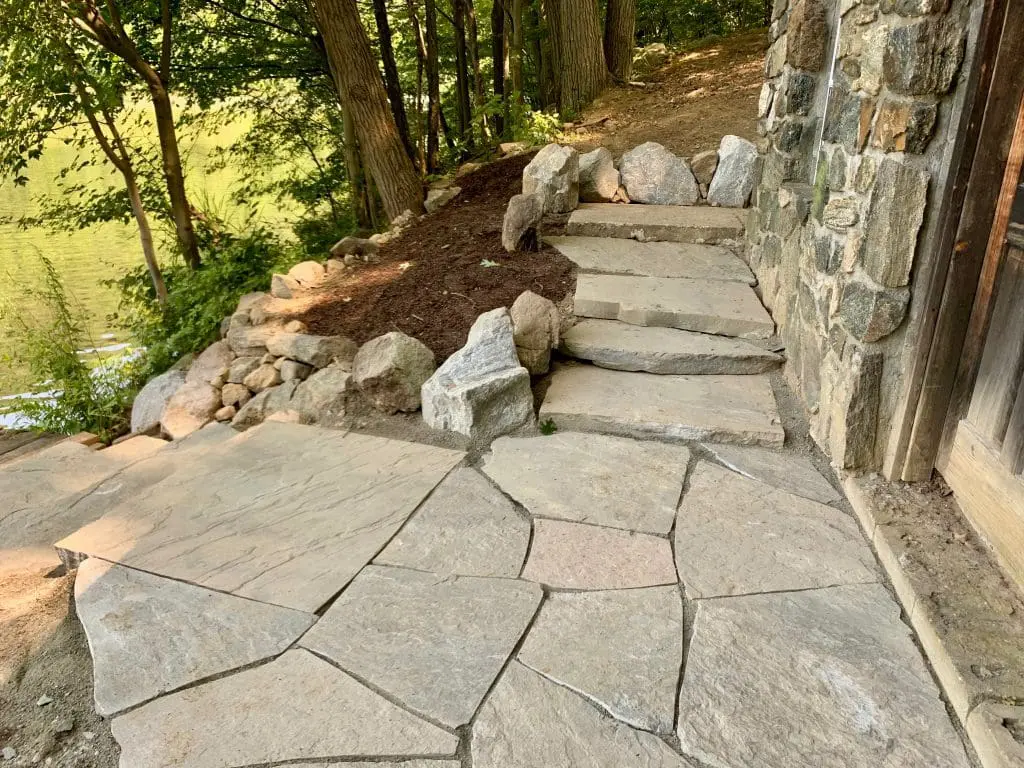
For the lake area, the existing masonry of cement pavers and railroad ties had both seen better days. We removed the old pavers from the patio above the boathouse and replaced them with irregular flagstone to match the front entrance.  A stone staircase winds down to seamlessly connect the second-floor patio to the lower dock. The new masonry melds perfectly with the stone veneer of the boathouse and provides new gathering spaces to enjoy the lake from.

New steps and patio to connect the boathouse to the dock; looks much better with the stone veneer siding!
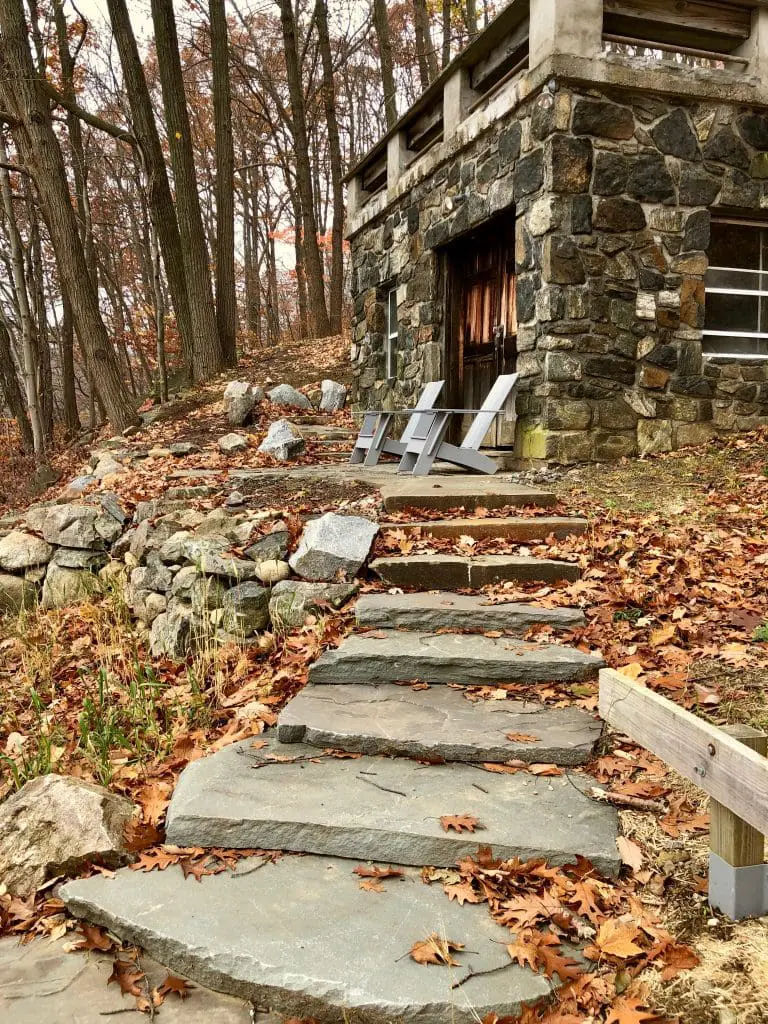
Just completed fieldstone steps lead from the boathouse toward the lake.
The steps in fall.
Detail shot of the boathouse patio and walkway.
Atop the boathouse, we replaced and refinished the patio with natural fieldstone to match the rest of the property.

Phase Three of this project, to be completed in the spring, will encompass hardscape and gardens around the guest house, connecting this dwelling with the main house. Excited to finish out this project and see the gardens bloom in a few short months! 

Follow along for more updates!

Contact us to schedule your own Ecological Landscape Design consultation. 

—

Green Jay Landscape Design

Where Design Meets Ecology
Filed Under: Featured Work Tagged With: circulation, custom masonry, ecological landscape design, ecological landscaping, forest garden, foundation planting, grading, hardscape, healthy yard, hillside garden, landscape design master plan, landscape designer, landscape ecologist, landscape plan, masonry, native plant garden, natural landscaping, natural stone, organic garden, organic landscape, outdoor staircase, pollinator garden, sloped garden, walkway, woodland garden

Our mission as ecological landscape designers has always been to improve our natural environments from traditional, chemical-laden and exotically planted landscapes to native, ecologically-productive habitats. We interviewed several long-term clients on what wildlife visitors they see in their landscape. Watch the video below to hear directly from them!

Testimonial Highlights:

“No matter what time of year it is, you can always look out the window and see something really interesting.” –Kathleen, Mamaroneck

“There’s lots of turkeys that come in. Last week we had a flock of about 10.” –Clare, Beford Hills

” A flock of about twenty robins, foraging in the leaf litter” –Kathleen, Mamaroneck

“Sphinx Moths, I have never had any in my garden before. I had a whole bunch of Monarch butterflies. I haven’t had any in previous years” — Marty, Hastings-on-Hudson

“Just sitting there and seeing all the bees and butterflies, it’s like everyday is a show” — Anne, Irvington

“They come in shifts; first you have the catbirds, then you have the sparrows, and then the chipmunks” –Kathleen, Mamaroneck

Want to see more wildlife in your garden? Contact us to discuss your ecological landscape design project!
—

Green Jay Landscaping

Where Design Meets Ecology

Filed Under: Uncategorized Tagged With: Audubon international, bird-friendly, bird-friendly garden, certified wildlife habitat, ecological landscape design, ecological landscaping, FAIRFIELD COUNTY CT, habitat garden, healthy yard, landscape designer, landscape ecologist, monarch butterfly, native landscapes, native plant garden, natural landscapes, natural landscaping, organic garden, organic landscape, plant it and they will come, pollinator garden, pollinator paradise, pollinator pathway, review, save the bees, testimonial, video testimonial, Westchester NY, wildlife, wildlife habitat

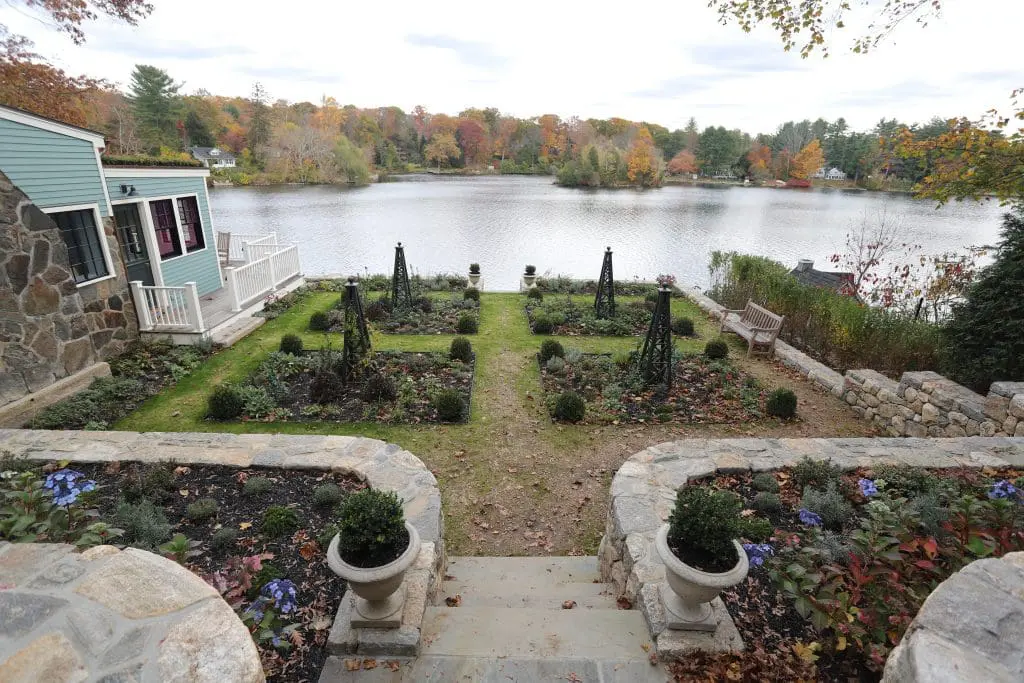
This recently completed landscape design & build project was a complex, steep slope in a delicate wetland environment that required a tremendous amount of permitting, engineering and site development.  We are so proud of the final product and thankful for our incredible team – from Green Jay’s staff to our engineering partners and wetland consultants. The unique site, located on Lake Peekskill in Putnam County, New York, necessitated an erosion control plan to prevent any disturbance to the lake. The site was both beautiful and challenging – our favorite type of work! Read on to see our process in transforming this unsightly slope into a beautiful, functional lakeside habitat.

Completed retaining wall and newly seeded low-mow lawn on Lake Peekskill, NY.

Design & Build in a Wetland: Permitting, Inspections & Engineering

Sitting directly on Lake Peekskill, this site required a wetland permit from the NY DEC. We applied for a waiver for the permit, with the help of wetland scientist Bruce Barber, which took a full six months to obtain. No work could start before the waiver was approved. Given the steep slope and proximity to the fresh water lake, the waiver required an engineered erosion control plan, which was completed by our partner Brian Hildenbrand. 

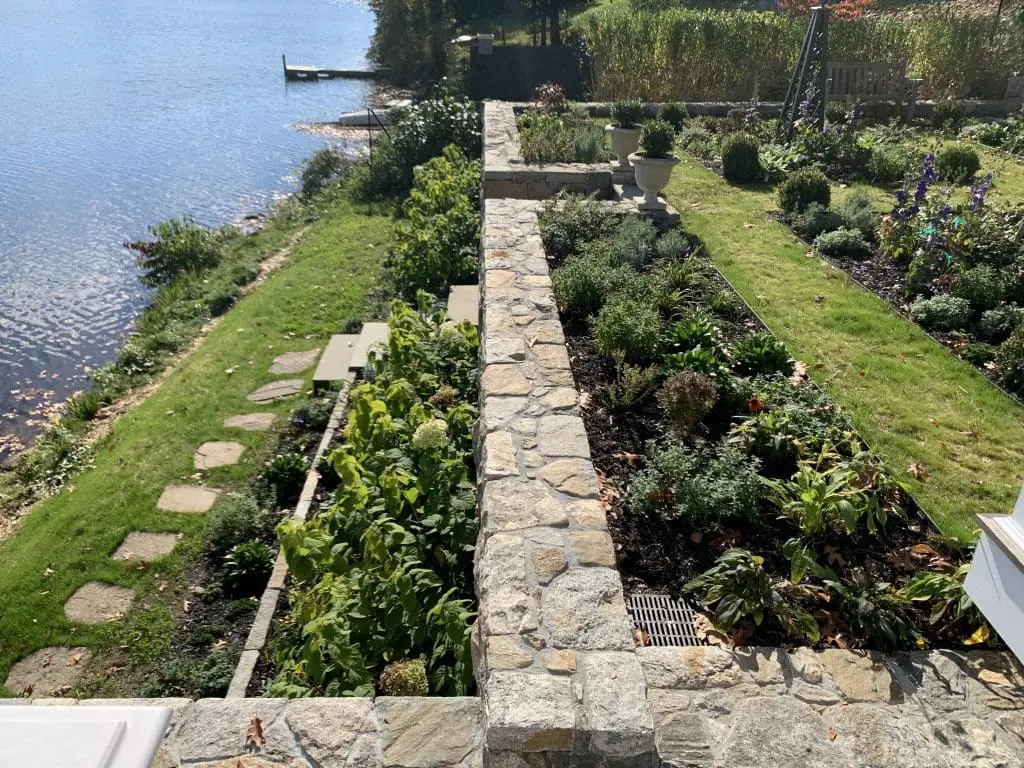
Looking upslope at completed terrace gardens with native shrub planing. Some trees were removed to let in more light to the garden.
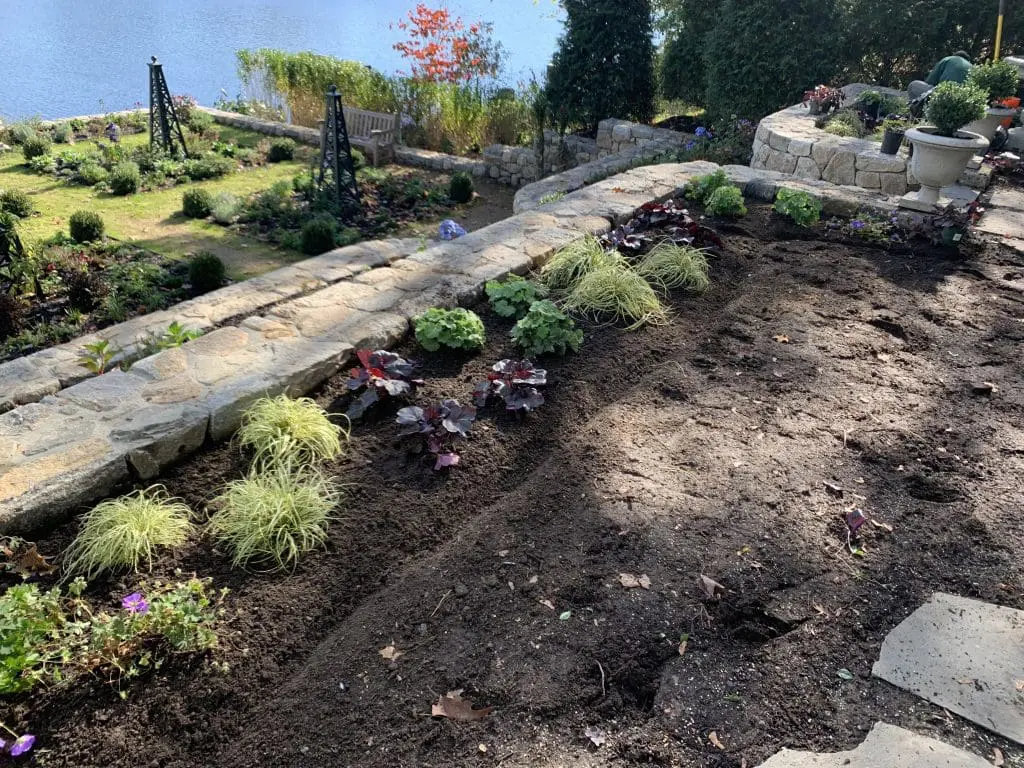
Progress shot: grading the garden slope between the walkway and retaining wall.

We were required to limit and contain the area of disturbance throughout the project. Site protection around the area of development – silt fences to prevent sediment from running off into the lake – was installed under Jay’s supervision, as a Certified Storm Water Inspector. 

Woodchip walkway, designed with erosion control devices, contrasts nicely with the dark brown garden bed mulch.

Steep Slope Soil Engineering 

The erosion control plan, for the main slope to be landscaped, included a suite of soil stabilization techniques, starting with the very soil itself. We brought in 120 yards of a custom, engineered soil to create the garden terraces, grading one to three feet of soil across the slope.

Laying out the skeleton of the terraces: work in progress!

We chose a customized, engineered soil that is 80% mineral and 20% organic matter. Most commercial soil is about 50% organic matter, in the form of wood products and leaves recycled into topsoil. Soil with this high of organic matter decomposes much faster than the 80-20 mix. If we had used the conventional 50-50 mix, in just a few years, the slope we carefully constructed would have shrunk, undermining the integrity of the slope and threatening erosion.  

The density of the soil (1-3’, in this case) is important, for it prevents inundation from storm water, which can undermine the lift we achieved through grading. Soil quality is also extremely important. We choose premium-screened loam to ensure we are not planting into contaminated soil.

Completed woodland garden with native perennials and shrubs, stroll path, and boulder accents.

The leaner soil also benefits our plant palette – native shrubs, grasses and perennials that evolved in disturbed lean soils, and prefer this growing environment.  The soil amendments we do apply are organic compost that contains biochar and are 100% natural source, to help cultivate healthy soil microbes. Soil microbes are key to cultivating healthy plants and storing carbon in the soil (catch up on our previous blog on Designing Carbon Sinks). 

In the tri-state area, it is safe to say that there are no pristine soils. Everything we come across in residential or commercial areas has already been degraded through years of construction debris, pollution, compaction, and erosion. No soils are ready to plant.  All require amendments to supply the building blocks of a successful and thriving organic landscape. 

Placing plants: perennial and grasses on the lower terraces, flowering & evergreen shrubs on the upper levels.

Site Development in a Wetland Zone

Green Jay Landscape Design brought in thirty yards of boulders to construct the terraces and garden path through the hillside. The walls are dry-laid by hand; they were constructed with real boulders and rammed earth. No machines, or concrete were used to construct the walls. See more of our custom masonry work. 

We love the aesthetic of river rock and its ability to slow down and absorb stormwater instead of letting soil erode.

We originally thought only two dry-stacked boulder retaining walls would be necessary, but during site development we discovered a giant pile of buried gravel where our planting terrace was supposed to be. The gravel was part of an existing over-engineered retaining wall, where three feet of gravel (an excessive amount) was installed behind it.  Jay decided to split the new retaining wall into two to avoid the buried gravel, covering the elevation in a total of three retaining walls instead of the anticipated two.

Other site development measures included extreme pruning of the mature trees on-site to let in more light for the new plantings. In some cases, we removed overgrown trees and shrubs that no longer served an ornamental or ecological purpose. 

Filtrex socks are an important erosion control device for terrace and slope landscape design.

Designing Terraces for Erosion Control 

To ensure erosion control, the terraces were constructed with filtrex socks, a type of erosion barrier. For the woodchip pathway that runs along the slope, we embedded logs at angles into the soil and installed filtrex fabric; together they act as a “water bar” preventing erosion of the path and woodchips during storm events.

Planting into the jutte netting so slope is stabilized as the new pants’ roots become established.

We also installed jutte netting across the planting beds, planting directly into the netting. This allows the roots of the new plants to become established while the plant itself is stabilized in place.  The jutte netting eventually decomposes in the soil, and the plant roots themselves act as soil stabilizers.

These photos were taken after an extreme storm event – Lake Peekskill received two inches of rain in twenty-four hours! These photos are a testament of our erosion control measures and terrace design – they hold up!

Native ferns, perennials and spreading ground cover were chosen for their ecological value suitability for dry shade.

Choosing Plants for a Slope

As with all of our projects, the majority of plants used for this design are native. This particular site called for plants suited to heat, inundation (from storm events) and dry shade. The lower terraces are composed of native perennials and grasses.  On the shadier portion of the slope, we planted colonies of native ferns – a mix of fast growers, scented ferns, and evergreen ferns to provide a naturalistic feeling and stabilize the slope year-round. Native shrubs, flowering and evergreen, will attract birds and continue to prevent erosion in the fall and winter months. 

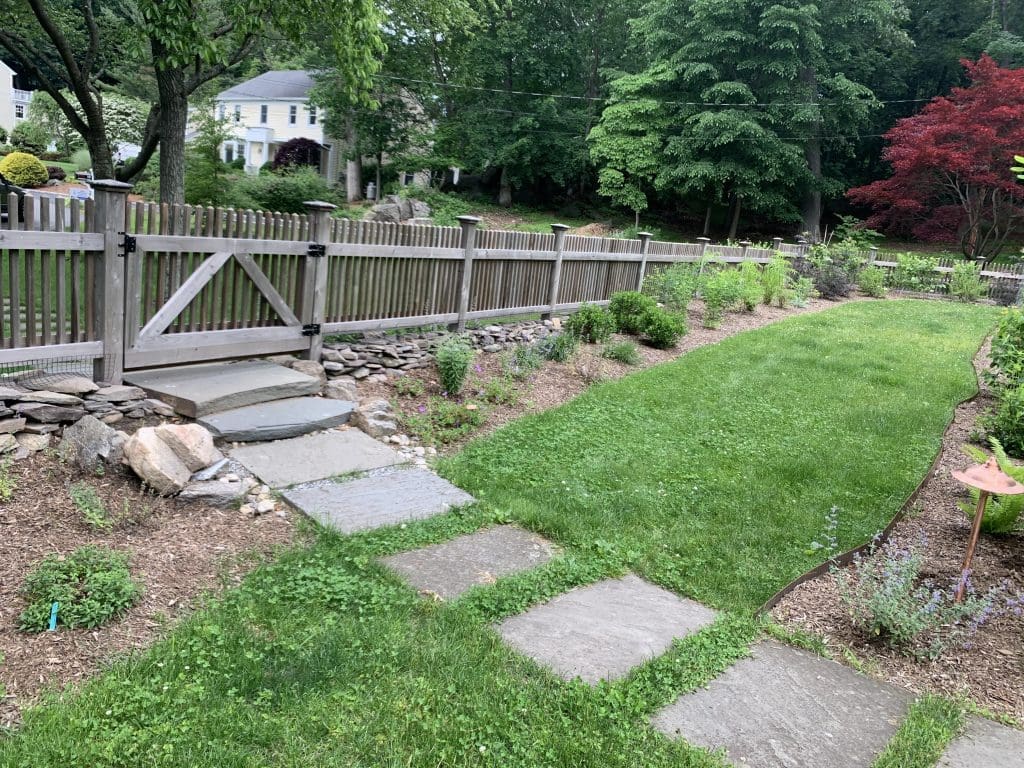
We connected an existing walkway behind the house to the woodland path, for fully integrated circulation throughout the landscape.

Custom Masonry & Hardscaping

Aside from the boulder retaining walls constructed for the garden terraces, we also created a rustic flagstone patio and walkway to connect some existing stonework that lacked a functional circulation flow. 

Rustic flagstone walkway to a new wedge of patio maximizes usable space by the deck.

River rock accents around areas prone to inundation (around the deck) prevent soil migration and look charming as a garden bed border. 

Our rustic, been-there-forever masonry style blends with the existing.

The garden path that runs through the terraced beds is finished with a light brown mulch to contrast with the chocolate brown mulch of the garden beds. Lining the path with small boulders creates a strong visual and helps prevent the mulch from migrating in runoff. 

Woodland garden paradise! Nic

Landscape Design & Build Takeaways 

This project took immense coordination amongst multiple vendors and the client. It required coordinating and stockpiling large quantities of materials that we took care to source locally – nearly everything was acquired within a thirty-mile radius.  The delicate site and waiver stipulations dictated that all of the work be done by hand – we could not bring in machines! Using high quality materials and hand labor translates into a higher price tag and more time spent, but the final product will endure for years and create a luscious habitat for our client to enjoy. Following regulations can sometimes feel tedious and endless, but our client was patient and understanding, and is beyond happy with the end result! 

This project is an example of a NWF Certified Wildlife Habitat, a Pollinator Pathway, a Monarch Waystation, a Bedford 2030 Healthy Yard, and more. It is truly a Landscape for Better Living.

Contact us to discuss your landscape design project or schedule an on-site consultation!

—

Green Jay Landscape Design

914-560-6570

Filed Under: Featured Work, Landscape Construction & Installation, Landscape Design, Wetland Restoration & Storm Water Tagged With: custom masonry, ecological landscape design, ecological landscaping, erosion control, lake Peekskill NY, lakefront, lakefront landscape, lakefront property, landscape design, landscape designer, natural landscaping, natural stone masonry, Putnam county NY, storm water management, storm water management plan, wetland, wetland landscaping, woodland garden, woodland habitat, woodland path

This is part two of our discussion of climate-smart landscapes, where we’ll dive into designing carbon sinks on your home landscape.  Catch up on Part One, where we detail how carbon is sequestered and stored in the soil via a critical plant-microbe relationship. Below are our best practices for landscape designers when designing and maintaining a carbon net positive landscape. 

Image courtesy of Lisa Fotios

Organic Soil Management

Organic soil management is an essential element of designing a carbon sink. As detailed in Part One of this blog series, CO2 sequestration and storage in the soil is governed by a diverse soil microbial community and their interactions with plants. To summarize: plants draw CO2 from the air and convert it into glucose via photosynthesis. The plant trades some of this sugar water for soil nutrients, broken down by microbes into a plant-available form. The exchange takes place on the roots, and microbes later exude a stable form of carbon called glomalin into the soil.  Glomalin also aides in the formation of topsoil by aggregating soil particles.

This delicate and magical relationship is dependent upon both sides having something to give and something to take. Without the microbes, plants would never be able to access and breakdown all of the essential nutrients in the soil. Microbes depend on the plants for sugars and water to stay alive. 

But, when this natural cycle is interrupted with inputs like synthetic fertilizers, the plant no longer needs nutrients from the microbes. Instead, the plant receives a flood of quick and easy NPK from the fertilizer. There is no need to exchange with the microbes, and there is no channel to store carbon in the soil. Soil microbes experience a brief surge in population from the nitrogen in the fertilizer; once the cheap food is consumed they target soil organic matter (carbon). Synthetic fertilizers not only disrupt the plant-microbe relationships, but they threaten to deplete organic matter significantly, rather than help store it.

This is why organic land care is of paramount importance for so many ecological reasons. By dousing our landscapes in chemicals, we are destroying one of our most valuable carbon sinks, one of the only natural systems for sequestering and stably storing a potent greenhouse gas. When designing carbon sinks, the landscape must be maintained organically.

Applying pesticides also indiscriminately kills insects, destroying habitat for essential pollinators, birds and beneficial insects. Learn more on our previous blog.

Minimize Disruption of Soil

Carbon stored in soil is relatively stable, especially around deeply-rooted plants, where it is stored in deeper layers of the soil strata. When soil is heavily disturbed and overturned however, the stored carbon is exposed to the air and released. This is why many regenerative farmers and landstewards now advocate for no-till farming and gardening. We avoid using roto-tillers whenever possible and suggest using hand tools to mix compost into top soil, for example. It is futile to design a carbon sink and not maintain it appropriately to keep the carbon stably stored.

Layered Plantings for Microbial Diversity, Plant Biomass

Layered plantings have long been a tenant of good garden design, but now we know the massive ecological value they bring as well. Simply put, the more plant diversity, the more soil microbe diversity, the bigger the underground network of carbon storage. There are billions of soil microbes in just a teaspoon of soil.  Many microbes are specialists, adapted to only specific plants’ roots. Others are generalists, forming relationships with many types of plants. By designing diverse, varied and layered plantings, we are able to maximize the carbon exchange and storage. Diverse plantings have different root depths and occupy different spaces in the soil strata, maximizing where and how stably soil carbon can be stored. For example, prairie grasses are known to have some of the deepest roots, and greatest carbon storage capacity. Including woody plants – shrubs and trees—increases carbon storage in both the mychorrizal network and the woody biomass. Perennials are also valuable; each winter some of their root system dies off and contributes carbon to the soil. Clearly, a garden featuring trees, shrubs, grasses, and perennials has far more potential to sequester carbon than any one monoculture (ahem, lawn).

Minimize Maintenance Emissions

To reach carbon net positive landscapes, our sequestration must outpace our emissions. Ultimately, we need to eliminate landscape emissions whenever possible during installation and maintenance. Many of our clients utilize robotic electric mowing services for zero emission and zero effort maintenance. Our crews use electric leaf blowers and perform as many tasks by hand as possible. Synthetic fertilizers also indirectly increase emissions when they leach into water bodies, cause eutrophication and create anerobic environments where microbes feed on the organic matter and respire CO2, acidifying the water and threatening marine life. 

Protect Coastal Wetlands

Connecticut, New York and New Jersey are blessed with ecological powerhouses: coastal wetlands.  From marshes to mangroves, coastal wetlands can sequester and store ten times more carbon than a forest! As Hillary Stevens described as ELA keynote speaker, this is because of a few factors. 1) plants grow and photosynthesize very quickly in coastal wetlands 2) lack of oxygen inhibits decomposition of organic material that falls to the sea floor 3) salinity inhibits certain microbe populations that live in freshwater wetlands and decompose OM rapidly, emiting the potent greenhouse gas methane as a byproduct. This unique set of conditions makes coastal wetlands an incredible natural carbon sink that we must work to protect. Restoring natural tidal flows to areas of development / impoundment can have a measurable impact on CO2 sequestration.

We hope you enjoyed this post on how to designing carbon sinks and maintaining your landscape as a stable carbon sink. Our window for reversing a devastating path of climate change is closing and it is imperative to employ every method available for reducing CO2 in our atmosphere. Soil carbon storage has the potential to reduce atmospheric CO2 by thirty percent. We have the tools, will we act?

—

Green Jay Landscape Design

Where Design Meets Ecology
Contact us to schedule a consultation

Filed Under: Ecological Education, Uncategorized Tagged With: 1.5 degrees, 2 degrees, carbon dioxide, carbon sequestration, carbon sink, climate action now, climate change now, climate change solutions, climate report, ecological landscaping, emissions, emissions reduction, global climate change, global warming, glomalin, ipcc, landscape design, landscape designer, mychorrizae, organic landscape, soil microbes, unipcc

  • « Go to Previous Page
  • Page 1
  • Interim pages omitted …
  • Page 13
  • Page 14
  • Page 15
  • Page 16
  • Page 17
  • Interim pages omitted …
  • Page 60
  • Go to Next Page »

Footer

Mailing Address: 222 Purchase Street, #144 Rye, NY 10580
Shop Address: 369 Bradhurst Ave, Hawthorne, NY 10532
(914) 560-6570
  • Facebook
  • Instagram
  • LinkedIn
  • Pinterest
  • YouTube
  • Houzz
  • Slide Share
  • Installation
  • Portfolio
  • Pricing
  • About
  • Contact

Copyright © 2025 · Green Jay Landscape Design. All Rights Reserved · Privacy Policy · Website and Local SEO by Ramblin Jackson