• Skip to main content
  • Skip to footer
Green Jay Landscape Design

Green Jay Landscape Design

Green Jay Landscape Design

(914) 560-6570
  • Design
  • Installation
  • Portfolio
  • Pricing
  • About
    • Service Area
    • Meet Our Team
    • Our Process
    • Our Promise
    • Mission, Vision, & Core Values
    • FAQ
    • Press & Events
    • Blog
    • Reviews
    • Careers
    • Affiliations
  • Contact

greenjayadmin

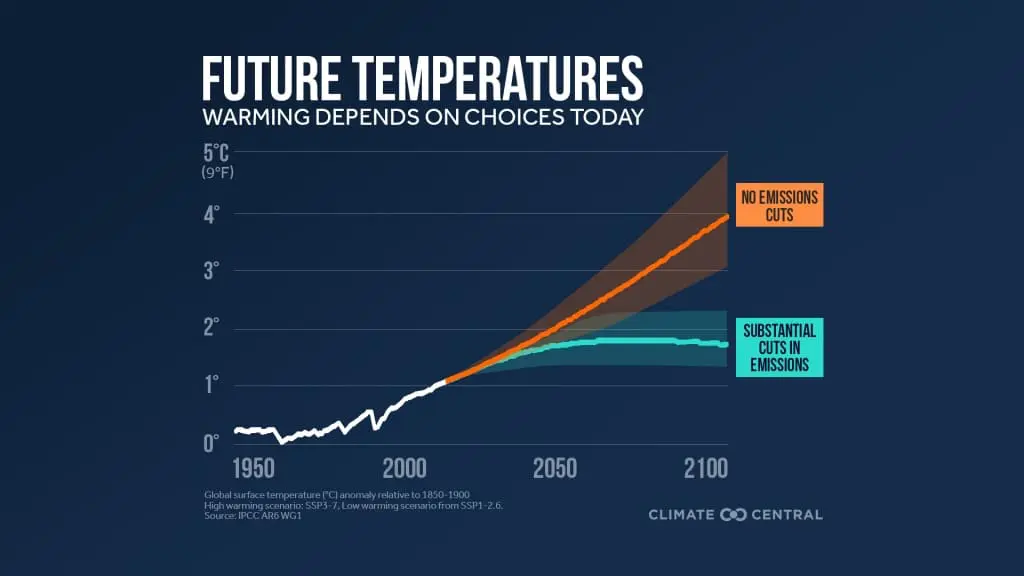
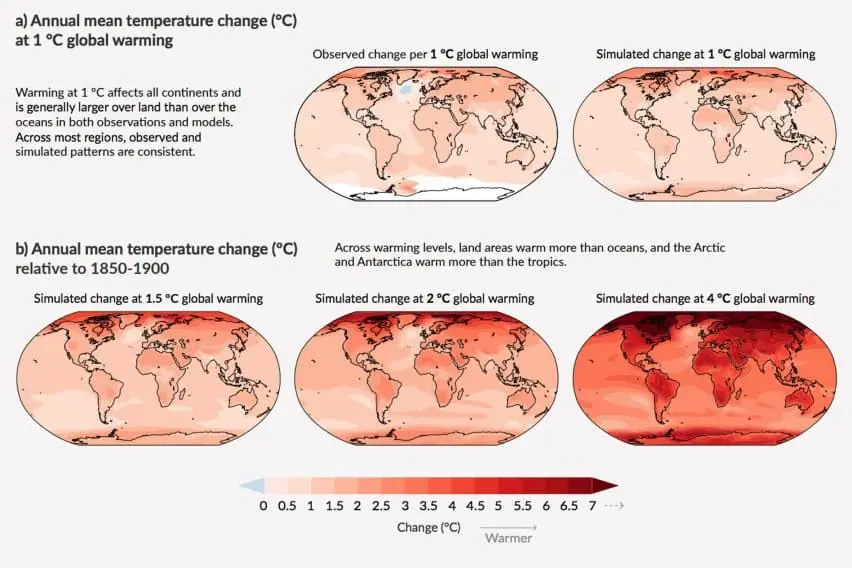
You probably saw the headlines a few weeks ago on the latest UN IPCC Climate Report. It was dire. It stated that we are unequivocally on pace to reach and exceed 1.5 degrees Celsius of warming in the next twenty years. This new reality will affect every single resident of planet Earth as sea levels rise, lands flood and droughts persist.  We are already seeing the devastating effects of climate change, just this summer. But together, landowners, landscape designers and land stewards can harness the power of plants and soil to reverse our path of reckless emissions, before our planet is altered forever. Every landscape has the potential to sequester and store the greenhouse gas carbon dioxide. By maximizing these potentials AND reducing emissions, we might just stand a chance at reversing global climate change. This blog post is a call to action: design landscapes as carbon sinks!

This is Part One of a two-part series. Read Part Two – Landscape Design to Halt Climate Change: Designing Carbon Sinks!

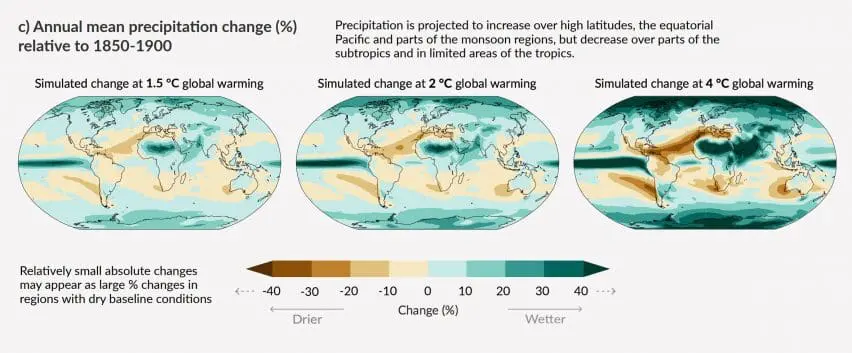
Image courtesy of UN IPCC Sixth Assessment Climate Report.

About the IPCC Report 

First, a little background. The IPCC report is groundbreaking because for the first time, it undoubtedly linked human-generated emissions to a quantifiable amount of warming – we are on-pace to reach 1.5 degrees C or more in the next two decades. This proverbial line in the sand was drawn by climate scientists, a line that when crossed would initiate “several regional changes in climate.” We are already seeing these regional impacts. The report directly connects the extreme weather we’ve seen this year to human-initiated climate change, from the historic drought / heat wave / wildfires in the western US, to destructive flooding in Europe, hurricanes on the gulf coast, and massive earthquakes in Haiti.When we reach 1.5 degrees of warming, many natural climate regulating systems may tip out of balance, threatening exponential warming. 

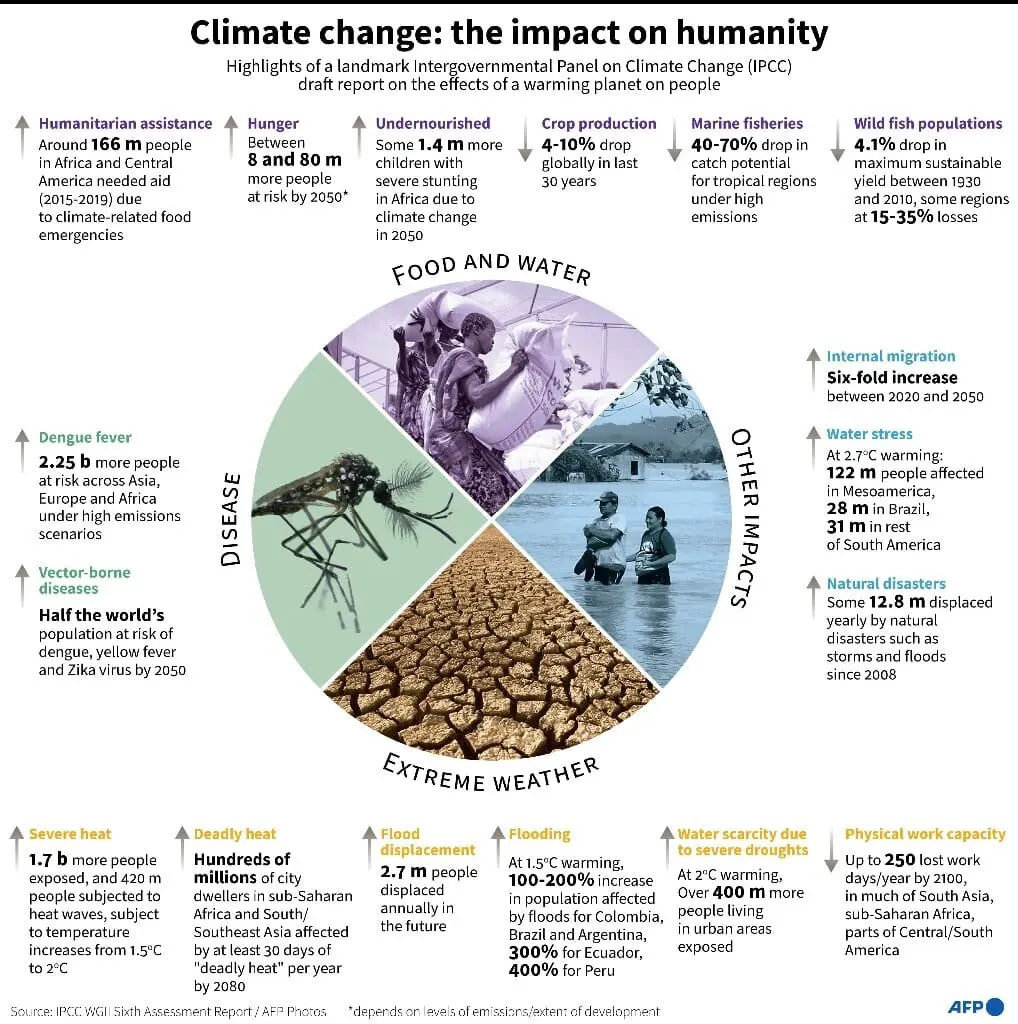
Image courtesy of UN IPCC Sixth Assessment Climate Report.

2 degrees Celsius is another line, one with catastrophic implications, which we are on-pace to hit in our current gas economy. At 2 degrees of warming, scientists warn we could see icebergs collapse, and 1.5 to 4 meters of sea level rise by 2,300. Our habitable land would be altered beyond recognition. Not to mention the predicted water wars, loss of arable land, and abundance of extreme weather events that come with a rapidly warming planet. This is the path we are currently on.

Image courtesy of UN IPCC Sixth Assessment Climate Report.

Designing a Landscape Solution to Climate Change: Carbon Sinks

So, as stewards of the land, designers and caretakers, what can we do to address climate change head on, with measurable, immediate impact? We make each landscape a carbon sink, harnessing the power of photosynthesis, and soil microbe ecology to sequester carbon dioxide from the atmosphere into a stable sink: soil and biomass – the very earth beneath us.

Image courtesy of IPCC Sixth Assessment Report.

In this blog we’ll address the revolutionary idea of carbon farming, designing carbon sinks, and generating a carbon net-positive landscape. But first, a lesson in the magic of photosynthesis and plant-microbe partnerships. 

What is a Carbon Sink?

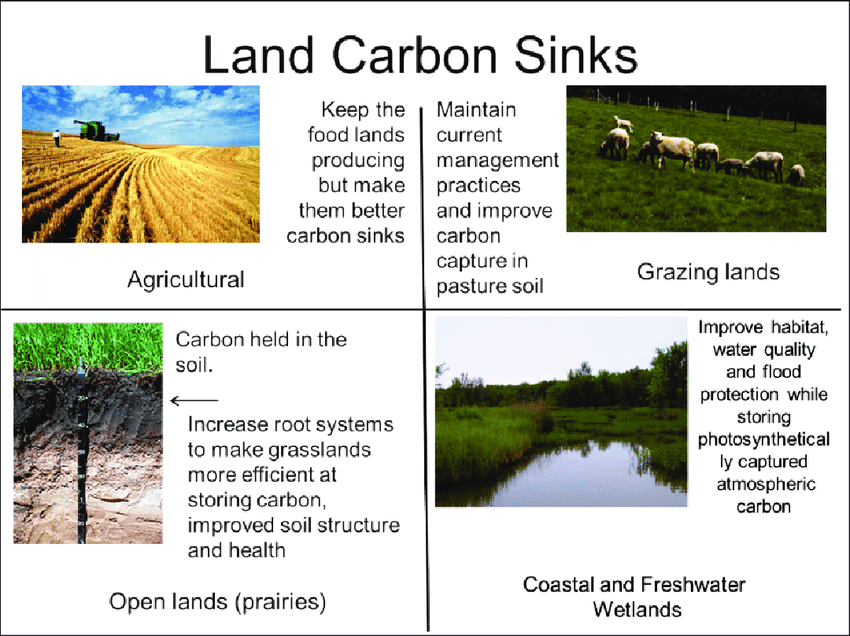
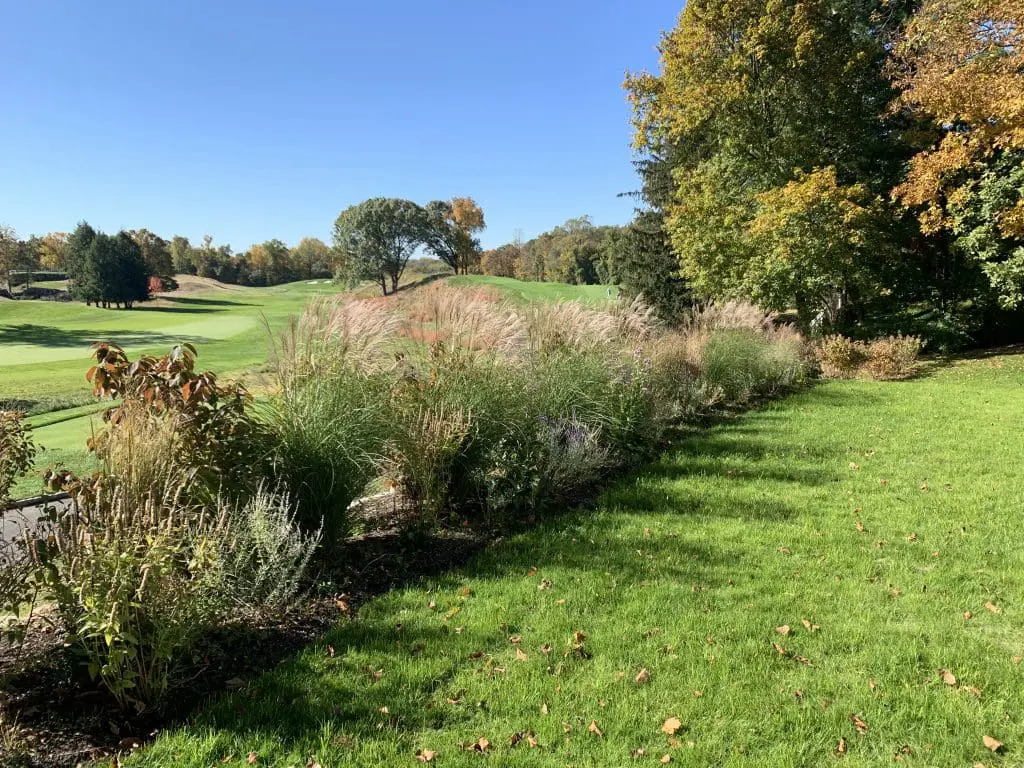
Simply put, a carbon sink is stably stored carbon. We often think of forests as carbon sinks – the Amazon rainforest is described as the lungs of the planet because of its massive ability to sequester carbon and release oxygen through photosynthesis. Photosynthesis converts sunlight, CO2, and water into glucose (a form of carbon) for the plant, while emitting oxygen as a byproduct. Trees can store carbon in their woody biomass, which is a very stable application…until a forest fire burns the area and releases all the carbon back into the atmosphere. Between forests and prairies just in the U.S., we have the potential to sequester and store 1000 pounds of C02 per acre per year!!   

Image courtesy of Research Gate.

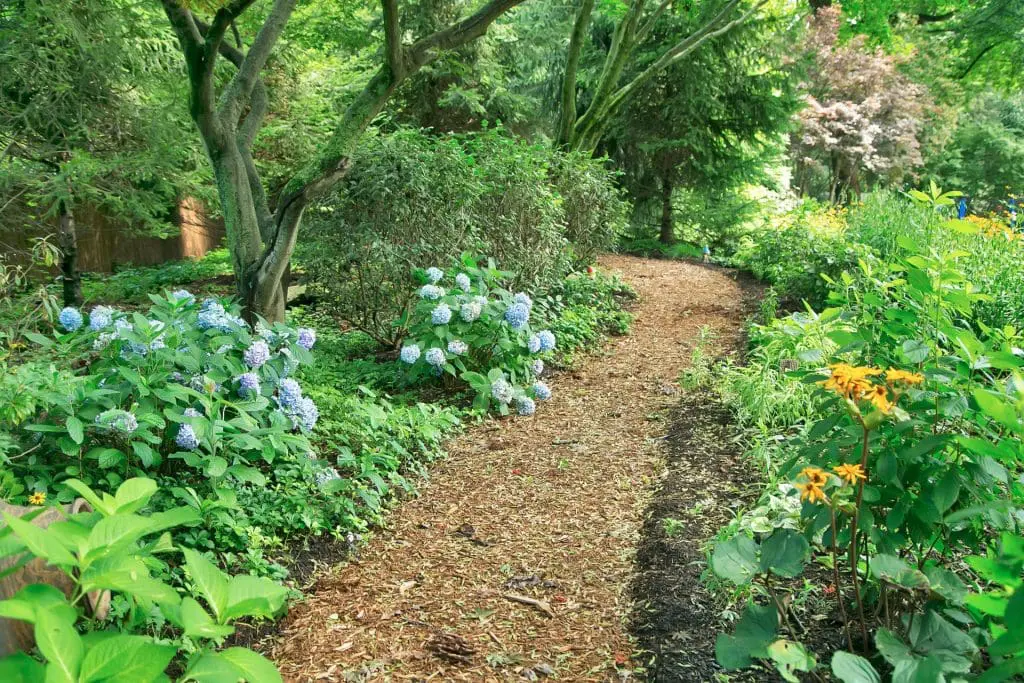
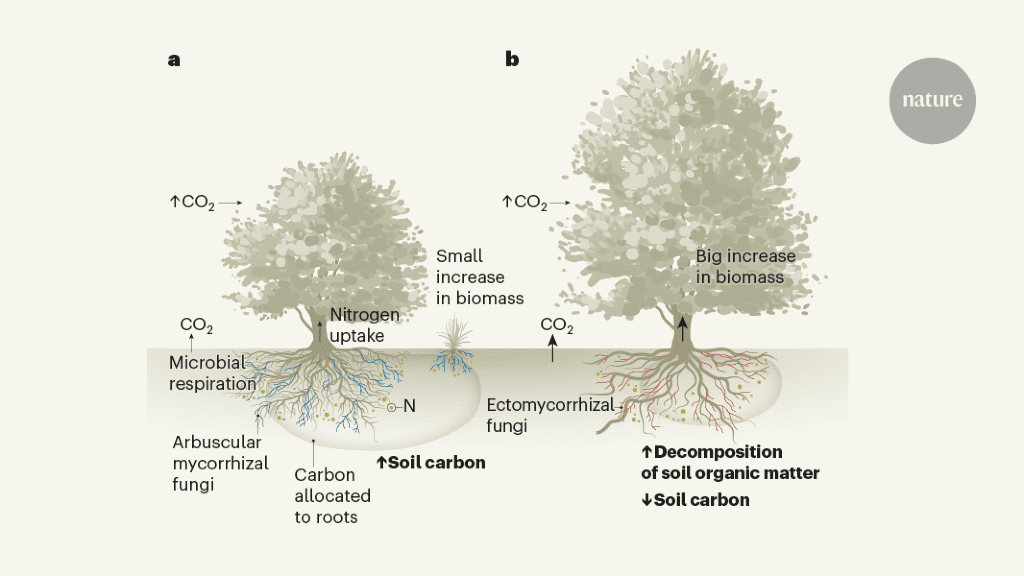
Other plants like grasses and perennials also sequester carbon dioxide and release oxygen, but the carbon is stored in the soil, through the process of (the creation of topsoil!). This magnificent process occurs from a partnership between the plant and soil microbes, called mycorrhizae. A diverse community of microbes attach themselves to plant roots; the plant relinquishes a small amount of sugars and water in exchange for the mycorrhizaes’ breakdown of nutrients (N,P,K and micronutrients) from the soil into a plant-accessible form. Ah, the barter system! 

The microbes then excrete the sugars into a gluey substance called glomalin, which is a stable form of carbon (glomalin is 40% carbon!). Glomalin helps aggregate soil particles into clumps, a via humusification. Humus is up to sixty percent carbon!

Image courtesy of Parkways Seattle

Deeply rooted plants, like prairie grasses, are able to store carbon at deeper soil strata, increasing the stability of the sink. In general, the more diverse a planting, the more variety of root depth and soil microbe partnerships, the more potential for carbon sequestration and storage.

Image courtesy of flattenthecarboncurve.org

Scientists estimate that baseline soil carbon content is 1-2% per acre, but with proper management and plantings, soil can store 5-8% carbon per acre, meaning 25-60 tons of stored carbon per acre. By some estimates, if we implemented carbon-smart land management across all landscapes and agricultural land, we could reduce atmospheric carbon by 30%! Carbon sinks are a real and tangible climate solution.

Action Items for Climate-Smart Landscape Designers

In part 2 of this blog post, we’ll dive into best practices for landscape designers and land stewards interested in converting their landscape to a carbon sink, with net zero emissions.

Read Part Two – Landscape Design to Halt Climate Change: Designing Carbon Sinks!

—

Green Jay Landscape Design

914-560-6570

Filed Under: Ecological Education Tagged With: 1.5 degrees, bedford 2030, carbon farming, carbon sequestration, carbon sinks, carbon soil storage, carbon-net-positive landscape, climate change, combat global warming, eco landscaaping, ecological consulting, ecological landscape design, ecological landscaping, emissions, forest carbon sink, fungal networks, glomalin, grasslands carbon sink, healthy soil, healthy soils, healthy yard project, healthy yards, humusification, landscape design, mychorrizae, organic gardening, organic landscapes, organic landscaping, organic soil, photosynthesis, reduce emissions, soil carbon sink, soil microbes, soil microbiology, UN IPCC Report

What is contemporary landscape design? Of course, let us preface by saying, art is subjective. When we think about modern architecture, we might conjure images of minimalist, clean lines, and a borderline austere aesthetic. When we think about contemporary landscape design, our design perspective transcends aesthetics. Modern landscape design solves a problem – many problems – associated with decades of poor land development, pollution, and destruction of critical habitats. Modern landscape design is a holistic examination of land use, function and ecosystem services.  

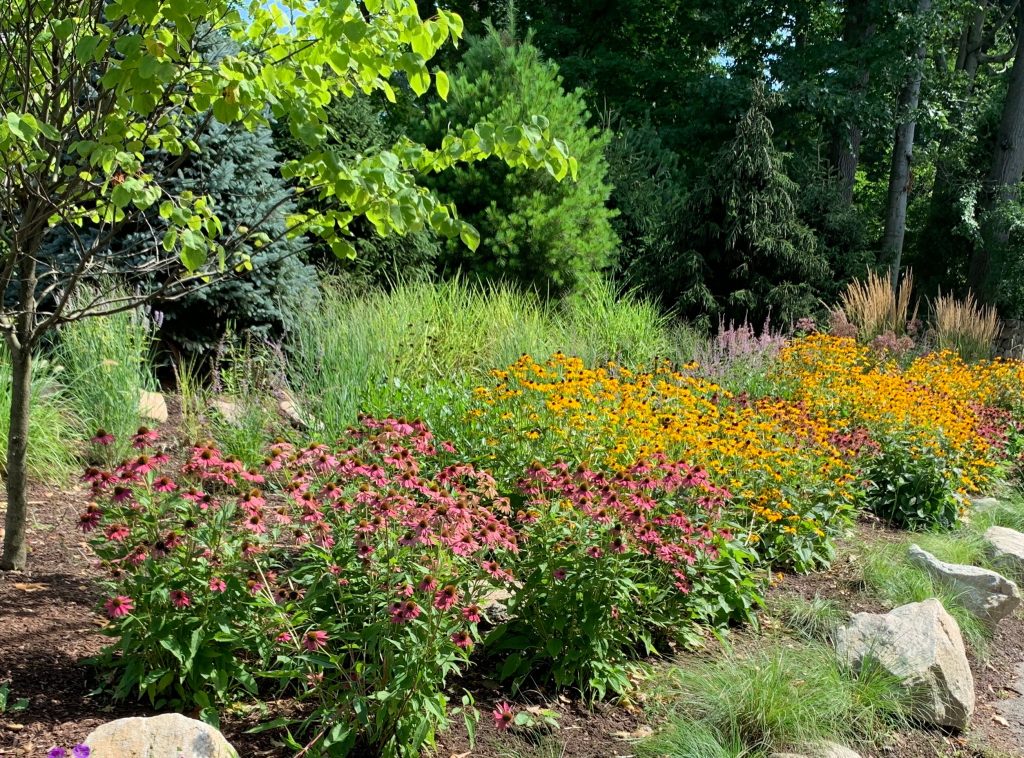
Front entrance landscaping featuring pollinator-attracting plants (Coreopsis, St John’s Wort), ornamental grasses and natural stone.

Contemporary Ecological Landscaping for Modern Architecture

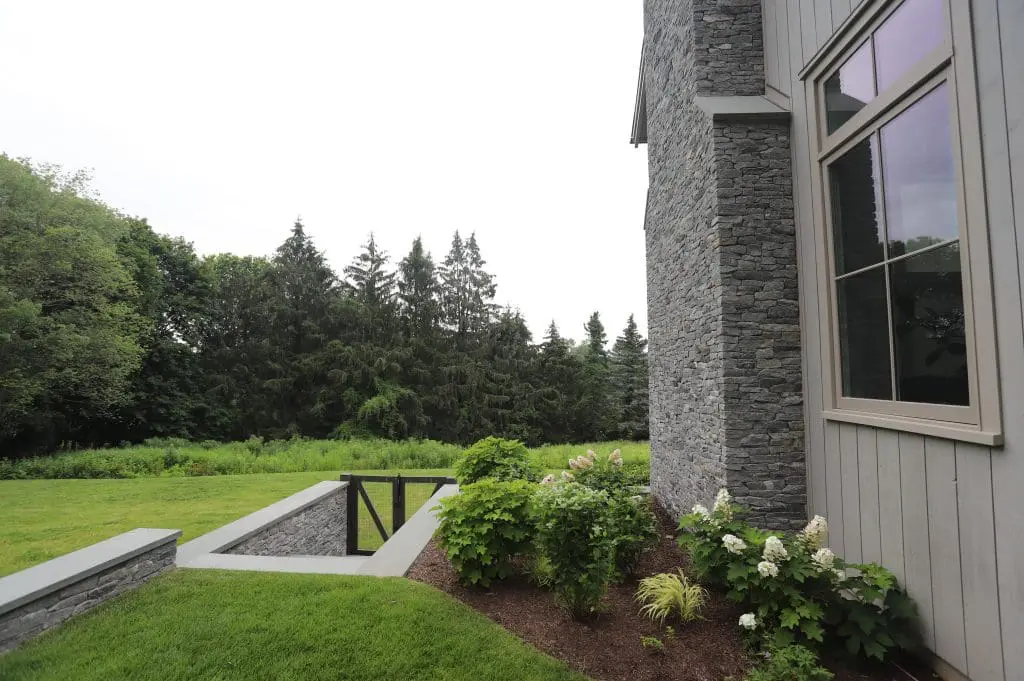
Designing landscapes in 2021 requires not only an eye for beauty but a brain for ecological restoration. This property in Darien, CT is proof that a naturalistic and ecological landscape design style looks fabulous against a modern, custom-built home of today’s styling. Natural landscapes are not just for the cottage in country. Every building looks at home nestled amongst a natural landscape, where birds nest, butterflies drink nectar and carbon is sequestered by the layers of plant material. Designing native landscapes makes the home look like it’s been grounded in the landscape for years; it just belongs, right at home in its native ecosystem. 

Command the entrance with color & texture! Newly planted driveway bed with native perennials, ornamental grasses & boulders.

Assessing & Amending Site Conditions

As this was a new construction, we found much of the property’s soil was contaminated with extremely poor, construction debris – making it alkaline – and very compacted. We created an engineered soil that improved the organic matter, pH and overall growing environment for the planting design.

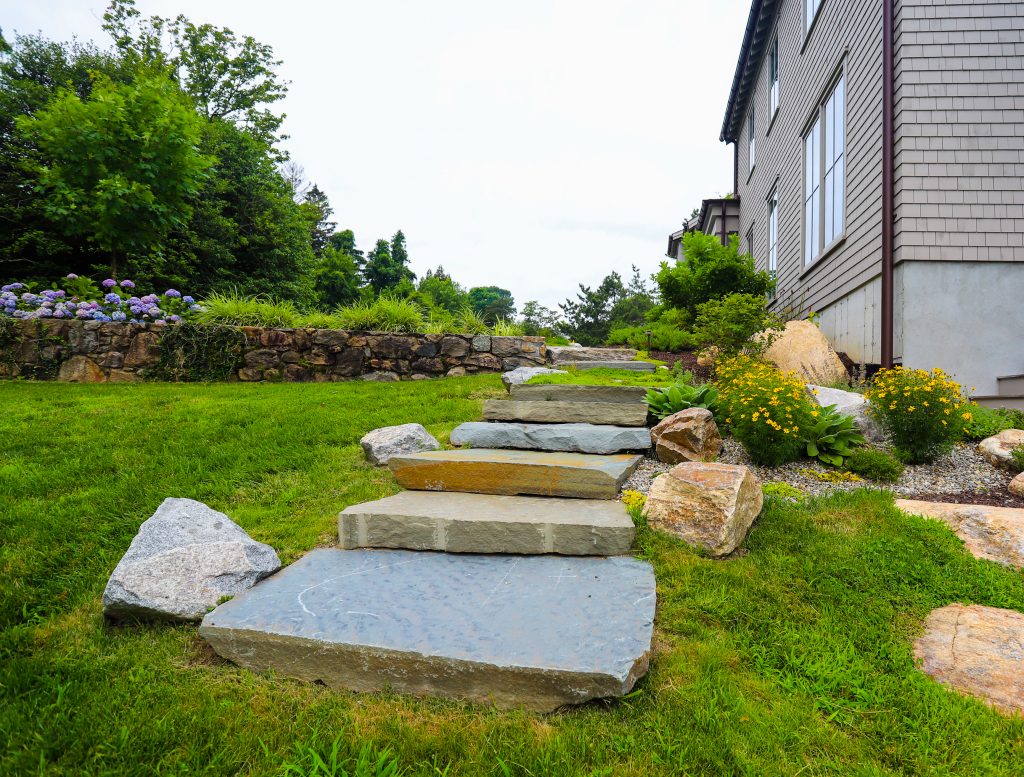
Natural stone staircase with boulder accents, designed and constructed by Green Jay Landscape Design.
Clean foundation plantings focusing on structure, color & ecological value.

We always assess the existing plant material on a property. At this site, we found that many of the existing shrubs – hydrangeas, azaleas, and rhododendrons – were suffering because they were planted in a spot with too much sun exposure. The stressed plants then suffered from a lace bug infestation which nearly defoliated the leaves completely. Mature shrubs, even those that aren’t native, serve an ecological purpose – sequestering carbon in their woody tissue. We opted to transplant these shrubs from highly exposed front yard to a shadier corner in the backyard, where this season they bloomed for the first time in years.

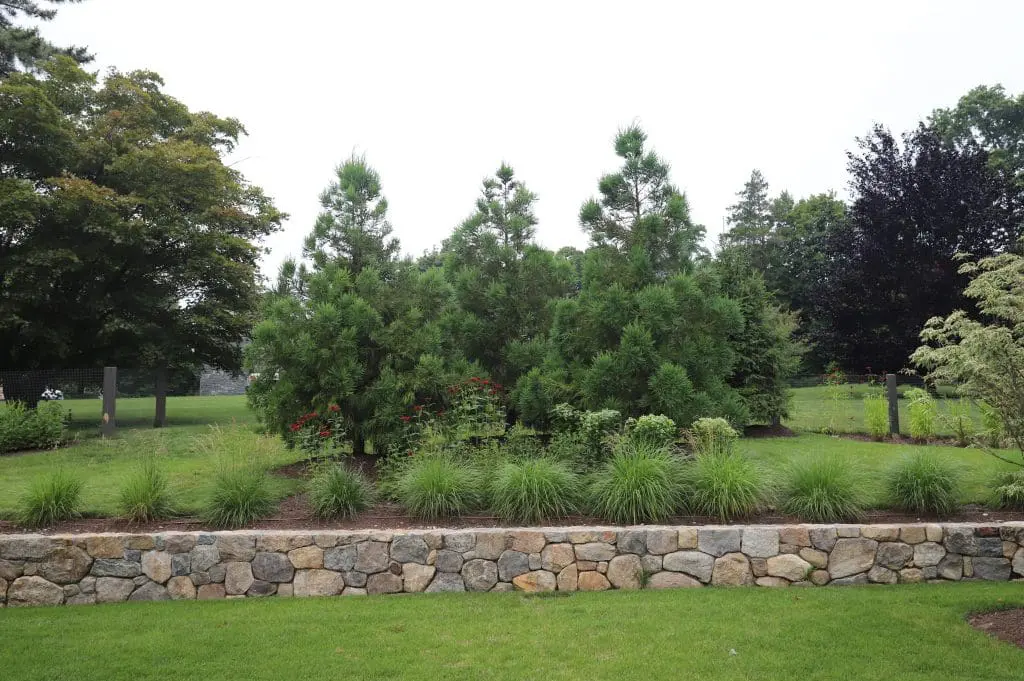
We LOVE contrasting textures, like this natural stone, ornamental grass & evergreen combo!

We also decided to transplant existing birch trees from the front circular bed in the driveway to the rear landscape.  In the previous spot, they blocked and detracted from the impressive architecture of the home.  We proposed replacing the birches with a colorful grass and perennial garden to accentuate the entrance. Birches are one of the most ecologically valuable native trees – attracting 413 species of lepidoptera, according to Doug Tallamy. 

Newly planted pool landscaping. Structured shrubs mixed with spreading ground covers and native perennials to attract birds, bees and butterflies.

Seeding for the Future

Part of ecological landscape design is always looking for areas to add/expand garden beds and increase the density of ecologically productive plants. One example on this property is the new bed beneath the mature trees we designed. The existing weeds and brush were removed by hand before seeding the area with several seed mixes. We included oats and rye grass as a cover crop, plus some annuals for color in the first year.  Some of the species in the New England Wildflower mix we used will take 2-4 years to flower, so having some faster growing crops is important for soil stabilization. These native perennials will provide critical habitat for pollinators and birds for years to come. 

Stroll Time! Loving this garden path through colorful perennials and delicate ornamental grasses.

Designing to Combat Climate Change

Even the foundation plantings were designed as their own microhabitats, featuring flowering shrubs that are pollinator magnets, native perennials, grasses and ferns. The increase in overall biomass from the plant material means an increase in greenhouse gas sequestration capacity. The dense planting will also help uptake storm water during storm events – plants have a much higher absorption rate than lawn does. This is important because water is a precious resource and stormwater runoff quickly becomes polluted and drains into oceans.

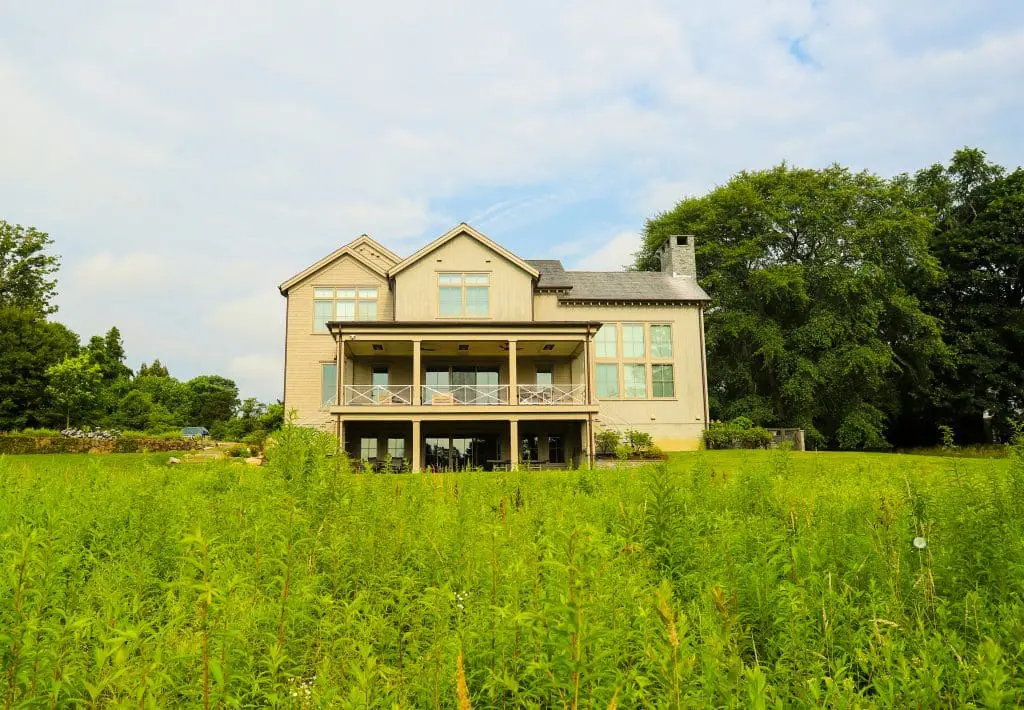
Absolutely stunning! This meadow *soon to have MORE color* looks fabulous from the porch, and vice versa!

We also worked to reinvigorate an existing meadow that had been mismanaged, causing it to lose much of the plant diversity. Catch up on our previous blog – Native Wildflower Meadow Management in Darien, CT.

As you can see, this design, while beautiful, is also serving multiple ecological functions. Designing landscapes in 2021 means not only creating beautiful spaces for our clients, but also addressing some of our most pressing environmental issues head on.  We do not have much more time to spare. 

Contact us to start your ecological landscape design consultation. 

Filed Under: Featured Work Tagged With: contemporary landscape design, Darien Connecticut, Darien CT, ecological landscape design, Fairfield County Connecticut, Fairfield county landscape design, fairfield county real estate, grass garden, landscape design, landscape designer, modern landscape design, native landscape design, native landscapes, native landscaping, natural landscaping, naturalistic landscaping, perennial garden

Green Jay Landscape Design is proud to announce our latest expansion: we are now offering our ecological landscape design & construction services to residents of Essex, Bergen and Morris County, New Jersey! 

New Jersey is home to many valuable and diverse ecosystems, from the sand dune coasts, to the tidal marshes and Pine Barren forests, New Jersey’s environment is worth protecting. We are proud to join the community of ecological land care, including New Jersey’s Pollinator Pathways program!

New Jersey Landscape Design

Now offering premiere landscape design, custom construction, ecological consulting, wetland & ecological restoration, and estate management services to New Jersey residents of Essex, Bergen & Morris Counties.

View our Landscape Design Portfolio

For more information on our work in each county, visit our location pages:

Essex County

Morris County

Bergen County

Contact us to schedule an on-site consultation or a free 15-minute discovery call. 

—

Green Jay Landscape Design

Where Design Meets Ecology
Filed Under: Landscape Construction & Installation, Landscape Design Tagged With: bergen county new jersey, ecological landscaping, Essex county new jersey, landscape consultation, landscape design & build, landscape designer bergen county, landscape designer Essex county, landscape designer Morris county, landscape designer new jersey, landscape plan, Morris county new jersey, New Jersey landscape design

We are proud of our talented team that keeps Green Jay Landscape Design operating every day. Our landscape designers, craftsmen, horticultural experts, masons, and project managers all play a valuable role in making each project a stand-out success. Our team has grown over the last few years, and we’d like to introduce our landscape design team – making waves in Westchester, NY, Fairfield County, CT & Morris County, NJ. 

Uziel Crescenzi

Director of Landscape Design Development

Uziel brings rich academic and field experience to the Green Jay team. Having always been design-oriented, he began his undergrad in an architecture program, but was soon drawn to transfer to SUNY College of Agriculture to study plant science. Learning the biology and chemistry of how plants work has been invaluable to Uziel as a designer. He has a deeper understanding of what conditions make which plants thrive, and how to design and execute a landscape around this knowledge. 

Uziel continued his education with a Master of Landscape Architecture from the City College of New York where he fine-tuned his skills in site analysis, ecological impact, and place-making design. His previous work experience includes Harvard’s Arnold Arboretum, Wave Hill public gardens, and The American Gardener.

At Green Jay, Uziel plays many roles. His main responsibilities are analyzing new landscape sites and designing ecological landscapes in Westchester, Fairfield, and Morris Counties. Jay and Uziel often collaborate on the initial site visit and then the final design presentation is executed by Uziel. An intimate plant knowledge, appreciation of nature and understanding of the intricacies of placemaking makes Uziel an incredibly valuable team member. 

Jay Archer 

Senior Landscape Designer & Landscape Ecologist, President of Green Jay Landscape Design

Jay Archer is the backbone, foundation and leader of Green Jay Landscape Design. His vision as a landscape designer, naturalist and landscape ecologist has guided Green Jay to our current form and success as an ecological landscape design & build firm. Jay’s foundation as a designer is rooted in his years spent immersed in the woods, hiking through acres of public land and observing mother nature’s work creating plant communities and ecosystems. 

Jay has an in-depth understanding of how site conditions – elevation, topography, sun patterns, soil porosity and composition – create hospitable or inhospitable growing conditions.  He also knows the diet, mating patterns, and nesting behavior of virtually every bird that could possibly be spotted in our region. 

This decades-long interest in ecology, horticulture, and ornithology, guided Jay to the field of ecological landscape design.  He studied at the New York Botanical Garden (NYBG) in the landscape design and horticulture departments, as well as the Rutgers University Center for Urban Ecology. Jay is also a Certified Organic Land Care Professional through the New England Organic Farming Association (NOFA).

Jay went on to share his knowledge by developing curriculum for NYBG on topics such as Wetland Restoration & Management, Landscaping with Stone, Ecological Restoration, and Waterscaping. He also prototyped curriculum for the Omega Institute and the Westchester Native Plant Center.

Jay founded Green Jay in 2012 with the goal of revolutionizing the standard of landscape design – from chemically-dependent and sterile to organic, native and full of life – a thriving natural ecosystem right outside your door.

Since our inception Green Jay has become a household name for designing beautiful, organic landscapes that are also habitats for birds, pollinators and other threatened wildlife. We have collaborated with many fabulous like-minded local organizations including Bedford 2030 Healthy Yards, Pollinator Pathways, Audubon International, Greenwich Botanical Society & more!

Contact us to start your ecological landscape design project! Serving Westchester, Fairfield, Putnam & Morris Counties in NY, CT & NJ!

—

Green Jay Landscape Design

Where Design Meets Ecology
914.560.6570

Filed Under: Ecological Education Tagged With: Bedford NY, CT landscape designer, ecological landscape design, ecological landscaping, Fairfield County Connecticut, Fairfield county landscape design, fairfield county real estate, greenwich CT, healthyyard, landscape design, landscape design and build, landscape designer, landscape plan, Morris county landscape design, NY landscape designer, rye NY, Westchester county landscape design, Westchester County NY, Westchester landscape designer

This Landscape Design Master Plan included re-vamping an existing native wildflower meadow that had not been maintained properly. The meadow is 3-5 years old and had been mowed in the fall of last year (not by GJL). This improper mowing schedule essentially removed many perennials before they went to seed, impacting the amount of diversity, flowers and color to be expected this season.

Meadow Disturbance Schedule

Don’t get us wrong – mowing is a critical part of organic meadow management! But when you mow is an essential detail. We follow this meadow disturbance schedule:

  • Mow 3x a year for the first year
  • 2x a year the second year
  • 1x a year, only in March for every year after

Mowing the native wildflower meadow in March helps control the overall height of the meadow and allows slower-to-develop plants in the seedbank to access enough sunshine to grow and thrive! Without some kind of disturbance, only the fastest growing species will survive, out competing others and limiting the overall diversity and ecological value of the meadow.

Reseeding with Native Wildflower Meadow Mixes

To remedy this meadow maintenance mishap in Darien, CT, we knew we need to reinvigorate the seed bank with new plant material. First, we mechanically disturbed the meadow. Burning is the best organic method of disturbance, but requires a permit and much oversight in Fairfield County, CT.  Mechanical disturbance via spiking is second best. Then, we planted several native wildflower meadow mixes from Ernst Seed. The new wildflower seeds will have a progression of blooms. Some species bloom in the first year, others take 2-3 years to mature to flowering.

By next year there will be much more color, diversity and ecological activity on this site! It is already performing eons better than a lawn, ecologically speaking, and will only get better as more wildflowers mature, provide habitat for pollinators and perform other ecosystem services like stormwater absorption and filtration.  In the fall, many songbirds will stop to feed on the seeds. Insects will overwinter in the hollow-stemmed perennials. And come spring, birds will find nesting materials in the grasses and stems of this beautiful meadow…that used to be lawn.

Do you have an area on your property that you’d like to convert to a meadow? Contact us for a free 15-minute discovery call or a professional on-site consultation.

—

Green Jay Landscape Design

Where Design Meets Ecology
914-560-6570

Filed Under: Ecological Education, Featured Work Tagged With: Darien Connecticut, Darien CT, Darien landscape designer, ecological landscape design, ecological landscaping, ernst seed, Fairfield County Connecticut, FAIRFIELD COUNTY CT, Fairfield county landscape design, landscape designer, meadow, meadow disturbance, meadow management, meadow mowing, native meadow, organic landscape, organic landscaping, organic meadow, pollinator pathways darien, wildflower meadow

The wind whispers, birds sing, flowers unfold and bloom throughout the seasons of your lives. Sweet fragrance fills the air, trees and grasses sway as you embrace the wild, the beating heart of nature, a symphony complete, where all the players play their part — at home in your Private Nature Preserve.

This could be your property. Your home landscape oasis. The above is an excerpt of a design proposal from one of our favorite projects of the year. A multi-acre private nature preserve we designed over the winter and are currently in phase 2 of installing. 

This is part two of our blog series on nature preserves, where we explore how ecological landscape design can achieve the same goals of preservation, connection with nature, and mental health renewal—at a residential scale. Catch up on our first blog, Designing a Private Nature Preserve at Home. 

In this post, we’ll be diving into a case study in Fairfield County, CT – an estate abutting a wetland – that has been one of the most fun and rewarding projects of 2021. The client hired us because she liked our naturalistic style and ecological perspective. The client requested a design that would highlight the property’s existing features while bringing more vibrance, life and activity to the estate.

Design Concept: Natural Paradise

Starting each project with a strong design point of view and concept is an essential part of the vision. Jay’s Design Proposals really capture the feeling of being in a naturalistic landscape. Below are some excerpts from this client’s Design Proposal:

Enter the sacred grove through the continuum of evergreens and arrive at the entrance shield, where the mighty oaks stand atop the torc guardians, the cosmic storehouse of strength, knowledge, truth and independence.

The harmony and balance restored to your lovely property will attract the spirit of nature in all its mystery and manifestations. The rich diversity of plant life will establish a sensory portal through which you may experience the awesome majesty and primal reality of a truly authentic natural world.

By employing the powerful forces of biodynamics and planting in the phases of the moon, the energy of the heavens and earth will be optimized to improve the vitality and longevity of all biological life in your landscape ecosystem. 

A model for an egalitarian life, living with nature, cherishing the precious natural resources as a gift in an imperfect world, may you celebrate the joy of being all the days of your lives, in health and happiness, now and forever.

We strive to design our ideal nature. Serene. Undisturbed. Full of Life. We manifest the feeling of walking through the woods or by a meadow. A national park at home, minus the crowds, tour busses, and selfie sticks. Rather, our havens of designed ecosystems are begging you to wander a path, fall asleep beneath a tree, and listen to the melodic buzz and song of all the creatures around you. (Check out Homegrown National Park to put your property on the map!)

Assessing & Designing Microclimates

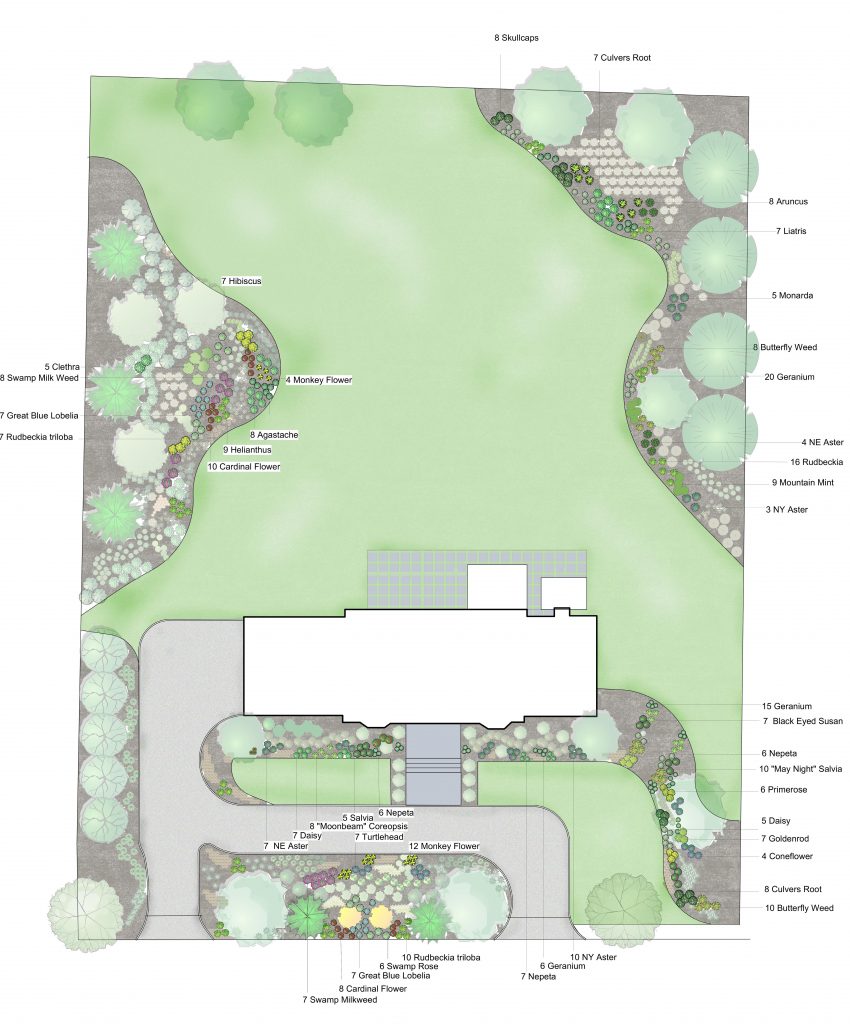
A property of this size will inevitably have microclimates – some zones will be shadier, wetter, more acidic, etc. than others. An obvious example at this site was the border of mature trees – a woodland overstory begging for an understory! We designed a garden spanning the entire northern border of the property, beneath the fabulous tree giants.  The plant palette included an abundance of native flowering and fruiting shrubs and our favorite woodland perennials. 

Another example of a microclimate is the expansive lawn area – hot, dry and sunny. We decided to accentuate the existing steps with two large meadow pollinator gardens on either side. Meadow plants perform best in lean, dry, sunny locations, so it was a no-brainer!

Near the house, we designed our own microclimate – a birch grove that both lends privacy from inside the house and creates another outdoor zone of tranquility. Underplanted with Carex and other native groundcovers, the birch grove will look and feel like the natural edge environment where meadow meets forest.  

Designing to accentuate each property’s existing natural features is a signature component of our POV when designing private nature preserves. Incorporating existing mature trees into the landscape composition gives the site a sense of permanence and longevity.

Whimsical Creativity

This property had so much opportunity for whimsy! We designed spiraled berm gardens for a dramatic entrance to the home. Planting them with native flowering shrubs creates continuity between the woodland understory nearby (both aesthetically, and for birds seeking food and shelter!).

The norther woodland garden has a woodchip path that meanders the length of the property, encouraging walking, observation and reflection. As you return to the house, duck into the willow fence tunnel or stop to doze beneath the birch trees.

Up by the pool area, an in-set serpentine garden bed makes even the hardscaping feel softened and connected to the landscape.

In all of these design choices, we sought elements that would invite the client’s interaction with the landscape.  This is not five acres of lawn to look at from your window! Just like visiting a national or state park, our residential landscapes are best when explored.

—

Green Jay Landscape Design

Where Design x Meets Ecology
914-560-6570

Filed Under: Featured Work, Landscape Design Tagged With: case study, ecological landscaping, estate management, Fairfield County Connecticut, Fairfield county landscape design, Fairfield county landscaping, fairfield county real estate, greenwich CT, landscape design master plan, landscape designer, landscape designer Fairfield county CT, landscape plan, native landscaping, private nature preserve, wild landscaping
  • « Go to Previous Page
  • Page 1
  • Interim pages omitted …
  • Page 14
  • Page 15
  • Page 16
  • Page 17
  • Page 18
  • Interim pages omitted …
  • Page 60
  • Go to Next Page »

Footer

Mailing Address: 222 Purchase Street, #144 Rye, NY 10580
Shop Address: 369 Bradhurst Ave, Hawthorne, NY 10532
(914) 560-6570
  • Facebook
  • Instagram
  • LinkedIn
  • Pinterest
  • YouTube
  • Houzz
  • Slide Share
  • Installation
  • Portfolio
  • Pricing
  • About
  • Contact

Copyright © 2025 · Green Jay Landscape Design. All Rights Reserved · Privacy Policy · Website and Local SEO by Ramblin Jackson