• Skip to main content
  • Skip to footer
Green Jay Landscape Design

Green Jay Landscape Design

Green Jay Landscape Design

(914) 560-6570
  • Design
  • Installation
  • Portfolio
  • Pricing
  • About
    • Service Area
    • Meet Our Team
    • Our Process
    • Our Promise
    • Mission, Vision, & Core Values
    • FAQ
    • Press & Events
    • Blog
    • Reviews
    • Careers
    • Affiliations
  • Contact

greenjayadmin

This is a case of total lack of communication and disregard for personal property and the environment.  The neighbors of our client in Mamaroneck decided to lift the grade of their property but failed to do so in a responsible way. The environmental impacts are serious and not easily remedied.  Green Jay Landscape Design was hired to provide an environmental site assessment and mitigation plan.

When Neighbors Go Too Far

The neighbor constructed a fieldstone retaining wall to raise and level the grade for a lawn installation. In the process, they installed subsurface PVC pipes to conduct stormwater away from their property and into a drainage easement on our client’s property. The easement leads directly to a stream – an unregulated wetland, but a valuable freshwater way nonetheless. The neighbor also removed significant vegetation including a mature 22” in diameter Maple.  Other understory vegetation including native shrubs, perennials and ground cover were carelessly removed and the area was blanketed in geo-textile fabric followed by non-composted wood chips at depth of 1-2.5’. 

Impacts of Environmental Disruption

After visiting the site, conducting field observations & analysis, we prepared a list of impacts of the landscaping conducted by the neighbor. 

  1. By installing a lawn, the neighbor increased semi-impervious surface area, thereby increasing sheet flow volume. Discharging both subsurface water and sheet flow towards our client’s property altered the natural hydrology leading to saturation of the ground and destabilization of the nearby large trees. 
  2. The increased volume of stormwater will continue to impact permanently as there is inadequate outflow downstream. Soil conditions are expected to remain wetter than the previous conditions. Potential erosion and flooding will likely continue into the foreseeable future. 
  3. Any and all contaminates from the stormwater runoff including VOC’s, inorganic compounds, fertilizers etc. will be deposited and carried by stream. Water quality may be compromised.
  4. Complete and total vegetated buffer removal results in further alteration of hydrologic impact on our client’s property including exposure to more severe wind storms, erosion and flooding as well as inability to provide usable yard space. Mold spores are likely to proliferate as evidenced by mushroom colonization at ground level, creating possible respiratory stress in the backyard environment.
  5. Most indigenous, native, ecologically beneficial existing plants and soils were buried by woodchips or completely removed in the case of the 22” Maple. This vegetation had provided valuable habitat for countless species as well as ecosystem services including air purification, emission secretions, and stormwater uptake. 
  6. The raw, uncomposted woodchips installed in place of the vegetaion which will alter the soil chemistry and biology by leaching nitrogen into soil and stream. This further potentially impacts water quality. 
  7. The construction of the fieldstone retaining wall further impedes the natural sheet flow drainage and decomposition process of wood chips, increasing mold proliferation. This deep layer of slowly decomposing wood chips are unstable and do not provide a media for new planting to grow, survive and thrive.
  8. The overall effect is sterilized soil and suppression of natural respiration of the remaining trees (by covering and saturating their root system) while prohibiting natural processes of regeneration and restoration. 
  9. The woven geotextile fabric was installed intentionally before the woodchips were deposited, further inhibiting the natural processes as well as making restoration and mitigation unnecessarily complicated and expensive. 

We consider this a rare example of destruction of highly valued upland, mesic and wetland ecological habitat, which we are continually losing due to approved intentional development.

It’s most unfortunate this disastrous result could have been prevented by proper communication between parties. It is unconscionable that respect to the property, the environment and the client/neighbor was not considered before construction and development began.

Proposed Mitigation Solutions 

  1. Cleaning, widening and deepening of stream corridor channel where possible to allow for increased flow and volume. Expanding stream with an overflow holding pool and installing subsurface hydrologic piping to alleviate seasonal flooding.
  2. Removal of 90% of wood chip material is necessary to return to a disturbed but acceptable soil condition, this includes removal of geotechnical fabric, allowing for landscape installation of Restoration and Mitigation Plan
  3. Landscape restoration planting to provide habitat and biomass necessary to improve climate for human health as well as compensate for loss of property value. This riparian buffer would provide ecosystem services to restore the ability to absorb and manage storm water flow during the course of normal storm events.
  4. If the retaining wall is to remain it should be backfilled with engineered soil plus topsoil for planting medium instead of woodchips, thus increasing stability, drainage and allowing for planting and revegetation.
  5. Stream bank wetland planting to stabilize soil erosion improve water quality, appearance and wildlife habitat.

Contact us about your environmental assessment and mitigation projects.  Visit our Ecological Consulting page 

Filed Under: Consulting & Project Management Tagged With: ecological restoration, environmental impact assesment, environmental mitigation, landscape construction, landscape consulting, landscape restoration, mitigation, neighbors, restoration, riparian buffer, stream, stream bank, stream restoration

Jay is a voracious reader always, but especially during the (marginally slower) winter months. Here’s what Jay’s been reading this winter! From urban ecology, to indigenous studies, explorative journeys, wildlife, and exposing the human psyche – there’s something for everyone on this season’s book list! Be sure to check out Jay’s previous Summer 2020 Book List for more great reads!
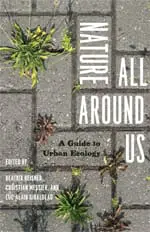
Nature All Around Us: A Guide to Urban Ecology
Beatrix Eisner, Chrstian Messier and Luc-Alain Giraldeau | Chicago Press

“Nature All Around Us uses the familiar—such as summer Sundays humming with lawn mowers, gray squirrels foraging in planters, and flocks of pigeons—in order to introduce basic ecological concepts. In twenty-five short chapters organized by scale, from the home to the neighborhood to the city at large, it offers a subtle and entertaining education in ecology sure to inspire appreciation and ultimately stewardship of the environment. Various ecological concepts that any urban dweller might encounter are approachably examined, from understanding why a squirrel might act aggressively towards its neighbor to how nutrients and energy contained within a discarded apple core are recycled back into the food chain. Streaming through the work is an introduction to basic ecology, including the dangers of invasive species and the crucial role played by plants and trees in maintaining air quality.
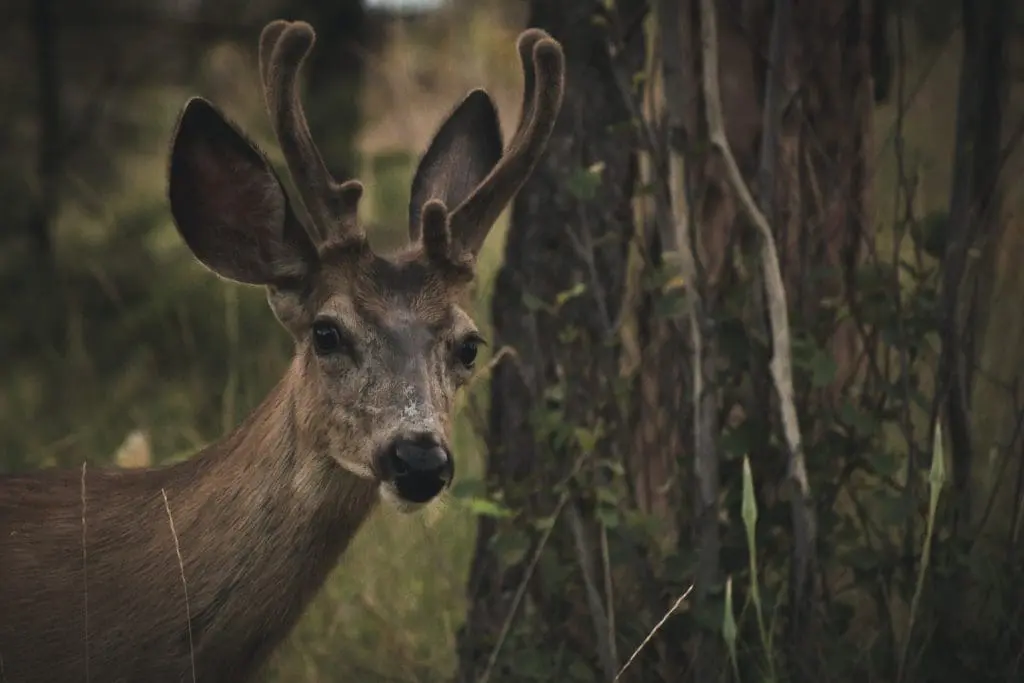
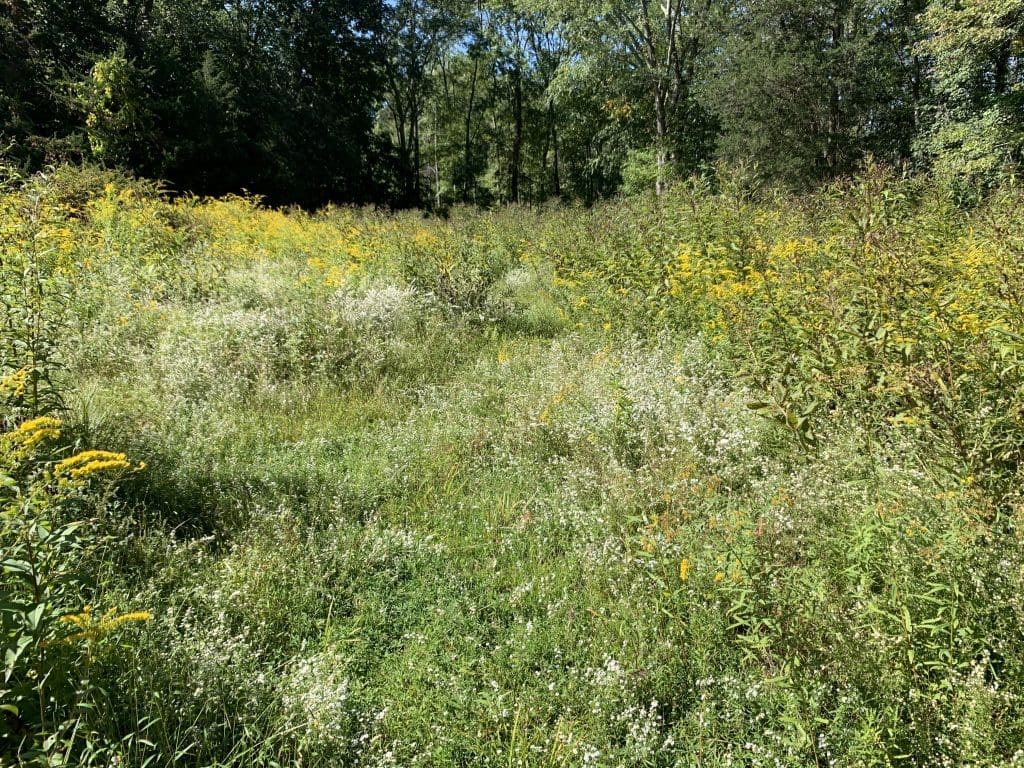
Taken as a whole, Nature All Around Us is an unprecedented field guide to the ecology of the urban environment that invites us to look at our towns, cities, and even our backyards through the eyes of an ecologist. It is an entertaining, educational, and inspiring glimpse into nature in seemingly unnatural settings, a reminder that we don’t have to trek into the wild to see nature—we just have to open our eyes.” 

Range: Why Gneralists Triumph in a Specialized World

David Epstein 

“David Epstein examined the world’s most successful athletes, artists, musicians, inventors, forecasters and scientists. He discovered that in most fields—especially those that are complex and unpredictable—generalists, not specialists, are primed to excel. Generalists often find their path late, and they juggle many interests rather than focusing on one. They’re also more creative, more agile, and able to make connections their more specialized peers can’t see.

Provocative, rigorous, and engrossing, Range makes a compelling case for actively cultivating inefficiency. Failing a test is the best way to learn. Frequent quitters end up with the most fulfilling careers. The most impactful inventors cross domains rather than deepening their knowledge in a single area. As experts silo themselves further while computers master more of the skills once reserved for highly focused humans, people who think broadly and embrace diverse experiences and perspectives will increasingly thrive.” 

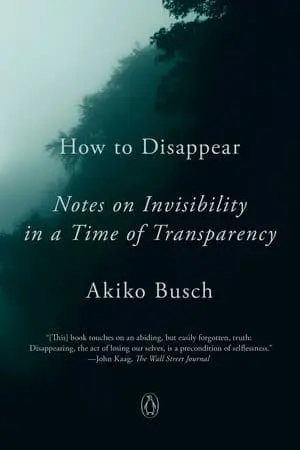
How to Disappear                                   

Akiko Busch | Penguin Random House

“How to Disappear is a unique and exhilarating accomplishment, overturning the dangerous modern assumption that somehow fame and visibility equate to success and happiness. Busch presents a field guide to invisibility, reacquainting us with the merits of remaining inconspicuous, and finding genuine alternatives to a life of perpetual exposure. Accessing timeless truths in order to speak to our most urgent contemporary problems, she inspires us to develop a deeper appreciation for personal privacy in a vast and intrusive world” 


The Archipelago of Hope

Gleb Raygorodetsky | Simon & Schuster

“An enlightening global journey reveals the inextricable links between Indigenous cultures and their lands―and how it can form the foundation for climate change resilience around the world.

One cannot turn on the news today without a report on an extreme weather event or the latest update on Antarctica. But while our politicians argue, the truth is that climate change is already here. Nobody knows this better than Indigenous peoples who, having developed an intimate relationship with ecosystems over generations, have observed these changes for decades. For them, climate change is not an abstract concept or policy issue, but the reality of daily life.

After two decades of working with indigenous communities, Gleb Raygorodetsky shows how these communities are actually islands of biological and cultural diversity in the ever-rising sea of development and urbanization.  They are an “archipelago of hope” as we enter the Anthropocene, for here lies humankind’s best chance to remember our roots and how to take care of the Earth. These communities are implementing creative solutions to meet these modern challenges. Solutions that are relevant to the rest of us.”

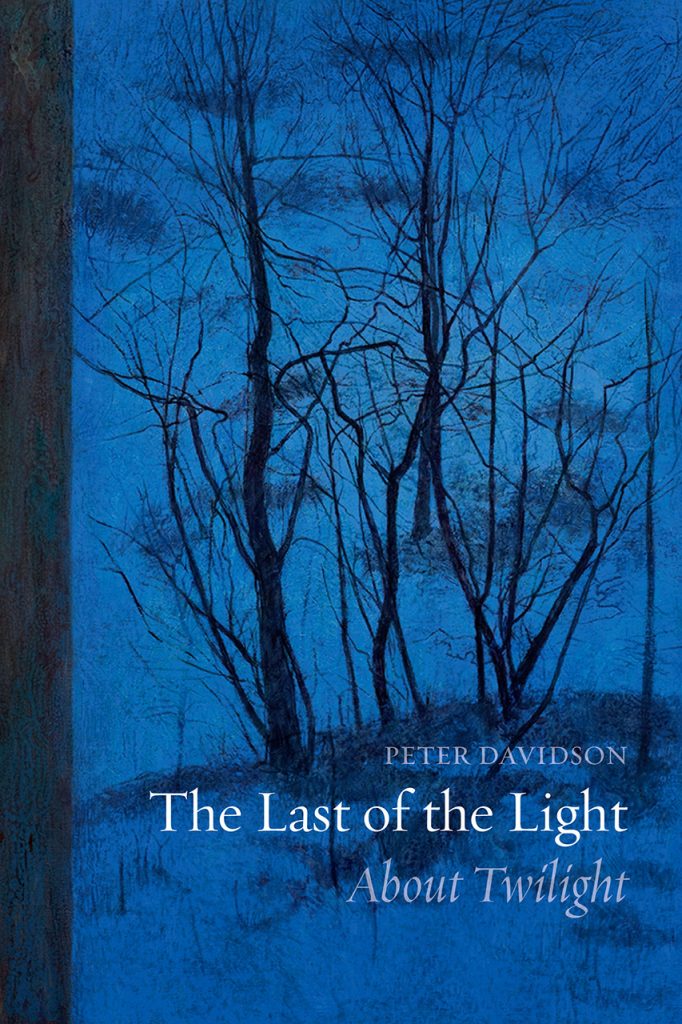
The Last of the Twilight: About Twilight               

Peter Davidson | University of Chicago Press

“Neither day nor night, twilight has long exerted a fascination for Western artists, thinkers, and writers, while haunting the Romantics and intriguing philosophers and scientists. In The Last of the Light, Peter Davidson takes readers through our culture’s long engagement with the concept of twilight—from the melancholy of smoky English autumn evenings to the midnight sun of northern European summers and beyond. Taking in poets and painters, Victorians and Romans, city and countryside, and deftly combining memoir, literature, philosophy, and art history, Davidson shows how the atmospheric shadows and the in-between nature of twilight has fired the imagination and generated works of incredible beauty, mystery, and romance. Ambitious and brilliantly executed, this is the perfect book for the bedside table, richly rewarding and endlessly thought-provoking.”

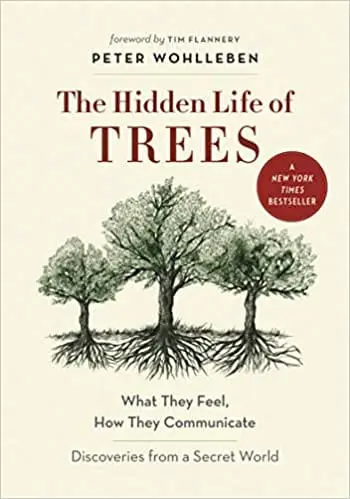
Hidden Life of Trees                     

 Peter Wohlleben | Greystone Books

“Are trees social beings? In The Hidden Life of Trees forester and author Peter Wohlleben convincingly makes the case that, yes, the forest is a social network. He draws on groundbreaking scientific discoveries to describe how trees are like human families: tree parents live together with their children, communicate with them, support them as they grow, share nutrients with those who are sick or struggling, and even warn each other of impending dangers. Wohlleben also shares his deep love of woods and forests, explaining the amazing processes of life, death, and regeneration he has observed in his woodland. After learning about the complex life of trees, a walk in the woods will never be the same again.”

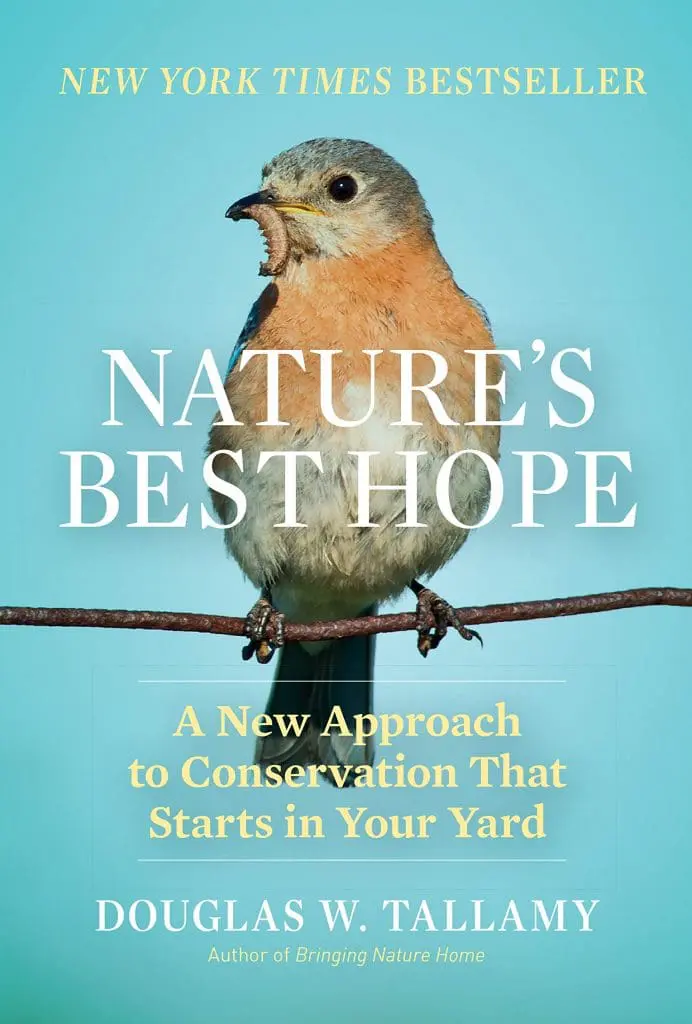
Natures Best Hope                       

Douglas Tallamy

“Douglas W. Tallamy’s first book, Bringing Nature Home, awakened thousands of readers to an urgent situation: wildlife populations are in decline because the native plants they depend on are fast disappearing. His solution? Plant more natives. In this new book, Tallamy takes the next step and outlines his vision for a grassroots approach to conservation. Nature’s Best Hope shows how homeowners everywhere can turn their yards into conservation corridors that provide wildlife habitats. Because this approach relies on the initiatives of private individuals, it is immune from the whims of government policy. Even more important, it’s practical, effective, and easy—you will walk away with specific suggestions you can incorporate into your own yard.

If you’re concerned about doing something good for the environment, Nature’s Best Hope is the blueprint you need. By acting now, you can help preserve our precious wildlife—and the planet—for future generations.”

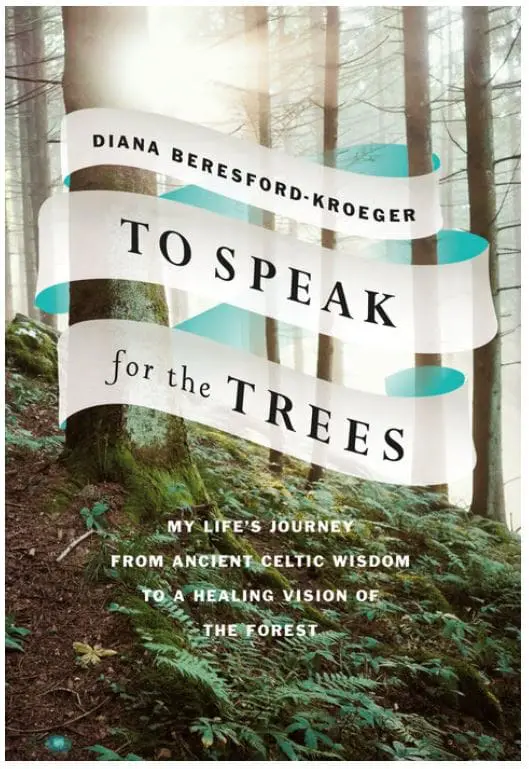
To Speak for the Trees                   

Diana Beresford Krueger

“When Diana Beresford-Kroeger–whose father was a member of the Anglo-Irish aristocracy and whose mother was an O’Donoghue, one of the stronghold families who carried on the ancient Celtic traditions–was orphaned as a child, she could have been sent to the Magdalene Laundries. Instead, the O’Donoghue elders, most of them scholars and freehold farmers in the Lisheens valley in County Cork, took her under their wing. Diana became the last ward under the Brehon Law. Over the course of three summers, she was taught the ways of the Celtic triad of mind, body and soul. This included the philosophy of healing, the laws of the trees, Brehon wisdom and the Ogham alphabet, all of it rooted in a vision of nature that saw trees and forests as fundamental to human survival and spirituality. Already a precociously gifted scholar, Diana found that her grounding in the ancient ways led her to fresh scientific concepts. Out of that huge and holistic vision have come the observations that put her at the forefront of her field: the discovery of mother trees at the heart of a forest; the fact that trees are a living library, have a chemical language and communicate in a quantum world; the major idea that trees heal living creatures through the aerosols they release and that they carry a great wealth of natural antibiotics and other healing substances; and, perhaps most significantly, that planting trees can actively regulate the atmosphere and the oceans, and even stabilize our climate.
This book is not only the story of a remarkable scientist and her ideas, it harvests all of her powerful knowledge about why trees matter, and why trees are a viable, achievable solution to climate change. Diana eloquently shows us that if we can understand the intricate ways in which the health and welfare of every living creature is connected to the global forest, and strengthen those connections, we will still have time to mend the self-destructive ways that are leading to drastic fires, droughts and floods.”

Gardentopia: Design Basics for Creating Beautiful Outdoor Spaces

Jan Johnsen | W. W. Norton

“’Gardentopia is that rare marriage of the art of landscaping and the technical knowledge of how to compose a landscape—boiled down to readily understood and easily executed actions. This book puts you in the driver’s seat and shows you how to chart the course to your own personal garden utopia.’ – Margie Grace, Grace Design Associates 
Any backyard has the potential to refresh and inspire if you know what to do. Jan Johnsen’s new book, Gardentopia: Design Basics for Creating Beautiful Outdoor Spaces, will delight all garden lovers with over 130 lushly illustrated landscape design and planting suggestions. Ms. Johnsen is an admired designer and popular speaker whose hands-on approach to “co-creating with nature” will have you saying, “I can do that!’ This info-packed, sumptuous book offers individual tips for enhancing any size landscape using ‘real world’ solutions.”

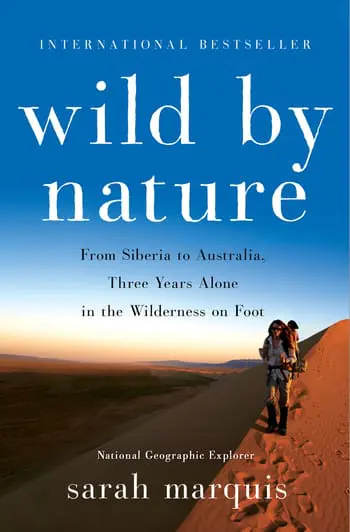
Wild by Nature                           

Sara Marquis | Macmillan

” ‘The only way to survive three years of walking was to embrace the moment of now.’—from Wild by Nature

Not since Cheryl Strayed gifted us with her adventure on the Pacific Crest Trail in her memoir, Wild, has there been such a powerful epic adventure by a woman alone. In Wild by Nature, National Geographic Explorer Sarah Marquis takes you on the trail of her ten-thousand-mile solo hike across the remote Gobi desert from Siberia to Thailand, at which point she was transported by boat to complete the hike at her favorite tree in Australia.

Against nearly insurmountable odds and relying on hunting and her own wits, Sarah Marquis survived the Mafia, drug dealers, thieves on horseback who harassed her tent every night for weeks, temperatures from subzero to scorching, life-threatening wildlife, a dengue fever delirium in the Laos jungle, tropic ringworm in northern Thailand, dehydration, and a life-threatening abscess.

This is an incredible story of adventure, human ingenuity, persistence, and resilience that shows firsthand what it is to adventure as a woman in the most dangerous of circumstance, what it is to be truly alone in the wild, and why someone would challenge themselves with an expedition others would call crazy. For Marquis, her story is about freedom, being alive and wild by nature.”

Healing the Mind                                    

Bill Moyers

“Ancient medical science told us our minds and bodies are one. So did philosophers of old. Now modern science and new research are helping us to understand these connections. 

In Healing and the Mind, Bill Moyers talks with physicians, scientists, therapists and patients – people who are taking a new look at the meaning of sickness and health. In a five-part series of provocative interviews, he discusses their search for answers to perplexing questions: How do emotions translate into chemicals in our bodies? How do thoughts and feelings influence health? How can we collaborate with our bodies to encourage healing? 

Healing and the Mind is a documentary series destined to influence how millions think about sickness and health.”

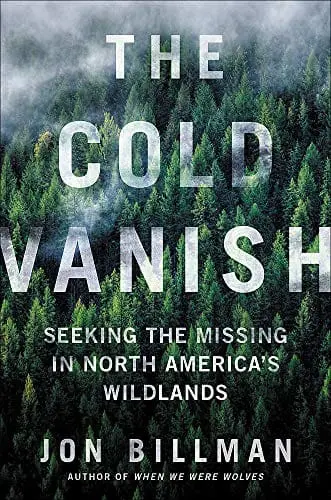
The Cold Vanish: Seeking the Missing in North America’s Wildlands

Jon Billman

“These are the stories that defy conventional logic. The proverbial vanished without a trace incidences, which happen a lot more (and a lot closer to your backyard) than almost anyone thinks. These are the missing whose situations are the hardest on loved ones left behind. The cases that are an embarrassment for park superintendents, rangers and law enforcement charged with Search & Rescue. The ones that baffle the volunteers who comb the mountains, woods and badlands. The stories that should give you pause every time you venture outdoors.
Through Jacob Gray’s disappearance in Olympic National Park, and his father Randy Gray who left his life to search for him, we will learn about what happens when someone goes missing. Braided around the core will be the stories of the characters who fill the vacuum created by a vanished human being. We’ll meet eccentric bloodhound-handler Duff and R.C., his flagship purebred, who began trailing with the family dog after his brother vanished in the San Gabriel Mountains. And there’s Michael Neiger North America’s foremost backcountry Search & Rescue expert and self-described “bushman” obsessed with missing persons. And top researcher of persons missing on public wildlands Ex-San Jose, California detective David Paulides who is also one of the world’s foremost Bigfoot researchers.
It’s a tricky thing to write about missing persons because the story is the absence of someone. A void. The person at the heart of the story is thinner than a smoke ring, invisible as someone else’s memory. The bones you dig up are most often metaphorical. While much of the book will embrace memory and faulty memory — history — The Cold Vanish is at its core a story of now and tomorrow. Someone will vanish in the wild tomorrow. These are the people who will go looking.”

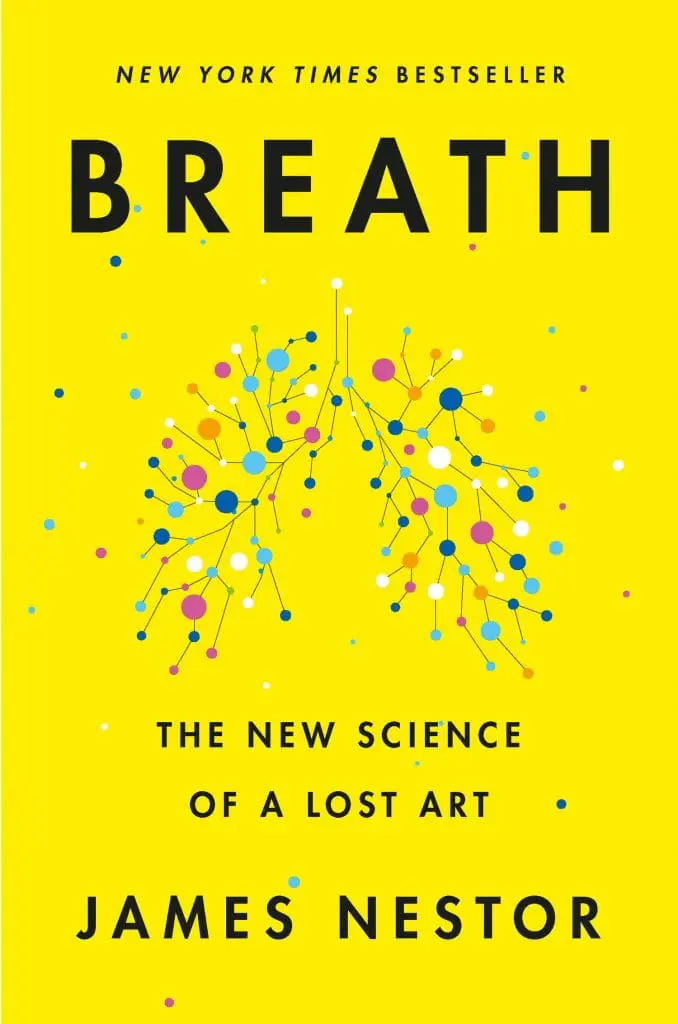
Breath: The New Science on a Lost Art

James Nestor

“

No matter what you eat, how much you exercise, how skinny or young or wise you are, none of it matters if you’re not breathing properly.

There is nothing more essential to our health and well-being than breathing: take air in, let it out, repeat twenty-five thousand times a day. Yet, as a species, humans have lost the ability to breathe correctly, with grave consequences.

Journalist James Nestor travels the world to figure out what went wrong and how to fix it. The answers aren’t found in pulmonology labs, as we might expect, but in the muddy digs of ancient burial sites, secret Soviet facilities, New Jersey choir schools, and the smoggy streets of São Paulo. Nestor tracks down men and women exploring the hidden science behind ancient breathing practices like Pranayama, Sudarshan Kriya, and Tummo and teams up with pulmonary tinkerers to scientifically test long-held beliefs about how we breathe.

Modern research is showing us that making even slight adjustments to the way we inhale and exhale can jump-start athletic performance; rejuvenate internal organs; halt snoring, asthma, and autoimmune disease; and even straighten scoliotic spines. None of this should be possible, and yet it is.

Drawing on thousands of years of medical texts and recent cutting-edge studies in pulmonology, psychology, biochemistry, and human physiology, Breath turns the conventional wisdom of what we thought we knew about our most basic biological function on its head. You will never breathe the same again.”

Fire in Paradise: An American Tragedy

Alastair Gee and Dani Anguiano | WW Norton

“The harrowing story of the most destructive American wildfire in a century.

There is no precedent in postwar American history for the destruction of the town of Paradise, California. On November 8, 2018, the community of 27,000 people was swallowed by the ferocious Camp Fire, which razed virtually every home and killed at least 85 people. The catastrophe seared the American imagination, taking the front page of every major national newspaper and top billing on the news networks. It displaced tens of thousands of people, yielding a refugee crisis that continues to unfold.

Fire in Paradise is a dramatic and moving narrative of the disaster based on hundreds of in-depth interviews with residents, firefighters and police, and scientific experts. Alastair Gee and Dani Anguiano are California-based journalists who have reported on Paradise since the day the fire began. Together they reveal the heroics of the first responders, the miraculous escapes of those who got out of Paradise, and the horrors experienced by those who were trapped. Their accounts are intimate and unforgettable, including the local who left her home on foot as fire approached while her 82-year-old father stayed to battle it; the firefighter who drove into the heart of the inferno in his bulldozer; the police officer who switched on his body camera to record what he thought would be his final moments as the flames closed in; and the mother who, less than 12 hours after giving birth in the local hospital, thought she would die in the chaotic evacuation with her baby in her lap. Gee and Anguiano also explain the science of wildfires, write powerfully about the role of the power company PG&E in the blaze, and describe the poignant efforts to raise Paradise from the ruins.

This is the story of a town at the forefront of a devastating global shift—of a remarkable landscape sucked ever drier of moisture and becoming inhospitable even to trees, now dying in their tens of millions and turning to kindling. It is also the story of a lost community, one that epitomized a provincial, affordable kind of Californian existence that is increasingly unattainable. It is, finally, a story of a new kind of fire behavior that firefighters have never witnessed before and barely know how to handle. What happened in Paradise was unprecedented in America. Yet according to climate scientists and fire experts, it will surely happen again.”

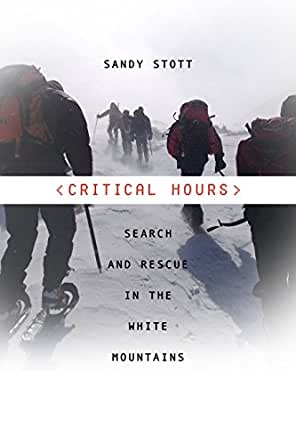
Critical Hours: Search and Rescue in the White Mountains

Sandy Stott

“A perilous history of search and rescue in a changing landscape

A misread map, a sudden storm, a forgotten headlamp—and suddenly a leisurely hike turns into a treacherous endeavor. In the past decade, inexpensive but sophisticated navigation devices and mobile phones have led to alarming levels of overconfidence on the trail. Adding to this worrisome trend, the increasing popularity of ventures into mountainous terrain has led hikers seeking solitude—or an adrenaline rush—into increasingly remote or risky forays. Sandy Stott, the “Accidents” editor at the journal of the Appalachian Mountain Club, delivers both a history and a celebration of the search and rescue workers who save countless lives in the White Mountains—along with a plea for us not to take their steadfastness and bravery for granted. Filled with tales of astonishing courage and sobering tragedy, Critical Hours will appeal to outdoor enthusiasts and armchair adventurers alike.”

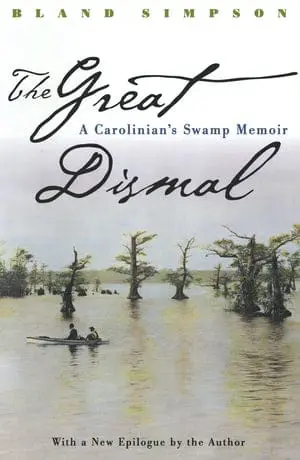
The Great Dismal: A Carolinian’s Swamp Memoir

Bland Simpson | UNC Press

“Just below the Tidewater area of Virginia, straddling the North Carolina-Virginia line, lies the Great Dismal Swamp, one of America’s most mysterious wilderness areas. The swamp has long drawn adventurers, runaways, and romantics, and while many have tried to conquer it, none has succeeded. In this engaging memoir, Bland Simpson, who grew up near the swamp in North Carolina, blends personal experience, travel narrative, oral history, and natural history to create an intriguing portrait of the Great Dismal Swamp and its people. For this edition, he has added an epilogue discussing developments in the region since 1990.”

Owls of the Eastern Ice: A Quest to Find and Save the World’s Largest Owl

Jonathan C. Slight | Macmillan

“I saw my first Blakiston’s fish owl in the Russian province of Primorye, a coastal talon of land hooking south into the belly of Northeast Asia . . . No scientist had seen a Blakiston’s fish owl so far south in a hundred years . . . 

When he was just a fledgling birdwatcher, Jonathan C. Slaght had a chance encounter with one of the most mysterious birds on Earth. Bigger than any owl he knew, it looked like a small bear with decorative feathers. He snapped a quick photo and shared it with experts. Soon he was on a five-year journey, searching for this enormous, enigmatic creature in the lush, remote forests of eastern Russia. That first sighting set his calling as a scientist.

Despite a wingspan of six feet and a height of over two feet, the Blakiston’s fish owl is highly elusive. They are easiest to find in winter, when their tracks mark the snowy banks of the rivers where they feed. They are also endangered. And so, as Slaght and his devoted team set out to locate the owls, they aim to craft a conservation plan that helps ensure the species’ survival. This quest sends them on all-night monitoring missions in freezing tents, mad dashes across thawing rivers, and free-climbs up rotting trees to check nests for precious eggs. They use cutting-edge tracking technology and improvise ingenious traps. And all along, they must keep watch against a run-in with a bear or an Amur tiger. At the heart of Slaght’s story are the fish owls themselves: cunning hunters, devoted parents, singers of eerie duets, and survivors in a harsh and shrinking habitat.

Through this rare glimpse into the everyday life of a field scientist and conservationist, Owls of the Eastern Icetestifies to the determination and creativity essential to scientific advancement and serves as a powerful reminder of the beauty, strength, and vulnerability of the natural world.”

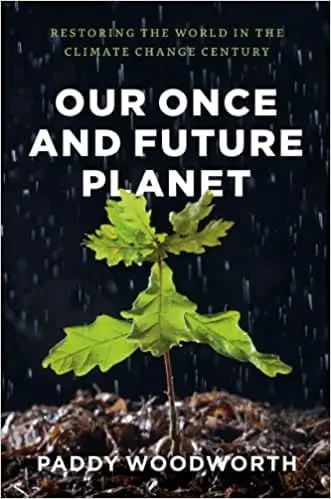
Our Once and Future Planet

Paddy Woodworth

“The environmental movement is plagued by pessimism. And that’s not unreasonable: with so many complicated, seemingly intractable problems facing the planet, coupled with a need to convince people of the dangers we face, it’s hard not to focus on the negative.

But that paints an unbalanced – and overly disheartening – picture of what’s going on with environmental stewardship today. There are success stories, and Our Once and Future Planet delivers a fascinating account of one of the youngest and least known but most dynamic areas of environmental experimentation and innovation: ecological restoration. 

Veteran investigative reporter Paddy Woodworth has spent years traveling the globe and talking with people – scientists, politicians, and ordinary citizens – who are working on the front lines of the battle against environmental degradation, and often linking it to the fight against poverty. 

… restoration’s goals are often deeply controversial. Should we – can we – attempt to restore an ecosystem to some ideal point in its past, or should we be restoring more pragmatically towards a healthier but still compromised future? 

These firsthand field reports and interviews with participants reveal the promise, the power, the drama and the challenging questions posed by restoration.”

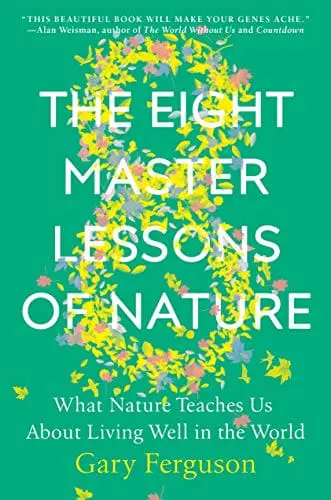
The Eight Master Lessons of Nature: What Nature Tells Us About Living Well in the World

Gary Ferguson | Penguin Random House

“A riveting manifesto for the millions of people who long to forge a more vital, meaningful connection to the natural world to live a better, more fulfilling life

Looking around at the world today—a world of skyscrapers, super highways, melting ice caps, and rampant deforestation—it is easy to feel that humanity has actively severed its ties with nature. It’s no wonder that we are starving to rediscover a connection with the natural world. 

With new insights into the inner workings of nature’s wonders, Gary Ferguson presents a fascinating exploration into how many of the most remarkable aspects of nature are hardwired into our very DNA. What emerges is a dazzling web of connections that holds powerful clues about how to better navigate our daily lives.”

On Democracy

EB White

“Decades before our current political turmoil, White crafted eloquent yet practical political statements that continue to resonate. “There’s only one kind of press that’s any good—” he proclaimed, “a press free from any taint of the government.” He condemned the trend of defamation, arguing that “in doubtful, doubting days, national morality tends to slip and slide toward a condition in which the test of a man’s honor is his zeal for discovering dishonor in others.” And on the spread of fascism he lamented, “fascism enjoys at the moment an almost perfect climate for growth—a world of fear and hunger.”

Anchored by an introduction by Pulitzer Prize-winning historian Jon Meacham, this concise collection of essays, letters, and poems from one of this country’s most eminent literary voices offers much-needed historical context for our current state of the nation—and hope for the future of our society. Speaking to Americans at a time of uncertainty, when democracy itself has come under threat, he reminds us, “As long as there is one upright man, as long as there is one compassionate woman . . . the scene is not desolate.”

The National Road

Tom Zoellner

“How was it possible, I wondered, that all of this American land––in every direction––could be fastened together into a whole?”

What does it mean when a nation accustomed to moving begins to settle down, when political discord threatens unity, and when technology disrupts traditional ways of building communities? Is a shared soil enough to reinvigorate a national spirit?

From the embaattled newsrooms of small town newspapers to the pornography film sets of the Los Angeles basin, from the check–out lanes of Dollar General to the holy sites of Mormonism, from the nation’s highest peaks to the razed remains of a cherished home, like a latter–day Woody Guthrie, Tom Zoellner takes to the highways and byways of a vast land in search of the soul of its people.

By turns nostalgic and probing, incisive and enraged, Zoellner’s reflections reveal a nation divided by faith, politics, and shifting economies, but––more importantly––one united by a shared sense of ownership in the common land.”

We hope you enjoyed this edition of Jay Archer’s Book List! Do let us know if you read any of the selections, and what you think! Knowledge is power 🙂

—

Green Jay Landscape Design

914-560-6570

Filed Under: Ecological Education Tagged With: book club, book list, book list winter 2021, book worm, ecological education, education, reading, reading list, reads, winter reads

It is said that in the fall and winter the Earth inhales and in spring and summer the Earth exhales. 

For those of us in the nature business, our daily lives follow the seasons, to some extent. In winter, we normally spend a significant time indoors, reflecting, calibrating, planning and designing for the seasons to come. Winter is a good time for heavy reading, science, philosophy etc. So, what is different during these cloudy days of imposed isolation during the zombie apocalypse? We experience practically no social interaction with others, friends, family colleagues, at least not in person. Yet we remain busy, busy as ever!

Photo courtesy of Roman Odinstov via Pexels.

Humans Are Social Beings

Very impressive how people have adapted to life without human contact. Unfortunately, this reduces our interaction to the one-dimensional screen (removed, emboldened, and flooding our eyes and brain with sleep-disrupting Blue Light). It’s bad enough we rarely, if ever, interact with other species in the best of times, under ‘normal’ conditions. 

We are social beings; it is not normal or healthy, physically and biologically, to lack physical touch and interaction, so we compensate. How do we respond and react to the lack of socialization?

Photo courtesy of Tobi via Pexels.

Nature is a Healing Force

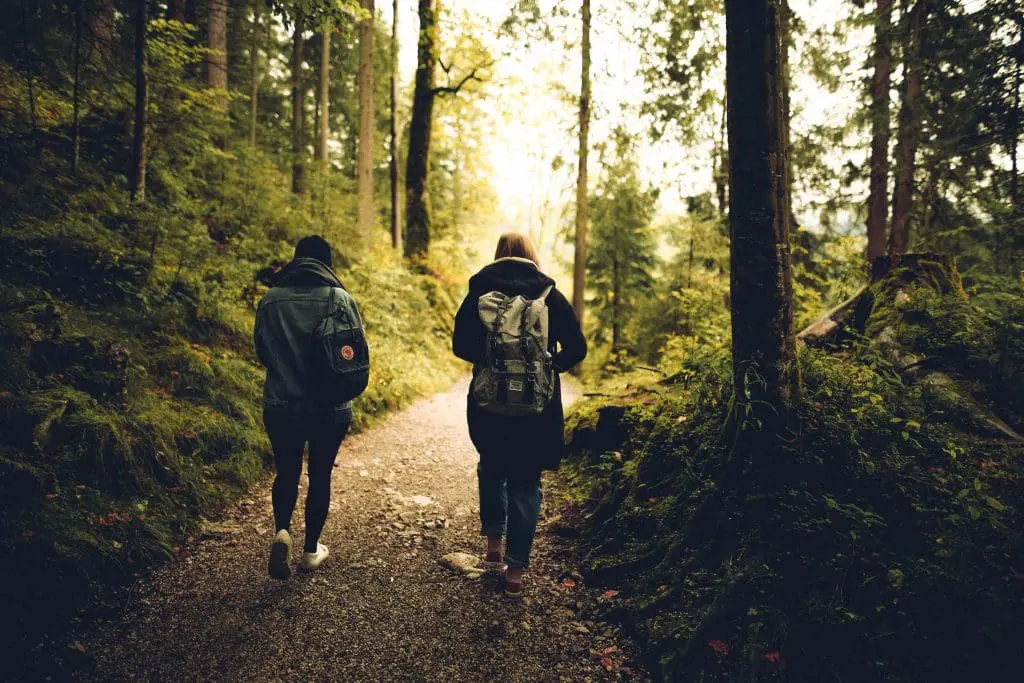
Suggestions: take a walk. You can call it centering or forest bathing. No pressure. Just go and breathe. Get as close to nature as possible. Breathe and be mindfully present. Leave the phone home, watch too! 

Affirm the good. In place of fear, apprehension and anxiety, be one with the universe. You are truly beautiful and good. What do you have to lose? I don’t live in a fuzzy new age of an abstract, esoteric world. I live in the here and now of the natural and man-made world. We should at least attempt to reach beyond labels. 

I look out the window at the seemingly egalitarian harmony and diversity of life at the bird feeders, in the bushes, shrubs and trees. Everybody seems to be getting along. It’s a myth! There is a tremendous competition between the titmice, the chickadees, blue jays, cardinals, the hawks and those damned squirrels (as Jean George named them). 
The division of power and territory, the desire for food and sex is fluid, shifting like the powers of male and female, yin and yang.

There is an absence of one important anthropomorphic trait. There is no hate among the so-called lower life forms and species. We might learn something here.

How Much Have We Changed our Landscape Environments? 

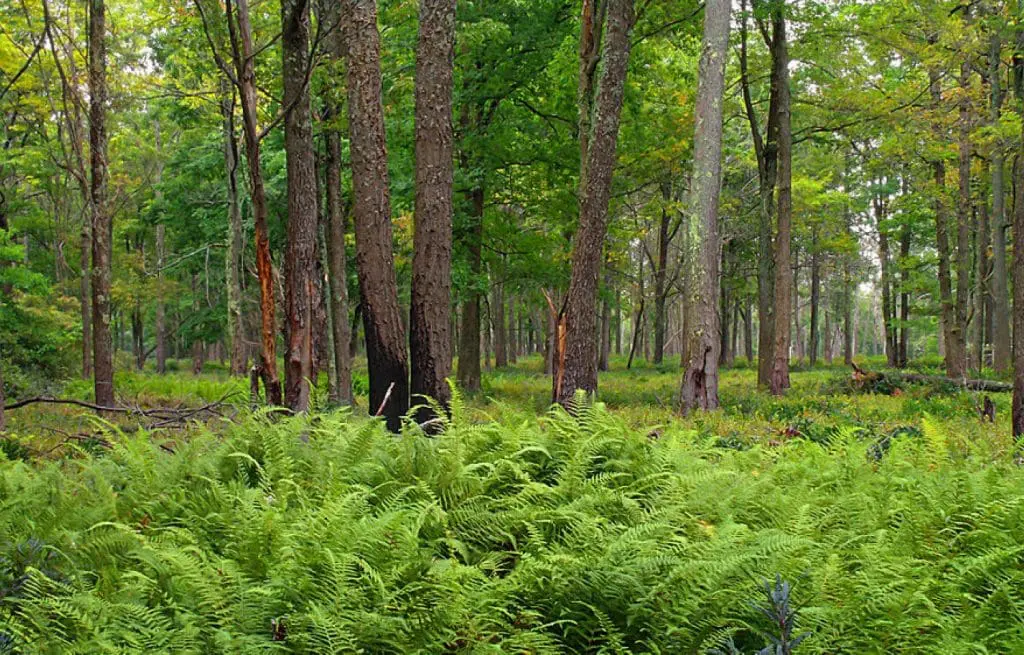
An interesting exercise is to take a walk in a park or nature preserve, a field, a backyard, and imagine. Imagine what used to be there. You don’t need to be a forensic scientist to recognize clues. In winter the trees tell a story. In this part of the country, it is rare to find trees over one hundred years old. Much more common to see recovering, greatly disturbed wood lots. 

Photo courtesy of Nicholas T via Flickr.

What was there before, what did it look like, what did it feel like? What did that more natural, undisturbed, undeveloped environment do? What functions did it serve? What was the impact on the water, the air? Very likely you would have been walking through a clear-cut field, no trees. Maybe the first grasses and shrubs emerge. The previous land use was logging by saw and burning. 

You don’t have to go back to when the dinosaurs roamed the Earth to see how radically we changed the environment we presently live in. At the turn of the last century, there was less forest and fewer deer. Fewer people too, certainly less permanent infrastructure, concrete and pollution. 

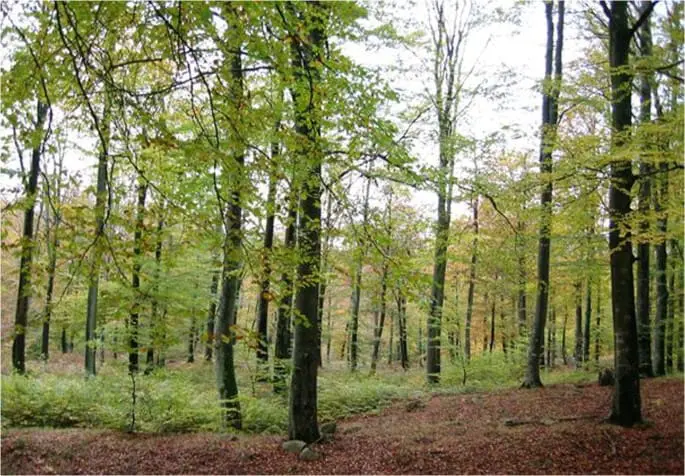
A beech stand. Photo by A Bolte Courtesy of Springer.

Succession, Regeneration & Deer

Here’s a clue. Look for the light bronze leaves of the trees with the silver gray bark. Usually thick stands tightly packed 3’ to 10’ in height. They are especially noticeable against the snowy backdrop of a recovering forest. American beech, a pioneer species, grows by a shallow underground network of clonal root systems and tendrils poking through the shallow soil.

You can’t easily buy, plant and duplicate these forest communities. Nurseries don’t sell the stock, it’s not viable. Only Mother Nature knows the trick to how it works. One of the reasons these beautiful young trees are so prolific, how they scream forest recovery is that the deer can’t eat them all. On a recent walk in Harriman State Park, we were entertained and inspired by these beauties as well as the vast stands or colonies of mountain laurel. 

Our remnant forest and struggling wood lots are losing the battle to achieve sustainable succession and maturity. The deer so dominate the forest environment that it is difficult if not impossible for pine and oak to regenerate. You don’t need to be a forester or arborist to observe and take note of the decline of hemlock and other evergreens. The deer displace and out compete other wildlife for food and habitat. 

On a recent trip to semi-rural Vermont, we saw ruffled grouse roosting in an apple tree. Something we are lacking in our distressed, contaminated suburban sprawl environment that is Westchester and Fairfield County. Grouse are indicator species much like the red fox indicates a likely Lyme disease-free landscape environment through their efforts at rodent control (they don’t call it that).

A GJL designed native wet meadow borders by a wetland forest in South Salem, NY.

Restorative Landscape Design

So where am I going with this rambling discourse?
Limit overdevelopment, cherish each green space. Take every opportunity to restore biological function and ecosystem services to a landscape environment. Talk to your neighbors. Show that you care about their health and your mutual future in the environment.

It’s not good enough to conserve resources, we must do something about preserving their function and integrity. If natural resources are compromised, contaminated and degraded, it is difficult and expensive to restore them, if that is even possible.

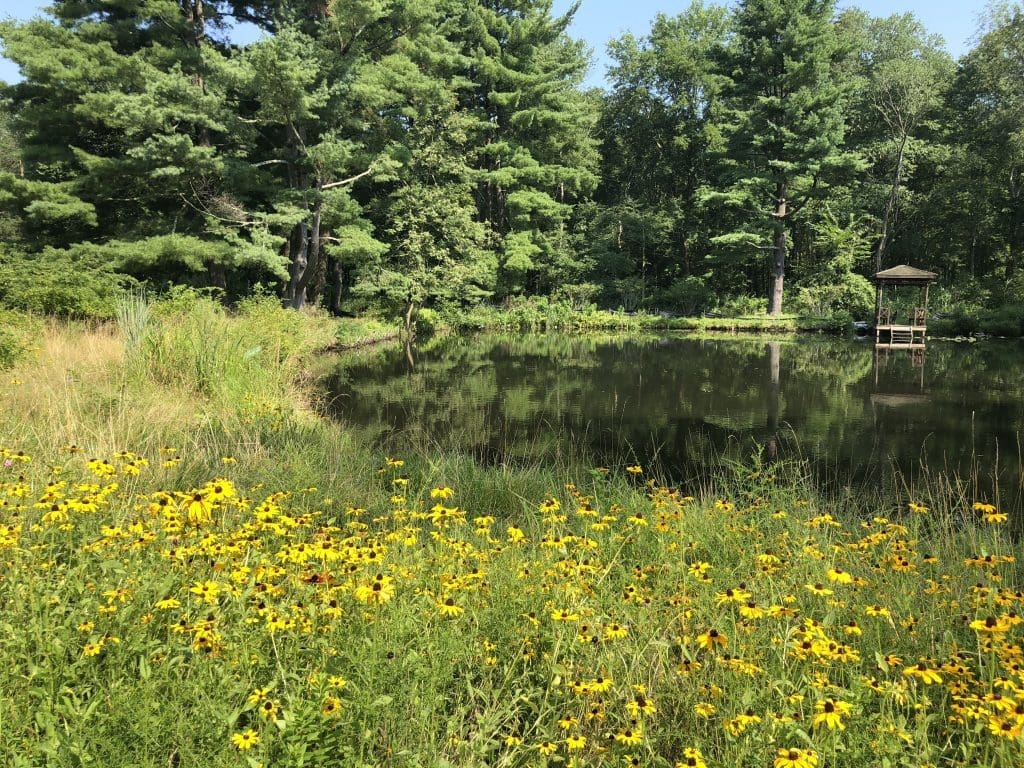
Native riparian border around a freshwater pond, bordered by a mature forested wetland in Westchester County, NY.

We must create fabulously attractive, highly functional environment and habit even if we consider them ‘novel’. We must continue to make ecological landscape design models that support diversity of life. At present, the forest and random wood lots, fields and backyards are not on track to adapt and compensate for what we ruin and take away from our beautiful world each and every day.

So, let’s join together, magnify our efforts and propagate our resources, human and financial, to save the planet for another day. A day we can once again reach out and touch and feel. A day in which we can use our gifts of sight, touch and smell to remember we too are animals…living in the material world.

—

Jay Archer

Green Jay Landscape Design

Where Design x Meets Ecology

Contact us about your ecological design project: 914-560-6570

Filed Under: Ecological Education Tagged With: ecological consulting, ecological landscape design, ecological landscaping, forest, forest bathing, health, healthy landscape, healthy yard

We love wrapping up a year and reviewing all of our accomplishments as ecological landscape designers & builders. So, in that spirit, we’ve selected our seven best landscape designs of 2020 to share with you. Let us know which is your favorite!!

#7 Coyote Woods in the Cradle of the Forest | Irvington, NY

This Landscape Design Master Plan focused on revitalizing some seriously overgrown foundation plantings, and creating safe play areas for the young family in the backyard.

The property was also plagued by clogged storm drains, standing water, and mosquitos (not a nice play environment!) so we included stormwater management in our overall design goals.

We also updated the front entrance masonry, using large irregularly cut bluestone that clearly designates what entrance to use (the previous design was confusing and seemed to emphasize the side door over the front door).

Learn more about the project on our previous blog! Elegant Front Landscaping with Stone Masonry

#6 Shangri-La: Ecological Restoration & Dam Construction | South Salem, NH

We restored the water level of this freshwater pond by constructing a concrete dam and footbridge with J-R-One Contracting. The dam allows the pond water level to stay consistent enough to support native plants and aquatic life, and also allows for overflow into the watershed during high rain events.

GJL planted the banks with a native mix of perennials and grasses to help stabilize the slope, purify the water and create aquatic and pollinator habitat. The riparian border around the pond is a direct extension of the nearby wet meadow, connecting habitats within the estate and the larger bordering forest.’

Learn more about this South Salem project on our previous blogs:

Pond & Wetland Native Planting w. Dam Construction

Dam Construction, Pond & Wetland Restoration

#5: Lakeside Retreat: Bird’s Eye View in the Cradle of the Clouds | Holmes, NY

Of course we had to include this stunning lakefront property in our Best Landscape Designs of 2020. GJL was hired to reimagine this slope — to make it more beautiful, stabilized and ecologically productive. We utilized many different erosion control devices to construct terraced garden beds before planting.

The planting palette selected is a mix of shrubs, ornamental grasses and perennials for full sun. We also uncovered and accentuated some of the bedrock, a great natural feature of the property!

Now, the slope looks fabulous from the water, the home and the walkway. We love how the lake breezes and afternoon light hits the ornamental grasses!

Learn more about the landscape design and the installation of this project on our previous blogs:

Hillside Garden: Landscaping a Steep Slope for Erosion Control

Hillside Stabilization Planting with Lakeside Views

#4 Harvest Hill and the Terrace of the Sun |Hastings, NY

This fabulous permaculture project was very fun to design. Since the lot is on a relatively steep slope, we decided to design a network of garden terraces with meandering walking paths in between.

The paths and terraces are lined with small boulders and we employed logs for a naturalistic erosion control in the pathways. The plantings are mostly native with the addition of some non-native fruiting trees — still to be planted this spring.

Lastly, our friends at Cooper Ponds constructed an amazing disappearing waterfall that is situated perfectly for viewing from either patio. Trust when we say, the sound of this waterfall can soothe even the worst day out of you!

Read up on the project on our previous blogs:

Terraced Native Gardens w. Water Feature & Natural Stone Masonry

Permacultre Terrace Garden w. Erosion Control

#3 Where the Sun Smiles | Stamford, CT

The number three spot in our best landscape designs of 2020 goes to this front lawn removal / replacement with a native pollinator garden! The new landscape is completely organic (duh) and incredibly ecologically productive. Not only does it provide habitat, it also captures and filters stormwater and secretes more GHG emissions than the former lawn did.

Learn more about the project on our previous blogs:

Landscape Design in Fairfield County: Front Yard Pollinator Garden

#2 Field and Stream, Camp Refugia | Greenwich, CT | Runner Up Best Landscape Designs of 2020

This newly constructed home received a fresh landscape that encompasses all our favorite elements: pool landscaping, front yard landscaping, wetland restoration plantings, natural stone masonry and an organic veggie garden!

The aesthetic was both modern and naturalistic: contemporary clean lines in the masonry, softened by lush and textured habitat gardens.

Learn more about the project on our previous blog:

Modern Patio Design, Pool Landscaping & Front Yard Garden in Greenwich

#1|Best Landscape Design of 2020: Wonderful World, Beautiful Bequest|Hastings, NY

Our TOP LANDSCAPE DESIGN OF 2020 goes to… this stunning front yard renovation into a beautiful habitat garden. We had fun playing with textures in this garden, from exposing the bedrock to employing ferns, grasses and of course grand sweeps of pollinator-attracting perennials.

Since this is a front yard garden, we knew it had to be a show-stopper not an eye sore for the rest of the neighborhood. The natural slope is actually great for displaying plants of different heights. We made sure to choose long-bloomers for maximum effect.

Learn more about the project on our previous blog:

Front Yard Hillside Native Pollinator Garden | Hastings, NY

What do you think — do you agree with our compilation of our best landscape designs? Which one is your favorite? We’d love to hear from you!

Contact us about your landscape design project: 914-560-6570.

—

Where Design x Meets Ecology

Green Jay Landscape Design

Filed Under: Featured Work, Landscape Design, Uncategorized Tagged With: bestlandscapedesign, bestlandscapedesigner, design and build, dream home, dream landscape, Fairfield county, Fairfield County Connecticut, Fairfield county landscape design, fairfield county real estate, front yard garden, front yard landscaping, landscape construction, landscape constuction, landscape design, landscape design and build, landscape design master plan, landscape designer, landscape ecologist, landscape installation, masonry, natural stone masonry, organic garden, organic landscape, pool landscaping, top72020, topdesigns2020, Westchester county landscape design, Westchester County NY, Westchester landscape designer, Westchester NY landscape design

Martin’s landscape won our Top Designs of 2020 and it’s no secret why. With a client that wanted “more than a pretty yard,” and an ecological landscape that “is his legacy in life,” GJL had full reign to design a vibrant, organic front yard habitat garden. Watch the full video testimonial interview below!

Learn more about Marty’s landscape on our previous blog: Front Yard Hillside Pollinator Garden | Hastings, NY.

Want more testimonials? Check out our previous interviews:

A Voice for Nature w. Kathleen| Mamaroneck, NY

A Voice for Nature w. Anne | Irvington, NY

A Voice for Nature w. Claire | Bedford, NY

A Voice for Nature w. Dan | Rye, NY

Contact us to start your ecological landscape design project! 914-560-6570

—

Where Design x Meets Ecology

Green Jay Landscape Design

Filed Under: Testimonials Tagged With: client appreciation, client love, client review, client testimonial, design and build, ecological landscape design, ecological landscaping, front yard garden, front yard landscaping, front yard permaculture garden, Hastings on Hudson NY, landscape design, landscape design & build, landscape designer, landscape ecologist, organic garden, organic landscape, organic landscaping, pollinator garden, pollinator habitat, pollinator pathway, pollinator pathways Hastings NY, video interview, video testimonial

This property is now a focal point of the neighborhood, both visually and as a manifestation of community values. As a corner lot, the front yard is highly visible, and its transformation into a completely organic, (mostly) native pollinator garden had all the neighbors taking notice!

Natural, native curb appeal on this hillside pollinator garden in Hastings, NY.

This project is #1: Wonderful World, Beautiful Bequest.  GJL’s Top Landscape Design Projects of 2020. 

Landscape Design Concept: Habitat Garden for the Planet

This client stressed that his main vision with his landscape renovation was to give back to the planet, to contribute something to counterbalance all the destruction humankind has collectively wreaked on the environment.

Midsummer’s beauty! Many sources of native pollen and nectar for essential pollinators.

Naturally, he and Jay got along famously.  With those design goals in mind, the client gave Jay “carte blanche” in the design composition.  Here’s an expert from the Landscape Design Proposal:

Your naturally beautiful native plant scape will be composed to resonate in harmony with the Earth’s elements.

This property had fabulous natural features – mature birches and boulders that we exposed more to highlight.

By harnessing the energy and spirit of place, we will channel and focus natural resources of rain, sun and soil biology to create a carbon net positive ecosystem which will attract and shelter the greatest biotic diversity. This will produce year-round interest and ecosystem services for now and all the days of your life, in dream time, and timeless longevity.

Celebrate the great mystery and acknowledge our kinship with all things.

Something for everyone! Some pollinators are generalists, some are specialists. Variety is key in your pollinator garden!

Scope of Work

The scope of work for this landscape renovation included first, removing the unwanted vegetation by hand. Next, we prepared the soil for stabilization of the slope and to provide the necessary building blocks for a successful organic landscape. 

We love how the tapestry of textures and colors flows over the natural hillside and spills onto the street in a naturalistic style.

Learn more about the scope of work, existing site conditions, and the challenges posed by the slope on our pervious blog: Weeds to Habitat: Front Yard Renovation in Hastings, NY. 

Sneezeweed! A fabulous native bloomer and pollinator favorite!

Native Pollinator Garden: Plant it and They Will Come

We installed this landscape in late fall and by late spring it was a habitat buzzing with activity.   The client often mentions how his neighbors were inspired by his landscape, learning about native plants how to create pollinator gardens of their own. This street is already creating a network of habitats for precious pollinators – a real life example of Pollinator Pathways Hastings! 

P)Lanting the other side of the sidewalk incorporates the walkway into the landscape instead of detracting from it.

This is why we do what we do! To create models of ecological landscaping that inspire others and change the narrative of what a “beautiful” front yard looks like!

Jay finds a sphinx month, a native pollinator, in the garden.

So far, in just the first season, the client has reported seeing: Monarch butterflies, Swallowtails, goldfinches, sphinx moths, hummingbird moths and countless native bees. The vivacity of this landscape has inspired the client to practice amateur entomology and ornithology. The landscape has given him new hobbies at home, in a time of isolation and containment. 

We love how the sneezeweed, geranium and daisies compliment the white birch bark!

Contact us to start designing your dream home landscape! 914-560-6570

Native perennials for pollinators that pair fabulously: white coneflower and sneezeweed.

—

Green Jay Landscape Design

Where Design x Meets Ecology

Filed Under: Featured Work, Landscape Construction & Installation, Landscape Design Tagged With: certified wildlife habitat, front yard garden, front yard landscaping, habitat design, habitat garden, habitat gardening, healthy yard, native plant garden, native pollinator garden, organic garden, organic landscape, organic landscaping, pollinator garden, pollinator pathways Hastings NY, pollinators

  • « Go to Previous Page
  • Page 1
  • Interim pages omitted …
  • Page 17
  • Page 18
  • Page 19
  • Page 20
  • Page 21
  • Interim pages omitted …
  • Page 60
  • Go to Next Page »

Footer

Mailing Address: 222 Purchase Street, #144 Rye, NY 10580
Shop Address: 369 Bradhurst Ave, Hawthorne, NY 10532
(914) 560-6570
  • Facebook
  • Instagram
  • LinkedIn
  • Pinterest
  • YouTube
  • Houzz
  • Slide Share
  • Installation
  • Portfolio
  • Pricing
  • About
  • Contact

Copyright © 2025 · Green Jay Landscape Design. All Rights Reserved · Privacy Policy · Website and Local SEO by Ramblin Jackson