• Skip to main content
  • Skip to footer
Green Jay Landscape Design

Green Jay Landscape Design

Green Jay Landscape Design

(914) 560-6570
  • Design
  • Installation
  • Portfolio
  • Pricing
  • About
    • Service Area
    • Meet Our Team
    • Our Process
    • Our Promise
    • Mission, Vision, & Core Values
    • FAQ
    • Press & Events
    • Blog
    • Reviews
    • Careers
    • Affiliations
  • Contact

greenjayadmin

The majority of landscaping in the United States is really just lawn care. There are approximately 40 million acres of lawn in the lower 48 states alone, accounting for 1.2% of the continental land mass.

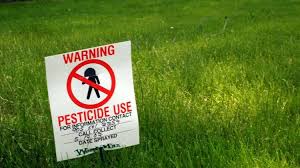
What do we achieve from such colossal acreage? Well, lawns are the largest irrigated crop in the US, and Americans apply a staggering 80 million pounds of pesticides to lawns every year.

The Environmental Costs of Lawn Pesticides & Fertilizers

Culturally, we overlook this nonchalant, careless application of toxic pesticides as the norm, necessary to achieve the universal aesthetic of a flawless carpet of turf. We mostly fail to consider the production costs and supply chains of these chemicals – nearly all pesticides’ active ingredients are hydrocarbons, derived from petroleum.

To create synthetic fertilizers, natural gas is employed to heat and combine atmospheric nitrogen and hydrogen into ammonia; a forty pound bag of synthetic fertilizer requires the equivalent of 2.5 gallons of gasoline to produce. Nitrous oxide and methane, both greenhouse gases, are byproducts of synthetic fertilizer manufacturing.

Residential lawn run off during a storm event can deposit chemicals into water bodies.

We also fail to consider the downstream effects of their application.  Pesticides leaching into ground water or being transported through runoff is a major concern. Fertilizers also easily wash onto driveways and down storm drains during storm events, where they are ultimately deposited into water bodies, creating eutrophication conditions (algal blooms and depletion of oxygen) which harm aquatic animals and plants.  There is also concern that nitrate in synthetic fertilizers can leach into groundwater, because it is not bound to soil particles.

Runoff & eutrophication diagram, courtesy of Friends of the North Fork.

Petroleum & Emissions Associated with Lawn Care

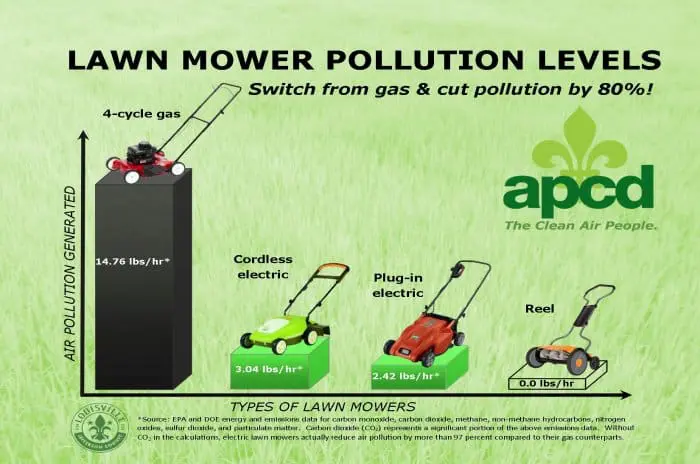
Equally troublesome are the energy and air pollution costs associated with upkeeping a lawn. It’s estimated that Americans use 600 million gallons of gas to mow and trim their lawns every year! Two stroke engines in lawn mowers are a shocking 11 times more polluting than a new car.

A comparison of lawn mower types.

Over application of fertilizers can also cause greenhouse gas emissions.  A study by the National Academy of Sciences found that the excess fertilizer not used by plants gets converted to nitrous oxide by soil microbes, and is released into the atmosphere. Nitrous oxide is a GHG 300 times stronger than CO2; total NO emissions from fertilizers annually is the equivalent of 25 million tons of CO2! Leaf blowers, used to blow clippings and keep lawns leafless in fall, are just as troubling. Using a gas-powered leaf blower for thirty minutes emits the same amount of hydrocarbons as a car does driving 7700 miles at 30 mph!

Not to mention the real human health impacts from hearing high-decibel blowers.  Catch up on the research on our previous blog post Why Leaf Blowers and Lawn Care Practices Are Hazardous to Our Health.

The Lawnscaping Alternative: Ecological Landscaping

It’s clear that lawns have a high cost: water, gas, the production of synthetic fertilizers and pesticides, the dangers associated with their runoff, and the emissions resulting from lawn care. On the flip side, every square foot of lawn is an opportunity to reclaim and design a landscape that positively impacts the local environment.

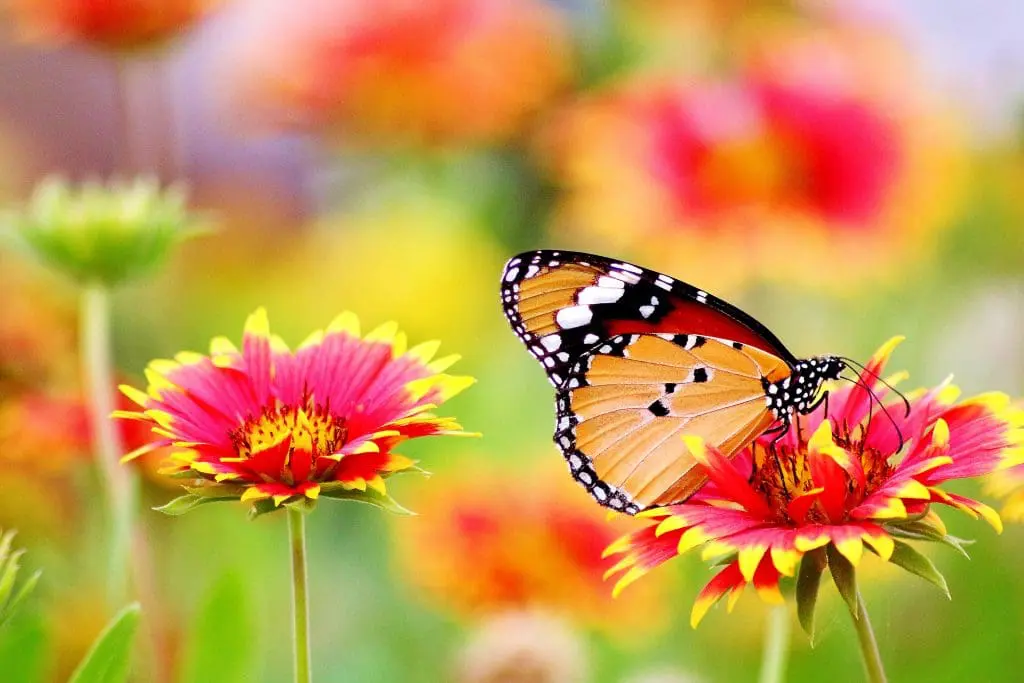
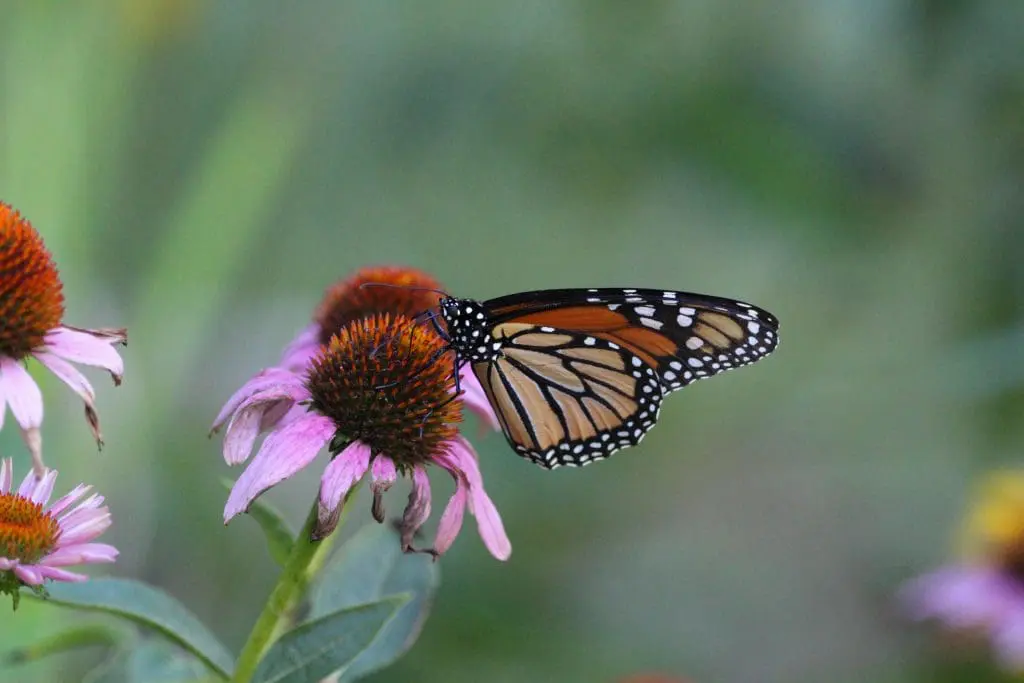
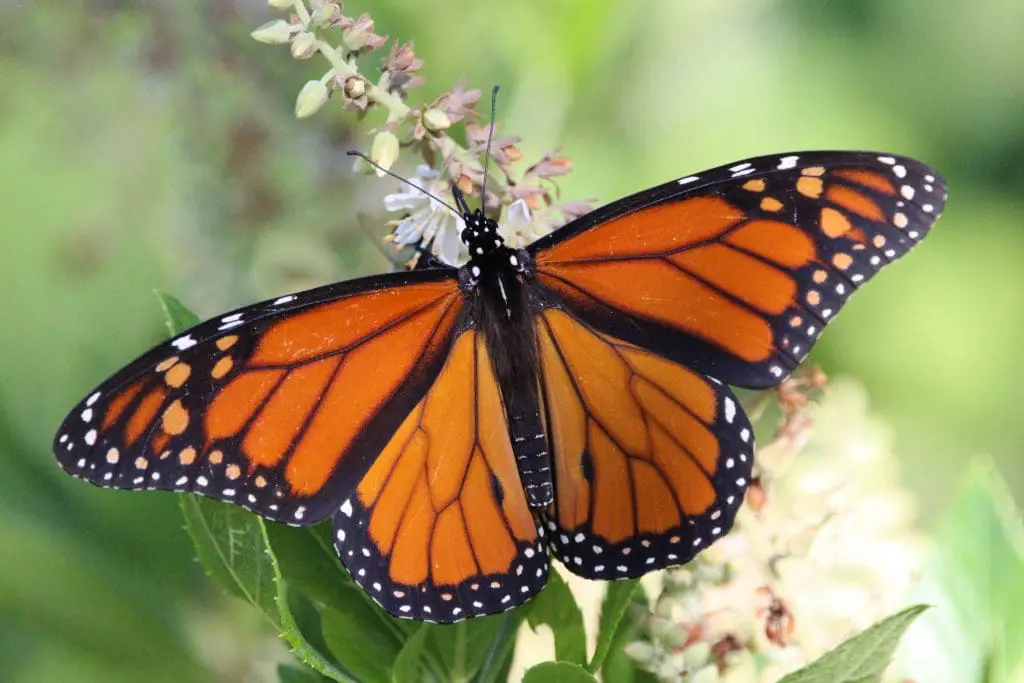
Client photo! Monarch butterfly on Echinacea.

As landscape ecologists and landscape designers, we are always *strongly* encouraging our clients to reduce their lawn area in favor of native gardens and ground cover. Think about what you really use your lawn for, it and devote an appropriate portion of property for lawn; let the rest go. Try to envision the creativity and personality your property can have when it stops being just a lawn.

With every lawn area converted to a garden you are:

  • Creating essential habitat for endangered birds and pollinators
  • Sequestering carbon
  • Reducing water use
  • Reducing petroleum use
  • Enriching the soil and preventing erosion
  • Purifying and infiltrating stormwater

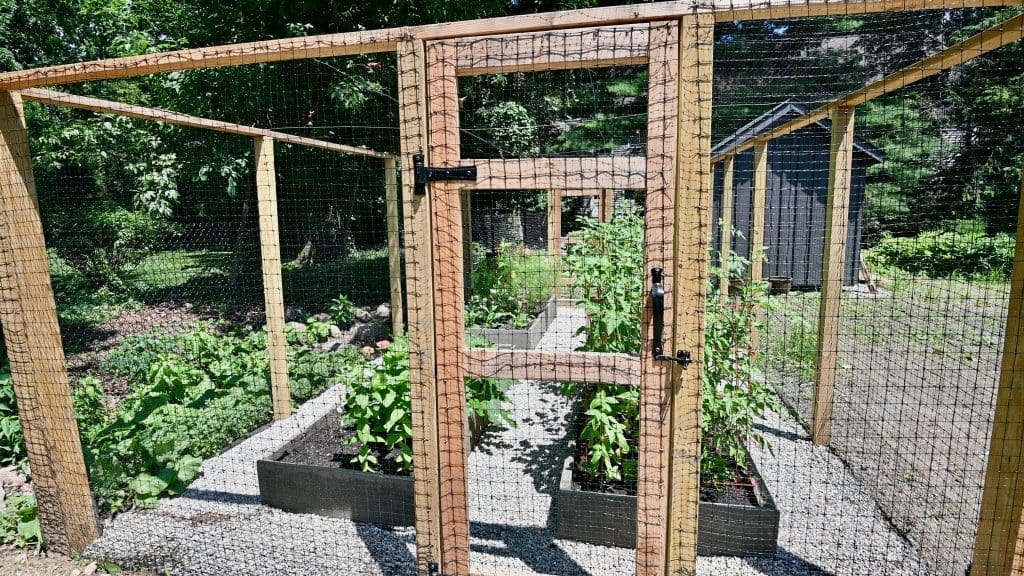
There’s also the potential to grow your own food, herbs, and cutting flowers, turning static lawn into a productive space. Consider also, the mental health benefits of spending time in a vibrant, ever-evolving garden.

Raised bed veggie garden designed & built by GJL — far more productive than a lawn!

Learn more about the principals of Natural, Ecological Landscaping in Fairfield & Westchester County on our previous blog post.

We recently received this note from a client on their new pollinator garden:

Jay, I can’t thank you enough! We are truly enjoying our garden oasis!! It is so amazing seeing the changes even in just a few weeks and all the daily visitors. And the kids are loving it. Thanks again.

Another fabulous client photo of a Monarch butterfly in their garden!

Transforming lawn into a garden instantly creates a learning opportunity for the whole family. Educate yourself and your family on soil microbes, pollinators, plant life cycles, and bird behavior – and watch the phenomenon unfold in your own garden!

For inspiration on lawn-replacement projects, check out our previous blog posts:

Landscape Design in Fairfield County: Front Yard Pollinator Garden

Creating Bird & Pollinator Habitat At Home

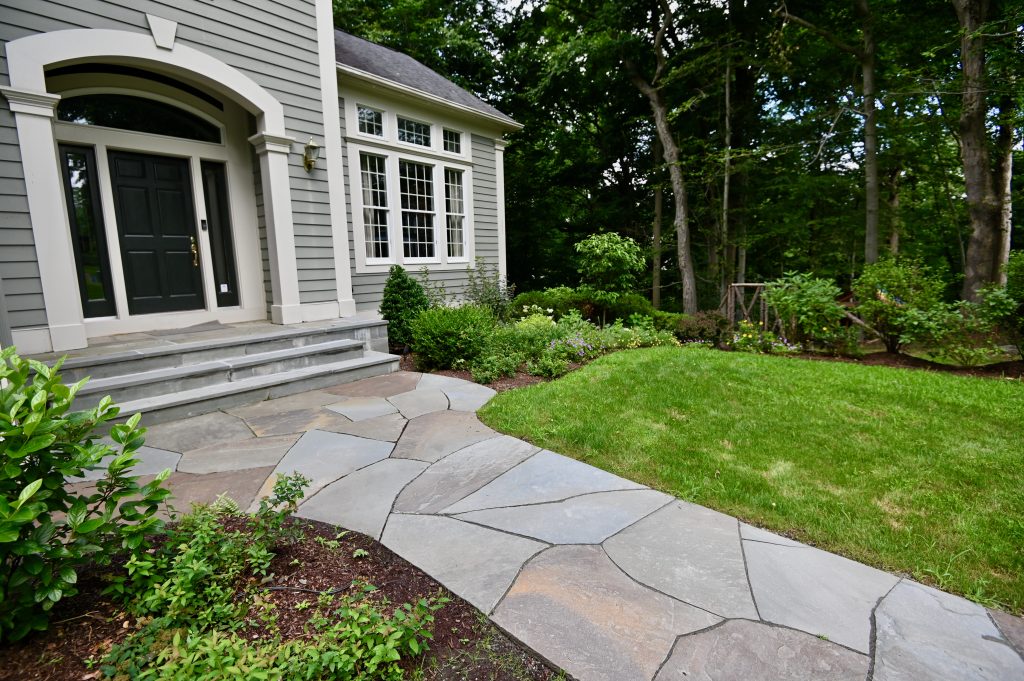
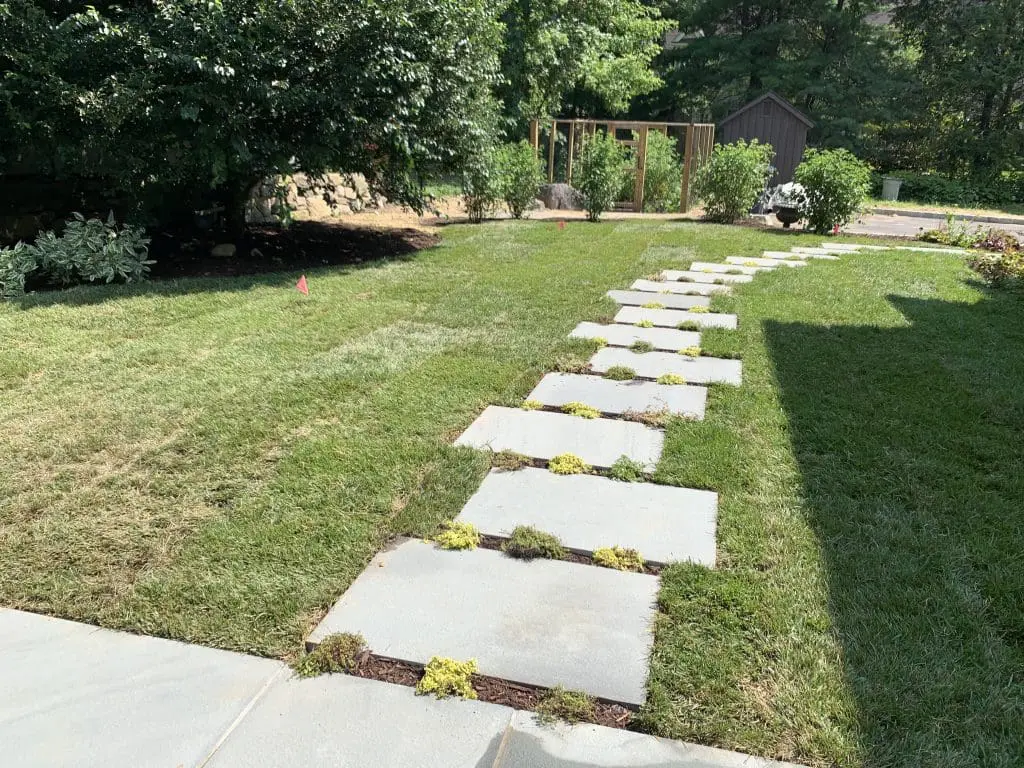
Front Yard Native Garden & Custom Bluestone Walkway

Designing an Organic Pollinator Garden: Tips from a Landscape Ecologist

Lawn Removal Front Yard Zen Garden

—

Contact Us or call about your ecological landscape design project!

Green Jay Landscape Design

914-516-6570

Filed Under: Landscape Design Tagged With: costs of lawn care, ditch your lawn, ecological landscape design, ecological landscaping, gardens over lawns, habitat garden, healthy yard, healthy yards, landscape design, landscape designer, landscape drainage, landscape ecologist, lawn care, lawn fertilizer impacts, lawnscaping, native landscaping, native plant garden, native plants, natural landscaping, organic garden, perennial garden, pesticides and runoff, pollinator garden, reduce your lawn area, storm water management

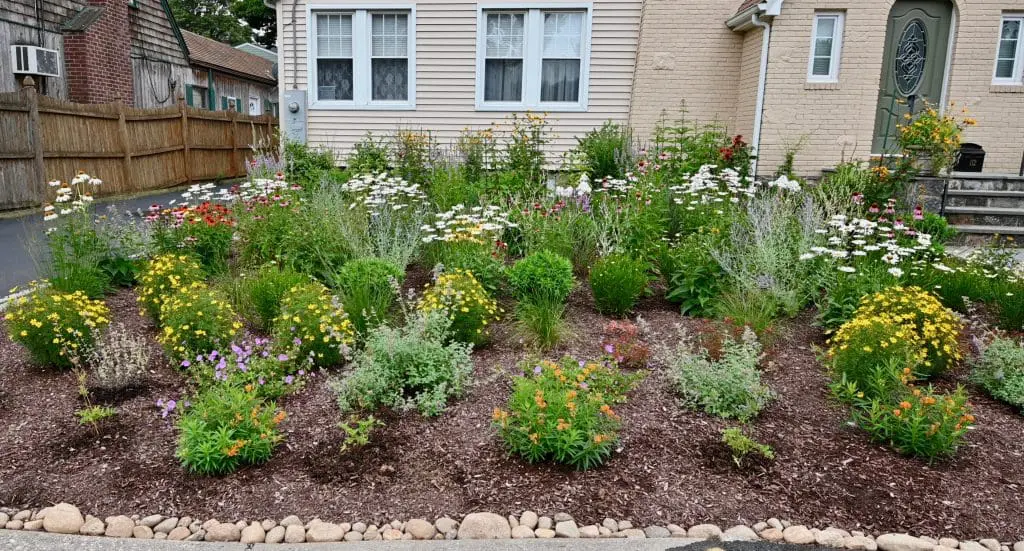
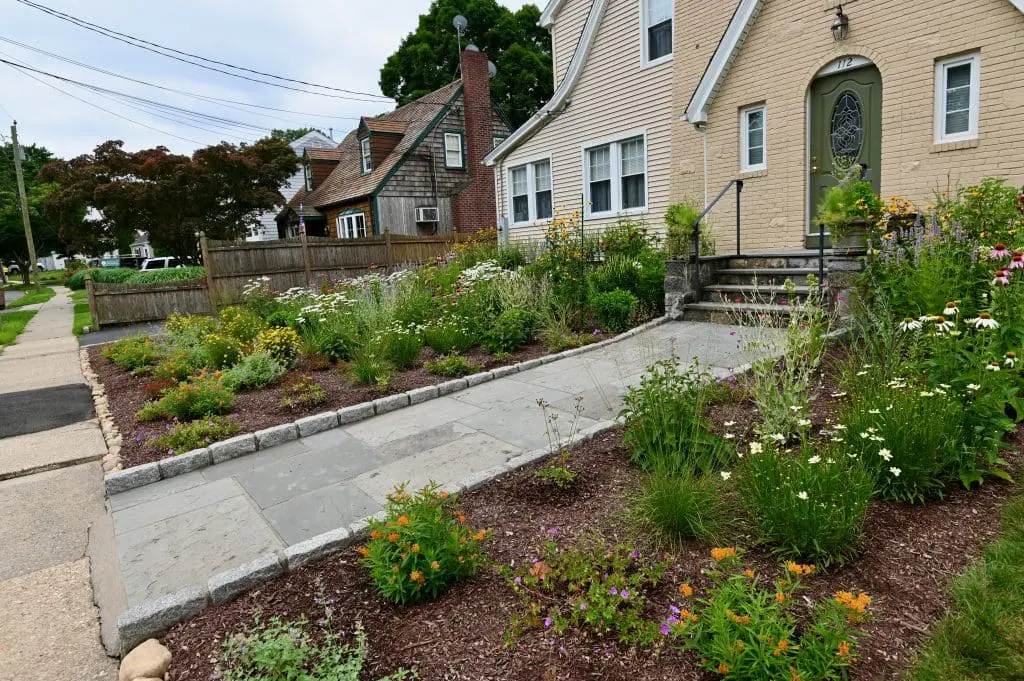
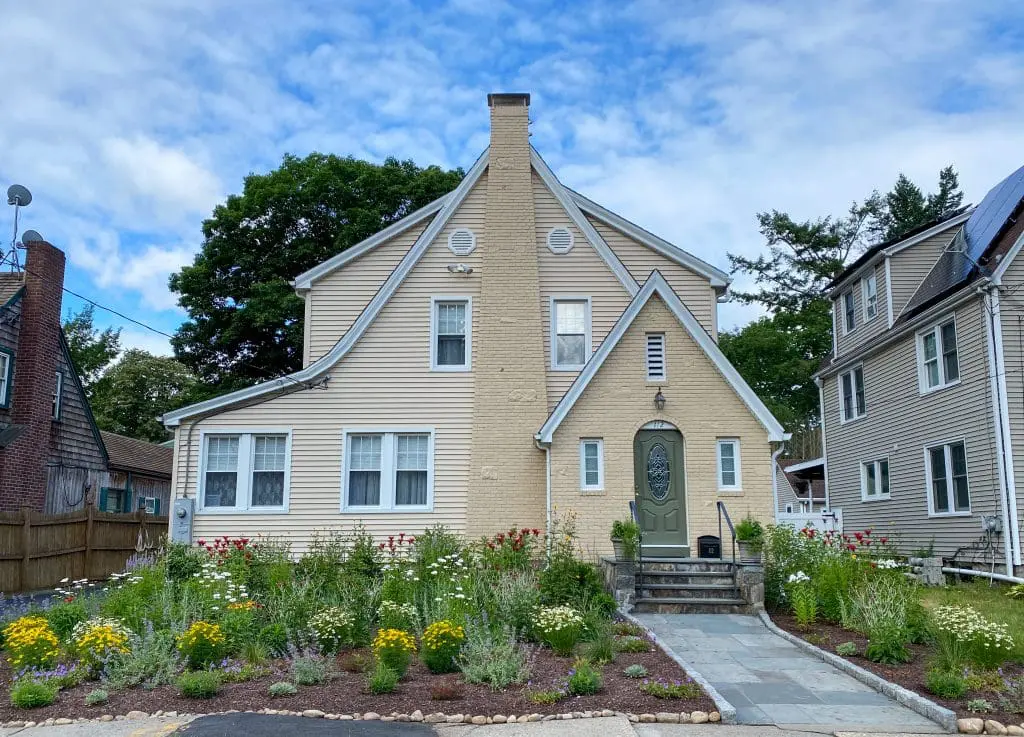
Few things get us more excited than designing a lawn replacement project – especially when it’s a highly visible front yard, like this property in Stamford, CT. The goal was to remove the lawn and replace it with a highly productive and visually stunning front yard native pollinator garden.

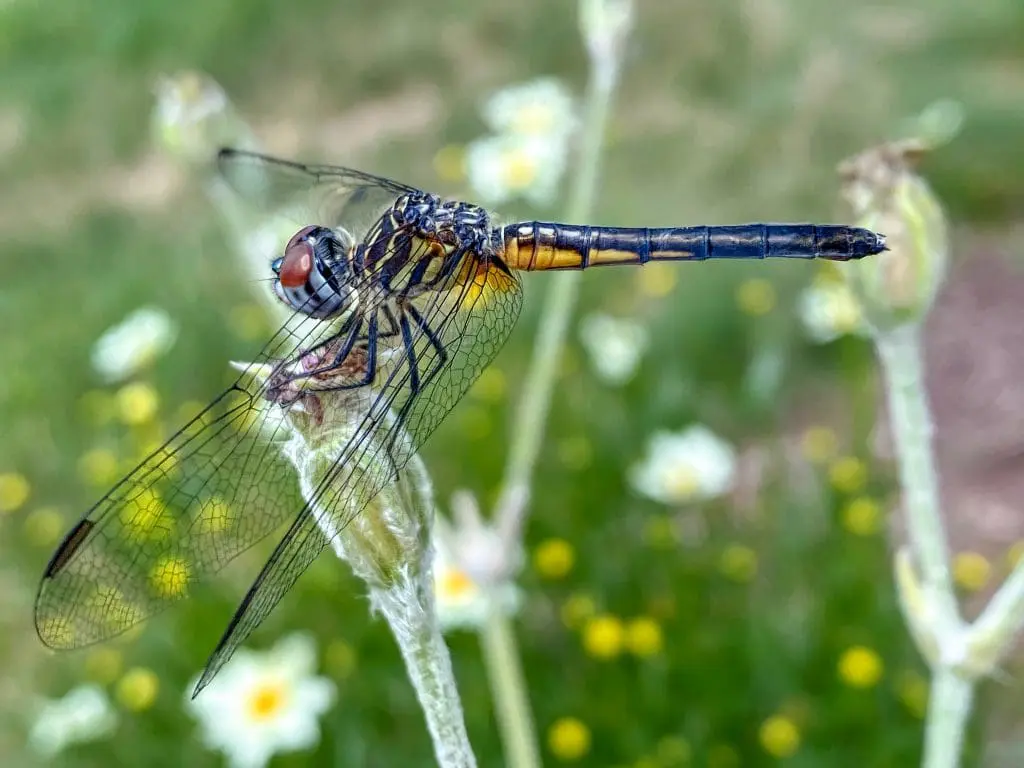
Blue dasher dragonfly captured by the client in their garden!

This client is a true nature enthusiast and photographer – we received such amazing pollinator footage from their time spent observing in the garden – nothing better than that! Needless to say the organic pollinator garden is thriving!

Summertime in the perennial pollinator garden – so much color!

If you’re intrigued by this project, and wondering if you will miss your front lawn, try to count the number of days you’ve looked out your window to watch the changes in your lawn…

That’s what we thought. There is truly nothing interesting about a lawn.

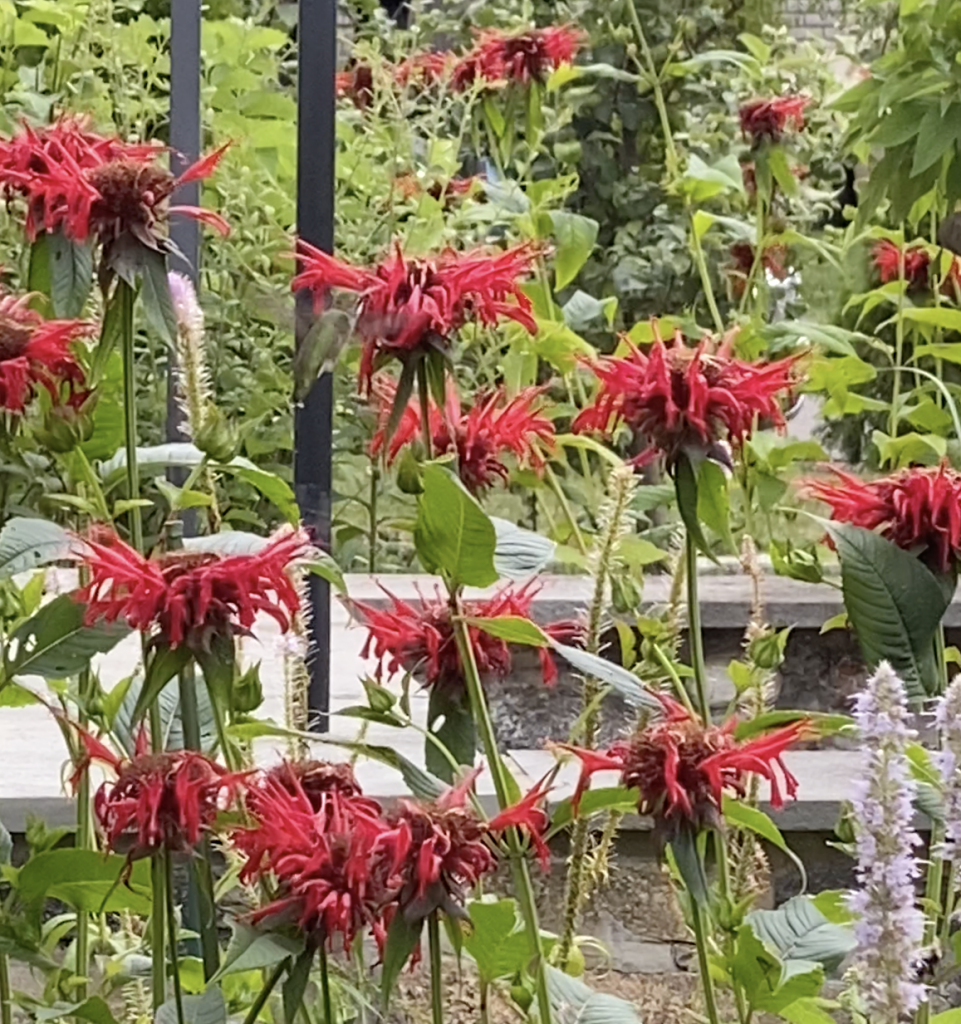
Hummingbird feeding on Monarda in the front yard pollinator garden — much more interesting than a lawn!!

Now enjoy these photos of the lawn removal and fabulous garden evolution in just a few months! This property certainly qualifies as a Pollinator Pathway garden in Fairfield County, CT.

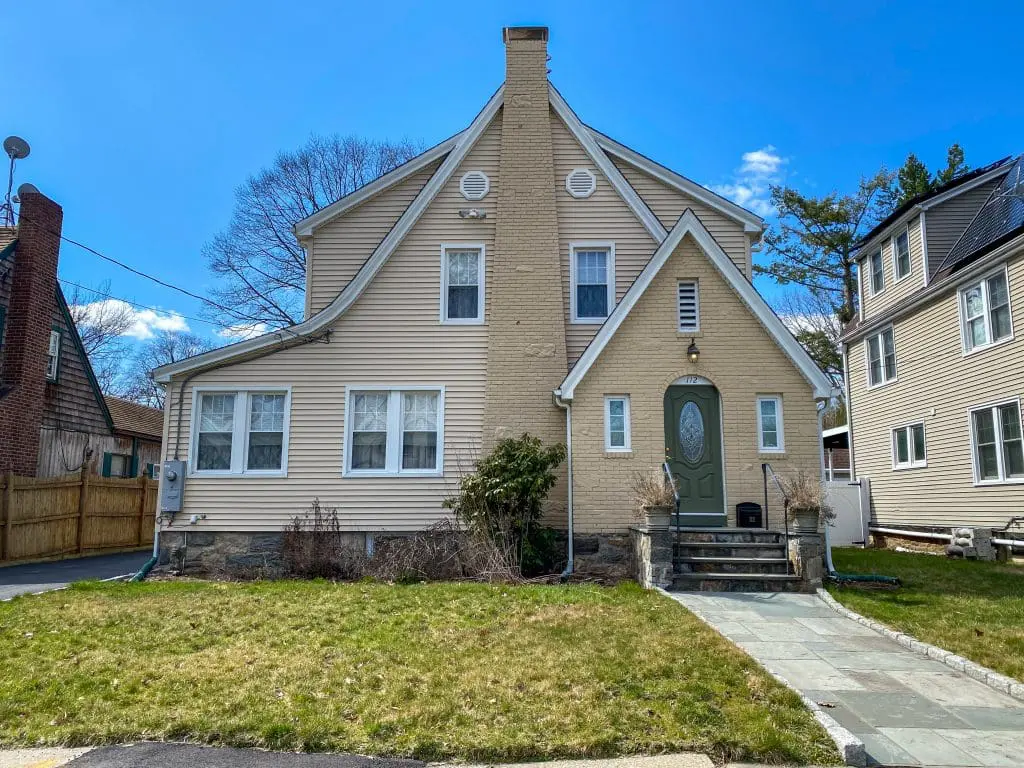
Before photo. Front lawn not adding anything aesthetically or ecologically.

Above is the before photo – pretty standard lawn.  The site is full sun which opens up a myriad of native perennial options, as well as ornamental grasses and flowering shrubs.

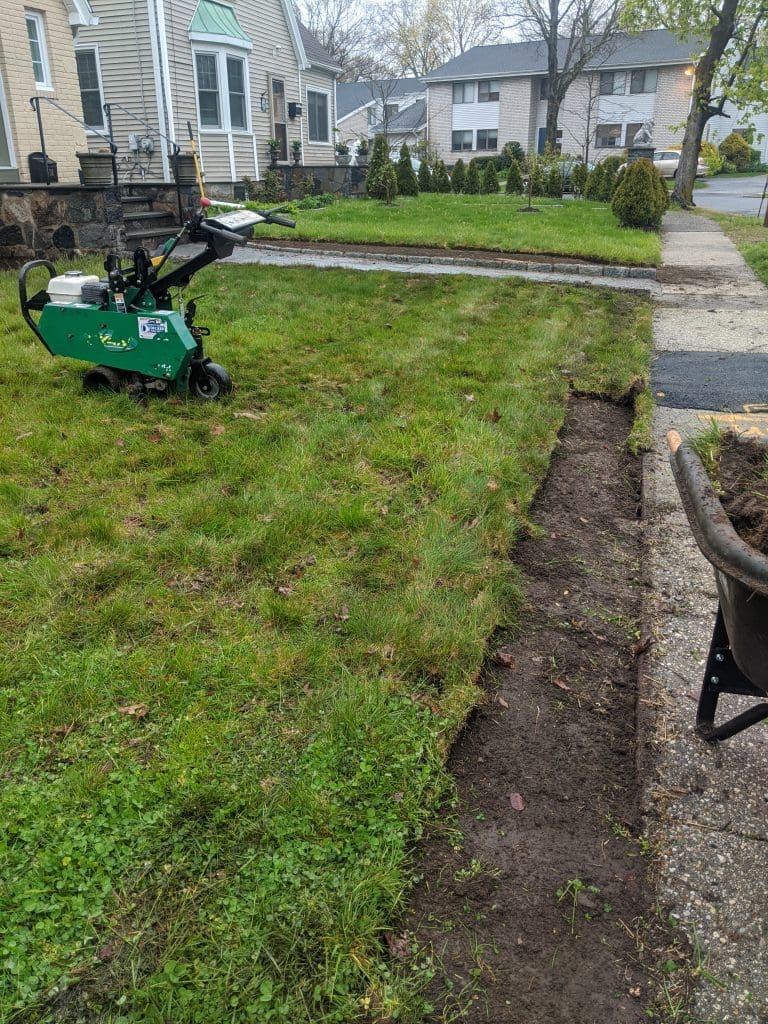
Using a sod cutter to mechanically remove the front lawn.

The space is small enough that the lawn can be removed mechanically – this is the preferred method anyways, as it does not disturb the soil or the weed seed bank within it.  Disrupting the seed bank can create a weeding maintenance headache if proper site preparation techniques are not employed.

Process shot — lawn partially removed.

The soil was then amended with organic compost and biochar to enrich the soil microbial communities and assist with soil structure and water retention. Green sand — an enlivened rock powder — was also top dressed onto the soil.

Aztlan applies green sand to the soil.

The green sand activates the clay particles in the soil and helps to alleviate compaction, allowing for air pockets in the soil that enable plant and microbial growth.

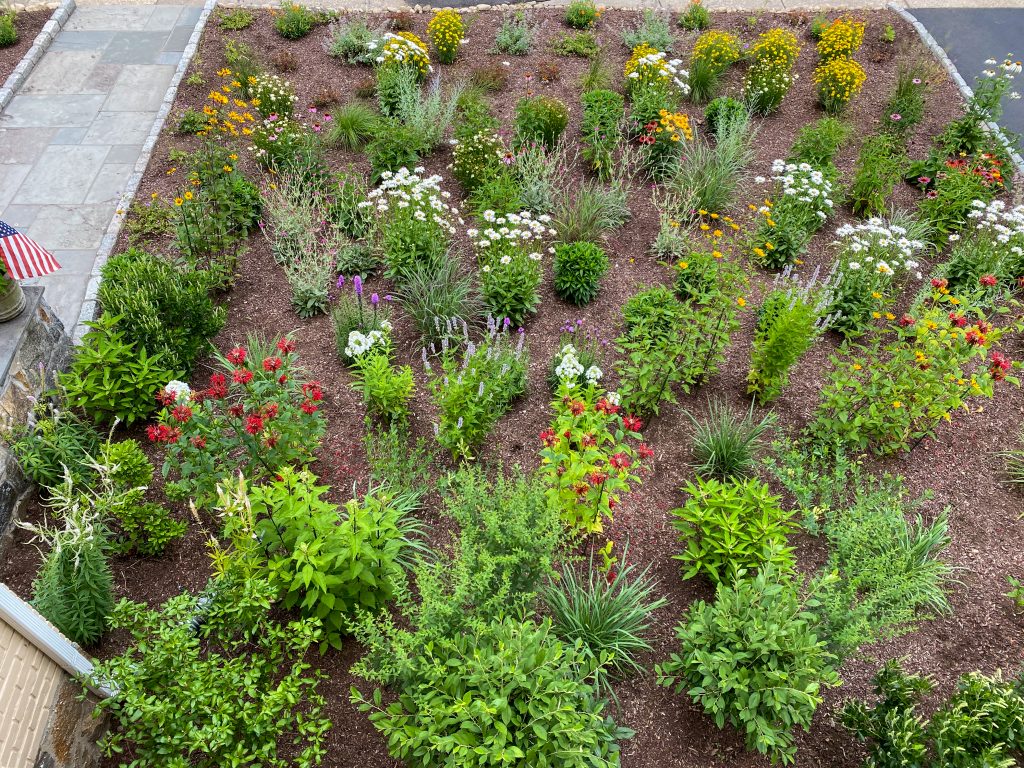
Field guide for the design and plant staging.

Designing the plant palette was lots of fun.  The perennials peak in mid-summer, creating quite the show for the neighborhood.  The butterfly, bee and hummingbird activity is unparalleled! We also made sure to have blooms – pollen and nectar – available in early spring and fall, and shrubs like native viburnum will provide berries in the winter for the birds.

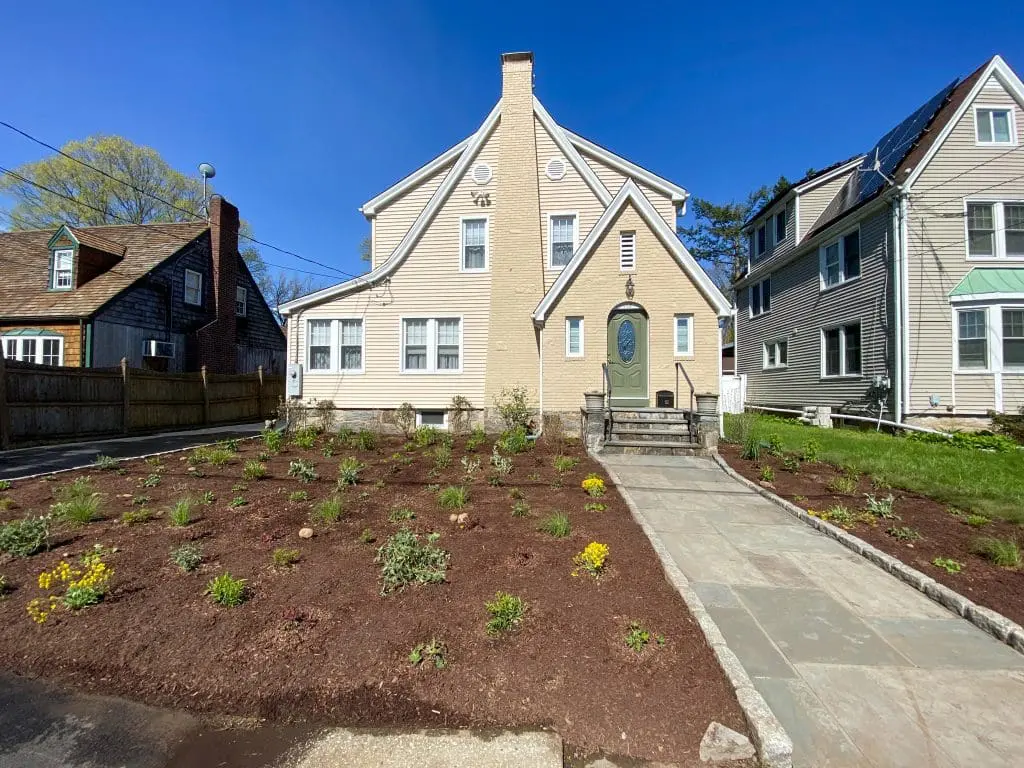
Newly planted! Watch how much this garden grows since the April install.
Front yard pollinator garden filling in — organic soil amendments working as expected!
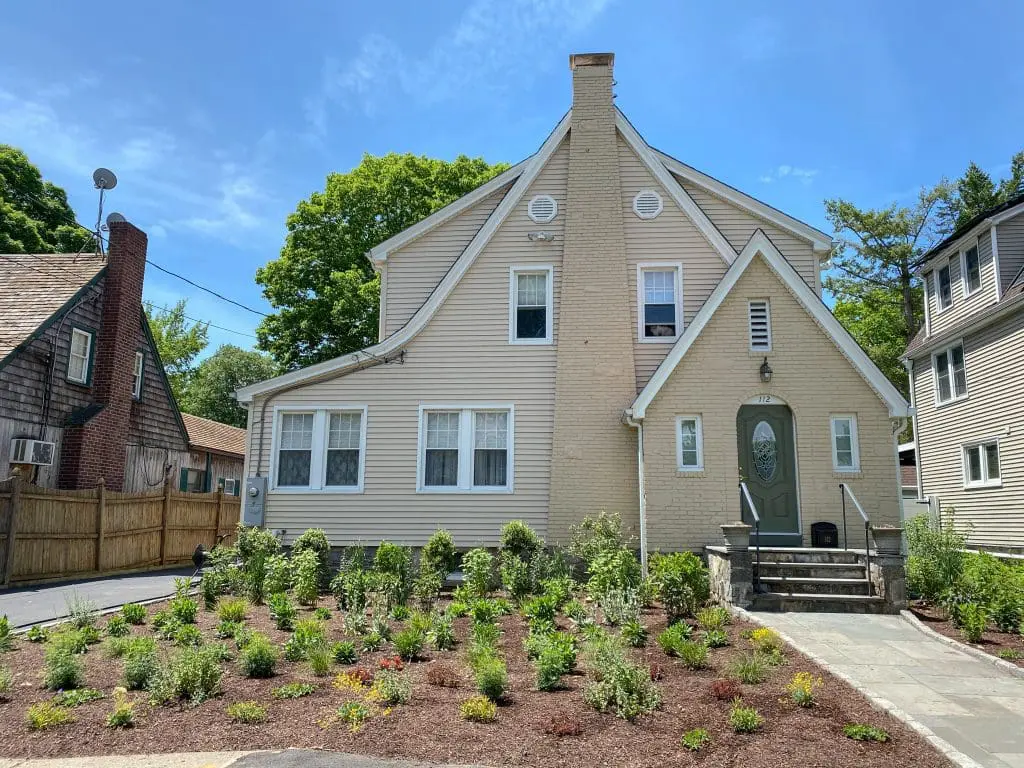
Amazing growth in season one of this front yard pollinator garden! It is truly a showstopper in the the neighborhood.

Learn more about Designing for Biodiversity on our previous blog.

Side view in springtime, the organic garden is newly planted.
Lush summertime color! A haven for pollinators too.
Imagine if this was the view from your window?!
Summer time shot — a spectacular show of native flowers!
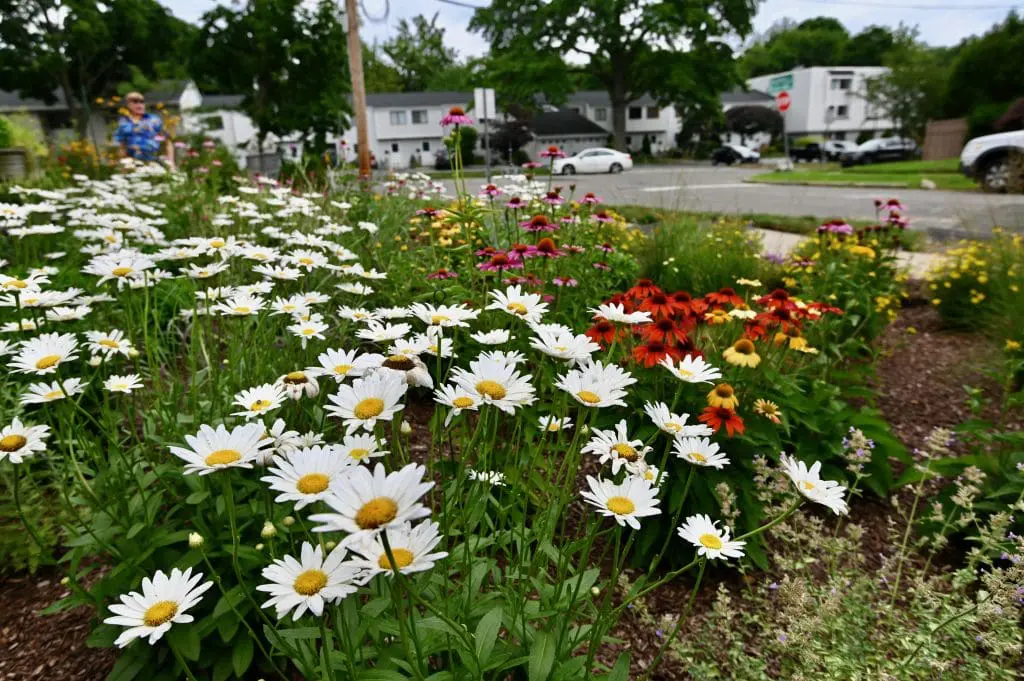
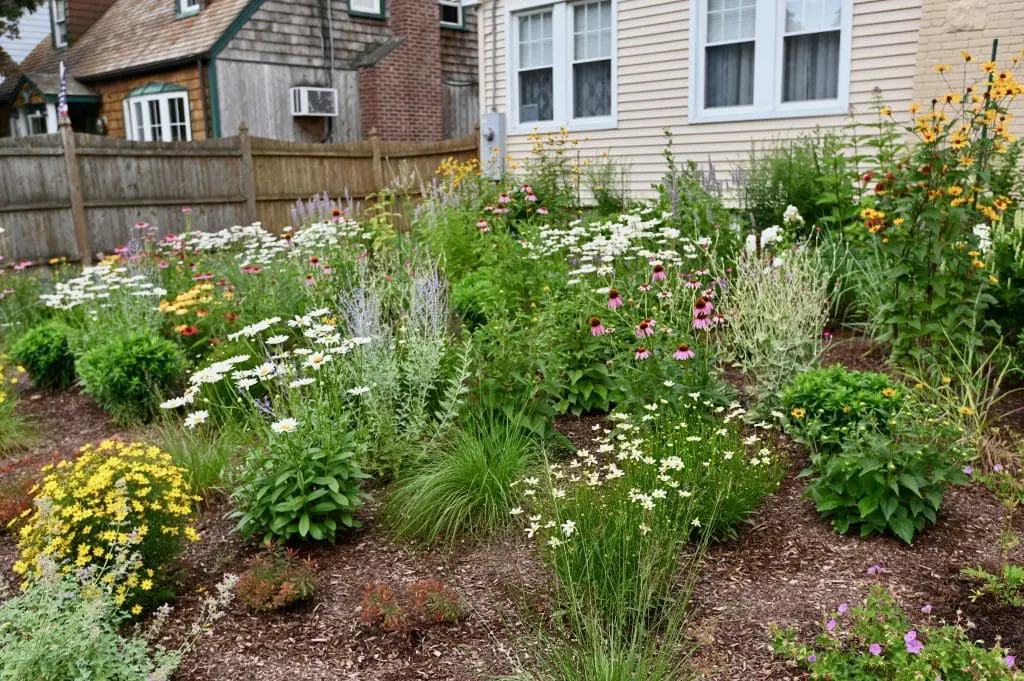
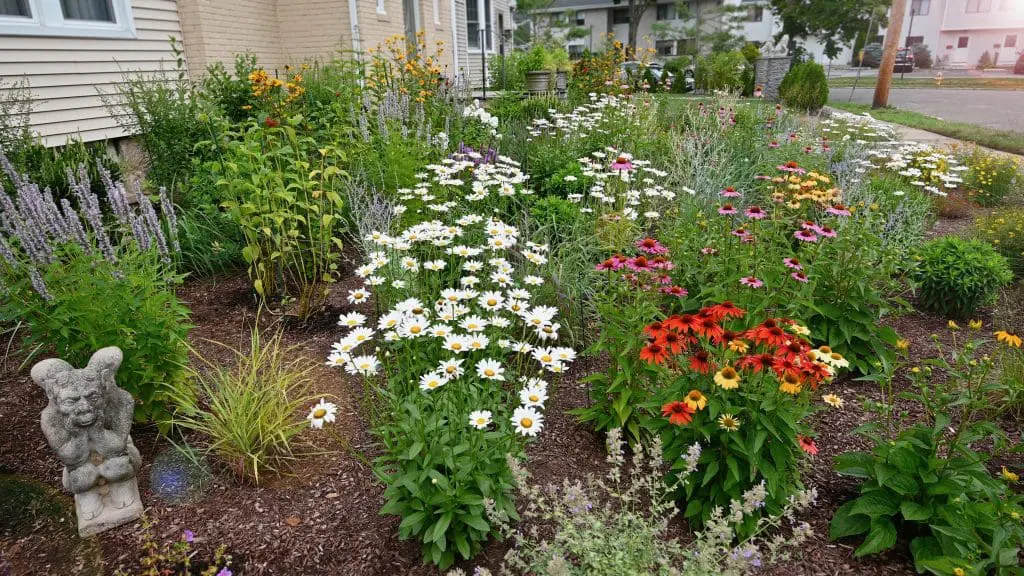
Daisies, coneflower and cat mint — pollinator favorites!
Lush and thriving in only a few months!
We absolutely love how this plant palette accentuates and compliments.

We compiled the pollinator footage taken by our client in their new front yard pollinator garden.  The pollinator and bird activity in this new habitat is truly inspiring!  Think of the impact we could have on reversing insect and biodiversity decline if we continued to convert our monoculture lawns to thriving habitats!

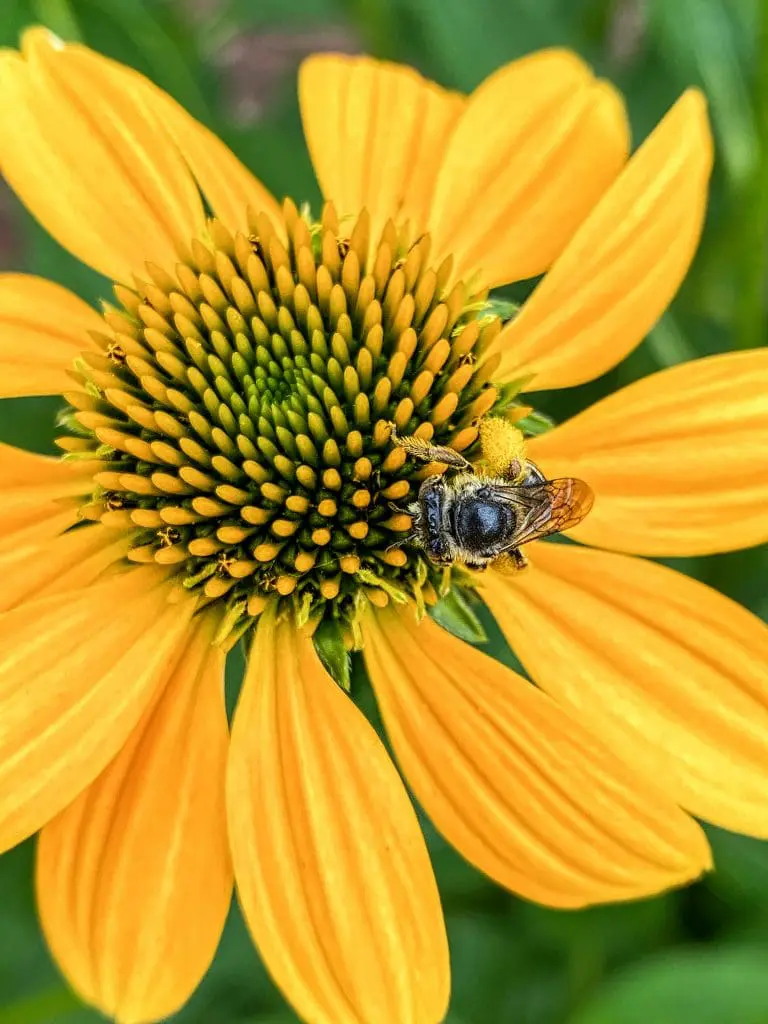
Native bee on Echinacea

Contact us or call about your ecological landscape design project: 914-560-6570

Jay Archer

Green Jay Landscape Design

Filed Under: Featured Work Tagged With: butterfly garden, certified wildlife habitat, curb appeal, ecological landscape design, ecological landscaping, front yard garden, front yard landscaping, habitat garden, healthy yard, healthy yards, landscape architecture, landscape design, landscape design master plan, landscape designer, landscape ecologist, native plant garden, native plants, natural landscaping, organic garden, organic gardening, organic landscape, perennial garden, pollinator garden

Our fabulous client in Stamford, CT sent us this incredible footage from their front yard pollinator garden. This garden replaced a front lawn and was installed in early spring. In just a few months it has become a thriving habitat for butterflies, moths, native bees, hummingbirds and more! This project certainly qualifies as a Pollinator Pathways landscape.

Learn more on our blog: Creating Organic Bird & Pollinator Habitat at Home and Where Have All the Birds, Bees & Butterflies Gone?

Video editing by John Pontillo.


Filed Under: Events & Garden Tours

It’s not too late to crush your summer reading goals! Jay shares his favorite books for summer 2020, ranging from trees to fungi to birds to nature’s effect on human health. Let us know if you read any of the books on this list and what you think! We always love discussing books!!

The Incredible Journey of Plants by Stefano Mancuso

“In this richly illustrated volume, a leading neurobiologist presents fascinating stories of plant migration that reveal unexpected connections between nature and culture.
When we talk about migrations, we should study plants to understand that these phenomena are unstoppable. In the many different ways plants move, we can see the incessant action and drive to spread life that has led plants to colonize every possible environment on earth. The history of this relentless expansion is unknown to most people, but we can begin our exploration with these surprising tales, engagingly told by Stefano Mancuso. …

In this accessible, absorbing overview, Mancuso considers how plants convince animals to transport them around the world, and how some plants need particular animals to spread; how they have been able to grow in places so inaccessible and inhospitable as to remain isolated; how they resisted the atomic bomb and the Chernobyl disaster; how they are able to bring life to sterile islands; how they can travel through the ages, as they sail around the world.”

Learn. more about the book.

Trees in Trouble by Daniel Matthews

“Climate change manifests in many ways across North America, but few as dramatic as the attacks on our western pine forests. In Trees in Trouble, Daniel Mathews tells the urgent story of this loss, accompanying burn crews and forest ecologists as they study the myriad risk factors and refine techniques for saving this important, limited resource.”

Learn more about the book.

Dirt to Soil by Gabe Brown

“As we know from his story, Gabe Brown didn’t set out to change the world when he first started working alongside his father-in-law on the family farm in North Dakota. But as a series of weather-related crop disasters put Brown and his wife, Shelly, in desperate financial straits, they started making bold changes to their farm. Brown―in an effort to simply survive―began experimenting with new practices he’d learned about from reading and talking with innovative researchers and ranchers. As he and his family struggled to keep the farm viable, they found themselves on an amazing journey into a new type of farming: regenerative agriculture.

Brown dropped the use of most of the herbicides, insecticides, and synthetic fertilizers that are a standard part of conventional agriculture. He switched to no-till planting, started planting diverse cover crops mixes, and changed his grazing practices. In so doing Brown transformed a degraded farm ecosystem into one full of life―starting with the soil and working his way up, one plant and one animal at a time.”

Learn more about the book.

Secret Wisdom of Nature by Peter Wohlleben

“Nature is full of surprises: deciduous trees affect the rotation of the Earth, cranes sabotage the production of Iberian ham, and coniferous forests can make it rain. But what are the processes that drive these incredible phenomena? And why do they matter?

In The Secret Wisdom of Nature, master storyteller and international sensation Peter Wohlleben takes readers on a thought-provoking exploration of the vast natural systems that make life on Earth possible. In this tour of an almost unfathomable world, Wohlleben describes the fascinating interplay between animals and plants and answers such questions as: How do they influence each other? Do lifeforms communicate across species boundaries? And what happens when this finely tuned system gets out of sync? By introducing us to the latest scientific discoveries and recounting his own insights from decades of observing nature, one of the world’s most famous foresters shows us how to recapture our sense of awe so we can see the world around us with completely new eyes.”

Learn more about the book.

Plant Intelligence and the Imaginal Realm by Stephan Harrod Buhner

“A manual for opening the doors of perception and directly engaging the intelligence of the Natural World
• Provides exercises to directly perceive and interact with the complex, living, self-organizing being that is Gaia
• Reveals that every life form on Earth is highly intelligent and communicative
• Examines the ecological function of invasive plants, bacterial resistance to antibiotics, psychotropic plants and fungi, and the human species
In Plant Intelligence and the Imaginal Realm, Stephen Harrod Buhner reveals that all life forms on Earth possess intelligence, language, a sense of I and not I, and the capacity to dream. He shows that by consciously opening the doors of perception, we can reconnect with the living intelligences in Nature as kindred beings, become again wild scientists, nondomesticated explorers of a Gaian world just as Goethe, Barbara McClintock, James Lovelock, and others have done. For as Einstein commented, “We cannot solve the problems facing us by using the same kind of thinking that created them.”

Learn more about the book.

Becoming Wild by Carl Sarfina

“Some people insist that culture is strictly a human feat. What are they afraid of? This book looks into three cultures of other-than-human beings in some of Earth’s remaining wild places. It shows how if you’re a sperm whale, a scarlet macaw, or a chimpanzee, you too experience your life with the understanding that you are an individual in a particular community. You too are who you are not by genes alone; your culture is a second form of inheritance. You receive it from thousands of individuals, from pools of knowledge passing through generations like an eternal torch. You too may raise young, know beauty, or struggle to negotiate a peace. And your culture, too, changes and evolves. The light of knowledge needs adjusting as situations change, so a capacity for learning, especially social learning, allows behaviors to adjust, to change much faster than genes alone could adapt.

Becoming Wild offers a glimpse into cultures among non-human animals through looks at the lives of individuals in different present-day animal societies. By showing how others teach and learn, Safina offers a fresh understanding of what is constantly going on beyond humanity.”

The Nature Fix by Florence Williams

“An intrepid investigation into nature’s restorative benefits by a prize-winning author.

For centuries, poets and philosophers extolled the benefits of a walk in the woods: Beethoven drew inspiration from rocks and trees; Wordsworth composed while tromping over the heath; Nikola Tesla conceived the electric motor while visiting a park. Intrigued by our storied renewal in the natural world, Florence Williams sets out to uncover the science behind nature’s positive effects on the brain.

From forest trails in Korea, to islands in Finland, to groves of eucalyptus in California, Williams investigates the science at the confluence of environment, mood, health, and creativity. Delving into completely new research, she uncovers the powers of the natural world to improve health, promote reflection and innovation, and ultimately strengthen our relationships. As our modern lives shift dramatically indoors, these ideas—and the answers they yield—are more urgent than ever.”

Learn more about the book.

The Hour of the Land by Terry Tempest Williams

“America’s national parks are breathing spaces in a world in which such spaces are steadily disappearing, which is why more than 300 million people visit the parks each year. Now Terry Tempest Williams, the New York Timesbestselling author of the environmental classic Refuge and the beloved memoir When Women Were Birds, returns with The Hour of Land, a literary celebration of our national parks and an exploration of what they mean to us and what we mean to them.

From the Grand Tetons in Wyoming to Acadia in Maine to Big Bend in Texas, Williams creates a series of lyrical portraits that illuminate the unique grandeur of each place while delving into what it means to shape a landscape with its own evolutionary history into something of our own making. Part memoir, part natural history, and part social critique, The Hour of Land is a meditation and a manifesto on why wild lands matter to the soul of America.”

Learn more about the book.

Thoreau’s Notes on the Birds of New England by Henry David Thoreau

“During his two-year residence at Walden Pond, Henry David Thoreau became keenly aware of the natural world that surrounded him. Entries from his journals reflect his soulful, in-depth observations of local wildlife, and his remarks on birds are particularly plentiful and poetic. This book, originally published as Notes on New England Birds in 1910 and edited and arranged by Francis H. Allen, collects Thoreau’s thoughts on the various bird species that populated the New England woods, from the great blue heron to the kingbird and the American finch.
“Open to any page and you will find, besides apt descriptions of the natural world, a cogent remark or a philosophical observation,” noted The Washington Post. Bird lovers and watchers, fans of Thoreau, and naturalists and environmentalists will delight in joining the author as he saunters through the woods and ponders the region’s abundant wildlife. A new selection of 16 full-page color illustrations by John James Audubon enhances the text.”

Learn more about the book.

The Bird Way Jennifer Ackerman

“From the New York Times bestselling author of The Genius of Birds, a radical investigation into the bird way of being, and the recent scientific research that is dramatically shifting our understanding of birds — how they live and how they think.
There is the mammal way and there is the bird way.” But the bird way is much more than a unique pattern of brain wiring, and lately, scientists have taken a new look at bird behaviors they have, for years, dismissed as anomalies or mysteries –– What they are finding is upending the traditional view of how birds conduct their lives, how they communicate, forage, court, breed, survive. They are also revealing the remarkable intelligence underlying these activities, abilities we once considered uniquely our own: deception, manipulation, cheating, kidnapping, infanticide, but also ingenious communication between species, cooperation, collaboration, altruism, culture, and play.”

Learn more about the book.

No Beast so Fierce by Dane Huckelbridge

“The astonishing true story of the man-eating tiger that claimed a record 437 human lives.

Nepal, c. 1900: A lone tigress began stalking humans, moving like a phantom through the lush foothills of the Himalayas. As the death toll reached an astonishing 436 lives, a young local hunter was dispatched to stop the man-eater before it struck again. This is the extraordinary true story of the “Champawat Man-Eater,” the deadliest animal in recorded history.

One part pulse-pounding thriller, one part soulful natural history of the endangered Royal Bengal tiger, No Beast So Fierce is Dane Huckelbridge’s gripping nonfiction account of the Champawat tiger, which terrified northern India and Nepal from 1900 to 1907, and Jim Corbett, the legendary hunter who pursued it. Huckelbridge’s masterful telling also reveals that the tiger, Corbett, and the forces that brought them together are far more complex and fascinating than a simple man-versus-beast tale.”

Learn more about the book.

Northeast Medicinal Plants: Identify, Harvest, and Use 111 Wild Herbs for Health and Wellness by Liz Neves

Liz Neves is your trusted guide to finding, identifying, harvesting, and using 111 of the region’s most powerful wild plants. You’ll learn how to safely and ethically forage, and how to use wild plants in herbal medicines including teas, tinctures, and salves. Plant profiles include clear, color photographs, identification tips, medicinal uses and herbal preparations, and harvesting suggestions. Lists of what to forage for each season makes the guide useful year-round.

Thorough, comprehensive, and safe, this is a must-have for foragers, naturalists, and herbalists in Connecticut, Maine, Massachusetts, New Hampshire, New Jersey, New York, Pennsylvania, Rhode Island, and Vermont.

Learn more about the book.

On Democracy by E. B. White

“A collection of essays, letters and poems from E.B. White, “one of the country’s great literary treasures” (New York Times), centered on the subject of freedom and democracy in America.

“I am a member of a party of one, and I live in an age of fear.”

These words were written by E. B. White in 1947.

Decades before our current political turmoil, White crafted eloquent yet practical political statements that continue to resonate. “There’s only one kind of press that’s any good—” he proclaimed, “a press free from any taint of the government.” He condemned the trend of defamation, arguing that “in doubtful, doubting days, national morality tends to slip and slide toward a condition in which the test of a man’s honor is his zeal for discovering dishonor in others.” And on the spread of fascism he lamented, “fascism enjoys at the moment an almost perfect climate for growth—a world of fear and hunger.”

Anchored by an introduction by Pulitzer Prize-winning historian Jon Meacham, this concise collection of essays, letters, and poems from one of this country’s most eminent literary voices offers much-needed historical context for our current state of the nation—and hope for the future of our society.”

Entangled Life by Merlin Sheldrake

“When we think of fungi, we likely think of mushrooms. But mushrooms are only fruiting bodies, analogous to apples on a tree. Most fungi live out of sight, yet make up a massively diverse kingdom of organisms that supports and sustains nearly all living systems. Fungi provide a key to understanding the planet on which we live, and the ways we think, feel, and behave.

In Entangled Life, the brilliant young biologist Merlin Sheldrake shows us the world from a fungal point of view, providing an exhilarating change of perspective. Sheldrake’s vivid exploration takes us from yeast to psychedelics, to the fungi that range for miles underground and are the largest organisms on the planet, to those that link plants together in complex networks known as the “Wood Wide Web,”  to those that infiltrate and manipulate insect bodies with devastating precision.

Fungi throw our concepts of individuality and even intelligence into question. They are metabolic masters, earth makers, and key players in most of life’s processes. They can change our minds, heal our bodies, and even help us remediate environmental disaster. By examining fungi on their own terms, Sheldrake reveals how these extraordinary organisms—and our relationships with them—are changing our understanding of how life works.”

Learn more about the book.

Into Wild Mongolia George B. Schiller

“Explore the wonders of wild Mongolia through the eyes of a distinguished field biologist Mongolia became a satellite of the Soviet Union in the mid-1920s, and for nearly seven decades effectively closed its doors to the outside world. Biologist George Schaller initially visited the country in 1989 and was one of the first Western scientists allowed to study and assess the conservation status of Mongolia’s many unique, native wildlife species. Schaller made a number of trips from 1989 to 2018 in collaboration with Mongolian and American scientists, witnessing Mongolia’s recovery and transition to a market economy after the collapse of the Soviet Union.

This informative and fascinating new book provides a firsthand account of Schaller’s time in this little-known and remote country, where he studied and helped develop conservation initiatives for the snow leopard, Gobi bear, wild camel, and Mongolian gazelle, among other species. Featuring magnificent photographs from his travels, the book offers a critical, at times inspiring contribution for those who treasure wildlife, as well as a fresh perspective on the natural beauty of the region, which encompasses steppes, mountains, and the Gobi Desert.”

Learn more about the book.

Even More Book Suggestions

If you enjoyed this post, be sure to read our COVID-19 Reading List  

—

Green Jay Landscape Design

914-560-6570

Filed Under: Ecological Education Tagged With: becoming wild, book club, book worm, books, dirt to soil, entangled life, environmental books, environmental education, good reads, into wild mongolia, landscape ecologist, nature books, no beast so fierce, northeast medicinal plants, on democracy, plant intelligence and the imaginal realm, reads, student, summer book list, summer reading, summer reading list, the bird way, the hour of land, the incredible journey of plants, the nature fix, the secret wisdom of nature, thoureau's notes of birds of new england, trees in trouble

This is Part Two in our series Where Have All the Birds, Bees and Butterflies Gone?  Catch up on Part One where we discuss the staggering population losses in recent history and the main causes – urbanization, habitat destruction, and exposure to toxic pesticides.

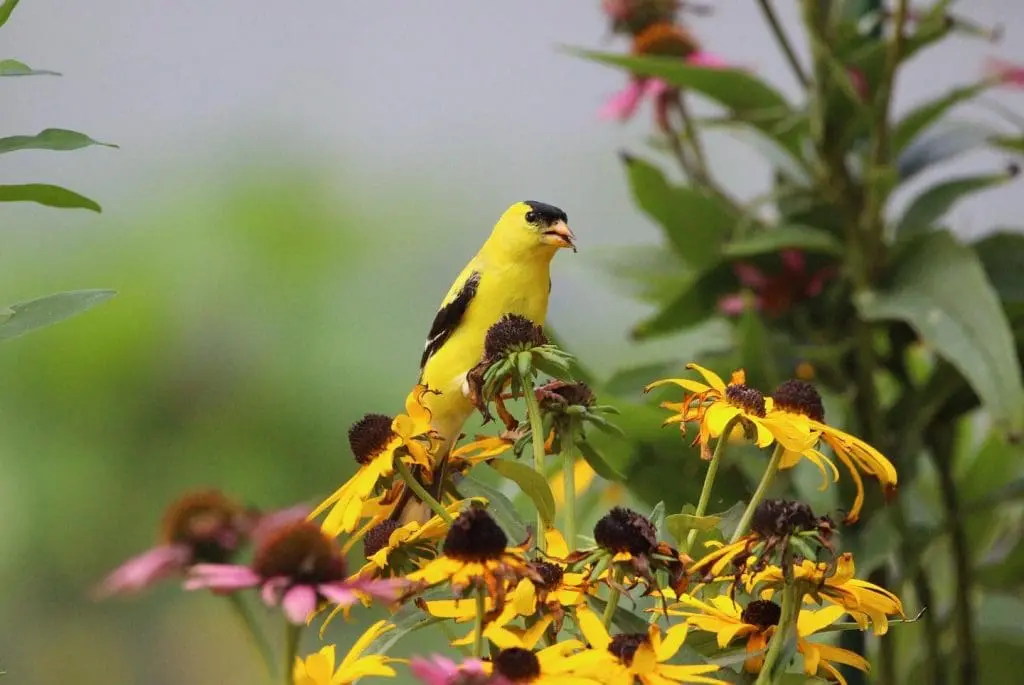
Goldfinch on Echinacea

Below we’ve compiled our tips for creating bird habitat for native and migrating birds as well as beneficial insects and pollinators.  The guidelines are broad, but we’ve pointed out specific plant-pollinator or plant-bird relationships along the way.

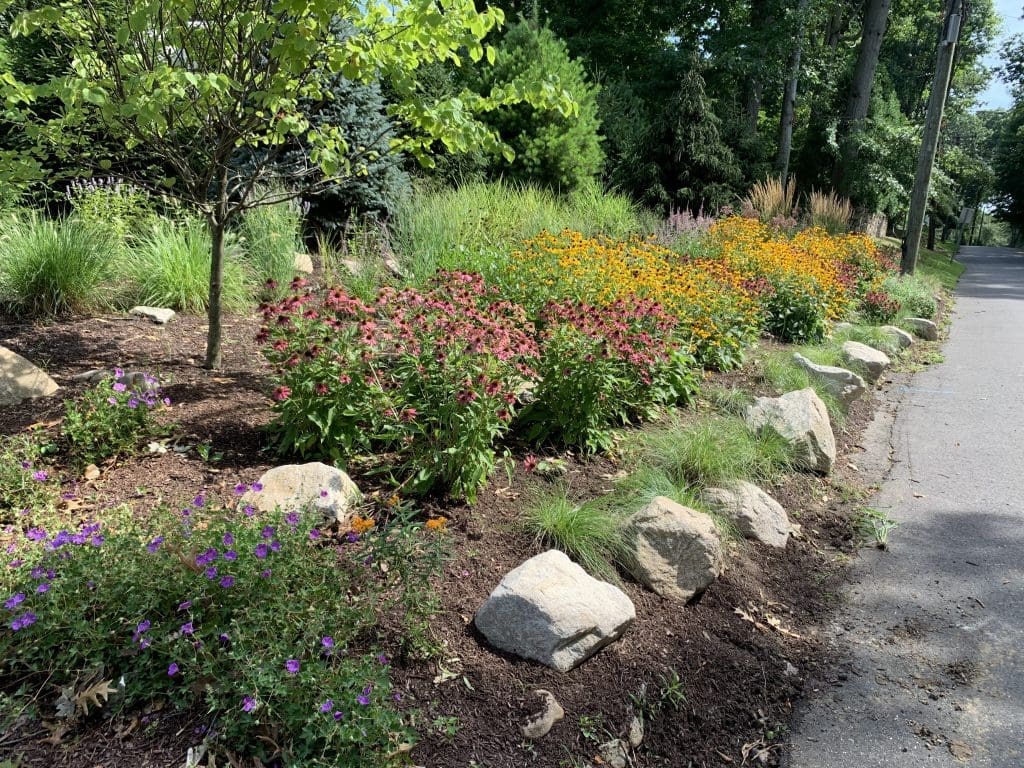
Fabulous sloped pollinator garden in New Canaan, CT. Mostly native with a few of the clients heritage plants mixed in (Asiatic Lillies).

Step One: Invite Insects, Plant Native

Bird habitat starts with creating habitat for insects – birds’ main food source! A diversity of native plants invites a huge variety of native insects for birds to feast on.  As we’ve discussed in the past, designing a garden that blooms sequentially will attract and host the most insects.  For more information, check out our past blog Designing an Organic Pollinator Garden.

Caterpillar in Larchmont, NY

Birds also gather nutrients directly from plants, for example, hummingbirds drink nectar from some flowers (particularly red ones!), orioles are attracted to orange flowers, and many birds eat seeds directly from the flower. Check out this awesome pollinator video with footage taken all by one client in their front yard!

Below are some of our favorite native plants for attracting pollinators and birds. For more information we suggest reading: The Pollinator Victory Garden by Kim Eierman of Ecobenefical and entomologist Doug Tallamy’s Bringing Nature Home.  Information also obtained from The Spruce and Audubon Society.

Favorite Perennials for Attracting Birds, Pollinators

Monarch butterfly on Agastache in Harrison, NY

Agastache (Hyssop) – attracts hummingbirds, bees, butterflies; large purple floral display

Aquilegia Canadensis (Eastern Red Columbine) – attracts hummingbirds, requires wet/moist soil.

Monarch butterfly on Asclepias tuberose – Butterfly Weed

Asclepias (Milkweed) – Monarch host plant!!! Attracts other pollinators too.

Native bees on New England Aster

Aster – Attracts pollinators and cardinals, chickadees, goldfinches, indigo buntings, nuthatches, sparrows, towhees feed on seeds

Coreopsis  (Tickseed) – attracts pollinators, seeds attract songbirds. Repeat bloomer with a variety of flower and foliage forms. 

Delphinium (Larkspur) – attracts hummingbirds

Monarch butterfly on Echinacea (Coneflower) in a clients newly planted front yard garden!

Echinacea (Coneflower) – Attracts pollinators, especially bees and butterflies.  Birds will feed on seeds including the American goldfinch and the pine siskin.

Joe Pye Weed and Goldenrod in the background in a managed meadow in South Salem, NY

Eupatorium (Joe Pye Weed) – Insanely attractive to pollinators including butterflies like the tiger swallowtail and spicebush swallow tail (and provides larvae food for dozens of other butterfly and moth species). Chickadees, wrens, titmice and juncos feast on the seeds.  Straight species is quite tall, smaller cultivars are available.

Bumble bee on Lupine

Lupinus (Lupine) – Attractive to bees, hummingbirds. Spring blooms of large, upright flower stalks; interesting foliage; naturally fixes nitrogen in the soil.

Monarda is a favorite of bees and hummingbirds and has a unique flower in gorgeous colors.

Monarda (Bee Balm) – Attracts bees, as the name suggests, and pollinators as well as hummingbirds! Will repeat bloom if deadheaded.

Rudbeckia, Agastache and Geranium in Rye, NY

Rudbeckia (Blackeyed Susan) – Attracts numberous pollinators including Lepidoptera such as the pear crescent, silvery checkerspot and wavy –lined emerald. Also attractrs American goldfinches, chickadees, cardinals, nuthatches, sparrows, and towhees feed on the seeds.

Salvia (Sage) – Attracts hummingbirds, pollinators.  Attractive upright flower stalks in a range of purples.

Solidago (Goldenrod) – New England Wildflower Society dubs Goldenrod the number one native perennial for attracting bees and pollinators.  It is fall blooming, making it extra important in a season of scarcer food.

Pesticide Free Zone at a client’s property in Irvington, NY

Step Two: Maintain Property Organically

 Of course, attracting insects to feed local birds on your property is of absolutely no consequence if your property isn’t managed organically. As discussed in Part One, pesticides are extremely toxic to insects including bees and pollinators, and equally destructive for the birds that eat these insects.

Learn more about our holistic, organic landscape maintenance programs.

Step Three: Trees and Shrubs for Food, Shelter

Most bird species make their nests in shrubs or trees. It is important to have adequate cover and shrub “transition” areas for birds to comfortably travel from edge habitat to your property safely. Some bird species favor certain kinds of materials for making their nests. By providing these, you can encourage nesting on your property.  Furthermore, native trees and shrubs are an important source of food (berries) for birds from summer through winter.

Favorite Native Trees and Shrubs to Attract Birds and Pollinators

Acer (Maple) – Supports 285 species of Lepidoptera (butterflies and moths) according to Doug Tallamy. Seeds become a food source for birds and branches provide nesting habitat for birds like orioles.

Aronia prunifolia (black chokeberry) is a great source of food for birds through fall and winter.

Aronia (Chokeberry) – Red chokeberry’s berries attracts meadowlarks, catbirds, and cedar waxwings.  The black chokeberry attracts wild turkeys, jays and mockingbirds.  Both are native shrubs with delicate white flowers.

Betula (Birch) – Attracts 413 species of Lepidoptera. Seeds and flower buds become food for songbirds, grouse and turkeys.

Clethra ‘Ruby Spice’ planted as a hedge in Rye, NY with a bumble bee friend.

Clethra (Summersweet) – Hugely attractive to bees, pollinators and hummingbirds! There is even a cultivar named ‘hummingbird’. Fragrant shrub with fabulous bloom!

Native flowering dogwood tree is a extremely ecologically valuable.

Cornus (Dogwood) – Range from native flowering trees to shrubs with variegated foliage or colored stems. Attracts butterflies like the spring azure. Over 35 species of birds feed on Dogwood fruit including northern cardinals, tufted titmice, bluebirds, juncos and waxwings.

Lindera (Spicebush) – Attracts spicebush swallowtail butterfly, flowers in early spring

Liriodendron (Tulip Tree) – Attracts hummingbirds, tiger swallowtail butterflies.  Fast growing native tree.

Honeysuckle blooms hit all the criteria for attracting hummingbirds, and their fragrance is fantastic too!

Lonicera (Shrub Honey Suckle) – Attracts hummingbirds, fabulous scent!

Myrica  (Bayberry) – Produces berries in summer attracting numerous birds including: American Robin, Black-Capped Chickadee, Cedar Waxwing, Eastern Bluebird, Norther Flicker, Red-Bellied Woodpecker, Red-Eyed Vireo, Tree Swallow, and Yellow-Rumped Warbler.

Populus (Cottonwood, Poplar) – Supports 368 species of Lepidoptera

Prunus (Cherry, Plum) – Attracts 456 species of Lepidoptera and berries support birds diet beginning in late summer.

Quercus (Oak) – Accoring to Doug Tallamy, Oaks suppot 534 species of Lepitoptera! They also support insects like beetles which are excellent bird food as well.

Salix (Willow) – Attracts 456 species of Lepidoptera including commas, viceroys, red-spotted purples, and mourning cloaks. Range from small shrubs to trees. Attract wood-boring beetles and as a result, wood peckers.  The shrub pussy willow (Salix discolor), fuzzy flowers that hummingbirds like to use to line their nests.

Native blueberries are attractive and valuable for wildlife!

Vaccinium (Blueberry) – Berries provide fruit for countless birds.  Host plant for a number of Lepidoptera including Henry’s elfin, spring azure, brown elfin and striped hairstreak.

Viburnum – Group of native berry-producing shrubs that are hugely popular with birds including: cardinals, eastern bluebirds, robins, cedar waxwings. Flower and foliage make it a host to Lepidoptera such as Holly Blue Butterfly, silk moths, sphinx moths, and hummingbird moths.

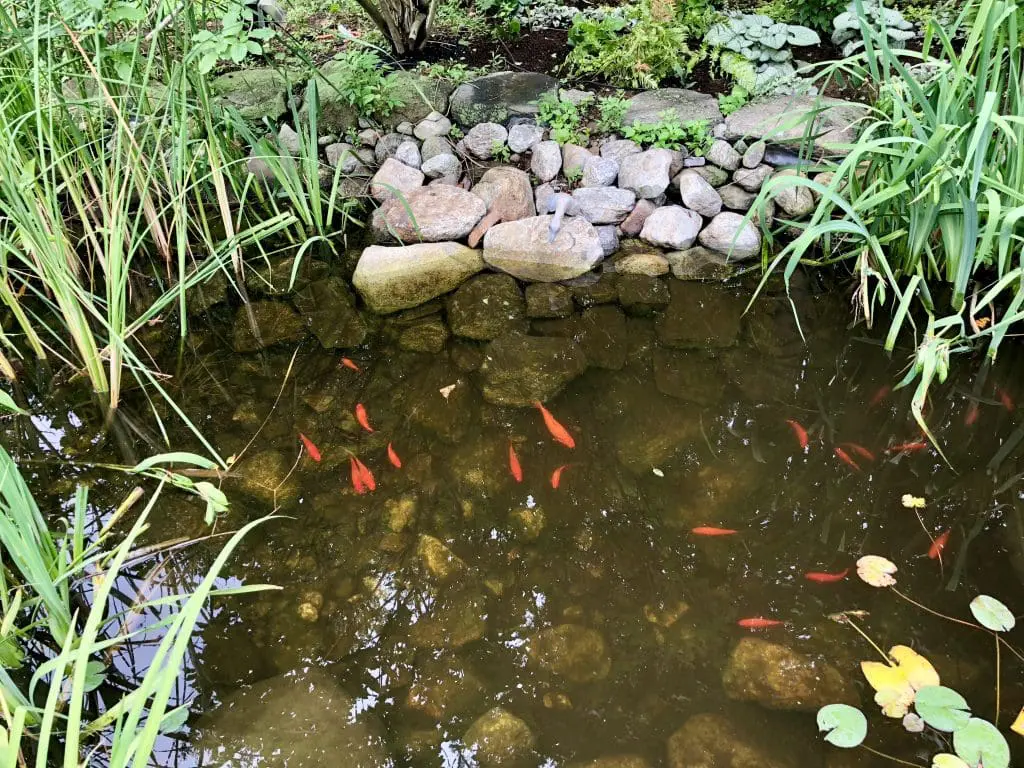
Mallard duck visits a constructed waterfall / stream in Rye, NY – designer Jay’s home!

Step Four: Provide Water

Birds are attracted to the sound of running water and like to have a shallow pool to bathe in.  This can be as simple as a birdbath or as elaborate as a designed waterfall, stream or pond. Use rocks to create different depths that birds of various sizes are comfortable wading on.  Make sure to refresh the water often to avoid creating mosquito habitat, or install a pump or fountain to keep water circulating.

Birds love to visit water features to bathe or get a drink! Rye, NY

Step Five: Observe the Show & Tell Your Neighbors

Your work here is done! Sit back, relax and enjoy your at-home bird sanctuary.  There is sure to be something going on in your garden at all hours of the day! Take the opportunity to learn from nature’s classroom, and share the excitement with your neighbors! Imagine if your whole neighborhood pledged to use their yards to create organic bird habitat – think of the un-fragmented paradise our native birds would find!

You can even register your property with National Wildlife Fund’s Certified Wildlife Properties and obtain some signage to catch your nieghbors’ eye!

Call  or Contact Us to discuss your potential bird habitat – 914-560-6570.

Certified Wildlife Habitat sign at our client’s property in Larchmont, NY

Filed Under: Ecological Education Tagged With: bird garden, bird habitat, bird sanctuary, butterfly garden, certified wildlife habitat, ecological landscape design, ecological landscaping, ecology, habitat garden, healthy yard, landscape design, landscape designer, landscape ecologist, native landscaping, native plant garden, native plants, natural landscaping, organic garden, organic gardening, organic landscape, perennial garden, pollinator garden, pollinator paradise, pollinator pathways, Rye New York, save the bees, westchester county, Westchester County NY

In September 2019 an alarming study made headlines – North America had lost almost 30% of its bird population in the last fifty years, a total of nearly 3 billion birds lost.
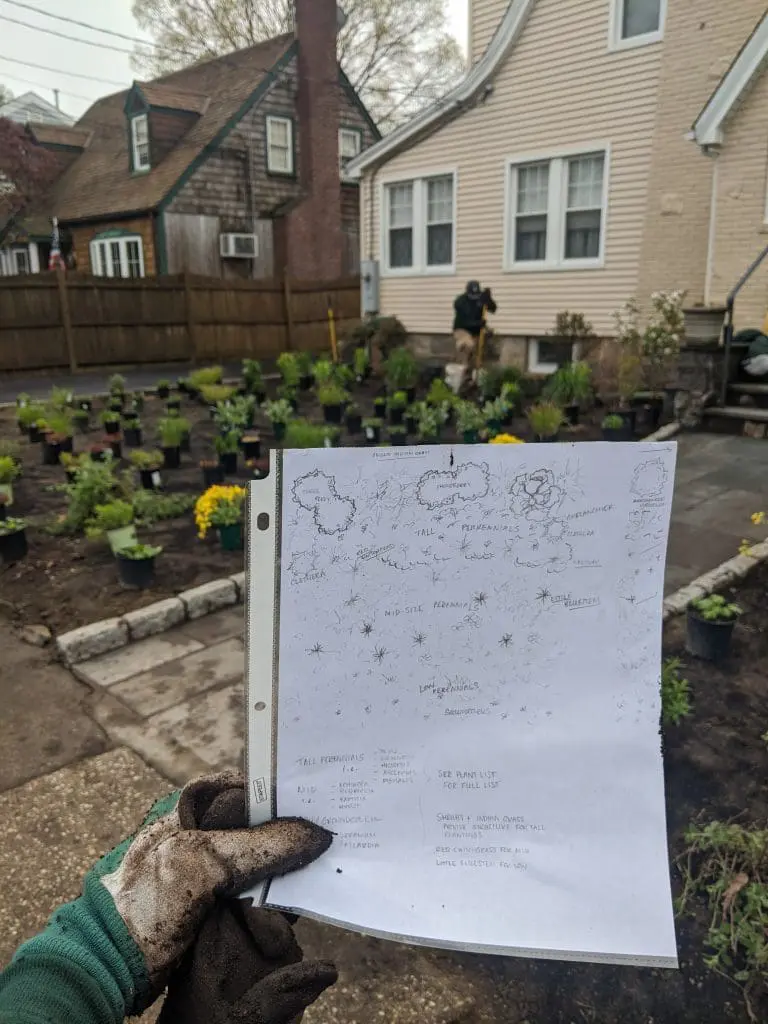
Image courtesy of ABC News.

The population losses span every biome, but forests (1 billion lost) and grasslands (720 million lost) are especially hard hit.

The study’s authors point to several potential causes of bird population loss: habitat destruction, urbanization, and pesticide use.  We’ll explore these topics below.

This powerful video by the American Bird Conservancy illustrates the problem at hand and really tugs at the heart strings:

A parallel mass extinction is occurring in the insect world, for similar reasons. The National Resource Defense Council reports that in 1997 over 1 billion monarch butterflies migrated from the US to Mexico.  Today, the monarch population has dropped over ninety percent, to less than 57 million documented in the migration.

Experts attribute the decline in monarchs and insects more broadly to loss of habitat, climate change, and increased exposure to toxic pesticides.   The New York Time’s The Insect Apocalypse Is Here piece is required reading on this topic.

American Kestrel — an endangered bird of prey in the US. Photo courtesy of TrogTrogBlog.Blogspot.com

Pesticides Effect on Birds

In the 1960s, Rachel Carson’s Silent Spring was groundbreaking in its revelations about DDT and its impact on the environment, particularly bird populations.  As a result DDT was banned in the US, but today other equally toxic pesticides in the same organochlorine category are still heavily used today.

For example, Dicofol, a miticide (kills spider mites) used on a wide variety of food and ornamental crops causes eggshell thinning in birds including the mallard duck, American kestrel, ring dove and screech owl.  Organochlorines have also been documented to cause a lack of appetite in birds (eating up to 30% less), culminating in their starvation.

Milkweed, a host plant for the Monarch butterfly, in a native meadow.

Neonicotinoids: Systemic Pesticides, Harm Pollinators

Another class of insecticide, neonicotinoids (the most widely used insecticides in the world) have been linked to a “wide range of negative biological and ecological impacts” according to a 2015 report by 29 scientists on the Task Force on Systemic Pesticides.

Neonicotinoids are used in agriculture as well as on residential and commercial properties, particularly lawns, to “treat” pests. The consequences are vast.

In today’s industrial agriculture, neonicotinoids are often deployed as seed coatings.  This insecticidal-seed grows a plant with a “systemic pesticide,” meaning it reaches all parts of the plant – leaf, stem, flower, pollen, and nectar included – poisoning the beneficial insects that feed on them.

These toxins also persist in the soil and show up in plants that were never targeted, for example roadside native plants that created essential habitat for pollinators. The decline in milkweed (the only genus of plants that monarchs lay eggs on) in native landscapes is a prime example.

Image captured by client in their front yard pollinator garden!

Instead of managing pests, these indiscriminate toxic chemicals kill or disrupt the physiology of birds, beneficial insects and pollinators.  NRDC senior scientist Slyvia Fallon attributes the monarch butterfly loss “largely due to changes we have made in our agricultural practices.”

Client image from their front yard pollinator garden!

What’s more, Cornell University examined the research on neonicotinoids affect on honey bees, bumble bees and wild bees, and the results were damning:

Honey Bees Exposed to Neonicotinoids:

  • Increased mortality
  • Impaired feeding
  • Impaired locomotion
  • Altered learning and memory
  • Impaired Foraging
  • Reduced Immunity

Bumble Bees Exposed to Neonicotinoids:

  • Increased Mortality
  • Reduced colony growth
  • Reduced b rood production
  • Reduced nest construction
  • Impaired feeding

Wild Bees Exposed to Neonicotinoids:

  • Increased Mortality
  • Reduced brood production
  • Altered locomotion

For more information, read the Xerces Society’s How Neonicotinoids Can Kill Bees.

Sparrow, image courtesy of All About Birds.

Neonicotinoids Effect on Birds

Neonicotinoids affect birds in two ways.  First, when birds eat insecticidal seeds; National Geographic reported of A 1992 study by the EPA that concluded that,

“sparrows have difficulty flying after consuming a tiny amount of imidacloprid [a common neonicotinoid], and become immobile at higher doses.”

The second way pesticides affect birds is by decreasing their food supply – the very insect populations (caterpillars, beetles, grasshoppers) that are suffering because they have consumed the now-toxic plants.

A disturbing 2014 study in the Netherlands found correlation between high pesticide in surface water contamination and declining bird populations: where there were high concentrations of imidacloprid, bird populations fell by an annual average of 3.5 percent.

Image courtesy of wildlife.org

Urbanization & Habitat Destruction for Bird, Pollinators

Urbanization – forming the cities that now house half the world’s population – has also wreaked havoc on native bird populations.  A 2014 Study that examined data on bird and native plant populations in 54 cities worldwide found that urban areas had only 8% of the bird density as rural areas (species per km2) and only 25% of the native plant species.

As discussed above, native plants are the foundation of habitat for many native insects, who in turn become the food supply for native birds. Replacing native landscapes and plant material with paved urban developments has rippling ecological repercussions.

Depressingly, a lack of habitat is not the only threat; what replaces our native plants creates additional problems.  The Guardian reports “Scientists estimate that at least 100 million and maybe as many as a billion birds die each year in the US when they collide with buildings, especially glass-covered or illuminated skyscrapers.”

Coopers Hawk in a clients property — image courtesy of client.

Reclaiming Bird Habitat in the Suburbs

In our suburban neighborhoods, bird death by skyscraper is not as much of an issue, but the general trend of suburban landscaping has not helped bird populations.

First, our culture prioritizes a pristine lawn over garden space. Homeowners generally fail to consider the impact of the synthetic chemicals regularly applied to create their “perfect” lawn.

Second, the nursery industry has a long history of importing exotic plants for landscaping; plants that have not evolved alongside our native bird species and do not provide the same essential habitat.  Furthermore, plant breeders focus on hybrid plants that often sacrifice nectar or pollen to create double and triple rows of petals for more “ornamental” specimens.

While most of the above pesticide research has been focused around farmlands, the landscape industry is not to be overlooked! The EPA estimates 30,000 tons of pesticides are applied on American lawns every year! Instead of dousing our properties with chemicals, we can use them to reclaim habitat for bird and pollinator populations.

Biodiversity – from native plants to beneficial insects to bird populations –is at stake, and the easiest way to initiate change is right at home.  Stay tuned for our next post in the series where we dive into Creating Bird Habitat at Home.

—

Green Jay Landscape Design

914-560-6570


Filed Under: Ecological Education Tagged With: 3 billion birds lost, bees, bird habitat, birds, birds garden, birds of north america, butterflies, ecological landscape design, ecological landscaping, endangered birds, habitat creation, habitat design, habitat destruction, habitat loss, landscape design, landscape designer, monarch butterflies, monarch habitat, organic landscaping, pesticides and birds, pesticides and monarchs, pesticides and pollinators, pollinators

  • « Go to Previous Page
  • Page 1
  • Interim pages omitted …
  • Page 22
  • Page 23
  • Page 24
  • Page 25
  • Page 26
  • Interim pages omitted …
  • Page 60
  • Go to Next Page »

Footer

Mailing Address: 222 Purchase Street, #144 Rye, NY 10580
Shop Address: 369 Bradhurst Ave, Hawthorne, NY 10532
(914) 560-6570
  • Facebook
  • Instagram
  • LinkedIn
  • Pinterest
  • YouTube
  • Houzz
  • Slide Share
  • Installation
  • Portfolio
  • Pricing
  • About
  • Contact

Copyright © 2025 · Green Jay Landscape Design. All Rights Reserved · Privacy Policy · Website and Local SEO by Ramblin Jackson