• Skip to main content
  • Skip to footer
Green Jay Landscape Design

Green Jay Landscape Design

Green Jay Landscape Design

(914) 560-6570
  • Design
  • Installation
  • Portfolio
  • Pricing
  • About
    • Service Area
    • Meet Our Team
    • Our Process
    • Our Promise
    • Mission, Vision, & Core Values
    • FAQ
    • Press & Events
    • Blog
    • Reviews
    • Careers
    • Affiliations
  • Contact

greenjayadmin

Jay breaks down our process for planting and transplanting in 90 degree heat or higher. Transplanting at these temperatures can be extremely stressful for the plant, unless proper precautions are taken. We break down Green Jay Landscape Design’s organic process for transplanting and planting (including mature trees) in peak summer with high temperatures and humidity.

Leave us a comment on YouTube if you enjoyed the video or have a question!

Contact us about your Landscape Design project – 914-560-6570.

Products mentioned in this video:

Organic Mechanics Soil Company BioChar Blend

Stone Barns Compost 


Filed Under: Landscape Construction & Installation Tagged With: ecological landscaping, gardening, healthy yard, heat stress, landscape construction, landscape design, landscape designer, landscaping, natural landscaping, organic gardening, organic landscape, planting, planting mature trees, summer gardening, summer landscaping, summer planting, transplanting

Often, the most critical part of developing a landscape plan is knowing what to edit, remove and replace.  This was definitely the case for this Westchester, NY home with overgrown foundation plantings that restricted essential airflow around the home and overshadowed the home’s architectural features.

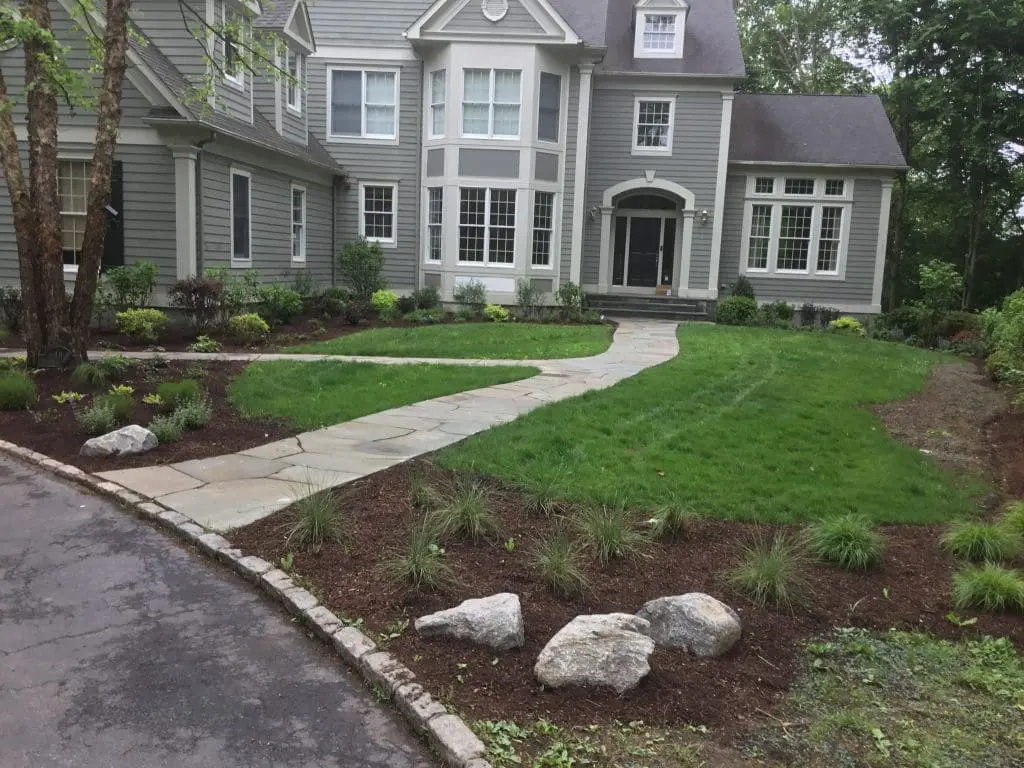
Foundation planting remodel, new walkway, and newly organic lawn!

Landscape Site Conditions

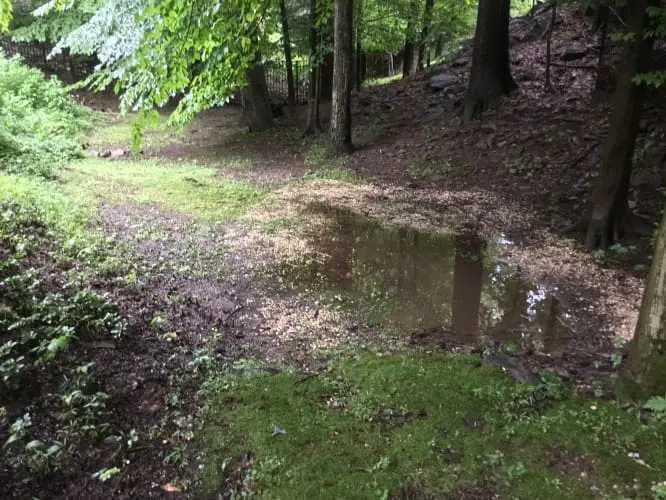
The client also had their new family in mind, and asked for a design that would be a safe and engaging space for their children to play in. Upon evaluating the site conditions, Green Jay Landscape Design also found areas with poor landscape drainage, creating pooling, dirty storm water that in turn became mosquito breeding habitat.

BEFORE PHOTO: pooling water creates mosquito breeding habitat.

Landscape Design Program

From our client interviews and independent landscape evaluation, we determined the design goals as such:

  • Remove overgrown and ecologically void landscape plants
  • Prune existing plants to a functional scale
  • Improve landscape drainage through a comprehensive stormwater management plan
  • Design and install a fence around the main rear lawn to create a safe and practical play area and border along the steep slope
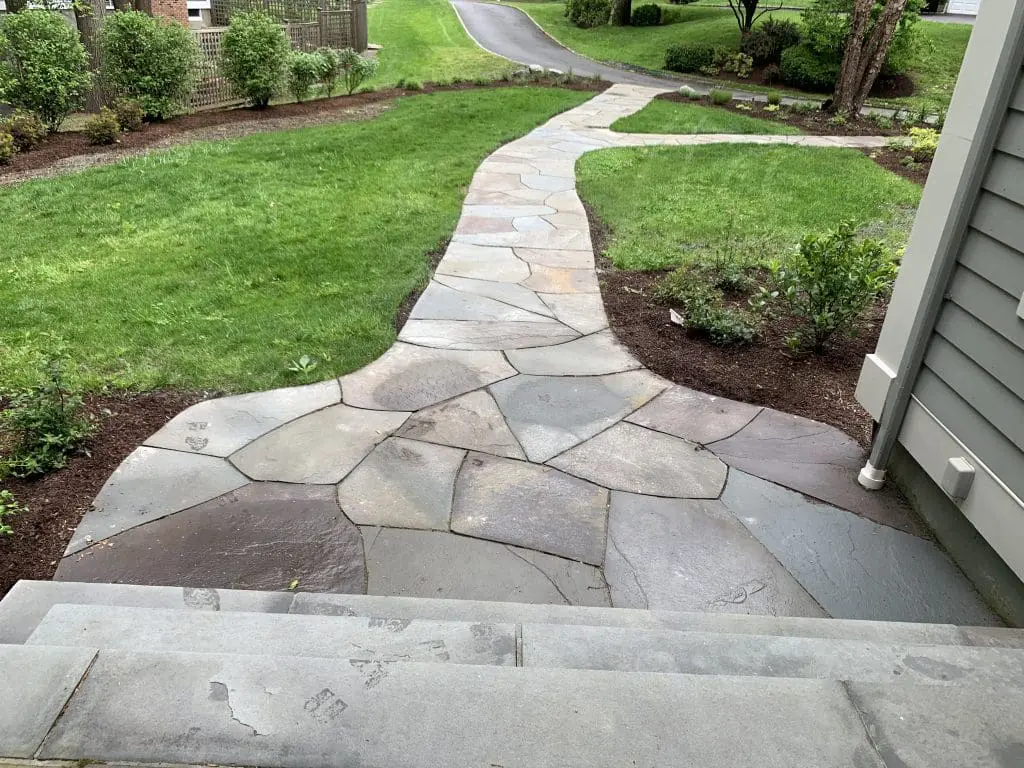
  • Remove and replace the awkward paver walkways with smooth, natural stone pathways in the front yard
  • Update the plantings along the driveway

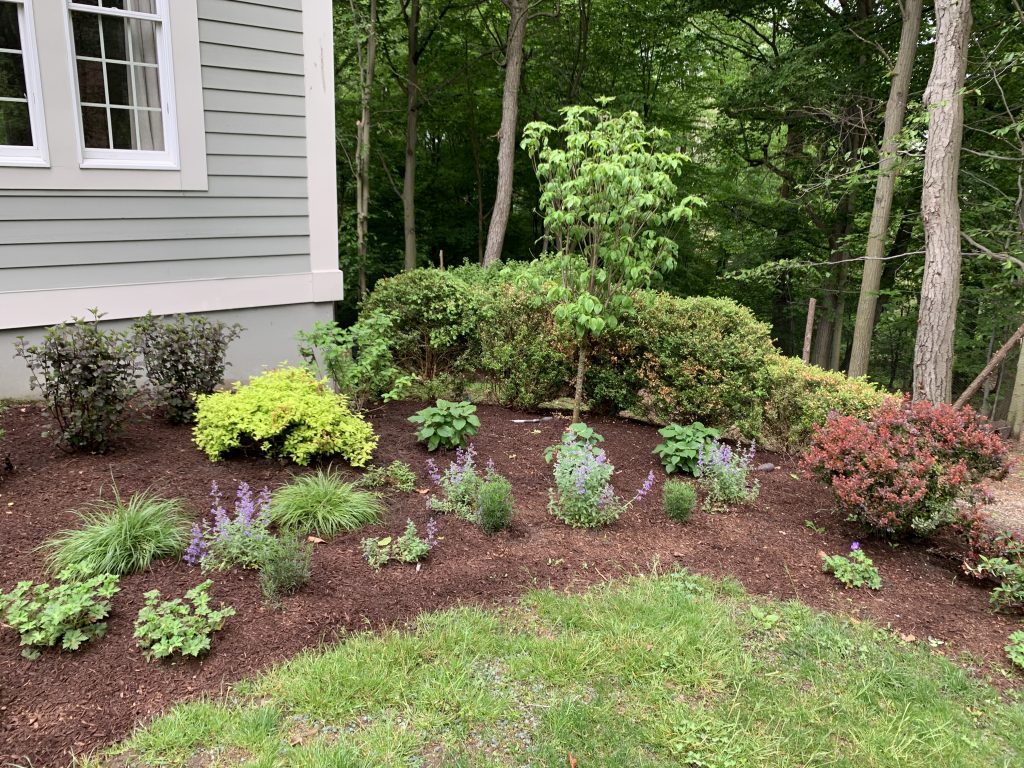
Front yard foundation planting featuring dogwood and nepeta!

Design Concept: Landscape Design Master Plan

A design concept encompasses both the tangible and intangible: the desired feeling of the landscape and the practical elements that will bring the space to fruition.

In Jay’s words:

The landscape environment will express youthful enthusiasm, energy and light in the freshness and rich diversity of plant life. In all weather, through all seasons, your garden borders, planting beds, trees and lawns will thrive and exude vibrant health and vitality, growing and developing along with your family.

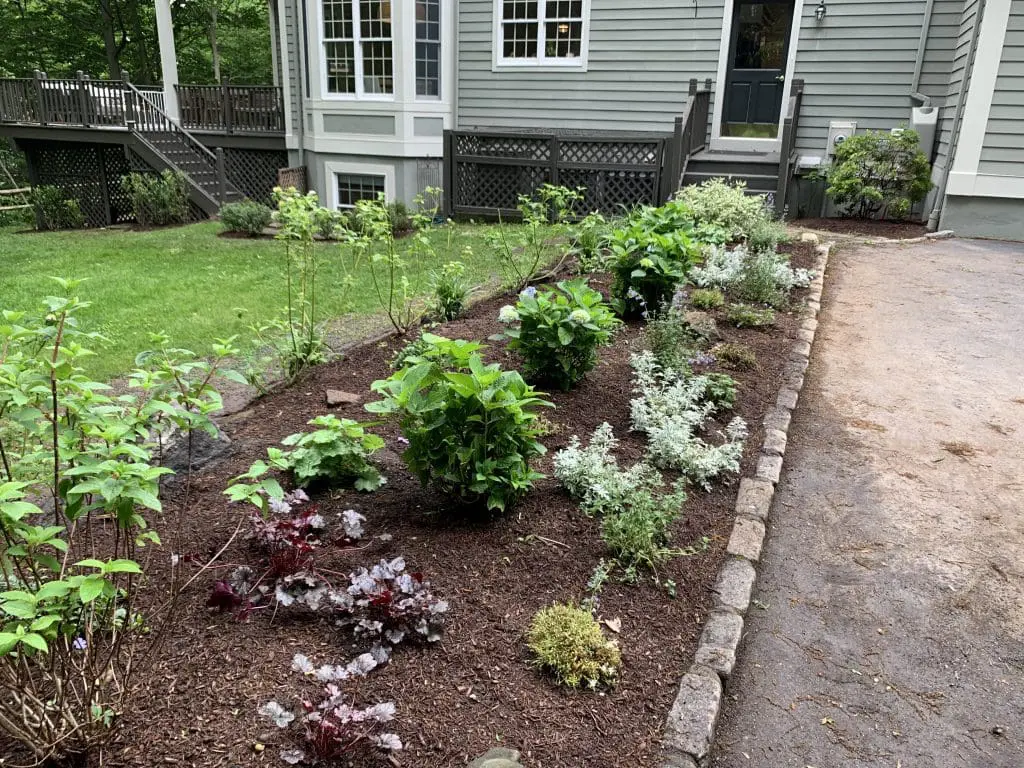
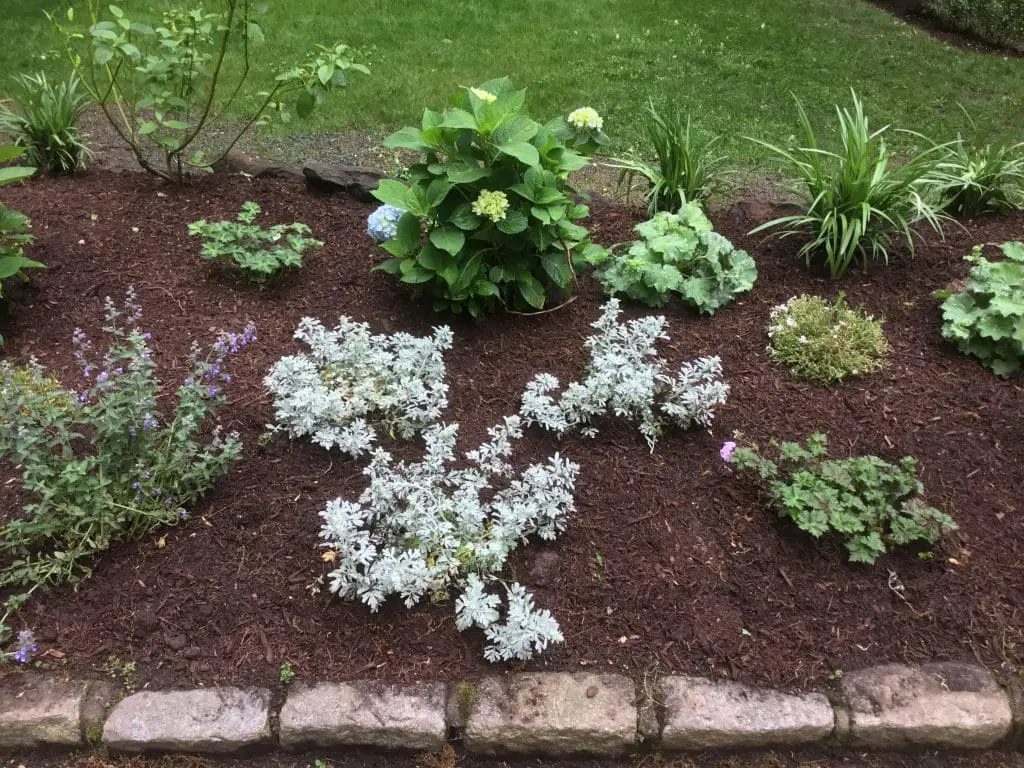
Hydrangea shrubs with ecologically beneficial perennials.

Your plant palette has been chosen for ecological function (producing oxygen, sequestering carbon, conserving and biofiltration of water resources etc.) as well as aesthetic value. All this while featuring long lasting flowers, sweet fragrance, native grasses moved by the wind and fruiting shrubs of different contrast in color and height.

All conspiring to create a whole tapestry and composition, which will support necessary diversity in beneficial wildlife, including an abundance of insects, birds and butterflies. Your property will have added value for Pollinator Pathways.

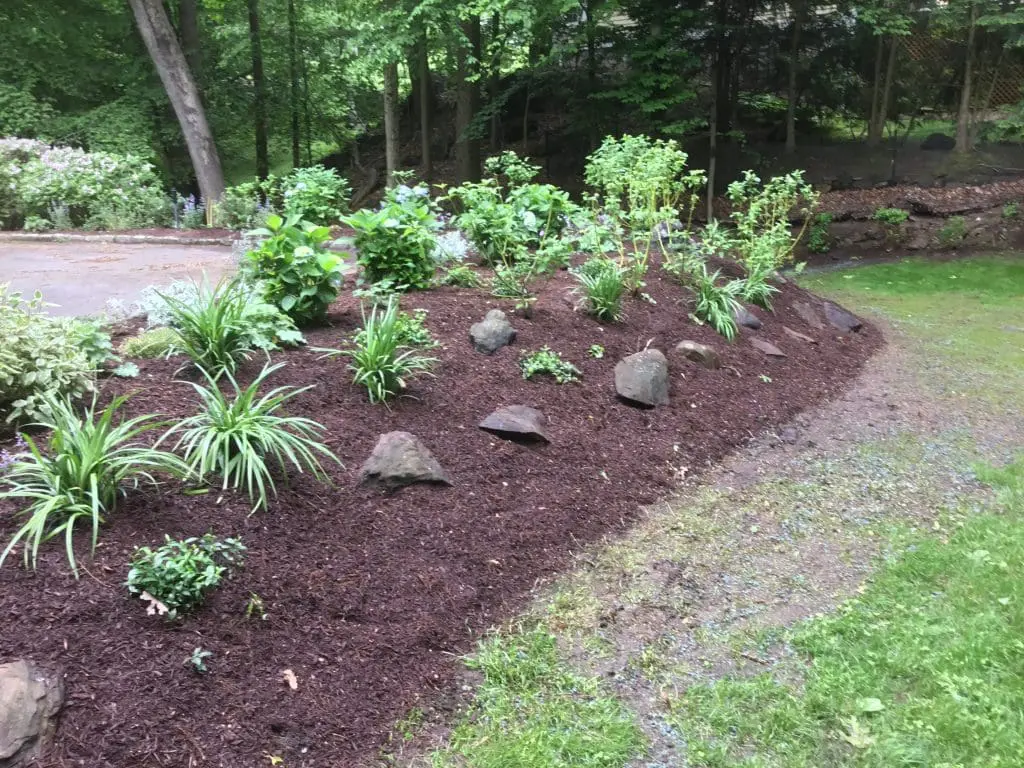
New parking area garden beds with boulder accents! Planting pallet attracts pollinators and birds!

Newly planted garden along the parking area featuring contrasting foliage and long-blooming perennials.

Landscape Construction & Installation

 After removing a significant amount of overgrown foundation trees and shrubs, we expanded planting beds and prepared the soil organically. We replaced a heavily evergreen planting palette with a selection that emphasized native, flowering trees and shrubs, and layers of understory perennials to provide pollinator and bird habitat.

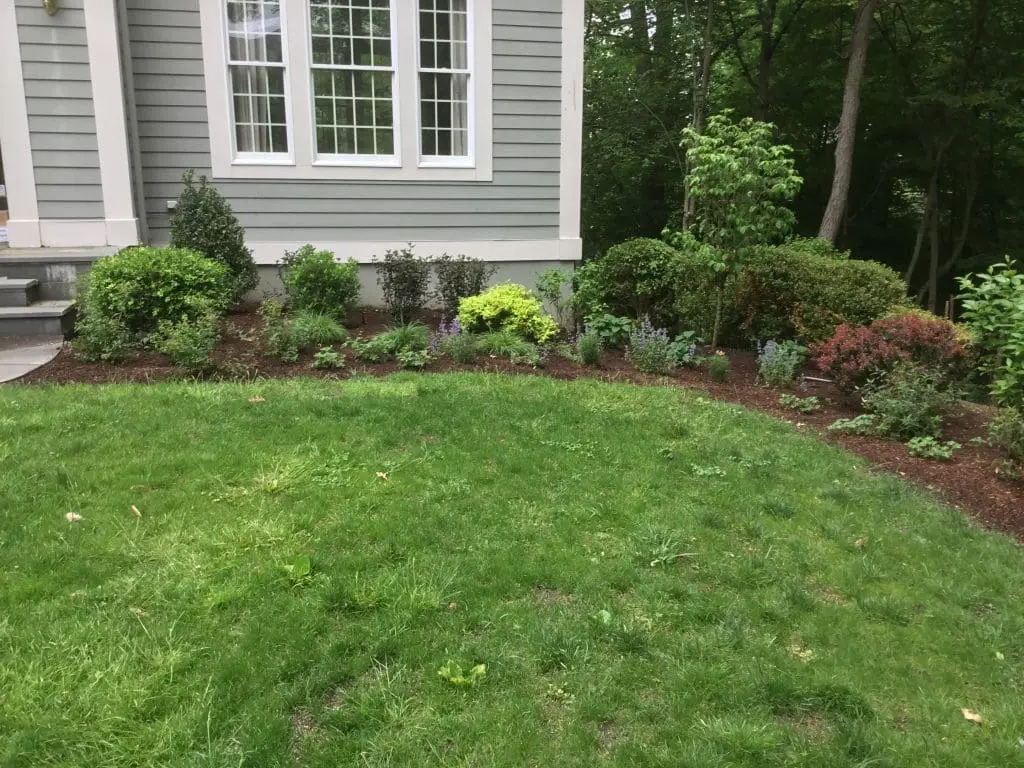
Brand new foundation plantings featuring modern, ecological layers.

Given the suburban-rural location of Irvington, NY, the potential for connecting habitats – between the natural and abundant forests to the residential neighborhoods – was too good to pass up, especially since we had already installed an ecological and organic landscape for the client’s direct neighbors!

Pollinator Pathways, Certified Wildlife Habitats, and Healthy Yards are all more impactful in numbers! A yard is a great step, but a neighborhood, town, and county are scales of impact.

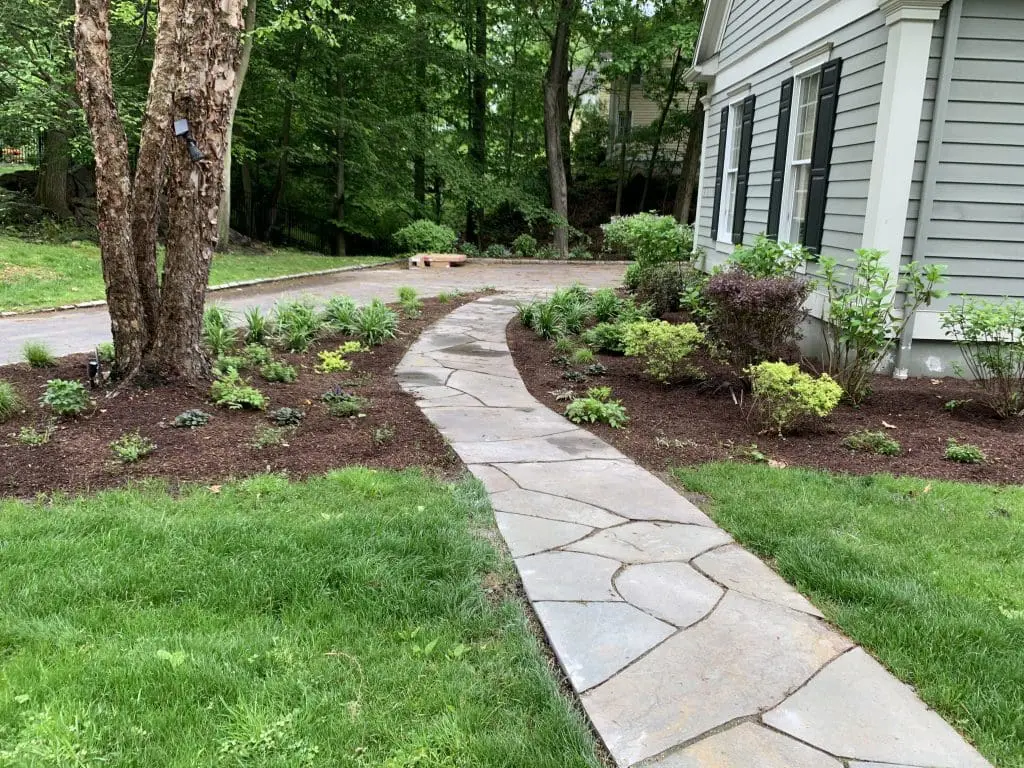
Custom flagstone masonry walkway from garage driveway area to front yard.

Forked custom front entrance walkway with natural flagstone.

In addition to plantings, we modernized the front entry with a new front walkway of natural bluestone in an irregular pattern.  We chose a soft base, which we always prefer over a concrete  base.  Extending the footprint into grand, sweeping lines also achieved the desired effect. The clinets are thrilled!

Contact us to plan your next ecological landscape design project, or schedule a consultation!

—

Green Jay Landscape Design

914-560-6570
 

Filed Under: Featured Work, Landscape Construction & Installation, Landscape Design Tagged With: curb appeal, ecological landscape design, ecological landscaping, flagstone, front entrance, front yard, front yard landscaping, habitat garden, healthy yard, landscape construction, landscape design master plan, landscape designer, landscape ecologist, masonry, natural landscaping, organic garden, organic gardening, organic landscape, organic lawn, perennial garden, pollinator garden, storm water management, woodland garden

Weeds are often depicted as Enemy #1 in the gardening world, especially the dreaded invasive species. However, one thing is never one thing, but many. Chinese philosopher Lao Tzu says, “the named is the mother of the ten thousand things.”

A weed is really just the wrong plant in the wrong place, after all.

Pervasive Invasive Species

There are many factors or influences which contribute to and affect the dominance of particular plant species. Hydrology, soil type and texture, pH, organic matter, animal populations –most notably deer (native) and earth worms (non-native)—all have a quantifiable impact on the ecology and performance of a landscape. Our human tendency to look at things as black and white…problems with simple, actionable solutions may be incomplete when we try to understand complicated natural systems.

Take, for example. this newly promoted concept of Bio-Control Maintenance in the COVID-19 era. States like New York permitted the chemical maintenance –pesticides, herbicides, tick spraying– of properties as an essential service for health and safety, but prohibited installations of ecologically beneficial plants, the key to successful organic gardening (the installation ban has since been lifted).

In my opinion, reducing biological diversity as an answer to a problem is seriously flawed…we cannot completely control or predict nature! This may be true of weather, climate change, etc. By accumulating data, we predispose ourselves to expect a result supporting our belief and hypothesis.

A New Perspective on Invasive Species Management

One thing I know for sure in my lifelong career observing and working with natural ecosystems…things change! 

For many years I worked with municipalities as well as contractors, designers, architects, engineers, professionals and homeowners to produce sustainable, manageable landscape environments. I have studied with highly qualified people in all our related fields, lectured extensively on native plants and ecological restoration, and I can say without reservation and in full confidence: there is no silver bullet for invasive plant species management.

Like our human bodies and nature itself, there are many factors contributing to the health and well-being of our complicated living systems and landscape environments.

For example, we describe the plant environment in zones delineated by hydrology and plant type, deriving communities such as wetlands, uplands, mesic, riparian, littoral, and palustrine.  Understanding the environmental factors that allow plants to proliferate, or be overtaken, is essential in developing successful land management.

Human Development, Displacement & Disrupted Ecosystems: The Case of Japanese Barberry

To further consider factors that favor a particular species over another, we must consider human development and its impact on biological disturbance and displacement. A simple example is the effect of deer browse on the forest ecosystem and plant communities.

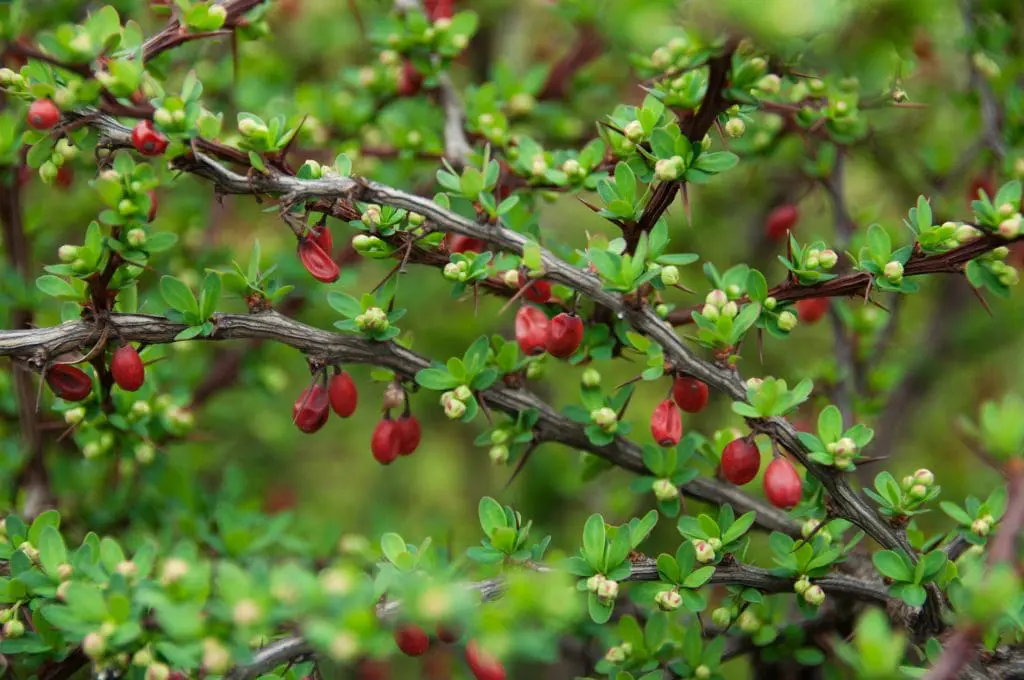
The result of lack of ‘control’ of deer populations has resulted in significant lack of diversity of and regeneration of tree species as well as all ground cover and understory species. You need look no further than a walk in the suburban nature preserves to see the dominance of Japanese barberry. This plant predominates as a monoculture because deer do not eat it, because of the plants’ large thorns.

Japanese barberry (Berberis thunbergii)

Other concerning and self-advantageous factors: Barberry is allelopathic, meaning it exudes chemicals in the soil that inhibit the growth of other species. Barberry also greens up before the trees leaf out, taking advantage of the early spring sunlight to propagate prodigiously both by seed and clonal shoots.

While ‘control’ or suppression can be achieved by cutting and torching barberry, the real problem, the root of the issue, has been created by overpopulation of herbivores (deer).

Japanese Barberry’s Ecological Snowball Effect

 The substitution of a diverse understory of native shrubs and perennials, with a monoculture of an exotic species has a ripple effect on the local ecology.

A study released last year from Washington State University and Great Hollow Nature Preserve and Ecological Research Center (in New Fairfield, CT!) measured the discrepancy in arthropod populations between native shrubs and barberry forests.

They found a 23% decrease in foliage anthropods and a 28% decrease in leaf litter anthropods in bnarberry-infested forests as compared to native understories. As reported by Phys.org Dr. Chad Seewagen, an author of the study describes the results:

“We saw a clear and concerning pattern of community simplification and trophic downgrading in areas that have been heavily invaded by Japanese barberry.

How these changes in arthropod community structure affect food availability, and the composition and quality of the diet of insectivores, like many species of birds, is something we don’t know yet. Much more work is needed to understand the full ecological impacts of this non-native plant that has overtaken so many forests in the eastern U.S.”

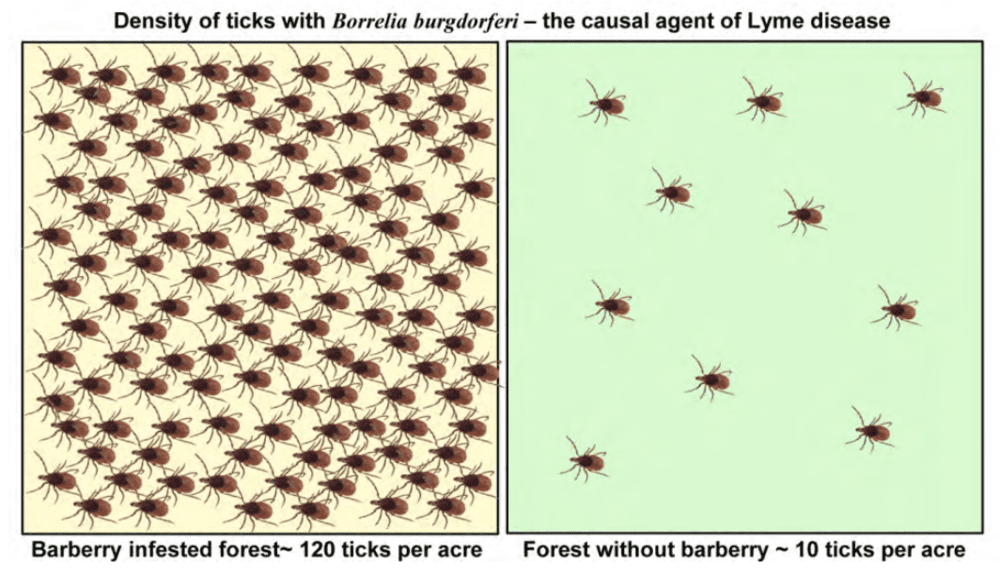
Image courtesy of: https://www.techlinenews.com/articles/2017/managing-japanese-barberry-in-natural-areas

Another ecological impact of barberry: white-footed mice take shelter in the shrub (thorns are a natural defense), allowing their populations, as well as the ticks they often carry, to balloon.  Ticks in the Northeast can carry Lyme disease, creating another human health concern associated with barberry’s overabundance.

Holistic Land Management for Invasive Species Control  

Japanese barberry is not the exception; there are many such examples. Earthworms for another non-natiove example, have contributed to significant destabilization and degradation of soil conditions and biology resulting in substantial erosion of slopes.

In my work in managing invasive species in many Westchester County Park properties, results were mixed when no follow up planting (after invasive removal) or regular maintenance budget was provided to ensure sustainable results. It is a fruitless effort to remove unwanted species and not replace them with more desirable and ecologically valuable ones. Removal only opens the door to the weed seed bank and should be the first step in prescribed land management program.

The moral of the story is: success in controlling invasive species comes with designing a plan with a management protocol to deliver an acceptable range of results and expectations.

We must adapt to nature. It will not necessarily adapt to our changes in the environment in a beneficially predictable way. We need to analyze and inventory all site conditions and impacts on the landscape to develop a plan to alter the existing for the better, whatever that may be.  Monitor, respond and steward with respect for the power of our precious natural resources.

Human knowledge, science and trust in our basic human goodness will all be required to create Landscapes for Better Living in this new world we are living in.

For more ways to get involved, check out the Lower Hudson Partnership for Regional Invasive Species Management (PRISM).

Contact us about your land management or ecological landscape design project.

—

Jay Archer

Landscape Ecologist & Designer

Green Jay Landscape Design

914-560-6570
 

Filed Under: Gardening & Grounds Maintenance

Landscaping for a newly constructed home is always an exciting job – a completely blank slate!

This contemporary country home in Riverside, Connecticut already had great design features to work with: a modern rectangular pool in need of landscaping, and mature trees lining the front and back of the property.  The client also needed to complete wetland mitigation requirements with an attractive and ecologically valuable planting.

This type of project necessitates a Landscape Design Master Plan.  Given the scale and scope of the design work, there was no doubt that our design ideas would be best communicated through a detailed site plan drawing. During the initial Professional Consultation, we established the design goals / program with the client and took status of the site conditions.

Design Goals

  1. Modern front entrance, with custom masonry and front yard gardens
  2. Colorful, meadow-like landscaping for the pool area
  3. Foundation plantings
  4. Woodland garden
  5. Wetland mitigation
  6. Organic vegetable garden
  7. Boosting the ecological value of the property through habitat creation, encouraging biodiversity, and storm water conservation.

Landscape Design Master Plan including poolscape, organic meadow, summer garden, woodland garden, front entrance and wetland mitigation.

Site Development

The post-construction landscape often has significant site development challenges including remaining construction debris (on the surface and often buried in the soil) and intense soil compaction from heavy construction machinery.  For this projet, our site development included:

  • Clearing all construction debris and gravel and de-compacting all ground surfaces.
  • Soil regrading for elevation and drainage (particularly for the front walkway).
  • Addition of structural soil with amendments including: premium screened topsoil, high grade organic compost and biochar mix.
  • Radical reduction and pruning of existing Forsythia and Dogwood trees.

Front yard, post site-development, ready for planting!

Modern Bluestone Walkway & Front Entrance Planting

We opted for large, rectilinear bluestone pieces in a geometric pattern for the front walkway to compliment the clean line architecture of the home. The linear walkway is softened and enhanced by a simple and colorful fragrant planting with a seasonal progression of bloom and aesthetics. The planting consisted of a tapestry of low-growing sedges, flowering perennials for pollinators, and ornamental grasses for year-round structure and interest.

Rectilinear sweeping bluestone pathway to the front entrance.

Post planting the front Butterfly Walk — can’t wait to see this garden grow!

Ground cover and low-growing flowering perennials accentuate the new walk.

New bluestone walkway from driveway to side door.

We love these native flowering plants with great foliage!

Front Yard Landscaping – Habitat Gardens

Scalloped border gardens featuring sunny pollinator-attracting perennials and woodland sections with native shrubs and flowering perennials under the existing mature trees. pollinator-attracring

Front yard perimeter garden for maximum curb appeal!

Heuchera and Allium in Spring! (newly planted garden)

Woodland perennials for the front yard shade garden.

Goat’s Beard in the front yard woodland shade garden.

Shade gardens can stick have flowers! And be ecologically valuable!

New walkway from the street to the front yard via the native woodland garden.

Wetland Mitigation

Per the design plan, the landscape environment is now surrounded, embraced and framed by a native wetland planting bracketing the property. The entire design plan was named Field and Stream, Camp Refugia, and the bracketing wetland gardens represent the stream aspect of the composition.

Meadow Poolscape Landscaping & Summer Garden

The sunny pool area invited a bold and beautiful planting that would attract butterflies and birds to a highly visible garden enjoyed by the whole family. GJL designed a meadow-inspired garden to surround the pool.

This pool landscaping design supports the Pollinator Pathways initiative in Fairfield county by using native plants to invite pollinators and create sustainable habitat.

The summer garden lines the back border of the property, directly across from the main patio and adjacent to the pool area.  It features a similarly colorful and ecologically valuable perennial plant pallet, with emphasis on summer-blooming plants.

Terraced garden featuring spring blooms. This will be fantastic in summer too!

Together, these garden areas manifest the ecological design intent and inspiration. In Jay’s words:

“The fields/meadows and summer garden will present life abundant and enduring, possessed of the inherent memory and morphic resonance of plants in the continuum from the before to after.”

The Beautiful Bird Beds

This trio of oval-shaped planting beds was specially designed to attract both migrating and year-round resident bird species by providing shelter, habitat and pollinator resources. This brotherhood of islands provides continuity for the property’s eco-system.

The planting pallet includes native flowering shrubs including fragrant Clethra and repeat-bloomer St John’s Wort.  Native ornamental grasses like Tufted Hair Grass achievces mutli-season interest, and perennials provide pollen, nectar and seeds for the birds.

Woodland Border Garden

The rear of the property has a border of mature evergreen trees, but needed some underplanting to build visual interest from the ground up.  We designed a native woodland garden with boulder accents.

Native variegated dogwood is a great shade shrub and the birds love it too!

We love the natural and architectural feel achieved by incorporating boulders into garden beds!

Enclosed Raised Bed Veggie Garden

Protecting your vegetable garden from hungry wildlife is essential! We install fencing around the perimeter and as a ceiling. Of course the raised beds are filled with organic compost with biochar and potting soil.  If you are planting something acid-loving like blueberries, make sure to amend the soil appropriately!

Raised bed veggie garden in progress.

We can’t wait to share more photos of this project with you as it matures and evolves throughout the seasons. Stay tuned!

Contact us about your Landscape Design project! We’d love to speak with you.

—

Green Jay Landscape Design

Where Design Meets Ecology

914-560-6570

Filed Under: Featured Work, Landscape Design Tagged With: bluestone, bluestone walkway, curb appeal, ecological landscape design, ecological landscaping, front entrance, front entrance garden, habitat garden, healthy yard, landscape design master plan, masonry, native garden, native plant garden, organic garden, organic landscape, perennial garden, pollinator garden, poolscape, woodland garden

Much has changed within the landscape industry in recent history.  What began as a fascination with exotic plants and a design style that emphasized control and artificial perfection in the landscape is now seeing a tide change toward natural and organic landscaping.

Learn more about our Ecological Landscape Design  and Organic Maintenance services. 

Groups like the Ecological Landscape Alliance, the Northeast Organic Farming Organic Land Care Program, the Native Plant Center of Westchester, and Bedford 2020 Healthy Yard Program are making great strides in elevating the natural land care industry and spreading valuable information to the public.

What is Natural, Ecological Landscaping?

Much of the public is still unfamiliar with the term ecological landscaping. At Green Jay Landscape Design, we subscribe to the creed of:

  1. Do No Harm – Reject landscape chemicals and practices that harm the environment and local ecology. Natural landscaping is necessarily organic landscaping. (Learn more about why organic landscaping / gardening is the first step towards a safe and healthy landscape.)
  2. Use Landscape Design for Good – Protect precious natural resources and improve the environment by:
    • creating habitat
    • cleaning the air
    • capturing carbon
    • collecting, filtering and reusing storm water
    • preventing erosion
    • building healthy soil microbial communities.

Ecological landscaping looks toward nature for inspiration; hence it is often also referred to as natural landscaping, native landscaping, or environmental landscaping.

Instead of striving for highly manicured landscapes, requiring countless chemicals, endless maintenance practices, and relying on exotic plants that do very little for local wildlife, we turn to our native landscapes for design guidance and creative inspiration.  We seek to replicate these natural landscapes in a residential setting and achieve their same positive impact on local ecology.

At Green Jay Landscape Design, we have designed and installed native organic wildflower meadows, woodland gardens, naturalistic ponds and streams, and sunny pollinator gardens.

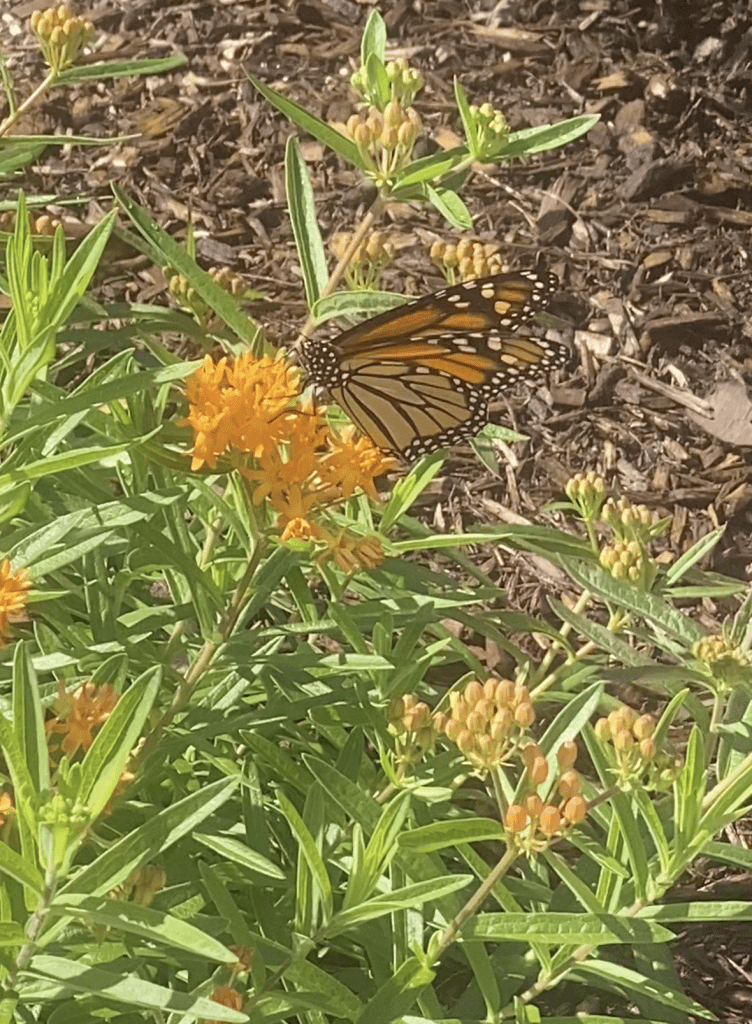
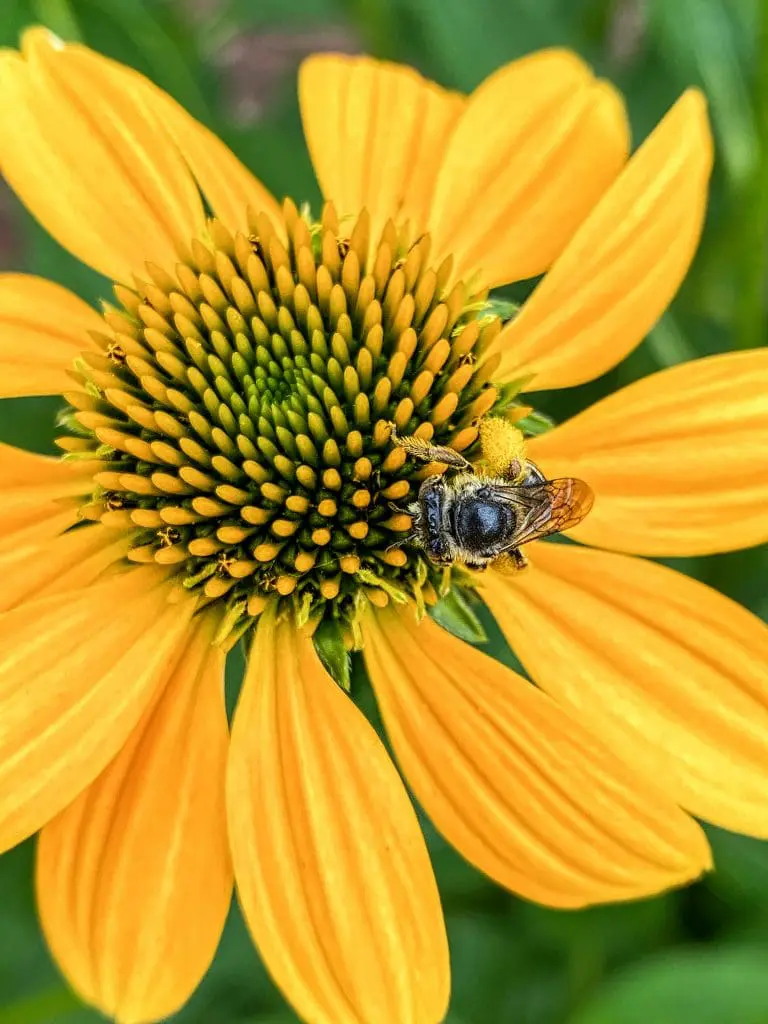
A key tenet of natural landscapes is supporting biodiversity – using a range of (mostly) native plants that invite pollinators, birds, and other local wildlife.  Natural landscapes are not sterile but vibrant with life and activity! Learn more about Our Promise as Landscape Ecologists and our commitment to biodiversity.

Examples of our Natural Landscaping Work

Whether you are looking to transform your front yard, back yard, or a specific garden area, our landscaping services can fit your needs! Below are some examples of Green Jay Landscape Design design and construction projects that exemplify natural, environmentally friendly landscaping.

Backyard landscaping: GJL transformed this rear lawn into a woodland wildlife paradise with a constructed waterfall, stream, and fish pond!


This entire property is an example of organic landscaping, with many native plants for pollinators.


A fish pond and organic hillside pollinator garden. Sustainable landscaping in New Canaan!


Native plants and natural landscaping — this design provides habitat for pollinators, birds, fish and other wildlife!

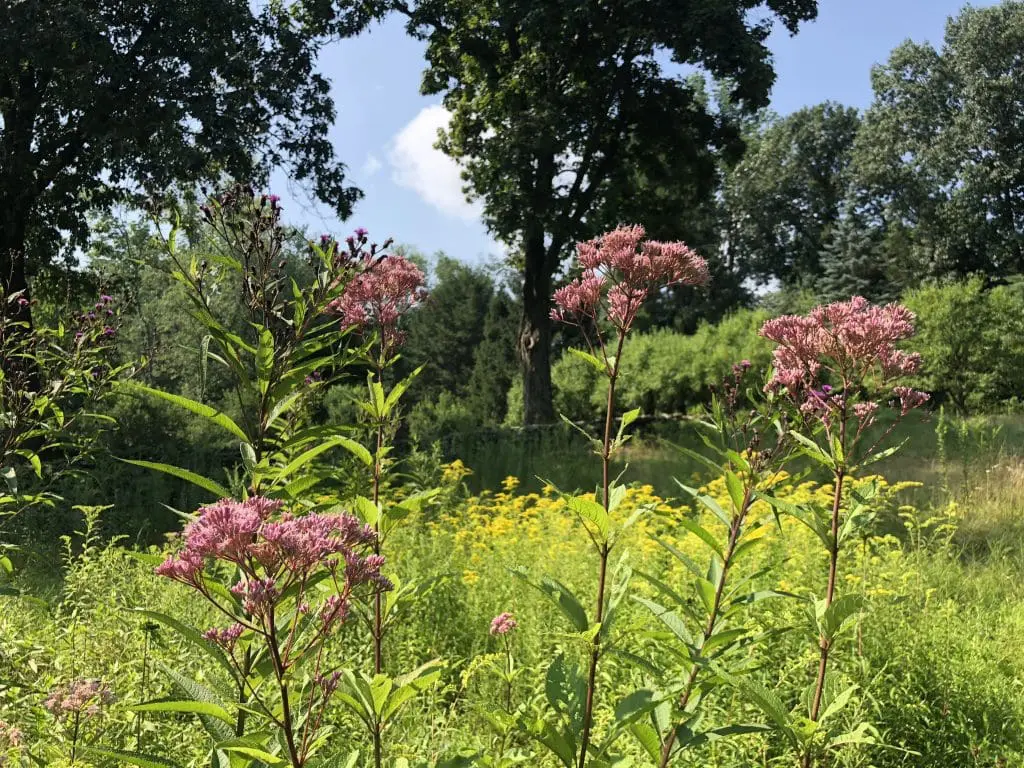
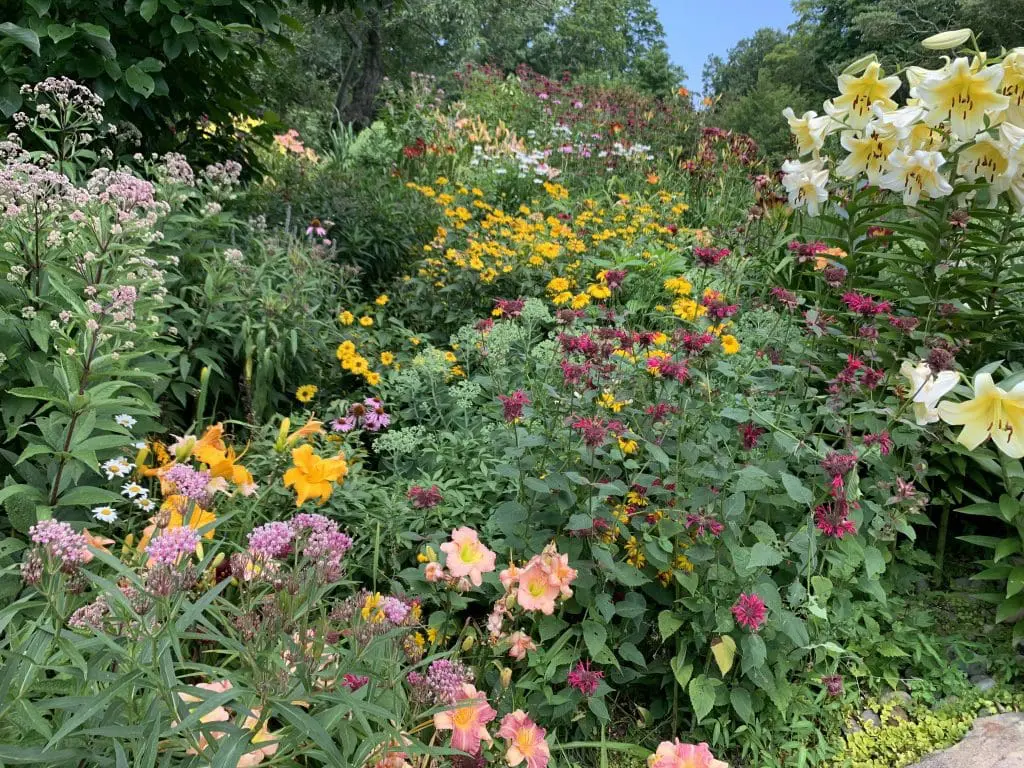
An organic meadow in South Salem, NY featuring native Joe Pye Weed (pink), New York Ironweed (purple), and Goldenrod (yellow) — pollinator favorites!


Are you ready to explore sustainable, natural and organic landscaping? Is supporting local ecology and improving the environment important to you?  Give us a call to discuss your property! 914-560-6570 or submit our consultation form!
—

Green Jay Landscape Design

Where Design Meets Ecology

Serving NY and CT

914-560-6570
 

Filed Under: Gardening & Grounds Maintenance, Landscape Design, Organics - Lawn, Tree & Shrub Care Tagged With: backyard landscaping, best landscaping near me, eco landscaping, ecological landscape alliance, ecological landscaping, environmentally friendly landscaping, Fairfield county landscape design, Fairfield county landscaping, front yard landscaping, garden landscaping, healthy landscape, healthy yards, landscape designer, landscape ecologist, native landscaping, native plants, natural landscaping, naturalistic landscaping, organic, organic garden, organic landscape, organic landscaping, pet friendly, sustainable, sustainable landscaping, Westchester County NY, Westchester landscaping

A newly renovated home requires an updated landscape design to compliment it.  In this case, the front façade of the home was given a modern update with unique architectural elements – major inspiration for the designers at Green Jay Landscape Design!

We have worked with this client for many years, developing the landscape in phases.  The initial phases focused on the backyard, where we repaired a seawall, natural swimming pond and bog garden, a salt-tolerant, pollinator-attracting perennial border, and brand new bluestone patio for entertaining.

New Home, New Walkway, New Landscape!

After renovating their home, it was obvious that the existing front walkway, constructed of brick, looked tired and outdated.

BEFORE PHOTO – front entrance with brick walkway.

The client, an environmental advocate and nature-lover, was also ready to ditch the front lawn for good and replace it with a more ecologically valuable landscape design.

AFTER: the front yard is now a colorful, organic perennial garden and habitat for local wildlife!

Custom Bluestone Masonry

Green Jay Landscape Design designers drew inspiration from the circular port window above the front door, and decided to echo it in the new bluestone walkway.  GJL created a forked walkway, radiating out form the circular landing to the driveway and street. The circular design element encourages a lingering rest to take in the lovely architectural facade of the newly renovated home.

Architectural inspiriation + newly planted organic garden.

Circular landing connects forked walkway and echos the port window above the front door.

The front walkway is constructed of irregular flagstone with subtle color variation.  The organic lines and shapes give the appearance of naturally blending into the beautiful low growing native flower garden.

We chose to construct the walkway on a “soft base” of gravel, item #4 and stone dust.  Whenever possible we avoid the use of concrete, because of the high emissions associated with cement production, and the toxic ingredients that put workers at risk, especially during demolition.

Pollinator Plants & Ground Cover for a Front Yard Shade Garden

With existing mature river birches, the front yard receives mostly dappled lighting – the perfect setting for a woodland shade garden (only briefly in late afternoon does it get illuminated like in the photo).  GJL designers also wanted to keep the plant height relatively low, to accentuate, not overpower the stunning new architecture.

Native garden featuring Heuchera, Geranium, Carex, Alchemilla, and Solidago.

With that in mind, we included several types of ground cover as well as shorter, clump-forming perennials.  Of course, ecological value and habitat creation for pollinators, birds and wildlife was at the forefront of our decision making.  After all, this is a Certified Wildlife Habitat in the backyard – the front yard had to measure up!

Front Yard Native Garden Planting Pallet

Bee feeding on Heuchera flower. Photo courtesy of gardeners-word.blogspot.com

Huechera (Coral Bells)  – Native to north America, over fifty species.  Flowers attract native bees and hummingbirds. Excellent shade garden plant with wonderful foliage in a variety of colors.

Lady’s Mantle, light green scalloped foliage in the left foreground and Coral Bells, orange foliage I the left background.

Alchemilla mollis (Lady’s Mantle) – North American Native. Attracts butterflies and is deer and rabbit resistant (important as there are many rabbits in this neighborhood!).  Charming scallop-shaped foliage, mounding habit and tiny chartreuse flowers.

Solidago foliage in the center and left foreground — a fabulous fall-blooming, native perennial for pollinators!

Solidago (Goldenrod) – Goldenrod is a superstar plant for attracting a huge range of native pollinators including over 115 species of butterflies and moths, as well as 11 species native bees.  Butterfly species include: Bronze Copper,  Gray Hairstreak ,  Orange Sulphur,  Horace’s Duskywing,  American Lady,  Milbert’s Tortoiseshell.

Goldenrod blooms in fall which is very important for successional pollen sources!  If you allow Goldenrod go to seed, the birds will have food too!  There is a common misconception that goldenrod is the cause of seasonal allergies.  In fact, it is animal-pollinated, not wind pollinated, and the pollen is actually too heavy to become airborne.  Ragweed (which blooms at a similar time) is the true culprit of most seasonal allergies.

Pink flowers and lobed foliage of native Geranium.

Geranium – North American native that attracts bees, butterflies (including monarchs!) and hummingbirds. Blooms for eight to ten weeks! Lobed foliage is an attractive garden feature in itself.

Carex pensylvanica (Pennsylvania Sedge)  – Sweeping grass-like ground cover for dry shade areas, native to Northeastern US.

Cornus alba ‘Ivory Halo’ (Varigated Dogwood) – Cultivar of a native shrub dogwood.  Flowers turn to drupes which attract many bird species.  Red stems provide winter interest.

Pulmonaria in the center midground, with spotted foliage. A great addition to any shade or part-shade garden!

Pulmonaria (Lungwort) – Beautiful spotted foliage is attractive even without the violet flowers! Blooms in spring.

Snowberry Clear Wing moth pollinating an Ajuga reptans flower. Photo by Ken Slade

Ajuga (Bugelweed) – Spreading groundcover with a range of shiny foliage colors from green to mauve to purple.  Spikes of violet flowers attract native bees and moths! Sometimes a repeat bloomer.

Gallium odoratum naturalized in a woodland setting.

Galium odoratum (Sweet woodruff) – flowering ground cover, spreading but non-invasive.   Repeat bloomer.  Wonderful fresh and sweet smell.

Lawn Removal & Organic Garden Preparation

The key to replacing a lawn with a garden is first, removing the turf without disturbing the seed bank underneath — otherwise you may encourage weed seed growth and make maintenance a nightmare! For smaller, flat areas like this front yard, we use a sod cutter machine.  Next, we top with organic compost with biochar (to boost soil microbial communities) and any other natural-source soil amendments necessary, as determined by the soil test.

Laying out the organic compost and topsoil.

Our favorite organic compost blend is Organic Mechanics Biochar Blend!

Soil and compost spread, beds are ready for planting!

Thinking about transforming your lawn to a colorful, ecologically valuable garden for wildlife? We can help! Contact us about your ecological landscape design project: 914-560-6570.

—

Green Jay Landscape Design

Where Design Meets Ecology

914-560-6570
Filed Under: Featured Work, Landscape Construction & Installation, Landscape Design Tagged With: bluestone walkway, butterfly garden, certified wildlife habitat, curb appeal, custom masonry, ecological landscape design, ecological landscaping, environmental landscaping, front walkway, front yard garden, groundcover, habitat garden, healthy yard, landscape construction, landscape design, landscape design master plan, landscape designer, landscape ecologist, landscape renovation, Larchmont New York, lawn replacement, native plant garden, native plants, natural landscaping, organic compost, organic garden, organic gardening, perennial garden, plant native, pollinator garden, pollinator habitat, pollinator pathway, soil ammendments, spring flowers, Westchester County NY, wildlife habitat

  • « Go to Previous Page
  • Page 1
  • Interim pages omitted …
  • Page 23
  • Page 24
  • Page 25
  • Page 26
  • Page 27
  • Interim pages omitted …
  • Page 60
  • Go to Next Page »

Footer

Mailing Address: 222 Purchase Street, #144 Rye, NY 10580
Shop Address: 369 Bradhurst Ave, Hawthorne, NY 10532
(914) 560-6570
  • Facebook
  • Instagram
  • LinkedIn
  • Pinterest
  • YouTube
  • Houzz
  • Slide Share
  • Installation
  • Portfolio
  • Pricing
  • About
  • Contact

Copyright © 2025 · Green Jay Landscape Design. All Rights Reserved · Privacy Policy · Website and Local SEO by Ramblin Jackson