• Skip to main content
  • Skip to footer
Green Jay Landscape Design

Green Jay Landscape Design

Green Jay Landscape Design

(914) 560-6570
  • Design
  • Installation
  • Portfolio
  • Pricing
  • About
    • Service Area
    • Meet Our Team
    • Our Process
    • Our Promise
    • Mission, Vision, & Core Values
    • FAQ
    • Press & Events
    • Blog
    • Reviews
    • Careers
    • Affiliations
  • Contact

greenjayadmin

Look at how water flows over, through and into your property and landscape.  This observation is especially valuable during storm events. Consider the source: uphill, adjacent property, etc..

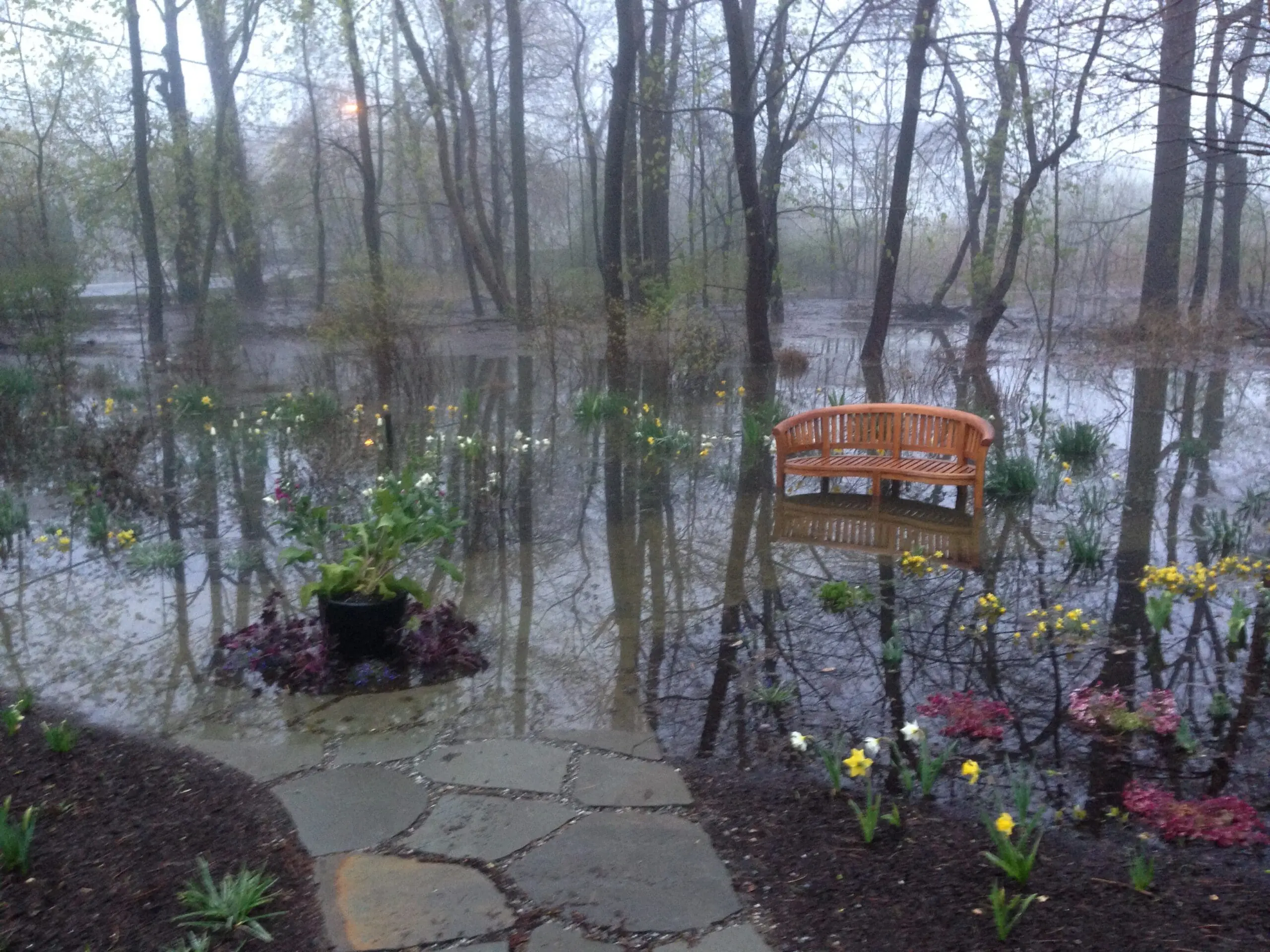
Sometimes even when we have substantial drainage systems, we need to reevaluate the function of drainage due to changes in the landscape environment. This may be caused by changes in the hydrology of the watershed above or below ground. During this past year we have seen issues that under normal circumstances may not be a problem. When the ground water table is high and the ground is saturated, existing piping and catch basins may be temporarily unable to handle a large volume of flow.

Early spring flooding can more detrimental, for most plants are still dormant and unable to absorb the excess water.

In this case, our client had a small amount of water at the base of the inside basement wall. Upon a proper inspection of the grounds we found the following: property was at significantly lower elevation from neighbors properties, patio had settled, pitching toward rear of house, window well covers broken, neighbors’ gutters and leaders were discharging towards side of house (where the problem occurs), lack of perimeter drain, bioswale and grade/pitch incorrect, evidence of significant loss of topsoil, scouring/erosion. The rear yard was very shady, mostly overgrown trees and shrubs, above the retaining wall. This reduced evapotranspiration, keeping the heavy clay soil damp. Additionally, the window well where the problem occurs happens to have a valve box for irrigation located very close.

The first step was to examine the property survey which showed the location of three cultec dry-wells cultec.com as well as piping and catch basins. For technical support we utilize conservationtechnology.com & ndspro.com. To correct the issues we started by tree removal and severe pruning to alleviate the deep shade. Next we excavated to expose the exterior foundation wall to the interior floor depth to be sure the foundation was not compromised by cracks/intrusion. We checked the irrigation system for leaks. We re-graded (by elevating) the side and part of the rear yard/lawn to increase pitch and volume of the bioswale. The installation of the cultec dry-wells were appropriately located, however, they were installed too deep considering the impervious clay fill between the surface and top of system. As a result, the water poured over the retaining wall (which also lacked proper drainage/weep holes), failed to infiltrate to the subsurface dry-wells, and flowed to the rear and side of house.

This drainage problem was remedied by installing a perimeter drain (perforated PVC/gravel/filter fabric) at the base of the retaining wall at a depth of 18”, the top void filled and re-graded with a topsoil/compost mix to increase storm water infiltration. Most importantly, we connected the perimeter drain to the deep cultecs by means of a vertical infiltration trench (gravel). While we were at it, we also prepped the ground for the new play set by dethatching the grass, de-compacting the ground/surface by hand, installing filter fabric and playground mulch (cedar chips) for under the playground surface.

As part of the scope of work we also: core aerated the lawn, applied gypsum, compost, topsoil, seed accelerator, re-graded and seeded the rear and side lawn (with 13 improved grass varieties/species) including the bioswale. We installed new window well covers and repositioned existing unused bluestone pieces to create a walk to the play set.

Once complete, even without re-pitching the rear patio, which remained slightly sunk below grade, the water intrusion in the basement was remedied. The total project took three full days. The visual effect was a dramatic improvement. The functionality was equally dramatic as the children were able to use the play set and rear lawn right away, even though it was getting rather late in the fall (Halloween).

—

Jay Archer

President, Landscape Ecologist

914-560-6570

Filed Under: Organics - Lawn, Tree & Shrub Care, Wetland Restoration & Storm Water Tagged With: basement flooding, flooding prevention, landscape drainage, landscape drainage plan, lawn renovation, organic lawn, perimeter drain, playset base preparation, storm water management, storm water management plan

Last week we had the pleasure of attending the 30thannual New Directions in the American Landscape (NDAL) two-day conference at Connecticut College. Founded by Larry Weaner Landscape Associates, NDAL has a stacked history of assembling leaders in ecology, restoration, landscape architecture/design, sustainable agriculture, and community development, to name a few. This year was no exception—the speakers were informative, inspiring and grounded (the power of case studies!).

See bottom of page for a full list of speakers and their presentation topics.  I’ll attempt to summarize my favorite talks for those who couldn’t make it!

Larry Weaner – Reflecting on New Directions in the American Landscape

Landscape Architect and NDAL founder Larry Weaner spoke on the need for landscape design to address and solve pressing issues of our time.  He iterated three categories:

“Culture: Use an anthropological lens to reintroduce lost cultural landscape practices; particularly where contemporary trends have given them renewed relevance. 

Agriculture: The role of farming in landscape design and the role of landscape design in farming. 

Social Justice:How can landscape designers more frequently and more effectively provide services to underprivileged communities.” 

Weaner gained international accolades for his expertise as ‘the meadow guy,’ frequently designing acres of native wildflower meadows for his clients.  Larry reflected on his decades of meadow experience with lessons learned about meadow seed mixes and management. Some takeaways I found notable:

  • Many invasives are early succession colonizers.  If you can shade them out with taller desired plants, they wont stand much chance.
  • Mow your meadow in June for shorter plants that still have time to flower.
  • Be patient! Some wildflower species don’t emerge for 8-10 years! Others will only be present for the first 1-2 years. The dynamism is part of the fun!
  • Observe which species can compete with each other, and which get over powered. For example, Larry noted that Canada Golden Rod is usually quite aggressive, but New England Aster can compete well with it.
  • Study the natural microclimate of your species.  For example, Larry observed that Coneflower prefers the woodland edge to the open, sunny meadow. Mirror these preferences in your design and your plants will thrive.

William Young – Managed Ecological Succession as a Response to Major Disturbance Events 

Wetland scientist and landscape architect William Young walked us through three case studies of mitigating extreme pollution and contamination through ecological restoration.

One such example was over 100 acres of riverfront Brownfield land in Woodbridge, New Jersey Young and the Dawson Corporation designed an ecological wetland restoration plan for the area, which would eventually become a public park, dubbed Woodbridge Waterfront Park.  The plan involved using phytoremediation to remove toxins from the soil – industrial wastes from the site’s former owners Nuodex and later, EPEC Polymers.  I was reminded that in phytoremediation, the plants are not up-taking the toxins in the soil, but rather, the plants are creating a hospitable habitat for microbiology that can decompose the toxins in situ.  It is far preferable to detoxify on-site rather than haul materials out and in.

The design involved choosing which habitat, which stage of natural succession after a disturbance, to restore through grading (manipulating the hydrology) and planting. The Dawson Corporation team designated specific areas as wet meadows, scrub-shrub, riparian forest and swamp forest and planted them with species found in nature in each of these ecosystems.  Plant It and They Will Come, the saying goes, and here was no exception.  Young kindly provided these informative charts of what species to expect at what level of ecological succession.  Fascinating!

Tama Matsuoka Wong – New Perspectives on Edible Landscapes

Tama Matsuoka Wong is a professional forager for elite local chefs; she forages on her 45-acre property in New Jersey.  Wong’s passion for truly wild ingredients is one part ethnobotanic historian, one part eccentric foodie, and one part upcycling genius, turning obnoxious invasives into culinary delicacies.
Wong recently co-published with chef Eddly Leroux  Foraged Flavor a foraging guide and cookbook detailing her foraging forays and Leroux’s delicious, inventive recipes.  Some fascinating inclusions from her presentation are:

  • Shagbark Hickory Bark Icecream – recipe here
  • Garlic Mustard Pesto
  • Daylily shoots and buds used as a vegetable reminiscent of French beans x leeks, and asparagus, respectively.
  • Fading Queen Anne’s Lace flowers as a spice, whose flavor she described as a combination of coriander, carrot and paprika.
  • Japanese Knotweed as a Rhubarb substitute in yummy dishes like Strawberry Knotweed Crumble

Alexa Bosse – Landscape Design in Underserved Communities: Part 2

Alexa presented on the growing need and awareness for community-centered design in communities that are often overlooked and underserved in landscape architecture, architecture and urban planning projects.  She spoke of her work in Philadelphia with her design firm Hinge Collective, whose mission is “to support communities in realizing public places, that reinforce what makes those communities unique and powerful.”

They do this through a lengthy participatory design process; one that involves showing up at community events completely unrelated to design or the space; surveying and listening to community members about what their community needs and doesn’t need in a public space; and involving them in the design process through community meetings and design charrettes.

Community involvement doesn’t stop there, either.  It was inspiring to see how Hinge Collective orchestrated community installation days—with residents of all ages—to complete planting, painting, and other elements of landscape construction as a team.  The community vision doesn’t stop at the installation, either.  For example, in one such project, Frankford Pause Park, they partnered with the Frankford Community Development Corporation to host a small business “shark tank” for the vacant store fronts surrounding the new park; winners received one year of free rent in their new store front.

For more information on Hinge Collective projects and case studies, visit their website.

Full List of Speakers & Presentations

Larry Weaner– Reflecting on New Directions in the American Landscape

William Young – Managed Ecological Succession as a Response to Major Disturbance Events 

William Cullina – Vignettes from Coasta Maine Botanical Gardens

Chad Adams – New Perspectives on Edible Landscapes: Regenerative Agriculture 

Tama Matsuoka Wong – New Perspectives on Edible Landscapes: Foraged Flavors 

Rick Darke – Imposition or Revelation? Design and the Nature of Contradiction 

Teri Rueb – Listening to Landscapes: Augmenting Environments with Media Overlays 

Charles Birnbaum – Managing Change with Continuity 

John Swallow – Reality Check: Soil Science During Construction 

Kofi Boone – Landscape Design in Underserved Communities: Part 1 

Alexa Bosse – Landscape Design in Underserved Communities: Part 2

Thomas Baker – Advancing Science and Design: Exploring the Science of Ecology in Contemporary Landscape Architecture 

Jeffery Longhenry –Culture, Ecology, and Equity as Drivers of Contemporary Landscape Design  


Filed Under: Ecological Education, Events & Garden Tours Tagged With: design professional, ecological landscape design, educational event, environmental event, New Directions in American Landscape Design

When we think about our landscape what do we think about? It could be a simple as what you might do to make your property look better or be able to entertain outdoors more. It may be something useful and practical, something you need, like a new driveway, a retaining wall, new walkway, a green lawn etc. Maybe it will be something that will increase your quality of life and change or improve your lifestyle, like a swimming pool or a patio, gazebo or pergola. Is this a substantial home improvement (capitol improvement) project which will increase the value of your home and property?

Hopefully you are also thinking about what could enrich your life in terms of your physical, mental and even spiritual health. The desire to improve your overall health and well-being should be a motivation for landscape design as well as maintaining your landscape.

Removing toxic pesticides from your landscape is a healthy start in the right direction. Consider redesigning with a goal to increase the actual, healthy biology of your property. We are exposed to countless chemicals and environmental contaminants in our day to day life. Exposure to dirty air, unclean water, and we now know, pesticides and antibiotics in our food are a modern plague! Our homes and landscape environments, which we may not be completely in our control, can have the largest positive impact on our health and well-being.

Trees, for instance, will offer not only shade and cooling while drinking in air pollution, but will also create habitat and sanctuary for birds and wildlife while providing a peaceful, serene atmosphere for contemplation. Even modern medicine, through Harvard University now recognizes the health benefits from deep breathing, Tai Chi and meditation! Cornell University recognizes the value of nature so much so they are even giving out prescriptions in their natureRx program!

In any case, you should think about what changes you would like to make in your landscape and how your body and mind will react and respond to those changes. The true question is, what is your hope, your expectation from your new landscape? How will that be an improvement over the old? For instance, if you intend to entertain and cook on a new outdoor kitchen or build a fire pit with a patio you will need an architectural plan and permits as well as some lead time for the design and permitting process. You will need to allow for these costs in the budget. Whether your intentions are ecologically based or not really, you will need to consider resource management including land, air, water, plants, stone, wood and don’t forget… (most important of all) …financial!  Who are you going to trust with your money?

What about growing your own organic herbs, fruit and vegetables? Foodscaping is not only popular but it’s fun! Personally everywhere I’ve lived, (I am a client too!), I have designed and constructed a water feature, a fire pit, a living wall or vertical garden and of course, an awesome flowering, colorful, native plant garden / landscape with fragrant flowers, fruit, herbs, trees and shrubs. Keep in mind, everything in life requires maintenance! That is as true of our landscapes as it is of our human bodies! Who’s your doctor, who will keep you well and in good shape …does he make house calls?

I know what these landscape features surrounded by vibrant, abundant healthy biology do for my health and serenity! I wouldn’t want to live any other way!

Since the beginning of time, some people were always blessed to be living with clean air and water and heathy organic food surrounded by nature and beauty.  You don’t need to be rich to deserve and have the best things in life…you have to identify them…recognize what they are…and value them for the gifts of joy, hope and love they offer!

There are people that specialize in many different aspects of landscaping from contracting to landscape designers APLD to landscape architects to ecological landscape professionals (designers, ecologist etc.) to organic landscape professionals.

Many professionals wear many hats and have many overlapping interests. I recommend that you trust your intuition and common sense, after they have been carefully vetted through professional and government agencies such as the Better Business Bureau, Dept. of Consumer Protection, LinkedIn etc.

Plan on enjoying the wonderful experience of metamorphosis and change that occurs when you join your head and heart to begin an exciting, worthwhile journey to Landscapes for Better Living!

Jay Archer, President

914-560-6570

greenjaylandscapedesign.com

Filed Under: Ecological Education, Landscape Design Tagged With: design professional, ecological landscape design, ecological landscaping, landscape consultation, landscape design master plan, landscape designer

What do we do? Why do we do it? How do we do it?

We are in the nature business. We work with nature every day, with plants, soil, water, and countless creatures. We believe nature is an expression of God’s love. We need to appreciate it, love it and value our precious natural resources: the trees, the flowers, the fields and yes, even the lawns of our landscape environments.

How do we do it? We nurture our faith and respect for the land by healing the waters and caring for the land. We accomplish this goal every day by first…Do No Harm.

We tirelessly strive to increase the biology of our landscapes by encouraging life…not killing and destroying it!

We practice humility and acknowledge there is no way for us to know what lifeforms to remove from our landscape ecosystems without upsetting the natural balance.

All our landscape systems are challenged and in need of balance. We firmly believe subtraction is usually not the answer. Improving the  biological health of our landscapes is our proven winner.

By restoring and regenerating the productivity of our naturally beautiful landscape ecosystems, we create and support living landscapes that contribute, conserve, preserve and protect resources. That includes financial resources.

Reducing waste by better management means repurpose, recycle and redirect resources for the best productivity and result. We do this by not looking for a pill, a product, or a switch to pull to effect positive change.

Instead we look holistically at the landscape as a patient in pain.

We strive to correct the ills, the symptoms, which plague the body of the landscape. Using science, art and intuition we develop plans and protocols which may involve cultural practices, design, construction, bioengineering, organic horticulture, permaculture methods, marriage counseling and any therapeutic means necessary that apply to insure our landscapes deliver a pure, wholesome environment for all living things.

Jay Archer

President, Landscape Ecologist

914-560-6570

Filed Under: Ecological Education Tagged With: ecological landscaping, habitat garedens, healthy yards, landscape designer, landscape ecologist, landscapes for better living, organic landscapes, soil conservation

Anne, a beloved client in Irvington, NY shares her perspective on nature in the landscape, and why she chose ecological landscaping for her property.

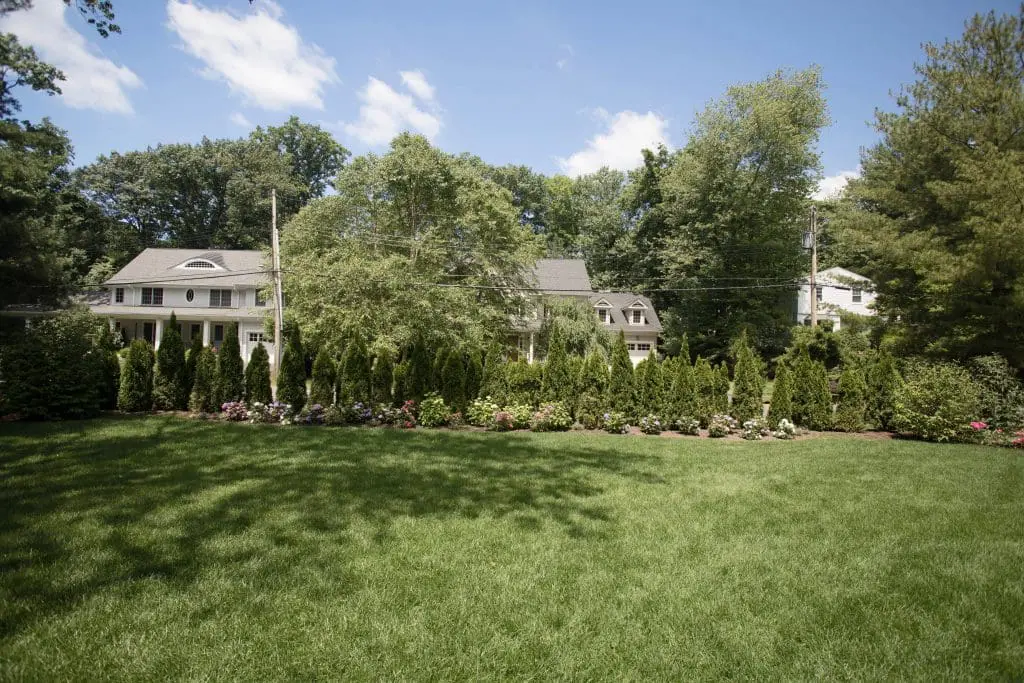
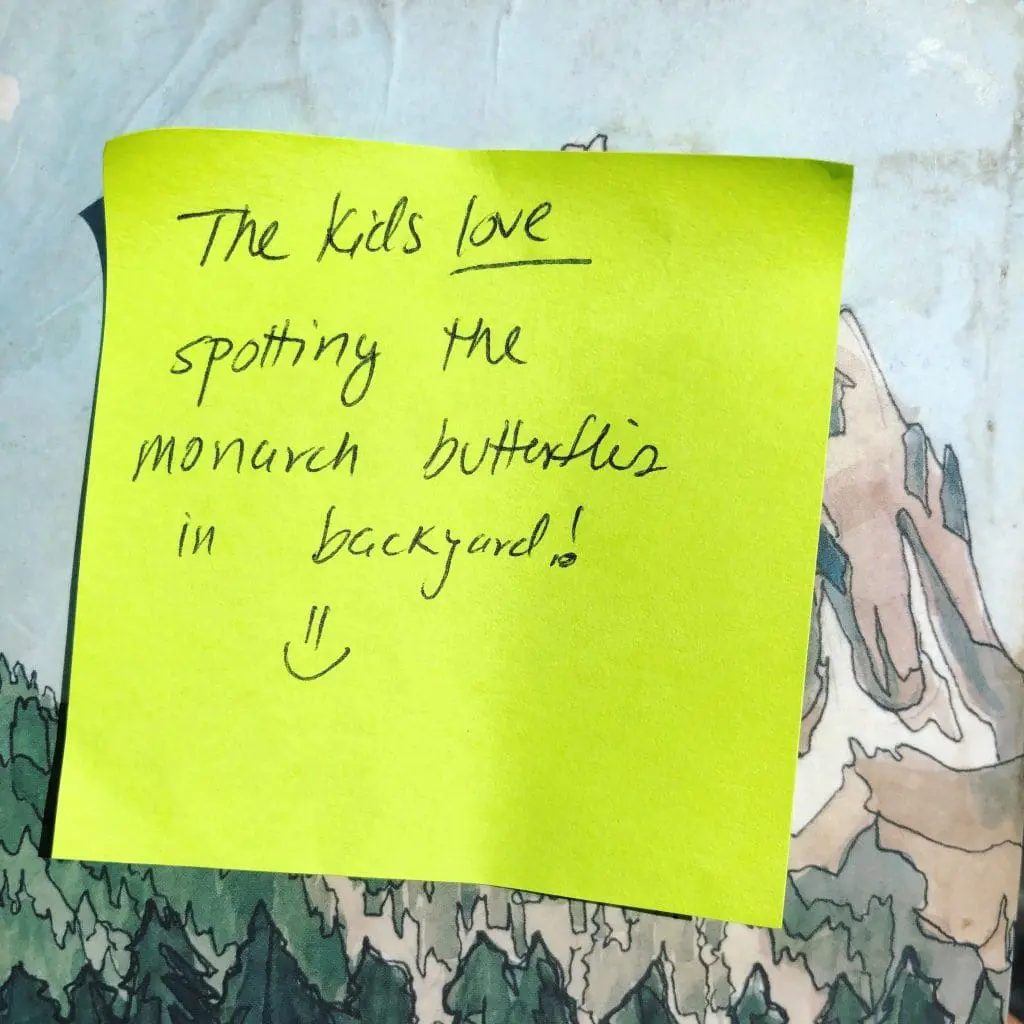
GJL created a Landscape Design Master Pan for Anne that included removing a small useless strip of lawn along the front walk, and replacing it with native perennials for pollinators.  Her young children especially appreciated watching the birds an butterflies in their new outdoor classroom. GJL also consturcted a flagstone staircase and stepping stone path, laid completely by hand, to increase access to all areas of the property.  The result is a carbon-positive landscape with immense diversity of flora and fauna.

Filed Under: Ecological Education Tagged With: A Voice For Nature, landscape ecology, natural landscaping, nature as medicine, testimonial, why we value nature

Closing one door and opening another! We love the challenges presented by new construction. In this case, a beautiful addition to the rear of our client’s lovely home in Mamaroneck required extensive conventional engineering and drainage construction.

With all the rainfall this year we have to ask…where do we put the water?

When designing storm water systems, we must consider three sources: sheet flow (surface storm water), ground water, and water displaced by impervious space (i.e. house patios, walks, driveways, pools, ponds etc. that prohibit water from infiltrating to the aquifer

Typical of new construction, to conform to building codes and gain architectural review board approval, subsurface drainage systems are designed to contain allrainfall/storm water on site during a specific, extreme storm event. This usually includes solid piping (from gutters/leaders) and/or perforated pipe surrounded by gravel, in conjunction with storm chambers, cultecs , or some form of galleries or underground dry-wells. While highly effective as designed, when constructed and installed they are limited in the ability to accommodate all the surface water. This is particularly true in the case of managing runoff from adjacent properties.

[Above: Rain Water Harvesting Passive Irrigation system overlayed on existing dry well system required by town for the new construction.]

GJL was hired (in part) to optimize the existing system by supplementing with a tile-like piping system, which will deliver roof collection of storm water from gutters and leaders, redirect it to landscape planting beds, as well a rain garden and two gravel surface patios.  An important component of our passive irrigation system is a vertical infiltration pipe connected to a distribution box/clean-out from the system, which insures that surface water reaches the deeply buried dry-wells (~3’ below grade). This is critical to insuring performance and ease of maintenance. Don’t forget to clean your distribution boxes of leaves and debris!

In addition, we find it very helpful to treat the soil to relieve compaction due to construction or the existing soil type (i.e. heavy clay). Sometimes this involves excavating, rototilling, or soil amending with sand, compost, gypsum etc. This pertains to lawn, landscape planting beds and basically all of the 6-8” depth of soil surface.

The next step is to compose the landscape with plants that will improve the natural hydrologic cycle. That is determined by the right soil type, sun/shade, topography and of course the aesthetic style of the landscape design composition and theme. In this case the gardens were named: Health and Healing Garden, Cornucopia of Hope (which includes a water feature, fire pit and living wall) and the Bird and Butterfly Rain Garden. The end result is to create a beautiful and highly ecologically functional landscape in terms of resource management.

A landscape should be beautiful to look at while improving our human health, managing and conserving resources, creating habitat for beneficial species, and critically important: producing a carbon positive landscape environment!

We can make our world more beautiful and healthier by designing and building carbon positive ecological landscapes!

Jay Archer, President
914-560-6570
greenjaylandscapedesign.com

Filed Under: Featured Work, Irrigation & Water Systems Tagged With: landscape drainage, landscape drainage plan, landscape ecologist, passive irrigation, rainwater harvesting, storm water management, storm water management plan

  • « Go to Previous Page
  • Page 1
  • Interim pages omitted …
  • Page 36
  • Page 37
  • Page 38
  • Page 39
  • Page 40
  • Interim pages omitted …
  • Page 60
  • Go to Next Page »

Footer

Mailing Address: 222 Purchase Street, #144 Rye, NY 10580
Shop Address: 369 Bradhurst Ave, Hawthorne, NY 10532
(914) 560-6570
  • Facebook
  • Instagram
  • LinkedIn
  • Pinterest
  • YouTube
  • Houzz
  • Slide Share
  • Installation
  • Portfolio
  • Pricing
  • About
  • Contact

Copyright © 2025 · Green Jay Landscape Design. All Rights Reserved · Privacy Policy · Website and Local SEO by Ramblin Jackson