• Skip to main content
  • Skip to footer

Nassau County Residents

Green Jay Landscape Design is licensed and insured only for landscaping services in Nassau County.

All other services mentioned on this website are performed by independent contractors.

Green Jay Landscape Design

Green Jay Landscape Design

Green Jay Landscape Design

(914) 560-6570
  • Design
  • Installation
  • Portfolio
  • Pricing
  • About
    • Service Area
    • Meet Our Team
    • Our Process
    • Our Promise
    • Mission, Vision, & Core Values
    • FAQ
    • Press & Events
    • Blog
    • Reviews
    • Careers
    • Affiliations
    • Newsletter Sign-up
  • Contact

greenjayadmin

Nestled amidst a sloping topography, mature woodland and adjacent wetland, this contemporary Greenwich, CT home is sited amongst natural beauty, but is also prone to landscape drainage challenges.  A holistic evaluation of the property during the initial consultation and site visit led us to discover an underlying well issue that impacted our design decisions. Ultimately, the landscape drainage plan and planting design were sized to the water availability and a multi-pronged stormwater strategy resolved the pooling and intrusion issues. The timing was perfect, as winter can be the most dangerous time for landscape drainage impacts. Expansion and contraction from the freeze/thaw cycles of subgrade water against the foundation creates pressure and the potential for fissures and infiltration.

BEFORE: poorly chosen masonry materials and improper grading created landscape drainage issues.

Analyzing Landscape Drainage Conditions Holistically

There were clear signs of landscape drainage problems on this property. The existing drainage infrastructure was inadequate and during large storm events, the four gutters and leaders directed to the courtyard would overflow, flooding the courtyard. The surrounding lawn landscape pitched downslope toward the driveway, exacerbating the surface water sent toward the sunken courtyard.

Surface water from surrounding landscape is funneled down the driveway.

The existing bluestone patio in the courtyard was pitched improperly and directed stormwater toward the foundation. The patio was consistently covered in mold from the wet and shady conditions, creating a slippery surface and unhealthy respiratory stress. As an impervious space, it further inhibited stormwater infiltration.

The upper courtyard landscape bed above was planted with a monoculture of pachysandra, a notoriously inefficient plant for landscape drainage or stormwater absorption. Since pachysandra is an evergreen ground cover, it needs little water and has a shallow root system that barley diverts stormwater or secures the soil.

Beyond the Landscape: Asking the Right Questions

Another unique element of this property is the indoor swimming pool. The client had recently discovered a leak in the pool. The pool is connected to an auto refill (even indoor pools naturally evaporate) from the well holding tanks but was refilling at an alarming rate due to the leak.

When the client expressed concern about their well, we recommended they hire a well company to perform a well recovery test. Shockingly, their well recovery rate was only .75 gallons / minute. This is far too low for a family to live on. This critical piece of information shaped our design direction to phase in the landscaping until the well issue is resolved, instead of over-burdening the well with an extensive planting plan and irrigation plan.

Sunken Courtyard Stormwater Strategy & Design

After speaking with the client, we learned that although the courtyard is highly visible from within the home, the clients never used the outdoor patio. Its function was essentially view-only, and as an outdoor habitat for their box turtle. The family Labrador befriended the turtle, visiting it daily, like something straight out of a Disney movie!

We knew the bluestone patio had to be removed, it was not functional, and it was worsening the stormwater problem. Bluestone is slippery and moldy in cool weather and very hot in warm weather. Plus, once removed, we could install more sub-grade landscape drainage infrastructure. The bluestone patio was removed by hand and carried up a ladder to the driveway level.

Progress: bluestone patio removed, pachysandra reduced, and installation of drainage infrastructure begins.

We then installed a level spreader overflow pipe and drywell system.  By installing a T bracket on two of the existing leaders, the stormwater will still flow to the existing (unknown) drainage system below, but once that reaches capacity, it will exit into the level spreader.

T-bracket installation allows original landscape drainage system to function, and have an overflow system.

The level spreader consists of solid pipe for the first 10’ away from the foundation. It then switches to perforated pipe and connects to a flow well.
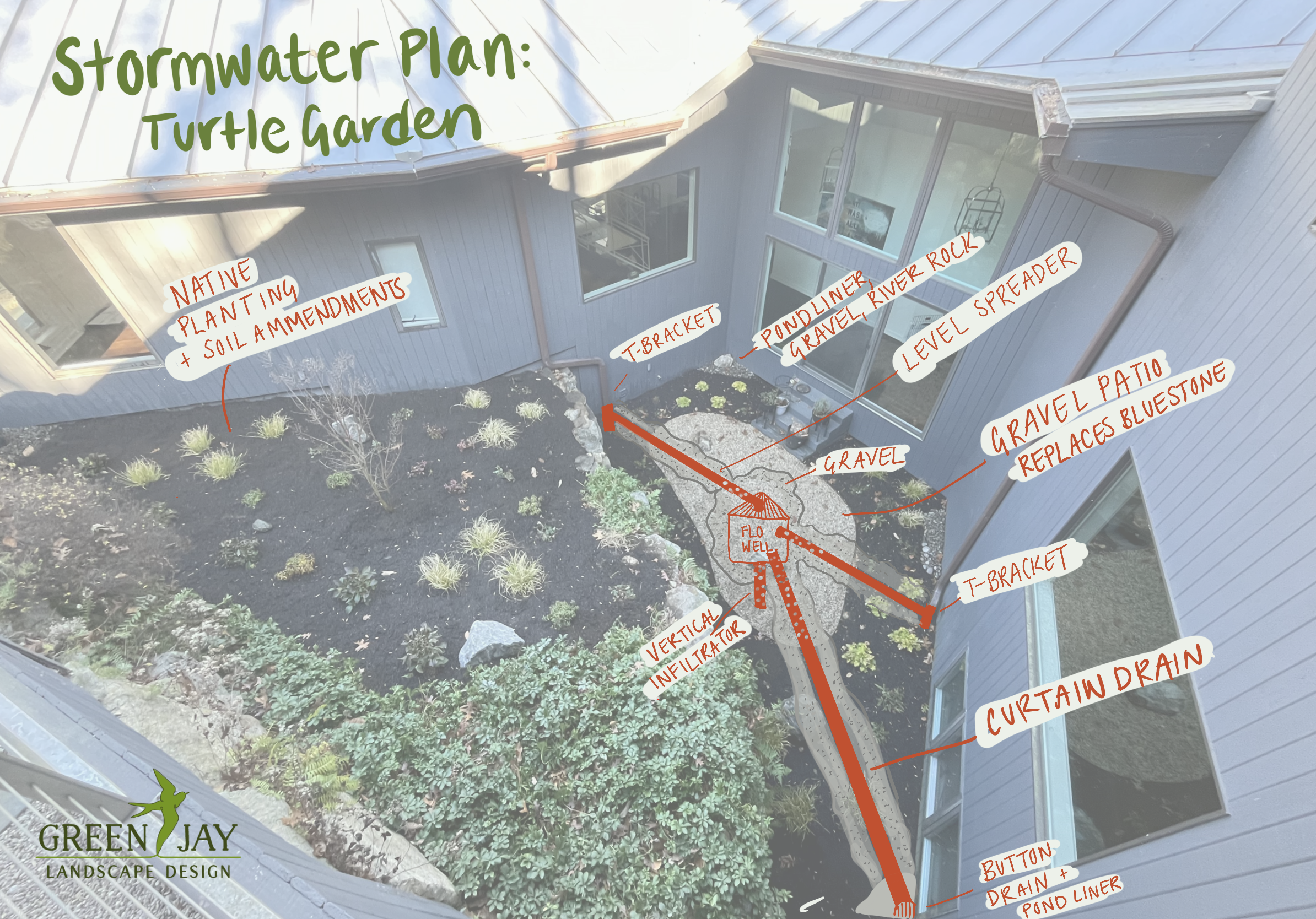
Stormwater Management Plan for a sunken courtyard in Westchester, NY.

Below the flow well is a three-foot vertical infiltrator, a perforated pipe extending down from the flow well, surrounded by gravel. The level spreader is overflow for the existing landscape drainage system, and the vertical infiltrator is overflow for the level spreader.

Level spreader installation in the courtyard directs stormwater away from foundation and allows it to infiltrate.

Gravel Garden & Grading

Another problem spot in the courtyard was around the patio, where the grade was inexplicably pitched toward a corner of the house, where it collected and caused intrusion. To remedy this, we regraded the entire area to properly pitch toward the new gravel patio.

In the corner, we installed a four-inch button drain (an exposed grate surrounded by gravel, with a edpm liner beneath to protect the foundation). The button drain is connected to a curtain drain (perforated pipe surrounded by gravel) which is pitched to the flo-well in the center of the gravel patio.

Courtyard and gravel garden designed for stormwater management.

To replace the bluestone patio, we opted for a Zen Gravel Garden: decorative gravel with boulder accents, all retained in an organic shape with aluminum edging. The gravel garden is aesthetically pleasing and allows stormwater to collect and infiltrate. All materials were brought in by hand, bucket by bucket down the ladder.

In the corners of the courtyard, we installed an impermeable pond liner apron along the foundation and covered it with decorative river rock, to protect the foundation and encourage evaporation.

Upper Courtyard Landscape Drainage

We also had to remove a stump and root system from an old Japanese maple. The stump and roots take up a significant amount of soil volume in the upper terrace, but do literally nothing for stormwater absorption, so removing the mass and replacing with new soil and planting was a significant improvement in biomass and absorption capacity.
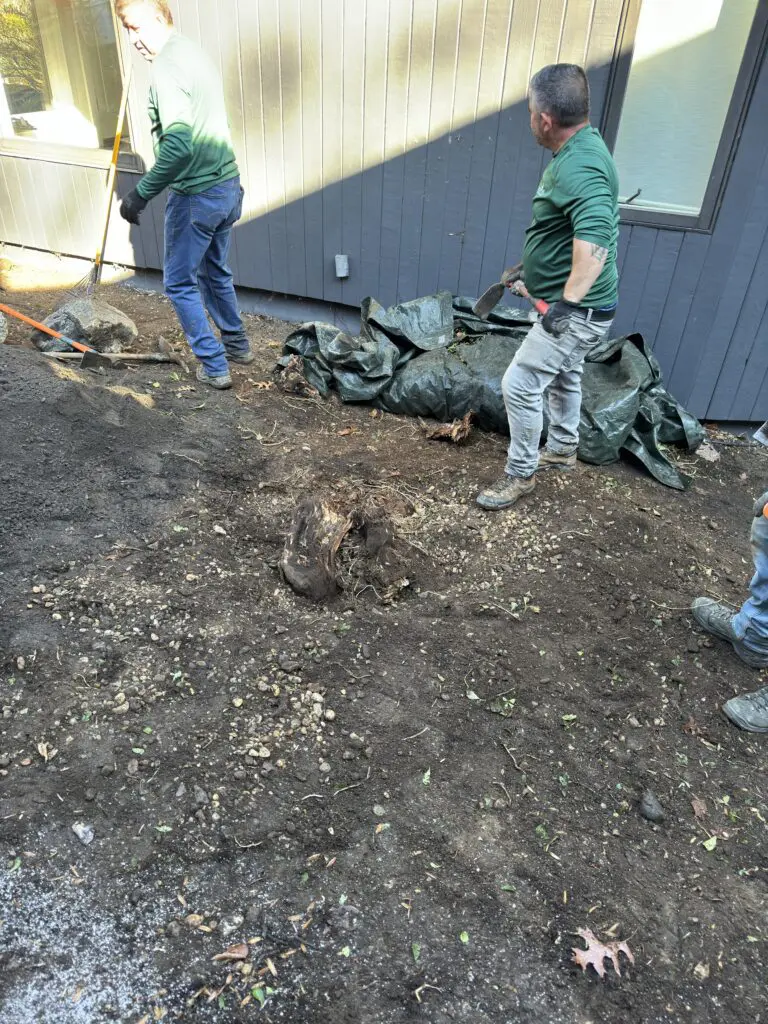
Japanese Maple stump was removed to improve soil drainage capacity.

Rectifying a Slope & Mitigating Erosion

 Along the side of the house, a steep topography change and improper grading technique funneled water toward the house, eroding the slope in the process. Scouring of the soil was evident as well as a loss of soil depth.

We noticed one of the leaders had a broken elbow that leaked stormwater, exacerbating the landscape drainage issues. We replaced the elbow, installed a 20’ solid pipe directing stormwater to a new wagon wheel drywell, and re-graded the area.

A Wagon Wheel dry well consists of layers of perforated pipe arranged in gravel.

To create the wagon wheel, perforated PVC pipe was cut to 18’ length, laid sideways and horizontally, alternating layers, and filled with gravel to create enough of a void to improve infiltration. The entire system is encapsulated by filter fabric with 6” of soil to allow for lawn to grow above. This strategy only works with limited stormwater volume/flow and good soil infiltration rates, which can be determined by a simple percolation test.

In all these stormwater strategies, the objective is to relieve pressure from stormwater on the foundation walls. Modern construction requires two waterproof layers and an insulation layer around the foundation of the house, but many of the homes we work at are not up to code and need further steps to protect the integrity of the foundation.

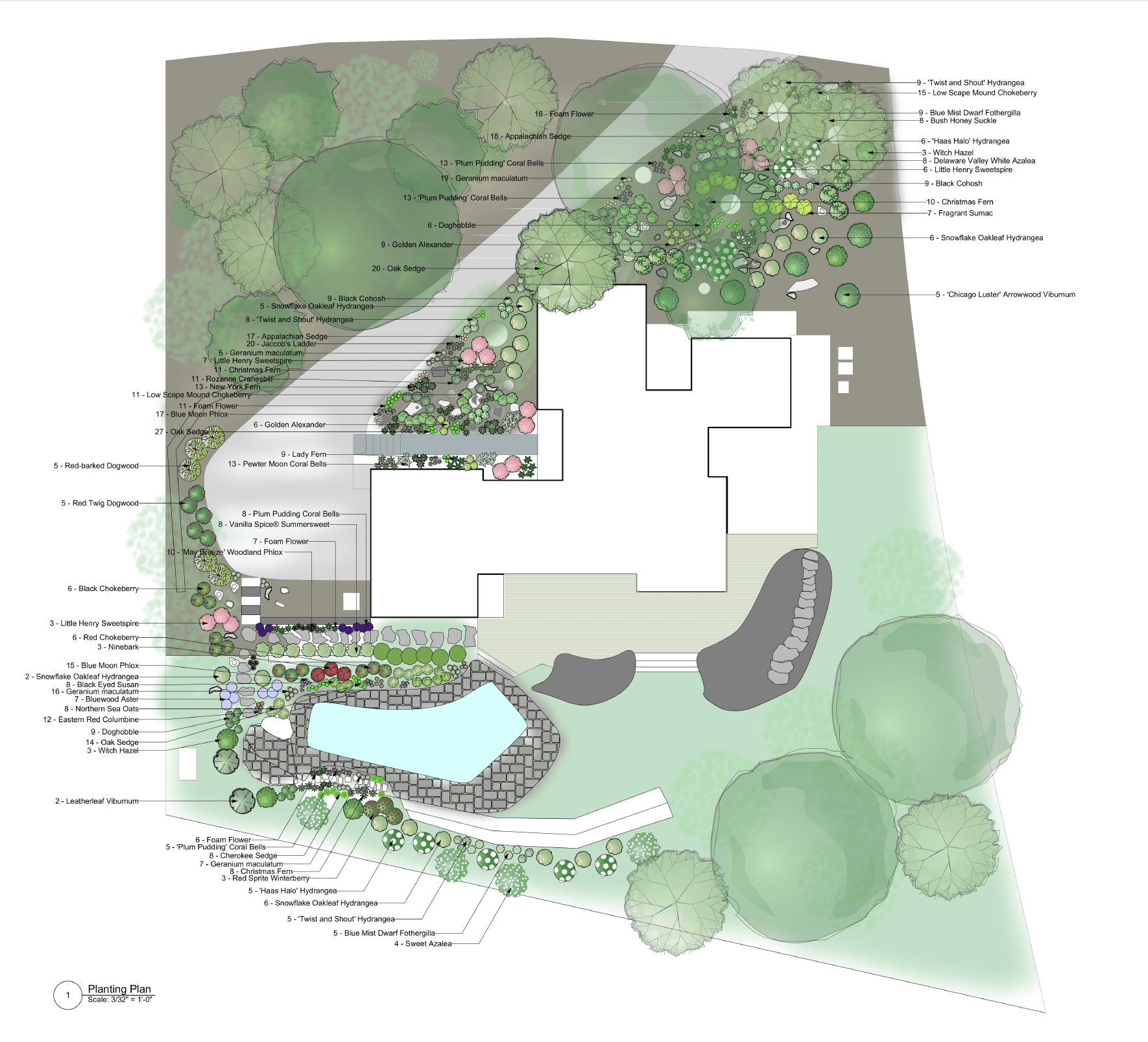
Front yard landscape plan includes strategic planting to absorb stormwater.

Phase Two Landscape Installation

In the spring, we will return to install the planting along the driveway, which will contribute even more biomass and stormwater absorption capacity, intercepting sheet flow before it reaches the courtyard.

To get started on your landscape drainage or landscape design project, contact us today!
Filed Under: Wetland Restoration & Storm Water Tagged With: button drain, courtyard garden, courtyard stormwater management, curtain drain, drainage, drywell, ecological landscape design, ecological landscaping, Fairfield county, flooding, gravel garden, gravel patio, greenwich connecticut, greenwich CT, intrusion, landscape design, landscape design master plan, landscape designer, landscape drainage, level spreader, masonry, natural landscaping, site development, storm water management, stormwater, stormwater plan, vertical infiltrator, wagon wheel

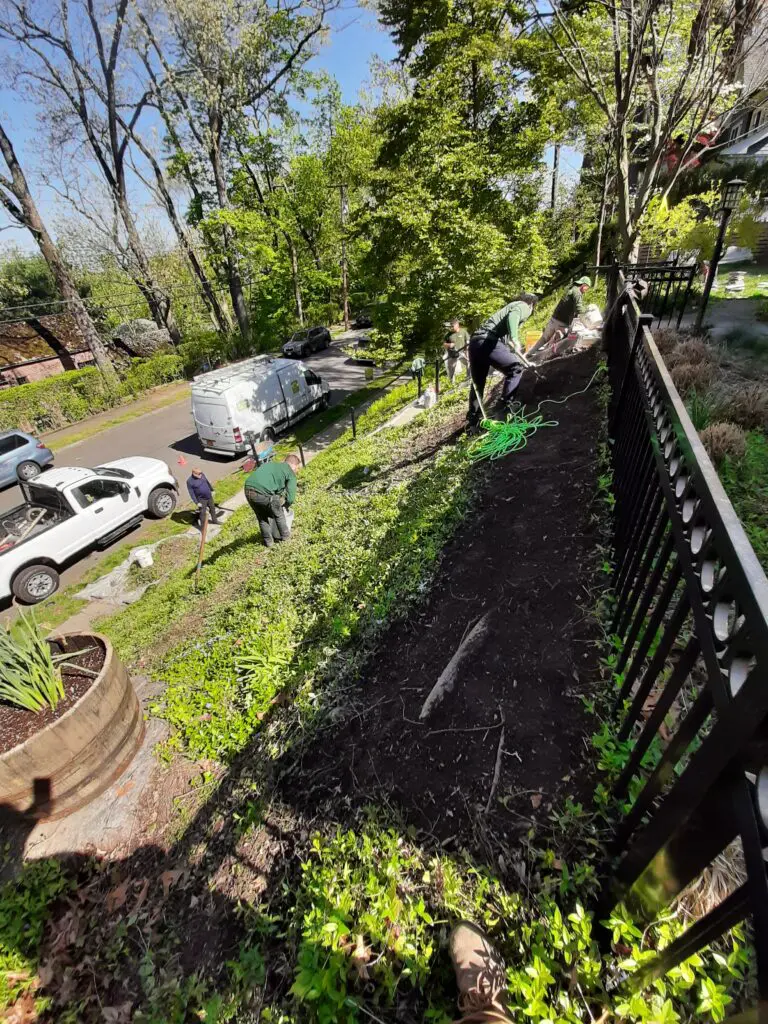
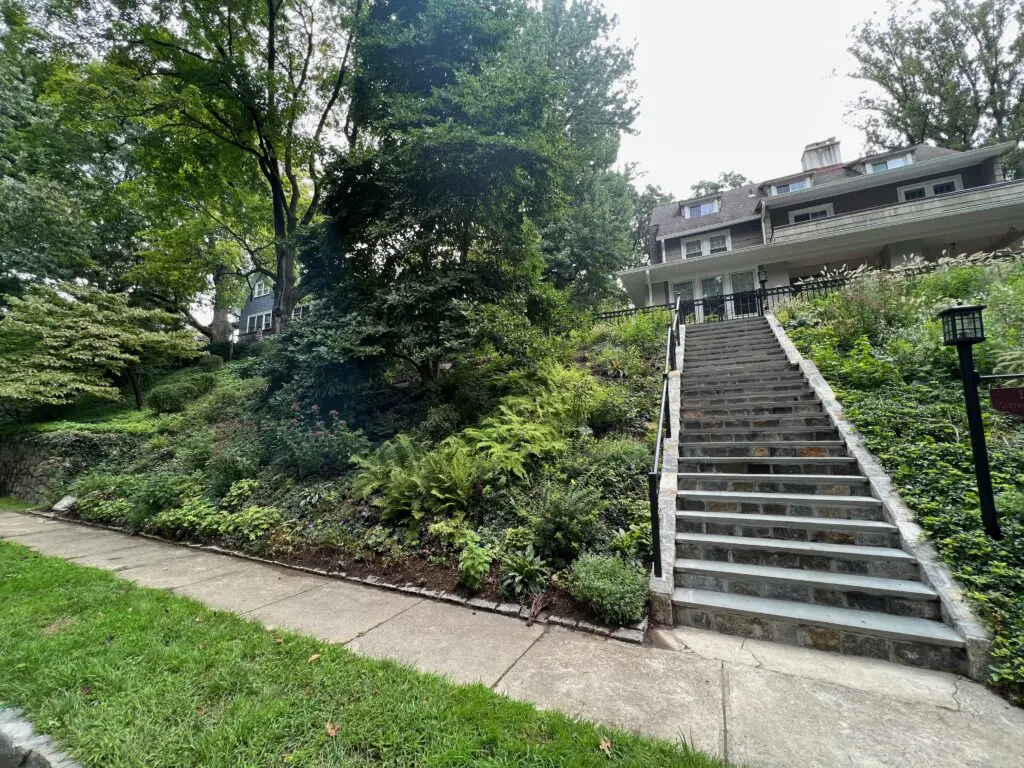
Another unique and challenging site involving a steep slope on a highly visible area, with years of erosion degrading the soil quality. Green Jay Landscape Design was hired to beautify the slope with a functional planting that would also stabilize the soil and prevent further erosion onto the street below. A suite of erosion control devices was deployed in this project, coupled with a site-specific plant palette that catered to all the microclimates.

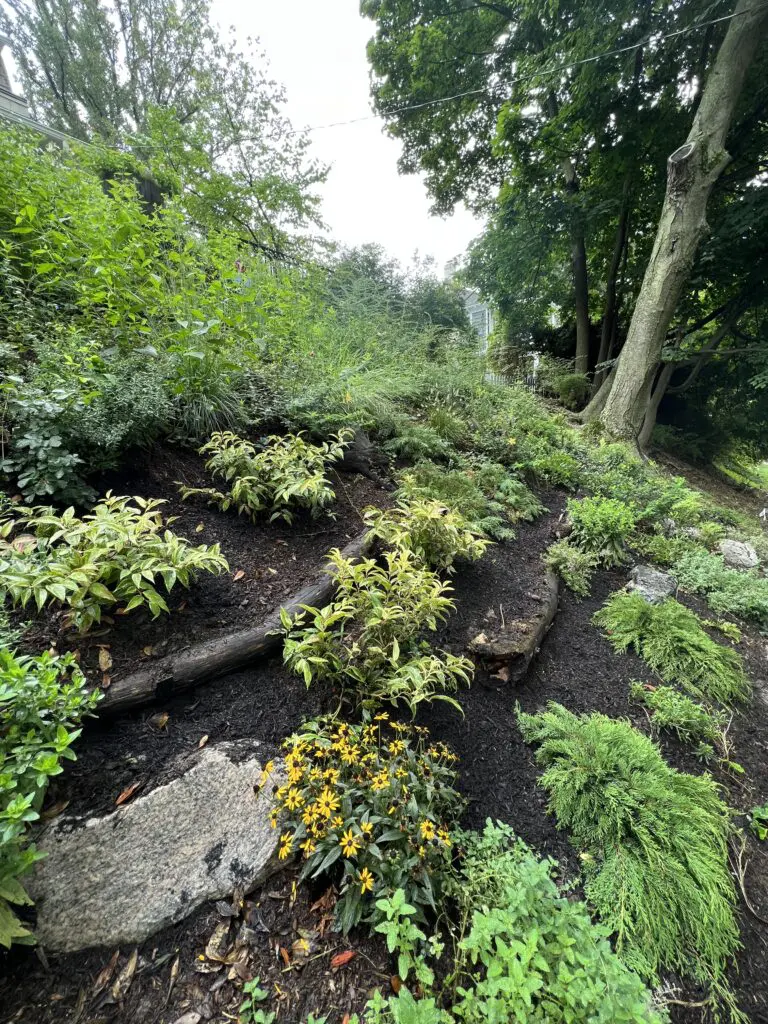
Shady side of the slope featuring native ferns and woodland perennials.

Watch an interview with Jay Archer and Uziel Crescenzi below on the project!
Find more of our videos on our YouTube Channel.

Analyzing Slope Site Conditions

This roadside slope was planted with mostly vinca and pachysandra, both shallow rooted, exotic plants that did little to stabilize the soil, especially during storm events. As a result, the soil depth was low, and it lacked adequate nutrients. During site analysis, we mapped the various light conditions, with a full sun section at the top of the slope, progressing to full shade by the bottom of the slope.

BEFORE: exotic plants did little to prevent erosion on the slope.

Designing a Plant Palette for Erosion Control

The plant palette needed to include deeply rooted native plants to secure the hillside as stormwater moves quickly down the slope. Deeply rooted plants are also better able to access water reserves deep in the soil during periods of drought.

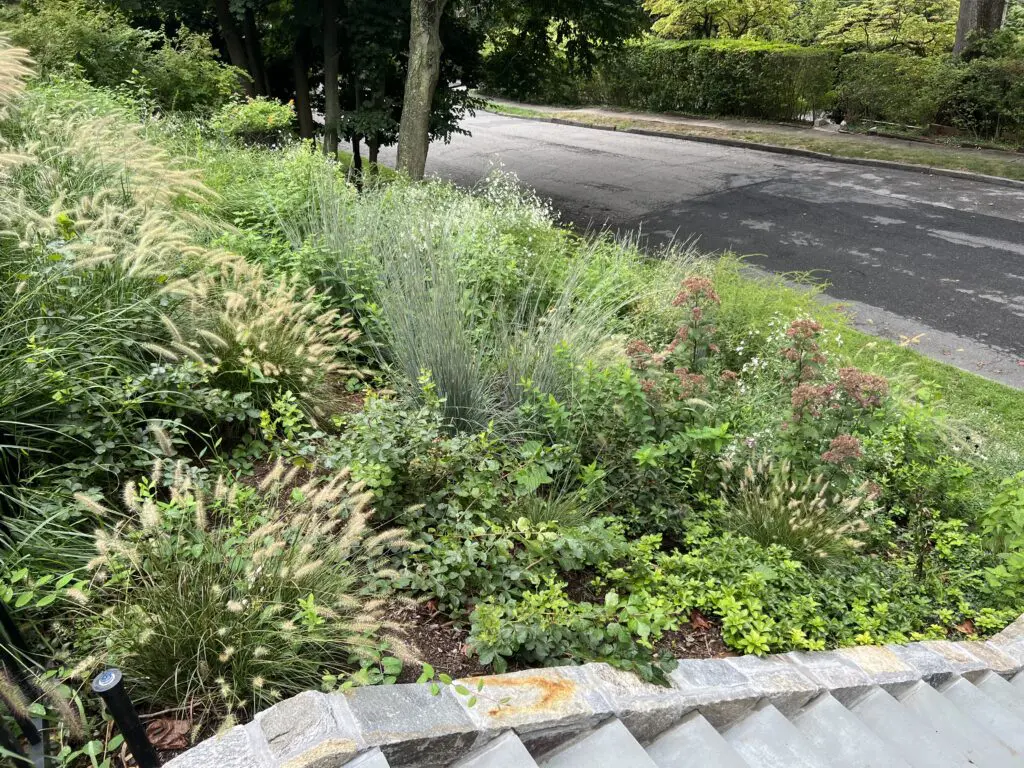
Deeply rooted prairie grasses in the full sun section of the slope preserve the structure of the slope.

This palette included many native woodland perennials, flowering shrubs, and ferns, as well as fast growing evergreen groundcover shrubs to maintain function during the winter months. The goal was to choose plants that would spread quickly to cover the slope, while also providing a variety of root depths for stabilization and look beautiful from the street!

Woodland perennials create a gorgeous contrast of color and texture.

As with all of our planting designs, ensuring a succession of blooms, from early spring to late fall, not only is visually appealing, but also supports critical pollinator species.

Erosion Control Devices for a Steep Slope

Until the planting matures, the root systems are less robust. We install with various erosion control materials to help support and stabilize the slope as the plants’ roots expand.

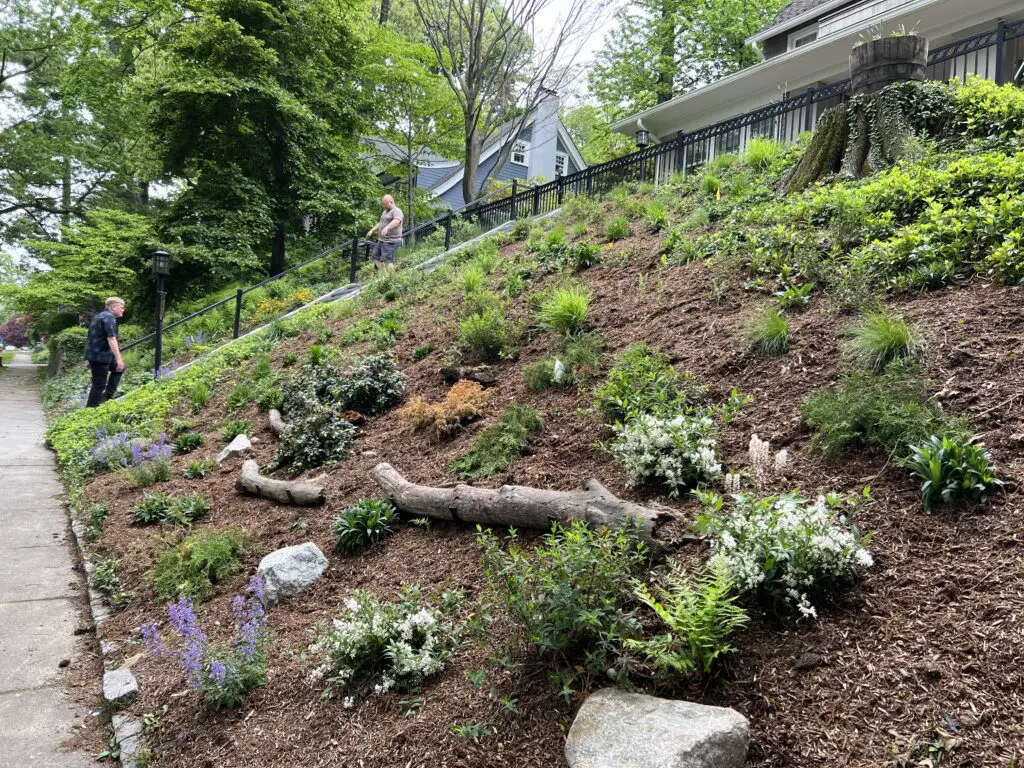
One example are erosion socks, cloth tubes filled with woodchips, that are staked into the ground across the slope to create a physical interruption. We surround the socks with high quality soil and plant around them. We use buried boulders for a similar purpose: interrupting stormwater flow, slowing it down and thereby allowing it to infiltrate into the surrounding soil. On this project, we also incorporated found logs, pinning them into the soil as an above-ground version of an erosion sock. The rustic, naturalistic aesthetic they provide to this woodland inspired garden is fitting.

Logs and boulders act as physical barriers to stormwater on the slope.
An earlier photo of the newly installed slope with naturalistic erosion control devices.

The soil brought into this project restored the organic matter previously lost to erosion. We also added biochar compost, which improves the water holding capacity of the soil as well as the soil structure. Soil structure is important because proper structure with air pockets allows plant roots to expand. Biochar is also a host material for soil microbes, which contribute greatly to plants’ immune response.

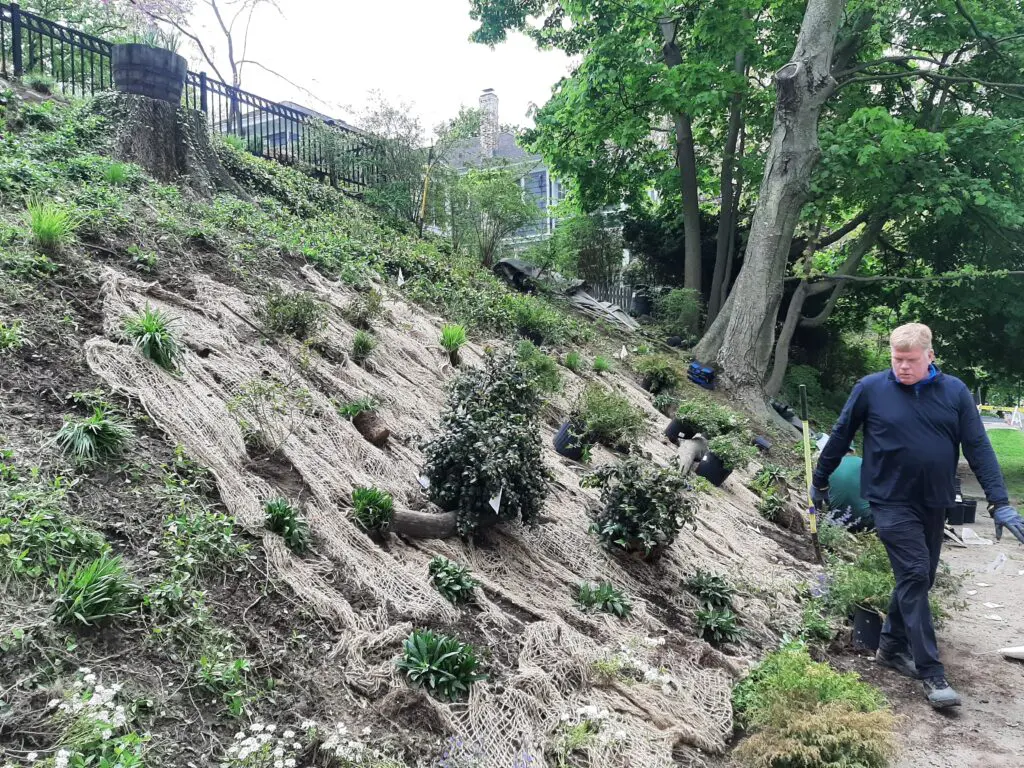
Planting into biodegradable jute netting, that stabilizes the new plants until they mature.

Lastly, we stake down jute netting across the entire site and plant directly into it. The netting secures each plant onto the slope and biodegrades over time as the plants mature. The netting is covered with mulch and not visible after installation.

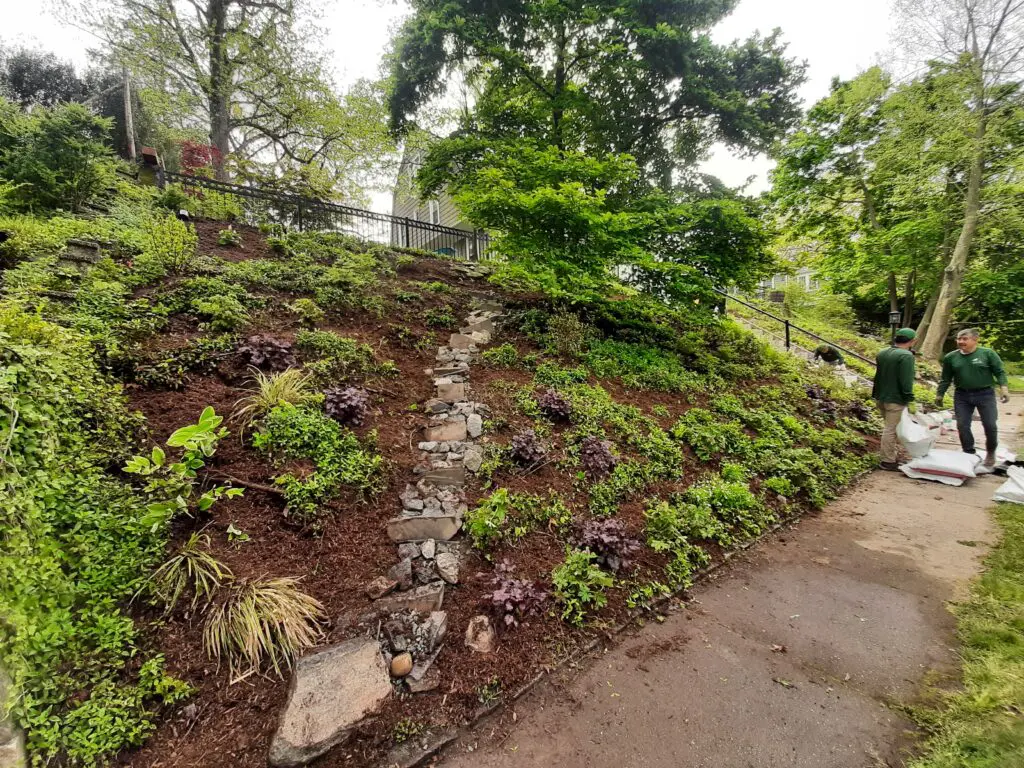
Baffled bioswale is another erosion control technique for slopes.

We also constructed a bioswale with stone baffles (larger horizontal pieces of stone) which effectively interrupt and slow down stormwater, diverting it out to the sides where it can infiltrate into the soil.

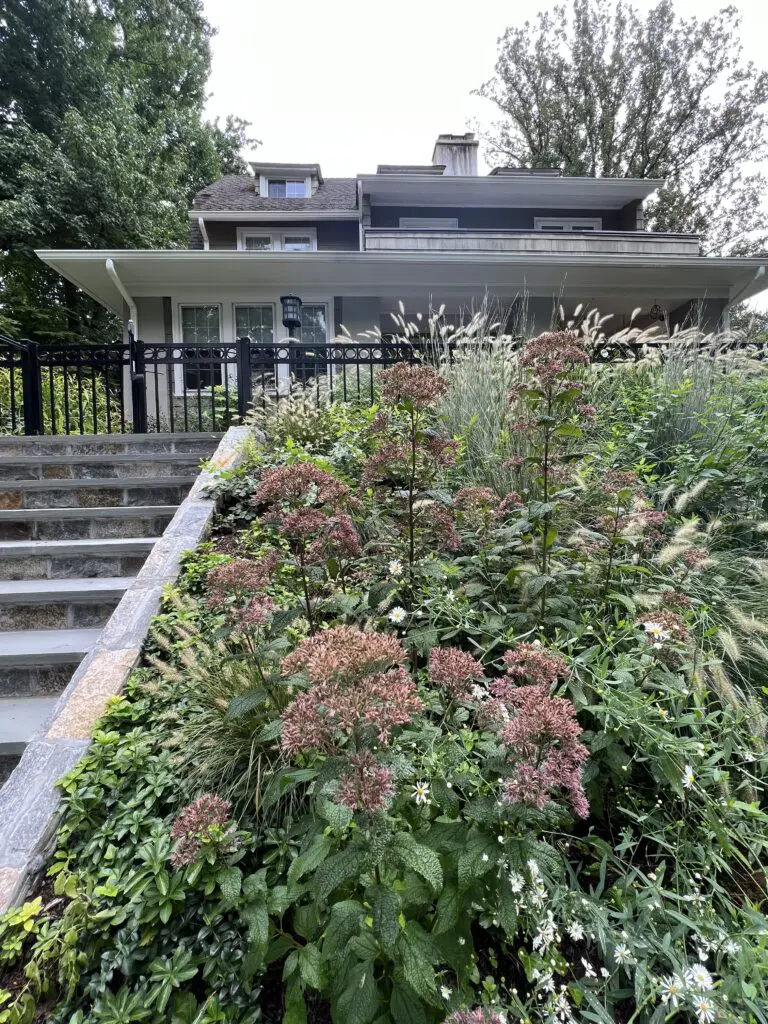
Joe Pye Weed is a native late-season bloomer and pollinator magnet!

Slope Landscaping Project Outcomes

Now that this project is mature, we can safely say that the erosion control devices were effective in stabilizing the integrity of the slope, preventing erosion, and conserving soil. The planting has filled in nicely and continues to provide season-to-season habitat for wildlife and pollinators The clients and their neighbors are happy with the biodiverse aesthetic of the hillside, and enjoy watching something new bloom, seed or berry every week.

Contact us to start your landscape design or landscape installation project!

Spring time shot of the slope two years after installation.

Filed Under: Featured Work, Landscape Design, Wetland Restoration & Storm Water Tagged With: bioswale, Dobbs Ferry NY, ecological landscape design, ecological landscaping, erosion control, erosion control devices, erosion socks, garden design, habitat garden, hillside, infiltration, jute netting, landscape design, landscape designer, landscape drainage, native plant garden, ornamental grasses, planting design, slope landscaping, soil conservation, stormwater, stormwater management, Westchester NY, woodland garden

If you want to learn more about stormwater management strategies that take a holistic approach, you’re in luck! Jay Archer will be presenting on landscape drainage at two industry trade conferences this January.

Tues. Jan 14, 2025 – Wed. Jan 15, 2025

The first is the Landscape Cod 2025 conference, taking place January 14th and 15th at the Hyport Conference Center in Hyannis, MA.

Wed. Jan 22, 2025

The second is the Michigan Nursery & Landscape Association’s Great Lakes Trade Expo on January 22nd.

Both presentations will cover how to evaluate drainage problems in the landscape, from observing the surrounding watershed, analyzing soil conditions, and gathering information about the extent of flooding or intrusion on the property and any existing drainage infrastructure.

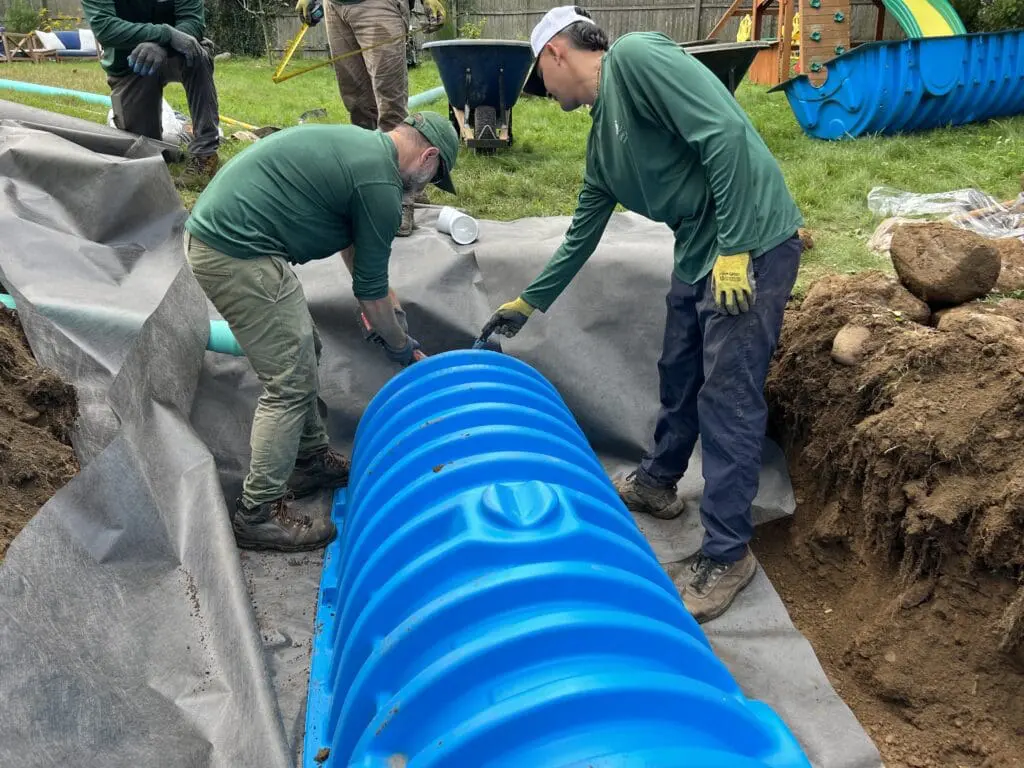
Cultec installation for a landscape drainage project.
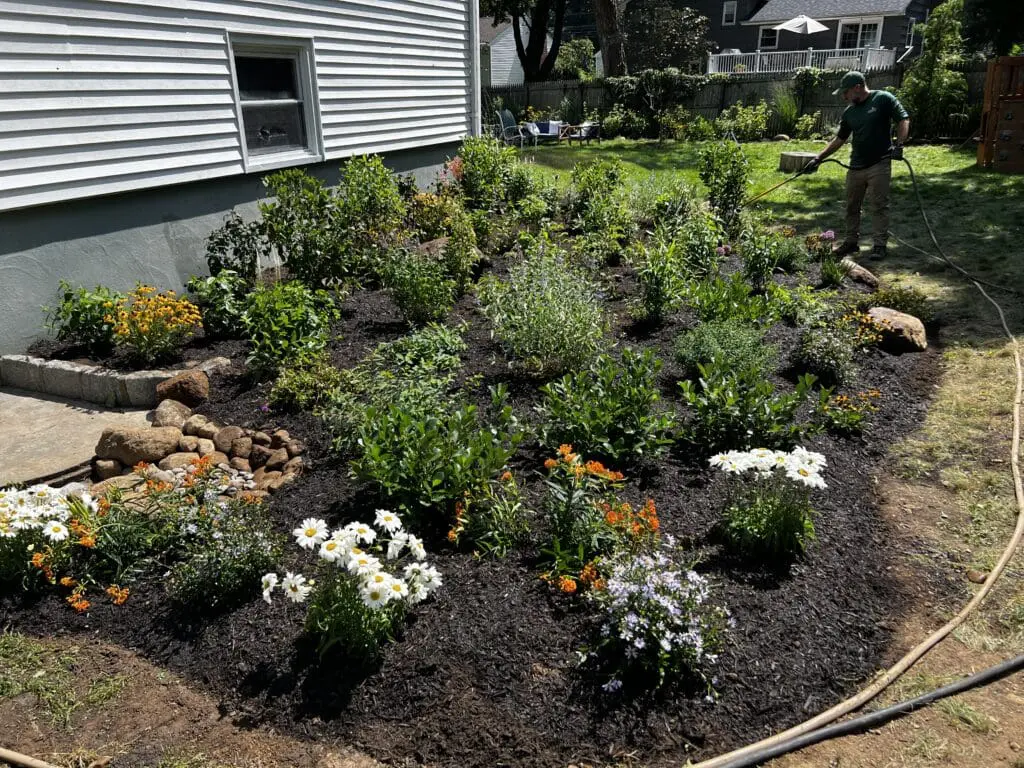
A rain garden designed and installed above the cultec adds habitat value and additional absorption capacity.

Jay will dive into case studies from Green Jay Landscape Design’s own clients, with a diverse selection of projects ranging from steep slopes to clay soil and reverse engineering existing infrastructure.

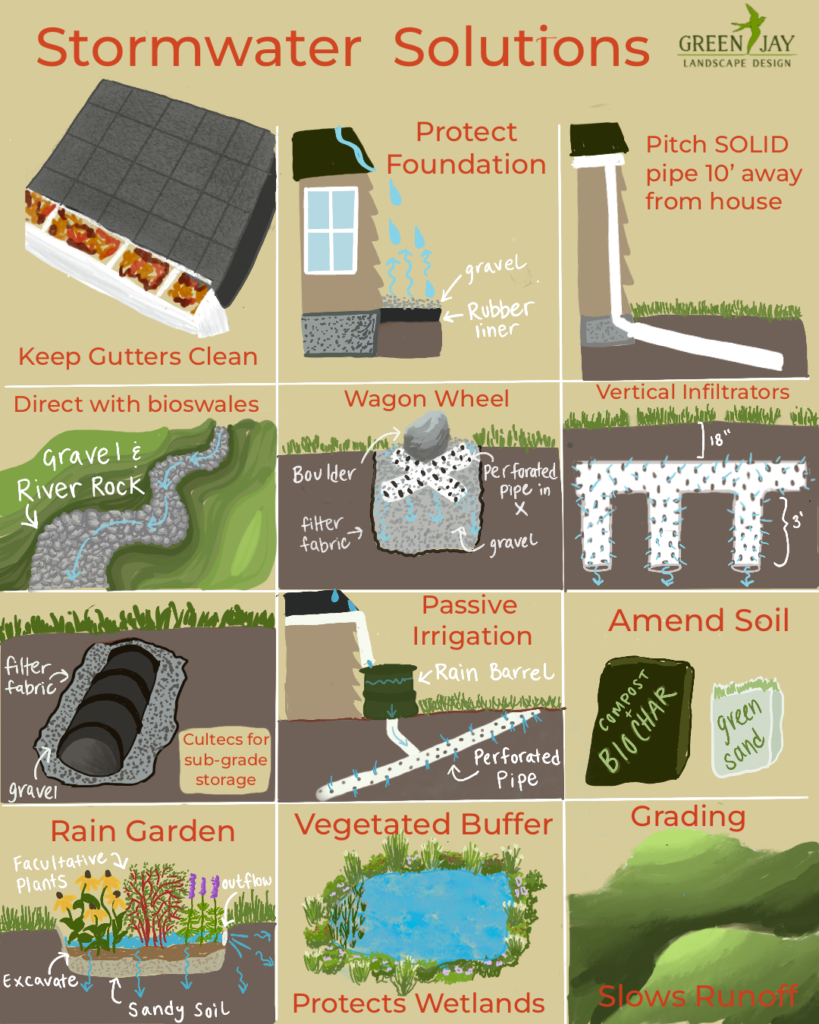
Stormwater management solutions we often implement for our clients. management solutions we often implement for our clients.

Learn about a number of solutions in the stormwater management toolkit and how to analyze and design a custom stormwater solution. You don’t want to miss these lectures!

Register today if you are an industry professional seeking to improve your landscape drainage knowledge with key takeaways from the trade.

Contact us to discuss your own landscape drainage project.

Filed Under: Events & Garden Tours Tagged With: cultec, ecological landscaping, guest lecturer, habitat garden, landscape construction, landscape drainage, landscape installation, lecture, native landscaping, native plant garden, natural landscaping, professional speaker, public speaker, rain garden, rain garden design, storm water management, stormwater, Westchester County NY

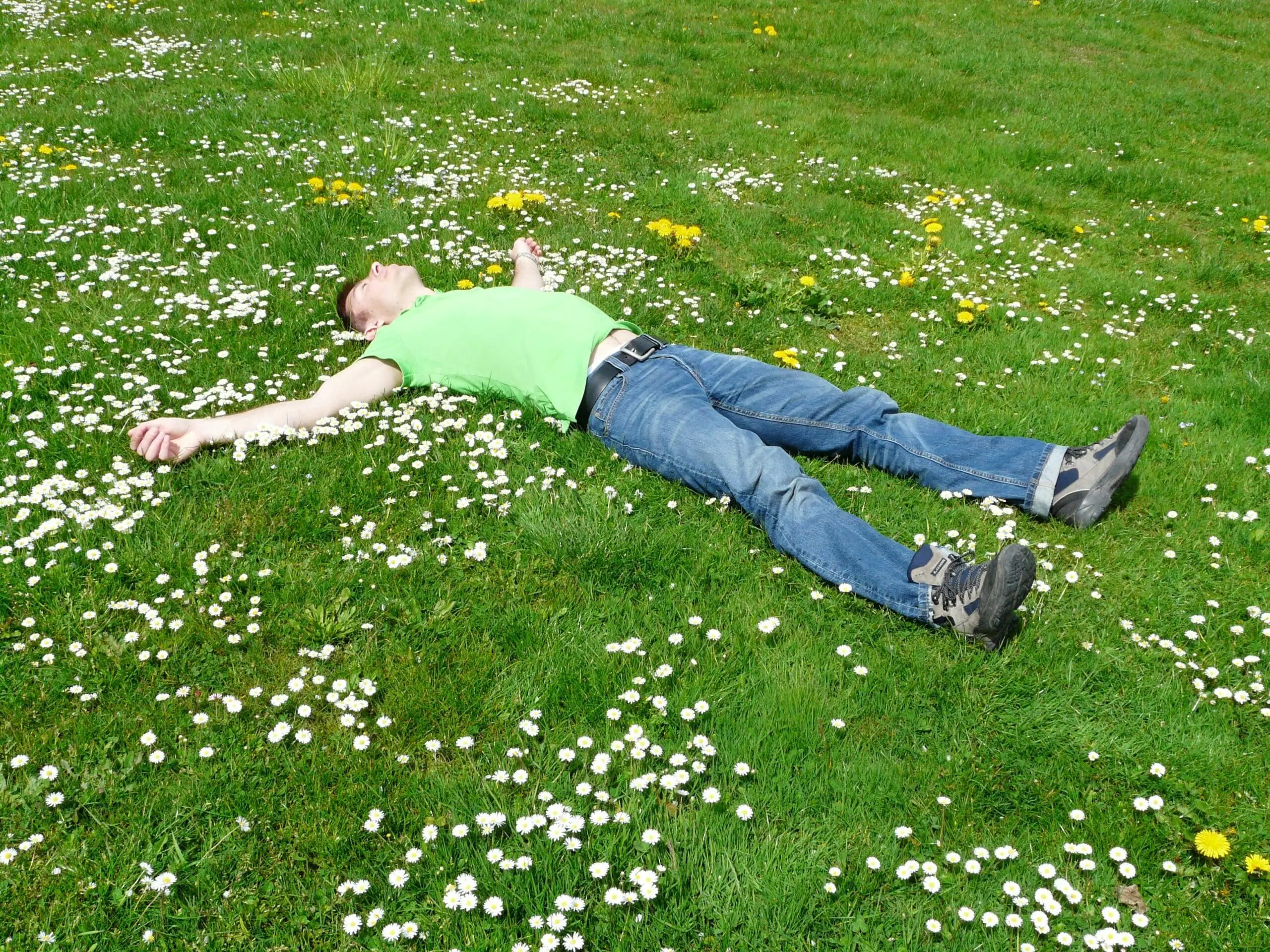
Spending time outside has long been associated with feeling better…but why? Does fresh air really do us good, or is there a more at play in our interaction with the natural world? At GJLD, we spend many hours a week in the landscape, and anecdotally, we can confirm the restorative qualities. But we also wanted the cold hard facts – is being in nature a placebo effect, related to being away from the daily grind, or are there quantifiable health outcomes from being outside? We did a deep dive into the research and found that there are significant health benefits associated with being in the landscape, largely due to the soil microorganisms beneath our feet, and the trees towering above us. We summarize the research below.

Soil Microorganisms and Human Health

Scientists studying our own gut microbiome discovered just how similar our gut bacteria are to soil bacteria. The theory is that they evolved alongside each other, over thousands of years, through the food that our ancestors ate. Our gut microbiome is known to influence our mood, immune system, and central nervous system. In fact, it’s colloquially called our second brain. As society becomes more urbanized, surrounded by manmade materials, and consuming a processed food diet, our gut microbiome has become increasingly less diverse. As land management turns toward industrial farming and synthetically maintained landscapes, soil microbe diversity is also decreasing.

Fortunately, restoring your gut microbiome is relatively simple: eat a high fiber diet (plants) and spend time in an organic landscape. Beneficial soil microbes, such as Microbacterium Vaccae, become airborne and are inhaled as we walk through the landscape. Gardening, eating off the vine, and playing in the dirt are other great ways to reconnect with these microorganisms, our so-called “Old Friends.”

Health Benefits of Soil Bacteria M. Vaccae

There have been many fascinating studies on M. Vaccae in just the last decade. Some findings on the link to human health include:

  • Increased serotonin levels and brain neuron growth – displayed in mice fed M. Vaccae. They completed mazes twice as fast and exhibited neuron growth in their brains. These mice also had increased levels of tph2, an enzyme involved in the biosynthesis of serotonin.
  • Reduced stress and anxiety – mice in the study were 50% less likely to exhibit stress-induced symptoms like colitis (cellular damage to the colon). When exposed to a larger, aggressive mouse, they exhibited less anxiety symptoms and more proactive behavior. Scientists believe M. Vaccae could be used as a PTSD treatment in humans.
  • Reduced inflammation, improved immune response – M. Vaccae’s anti-inflammatory character affects our neuroinflammatory processes. When fed to rats, it enables their central nervous system to regulate more effectively and “mitigates the neuroinflammatory and behavioral effects of stress.”

Furthermore, children growing up in rural, agricultural environments were studied against city kids. The rural children (studied as adults) had better immune response during stress, and exhibited fewer allergies and lower cases of asthma. Researchers posit that exposure to soil microbes, especially as children, helps “educate” our immune system and shape our immune response as adults.

Trees, Forest Bathing & Human Health

Another body of research connecting nature to human health originated in Japan. Shinrin-yoku, which translates to Forest Bathing, became part of the Japanese national health program in 1982 to address a spike in mental health troubles, stress and suicide rates during the technical revolution of the 1980s.

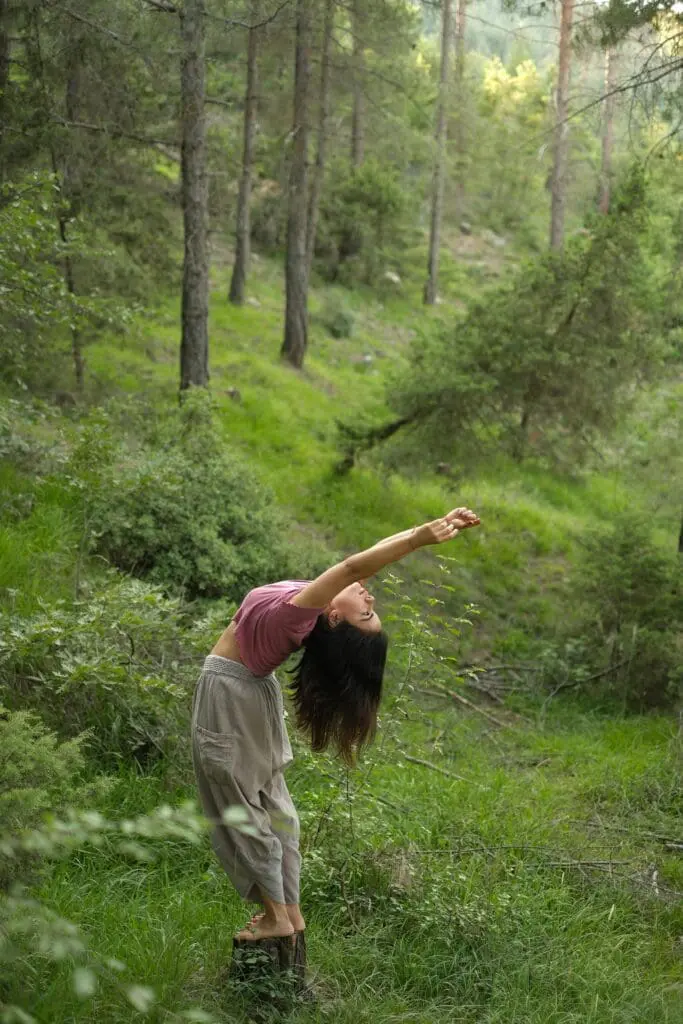
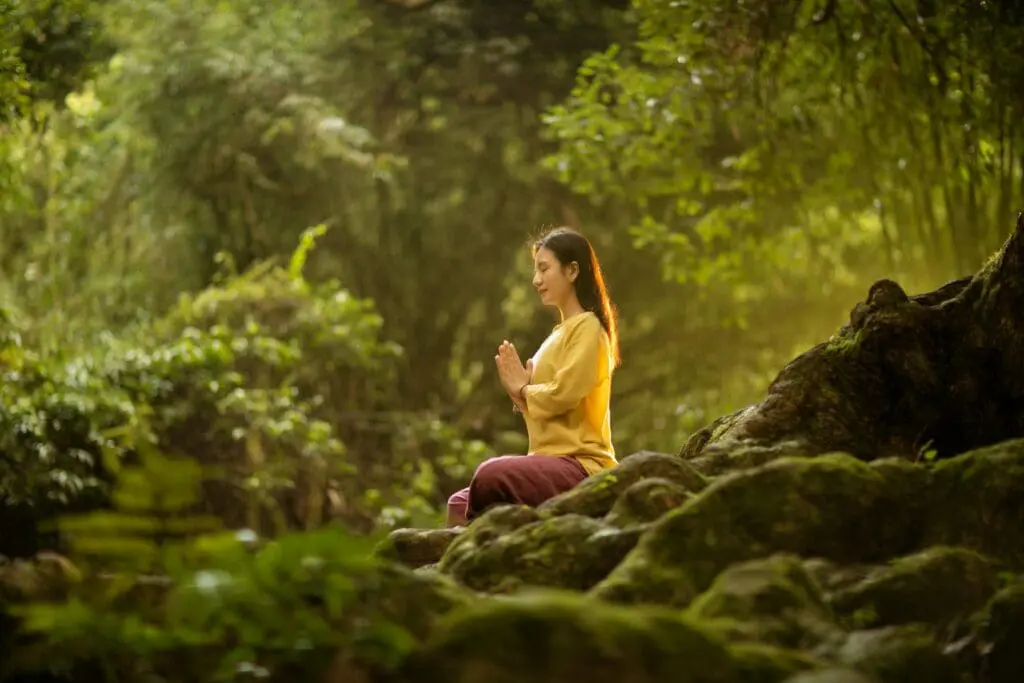
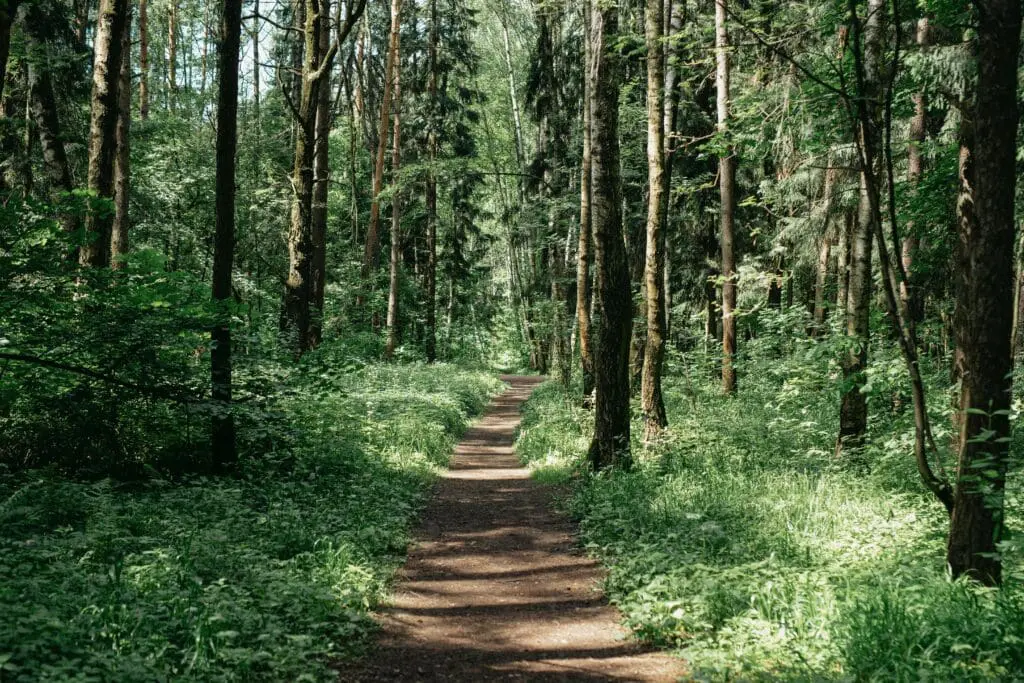
Forest bathing combines meditative practices within a forest setting. To practice shinrin-yoku, carve out some time to sit or walk slowly through the woods, paying close attention to your breathing and five senses; allow yourself to notice all the sights, smells, sounds, and touch of the natural world around you.

Since the 80s, forest bathing has been studied extensively in Japan and around the world and linked to a wealth of health benefits. 

Stress, Anxiety & Depression Reduction from Forest Bathing

Forest Bathing has been shown to reduce stress and relax the body. On a physiological level, after a forest bathing session, study participants exhibited lower rates of salivary cortisol, lower pulse rates, lower blood pressure, lower sympathetic nervous activity and higher parasympathetic nervous activity than those in the control group.

Participants were also asked to rate their mood using the Profile of Mood States (POMs) before and after Forest Bathing. All participants showed an improvement in mood afterwards, but the change was especially notable in those participants with depressive tendencies: their POMs scores increased dramatically, and in some instances, their scores no longer differed from the participants without depressive tendencies. Stress inhibits immune system function, so reducing stress has the added benefit of improve immune response.

Phytoncides Effect on Our Immune System

Many of the health benefits associated with trees can be traced to phytoncides, compounds that trees and other plants produce to help ward off predators and invaders. The anti-bacterial and anti-fungal properties of phytoncides are transferred to humans when we spend time in the forest and breathe in phytoncides as volatile organic compounds (VOCs).

Multiple studies have recorded a correlated increase in a type of white blood cell our bodies produce – natural killer cells or NK cells – when inhaling phytoncides. NK cells are known to fight infection and cancerous cells and are a valuable component of our immune defense.

Improved Sleep Linked to Phytoncides

Two common phytoncides in trees are α-pinene and 3-carene. They “enhance inhibitory synaptic responses” which positively promote sleep in the same way that common sleep-aid pharmaceuticals work (they “modulate the GABAA BZD receptor”). One study found exposure to α-pinene and 3-carene “enhance[s] the quantity of [non-rapid eye movement sleep] without affecting the sleep quality.” 

Inflammation, Lung, and Heart Health Benefits

Phytoncides α-pinene and β-pinene have been demonstrated to have “antimicrobial, anticancer, anti-inflammatory, and antiallergic properties in humans.” However, the effects tend to be short-lived as they are volatile compounds in the body. α-pinene and cineole (another phytoncide) work as bronchodilators – making it easier to breathe – especially for those with asthma or other respiratory problems. Cineole is an active ingredient in cold medications because of its ability to thin mucus and relieve coughs. Camphene, another phytoncide common in conifers, reduced wheezing and coughing in one study.

Collectively these compounds promote better circulation and overall lung and heart health. A study compared heart and lung disease deaths in areas where forests were badly affected by Emerald Ash Borer infestations. Those areas with greater trees lost also had higher rates of lung disease deaths (6,112 more deaths) and heart disease deaths (15,080 more heart-disease-related deaths) across the fifteen states studied.

Key Takeaways: Optimizing Your Home Landscape for Human Health

So, how to take advantage of all these health benefits found in nature?  If you are fortunate enough to live near protected land (state or national parks, forest service areas, conservation areas), incorporate visits to these areas into your daily or weekly routine. (For our Connecticut readers – check out the Aspetuck Land Trust preserve and trails!) The healthiest change is the one you stick to, so creating a nature sanctuary on your own property is about as hyper local as you can get, all barriers to entry removed!

Work with a landscape designer to develop a plan for your property that is more than a pretty garden viewed from behind a window. Design a landscape that invites you out in its midst, to explore the evolution and notice the intricacies. Practically speaking, we follow these principals:

  1. Organic Landscapes Only – synthetic additives to the soil do not help cultivate soil microbe communities. In fact, synthetic nitrogen starves microbes of an essential plant-microbe exchange for food and nutrients. You will not reap the benefits of M. Vaccae and other “old friends” in an chemically treated landscape.
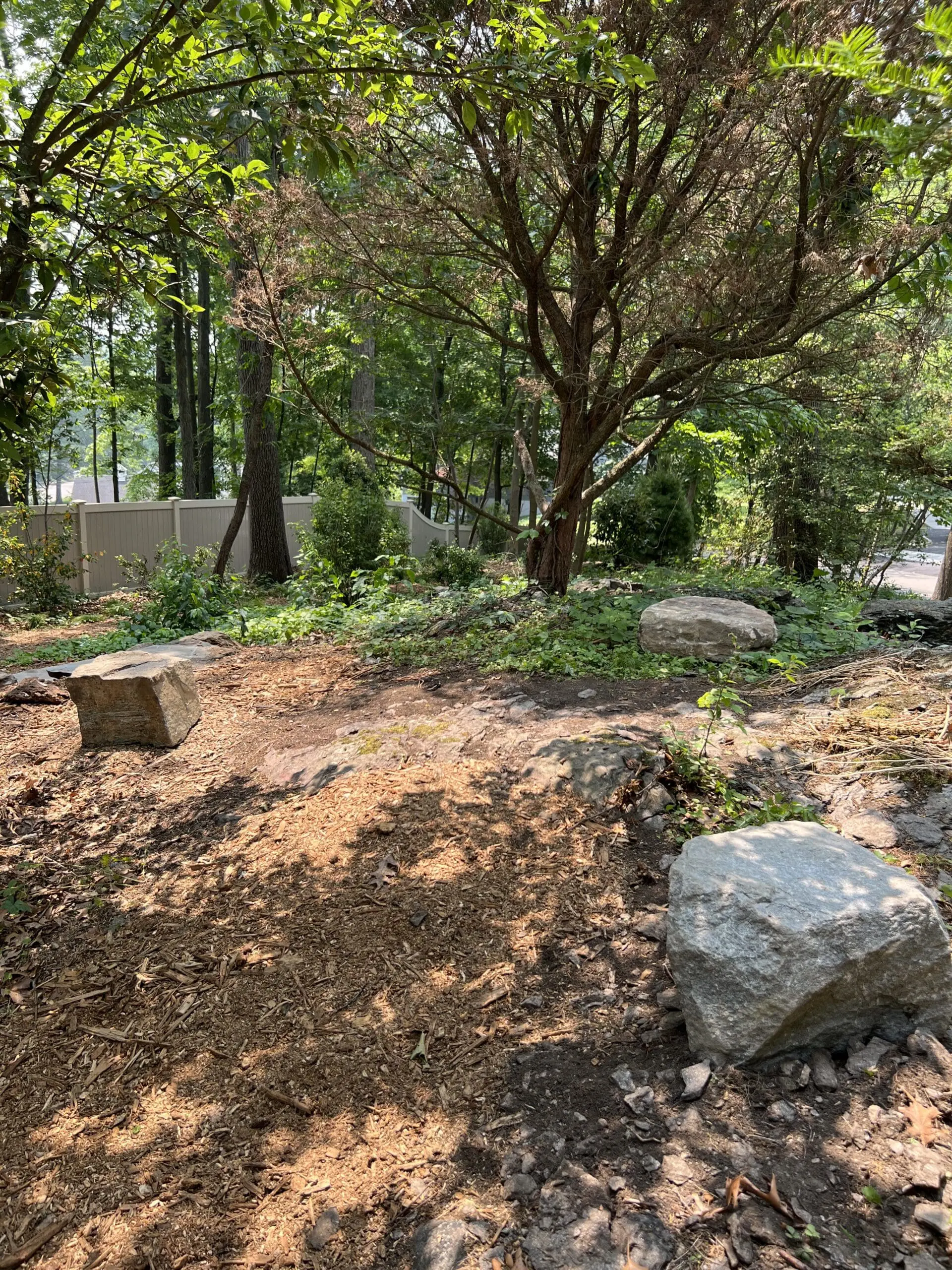
  2. Garden Paths Guide Experience – Create nooks and garden rooms throughout your landscape for spots of contemplation and meditation. A set of sitting boulders or stumps integrates into a naturalistic landscape and invites you to slow down and take it all in. If you have a woodland, consider creating trails through it for your own personal forest bathing loop. Paths also make garden maintenance significantly easier.

3. Evergreens – Evergreen plants like Cedars, Spruces, Conifers, Pines and deciduous Oaks have more Phytoncides and more potential to reap health benefits.

4. Herbs, Vegetables – Incentivize yourself to touch dirt and absorb more beneficial soil microbes by dedicating a spot in your landscape where you will garden, getting your hands in the dirt! Often a vegetable or herb garden is the most motivating for clients – fresh produce to harvest!

5. Keep it Interesting – a garden should be full of surprises; it should be constantly evolving. Design so that each week a new bloom emerges while another turns to seed or berry. Not only will the plant material evolve, but each element is a food source for wildlife. Delight in the hummingbirds, goldfinches, swallowtails and ladybugs that find solace in your landscape.

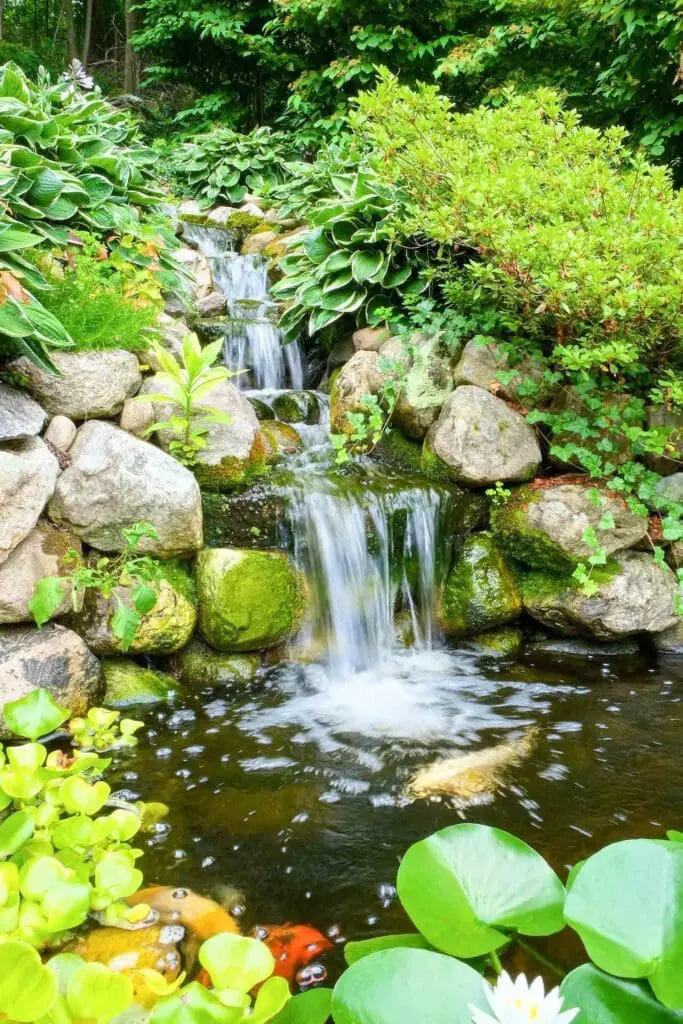
6. Water Features – Trickling water has psychological and physical benefits, plus it can attract birds to bathe and drink. Create your meditative sanctuary that engages all of your senses.

7. Scented Plants – Speaking of senses, nothing draws people close to a landscape quite like a sweet-smelling flower. Our favorite scented natives include Clethra, Itea, Agastache and Clematis. 

Contact us for help designing your dream landscape for mental and physiological health.

Filed Under: Ecological Education Tagged With: family friendly, forest bathing, health, heart health, immune response, immune system, landscape design, lung health, memory, mental health, mood, organic landscape, outdoor therapy, personal health, pet friendly, soil microbes, stress, wellness

2023 was another year of boundary pushing for Green Jay Landscape Design on many levels. We sold our first design in Essex County, NJ; we branched into more inventive designs, including a naturalistic children’s play area; we expanded our staff; we provided cost-of-living bonuses to all returning employees…it has been a productive and rewarding year at GJLD! None of it would be possible without our clients, who continue to prioritize responsible land stewardship by choosing ecological solutions for their landscape renovations. We feel so fortunate to work on unique and sometimes perplexing landscapes, to combine our science and art brains to design solutions that appeal to all of our senses and values. It was difficult to narrow down all of our landscape design projects from the year, but we felt these five landscapes really stood out for their ingenuity, complexity of site conditions, and craftsmanship. Please enjoy our best landscape design projects of the year! Feeling inspired? Contact us to discuss your landscape today.

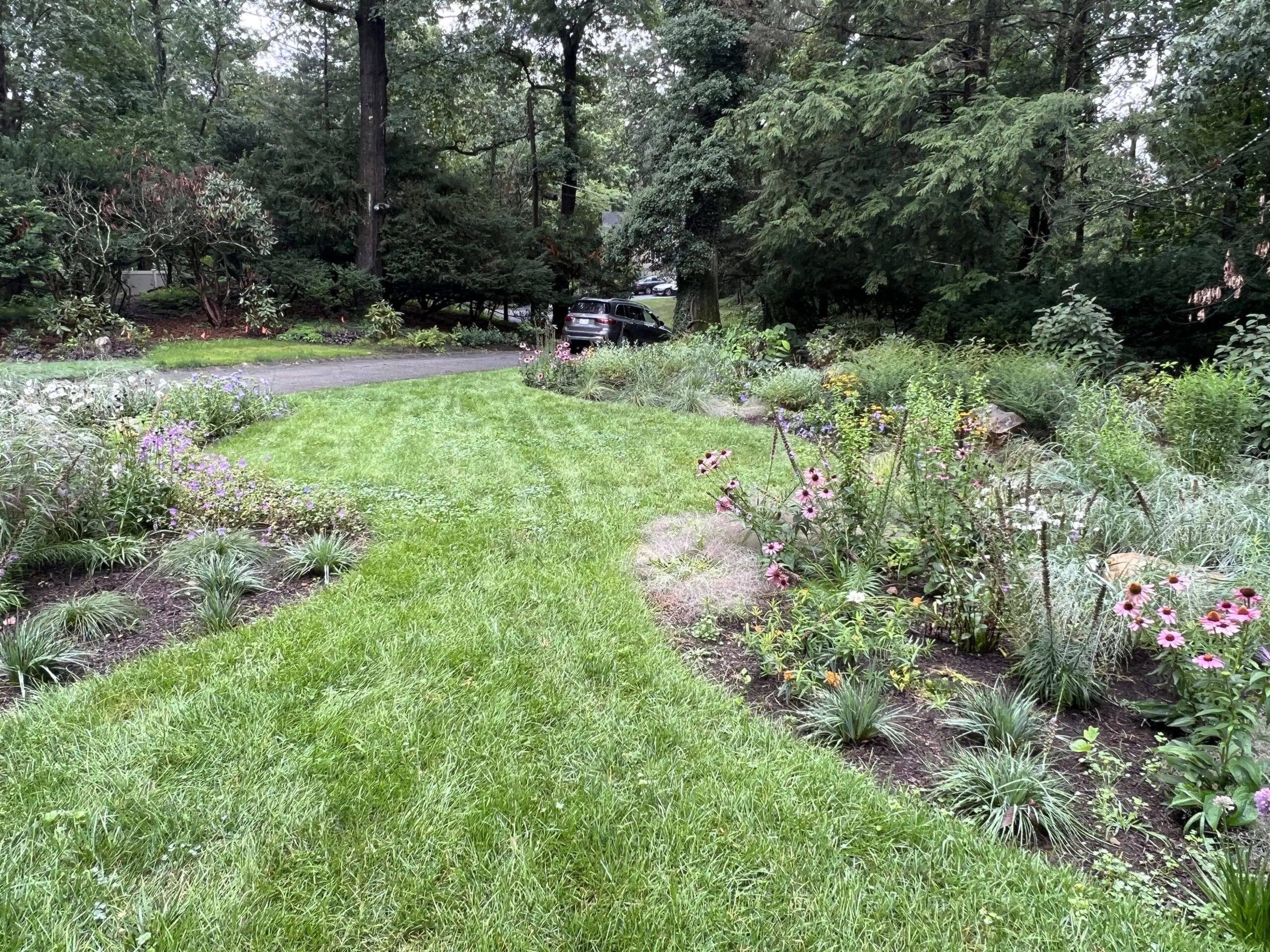
Re-designed front entrance area features low-maintenance native plants that boost biodiversity.

#5 – Home Sweet Home, Where the Heart Is

Grading, Native Plantings & Masonry | Hastings, NY

This full property renovation involved major grading and drainage in the backyard, to lift and level the lawn into a more functional play area. We also added woodland seating nooks that transform the corners of the property into useable space.

Boulder seating area beneath River Birch with native ferns.

In the front yard, we upgraded the foundation and entry plantings for a more naturalistic, composed look. Custom flagstone stairs ease the transition from the top of the property to the rear.

Learn more about the project on our blog here.

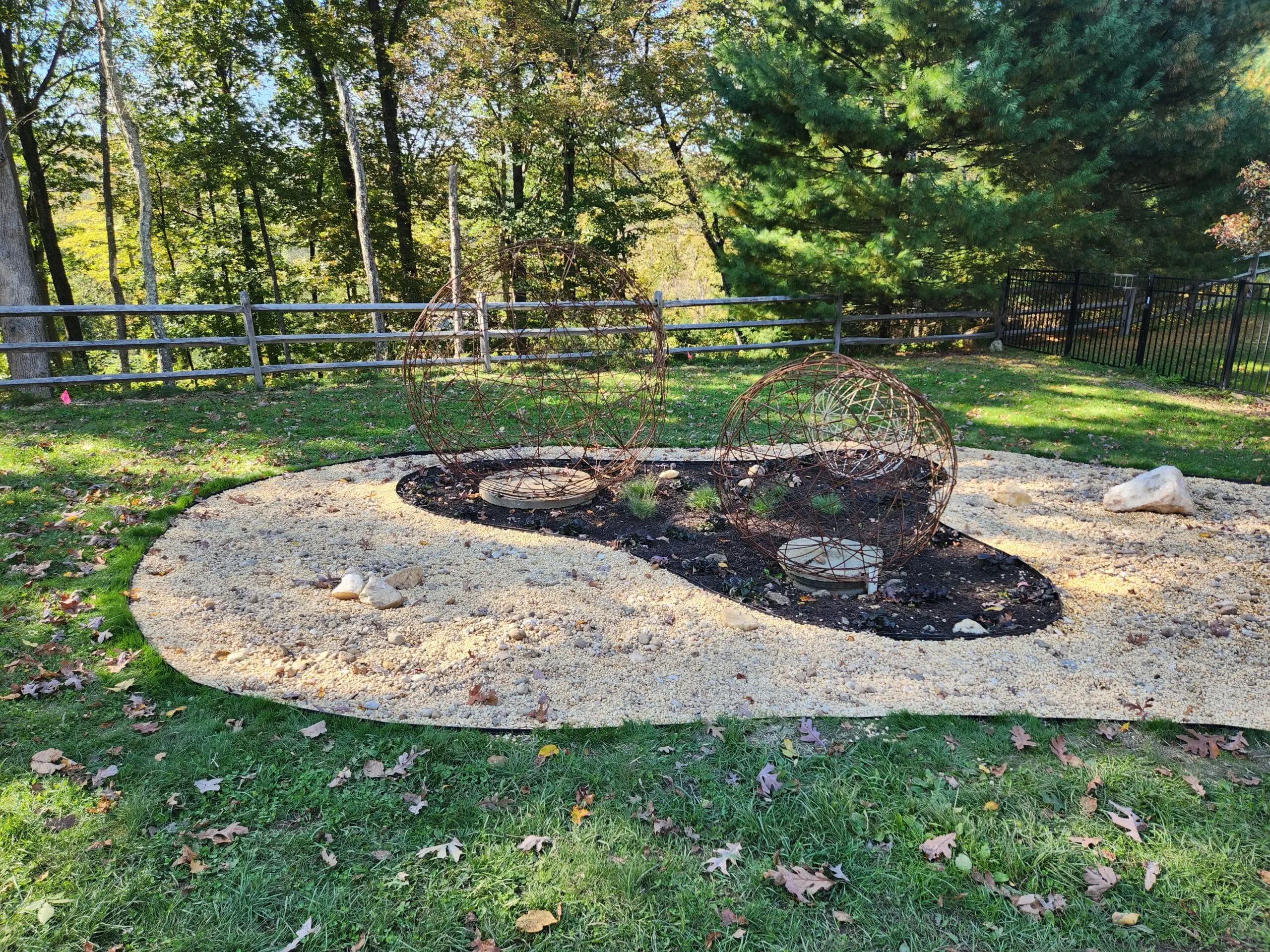
Gravel sculpture garden doubles as a septic tank cover.
Clients’ sculptures are incorporated into a gravel garden. Ground covers will fill in beneath the sculptures while maintaining access to the septic covers.

#4 – Through the Seasons, Into the Mystic

Zen Garden, Pool Landscaping, Meadow Renovation | Ridgefield, CT

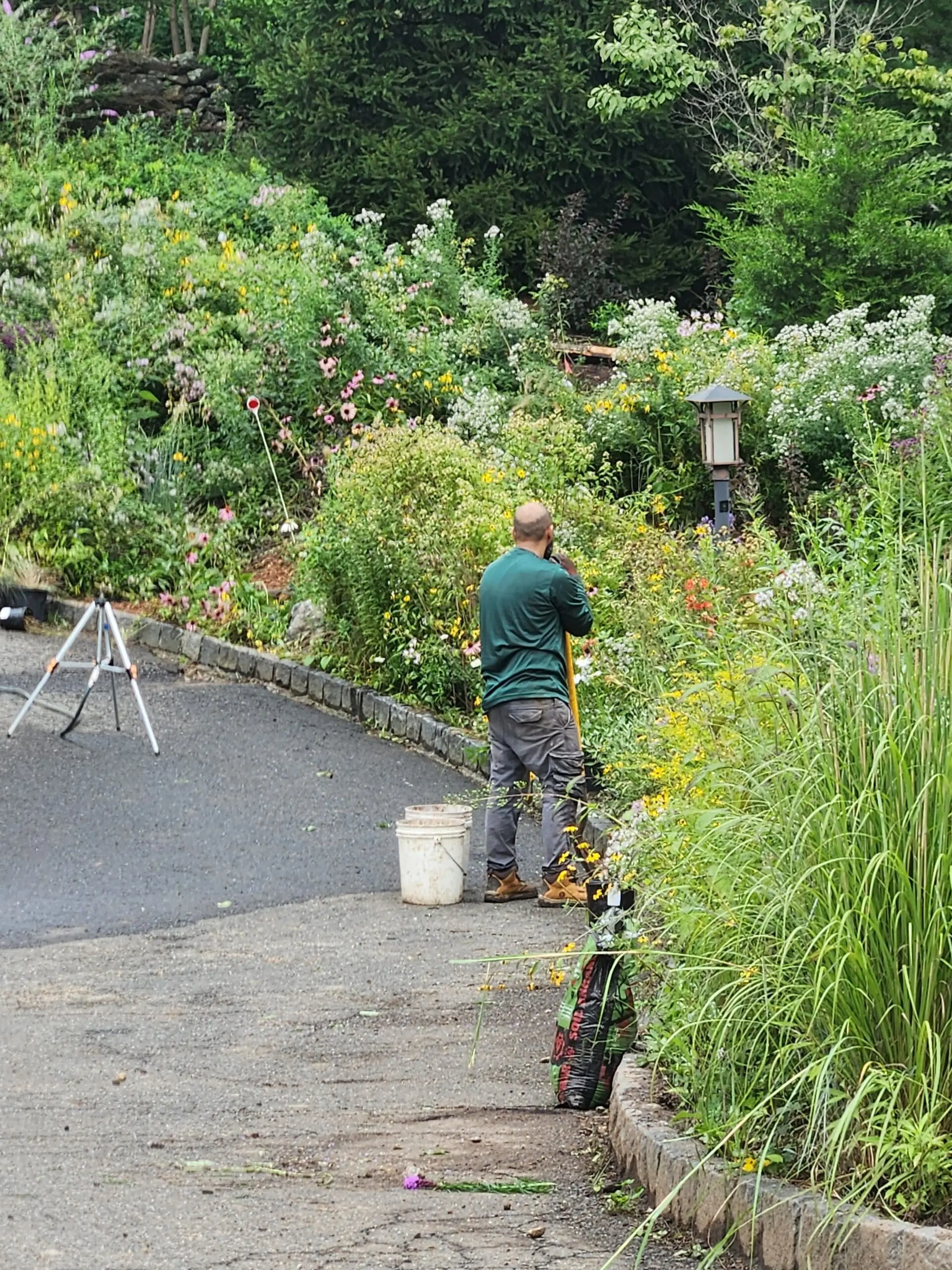
Each phase of this project offered unique design frameworks that challenged our creativity and construction techniques. The first priority was to renovate the large seeded meadow along the driveway, which the clients found weedy and unattractive. We interjected some structural plants (grasses and shrubs) as well as early season bloomers, which were lacking.

PROCESS PHOTO: GJLD crew works on selectively editing the meadow and adding structural plants.

The next priority was expanding a Zen garden space outside, and in view of, the clients’ office.  We designed a gravel garden with hot and dry native plants, and incorporated the clients existing sculptures.

Natural stone path laid out by GJLD masons.

Matching the existing gravel proved challenging but we love the unique gold color! Finally, zones around the pool area had been neglected, so we designed a layered planting to better transition the eye from lawn to the mature trees.

Read more about the project on our blog here.

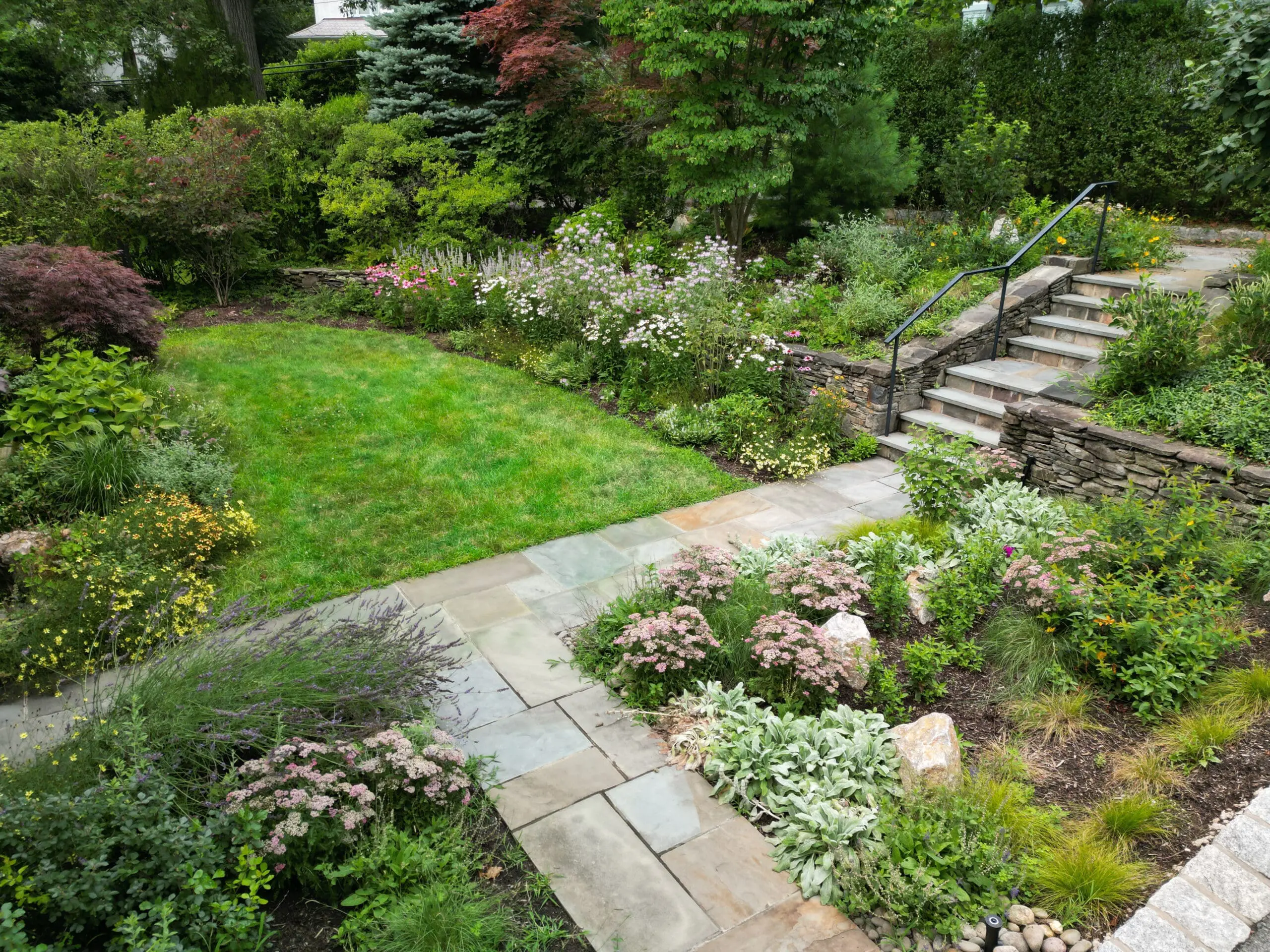
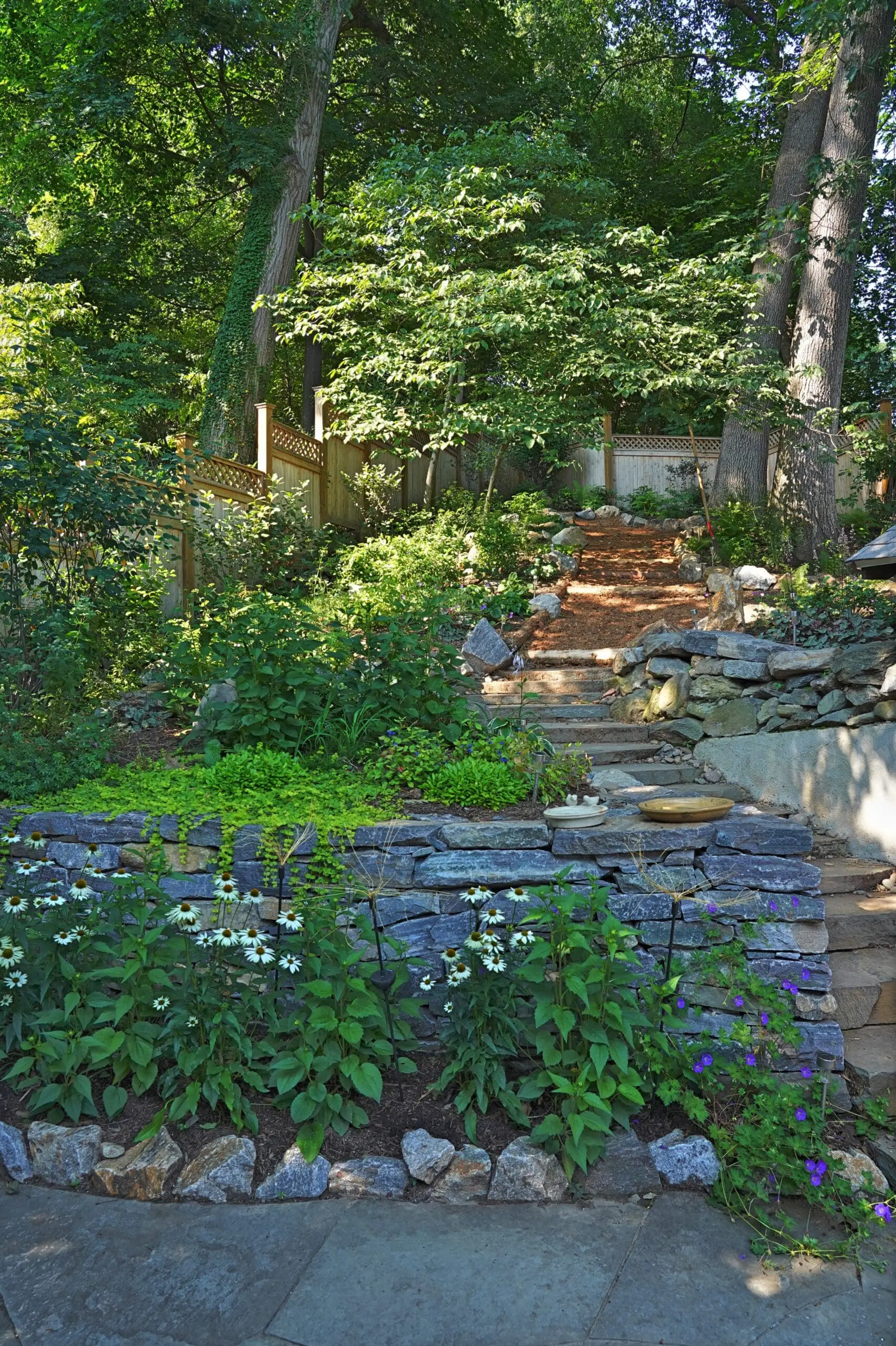
Terraced hillside backyard with native plant gardens and natural stone masonry.

#3 – Brining Nature Home, the Presence of Paradise, the Provenance of Peace

Terraced Woodland Slope, Patio Construction, Front Yard Pollinator Garden | Hastings, NY

This backyard is one of the narrowest and steepest we’ve worked on! We managed to maximize functional space in the backyard by constructing terraces in the slope, for both garden beds and seating areas. We planted the slope with native understory plants that make the whole hillside a focal point, while also stabilizes the soil and integrity of the slope.

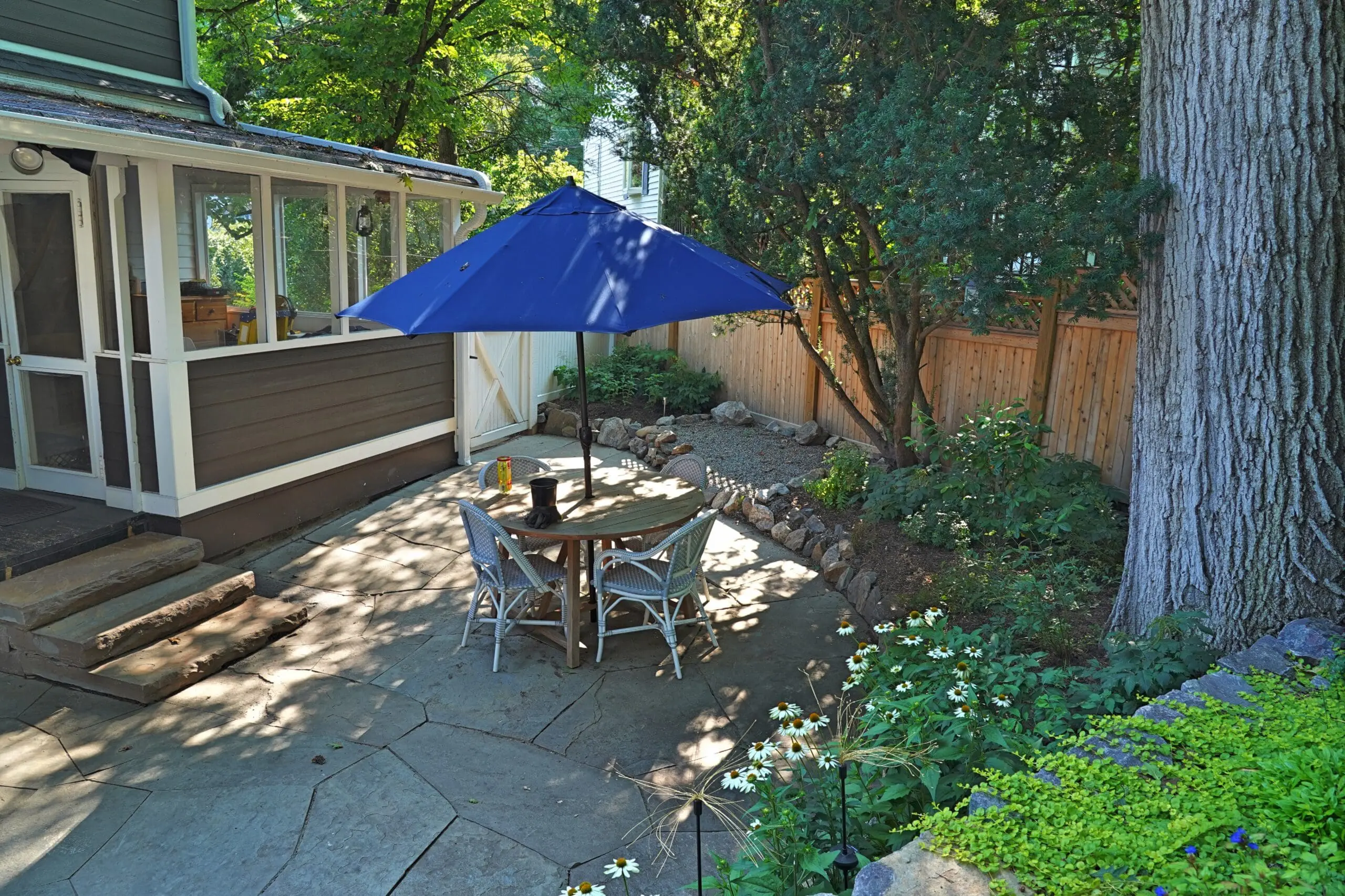
Irregular flagstone patio was newly constructed in the same footprint as the previous warped patio.

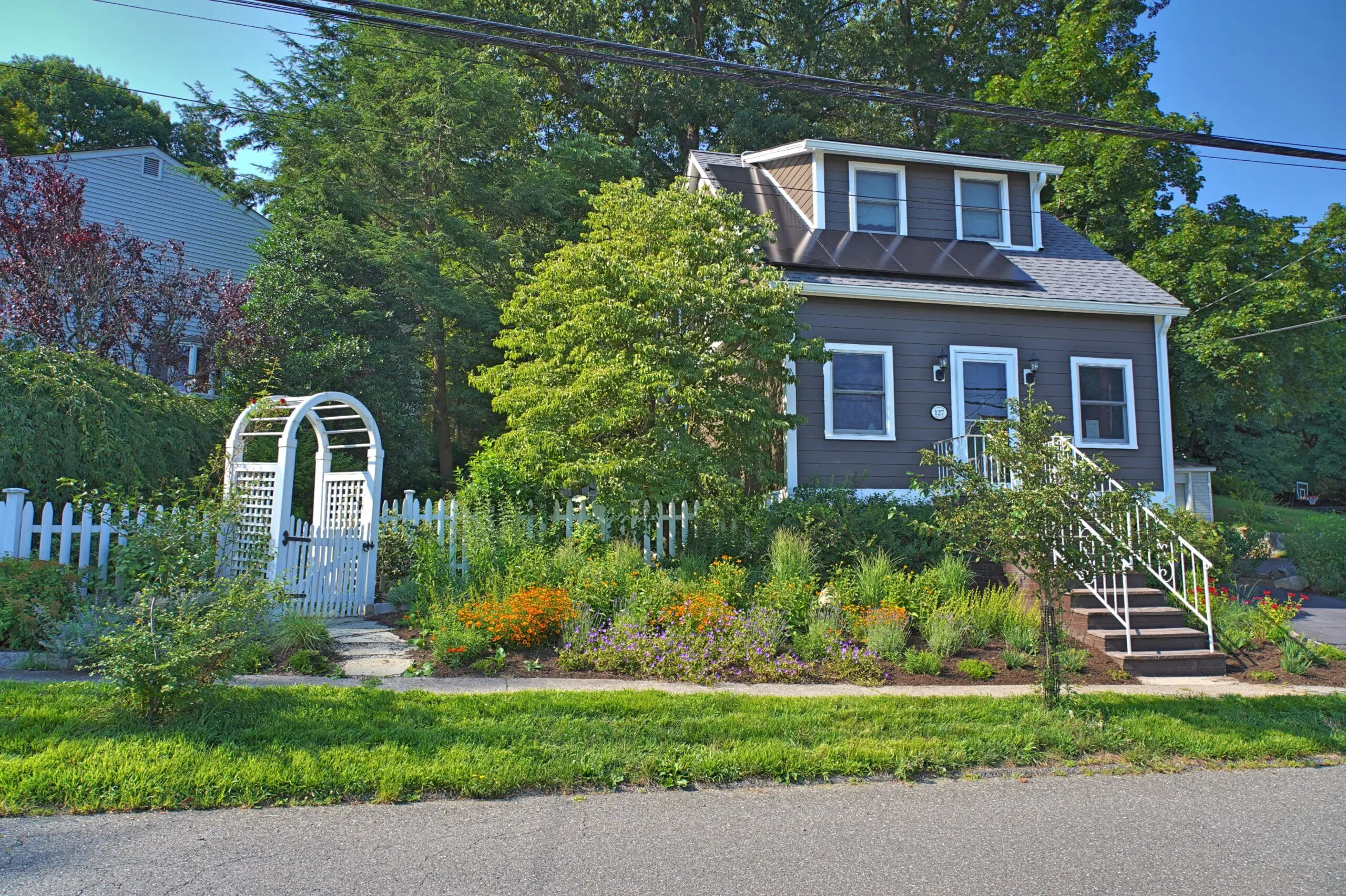
The existing patio and retaining wall were warped and crumbling – both were rebuilt with natural flagstone by GJLD. In the front yard, we removed the narrow strips of lawn and designed a full sun pollinator garden. We love how it looks against the white picket fence!

Front yard lawn replacement with native plants.

See more photos and details of the project on our blog post.

Newly planted native front entry with river rock border for drainage.

#2 – Modern Living in the New World, to Touch the Earth, the Embrace of Nature

Contemporary Native Landscape, Wetland Buffer, Pool Landscaping | Greenwich, CT

It was a pleasure collaborating with Trillium Architects for this project, who reach out to us early on, while the passive home was still under construction. With such a large project, it is critical to coordinate phases of landscape installation with other construction contractors, so that quality and efficiency of the work are optimized. For example, it was critical to us to protect the wetlands and the pool area as the first step. Site protection is essential for low impact development – it was our responsibility to make sure the bare ground of the construction site did not transport into the wetland zones.

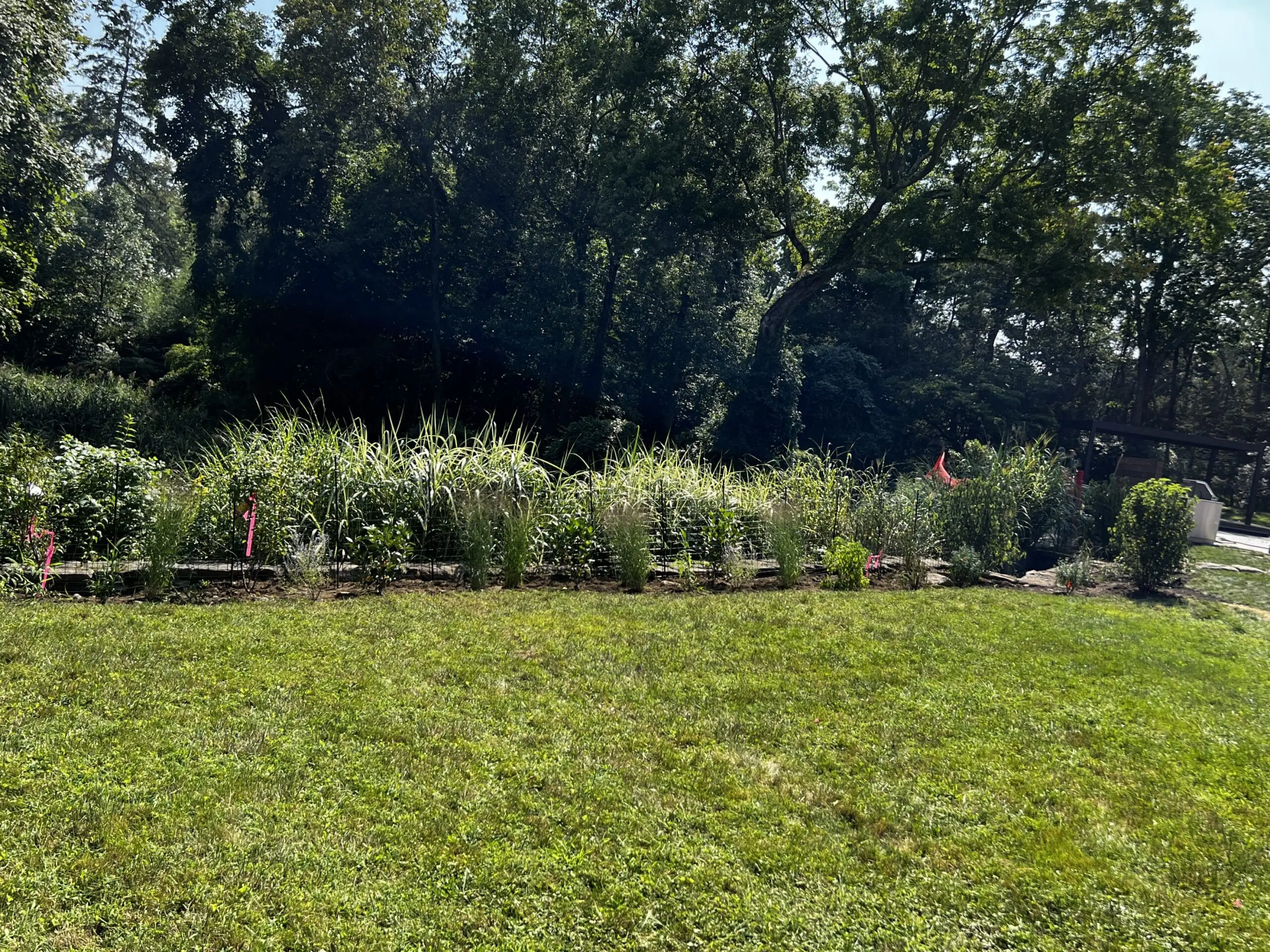
“Living Fence” vegetative border marks the edge of the retaining wall and start of the wetland.

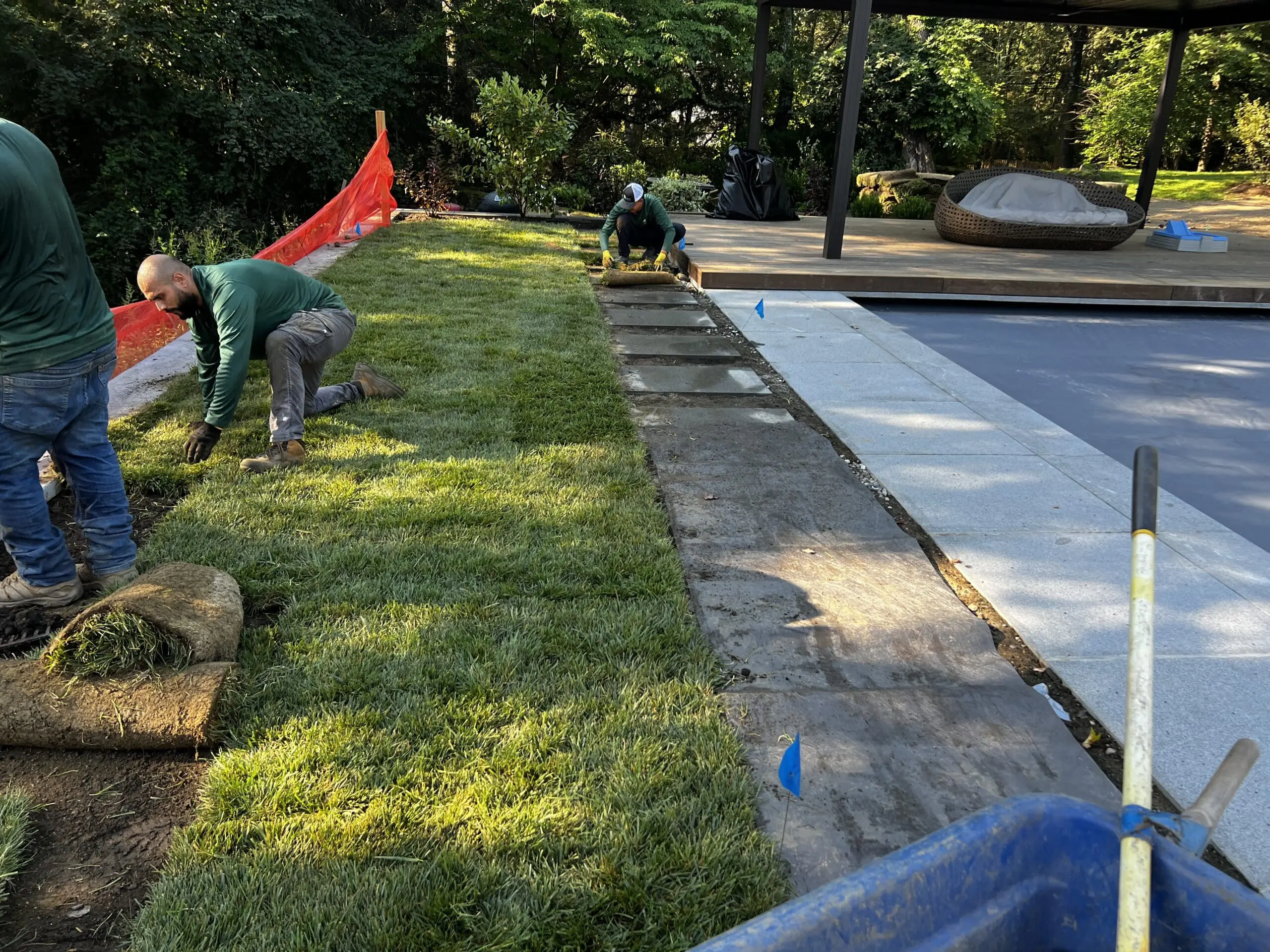
By installing sod around the pool area, we enabled the clients to enjoy the pool area during the summer, while the rest of the home was still being completed.

Installing sod with clover around the pool area to protect the newly build pool while construction continues.

We also designed a number of wildlife border gardens, as well as a contemporary foundation and entry plantings.

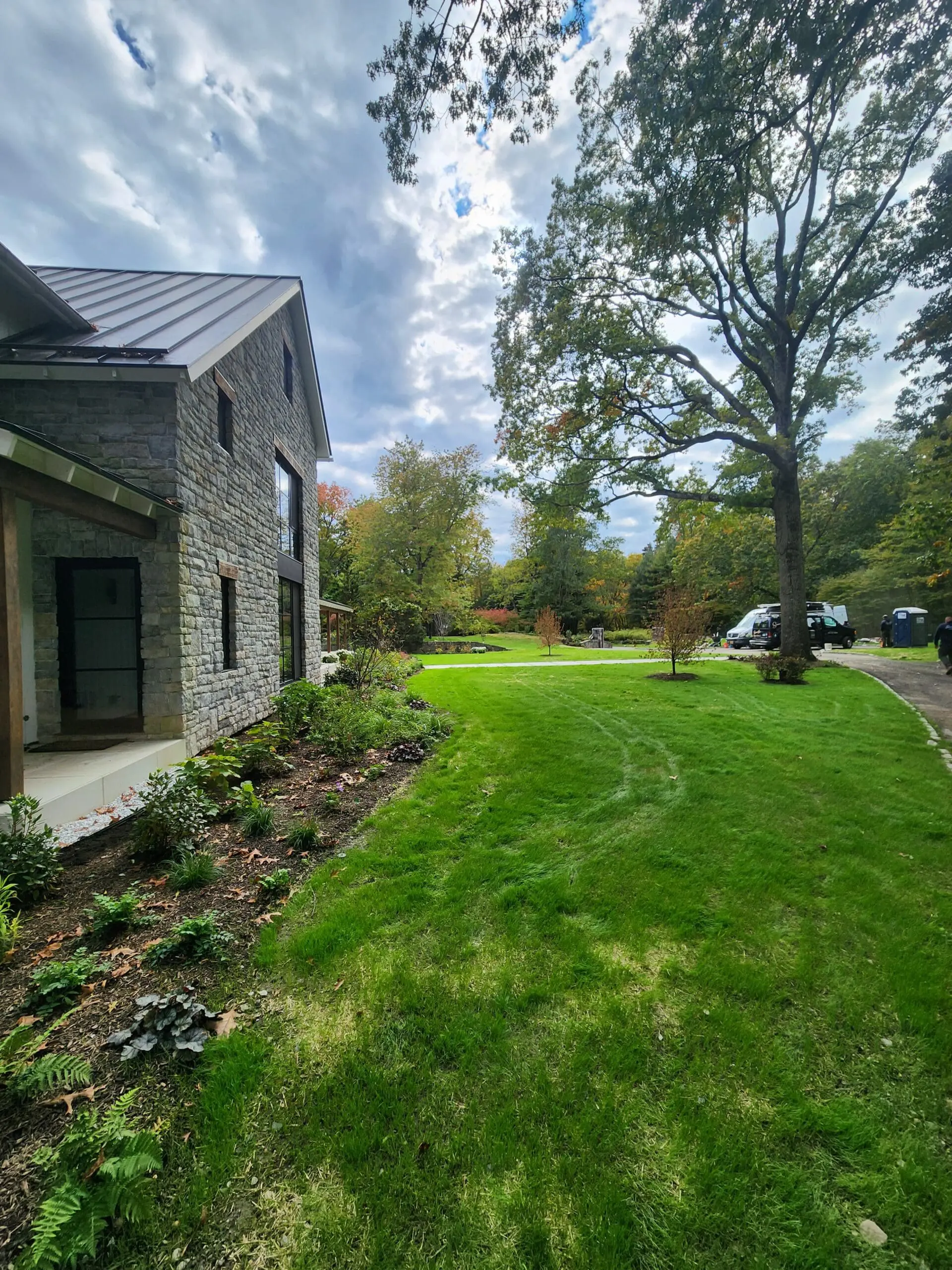
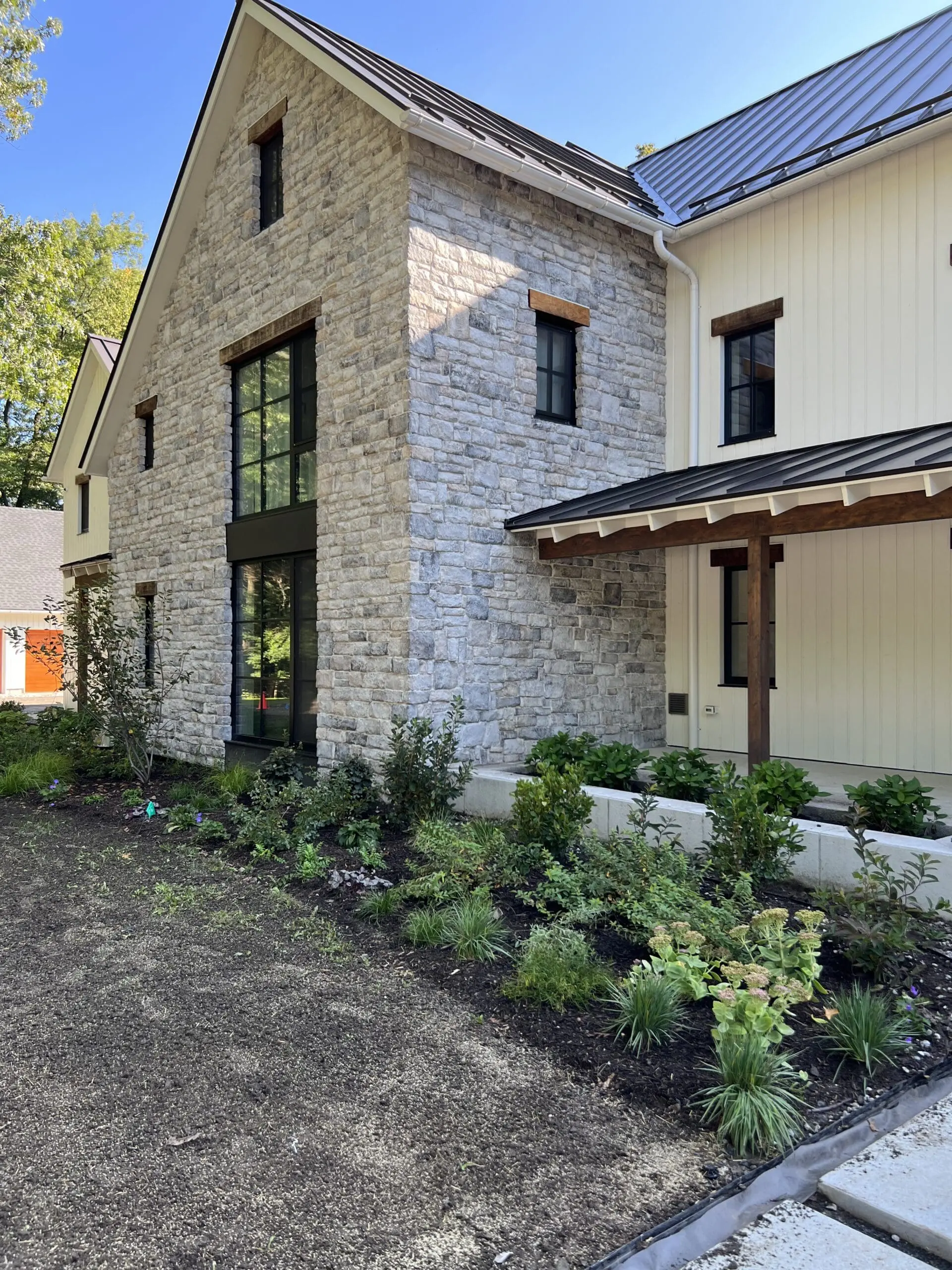
Front foundation planting features native shrubs, perennials and grasses for a layered habitat.


Learn more about the landscape design and installation on our blog post.

A trio of sitting boulders invites reflection and relaxation in the front yard woodland.

#1 – Invitation to Nature, Whimiscally Wild Woodland, a Partnership of Superb Pairing

Woodland Trails, Front Lawn Reduction, Native Understory | Briarcliff Manor, NY

What a fun, whimsical landscape design – it had to be #1 out of all our projects for 2023! This property is tucked into the woods of Westchester, but the woodland zones had been ignored and underutilized. We selectively removed Norway Maples in the woodland to allow more dappled light in, and designed a woodland understory planting. Since one of the woodland zones is in the front yard, the planting involved significant large evergreen trees, to add seclusion and privacy to the area. Most importantly, we installed a woodchip path to meander through the woodland, with an optional stop at contemplative sitting boulders. It feels like a private nature preserve!

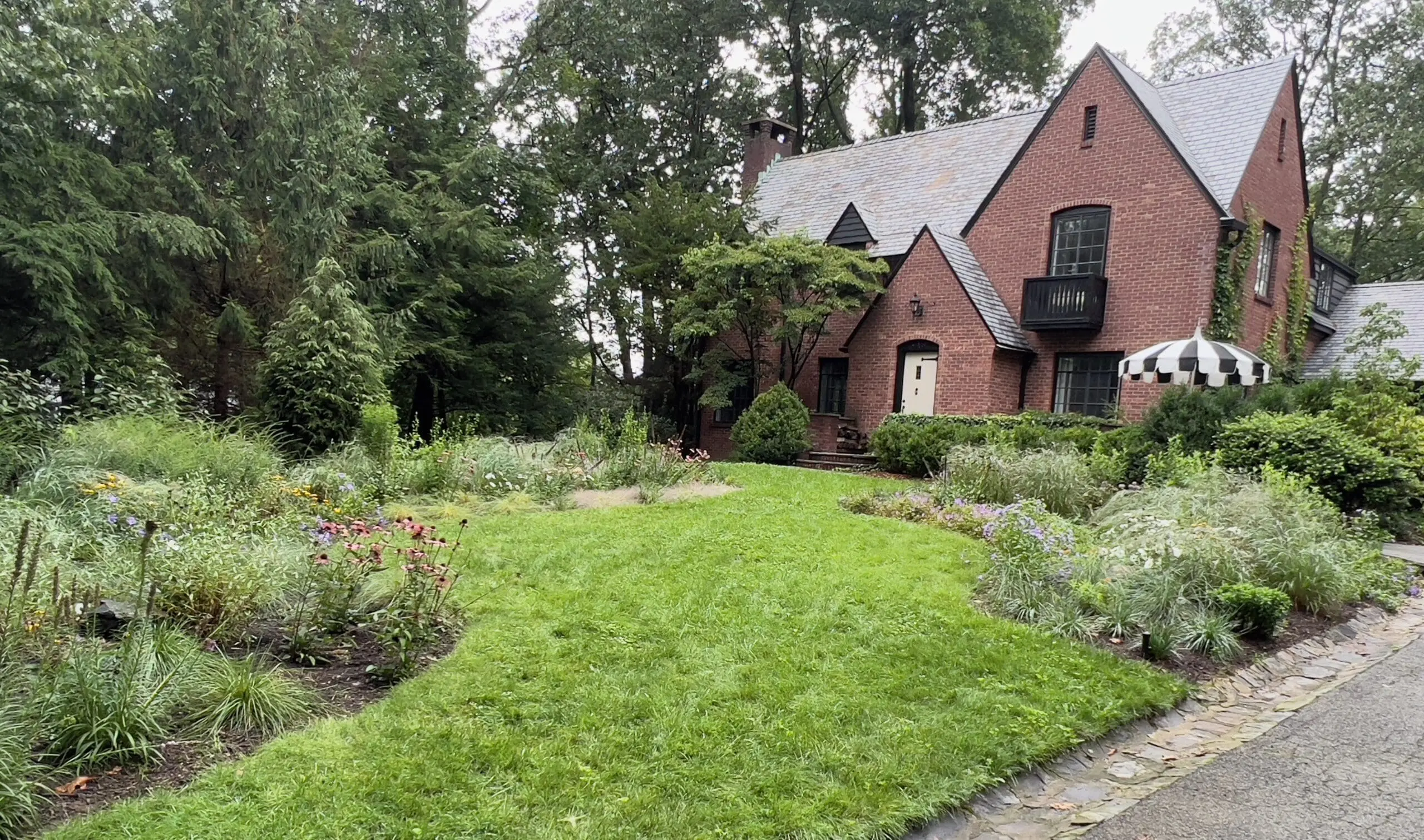
New front entry garden is framed by the unique lawn shape inside.

We also loved re-imagining this front entry landscape, which previously had a lot of lawn surrounded by mature trees. We drastically reduced the lawn area – leaving enough for the clients to play with their dog – and replacing the rest with layered native plantings that fill in the ground plane and mid layer of the landscape, while framing the front door.

Lawn area is functional and more interesting by limiting its extent.

Read and see more about the project on our blog here.

Now Scheduling Landscape Consultations for Spring 2024

Our spring installation schedule is nearly full, and we are currently accepting design work for the 2024 season! Contact us today to schedule your consultation and get started on the landscape of your dreams! 914-560-6570.

Filed Under: Featured Work Tagged With: certified wildlife habitat, ecological landscape design, ecological landscaping, habitat garden, healthy yard, landscape construction, landscape design, landscape design master plan, landscape designer, landscape ecologist, native plant garden, natural landscaping, private nature preserve, shade garden, trail building, Westchester County NY, woodland garden, woodland trail

As temperatures drop and winter returns, it may seem like everything landscape-related lies dormant. In fact, fall and winter are the best times to start your landscape design project! We can conduct site visits, complete the landscape plan, and in many cases, begin site development and hardscape installation during fall and winter months.

Jay and Uziel study the existing conditions and plan a design in Fairfield County, CT.

Landscape Design Process

Consultation

Our process starts with a professional on-site consultation, where we meet at your property and discuss your goals for your property.  During this consultation, Jay will make site observations and provide initial thoughts and analysis on how to improve your property. Contact us to schedule a consultation.

Front entrance renovation in Westchester, NY can suit your styles and accomplish ecological goals.

Here are some elements to consider before your consultation:

  • Do you have a property survey – please have it present or email it to us beforehand
  • What are you most excited about changing in your landscape? What are other priorities?
  • Are you expanding the footprint of your home at any point?
  • Are there any landscape styles that resonate with you?
  • Plants you like or dislike?
  • How adequate is your outdoor entertainment space (patio, fire pit, outdoor kitchen, walkways, water features, etc)
  • Is screening important?
  • Is there any pertinent historical information regarding your property, family taste, style, culture?
  • What have you done with your landscape already?
  • Do you take care of your own garden?
  • What is your budget?

Ecological Landscape Design Agreement

After the consultation, we prepare an Ecological Landscape Design Agreement (ELDA) for anywhere between $3,000 – $6,000, depending on property size and design objectives.

Once the ELDA is signed and we have received the fee, our design team gets to work! Typical turn around for a design plan is 6-8 weeks, but a current time estimate will be communicated.

Site Visits

Next, our designers visit your site for additional analysis and measurements that inform the design. If you have any changes to your design wish list, this is the best time to notify your design team.

 Our design team will incorporate your landscape wish list with our own analysis of how your property could be improved from an ecological perspective as well as from an outdoor lifestyle and aesthetic perspective.

Design Presentation

Next, the design plan is presented along with plant palette and hardscape visuals, plant list organized by bloom time, and a factsheet on the wildlife attracted by your new landscape. The Design Proposal includes suggested phases for installation and zones with cost-to-build. Each zone includes a complete plant list and description of the scope of work. The Proposal also defines a timeline for installation if the Proposal is agreed upon by a certain date.

GJLD plantings are designed to enhance ecosystem services and create habitat.

Landscape Construction Pricing

Revitalization Process

$25,000 – $50,000

Ecological and native planting design for your property. May include renovating existing beds or creating new planting zones. For simpler sites requiring little site development.

Levelling this lawn required a boulder wall construction and grading.

Rehabilitation and Restoration

$50,000 – $100,000

Typically involves more extensive site development — vegetation removal, grading, drainage, and soil remediation — to prepare the landscape for ecological planting.

Ecological Native Landscape

$100,000+

Complete landscape renovation including all necessary site development, native landscaping, and masonry work. We advise you on how to maximize your time in your landscape, whether that’s a new patio for entertaining, stone steps to navigate a previously unusable slope, or a fire pit area for extended outdoor living.

Below is an estimated range for different features that might be part of your landscape plan. Each property is unique and prices will vary.

Grading & Site Development:

  • $15,000 – $40,000

Landscape Drainage:

  • $3,000 – $20,000
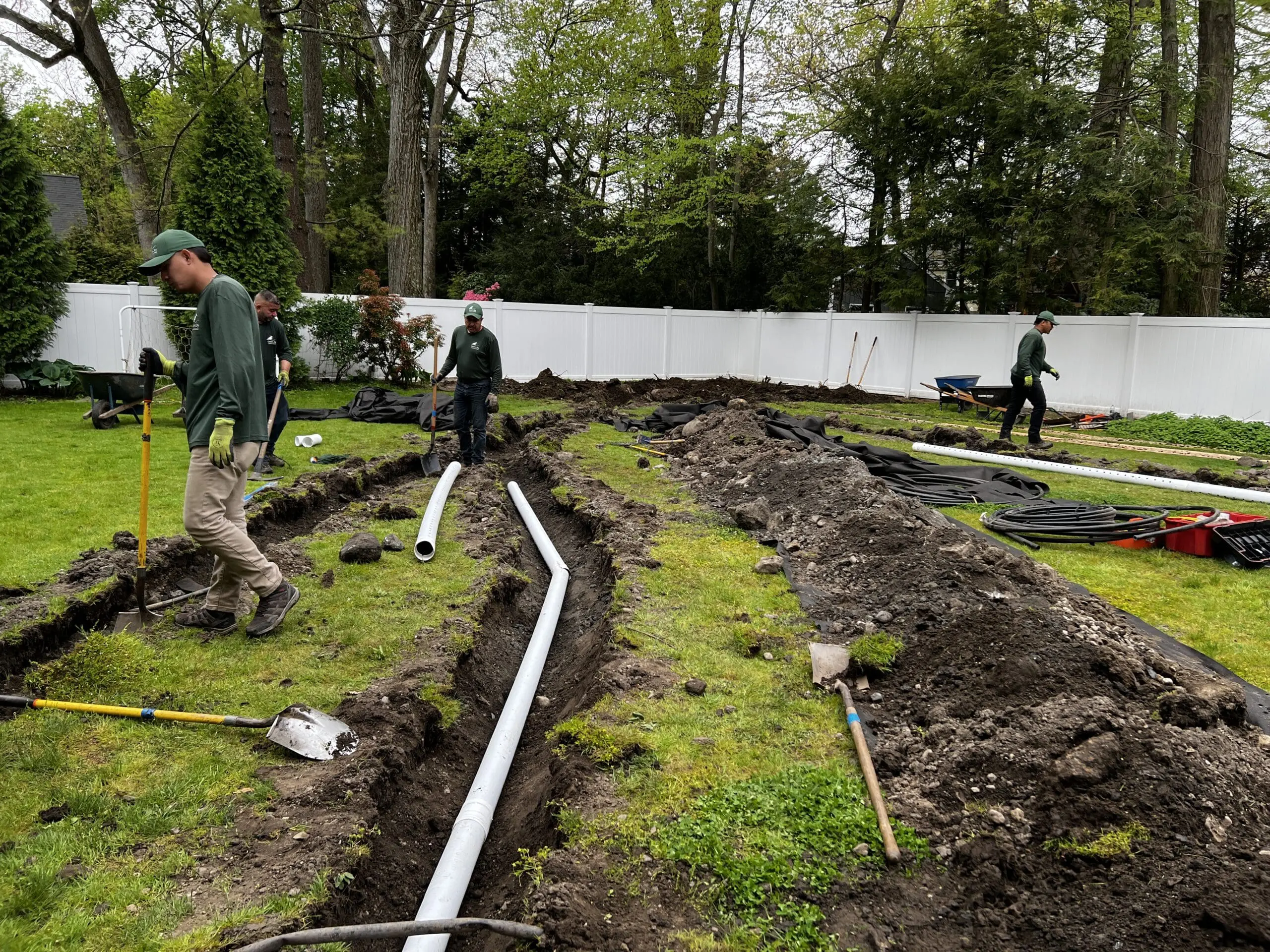
Installing drainage pipes to a new rain garden.

Masonry & Hardscape:

  • Stone Staircase: $10,000 – $30,000
  • Stone Walkways:  $8,000 – $15,000
  • Patios: $15,00 -$40,000+
  • Walls: $10,000 – $40,000+
  • Trail Building: $4,000 – $12,000

Fire Pits:

$3,000 – $12,000

Water Features:

$8,000 – $20,000

Planting: 

  • Small: $8,000 – $15,000
  • Medium: $15,000 – $50,000
  • Large: $50,000 – $100,000

Lawn Renovation:

  • $4,000 – $10,000

Installation Queue

Once the Proposal is signed and a deposit is received, we schedule any possible winter work, usually consisting of site development and/or hardscape construction. The advantage here is that come springtime, all that needs to be completed is the planting; then you have a new landscape to enjoy all summer long!

Winter Landscape Site Development

Grading

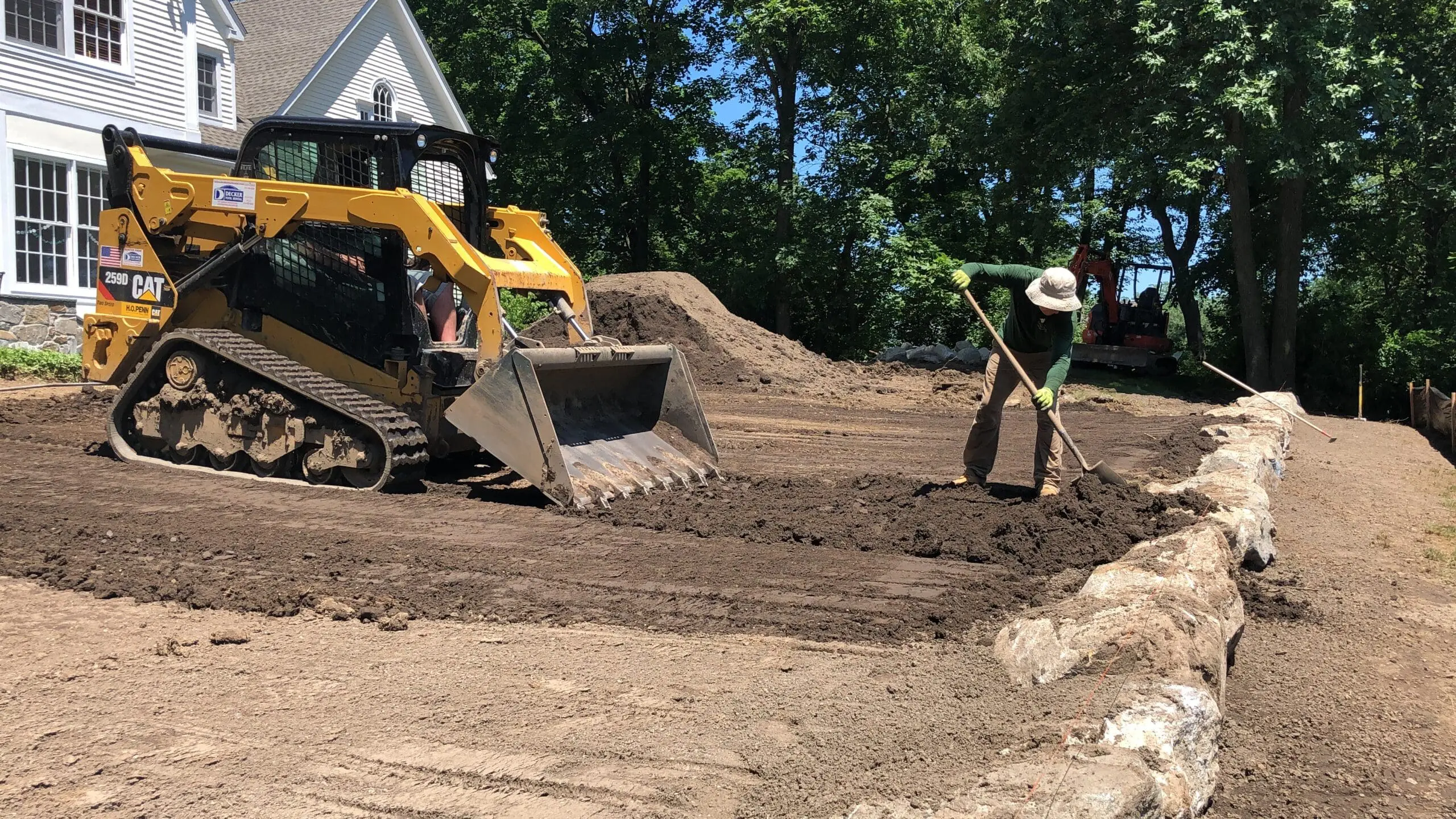
Winter is the perfect time of year to construct the foundation of the landscape and prepare the site for springtime planting. In many GJLD projects, grading is a significant component of the design plan. Grading involves changing the topography of the landscape by bringing in additional topsoil or cutting into an existing slope. Manipulating landscape grades allows us to expand functional space by making areas flatter, expanding planting zones, or enabling new hardscape areas. During this time, any necessary soil amendments and conditioners will also be incorporated into the soil. We may also opt to remove existing vegetation at this time.

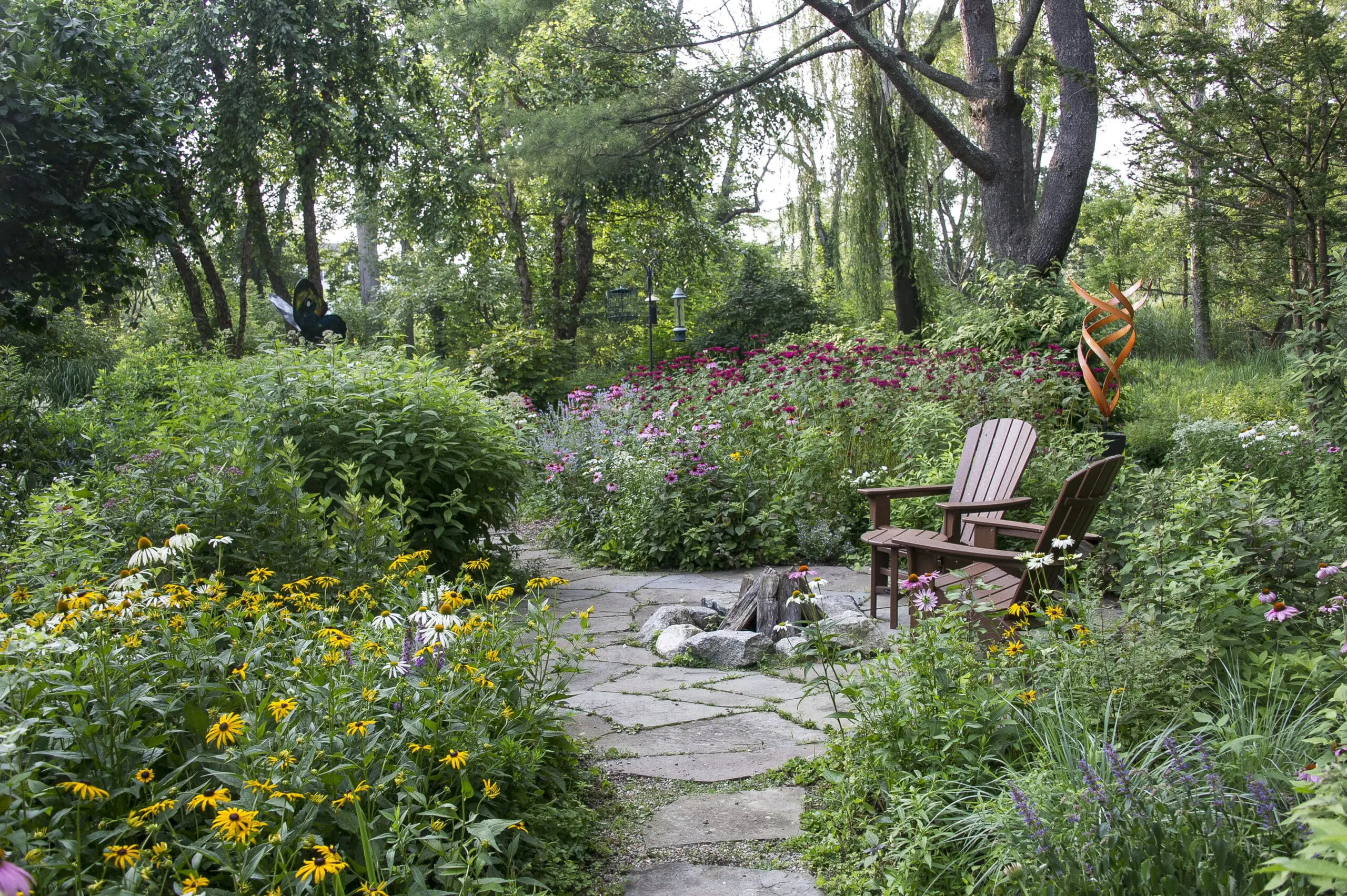
Backyard fire pit nook with native plantings and natural stone masonry. Designed and constructed by GJLD.

Hardscape Construction

Other elements of site development that may occur during winter months are hardscape construction. Constructing natural stone patios, stairs, walkways, garden paths, and walls in winter allows for significant progress in a design installation.

Faux stream bioswale directs stormwater to the underground Cultec.

Drainage

We can often address landscape drainage issues during fall and winter. These drainage solutions may include installing new piping, French drains, bioswales, dry wells, and more. Landscape drainage should be addressed before planting to avoid messiness and inefficiencies.

Preparation for Spring Planting

Clients that initiate their landscape installation during winter will be first in line for planting installation come spring. Having prepared the site through grading, delineating new planting zones, and removing unwanted vegetation, all that’s left to do is plant!

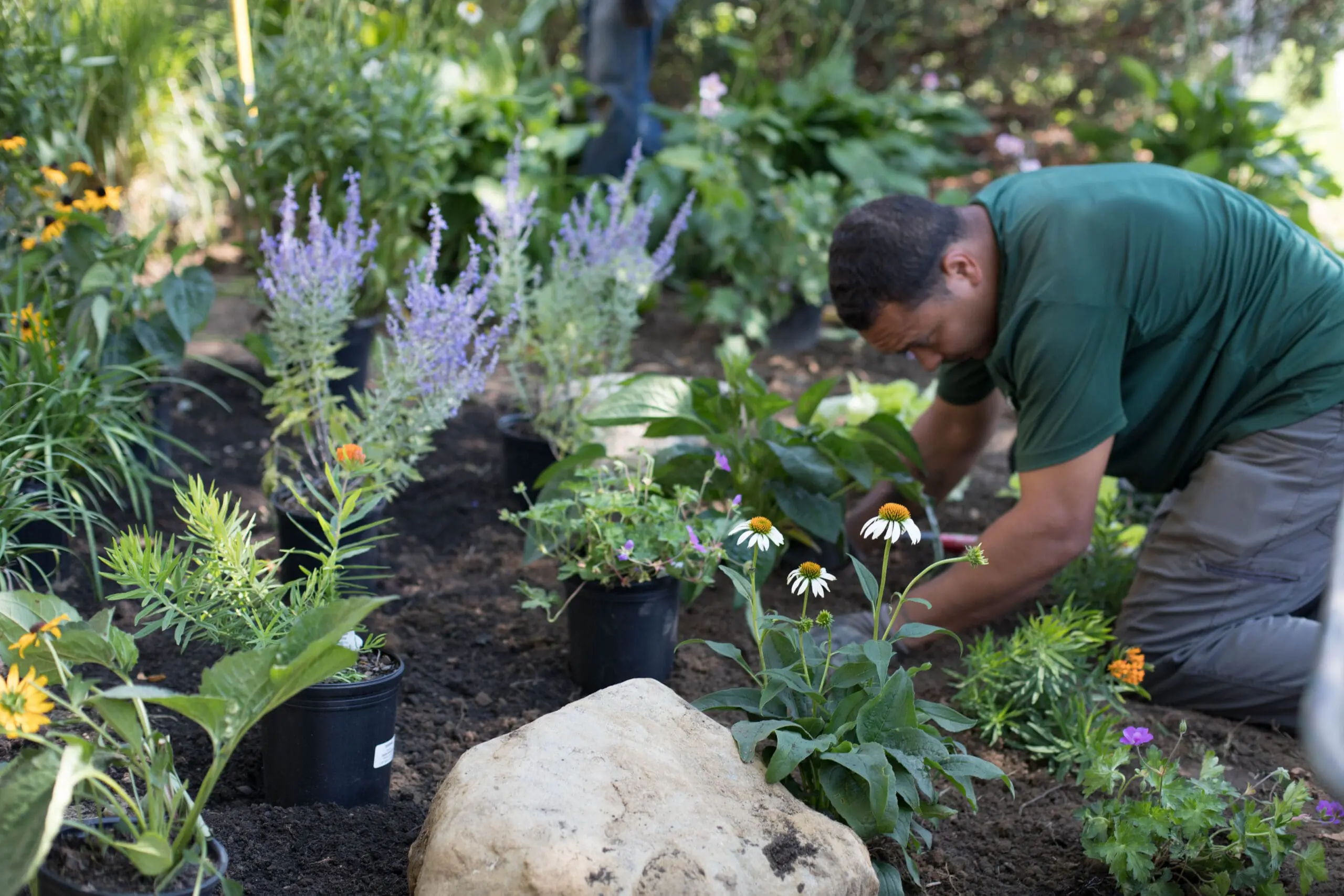
We hand pick and source native plants from Ecoregion 59, and “place” them in the landscape for client approval. Once approved, GJLD teams follow Northeast Organic Farming Association-approved organic horticulture practices when planting. Triple-ground dark chocolate mulch finishes all beds for a clean aesthetic.

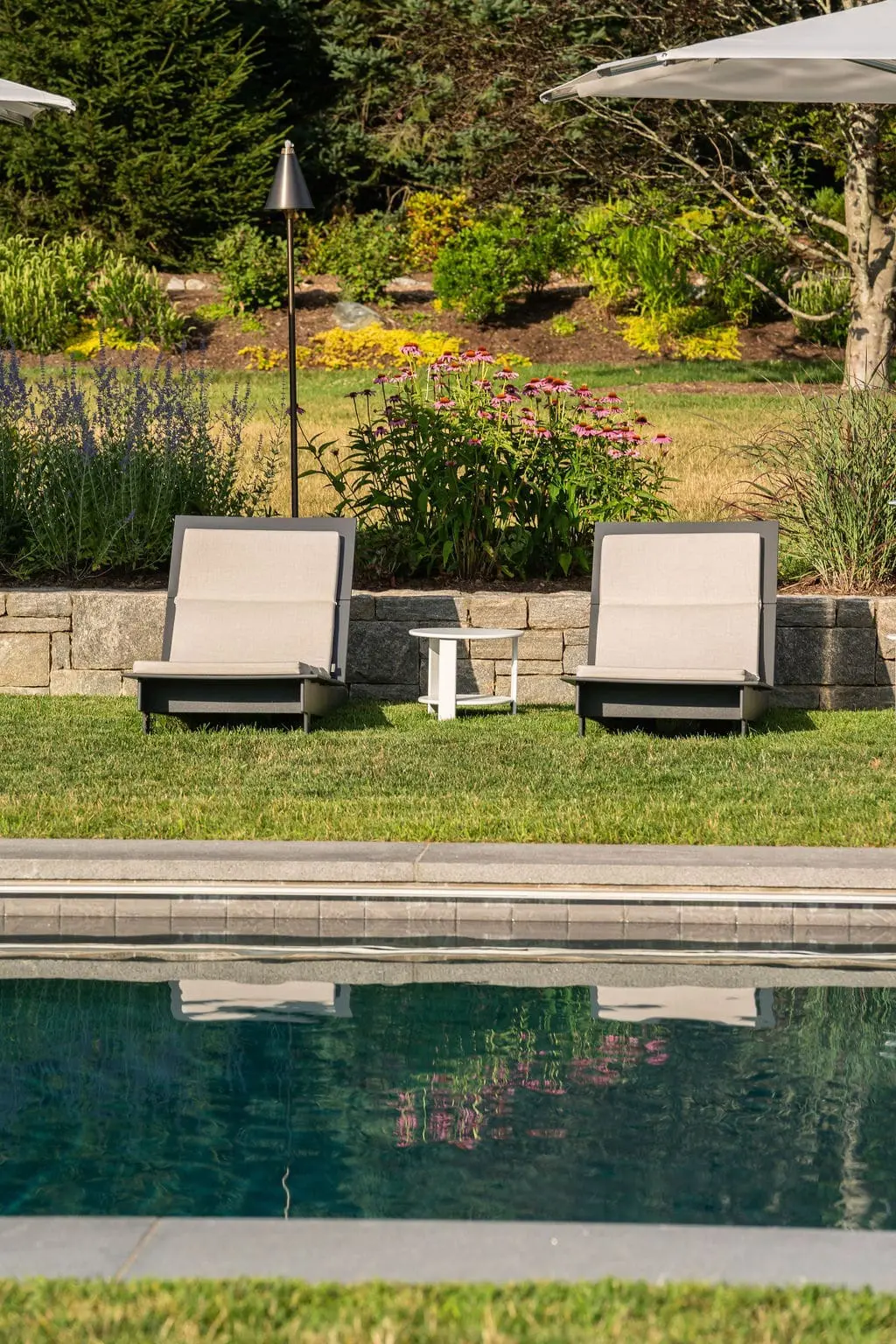
Newly renovated pool area features native plants and lounging areas.

Enjoy Your Landscape All Summer Long

The advantage of a spring landscape installation is obvious – you now have a completed new landscape to enjoy all summer long! Whether that means sitting beside the fire pit, next to the water feature, or around friends and family for an al-fresco dinner, your outdoor living landscape is elevated for maximum enjoyment.

As an added plus, your new planting has the optimum growing season, so you can expect more growth and lushness in your gardens throughout season one than if you planted in mid-summer.

Schedule a consultation to start your landscape design project!

Filed Under: Ecological Education Tagged With: ecological landscape design, landscape construction, landscape design, landscape designer, Westchester County NY, winter plan

  • « Go to Previous Page
  • Page 1
  • Page 2
  • Page 3
  • Page 4
  • Page 5
  • Page 6
  • Interim pages omitted …
  • Page 61
  • Go to Next Page »

Footer

Shop Address: 369 Bradhurst Ave, Hawthorne, NY 10532
(914) 560-6570
  • Facebook
  • Instagram
  • LinkedIn
  • Pinterest
  • YouTube
  • Houzz
  • Slide Share
  • Installation
  • Portfolio
  • Pricing
  • About
  • Contact

Copyright © 2026 · Green Jay Landscape Design. All Rights Reserved · Privacy Policy · Website and Local SEO by Ramblin Jackson