• Skip to main content
  • Skip to footer
Green Jay Landscape Design

Green Jay Landscape Design

Green Jay Landscape Design

(914) 560-6570
  • Design
  • Installation
  • Portfolio
  • Pricing
  • About
    • Service Area
    • Meet Our Team
    • Our Process
    • Our Promise
    • Mission, Vision, & Core Values
    • FAQ
    • Press & Events
    • Blog
    • Reviews
    • Careers
    • Affiliations
  • Contact

greenjayadmin

My how things have changed! We used to work so hard at cleaning up the landscape, the lawns and garden beds in the fall and again in spring.

Now, we collectively have a better understanding of how we can manage our resources for our own human health as well as for pollinators and other insects.

The Pollinator Pathway Initiative as well as the Healthy Yards Project has helped to revolutionize the way we treat our suburban landscapes.

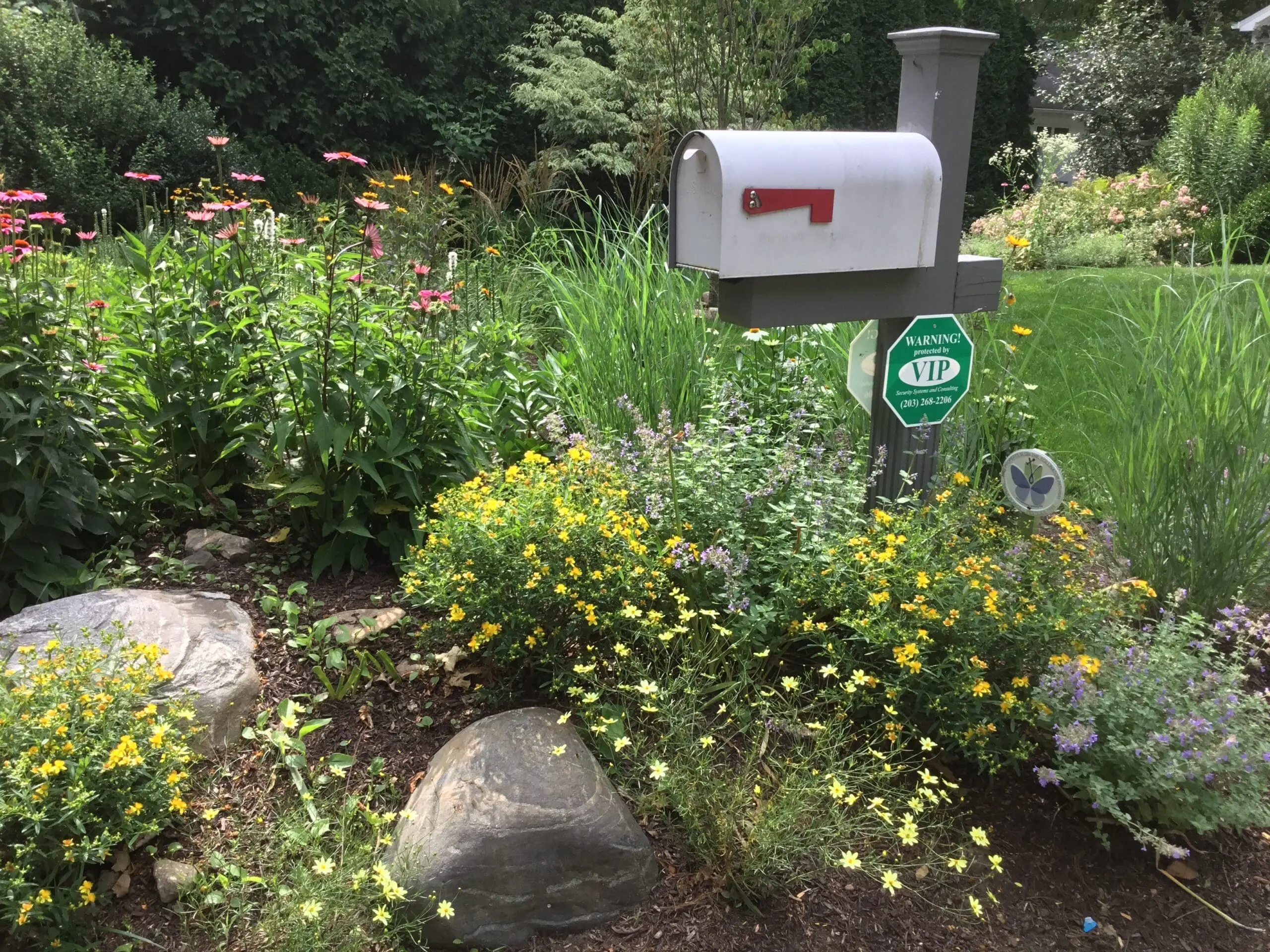
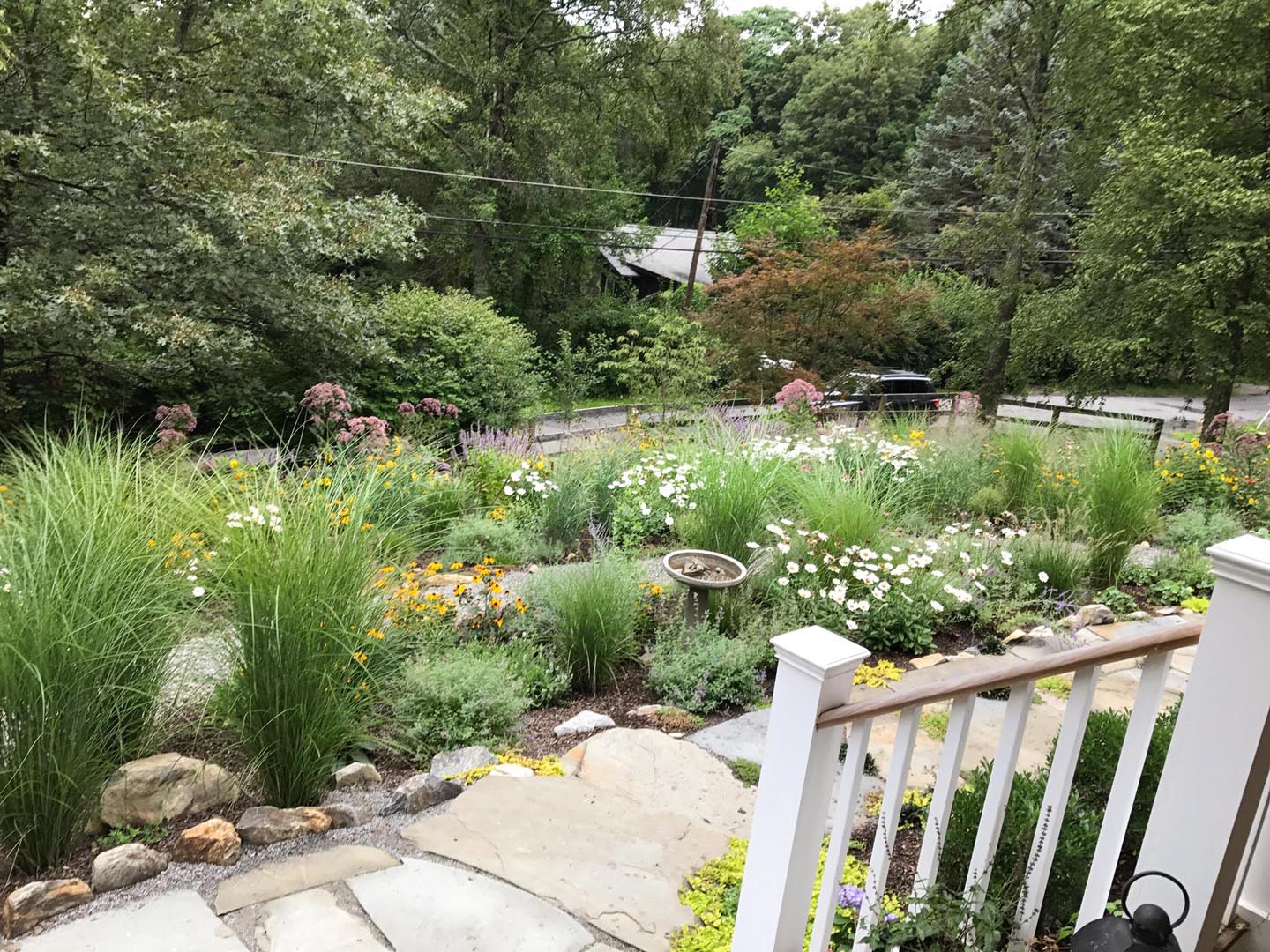
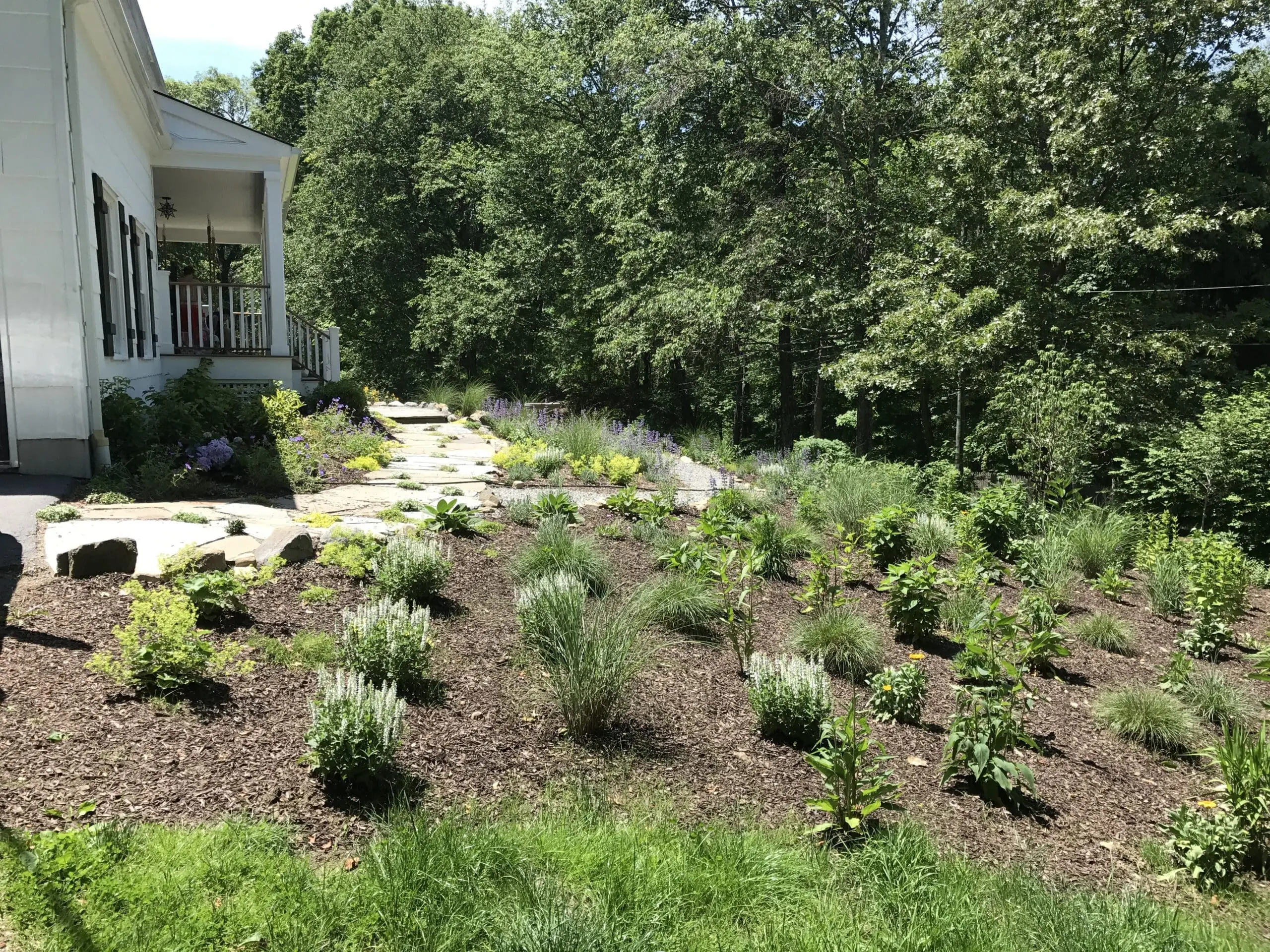
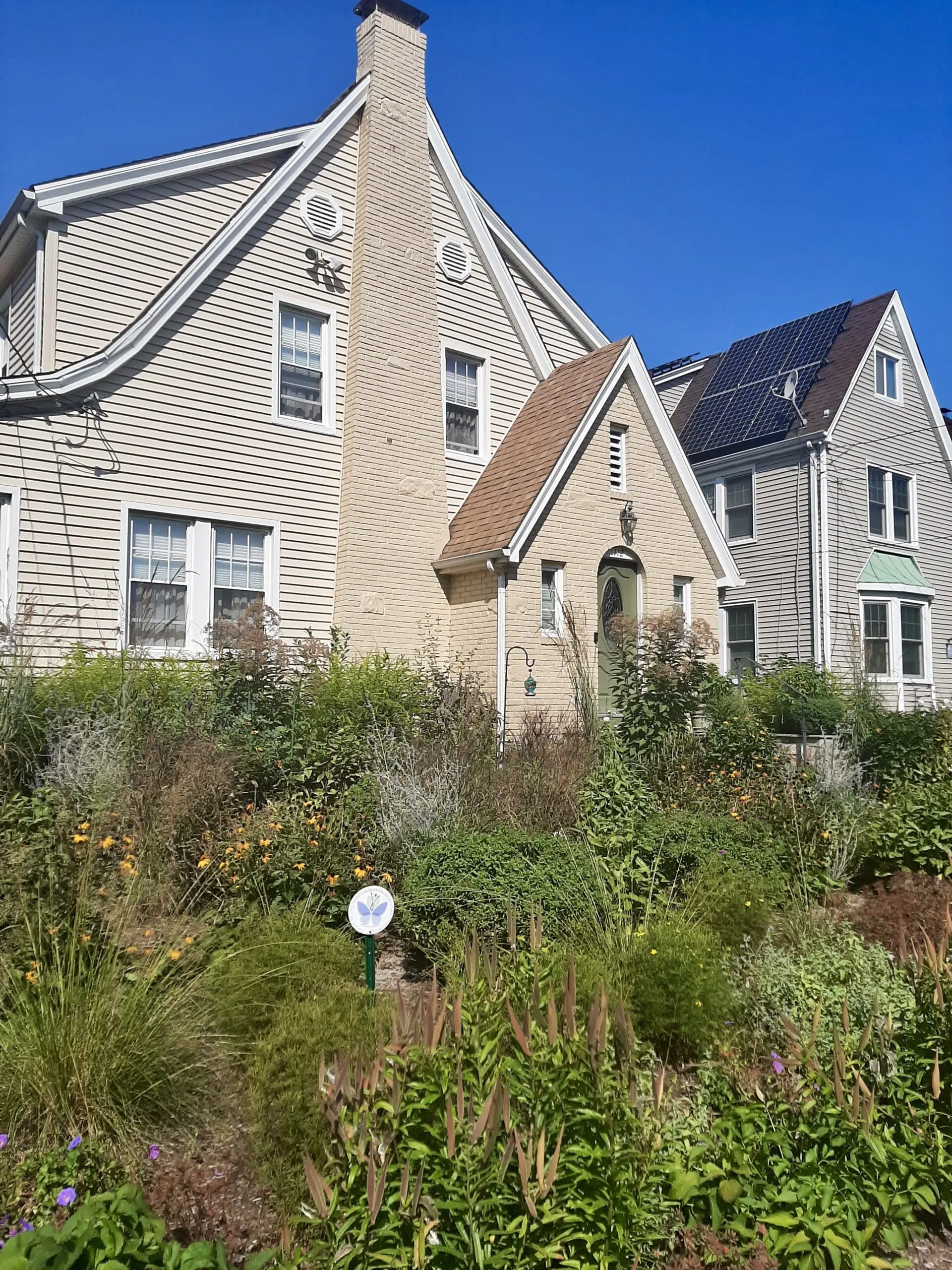
A front yard in Fairfield County, CT converted to a pollinator pathway organic landscape.

A couple of fundamental concepts: we do not recommend heavy raking of the lawn and beds to remove leaves. Pick up the mid to large size sticks and twigs left over from winter storms. Leaves should be removed if they are in a heavy, wet mass or if they are so thick that they completely prohibit light from reaching the surface. Leaving a light covering of leaves that will quickly breakdown with warm weather and contributes precious biology to the soil is a BMP or Best Management Practice.

A light layer of leaves can provide critical nutrients to garden beds. Remove large and medium sticks from lawn areas for ease of mowing. Avoid heavy raking in early spring, when root zones are fragile.

Cutting back grasses and perennials when temperatures reach 50 degrees helps maintain insect populations. We cut down hollow stem native perennials in 4-6” increments to a height of 18” to allow for habitat protection. Grasses, leaves and perennials can be shredded or composted for later use.

If desired, you can mow perennial gardens. Be aware of seed dispersal.

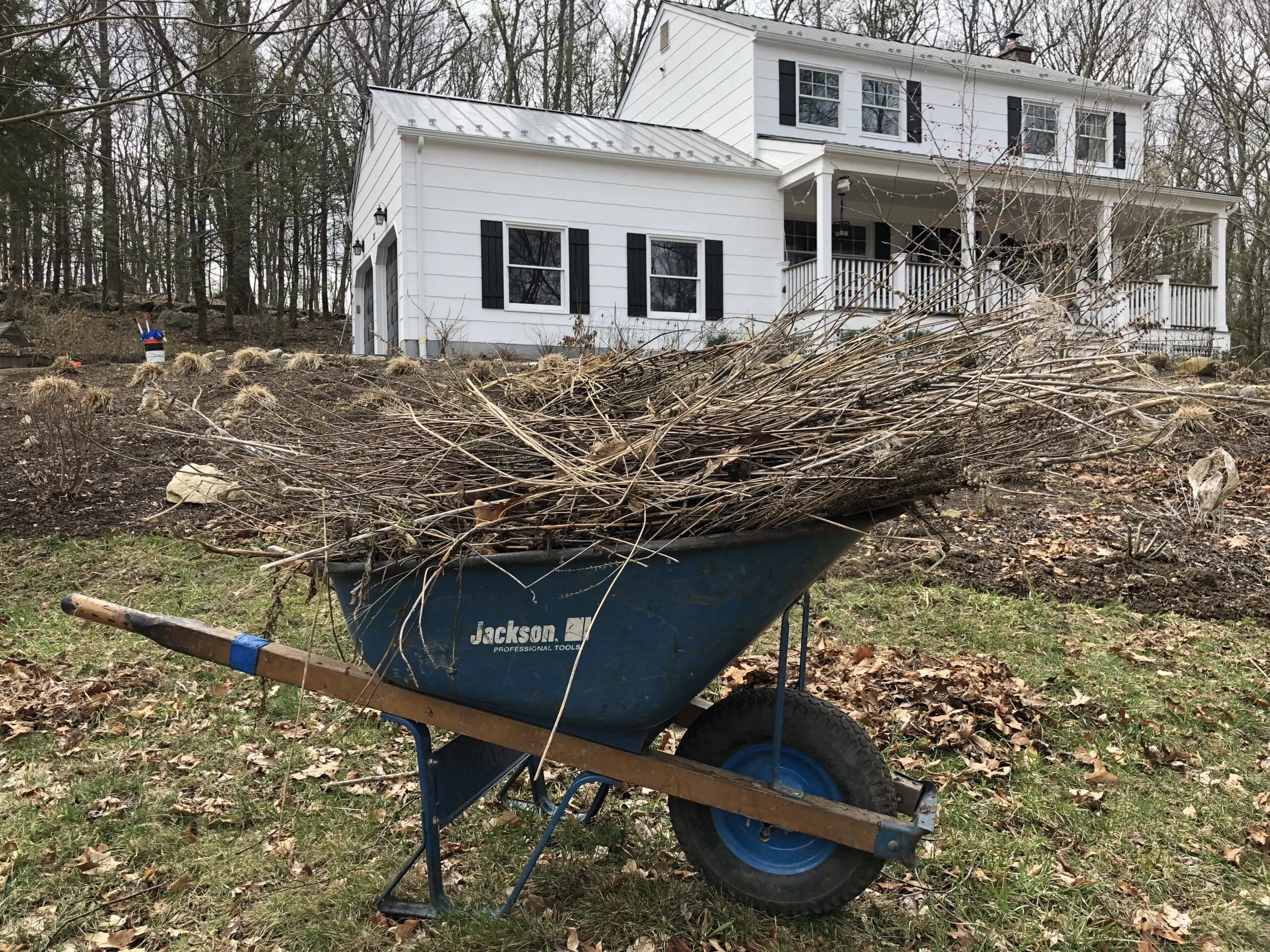
Saving hollow stemmed perennials, as to not disturb the overwintering insects, as we clean up a garden in early spring.

If you leave all seed heads up from fall to spring and then mow or cut and leave in place you will be dispersing seed throughout the garden. We selectively harvest seed in fall to control propagation of some species, especially more aggressive plants.

We may mulch garden beds with a light cover of triple ground hardwood mulch, especially with garden beds that have not yet reached maturity. The preferred method is to use native ground covers as ‘green mulch’, thereby conserving tree resources and reducing the impulse to mulch. This poses a challenge in communicating to landscape maintenance contractors the desire to change and improve practices.

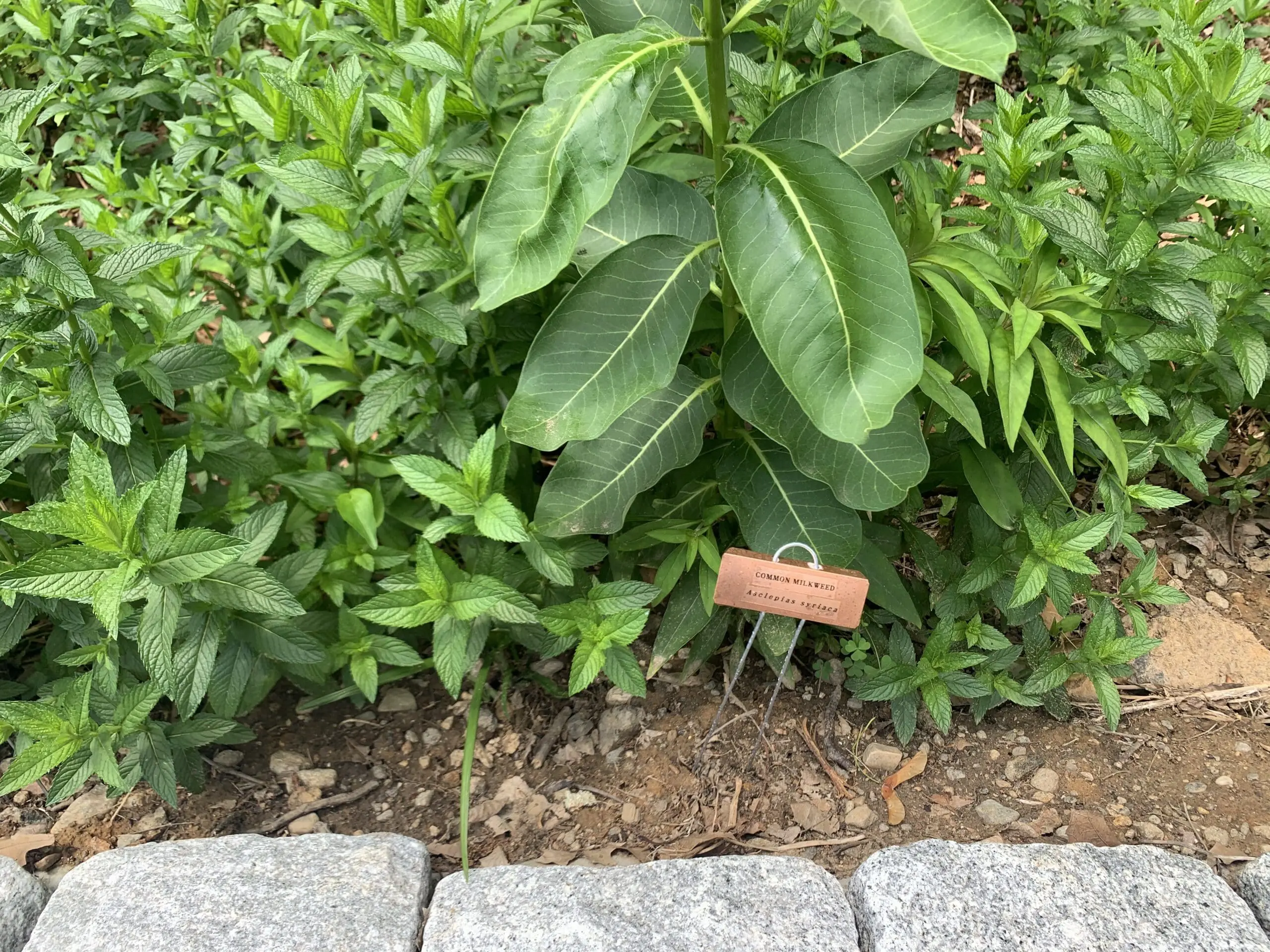
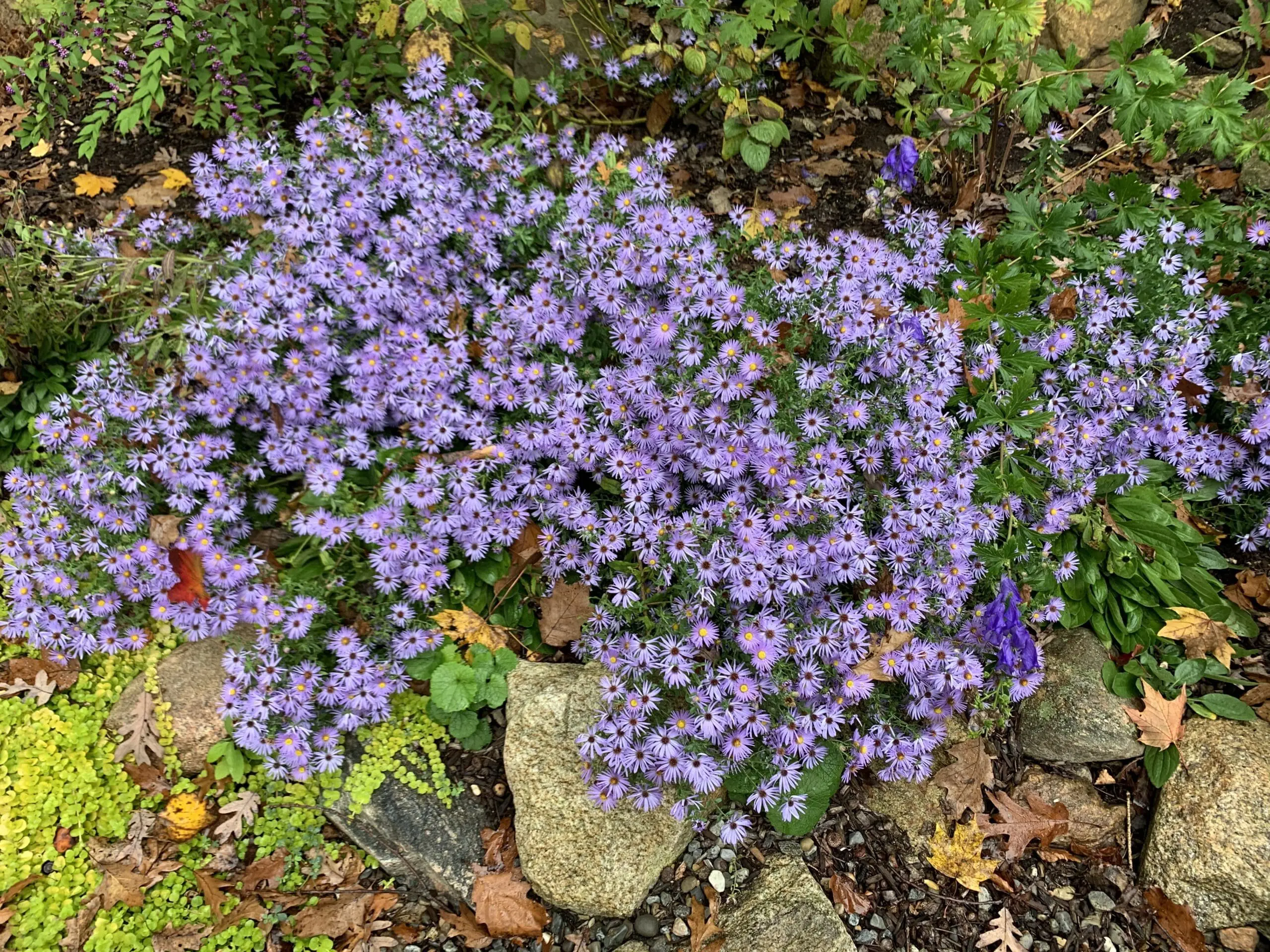
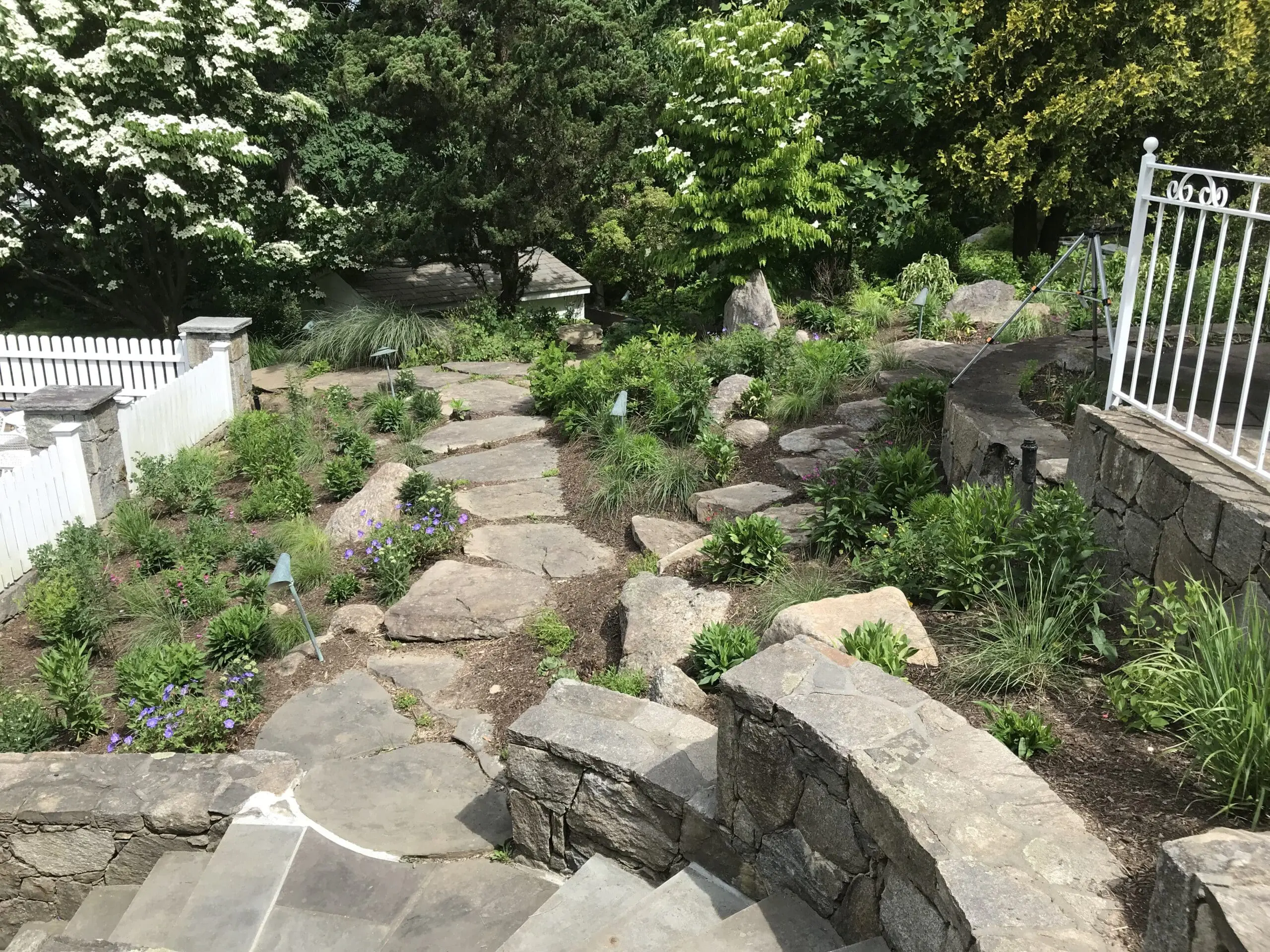
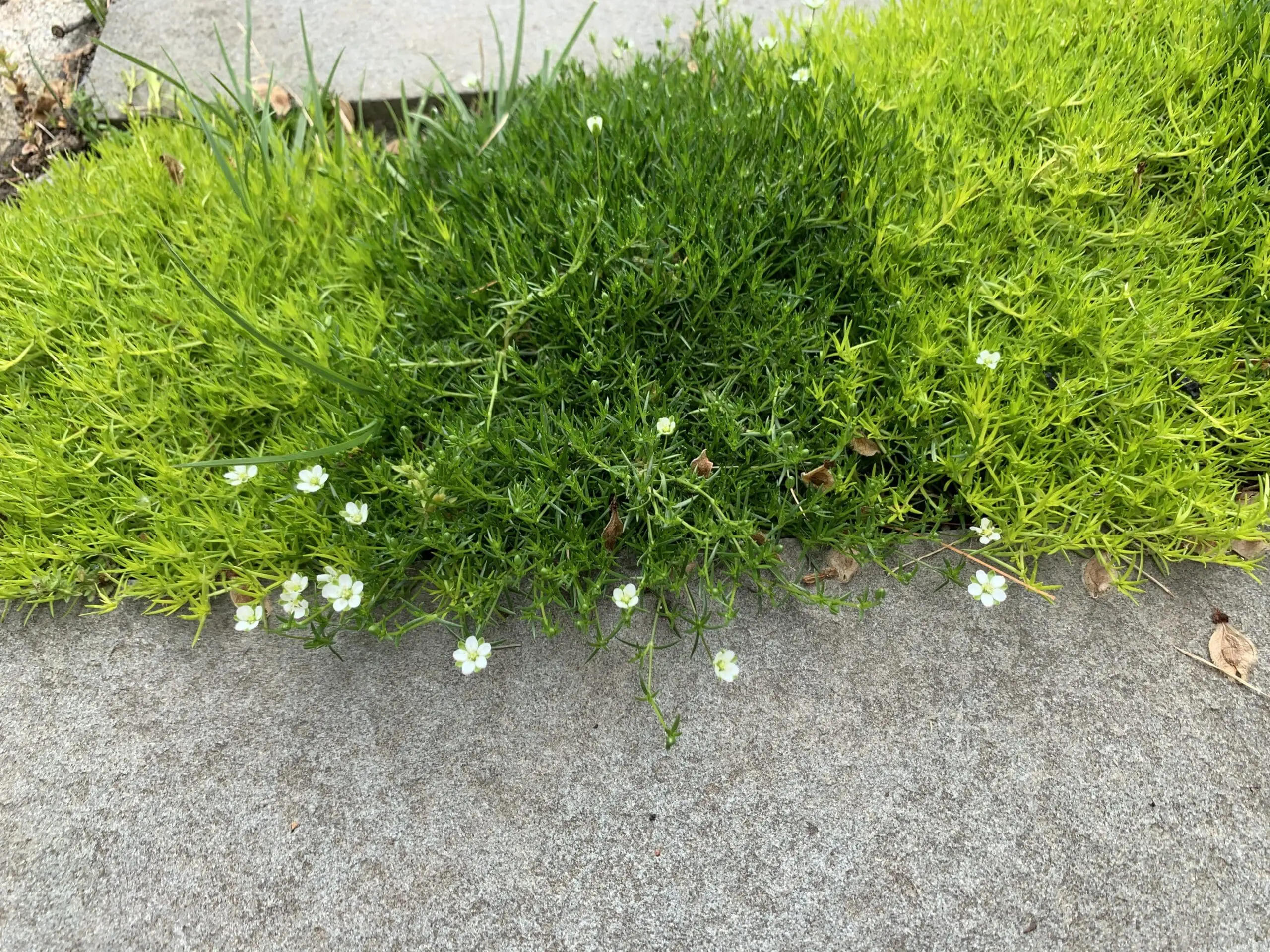
An example of Green Mulch: using ground cover plants to cover bare soil and reduce weed pressure, reducing use of traditional bark mulches.

Mulch mowing has become more widely used and accepted. It has enabled us to pulverize the precious organic material deposited on the lawn and convert it into biological building blocks, which in turn, help with water conservation. The absence of snowfall has done two things: 1) reduced the deposition of material from the atmosphere, usually produced from snow. 2) Limited the salt used for snow and ice control. Whereas we would normally use gypsum to alleviate damage along walks and roadways, we can now focus on other more important tasks. Enlivened rock powders such as Greensand and Azomite can improve drainage and facilitate nutrient availability.

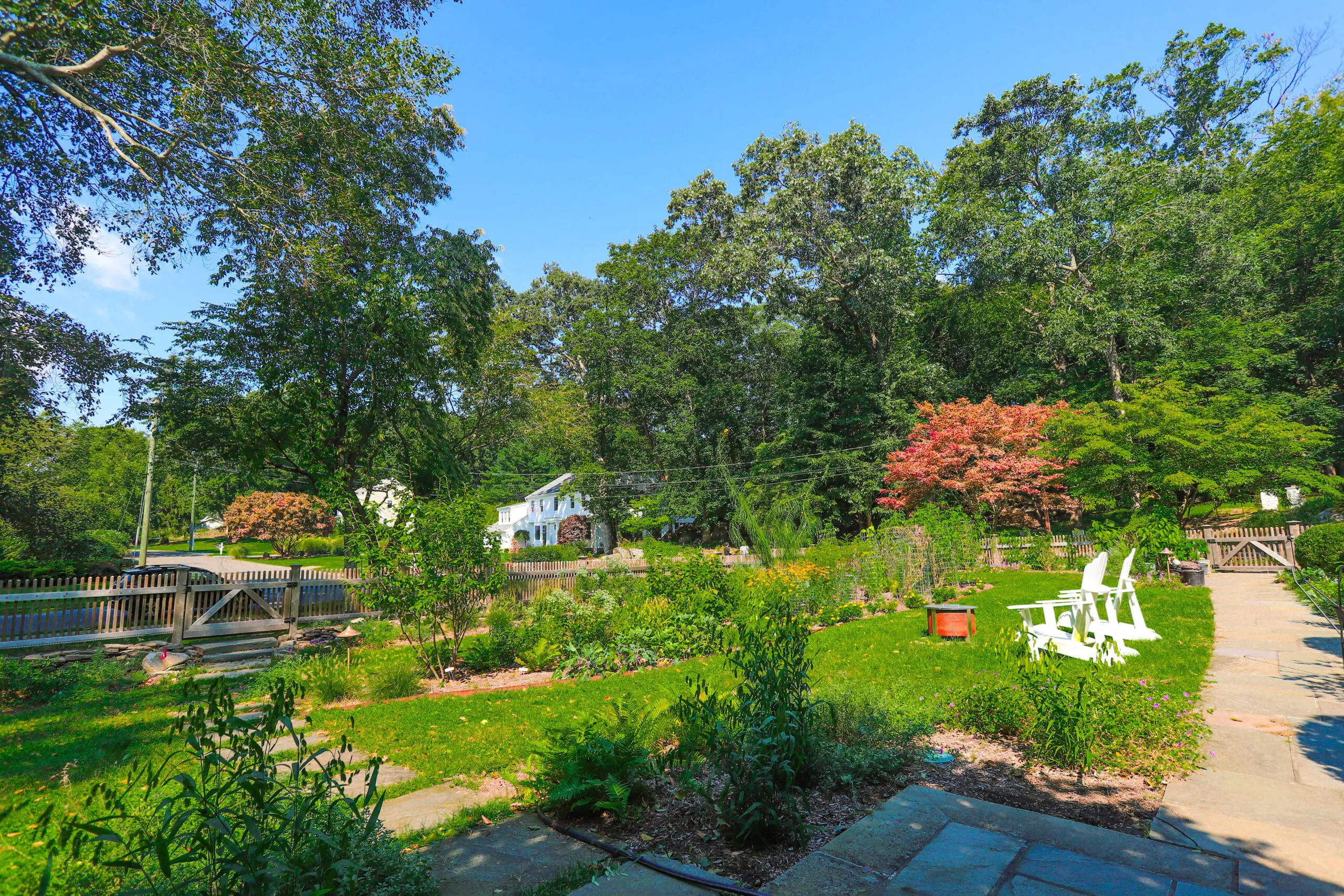
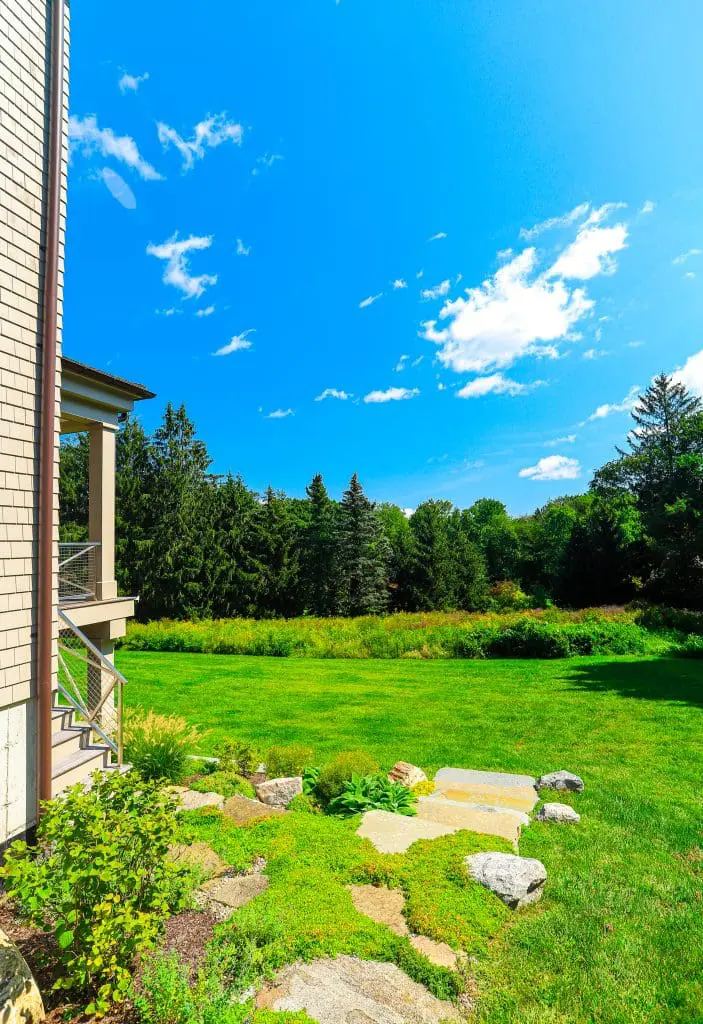
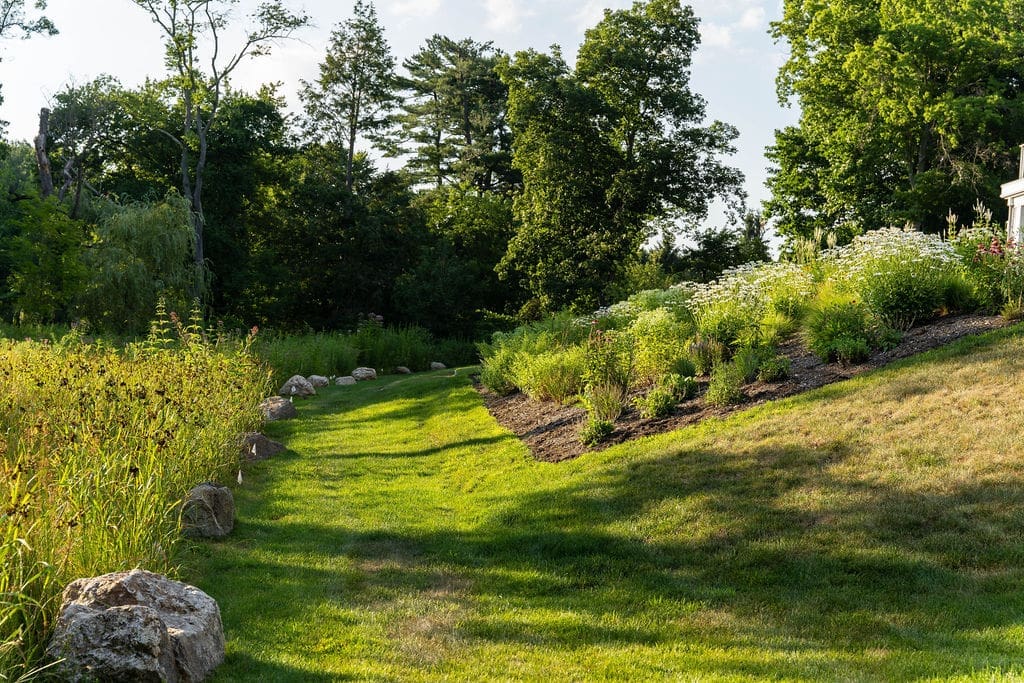
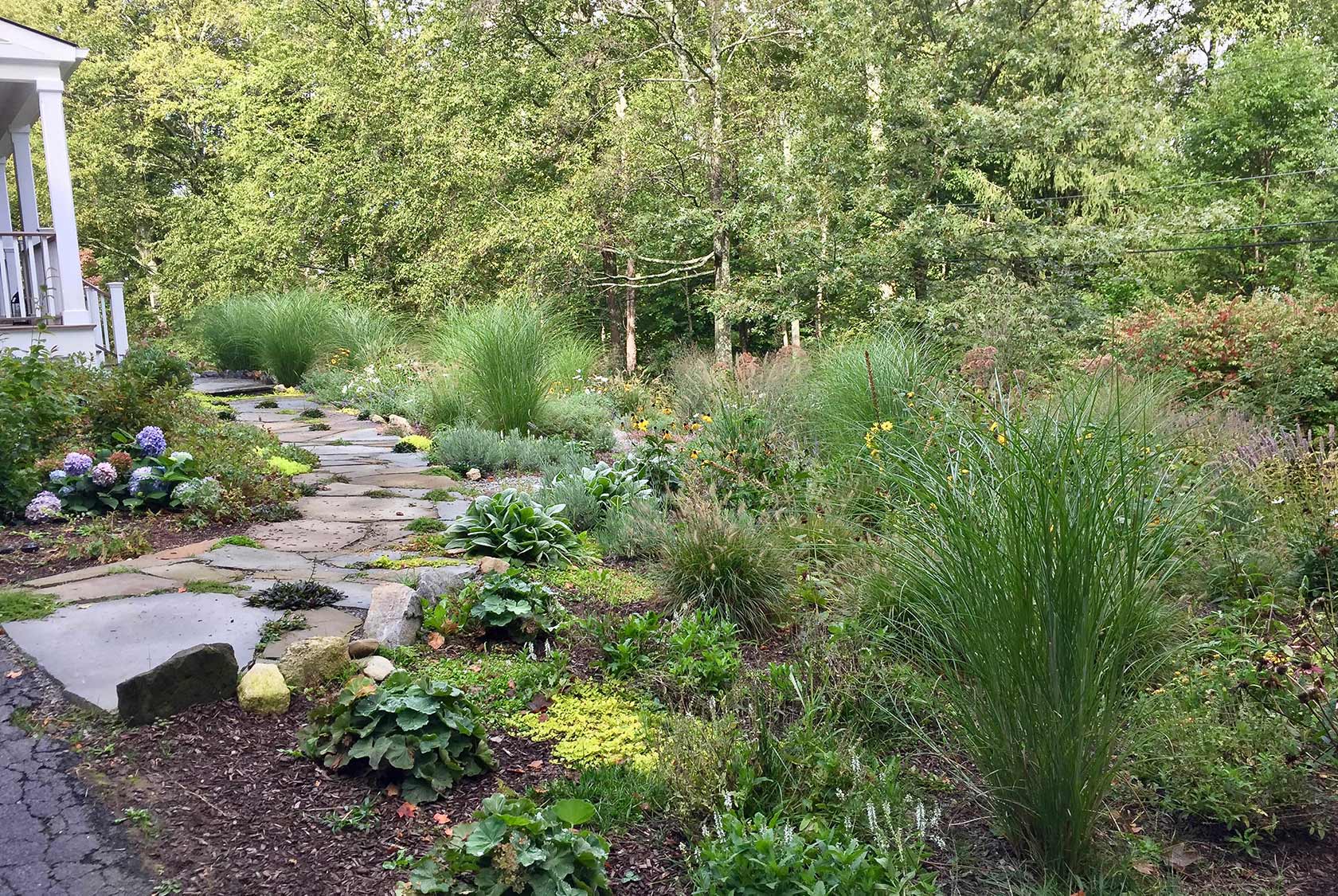
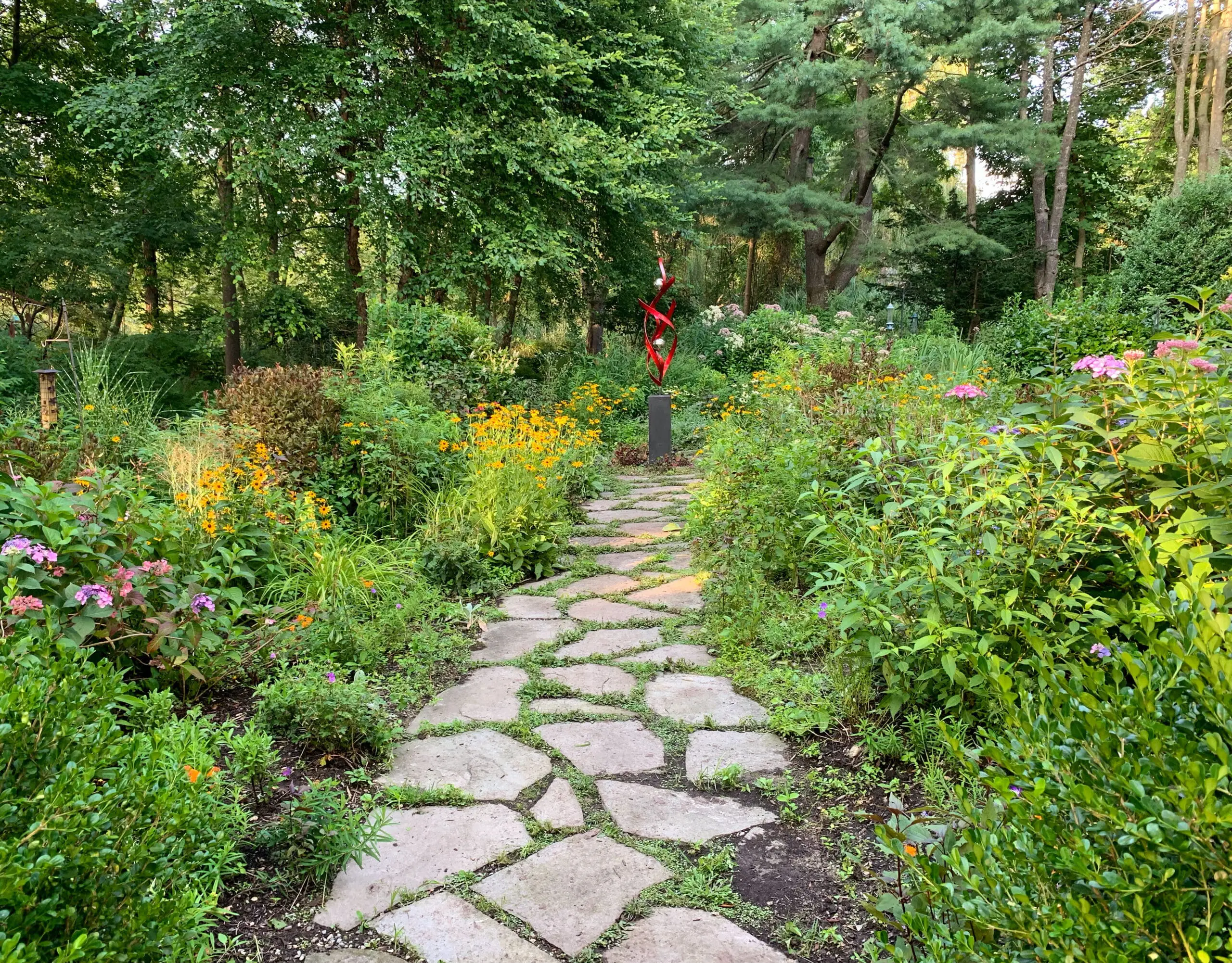
A mature garden, maintained with ecological landscaping principals for the past decade.

We continue to feed young trees and shrubs, planted in the last two years to help with establishment. This is especially important for ericaceous plants like hydrangea, blueberries, rhododendron, etc. In our area the average pH is in the normal range, so we need to compensate if we have those plants in our landscape. Like us, they respond well to organic feeding, so give them what they need, twice a year, in spring and fall. As the label specifies, twice the rate in spring compared to fall as the roots and shoots are growing now.

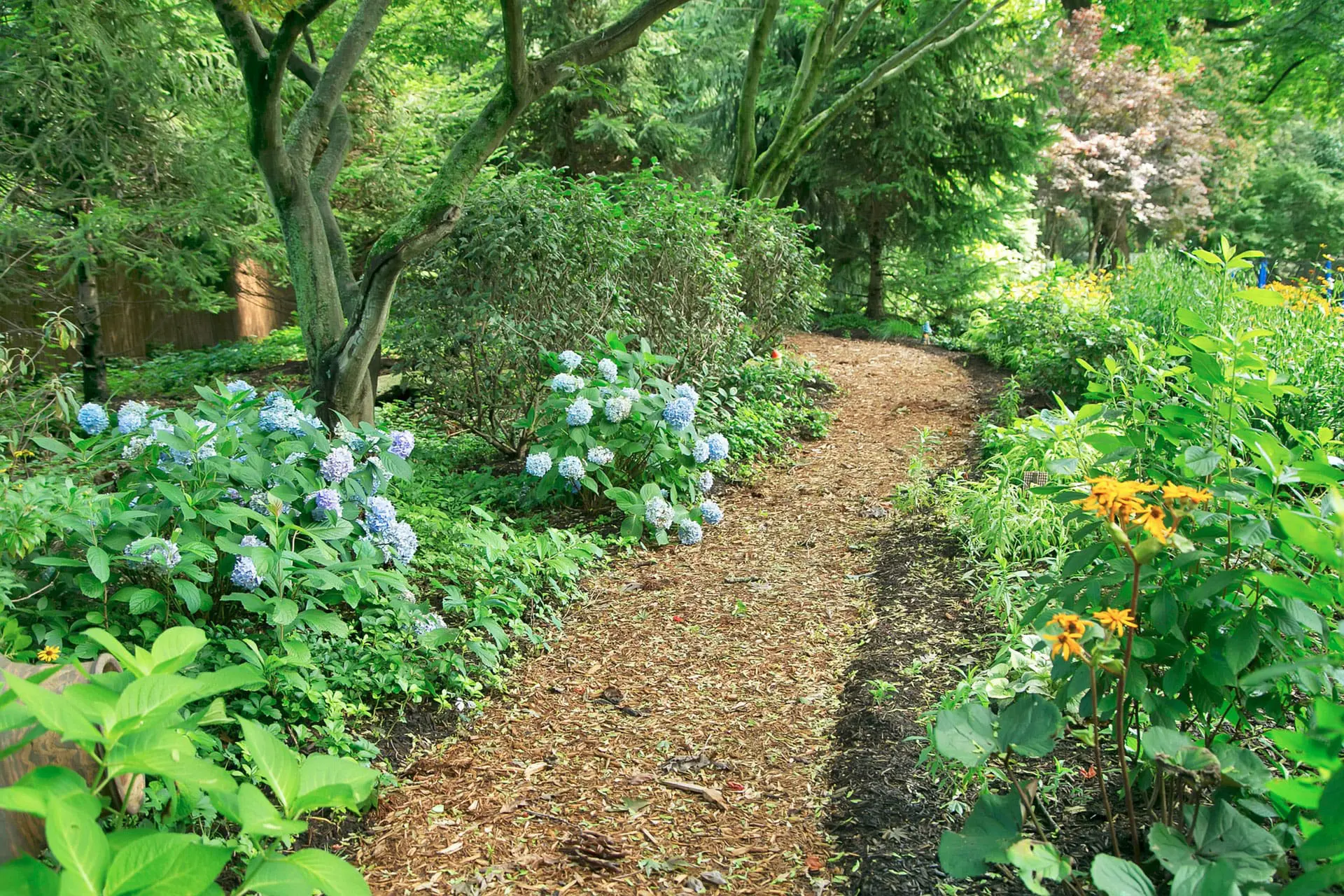
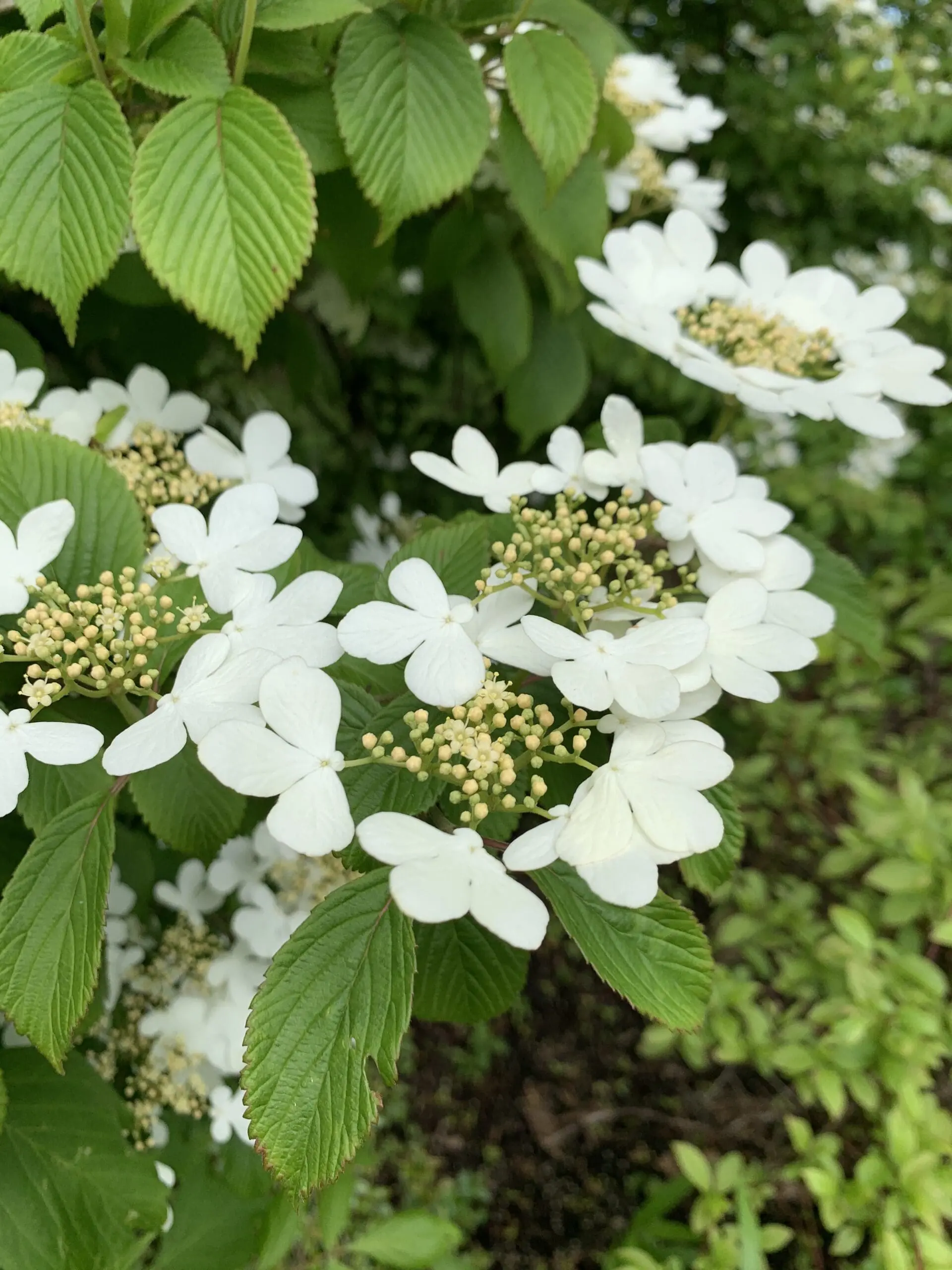
Lace Cap Hydrangea is an ericaceous shrub that benefits from acidic fertilizer.

In Ecological landscape design and development, we have an opportunity to reduce the use of fossil fuel, gas, oil and electric by designing and building landscapes without them, thereby reducing the need for maintenance.

Ecological landscapes can be designed, built, and maintained with respect for our precious natural resources. They can and will be maintained gently and quietly…as nature intended.

Reduce your lawn…reduce the for need for resources…increase the critical biological biomass which we desperately need to support life on Earth.

Most of all…take a walk…breathe the air…say a prayer of gratitude for nature… for the gifts we receive from her, each and every day.

Filed Under: Ecological Education Tagged With: ecological landscape design, ecological landscaping, garden inspiration, garden to do, habitat garden, healthy yard, landscape designer, landscape inspiration, natural landscaping, organic landscape, perennial garden, pollinator garden, spring clean up

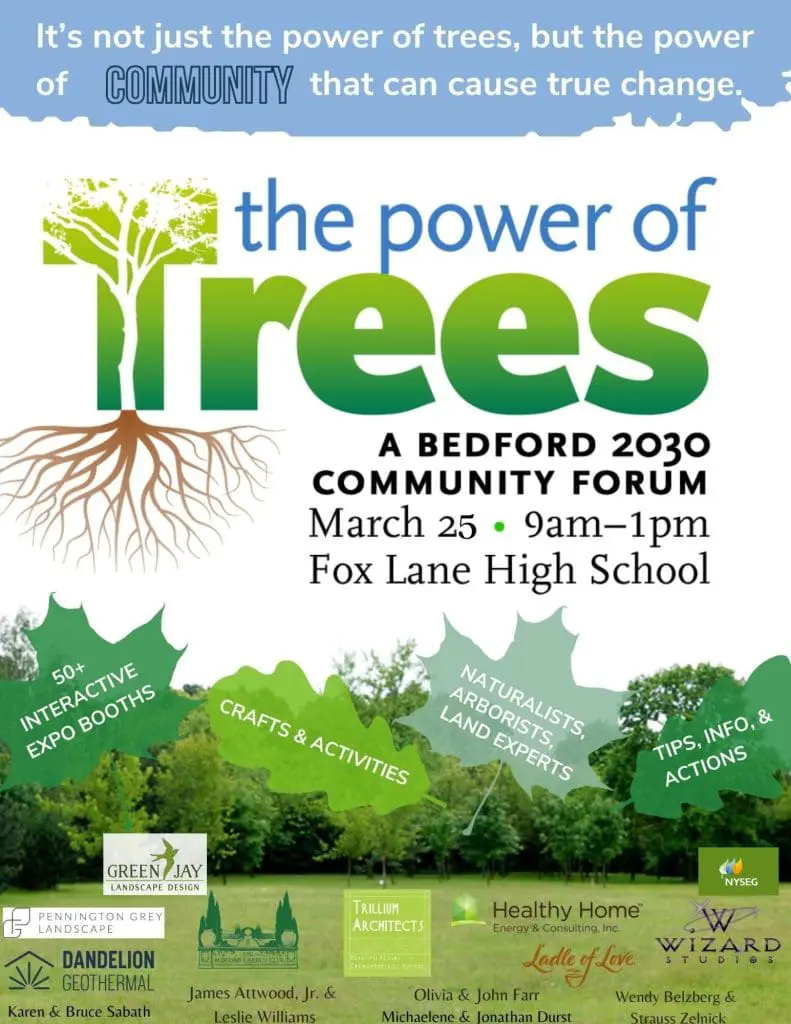
Don’t miss The Power of Trees, hosted by Bedford 2030 next Saturday March 25th! We are very excited for this event and so thankful for the environmental champions over at Bedford 2030 for creating tree awareness, especially during an unfortunate time of clearcutting throughout many parts of Westchester.

The event will be held at Fox Lane Highschool (632 S Bedford Rd, Bedford, NY) on Saturday March 25thfrom 9 AM to 1 PM.

Tickets are $25, with an optional breakfast add on for $10.

Expo Activities & Green Companies

An Expo-only ticket is free and will gain you access to activities ranging from Mushroom Growing Demo to Forest Bathing and Tree ID Nature Walks. View the schedule and activity descriptions.

Green Jay Landscape Design will be participating as an event sponsor. Visit our table at the expo! We’ll have examples of our design work and are happy to answer any questions you might have about ecological landscape design and native plants.

Tree and Land Experts Speak at Power of Trees

The lineup of speakers at the Power of Trees this Saturday is inspiring!

First up, Jessica Schuler, the keynote speaker, is bringing her expertise as the Program Coordinator of Natural Resources for Westchester County Department of Parks, Recreation and Conservation. Jessica earned a BS in Plant Science with Distinction in Research from Cornell University, is a horticulturist, a Certified Ecological Restoration Practitioner and an ISA-certified arborist. She was previously Director of the Thain Family Forest at The New York Botanical Garden.

Other speakers include:

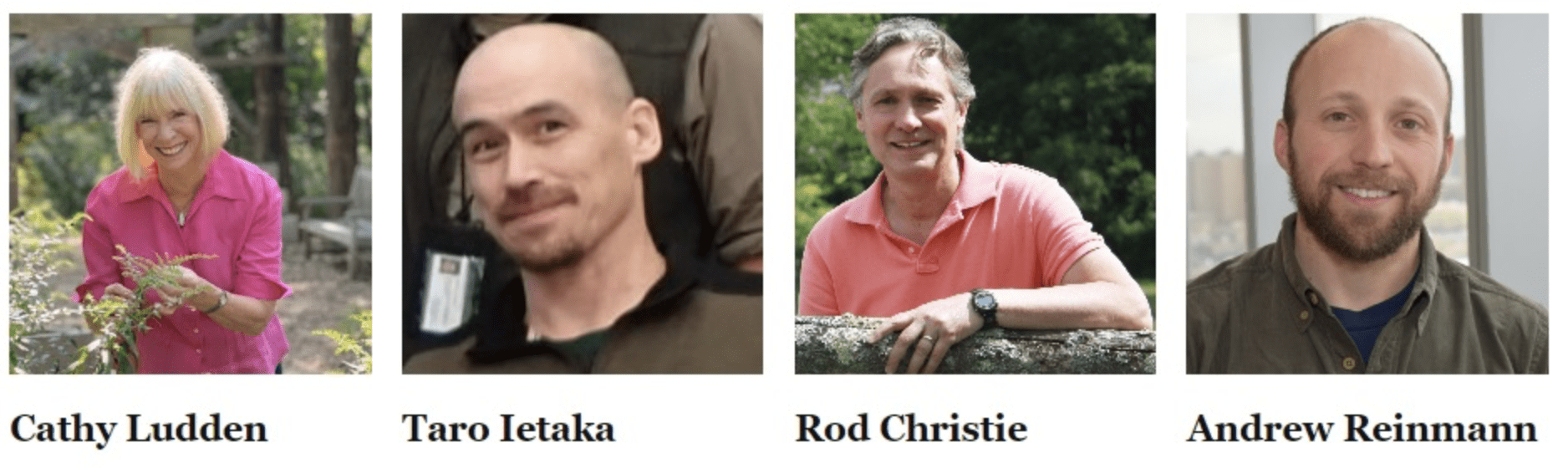
Cathy Ludden: is on the Steering Committee of the Native Plant Center at Westchester Community College and is the former president of the Board of Directors of Greenburgh Nature Center. She has been consulting, designing and planting pollinator gardens and meadows for the past decade.

Taro Ietaka: Taro works for the Conservation Division of Westchester County Parks overseeing nature centers and the biodiversity program. He has been especially involved in combatting Beech Leaf Disease  with Lower Hudson PRISM.

Rod Christie: is the Executive Officer for the Mianus River Gorge, a land trust that protects over 1000 acres of land including 100 acres of old-growth forest. Rod has a background in wildlife biology and has worked with not-for-profits for decades

Dr. Andrew Reinmann: Dr. Reinmann is an ecologist and biochemist who studies the effects of environmental change on plant-mediated controls of terrestrial carbon cycling.

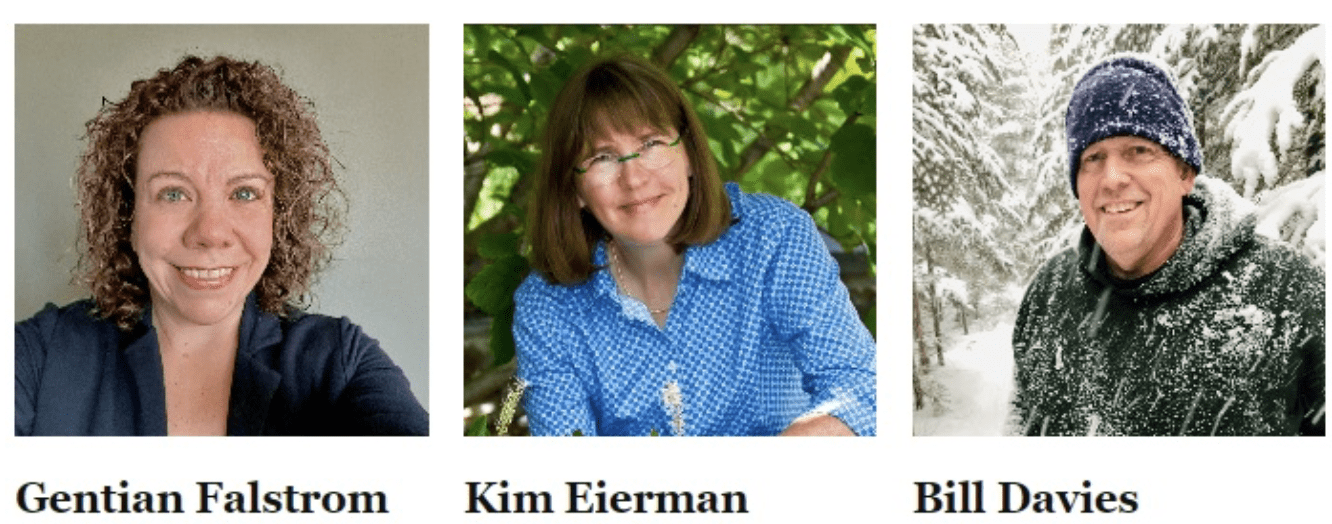
Gentian Falstrom: Gentian is the Land Project Manager at Westchester Land Trust, shepherding new land conservation projects through to completion. She also serves as the Chair of the Bedford Conservation Board, which provides input on applications and proposals before the town, as well as drafts new ordinances for the benefit of the town’s natural resources.

Kim Eierman: Kim is the founder of EcoBeneficial LLC, where she specializes in ecological landscape design and native plants. Kim teaches at the New York Botanical Garden, Brooklyn Botanic Garden, and The Native Plant Center and is the author of The Pollinator Victory Garden.

Bill Davies: Bill is an ISA certified arborist and has been caring for trees in Westchester for over forty years. He is knowledgeable about all aspects of quality tree care, using the most environmentally friendly methods available.

JoAnn Messina: JoAnn is the current and founding Executive Director of the Greenwich Tree Conservancy. She is a member of the Task Force reviewing CT DOT clearcutting in Greenwich and of a Greenwich task force planting trees along Route 1.

Shannon Holsey: Shannon is in her fourth term as president of the Stockbridge-Munsee band of Mohican Indians. She. has committed the Tribe to serving as good stewards of its economic, environmental and culture as well as intellectual resources.

Tatiana Grossman: Tatiana is a cofounder of Corridor, a company seeking to scale the fastest natural reforestation method known that grows thriving forests in months instead of decades.

Alexander Graham Marcoulides: Alexander led his students to plant 100 trees in Newark, New Jersey and was inspired to continue reforesting some of our most polluted cities. At One Tree Planted he helped raise funds to reforest the Australian outback and Amazon rainforest. He now works with Tatianna at Corridor.


Filed Under: Ecological Education, Events & Garden Tours Tagged With: bedford 2030, climate change, climate mitigation, community event, conservation, environmental education, environmentalism, grassroots, habitat, land stewardship, power of trees, save our trees, trees

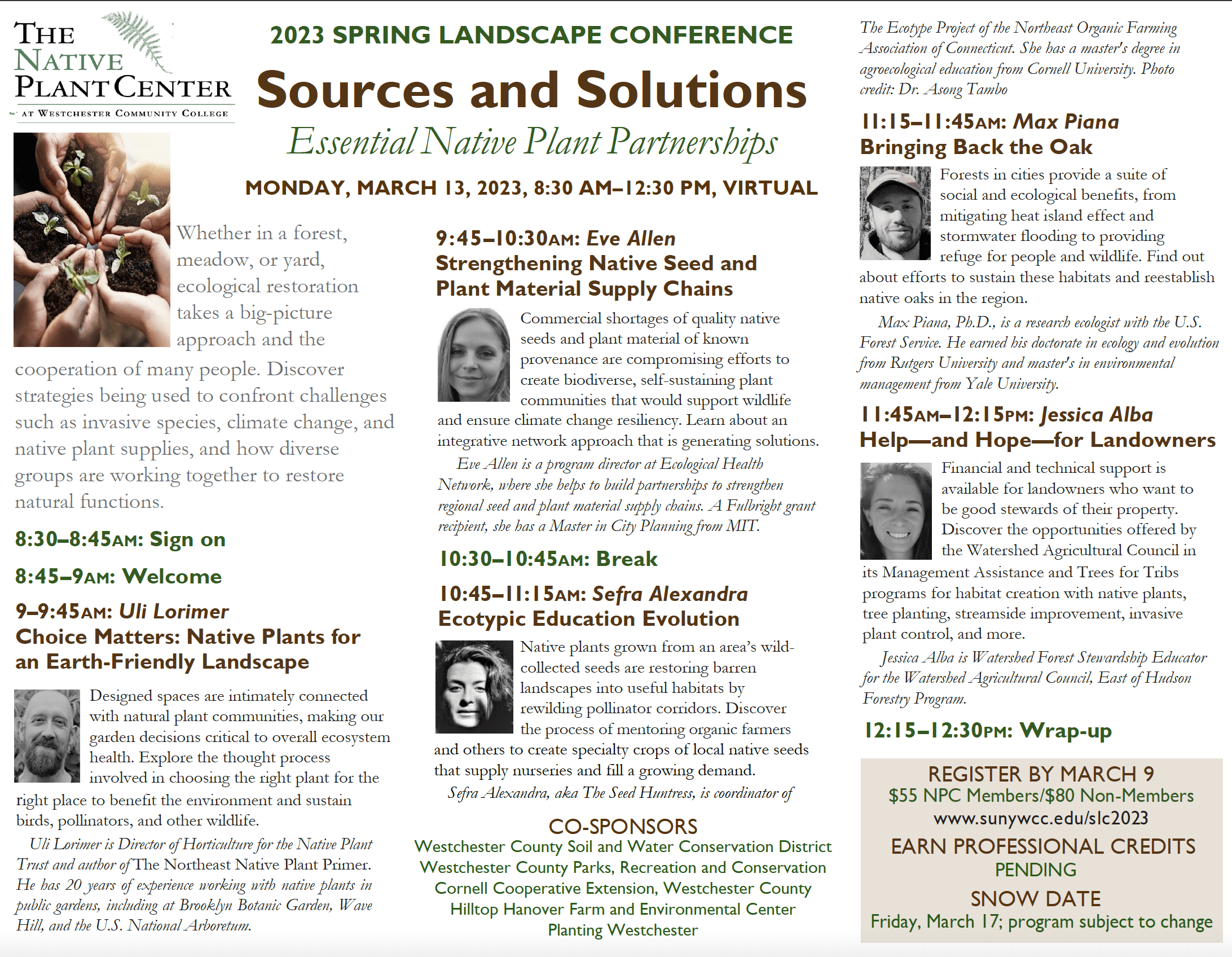
Don’t miss this wonderful community event put on, once again, by our friends over at Westchester Community College’s The Native Plant Center. The event is virtual and features five amazing speakers on  a range of native plant topics. The event is this coming Monday, March 13th, 2023 from 8:30 AM to 12:30 PM.

First up is Uli Lorimer, director of horticulture for the Native Plant Trust and author of The Northeast Native Plant Primer.  Uli will dive into picking “the right native plant for the right place” to best benefit the environment and wildlife.

Next up is Eve Allen, program director at Ecological Health Network. Eve will be speaking on her work with EHN to strengthen native seed and plant material commercial supply chains.

Sefra Alexandra, the self-proclaimed Seed Huntress, takes the virtual stage next, with her talk Ecotypic Education Evolution, which dives into mentoring organic farmers to grow native plants and save seeds, to support a growing demand.

Next is Max Piana, with his talk Bringing Back the Oak, which will detail urban forestry and rewilidng efforts. Max is a research ecologist with the US Forest Service.

Rounding out the program is Jessica Alba, Stewardship Educator for the Watershed Agricultural Council. Jessica’s talk, Help and Hope for Landowners reviews resources for homeowners interested in responsible land stewardship for their property.

Native Plant Center Spring Landscape Conference Information

For more details on the conference and becoming a member of The Native Plant Center, click here.

More upcoming community events related to ecological landscaping and native plants can be found on our blog!

—

Green Jay Landscape Design

Where Design Meets Ecology

Filed Under: Events & Garden Tours Tagged With: community event, conference, environmental education, landscape conference, native plant education, native plants, plant native, the native plant center, Westchester community college

Weak Tree Ordinances Threaten Ecosystems

The trees of Westchester need our help. There have been several horrifying instances of clearcutting throughout Westchester recently, destruction that our elected officials could use their power to prevent by enacting meaningful, enforceable tree ordinances.

Lewisboro was the first town in Westchester to adopt a tree ordinance, in 1977. Many other towns adopted tree ordinances in the 80s and 90s, but most do not have sufficient enforcement and are generally too weak to have averted the recent destruction.

“Unless someone like you cares a whole awful lot, nothing is going to get better. It’s not.” – Dr. Seuss, the Lorax

Rye Lorax cartoon by Chris Cohan.

Mass Mature Tree Removal in Rye, NY

A February 3rd approximately forty mature trees were cleared from a lot on Turf Lane in Rye. Rye has a weak tree ordinance, so the destruction was completely legal.

The clearcutting sparked local outrage, and the town council enacted a temporary moratorium on tree removal while a law to protect trees is drafted.

However, politics interrupted any real progress. A meeting on February 15th failed to preserve the tree removal moratorium for three more months. Three councilmen voted against the bill, three voted for it, and the mayor was absent on vacation, therefore defeating the bill. Tensions were high.

“So, any tree that comes down? It’s on the three of you,”  Councilwoman Souza reportedly reprimanded the three council people voting no. Other council people lamented how little progress had been made in over a year toward the tree protection initiative.

Meanwhile, every day passing puts Rye’s mature trees and the ecosystems they support at risk.

Rye citizens are up in arms about recent clearcutting and lack of effective tree ordinance.

ClearCutting Unchecked in Yorktown, NY

Yorktown, NY is facing similar predicament. A February 7th Examiner News Op-Ed by Yorktown resident Lisa Woodward exposed several instances of clearcutting in the last year, that seem to evade Yorktown’s existing tree ordinance. On December 23rd, her neighbor razzed a 10,000 square foot area of 80 to 100-year-old trees to create an ice-skating rink.

Woodward writes:

It’s important to note that this wooded area is located near a natural spring, a stream, wetlands, steep slopes and a brook that runs down the hill to additional wetlands and the New Croton Reservoir.

It appears that this disturbance and alteration of about 10,000 square feet of native tree canopy occurred in a protected woodland. This action has already adversely affected the area and created a muddy, degraded, unsightly wasteland that is now void of biodiversity. The most immediate devastating changes we have experienced are an increase in noise from routes 100 and 118, an increase in stormwater runoff and soil erosion. …

This brings to mind the recent bulldozing of the wooded corner lot at Route 118 and Kear Street near the medical building. The woodland edge of the existing parking lot had native hardwood trees could have been saved.  …

Another example is the area on Underhill Avenue near Town Hall, which now has the appearance of urban sprawl with missing old trees and poorly planned, uncoordinated development. 

Development is outpacing sound environmental legislation and enforcement in our communities.

A Pattern of Development and Deforestation

Mass tree removal is not isolated to Westchester County. Across New England, five percent of forest cover has been lost from 1985-2011 to deforestation, a study published by the Environmental Research Letters found.

Researchers consider New England forests to be in their second phase of deforestation, from the 1980s onward, characterized by a switch from large scale deforestation for agriculture to deforestation instigated by residential and commercial development.

As development pressures increase, there are both more trees being removed for development and a general reduction in open fields and lots for the forest to expand into. Rewilding efforts have not kept up with deforestation efforts.

“With no forest expansion to counter the deforestation, it turns out that even a small-scale rate of deforestation will have a large impact over time,” explains Pontus Olofsson, who led the Boston University study.

Emissions from deforestation combined with forgone sequestration capacity from deforestation, across the state of Massachusetts. Diagram courtesy of The Nature Conservancy.

Fewer Trees, Greater Climate Change

Another report by Clark University calculated the emissions associated with New England and New York’s combined deforestation. The region is collectively releasing 4.9 million metric tons of carbon dioxide equivalent into the atmosphere through forest destruction.

Losing those trees as a carbon sink (a stable storage of carbon, that trees sequester from the atmosphere) amounts to an additional 1.2 million metric tons of CO2 that could have been sequestered, annually.

States such as Massachusetts, which has pledged to reach net-zero carbon by 2050, are realizing how this unsustainable destruction is crippling their climate mitigation efforts, two-fold. The study by Clark University is incredibly important for galvanizing climate legislature and ecological restoration initiatives.

The State of Biodiversity in Northeast Forest Ecosystems

The character of forests in the Northeast has been disturbed for decades. A study published in PLOS Onecompared land survey documents from the time of European colonization in the Northeast to modern forest data, analyzing the changes in species representation and overall composition.

Consistently across the Northeast, forests underwent a homogenization of species and a shift toward early-succession or pioneer species, such as birch, cherry, and maple  – signifying that forest disturbance is ongoing today.

Populations of late succession species including beech, hemlock and spruce dramatically reduced since colonization. Oaks also declined, which can be attributed to several factors – a shift toward a wetter climate, a lack of prescribed burning by Native Americans, and an increase in acorn-eaters, especially white-tailed deer.

The predominant species is now Red Maple throughout most of the Northeast, whereas there used to be greater ecosystem distinction between the northern and southern parts of the region. The northern states in the Northeast used to be characterized by Spruce and Fir, while the southern Northeast states had more Oaks and Hickories. Today, Maples dominate throughout, an example of regional biotic homogenization.

Hemlocks and Beech, as late succession species, confirm the persistence in forest disturbance.

“Beech and hemlock are archetypically late successional species; they are shade tolerant, slow growing, long-lived, and slow to re-colonize a site after disturbance. Based on their pre-colonial abundance, it is clear that the disturbance regime was long dominated by small canopy gaps.”

Today, Hemlock and Beech populations are also battling pests: the hemlock wooly adelgid (HWA) and beech leaf miner and beech bark disease, respectively.  Beech leaf disease is caused by a nematode and kills beeches in 2-7 years. (If you see symptoms of BLD, report it to the NY DEC.) Beech populations have declined as much as 90% in some areas.

Thin canopy of a Beech tree with Beech Leaf Disease. Photo courtesy of URI.

HWA has decimated the hemlock population, except for in the northernmost part of the region, where cold winters seem to limit its spread.

Westchester Towns Can Reverse Biodiversity Loss

Despite all this grim reporting on the state of our forests and woodlots, it can also be viewed as an opportunity. As exhibited by the many recent op-eds, residents are passionate about protecting their local trees. Now we need town council people to follow suit and draft strong, tree ordinances grounded in ecology.

For example, some towns don’t require a permit for less than ten trees removed! Ten healthy, native trees on a property are an incredible habitat resource, supporting hundreds of species of wildlife.

Best practices include requiring a permit for any tree removal in a wetland or on a steep slope. Towns such as Hastings, NY have preferred species lists for replacement trees of any removed.

It also would be beneficial to take on a more holistic approach to forestry management. Instead of allowing all trees planted at the same time to age and die together, thinning out some canopy cover to allow new saplings to thrive can greatly help regeneration on the forest floor.

Deer are a huge threat to forest health – their overpopulation threatens native shrubs and woodland perennials, leaving invasives to dominate the forest understory.

If more towns implemented bow hunting incentives for does, deer populations could be sustainably managed, and endangered forest understory species can begin to rebuild.

If woodlots are better protected, we can manage disturbance to allow native late-successional species to return to our forests.

Biodiversity can have a chance to rebound in our forests if we become champions for the trees. Without our action, the environmental character of our communities is at jeopardy.

—

Green Jay Landscape Design

Where Design Meets Ecology

914-560-6570

Filed Under: Ecological Education Tagged With: clear cutting trees, conservation, ecological restoration, landscape ecologist, lorax, mature trees, preservation, protect trees, rye NY, save our trees, sustainable westchester, tree ordinance, Westchester County NY, Westchester NY, Yorktown ny

 Kim Eierman to Speak at Mad Gardeners Event

This Saturday Mad Gardeners returns (finally!) with their 2023 Symposium. Our friend and hero, Kim Eierman, of EcoBeneficial is the keynote speaker! Register to attend here.

Kim has such a wealth of knowledge on native plants, gardening for wildlife and landscape design. She even wrote a book – The Pollinator Victory Garden – named among the Top 10 Garden Books of 2020!

Her talk, Beyond Sustainability: Using Our Landscapes as a Source of Environmental Change, is not to be missed!

“A landscape is more than a combination of plants. It is a complex system where all life is connected. Kim Eierman explains how the choices we make can transition traditional landscapes to healthy ecosystems filled with life. We can go beyond sustainability and become a source of environmental change.”

Kim will then partake in an informal Q&A session, before the conference breaks for lunch.

Ellen Scheid to Present at 2023 Symposium

Ellen Scheid will command the afternoon session with her talk, Creating Beneficial Landscapes with Native Plants.


“Native plants are essential in the development and future of the horticulture and land-scape industry. Ellen will be sharing her experience gardening with native plants and installing lawn alternatives in public and private sectors. She will detail the process of turning a blank canvas into a low-maintenance, beneficial landscape. Learn about the many wonderful native plants that are easy to grow and great substitutions for classic horticulture staples.”

Ellen will also participate in a Q&A.

Mad Gardeners 2023 Symposium Details

The conference is hosted by Housatonic Valley Regional High Shool (246 Warren Turnpike Rd, Falls Village, CT 06031) from 9 AM to 2:30 PM.

Register for the Mad Gardeners symposium here.

Filed Under: Events & Garden Tours Tagged With: calendar, CT, ecobeneficial, ecological landscape design, ecological landscaping, Ellen Scheid, event, Falls Village, garden event, gardening, healthy yard, Kim Eierman, landscape design, landscape designer, Mad Gardeners, native plant garden, native plants, organic garden, pollinator garden, wildlife habitat

Jay Archer Speaks on Ecological Landscaping & Restoration

In case you missed it, below is a recording of Jay’s talk, Landscapes for Better Living: Healing the Waters, Caring for the Land, from January 27, 2023.

Jay’s presentation discusses ecological restoration from a residential level, using case studies from Green Jay Landscape Design clients.


Thanks again to ALT for putting together this valuable seminar series, and the excellent production effort behind it!

Aspetuck Land Trust a Community Asset

Aspetuck Land Trust is local champion of conservation and ecological restoration. ALT maintains 45 trailhead preserves in Fairfield County (Easton, Weston, Westport, Fairfield, Southport, Bridgeport and Monroe) for the public to explore and connect with nature. What a community resource!

We have worked with Aspetuck Land Trust as a Recommended Landscape Partner for years and participated in several of their events. Most recently, Jay spoke for the January 27, 2023 Lunch & Learn webinar. The turnout was impressive! A testament to ALT’s valuable and wide-reaching grassroots conservation campaigns.


Upcoming Aspetuck Land Trust Webinars

Don’t miss the next Lunch & Learn, Friday March 3, 2023 at 12 noon, featuring Missy Fabel of Plan it Wild. Missy’s talk, Advancing the Habitat Gardening Movement: One Yard at a Time, is not to be missed! Register here.

View Aspetuck Land Trust’s full calendar of events here.

–

Green Jay Landscape Design

Where Design Meets Ecology

914-560-6570

Filed Under: Ecological Education, Events & Garden Tours Tagged With: aspetuck land trust, ecological landscape design, ecological landscaping, ecological restoration, healthy yard, land trust, landscape construction, landscape design master plan, landscape designer, landscape ecologist, landscapes for better living, lunch and learn, natural landscaping, organic landscape, pollinator garden, webinar, wetland restoration

  • « Go to Previous Page
  • Page 1
  • Interim pages omitted …
  • Page 5
  • Page 6
  • Page 7
  • Page 8
  • Page 9
  • Interim pages omitted …
  • Page 60
  • Go to Next Page »

Footer

Mailing Address: 222 Purchase Street, #144 Rye, NY 10580
Shop Address: 369 Bradhurst Ave, Hawthorne, NY 10532
(914) 560-6570
  • Facebook
  • Instagram
  • LinkedIn
  • Pinterest
  • YouTube
  • Houzz
  • Slide Share
  • Installation
  • Portfolio
  • Pricing
  • About
  • Contact

Copyright © 2025 · Green Jay Landscape Design. All Rights Reserved · Privacy Policy · Website and Local SEO by Ramblin Jackson