• Skip to main content
  • Skip to footer

Nassau County Residents

Green Jay Landscape Design is licensed and insured only for landscaping services in Nassau County.

All other services mentioned on this website are performed by independent contractors.

Green Jay Landscape Design

Green Jay Landscape Design

Green Jay Landscape Design

(914) 560-6570
  • Design
  • Installation
  • Portfolio
  • Pricing
  • About
    • Service Area
    • Meet Our Team
    • Our Process
    • Our Promise
    • Mission, Vision, & Core Values
    • FAQ
    • Press & Events
    • Blog
    • Reviews
    • Careers
    • Affiliations
    • Newsletter Sign-up
  • Contact

greenjayadmin

We are incredibly grateful for another year in the books doing what we love: designing impactful, ecological landscapes that both improve the environment and inspire a reconnection to the natural world. We’ve had the pleasure of meeting some amazing, passionate clients this year who continue to push us with complex design challenges. With no further ado, we present to you our BEST Landscape Designs of 2022. From front yards, to backyards, to steep slopes and pool landscaping, we hope you enjoy this compilation of (mostly) native landscape design & construction projects.

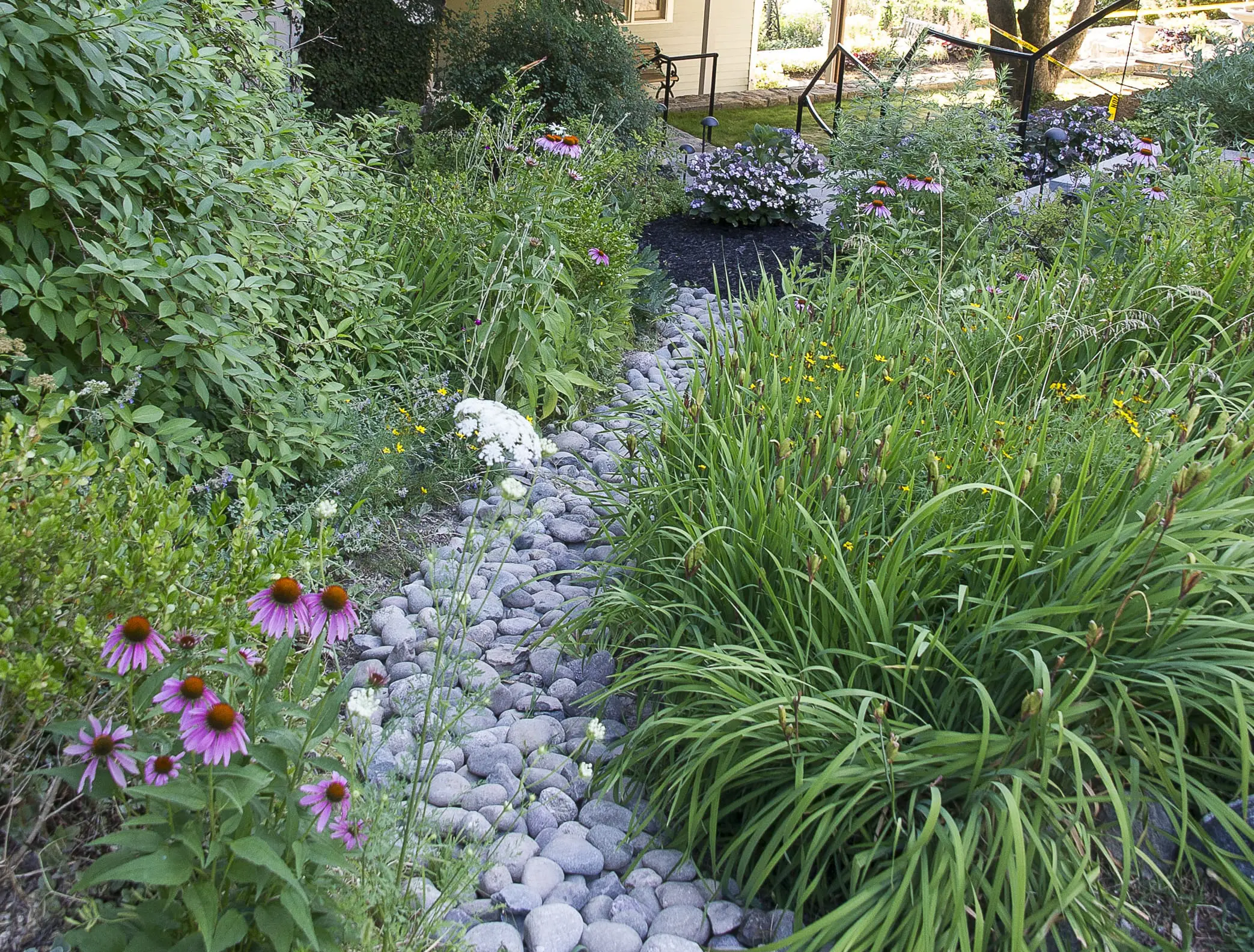
#5: Rain Garden & Soil Remediation for Landscape Drainage | Harrison, NY
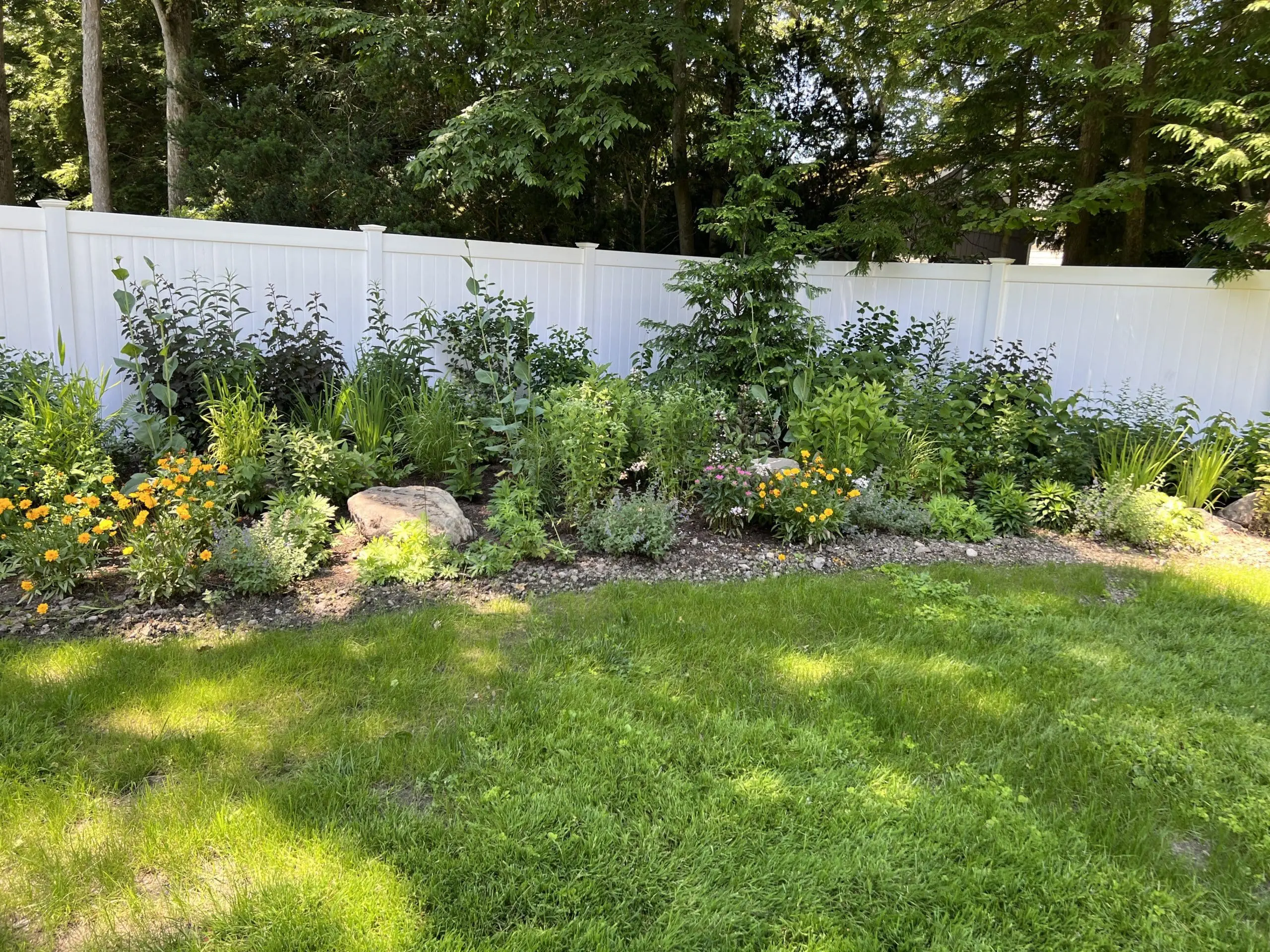
We were hired to rectify a soggy backyard that remained flooded for days after large storm events. Through the on-site, professional consultation, we learned that the large home had insufficient stormwater infrastructure: everything was fed toward the driveway, where the anti-gravity sump pump often got overwhelmed and failed, leading to flooding.
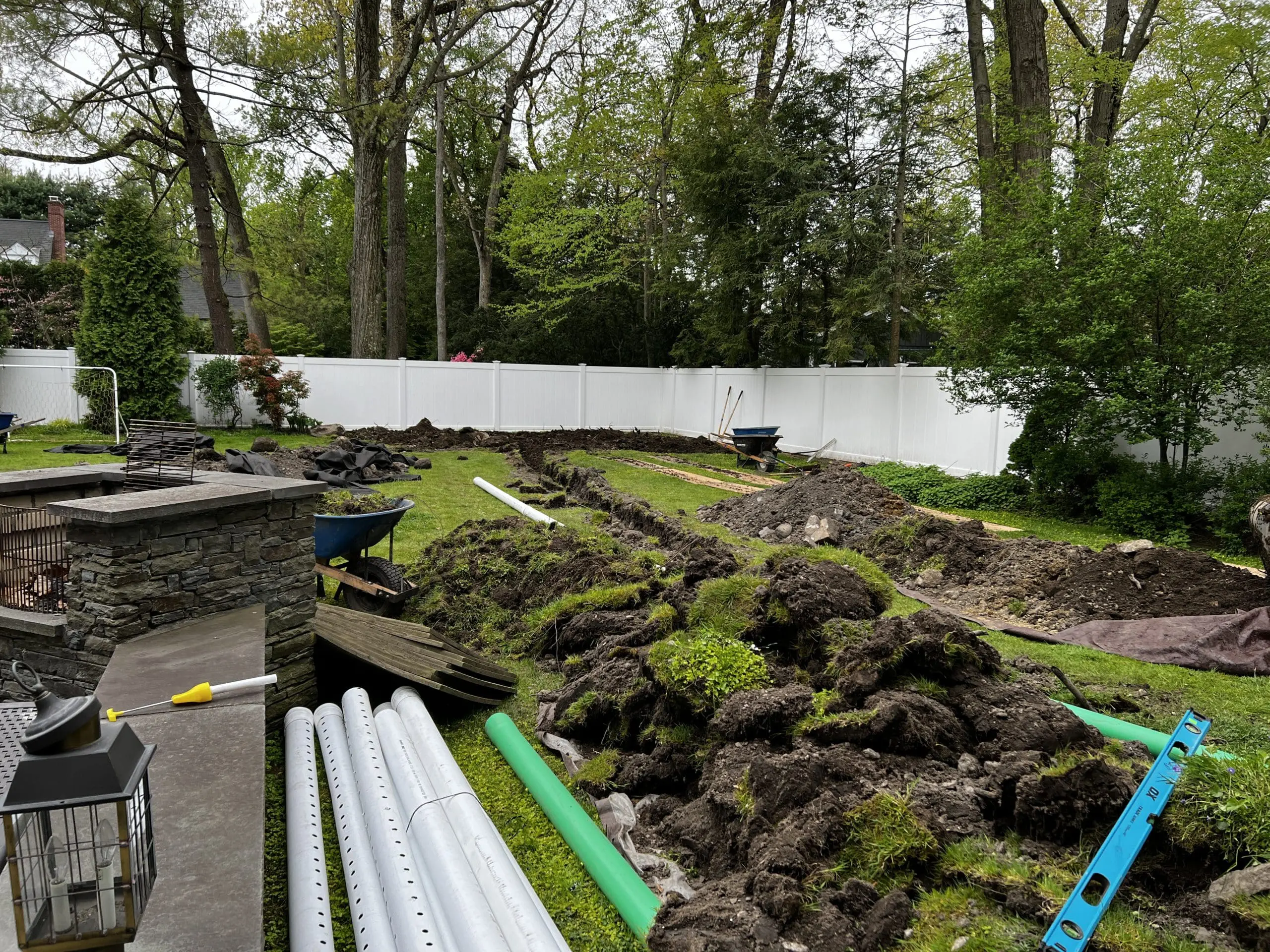
We designed a plan to feed about half of the roof’s gutters & leaders into underground pipes directed at pitch to the corner of the yard. The piping is solid for the first ten feet, to move it away from the house and foundation, and then becomes perforated. This allows both excess stormwater to leak out as irrigation, and allows groundwater (in a high water table situation), to enter the pipes as an evaporation drain. The pipes culminate in a technical Rain Garden, designed with well-draining soil and native facultative plants that are excellent at absorbing water, and double as habitat for wildlife.

Read about the full project on our previous blog!

#4: Front Entrance Masonry & Native Plant Landscaping | Putnam Valley, NY
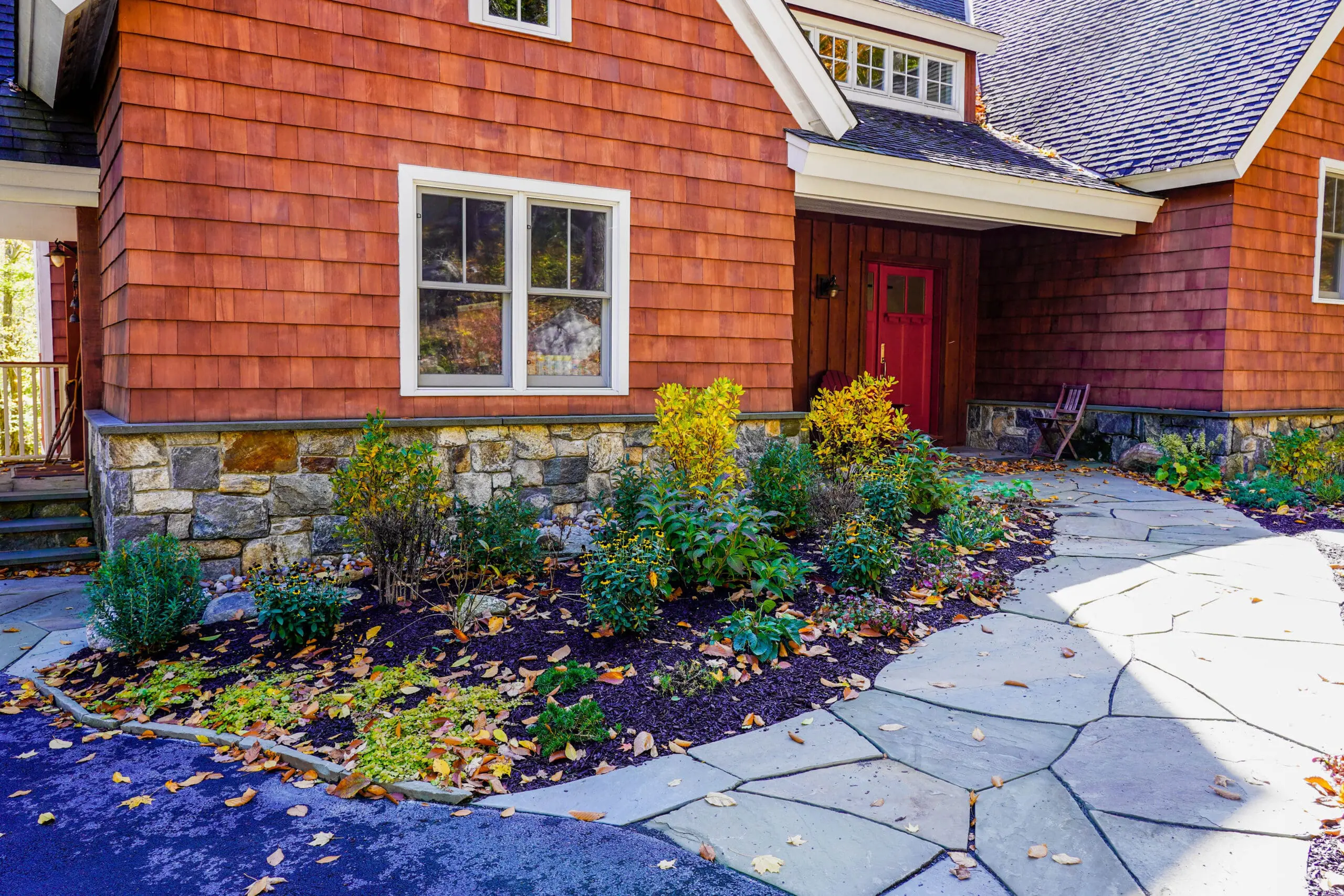
 

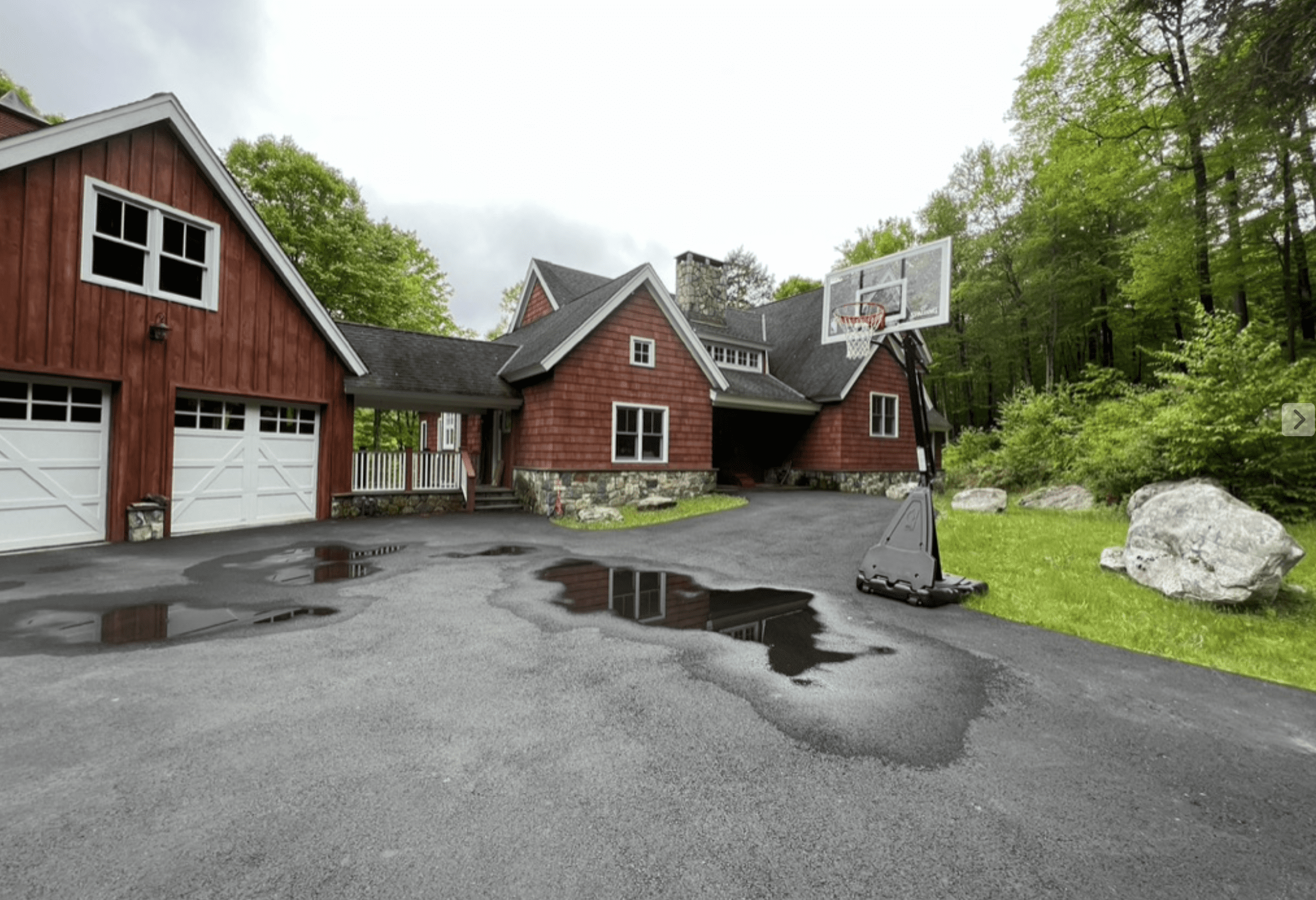
This estate is in a stunning setting, surrounded by mixed hardwood forest in beautiful Putnam Valley, NY. However, the landscaping around the house, especially the front entrance, left much to be desired.
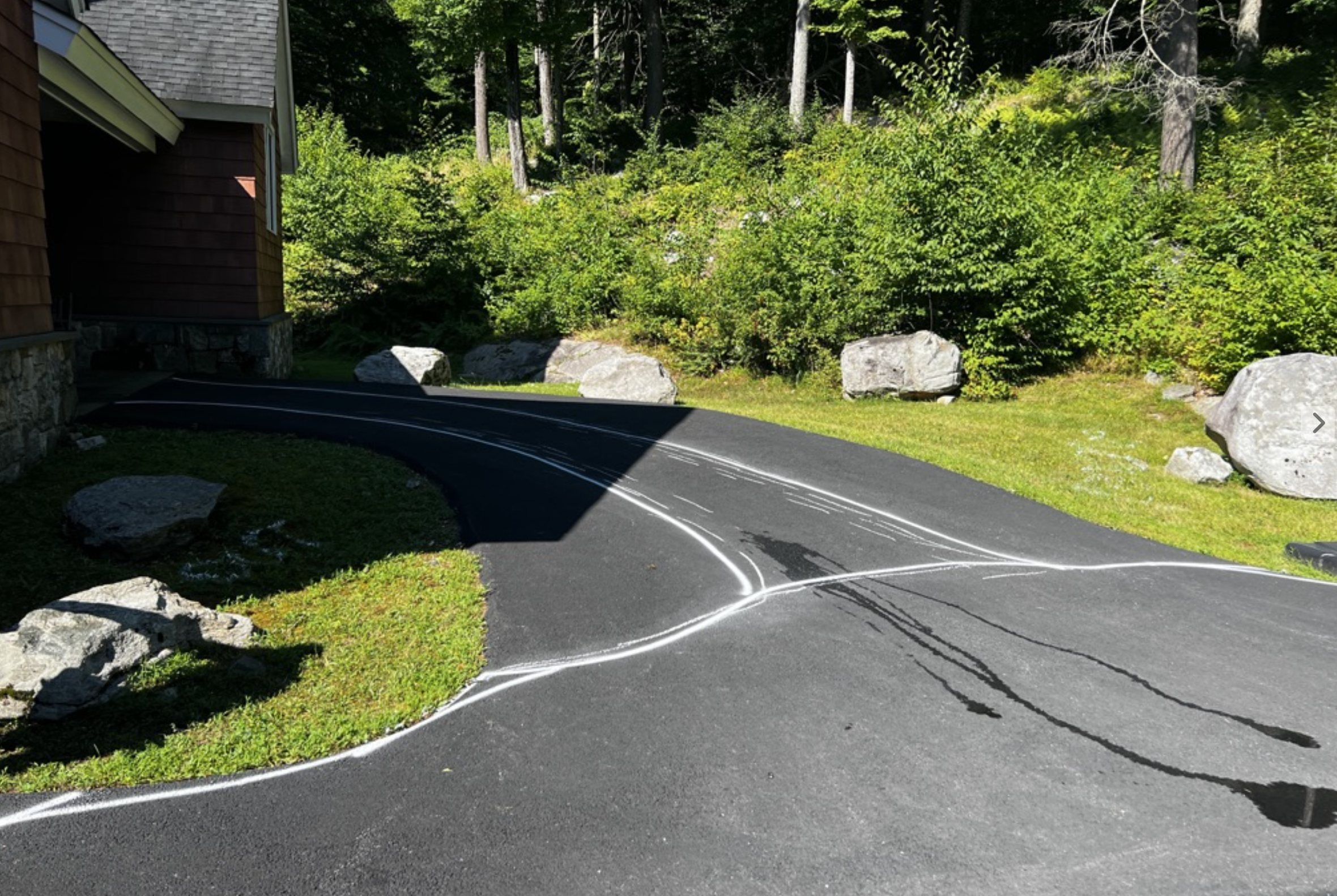
We knew we had to rectify the asphalt drive, which extended all the way to the home’s front and side doors. After completing a Landscape Design Master Plan, we removed the asphalt around the home to create space for new natural stone walkways and planting beds.
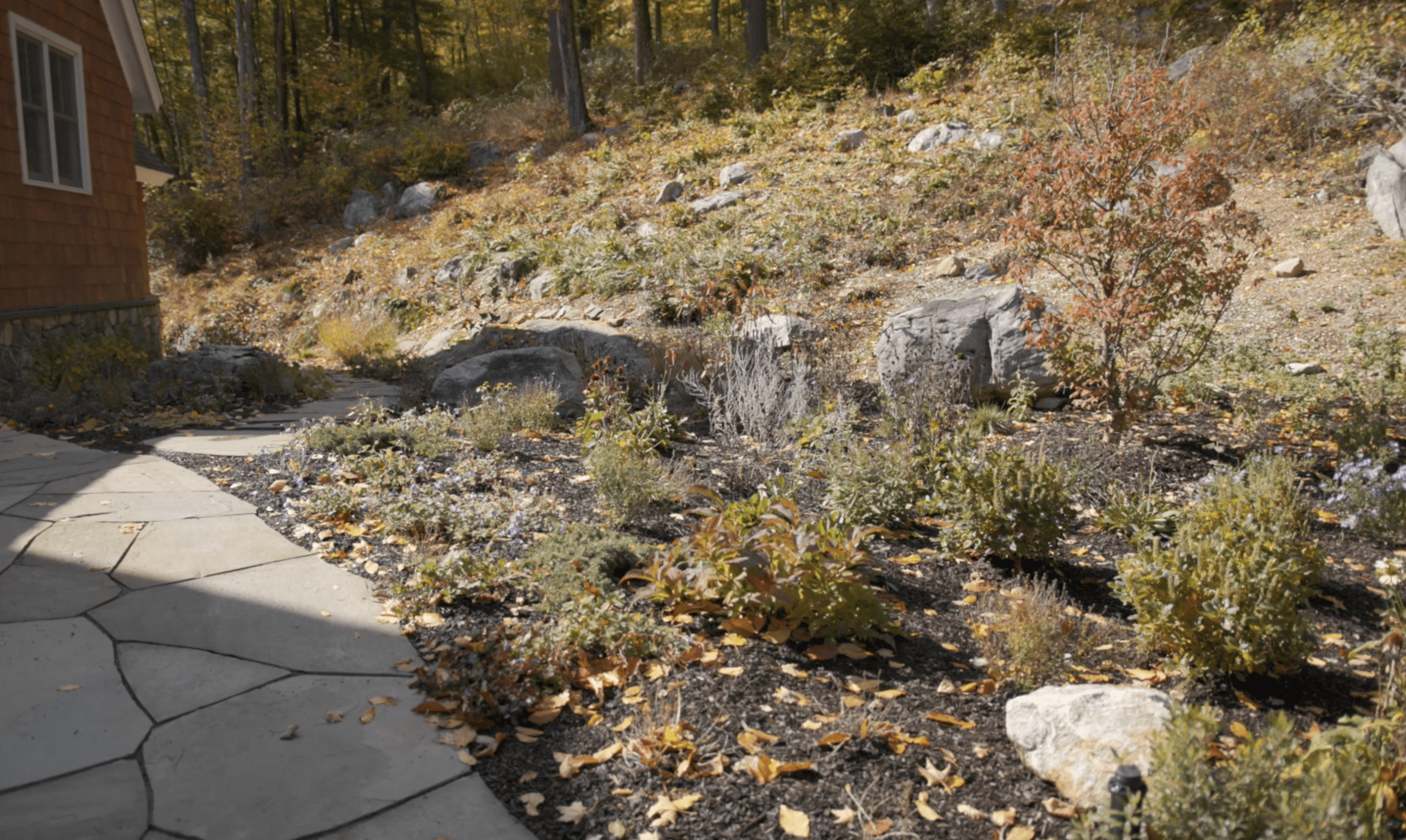
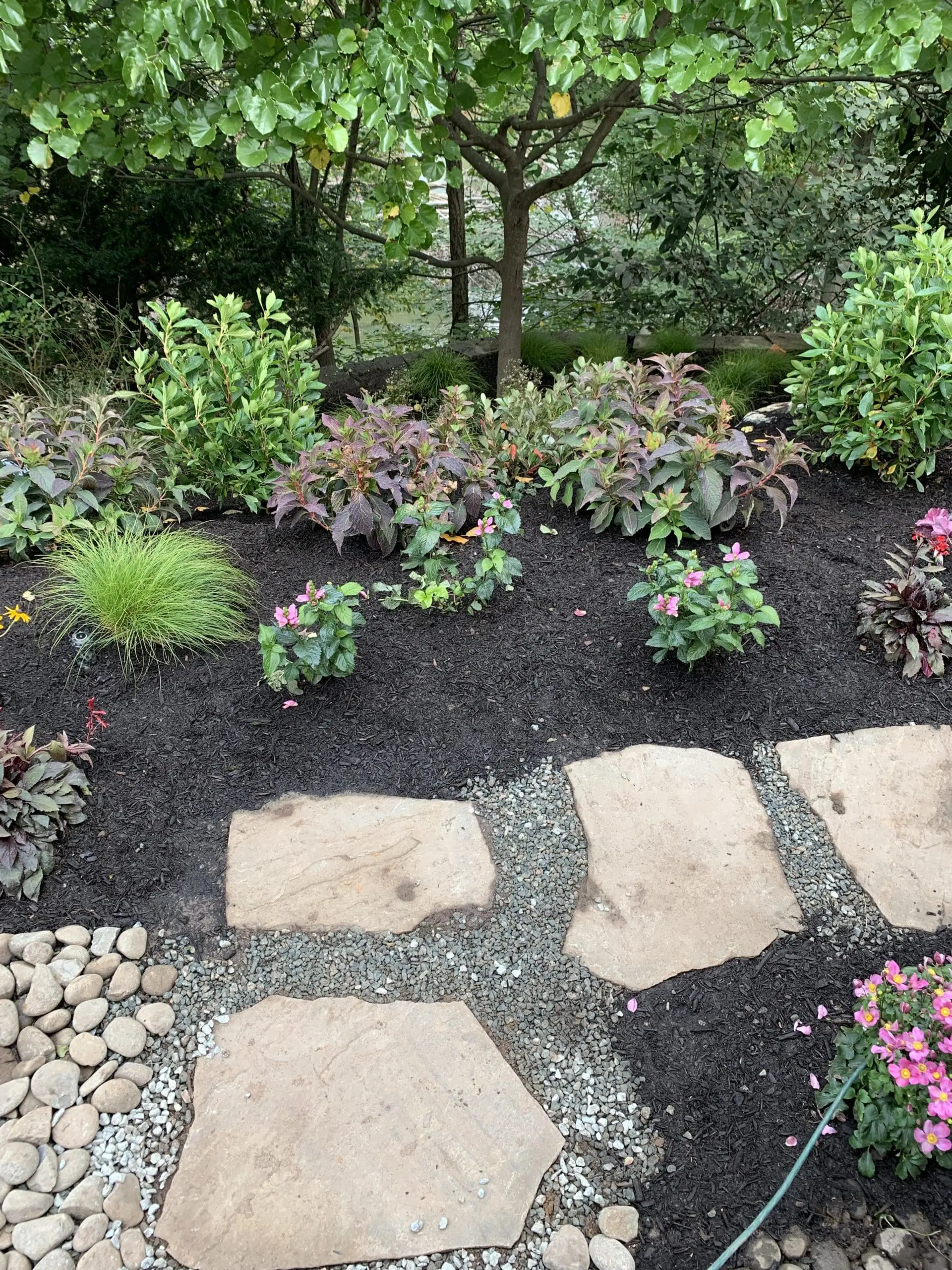
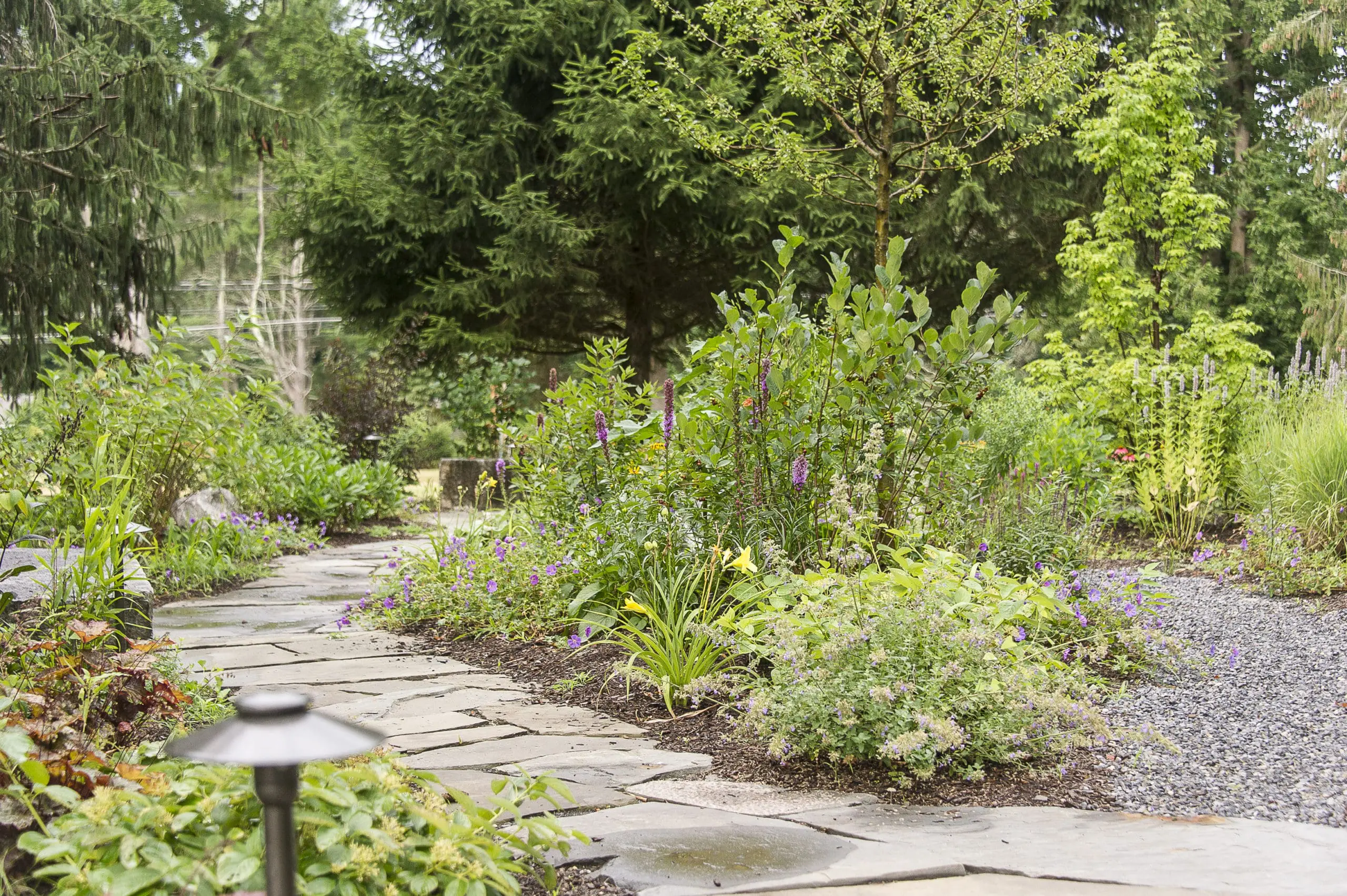
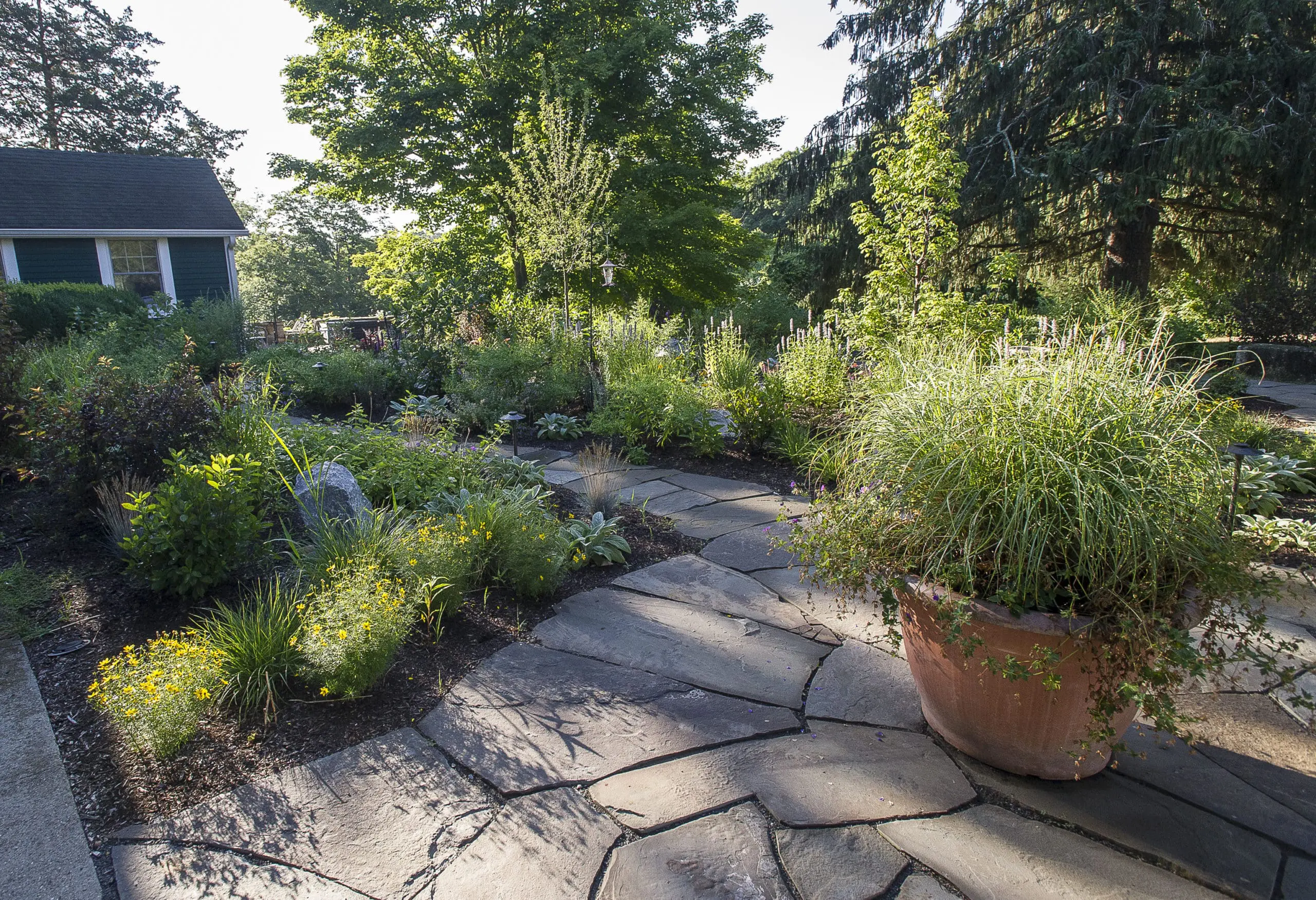
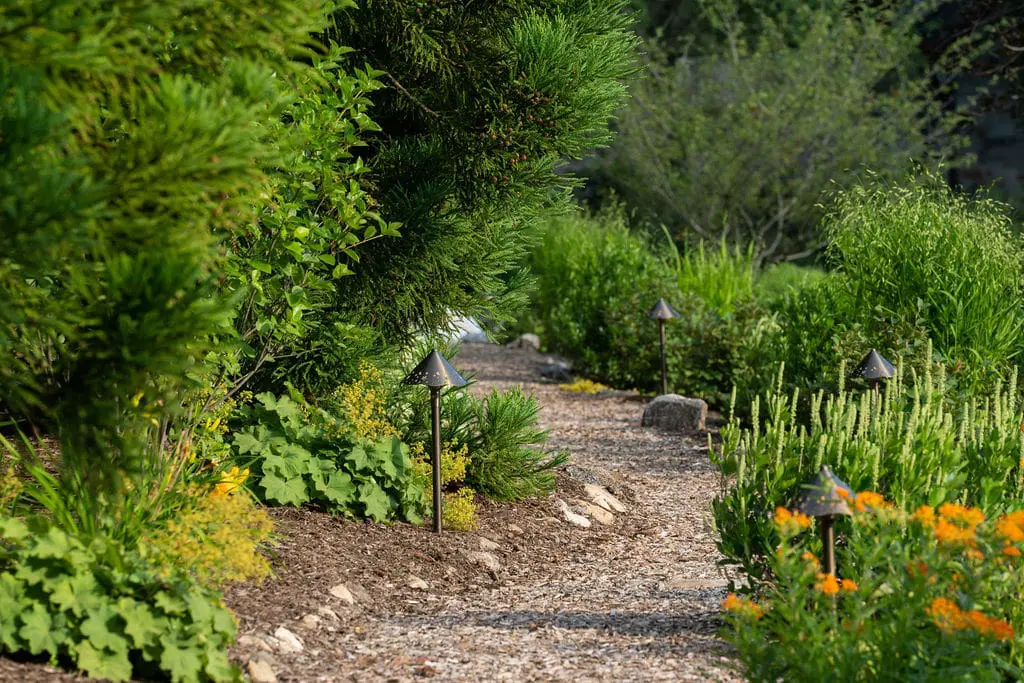
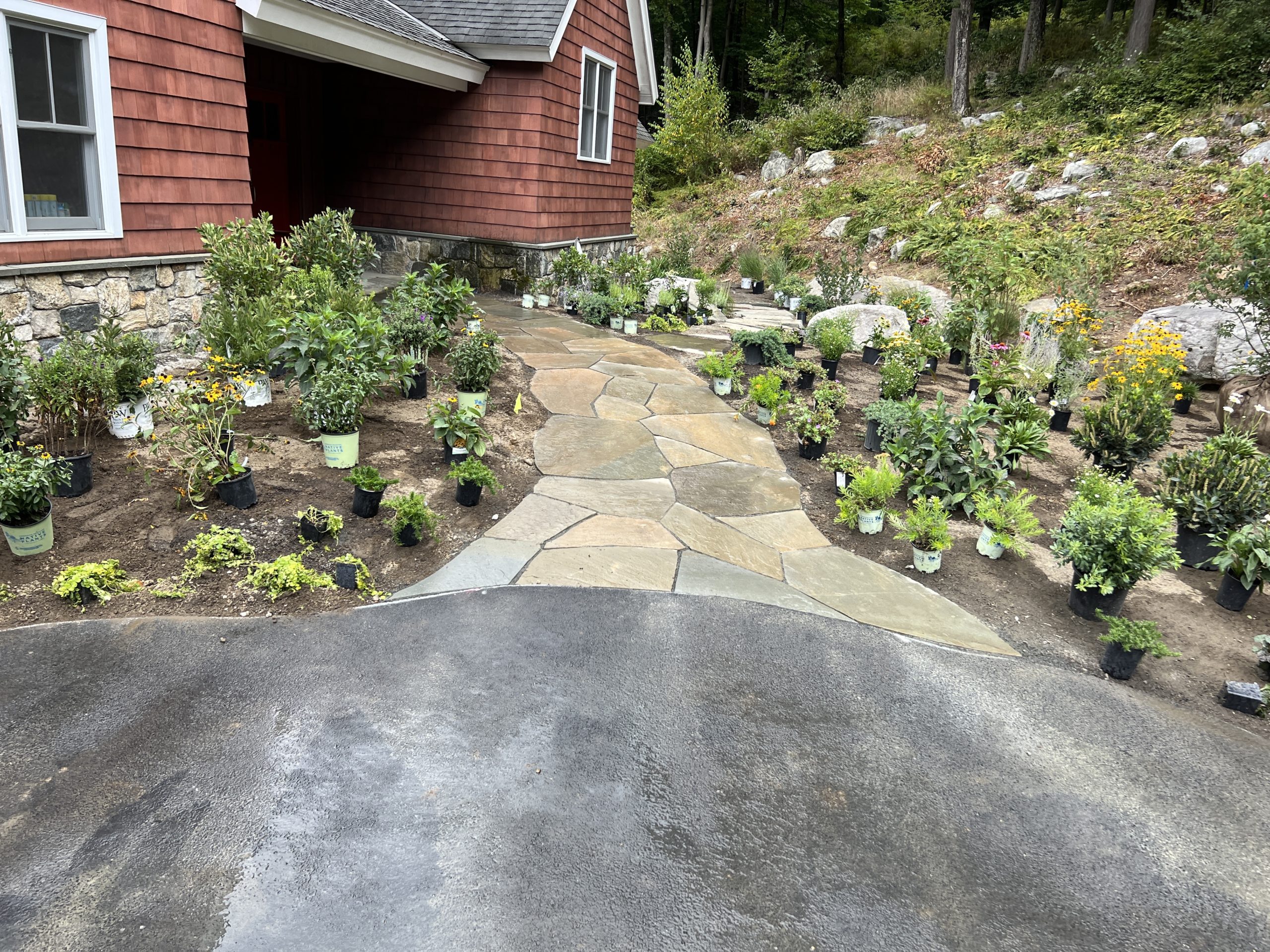
On either side of the new front entry flagstone walkway, are native gardens designed to extend the natural bird, pollinator, and wildlife habitat from the surrounding forest. Using a mix of native perennials, flower & fruiting shrubs, evergreen shrubs, ornamental grasses, and groundcover, we achieved a naturalistic front entrance that melds perfectly with the surrounding environment.
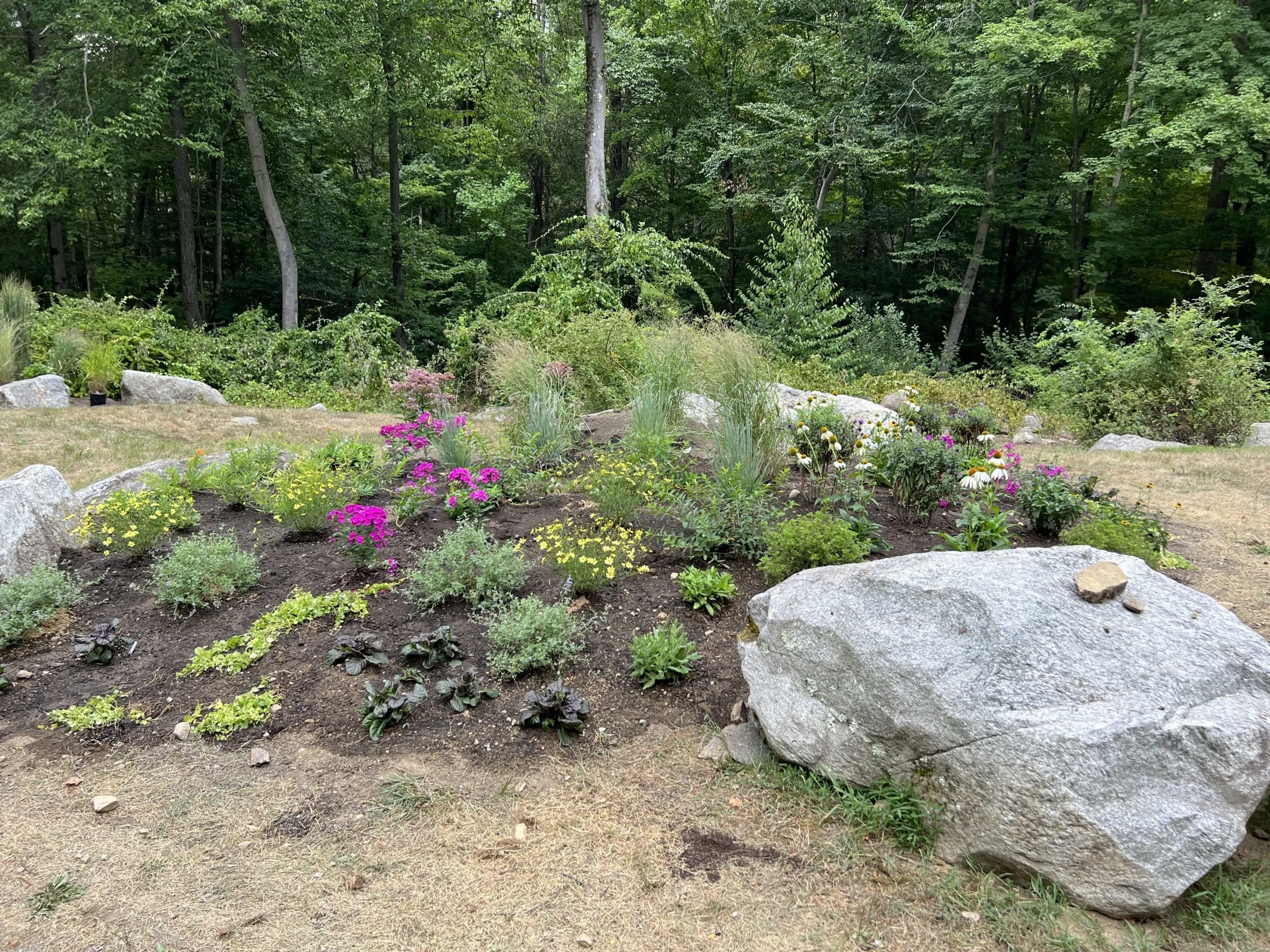
Read about the full project on our previous blog.

#3 Rectifying Hurricane Damage: Erosion-Proof Slope with Garden Terraces | Old Tappan, NJ
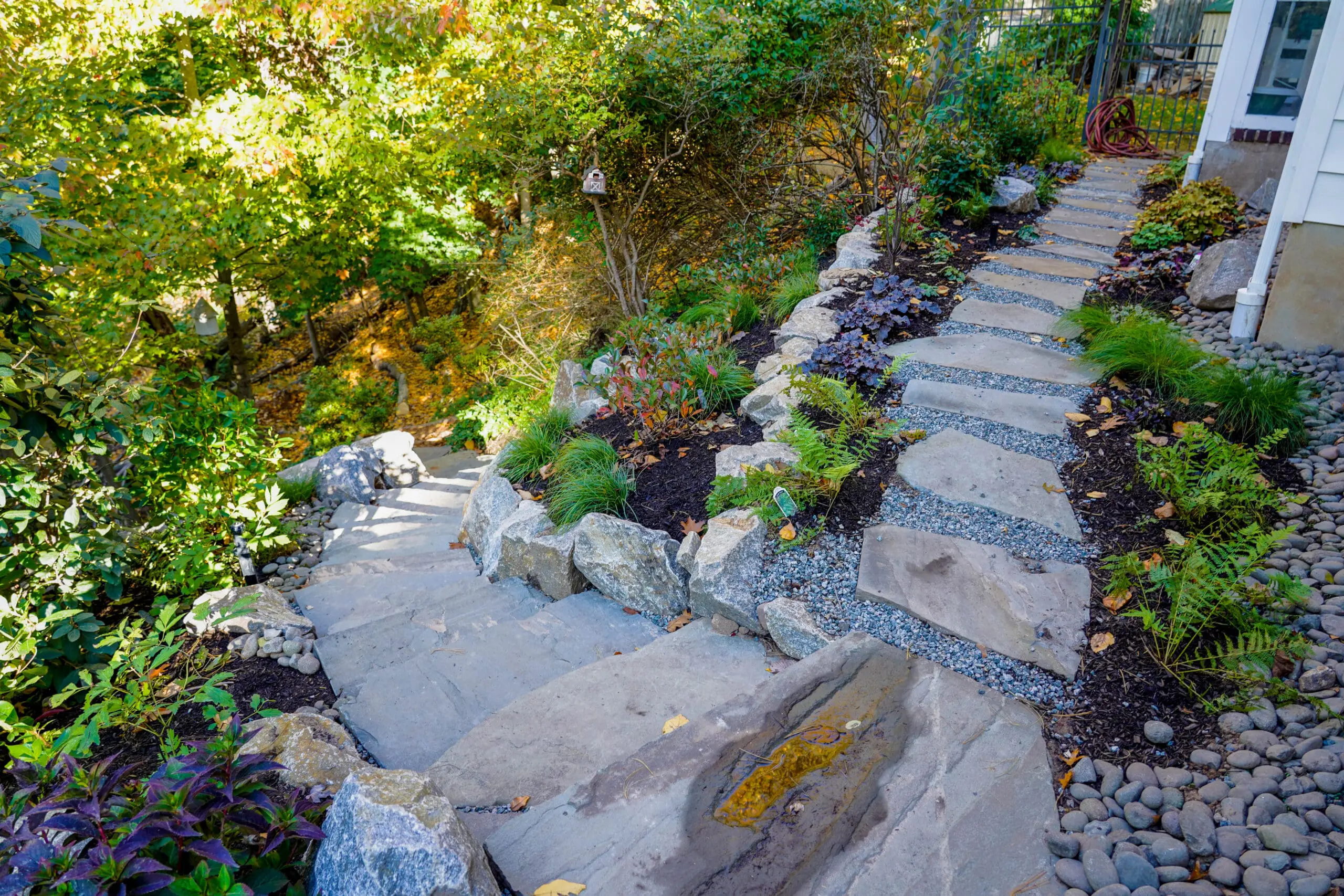
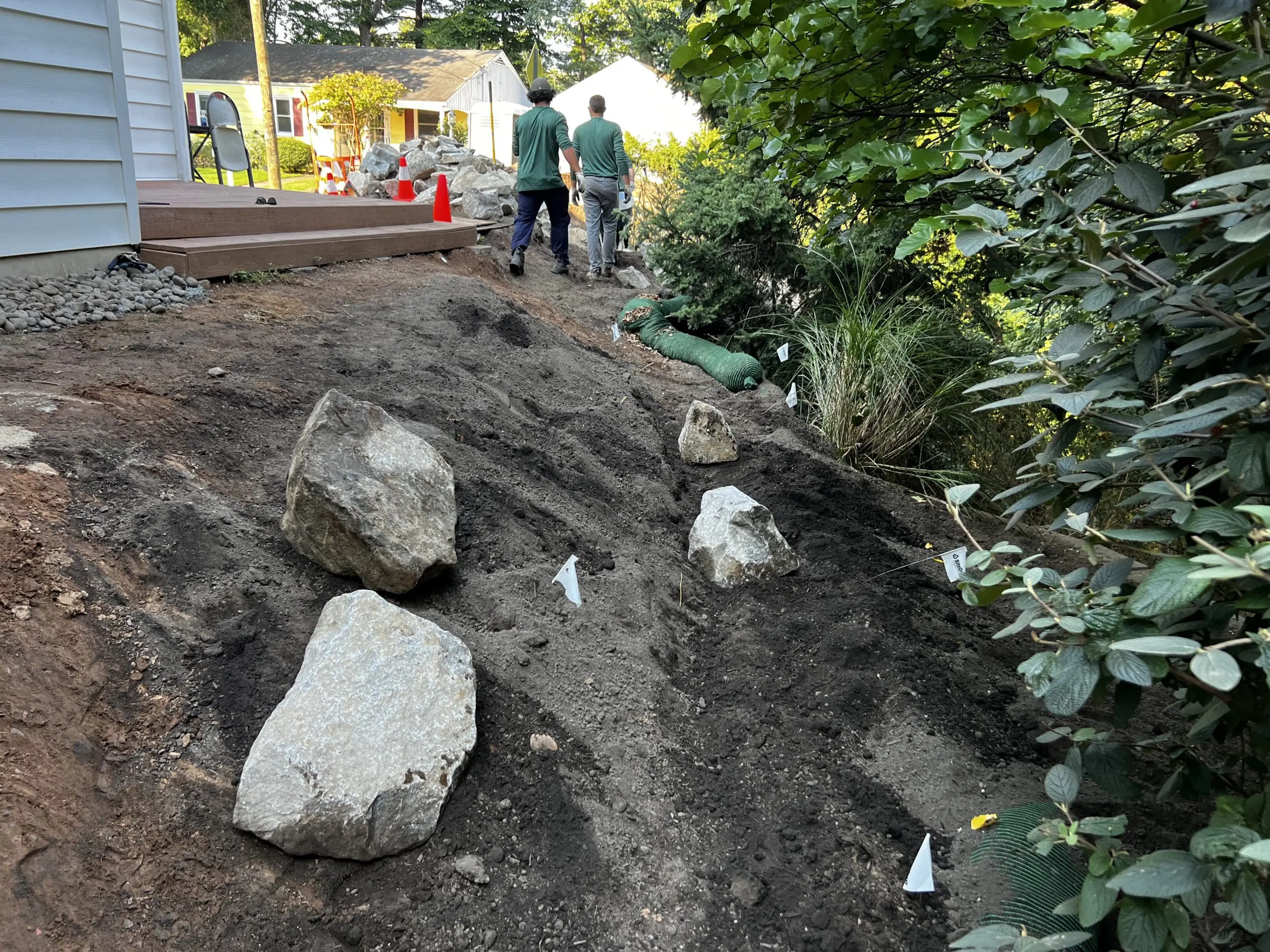
This is one of the most extreme cases of slope damage we’ve seen to date! During hurricane Ida, this steep slope collapsed, thanks to very intense rain, poor quality sandy soil, and insufficient drainage infrastructure. To rectify the slope and prevent further erosion, we employed several Green Infrastructure techniques.
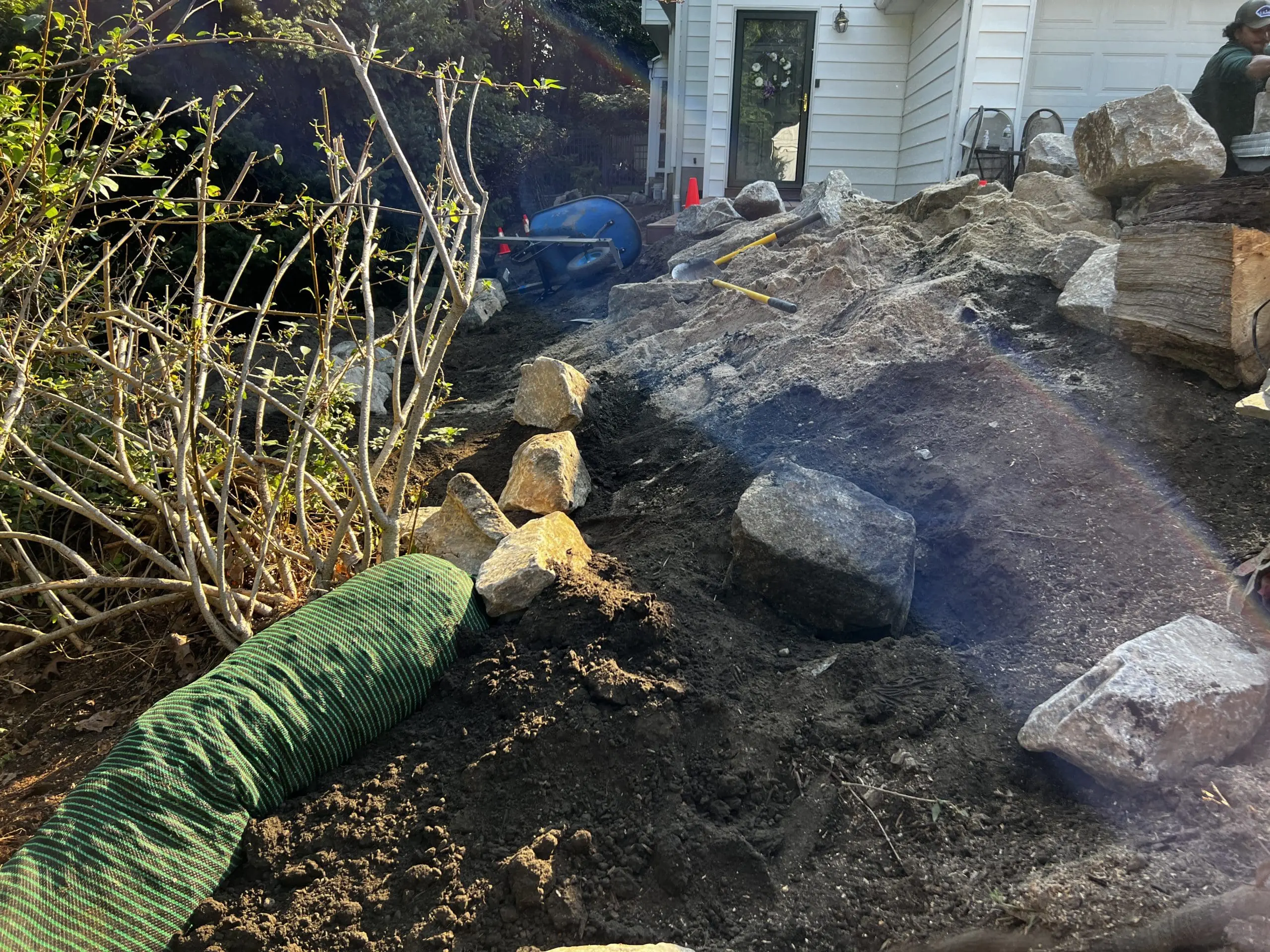
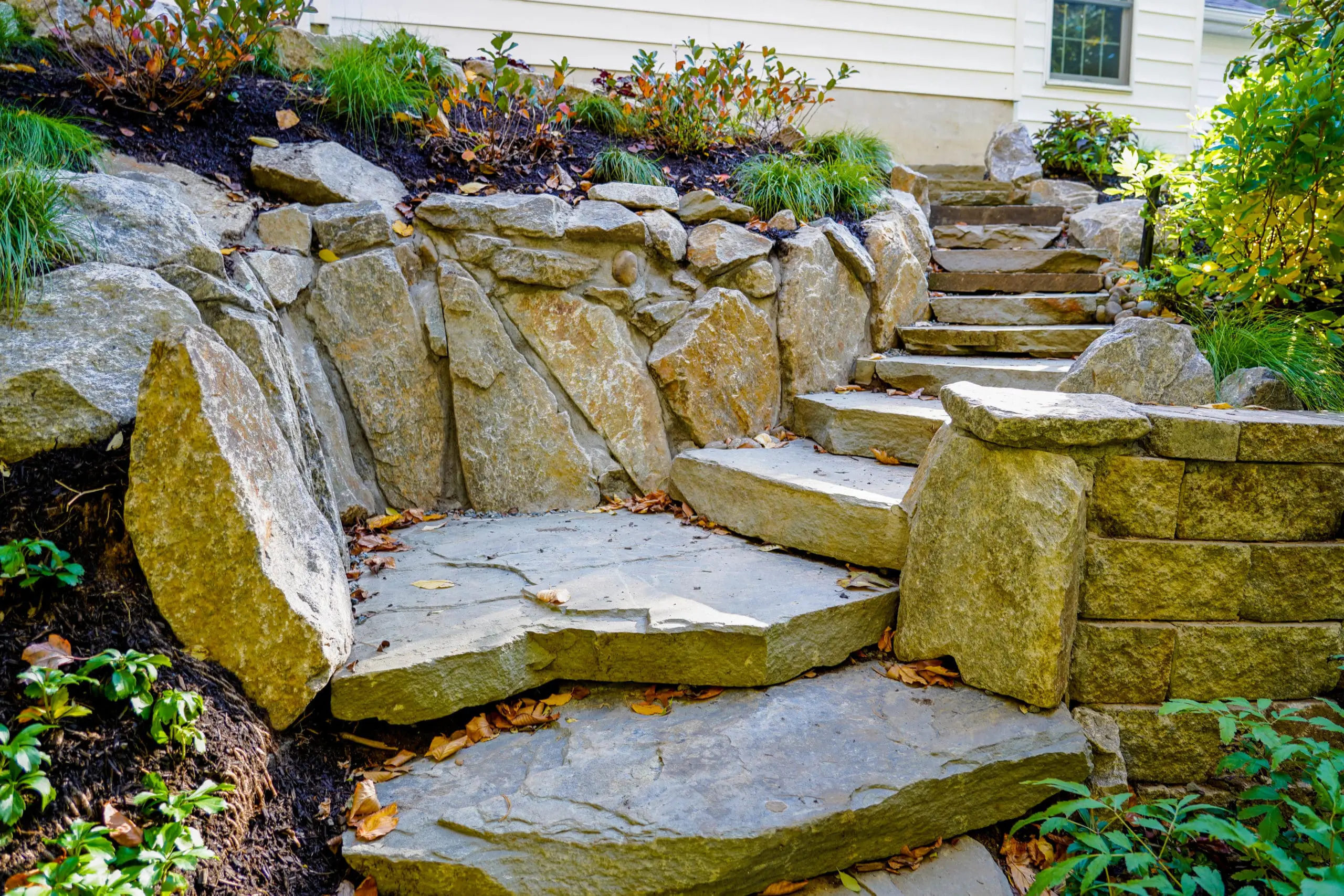
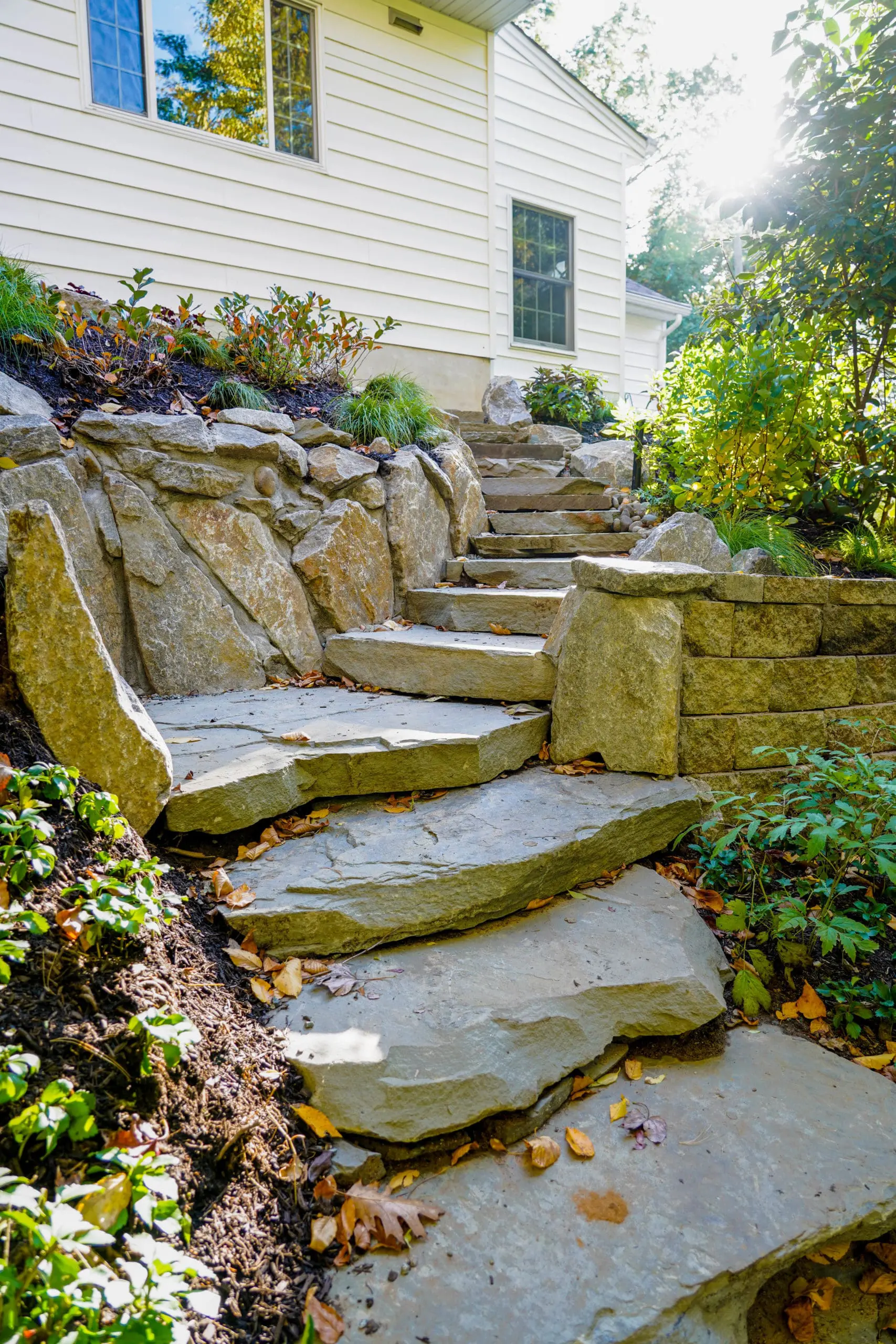
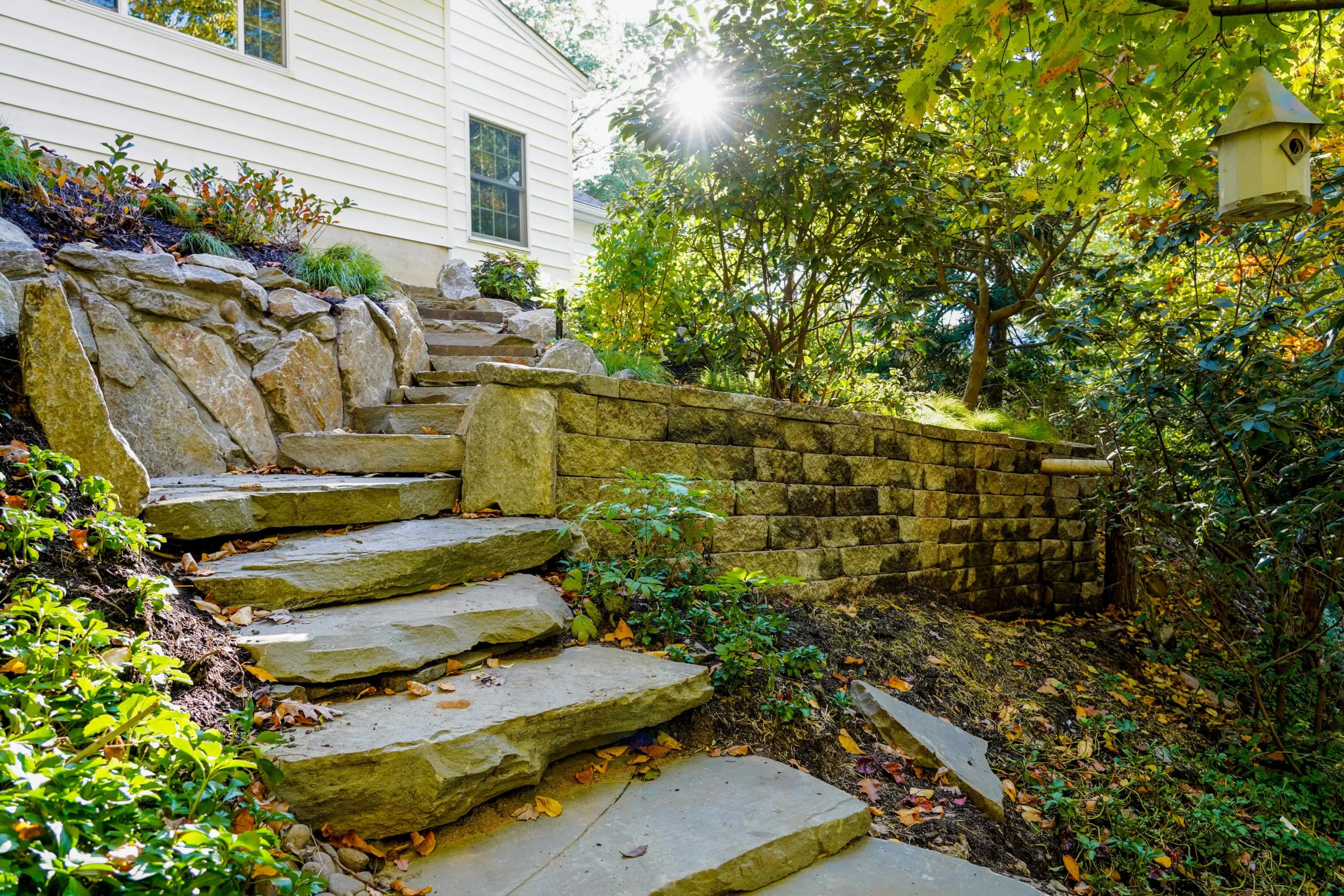
First, we directed the leaders from the roof into solid piping connected to NDS Flo-Wells. Then, we removed the sandy soil (that had too much drainage capacity). We installed six compostable Filtrexx Siltsoxx and staggered rows of boulders to support the slope. Together, both these features help to retain the slope while plant roots become established. Next, we brought in new engineered soil with a higher water holding capacity. Finally, we planted native shrubs and perennials into Jutte netting, for adding stability as the new plants become established.
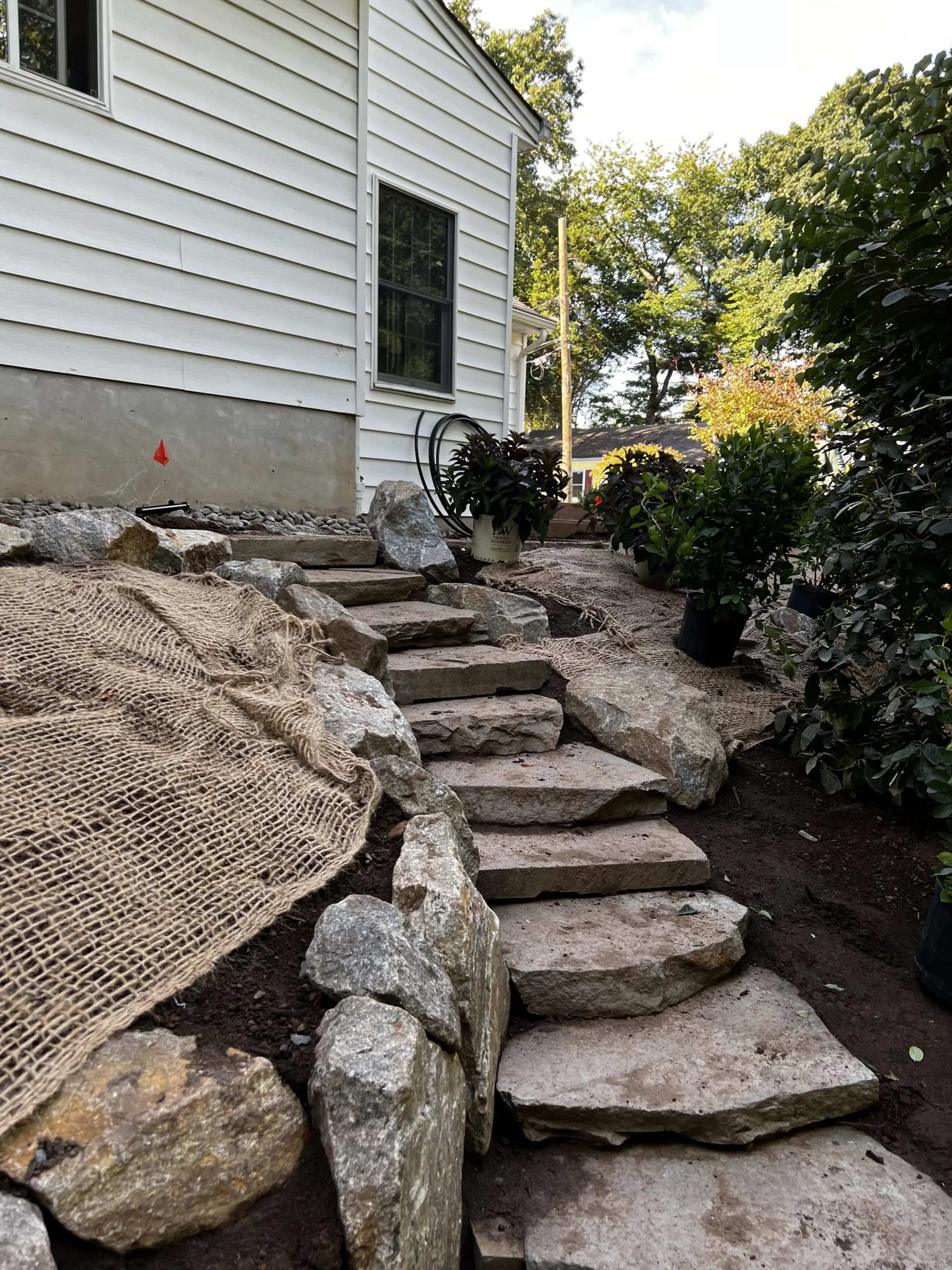
We also had to reconstruct the outdoor staircase and retaining wall, that had become damaged in the storm.

Learn about the full project on our previous blog!

#2: Backyard Courtyard Landscape Design with Natural Stone Masonry | Somers, NY
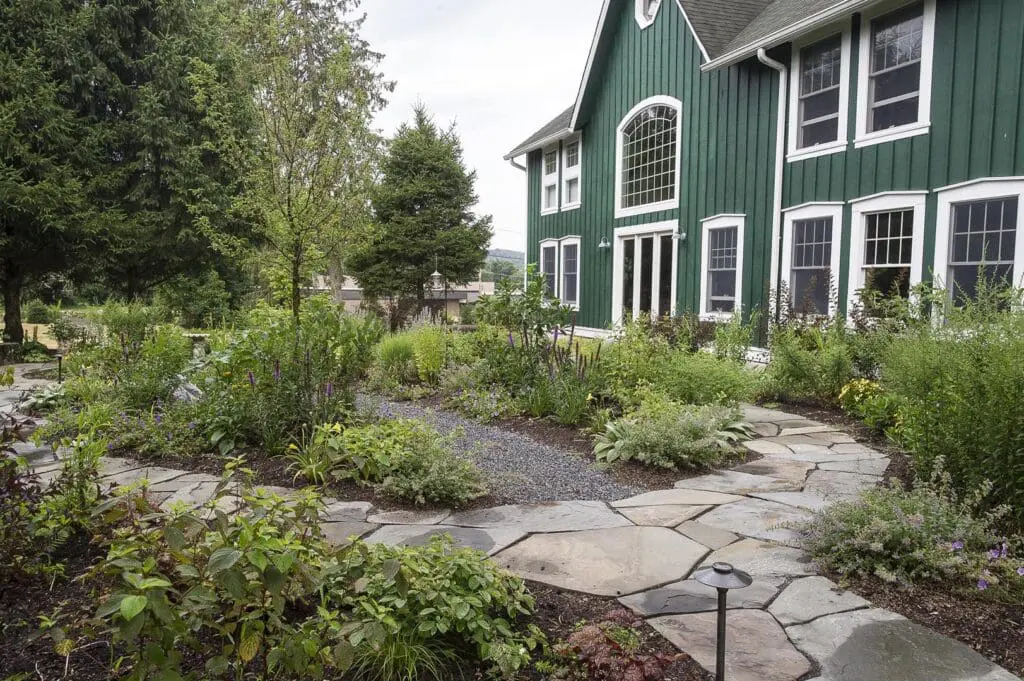
This landscape design invites quiet strolls through the circular paths

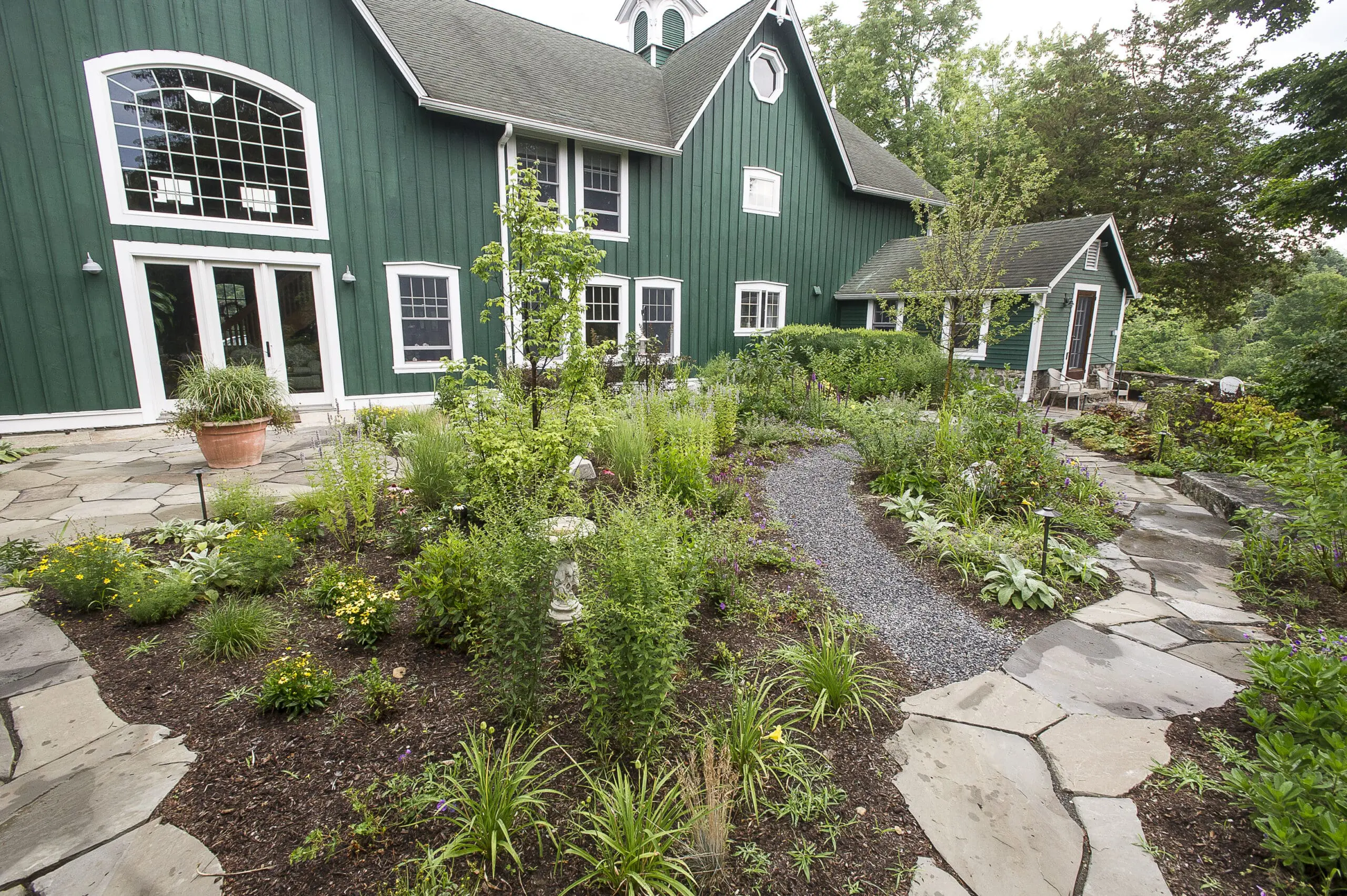
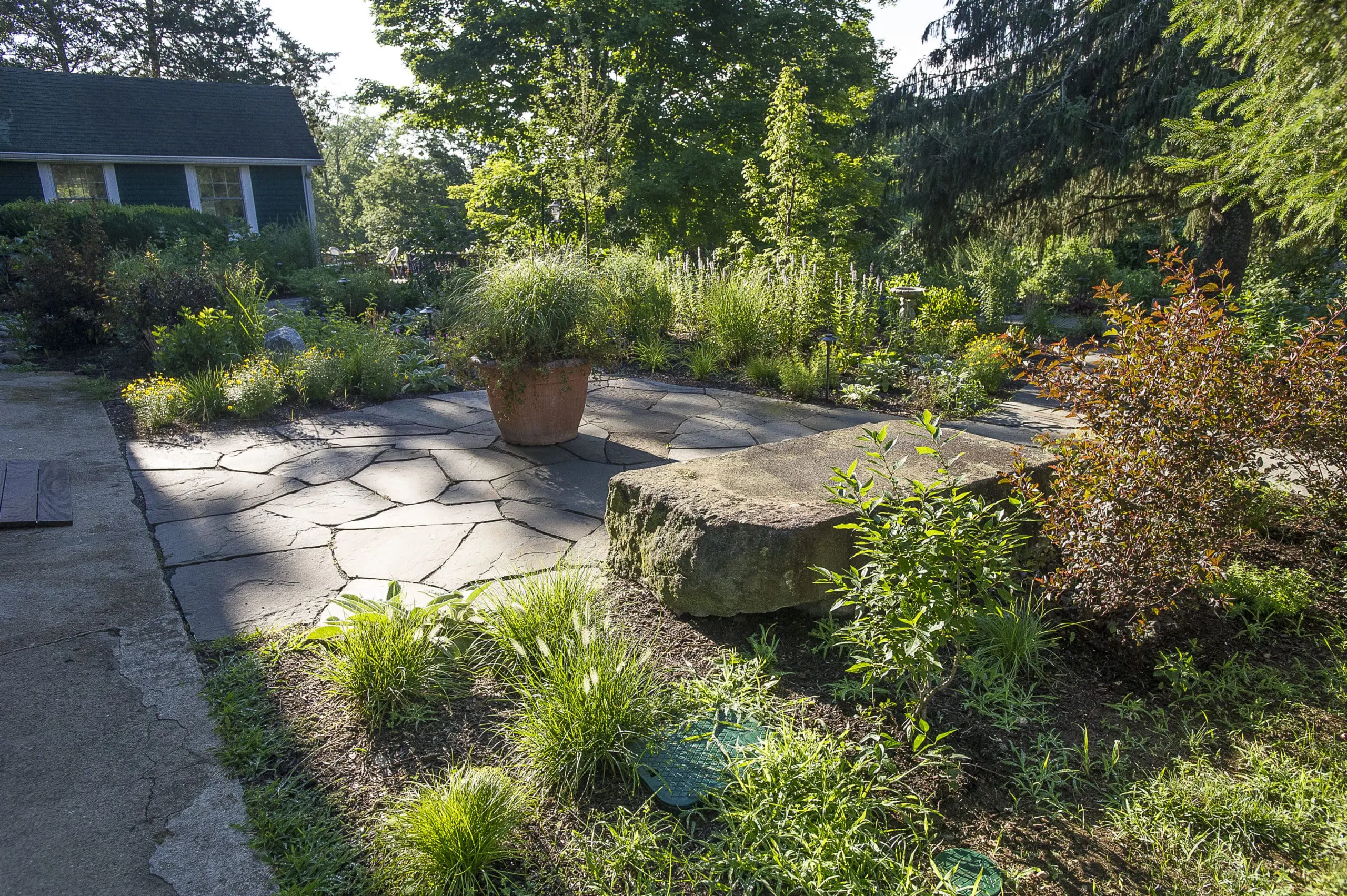
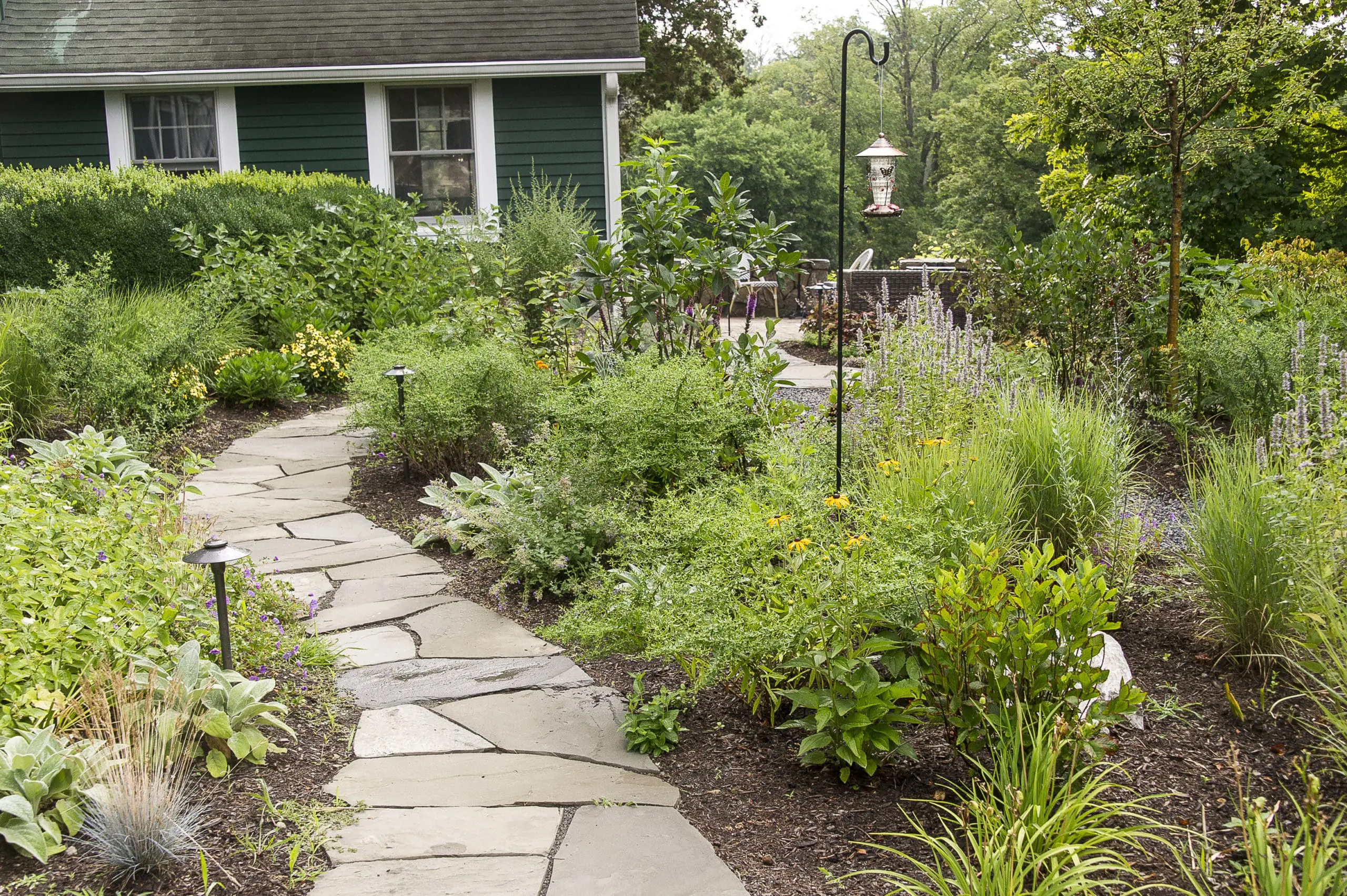
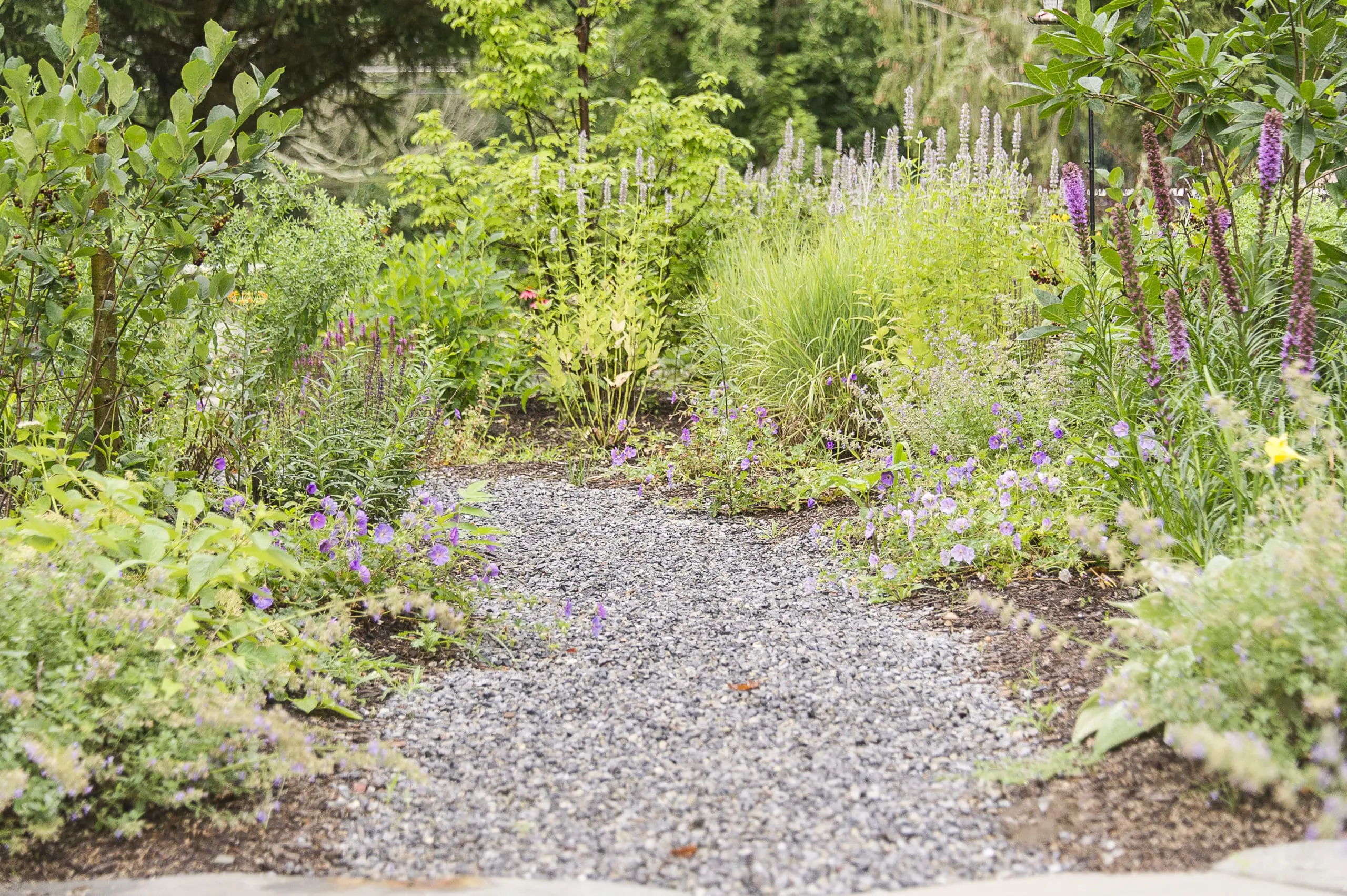
One of our favorite projects ever! We transformed this backyard expanse of lawn into a charming, native courtyard garden. The foundation of the design is the new natural stone masonry. We designed a flagstone patio off the backdoor, that leads to a circular natural stone walkway that meanders around the garden, with a gravel shortcut path through the middle.
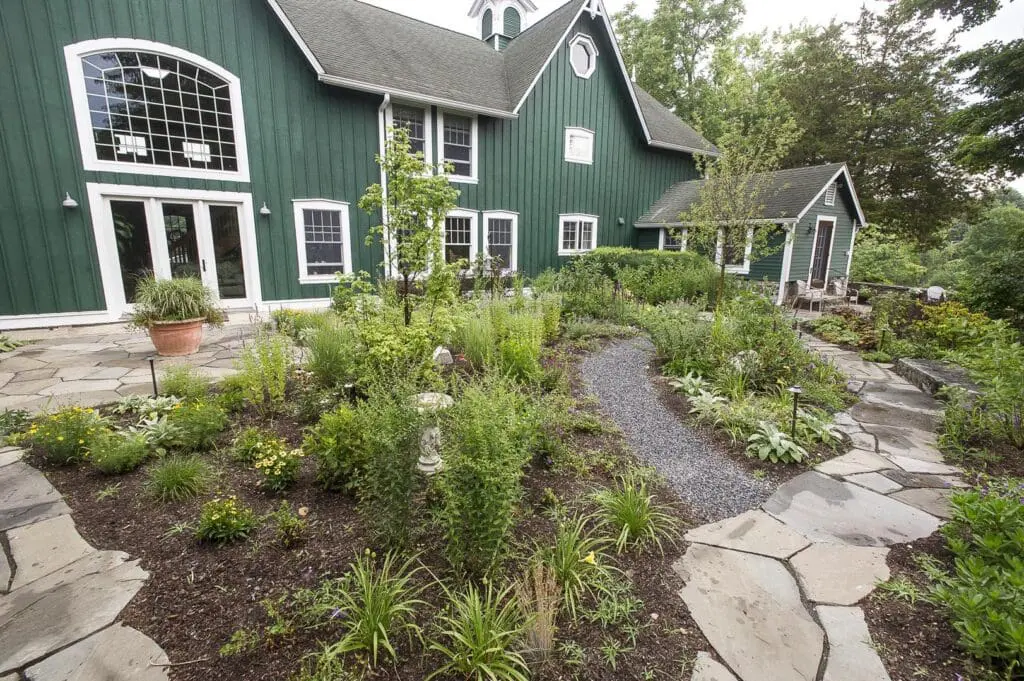
Native, textural perennials and shrubs soften the hardscape layout

Along the walkways are strategically sited benches, inviting you to slow down, rest and take in the magic of the garden. The plant palette is a naturalistic, mostly native selection chosen for wildlife benefit, year-round interest, and texture.

Learn more about the project on our blog, portfolio, and YouTube!

#1: Native Pool Landscaping & Front Entry Courtyard | Pound Ridge, NY
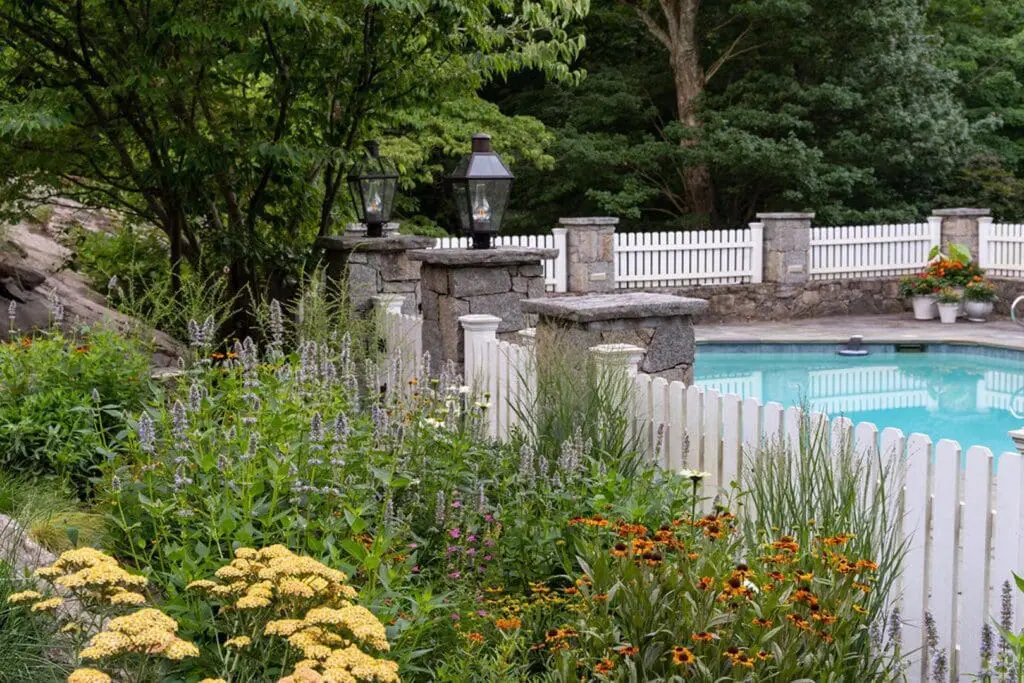
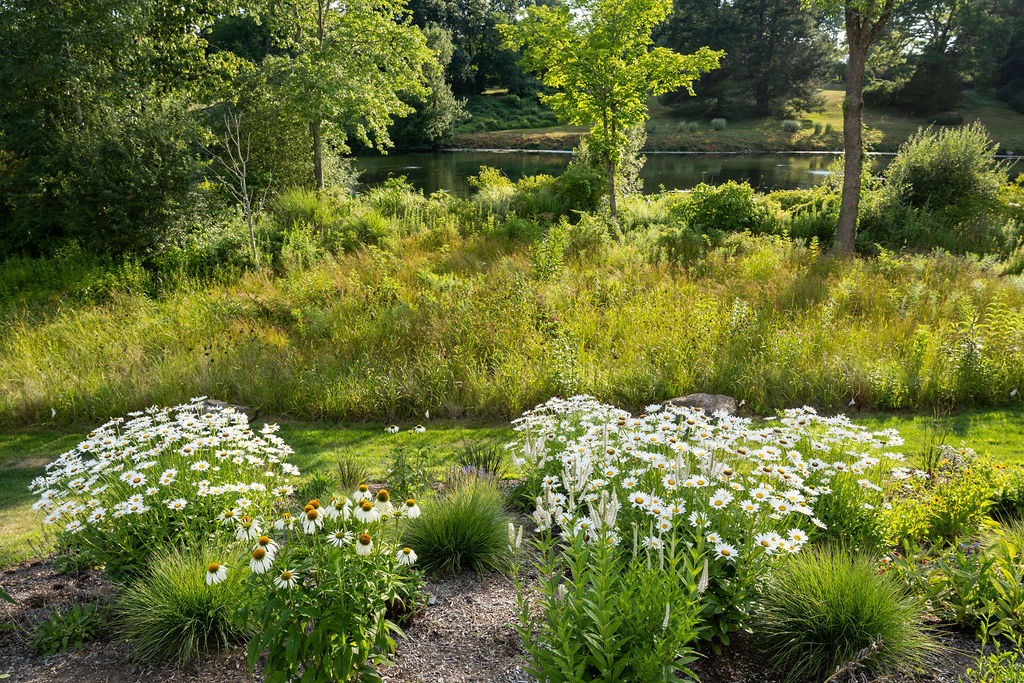
Native perennial planting blooms for weeks on end in summer

Coming in at #1 in our Best Landscape Design Projects of the Year is the fabulous Pound Ridge estate that received a pool landscaping makeover! We turned an overgrown, non-native pool landscape into a haven for pollinators, birds, and of course, our clients!
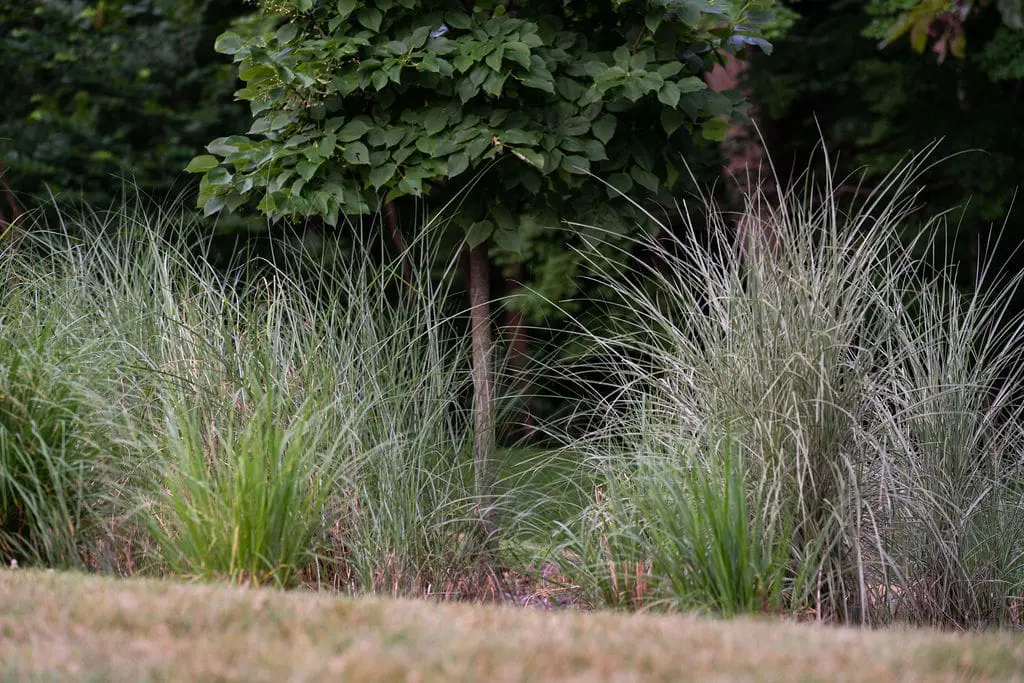
We transplanted many of the non-native ornamental grasses from the pool area and created a new grass garden in the large back lawn. This ornamental grass garden is lower maintenance than the lawn and provides visual interest in the expanse of turf.
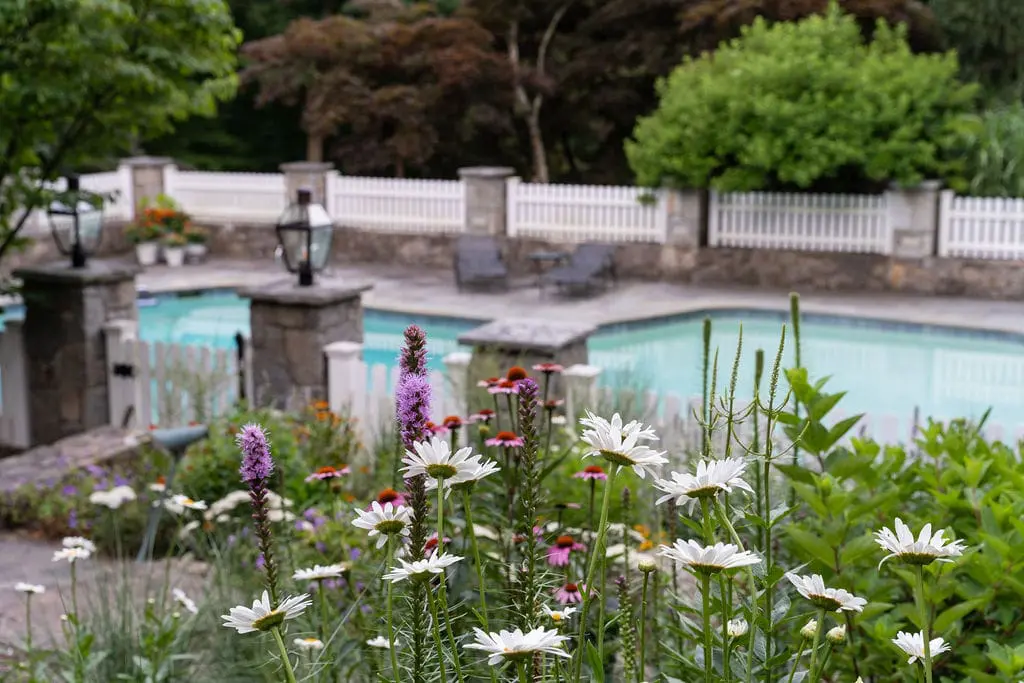
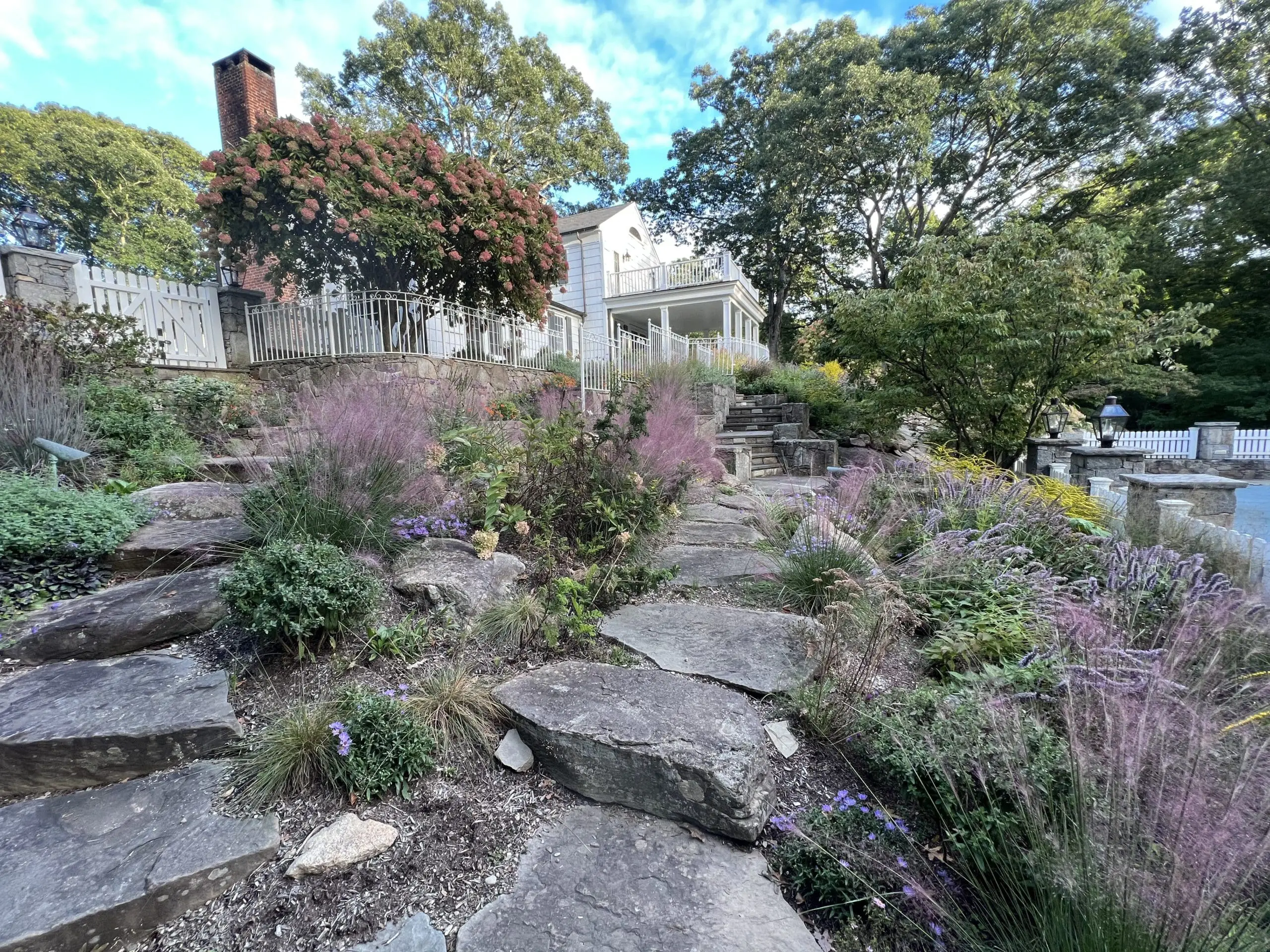
With a clean slate for the pool area, we designed a garden of native, sequentially blooming shrubs and perennials that are pollinator favorites.  In fall, native, appropriately sized, ornamental grasses steal the show with their stunning seed heads (looking at you, Pink Muhly Grass), that double as bird food in late fall and winter!
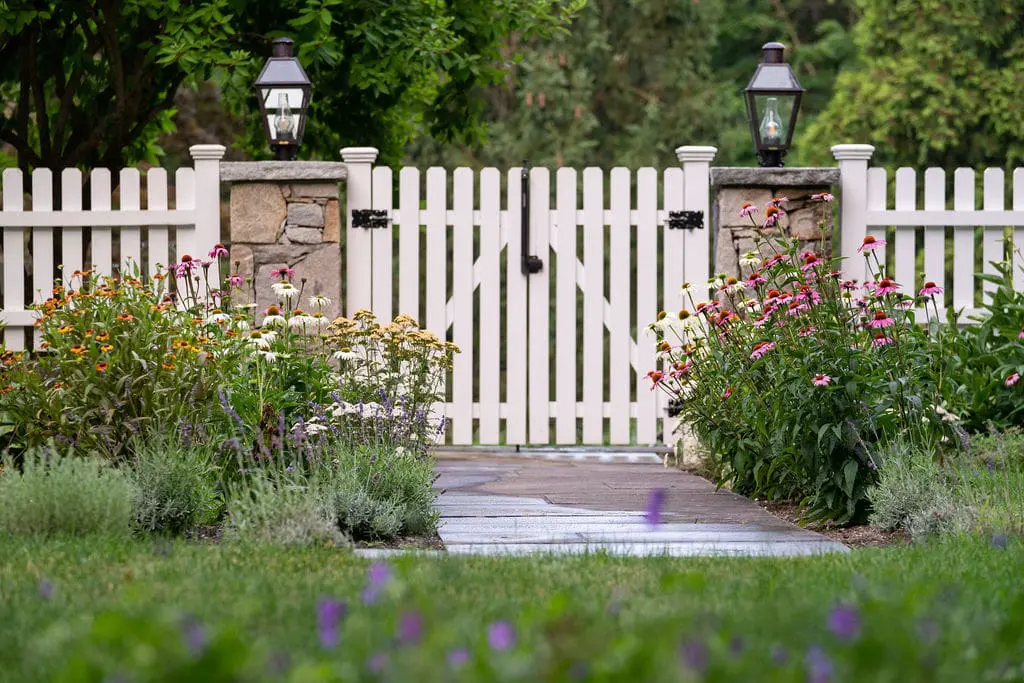
For the front entrance, we revamped an existing courtyard to include more color and habitat-friendly plants. The vegetable garden was also reorganized into quadrants, for ease of gardening, and we added a border of pollinator-attracting plants to aid with veggie pollination.

Learn more on the full project blog!
Thanks for recapping the year with us! We’re so excited to see what 2023 will bring for us – new sites, new design challenges, new clients with a passion for improving their local environment. Bring it on!

If you’d like to work with us in 2023, schedule a consultation or free 15-minute discovery call.

—

Green Jay Landscape Design

Where Design Meets Ecology

914-560-6570
Filed Under: Featured Work Tagged With: best landscape design, best landscape designer, best landscaping, design and build, design inspiration, ecological landscape design, ecological landscaping, estate management, habitat garden, healthy yard, landscape construction, landscape design, landscape design master plan, landscape designer, native plant garden, native plants, natural landscaping, perennial garden, pollinator garden, rain garden, stormwater management, Westchester County NY

This estate in Putnam County, NY is set in a stunning location, surrounded by hardwood forest, streams and fields. The beautiful home was plagued, however, by an awkward front entrance: the asphalt drive extended all the way to the front door and side door, obscuring any distinction between driveway and walkway. We knew we had to redesign the hardscape to include natural stone masonry to better delineate the entrances.

BEFORE PHOTO: asphalt extends to house.

That design choice was intentionally made to accommodate a wheelchair, but the client now desired a more aesthetic front entrance. GJLD was hired to complete a Landscape Design Master Plan that focused on the front yard.

Designing Front Entrance Masonry 

We knew we had to remove the asphalt around the house and replace with a natural stone walkway. The steps to the side door, next to the garage, also needed a stone distinction. Both masonry designs needed to accommodate cars moving in and out of the garage.

We designed a wide, irregular flagstone walkway that flares at the front door and out to the driveway. Colorful native garden beds flank either side of the walk, immersing you in nature as you approach the home.

A flared stone landing for the side door steps is just enough to characterize the entrance, while removing the excess asphalt allows for a new garden bed.

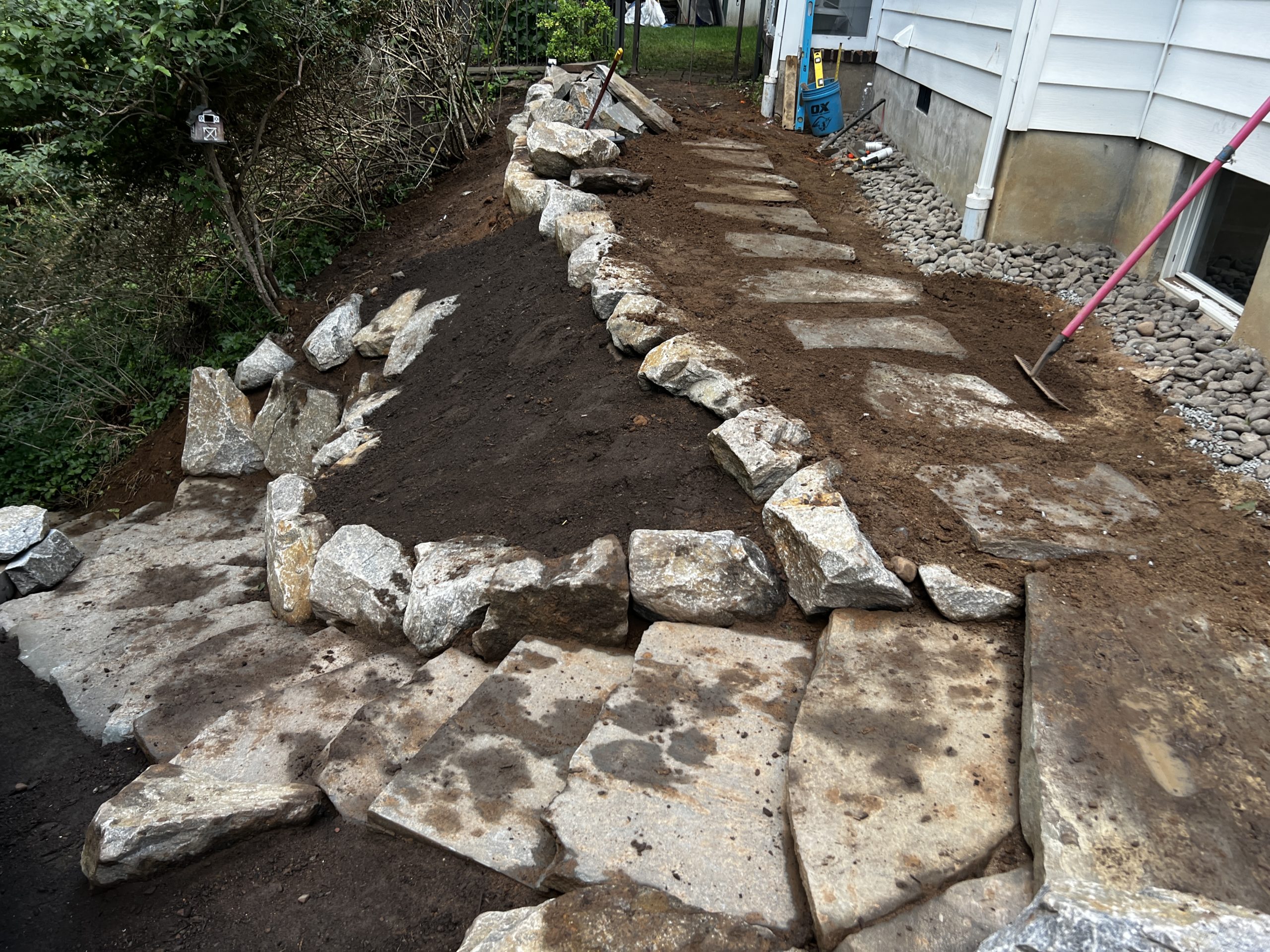
We also added a steppingstone path to lead from the front walkway, around the house to the backyard.

Thanks to our expert mason Aztlan for executing this project flawlessly.

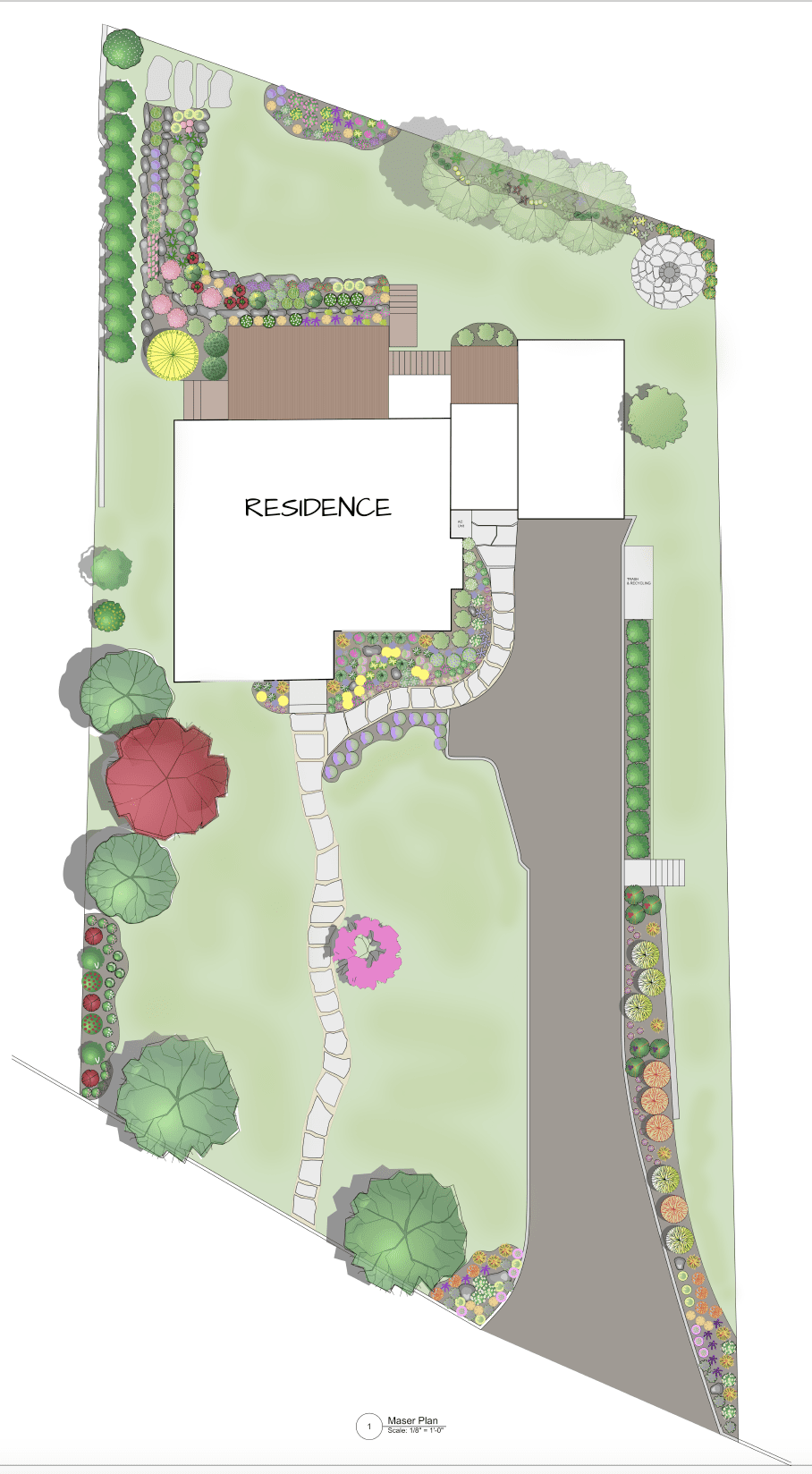
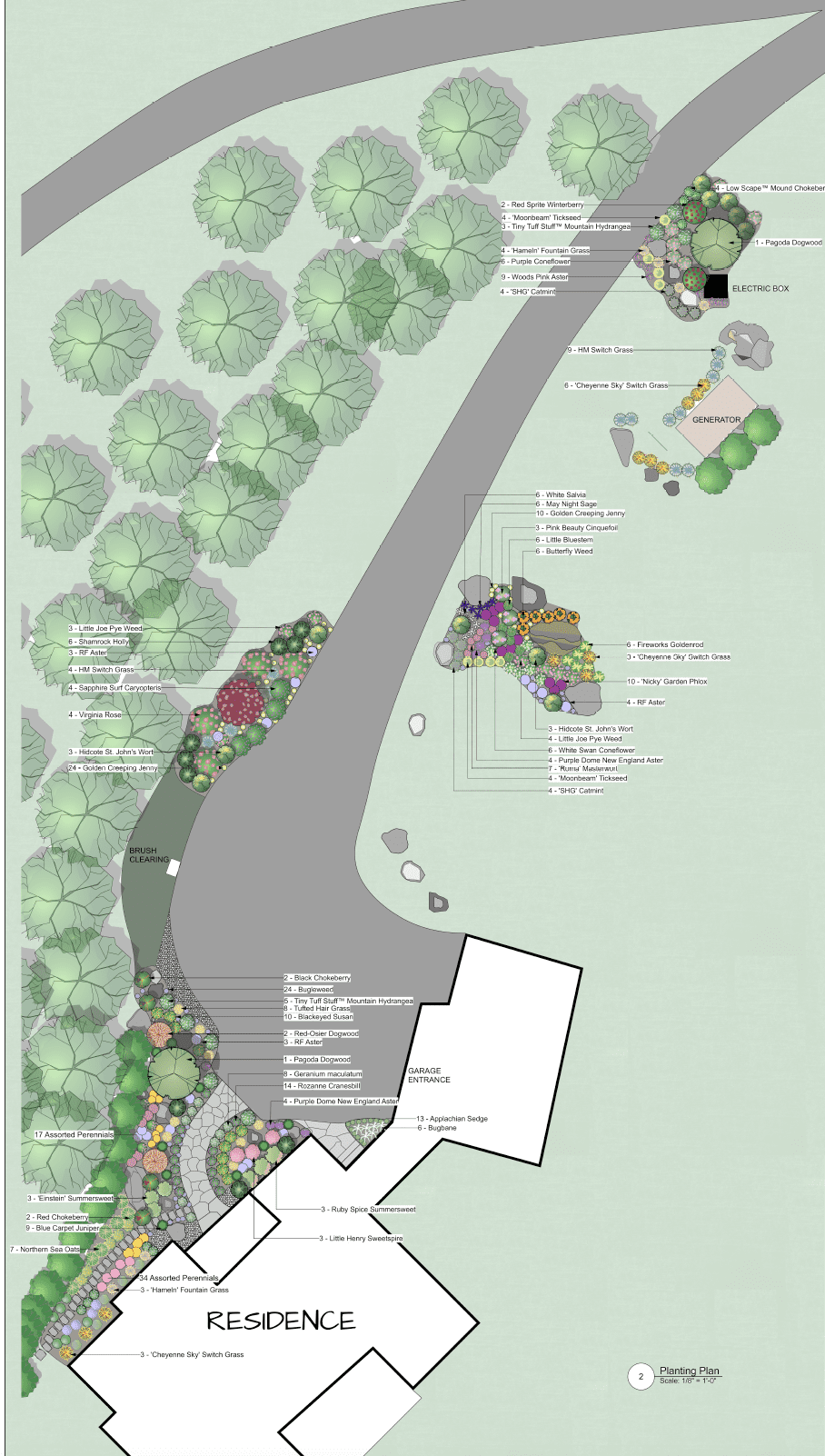
Landscape Design Master Plan in Putnam Valley, NY

Front Yard Native Landscaping  

There were a few areas of the front yard that really beckoned for a garden bed. There were many large boulders and rock outcroppings that created edges for garden beds. We designed one at the main driveway entrance, that doubled as screening for the electrical box.


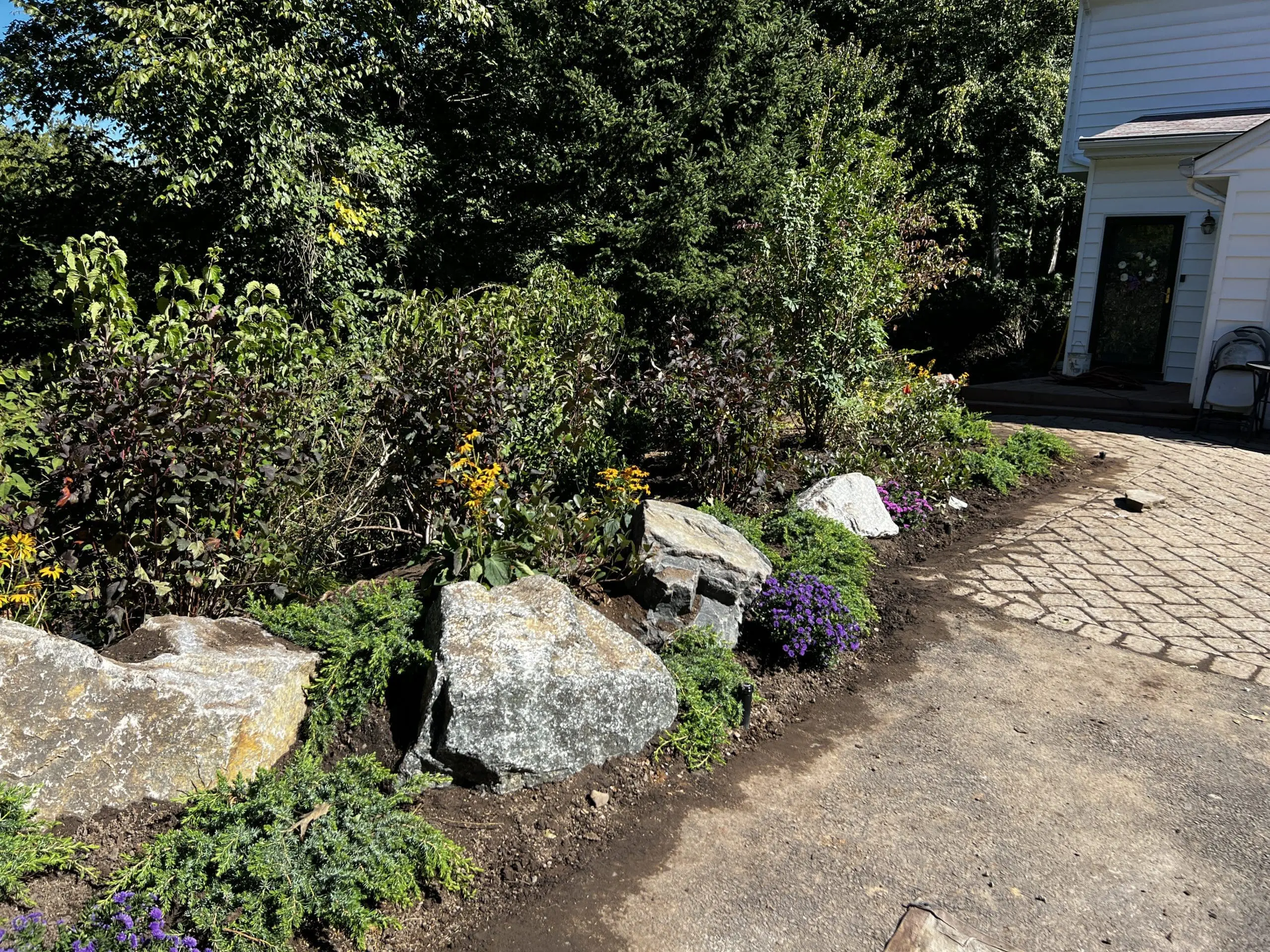
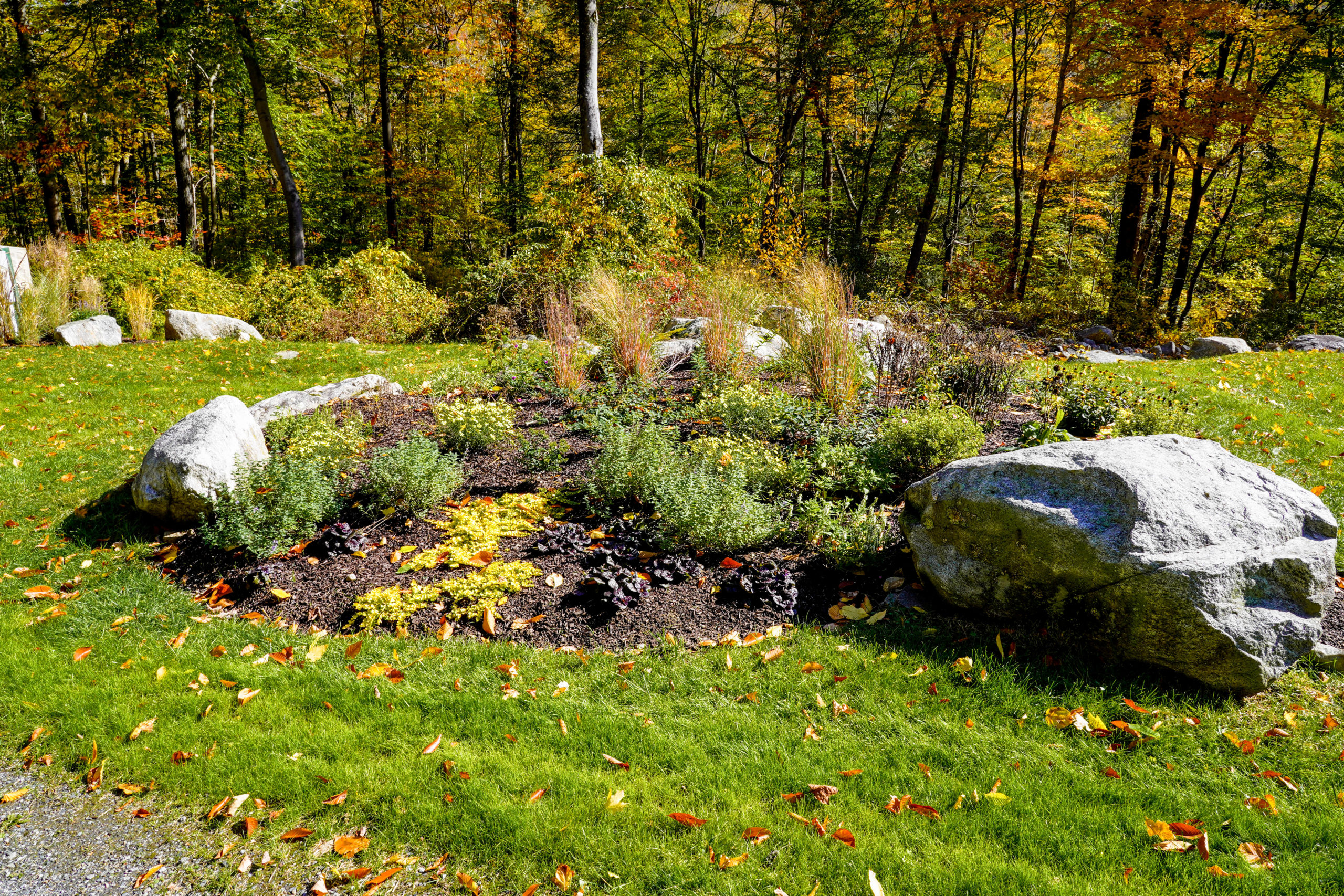
In the sunny front yard, we designed a bed around an existing sprawl of boulders. Taking advantage of rock outcroppings adds texture, contrast, and a natural border around a planting bed. We chose long-blooming perennials for the front border, complimented by native shrubs, ornamental grasses, and taller accent perennials, all of which collectively create pollinator habitat.

On the other side of the driveway, we break up the expanse of lawn with a native shrub bed designed for bird habitat and as a low-maintenance, beautiful border garden.

Selecting Plants for a Front Entrance

 When selecting plants for a front entrance we have a few considerations:

Multi-Season Interest:

Long bloom periods, fall foliage, winter berries, evergreen shrubs…plants that serve multiple visual functions make for a low-maintenance, high-impact combination

Native Habitat Value:

Is the selection providing food, nesting materials or shelter for wildlife? Every garden is an opportunity to extend habitats and increase biodiversity

Form & Scale:

Is the plant the appropriate size for the entrance, and does its scale relate to the other plant selections appropriately?

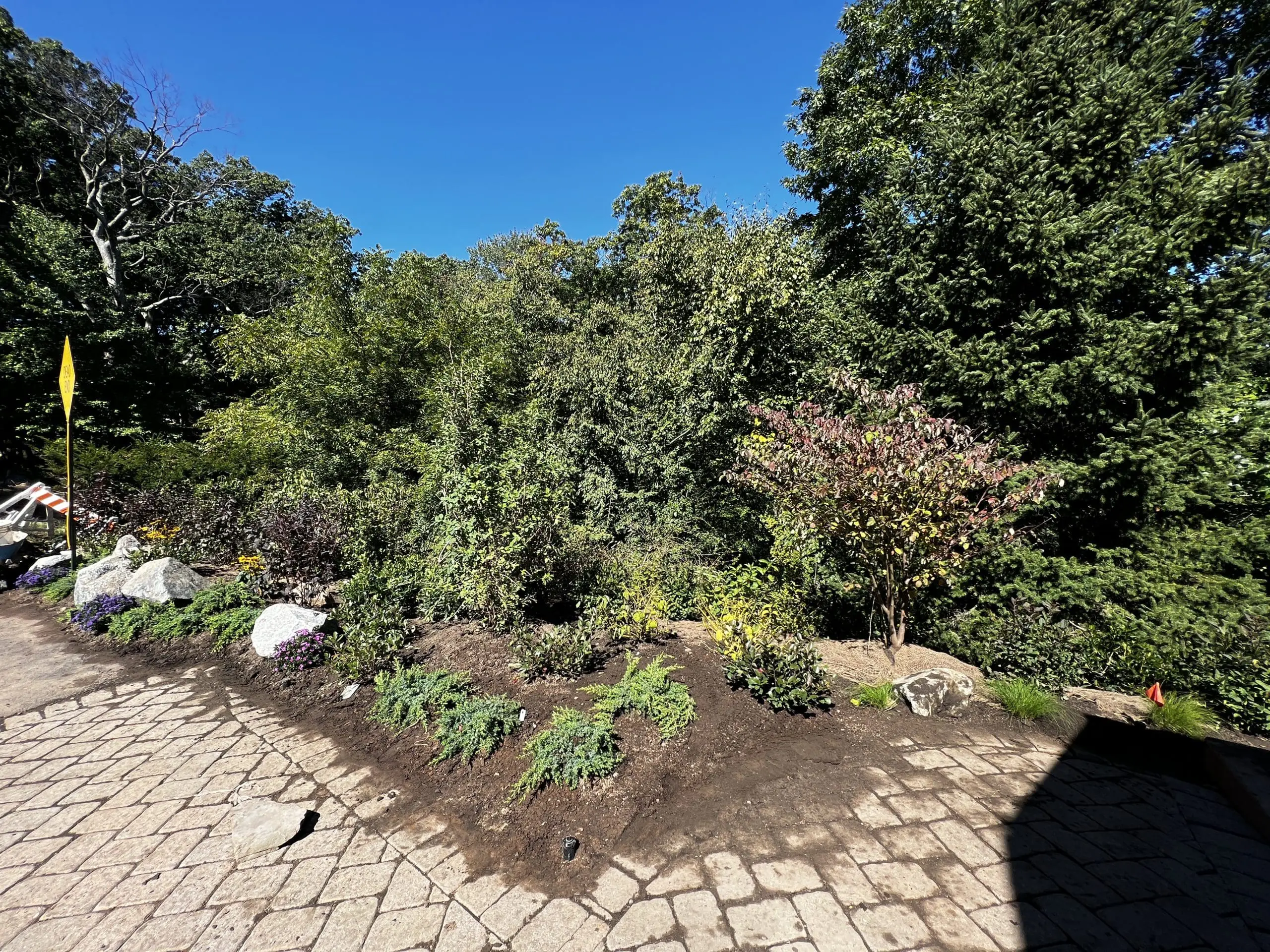
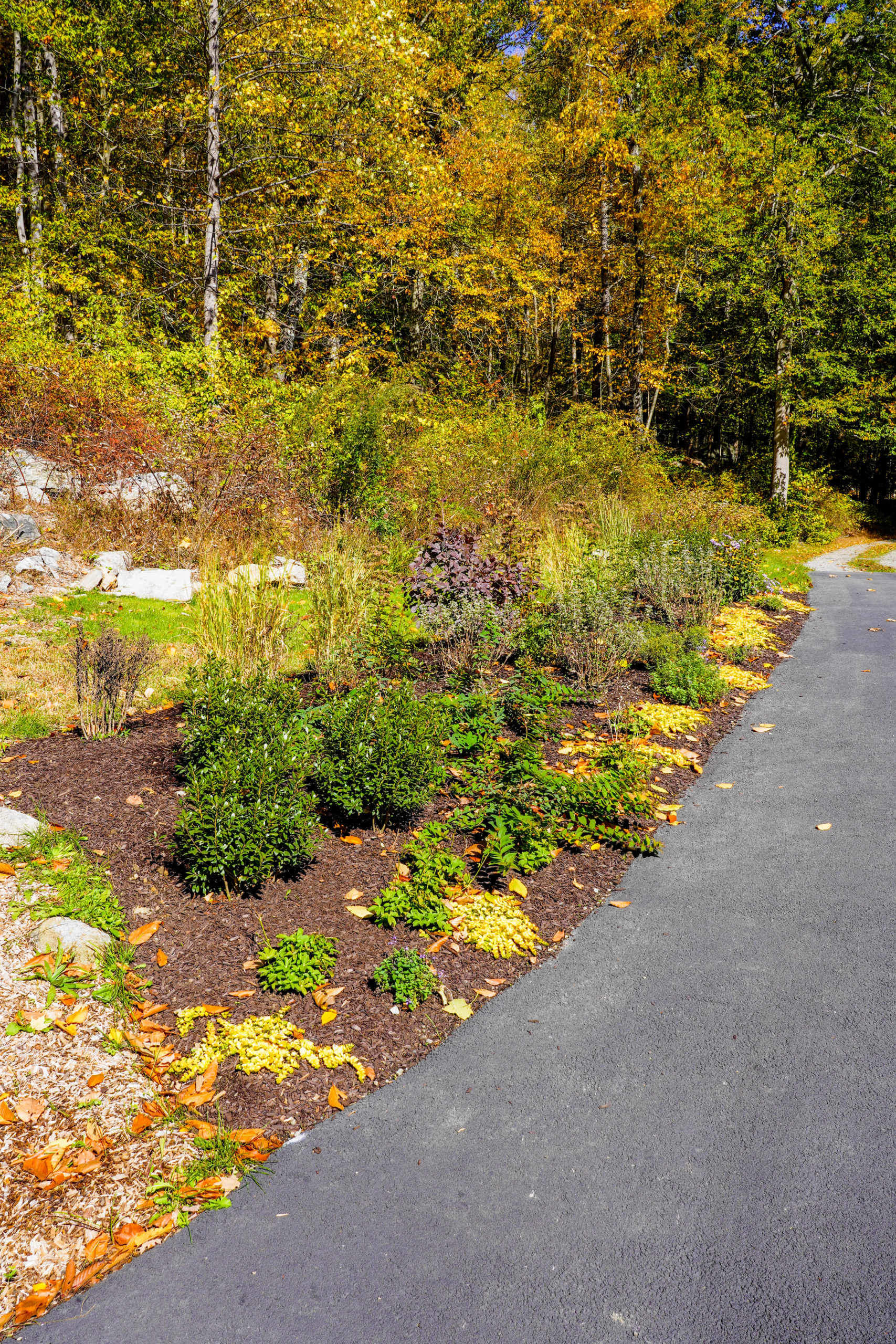
We designed a garden with native flowering and berry producing shrubs, of various heights but mostly smaller than six feet. Waves of evergreen Inkberry holly and Juniper create visual consistency throughout the year. Long-blooming perennials provide color from April thru September.

Newly planted native landscape in fall with boulder accents and natural stone masonry.

This site has the advantage of a slope and naturalized area behind it, which provides a visual backdrop and connects the garden to the broader habitat environment.

Work with Us!

We are currently scheduling design clients for the ’23 season! Start your design project this winter to enjoy by the summer! Schedule your consultation or free discovery call.

—

Green Jay Landscape Design

Where Design Meets Ecology

914-560-6570
Filed Under: Featured Work, Landscape Design Tagged With: ecological landscape design, ecological landscaping, estate management, front entrance, front entrance masonry, front entry, front entry masonry, front yard garden, front yard landscaping, healthy yard, landscape design master plan, landscape ecologist, masonry, native plant garden, native plants, natural landscaping, natural stone, natural stone masonry, organic landscape, perennial garden, pollinator garden, Putnam County, putnam valley, Putnam valley new york, stone walkway

Newly terraced slope stabilizes hillside. Natural stone steps make it accessible.

Our first landscape design project in Bergen County, New Jersey was a complex storm restoration project on a steep slope overlooking a river. During Hurricane Ida, historic rainfall collapsed the side yard slope just feet from the house.  Existing retaining walls began to collapse, and the once navigable slope was now too steep to walk comfortably down to the river.

Before photo: the slope collapsed during Hurricane Ida.

Landscape Design Goals

The client wanted to restore the slope into something beautiful that would resist erosion and restore functionality to their side yard. Green Jay Landscape Design created a design plan and erosion control plan that needed to be approved by the New Jersey Department of Environmental Protection as well as local regulatory agencies.

The sudden change in grade made this side yard dangerous and unusable.

Designing for Erosion Control

 The design plan includes several layers of erosion control strategies. First, many boulders were brought in and strategically placed to form the first layer of stabilization.

Boulder terraces and filtrexx socks work together to stabilize the slope and minimize erosion.

Next, we brought in sixty yards of engineered soil, specific to this application, to restore the grade to the pre-storm level. Installed within the soil are Filtrexx Socks, compostable “logs” that form the next level of barrier to keep the soil in place.

Boulder terraces retain the new soil.

Finally, the entire planting was planted into Jutte netting to an additional level of stabilization while plant roots get established. Eventually the Jutte will decompose and the plants will form a network of stabilizing roots.

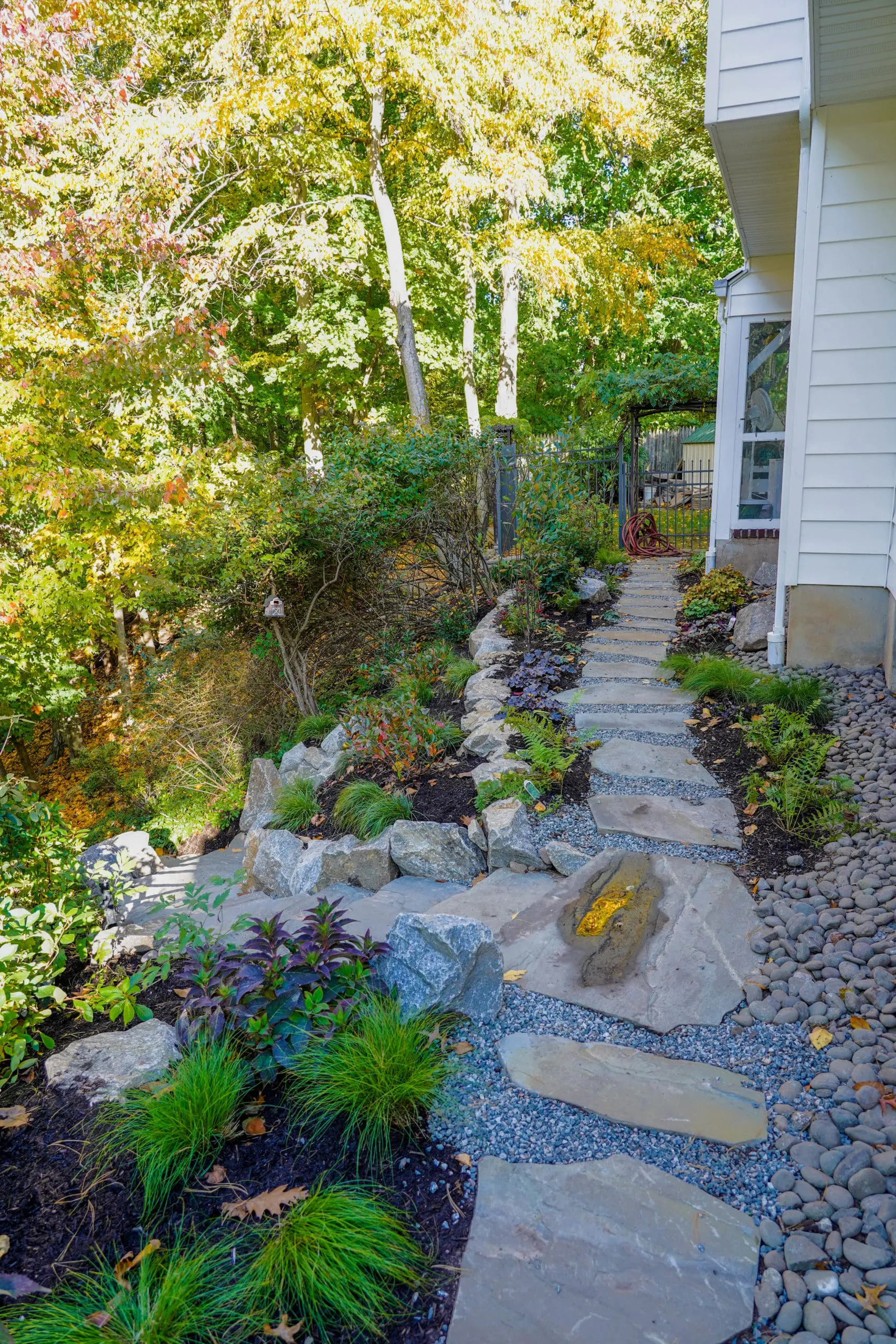
Jutte netting lines each bed, stabilizing plants as their root systems develop. Natural stone staircase navigates the grade change.

All materials used are natural source organic materials sourced locally whenever possible.

Planting for Erosion Control


Boulder accents and evergreen Juniper mark the edge of the driveway.

When designing this erosion control planting, with part to full shade light conditions, we chose plants that:

  • Were mostly shrubs, which have larger root systems than most perennials
  • Included evergreens, for added structure and stability in winter
  • Provided habitat for local birds and pollinators. Most of this plant palette is made up of native plants.

Shrubs of varying heights stabilize the newly. graded slope.

Some plant palette highlights:

  • Red & Yellowtwig Dogwood
  • Ninebark
  • Viburnum
  • Aronia
  • Pennsylvania Sedge

Shade-loving perennials line the walkway bringing color to a dark side yard.

Natural Stone Masonry

Impeccable stone work effortlessly navigates the steep grade.

Staircase uses large natural stone steppers for a grand, naturalistic aesthetic.

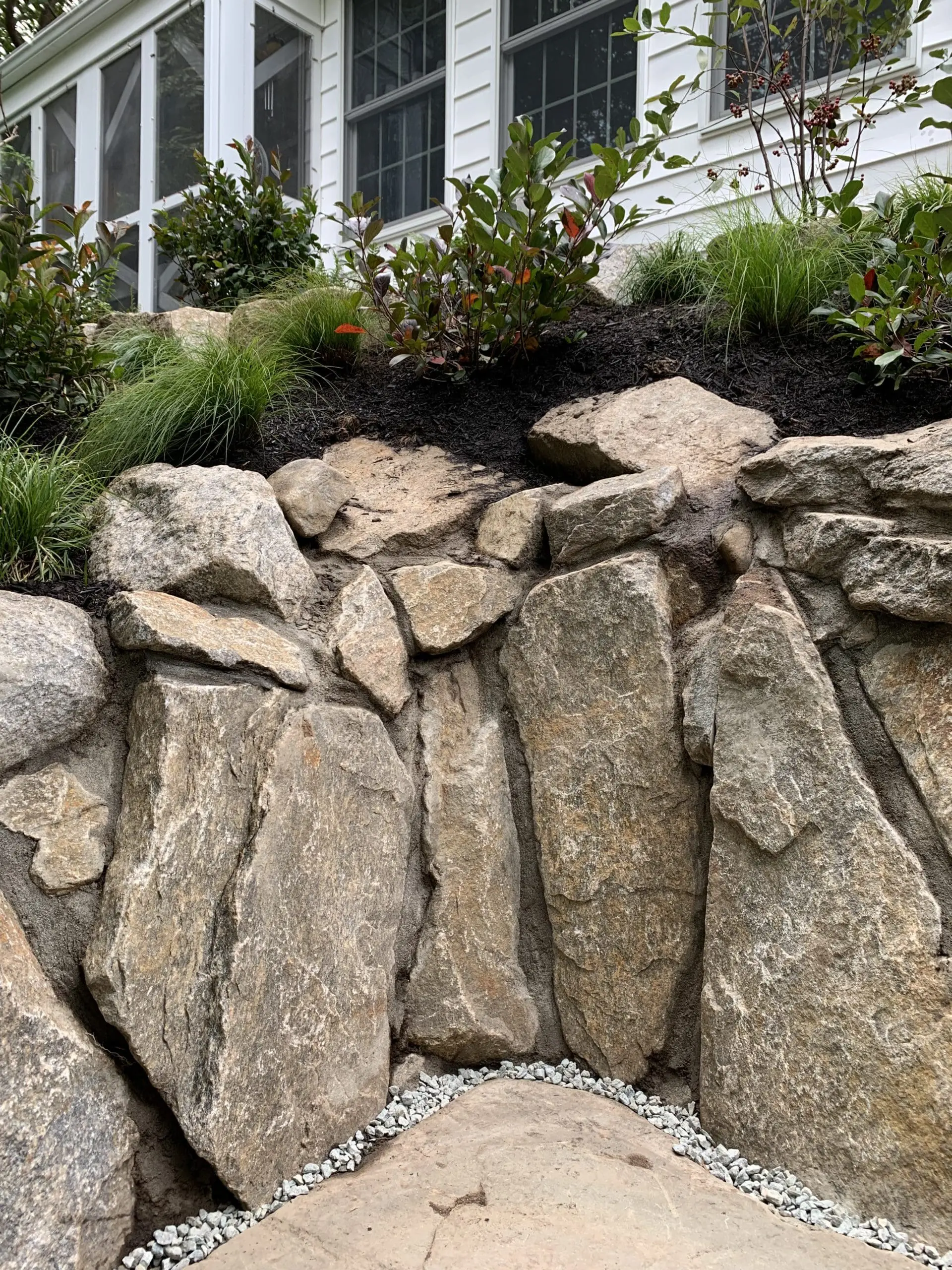
Garden terraces formed by boulder rip rap walls, alongside a new natural stone staircase.

Impeccable stonework retains the grade around a landing in the natural stone staircase.

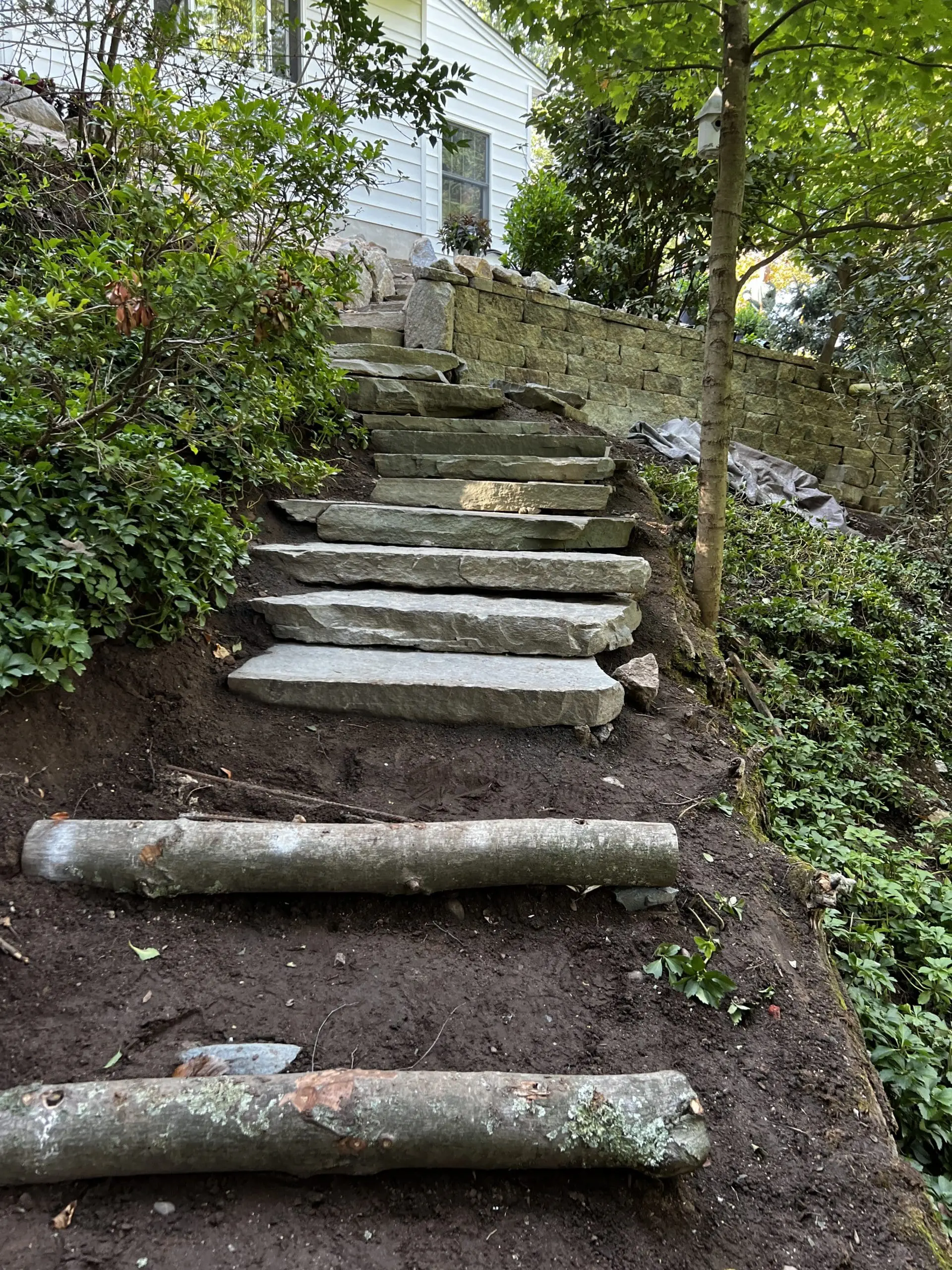
Much of the success of this design is due to the natural stone masonry. Aside from the boulder rip rap wall in the garden beds, our masonry team rebuilt a collapsed CMU wall and constructed new natural stone steps to navigate the steep slope. The result is beautiful, naturalistic and restores the functionality of the side yard as a corridor down to the river.

Wood chip path makes the steep slope down to the river accessible and a property asset.

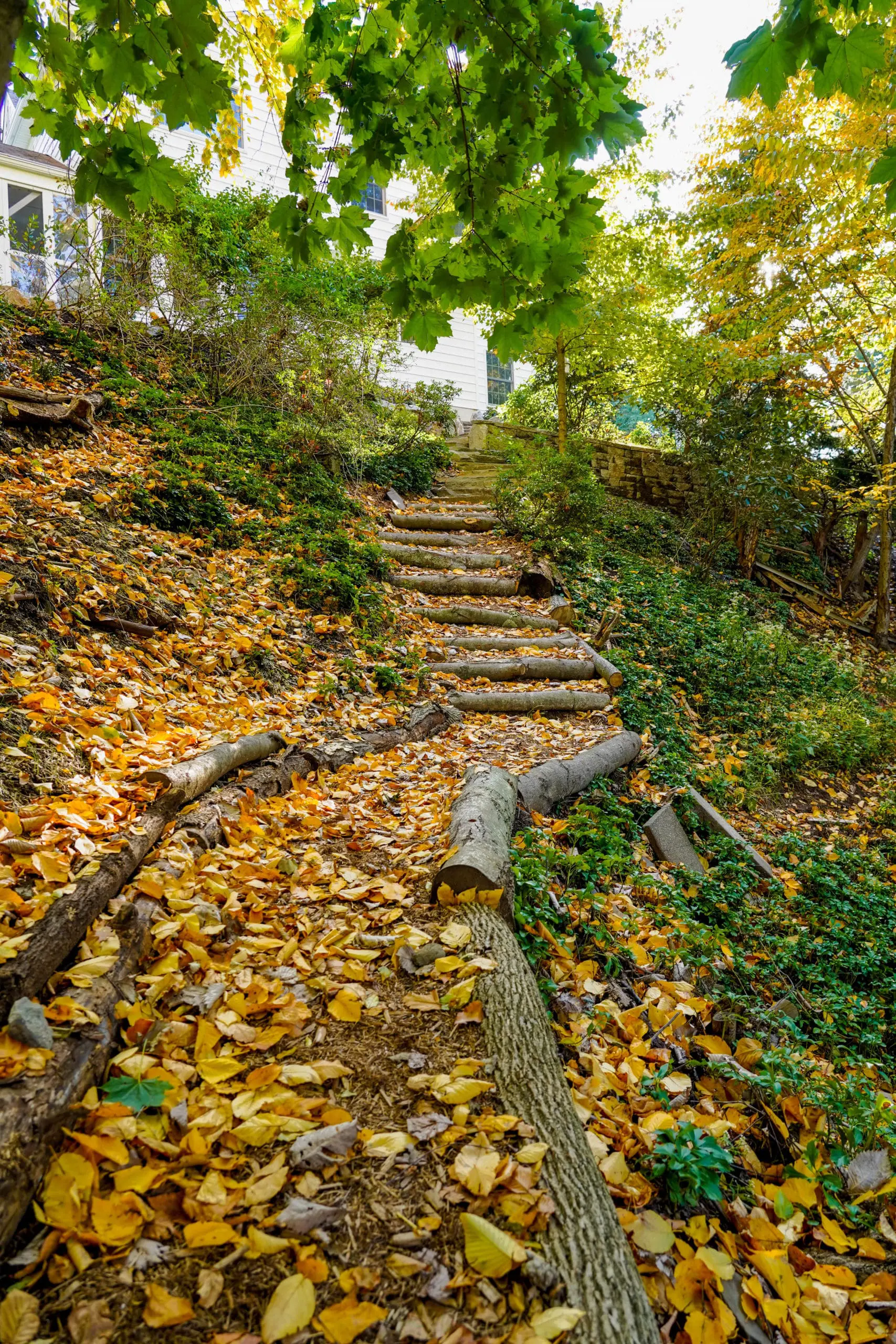
We also restored part of the woodland trail to make it safer and more stable, using logs as water bars.

Cedar bark mulch lines the woodland trail. It is a natural insect repellent, which helps to extend the lifespan of the log steps and rail.

Water bars help navigate the slope and prevent erosion on the woodland trail.

This project is an excellent example of our Nature Design Studio, Primitive Technology Group and adminstrative staff working together efficiently for best results.

Work with Us

We have expanded into Bergen County, NJ! Contact us to schedule a professional on-site consultation and begin designing your dream landscape!

—

Green Jay Landscape Design

Where Design Meets Ecology

914-560-6570
Filed Under: Featured Work, Hardscaping & Stonework, Landscape Construction & Installation, Landscape Design, Wetland Restoration & Storm Water Tagged With: bergen county, bergen county new jersey, erosion control, erosion control devices, erosion control plan, habitat garden, landscape a slope, landscape design master plan, landscape designer, landscape drainage, landscaping a slope, native plant garden, natural landscaping, New Jersey landscape designer, old tappan, old Tappan new jersey, organic gardening, pollinator garden, sloped garden, steep slope, terrace garden

This farmhouse-style home in Westchester County, NY did not have a landscape to match the stunning architecture. When GJLD first visited the property for a professional consultation, the backyard was a boring expanse of lawn. Jay observed the existing features—mature trees encircling the backyard—and was struck by inspiration to design a native courtyard garden for the backyard. He named the garden The Cloister of Sweet Serenity.

Backyard Masonry Design & Construction

The foundation of the landscape design is the natural stone masonry. An irregular flagstone patio off the back door creates an ideal gathering space for morning coffee, lunch, or summer evenings al fresco. From the patio, a flagstone path encircles the yard beneath the canopy of trees. A secondary gravel path meanders through the middle. Together, the pathways are both meandering and direct, offering multiple ways to experience the garden. Stone and metal benches are nestled within the garden for even more spots of respite.

Our flagstone walkways and patios are engineered for New England weather and climate including frost heaves. We choose to avoid cement because it is a very energy intensive material to produce, creates emissions during production, and is hazardous to human health.  Silica, in cement, is considered carcinogenic and recognized as so by OSHA.

Instead our base is composed of Item 4 (processed stone) with a washed gravel sub base for drainage with stone dust, sand, or polymeric sand for bedding and joints.

Native Cottage-Style Planting Design

The planting design for this Westchester County, NY property is predominantly native. From the early spring bulbs, to the extended summer blooming perennials, to the red and yellow twig dogwoods commanding the space through winter, the garden was thoughtfully designed to be enjoyed in all seasons. This aesthetic sequence doubles as an ecological one, for every ornamental feature also creates food for wildlife, from pollen, to seedhead, to berry.

As usual, all the planting was installed according to GJLD’s organic specifications. The highest quality, natural source compost, biochar and soil amendments were incorporated into the soil for optimum organic garden performance. We love Organic Mechanics and Organic Plant Magic products.

Landscape Design Process

This project began with the client hiring us to develop a Landscape Design Master Plan designed by our very own Nature Design Studio. The design plan allows us to decide the overarching layout, while also getting into the granular details of the planting plan. The Design Plan comes with one set of revisions as well as a Proposal with a ready-to-build plant list, and cost for installation.

It is never too early to start the design process. For those that pursue designs during the winter, we can often get started right away on the masonry work. Site development and planting installation can be scheduled for spring, and the landscape is complete just in time for the warm weather!  Contact us to start the design process.

—

Green Jay Landscape Design

Where Design Meets Ecology

914-560-6570
 

Filed Under: Uncategorized Tagged With: courtyard garden, courtyard landscape, ecological landscape design, ecological landscaping, garden bench, garden path, habitat garden, healthy yard, healthy yards, irregular flagstone, landscape construction, landscape design, landscape design master plan, landscape designer, masonry, native plant garden, natural landscaping, natural stone masonry, organic landscape, pollinator garden, Westchester County NY

We are thrilled to finally announce our re-brand, a shift we’ve been working on behind the scenes for the last year. Our brand name is now Green Jay Landscape Design, a change we felt reflected our specialization over the last few years into an ecological landscape design and build firm.

In the last two years, we’ve improved and expanded our design and build services to highlight our specialty: native landscapes that support ecosystem services and healthy lifestyles for our clients.


Of course, none of our branding efforts would be possible without the help of our incredible team: Melissa Tatge, graphic designer with All the Good Design, our talented team of web designers at Socious Marketing, and our tireless SEO friends at Market Hardware.


We invite you to explore our new website – we’re very proud of it!

Portfolio

A re-imagined Portfolio, that highlights the range of properties and types of work we perform.  Some of our favorite, newly featured projects include: Courtyard Cloister Garden, Lakefront Pollinator Parterre, Native Pool Landscape and Private Nature Preserve.

Garden beds define and relate landscape areas (ie. pool area and vegetable garden)

Thanks to our talented photographers Rich Pomerantz and Neil Landino and our videographer Chris Jones of Shoreline Video Production for helping us to capture and communicate our work.

Every garden needs a bench moment to take in the views.

Eco-Consulting

Consulting with other designers, contractors, municipalities, and homeowners on more technical projects has become an increasingly important wing of our business.

These projects step beyond the typical scope of landscape design to solve real environmental problems on complicated sites.

Our eco-consulting expertise includes:

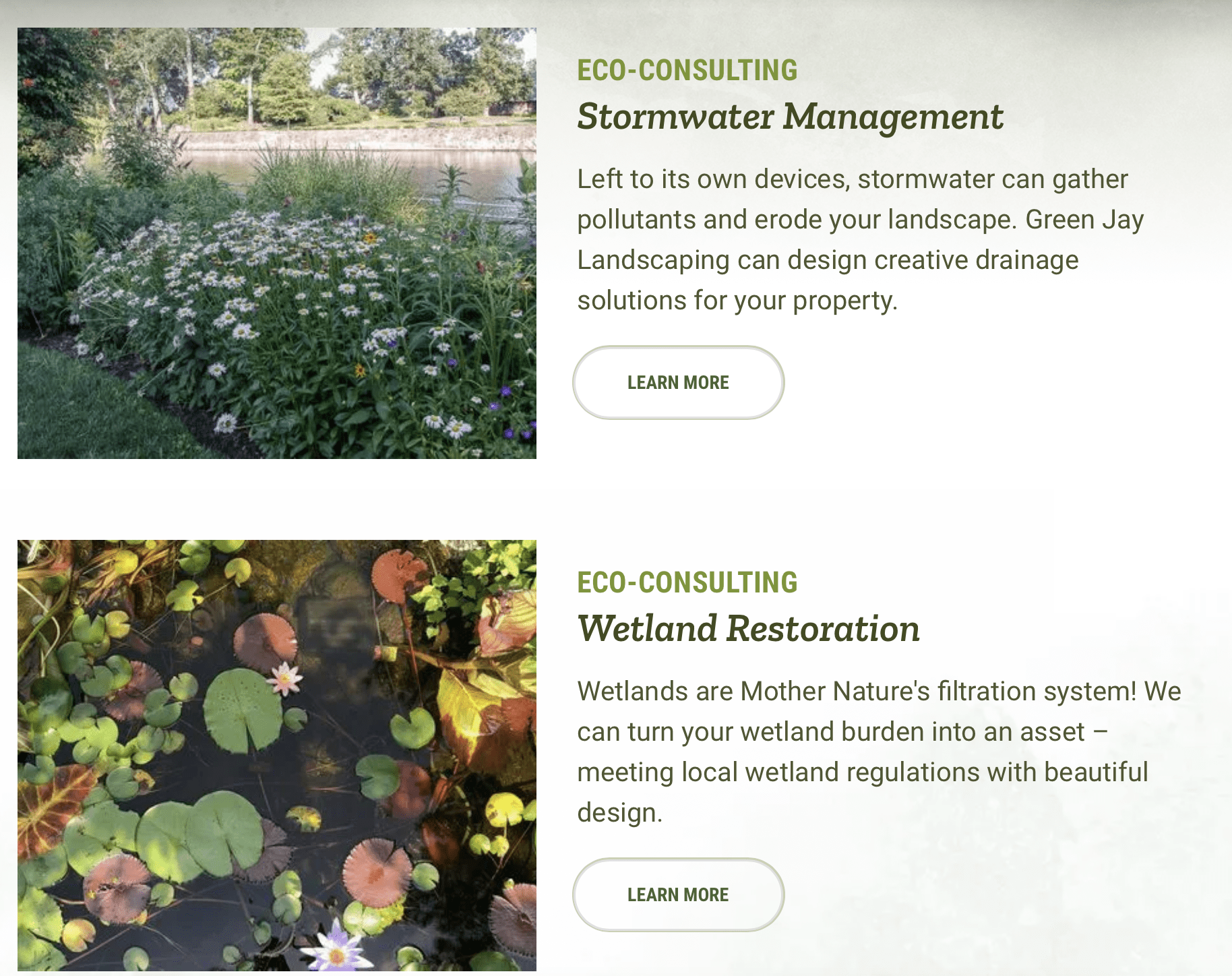
Wetland Restoration

Erosion Control

Stormwater Management

Carbon Smart Landscaping

Invasive Species Control

Project Management

Residential Sustainable Stewardship

A new solution we offer for large property owners (five acres or more) is our Residential Sustainable Stewardship program. We observe and analyze the microclimates of a property and develop a long-term plan of action to restore ecological value to the property.  Depending on the site, this may include understory development, wetland restoration, meadow management, and trail building.

Service Area

New in 2022, we’ve expanded our service area to include Bergen County, New Jersey  for landscape design, build and eco-consulting.

We are now proudly a Tri-State Area operator, serving Westchester & Putnam Counties, New York; Fairfield County, Connecticut; and Bergen County, New Jersey.

One of our first projects in New Jersey was an extreme slope remediation and erosion control project in Old Tappan, NJ.  Read more about the project here.

Follow Us

We invite you to follow us on Instagram for behind-the-scenes content, events, tips, and most recent project footage. Our blog  is regularly updated with landscape design and construction project summaries, ecological education posts, and more!

Contact Us

We are currently scheduling on-site professional consultations and queuing up landscape design and construction work for 2023. Contact us  to discuss your project.

—

Green Jay Landscape Design
Where Design Meets Ecology

914-560-6570
Filed Under: Featured Article Tagged With: Bergen County NJ, ecological landscape design, ecological landscaping, FAIRFIELD COUNTY CT, landscape construction, landscape design, landscape designer, native landscaping, native plants, natural landscaping, Westchester County NY

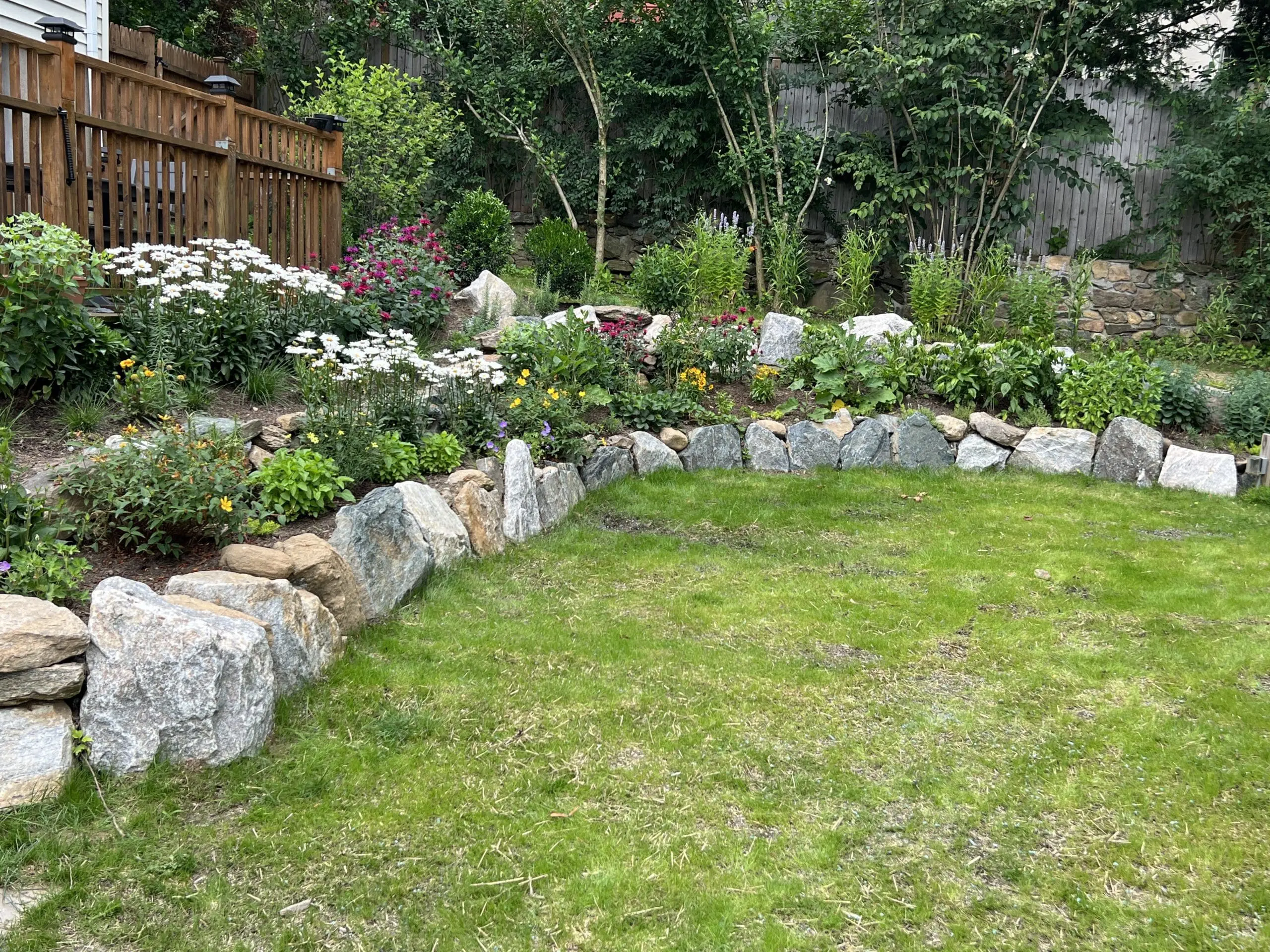
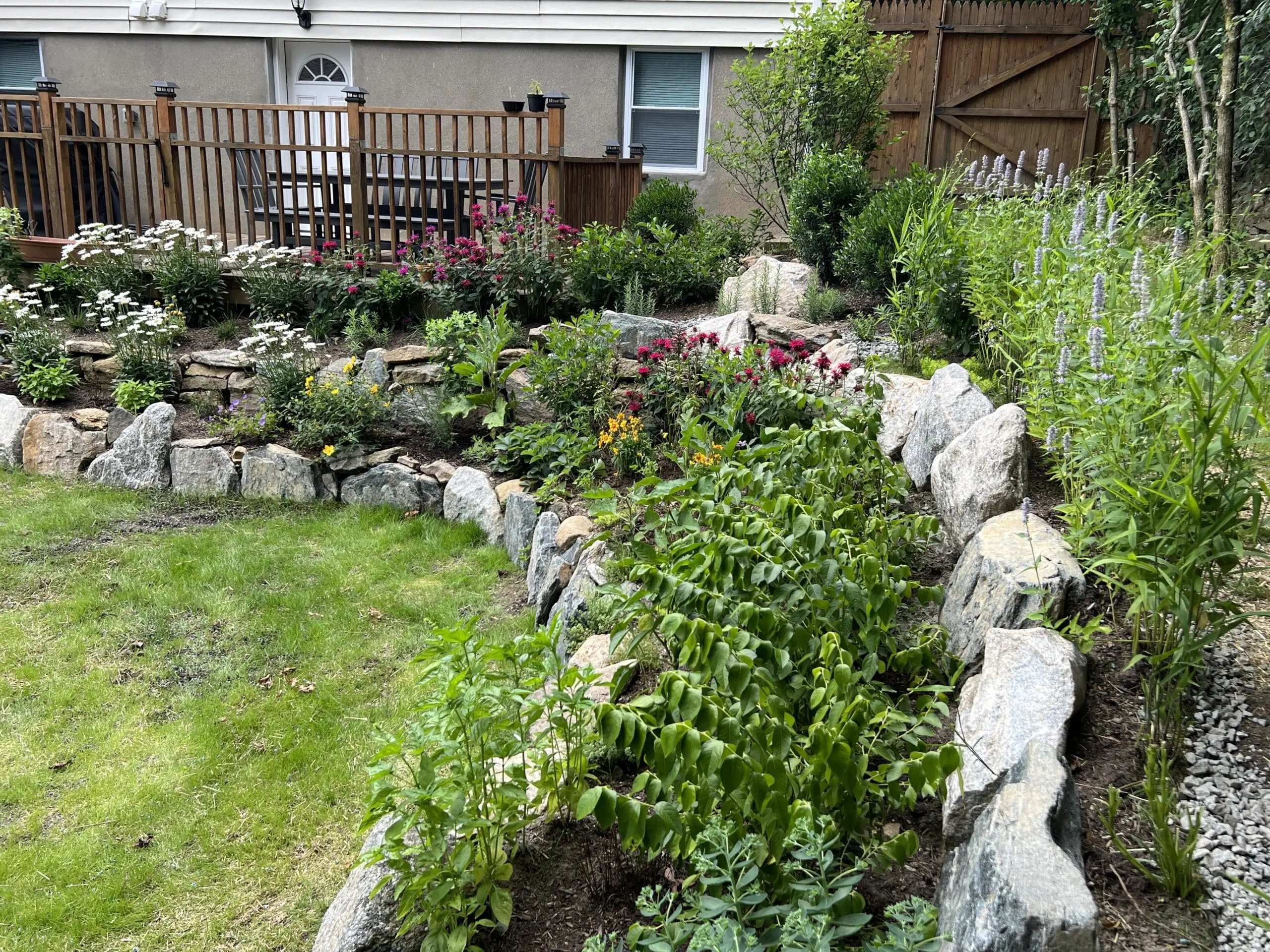
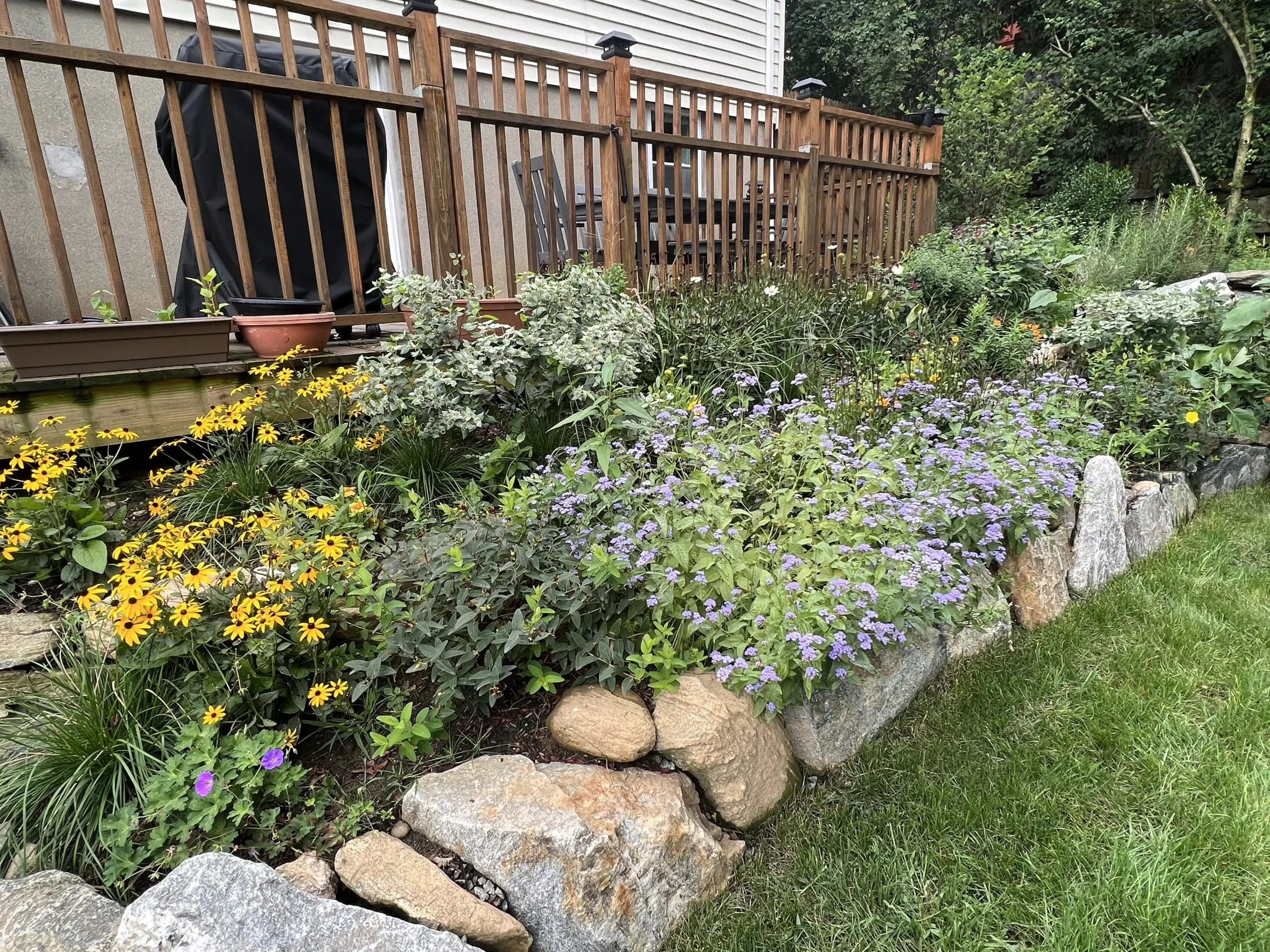
First year garden terraces in September. Native perennials for pollinators bloom for weeks.

Newly planted garden terraces with a mixture of native perennials and annual vegetables.

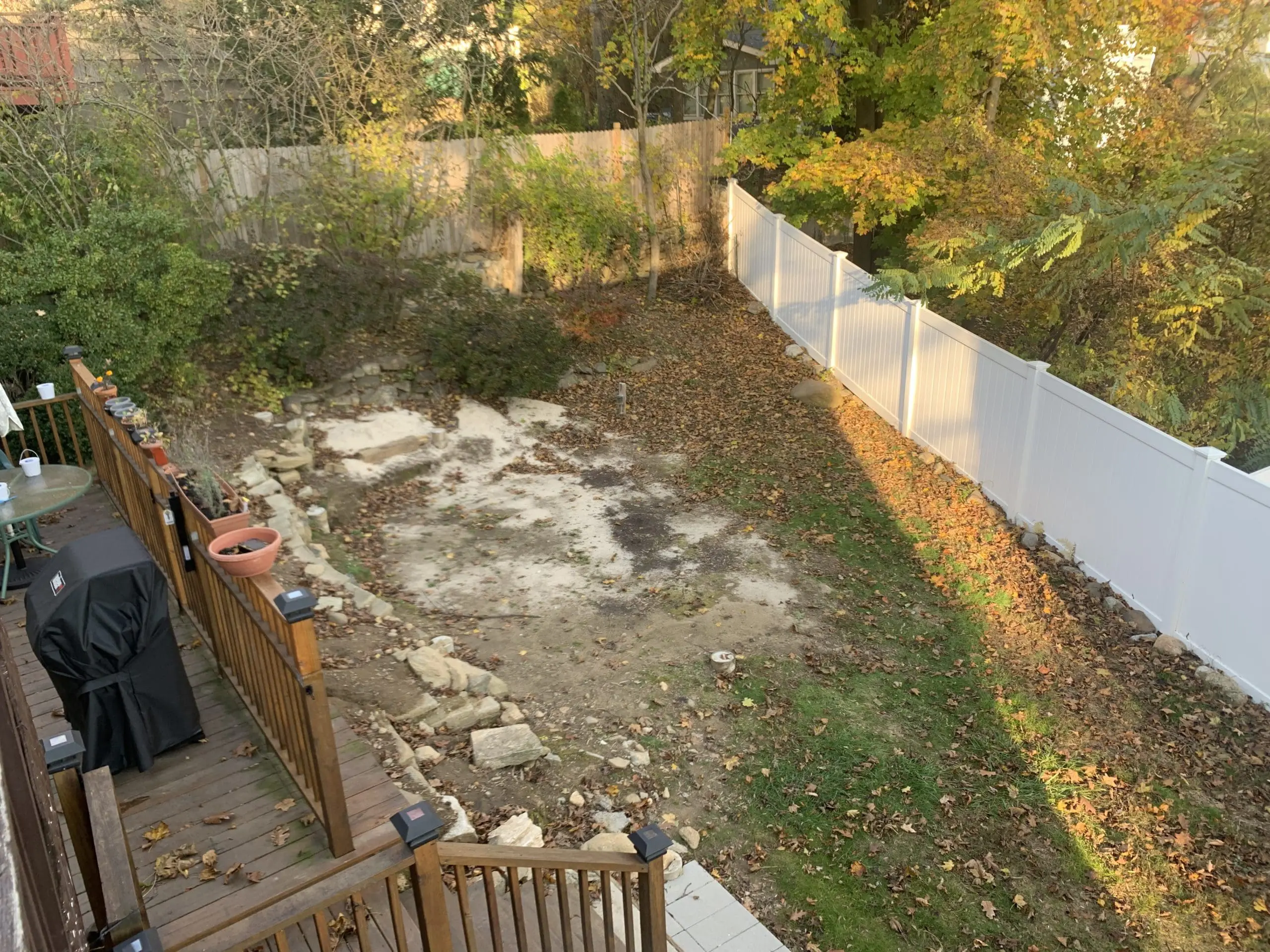
Buying a home comes with the remnants of the previous owners’ personality – the good, the bad, and the different. In this case, an above ground pool was put in by the previous owner but did not fit with our client’s young family and lifestyle. The pool was removed, leaving an awkward space between the deck (that used to step out directly into the pool) and the rest of the back yard.

BEFORE PHOTO: sand and concrete are remnants of the above ground pool.

Site Analysis Guides Landscape Design

While observing the site in person, it became clear that the grade change between the deck and lawn would lend itself perfectly to two garden terraces. Boulders would retain the terrace layers, adding a naturalistic aesthetic to the garden.

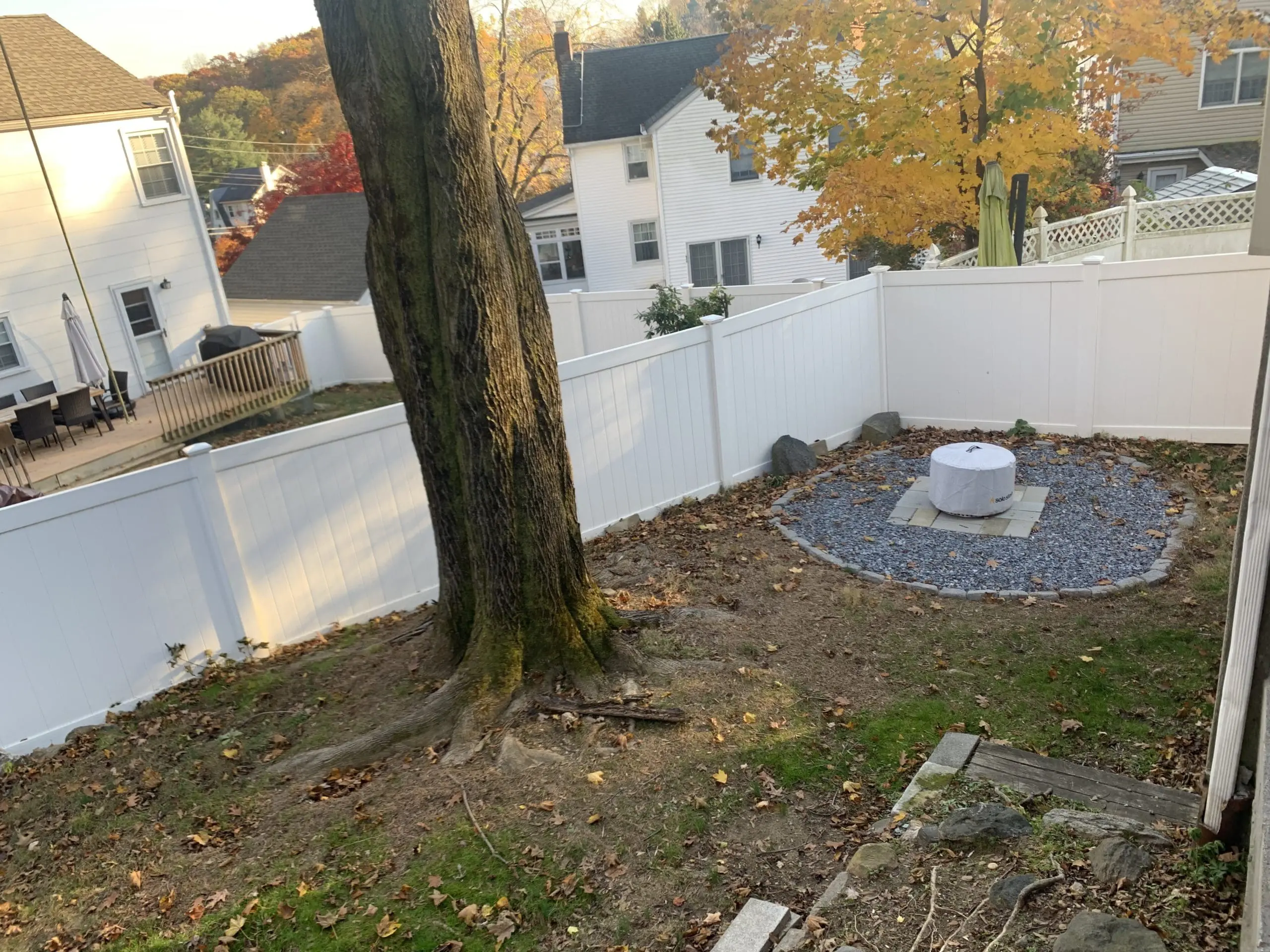
BEFORE PHOTO: wrap around white fencing and nearby neighbors left much to be desired for backyard privacy.

A few other problem areas expressed by the client during the professional consultation also needed to be solved through the design. The close quartered neighborhood in Dobbs Ferry had lots of fence real estate, and the neighbors’ homes felt imposing and close.

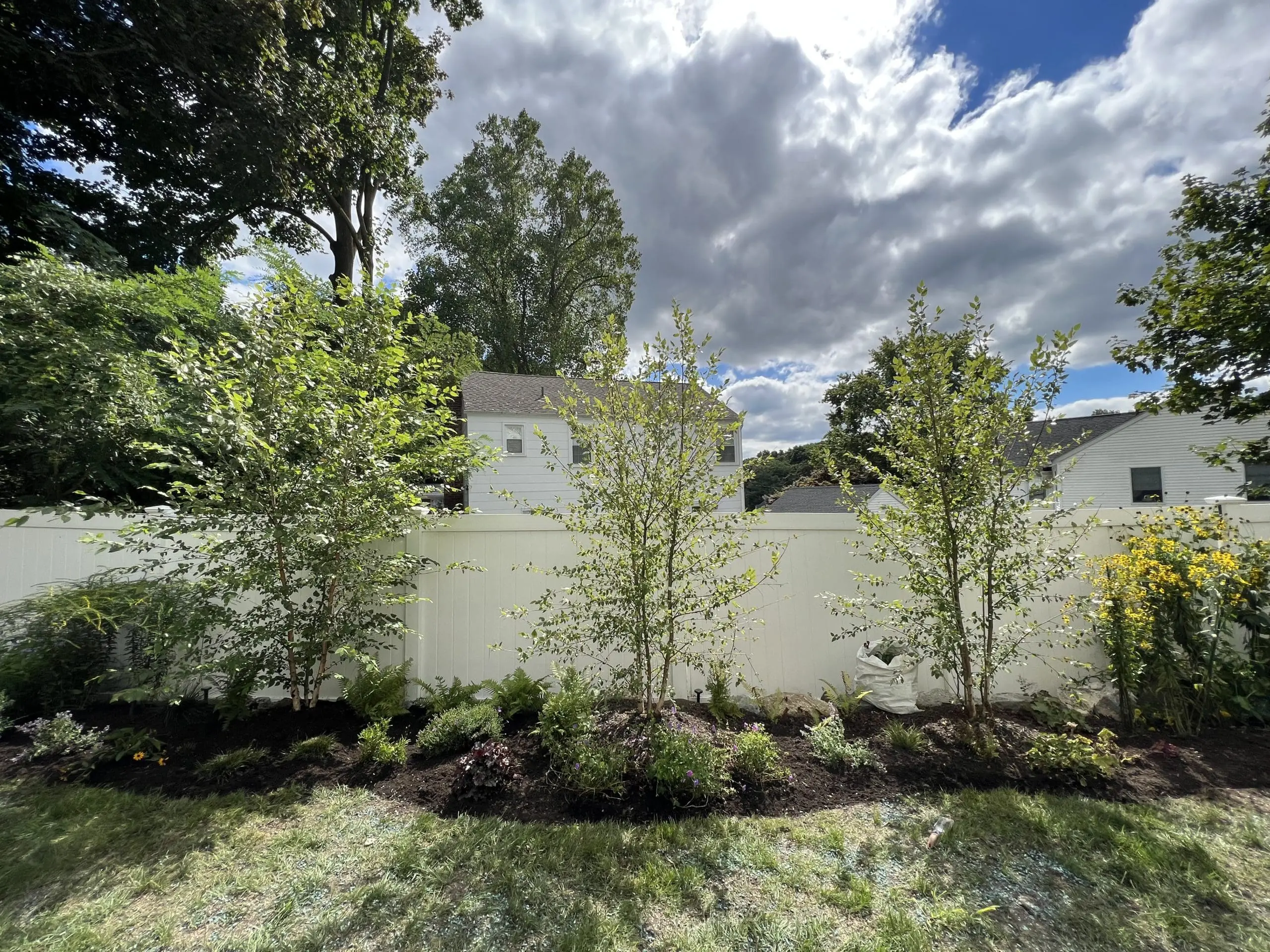
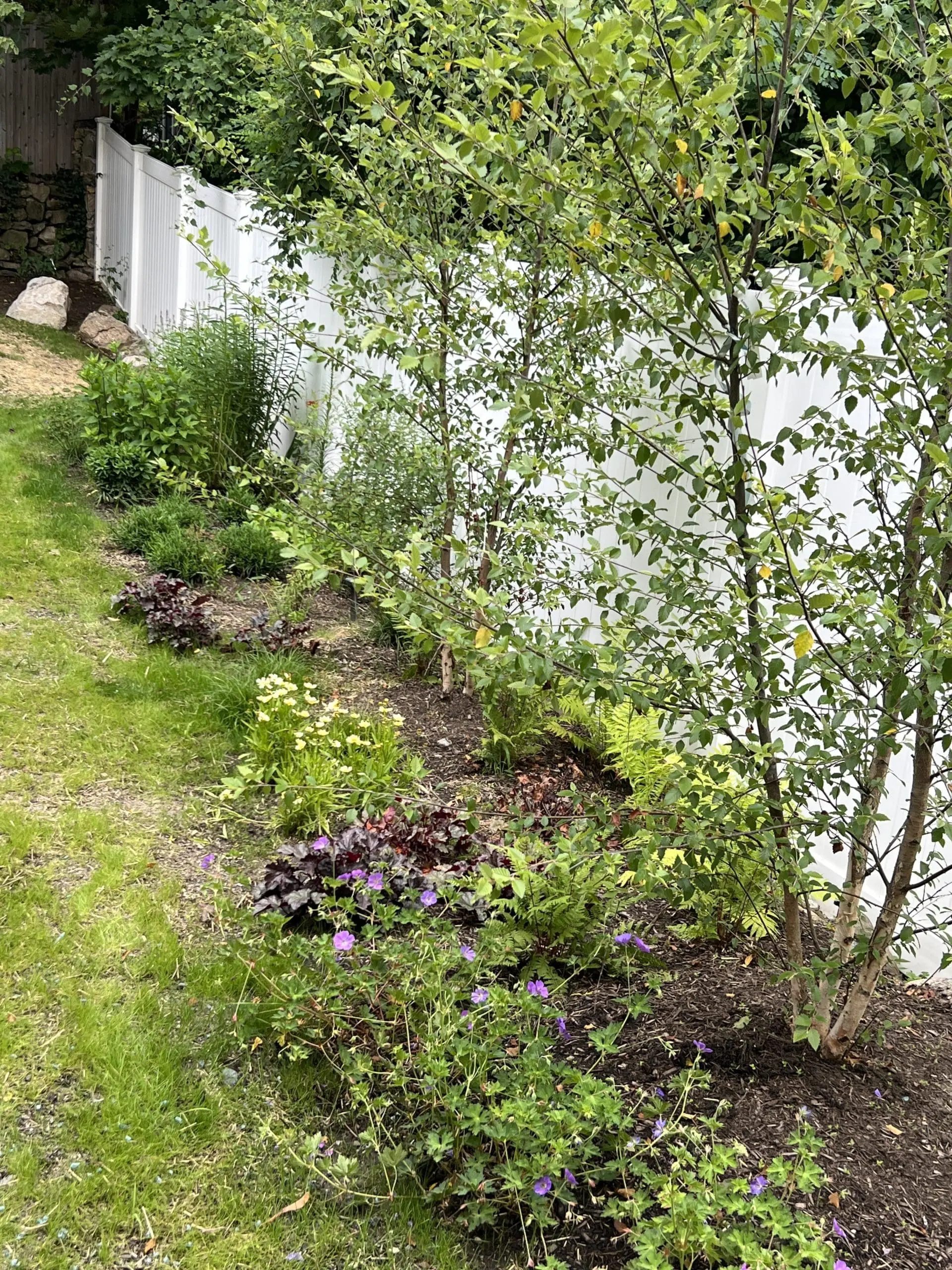
New border garden mixes River Birches with tall perennials for maximum coverage of the fence.

We decided a border garden along the white fence, featuring three River Birches and a native perennial underplanting, would disguise both the fence and the neighbors’ homes. The new garden along the fence creates habitat for pollinators and acts as a focal point from the deck entertaining area.

Underplant birches with Geraniums and maroon Coral Bells for low maintenance, long lasting color.

Landscape Design Master Plan can be executed in phases.

All these design ideas were flushed out in a Landscape Design Master Plan – a full color, ready-to-build planting plan that communicates the design to the client and guides our installation.

Combining Vegetables & Pollinator Plants for a Permaculture Approach

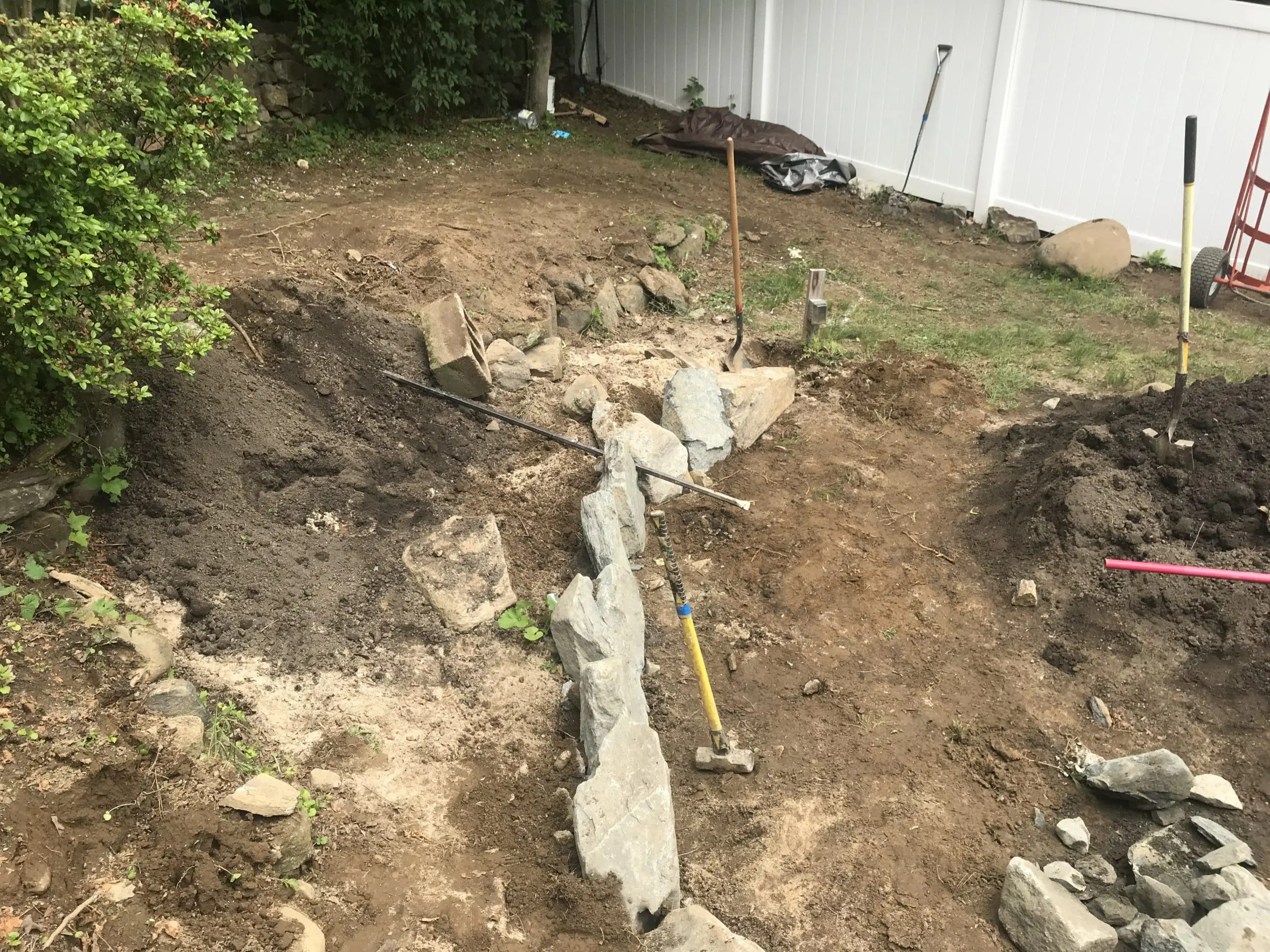
Process shot: GJLD masons construct a two-tier garden terrace with boulders.

Process shot: constructing garden terraces and a natural stone staircase.

The terrace planting was designed as both a pollinator habitat and a vegetable garden. Planting these groups in proximity brings more pollination to fruit and vegetable crops, increasing yields. Planting scented herbs next to vegetables helps deter pests. Some perennials like Lupines and others in the Pea family naturally fix nitrogen in the soil to a plant-available form.

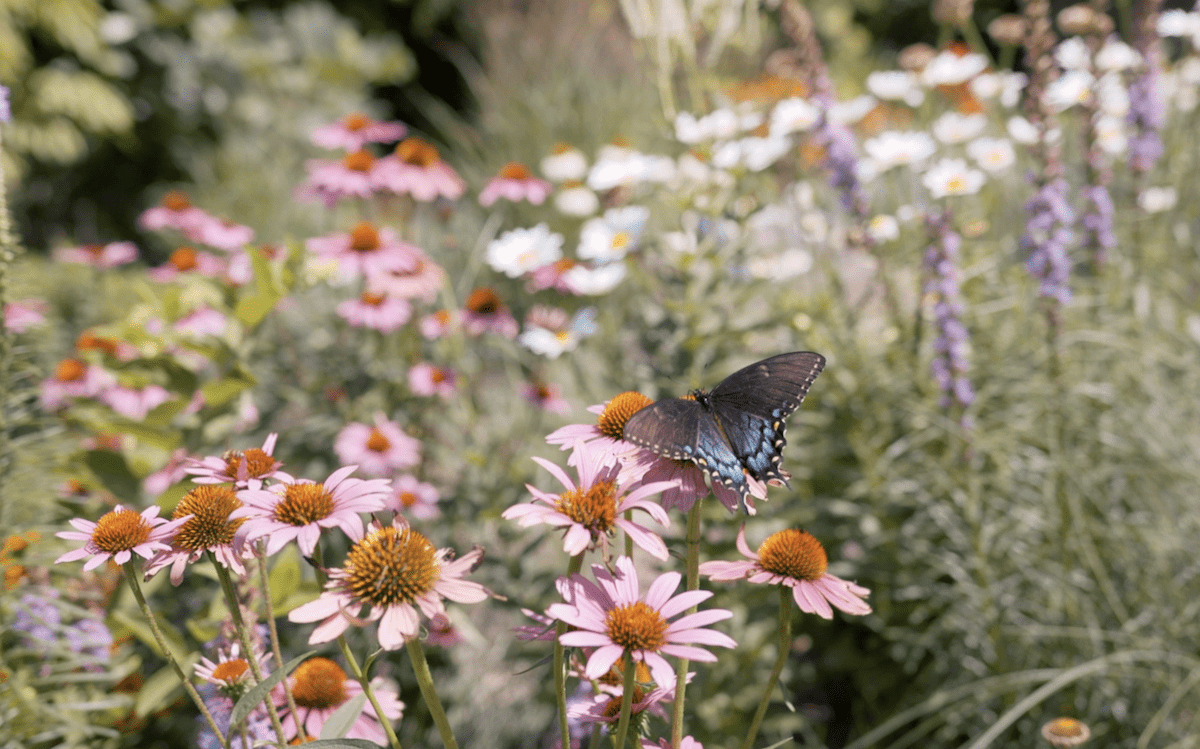
Early July plant palette for pollinators: Bee Balm, Daisies and Tickseed.

The backyard habitat planting features a sequence of mostly native flowering perennials and shrubs, chosen for their high ecological impact, long bloom time, and relative low-maintenance.

The foreground features vegetables and herbs while the second tier features long-blooming perennials for pollinators.

Here’s a sampling of the plant palette used in the backyard, according to bloom time / season of interest

Spring: Lady’s Mantle, Coral Bells, Spicebush, Sweetspire, Viburnum

Summer: Summersweet, Tickseed, Butterflyweed, Shasta Daisy, Blazing Star, Sneezeweed

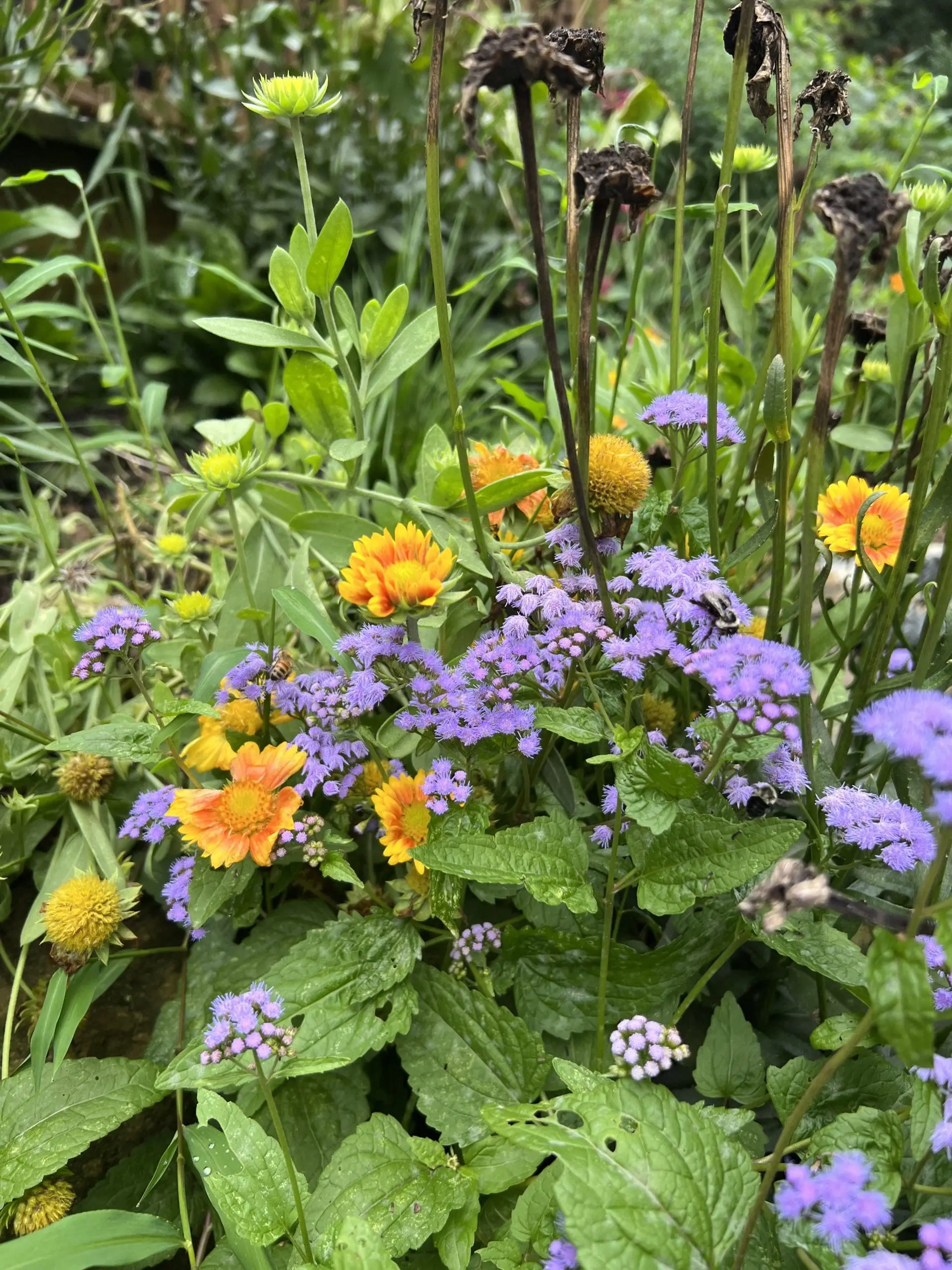
September native garden blooms featuring: Tickseed and Blue Mistflower.

Fall: Asters, Bluemist Flower, Joe Pye Weed, Goldenrod, Oxeye Sunflower, Blackeyed Susan, Prairie Dropseed, Northern Sea Oats

Winter: Chokeberry, Prairie Dropseed, Northern Sea Oats

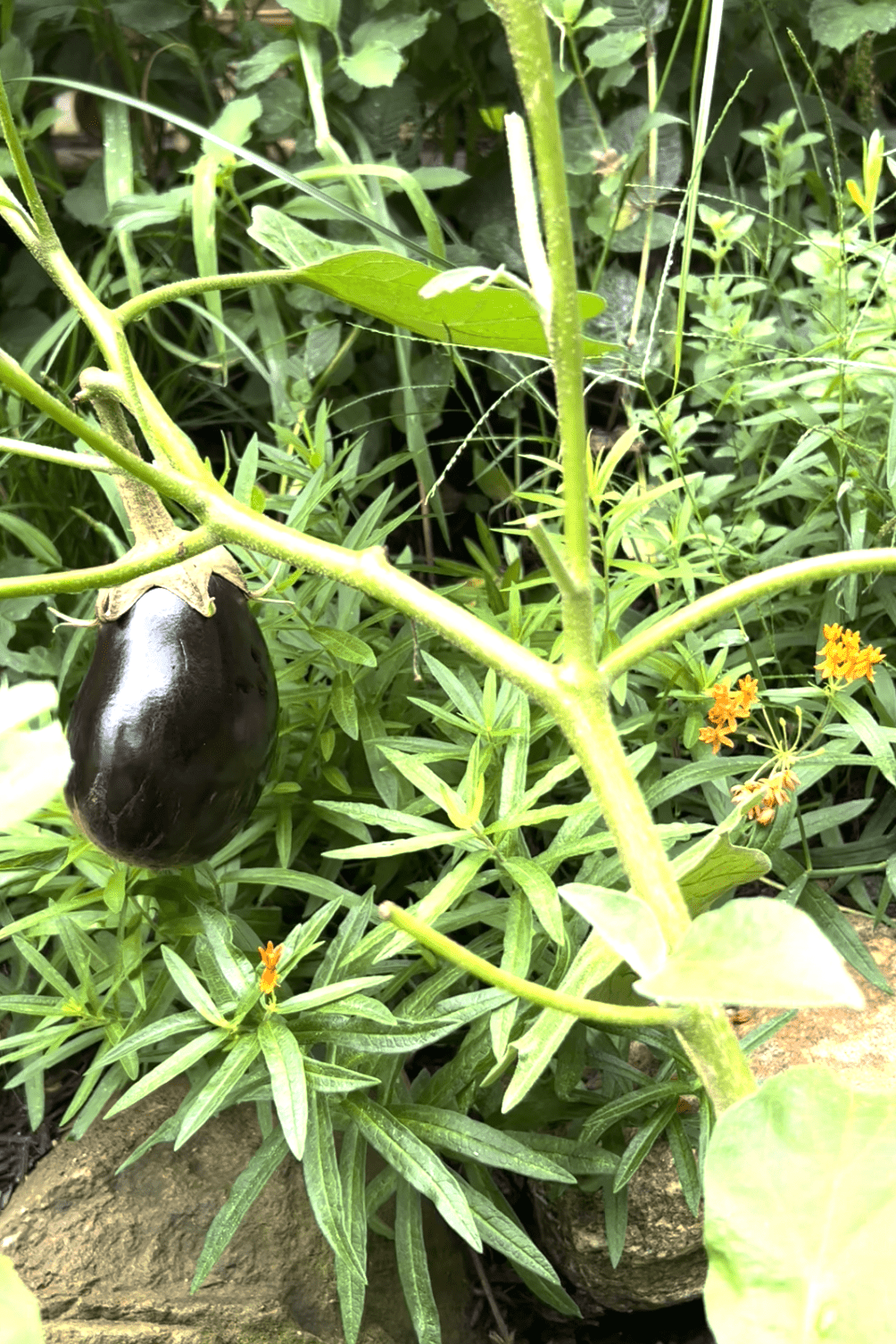
Eggplant is interplanted in the garden, shown here with Butterflyweed.

Intertwined with the shrubs and perennials in the terrace garden, the client planted a selection of annual vegetables – eggplant, pepper, tomatoes, basil, strawberry.

Rosemary and blueberries are also great additions as edible perennials and shrubs, respectively.

Functional Masonry

Natural stone masonry with a boulder rail navigates the transition from the lower lawn to the behind the terraces.

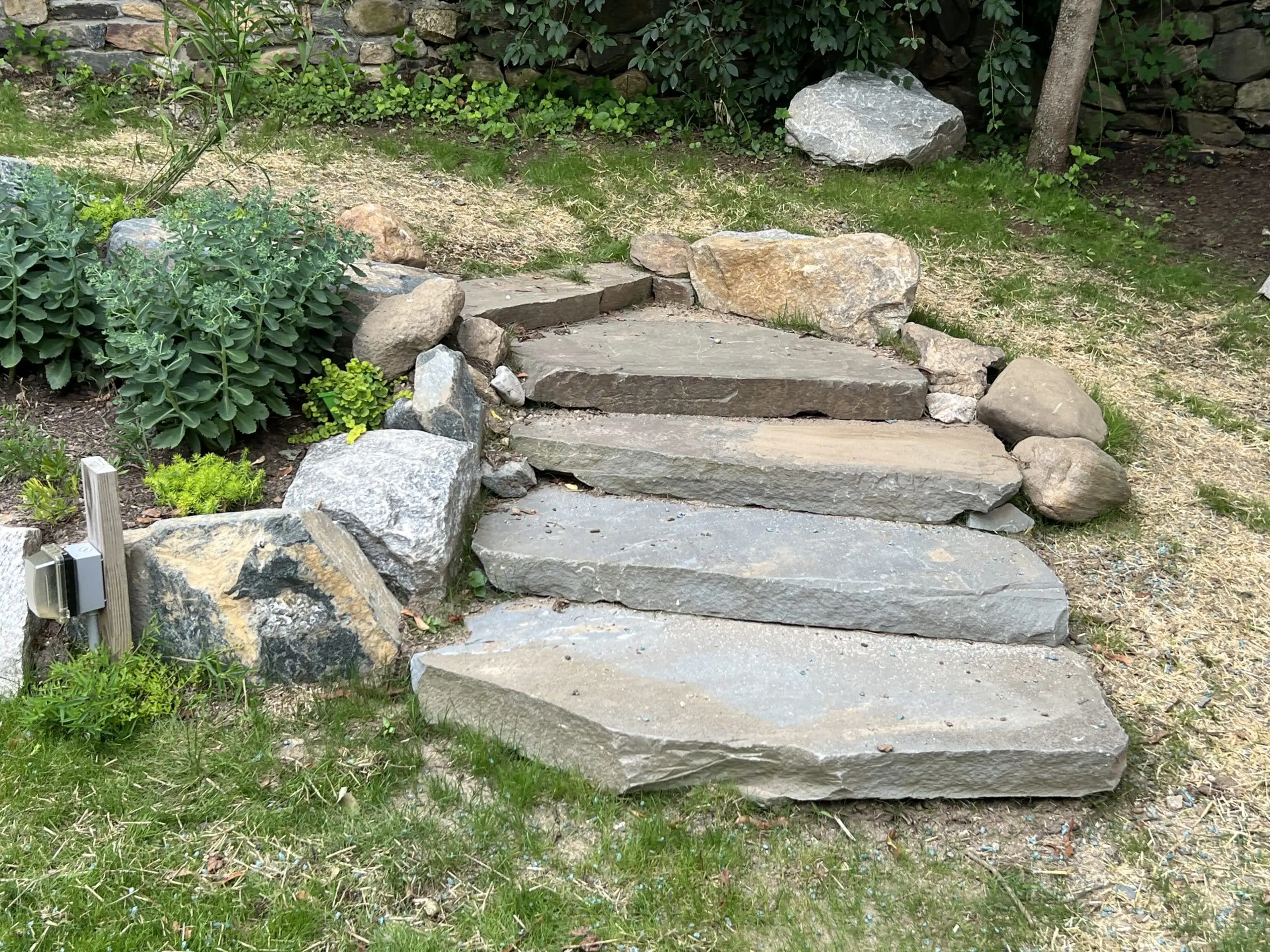
 To navigate around the terraces from the front yard to the backyard, the grade change was managed with a few natural stone steppers. The steps visually integrate with the boulder terraces and make the slope accessible. A section next to the steps was intentionally left as lawn to easily maneuver the lawnmower from front to back yard. This is an example of how thoughtfully siting masonry can have an outsized functional impact.

Phase Two Landscape Design

The driveway asphalt extends all the way to the house, making the side entrance awkward.

The front yard, which the clients decided to postpone for Phase Two, will involve removing excess asphalt in the driveway to allow for a re-imagined natural stone front walkway and side entrance landing. This construction will have the added benefit of solving a landscape drainage issue.

Currently, the gutter leader spills out onto the driveway, freezing in the winter and creating a hazardous area. By removing the asphalt, we can bury the pipe and allow the stormwater to recharge the ground aquifer instead. We will then construct the new masonry on top of the pipe. Perennial gardens will sweep both sides of the new front walkway, giving the home the colorful entrance it deserves.

Contact us to start your Landscape Design project!

—

Green Jay Landscape Design

Where Design Meets Ecology

914-560-6570
Filed Under: Featured Work Tagged With: certified wildlife habitat, custom masonry, Dobbs Ferry, ecological landscape design, ecological landscaping, garden terrace, habitat garden, healthy yard, landscape construction, landscape design, landscape design master plan, landscape designer, native plant garden, natural landscaping, natural stone masonry, organic lawn, perennial garden, permaculture, pollinator garden, terrace garden, vegetable garden, veggie garden, Westchester county landscape design, Westchester County NY

  • « Go to Previous Page
  • Page 1
  • Interim pages omitted …
  • Page 7
  • Page 8
  • Page 9
  • Page 10
  • Page 11
  • Interim pages omitted …
  • Page 61
  • Go to Next Page »

Footer

Shop Address: 369 Bradhurst Ave, Hawthorne, NY 10532
(914) 560-6570
  • Facebook
  • Instagram
  • LinkedIn
  • Pinterest
  • YouTube
  • Houzz
  • Slide Share
  • Installation
  • Portfolio
  • Pricing
  • About
  • Contact

Copyright © 2026 · Green Jay Landscape Design. All Rights Reserved · Privacy Policy · Website and Local SEO by Ramblin Jackson