• Skip to main content
  • Skip to footer

Nassau County Residents

Green Jay Landscape Design is licensed and insured only for landscaping services in Nassau County.

All other services mentioned on this website are performed by independent contractors.

Green Jay Landscape Design

Green Jay Landscape Design

Green Jay Landscape Design

(914) 560-6570
  • Design
  • Installation
  • Portfolio
  • Pricing
  • About
    • Service Area
    • Meet Our Team
    • Our Process
    • Our Promise
    • Mission, Vision, & Core Values
    • FAQ
    • Press & Events
    • Blog
    • Reviews
    • Careers
    • Affiliations
    • Newsletter Sign-up
  • Contact

greenjayadmin

We were hired to evaluate the landscape drainage issues at this Westchester County property, which proved to be complicated due to some peculiar construction from previous homeowners.
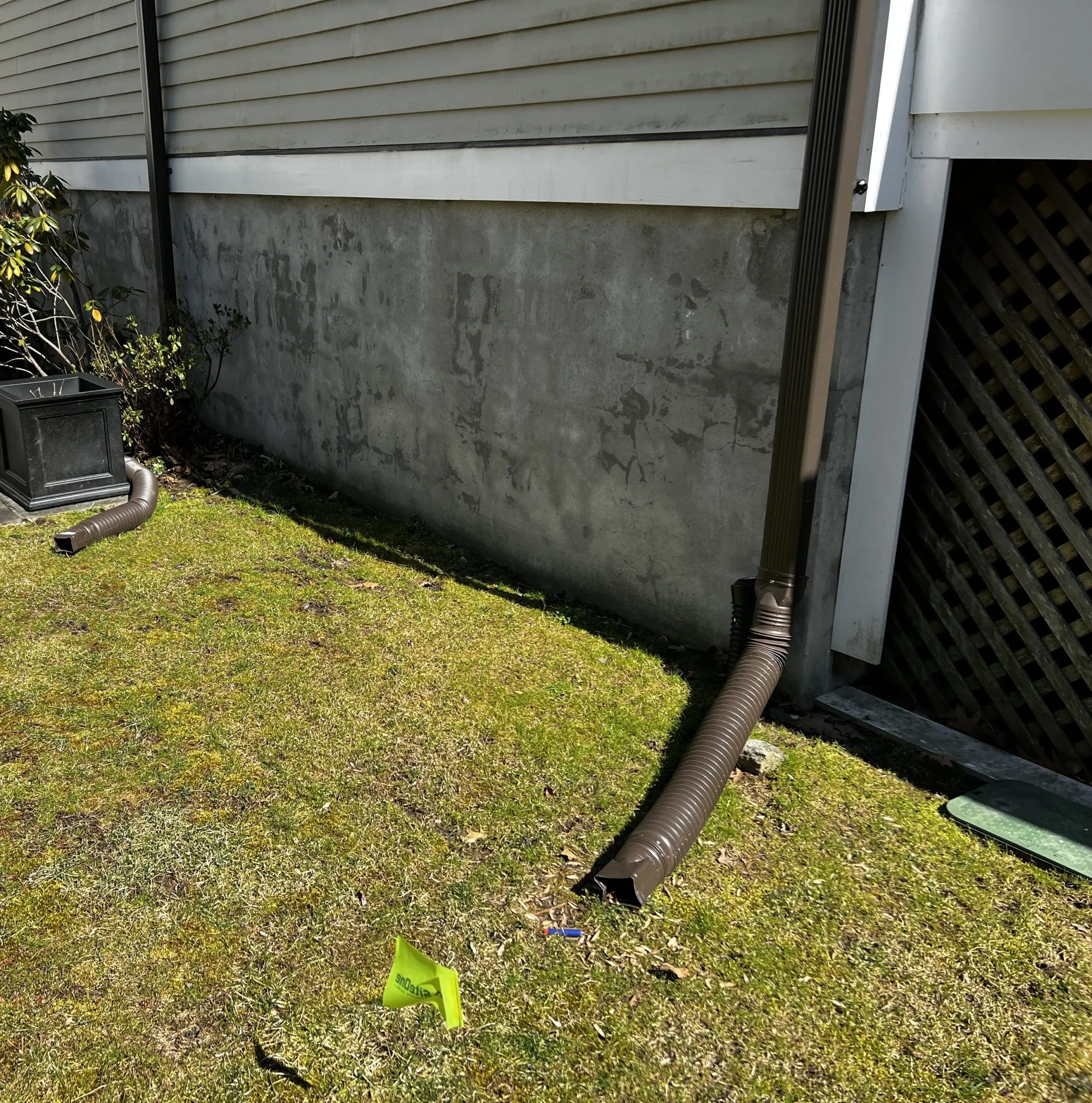
Analyzing the Stormwater Problem

The previous owners put an addition on the house and reconstructed the driveway to a grade that required an anti-gravity sump pump to re-route the stormwater. This complicated system often failed and led to flooding in our client’s basement and backyard. Half the backyard would have standing water for days after a large storm event.

Furthermore, gutters and leaders from the large roof emptied out onto the lawn, which can only absorb so much water.

Designing a Landscape Drainage Solution

We knew that the problem had to be addressed before it reached the sump pump, to avoid system failure. If we could divert some of the stormwater runoff from the roof into the landscape to be absorbed, the engineered sump pump system could deal with a smaller amount of runoff overall.
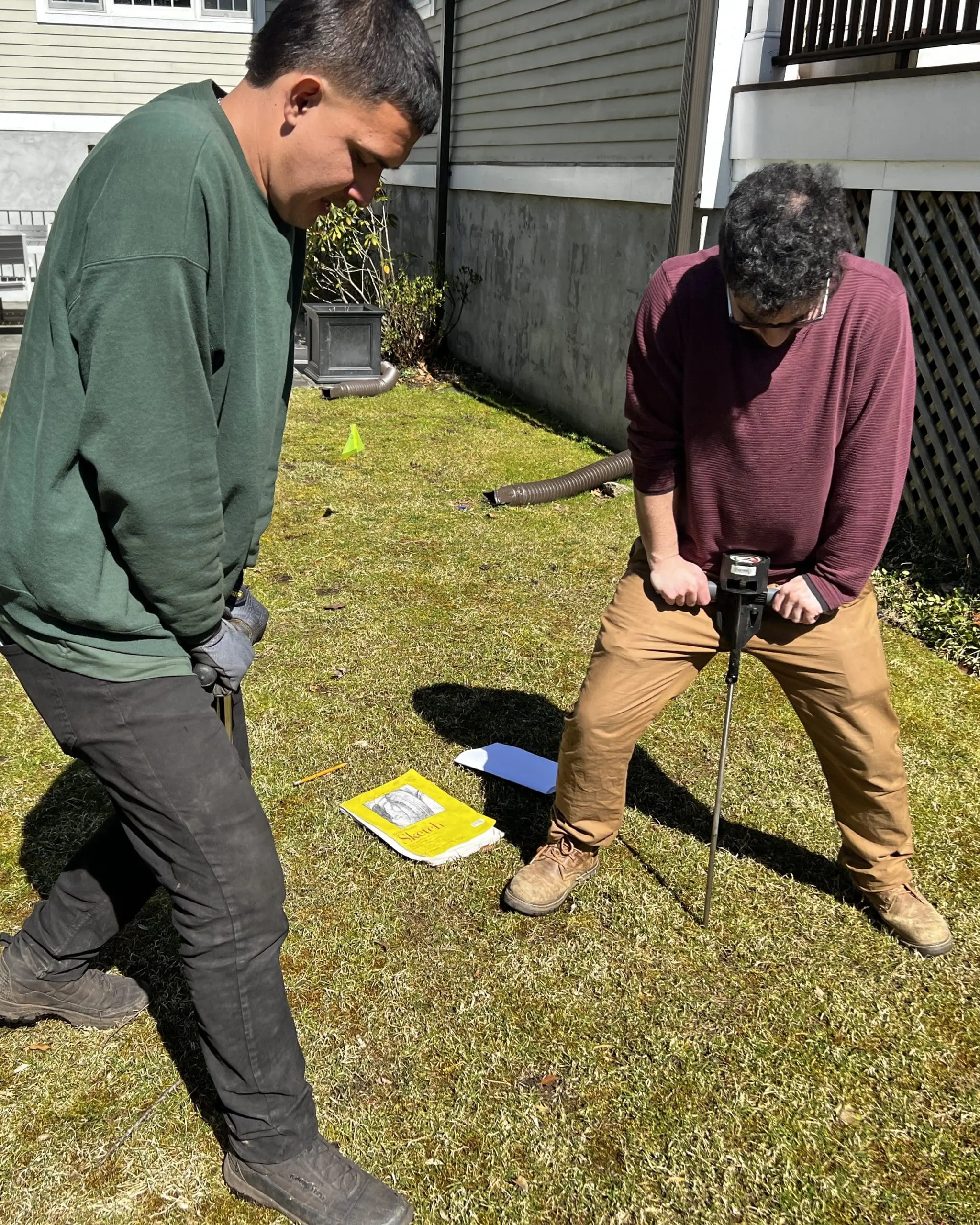
Diverting stormwater to a Rain Garden only works if the soil has appropriate drainage rates. Rain gardens are not bog gardens. Stormwater should drain within twenty-four hours.

Not every site is compatible as a rain garden – the soil must have sufficient drainage capacity. Heavy clay soils hold water, and do not work as rain garden sites.

We always perform percolation tests to test the soil characteristics, as part of our site analysis for a rain garden. In the photo above, Uziel tests the soil’s compaction level.

In this case, the existing soil was highly compact with a high proportion of clay. We core aerated, vertical slice seeded and applied numerous soil amendments to the lawn area, to help relieve compaction and improve drainage capacity.
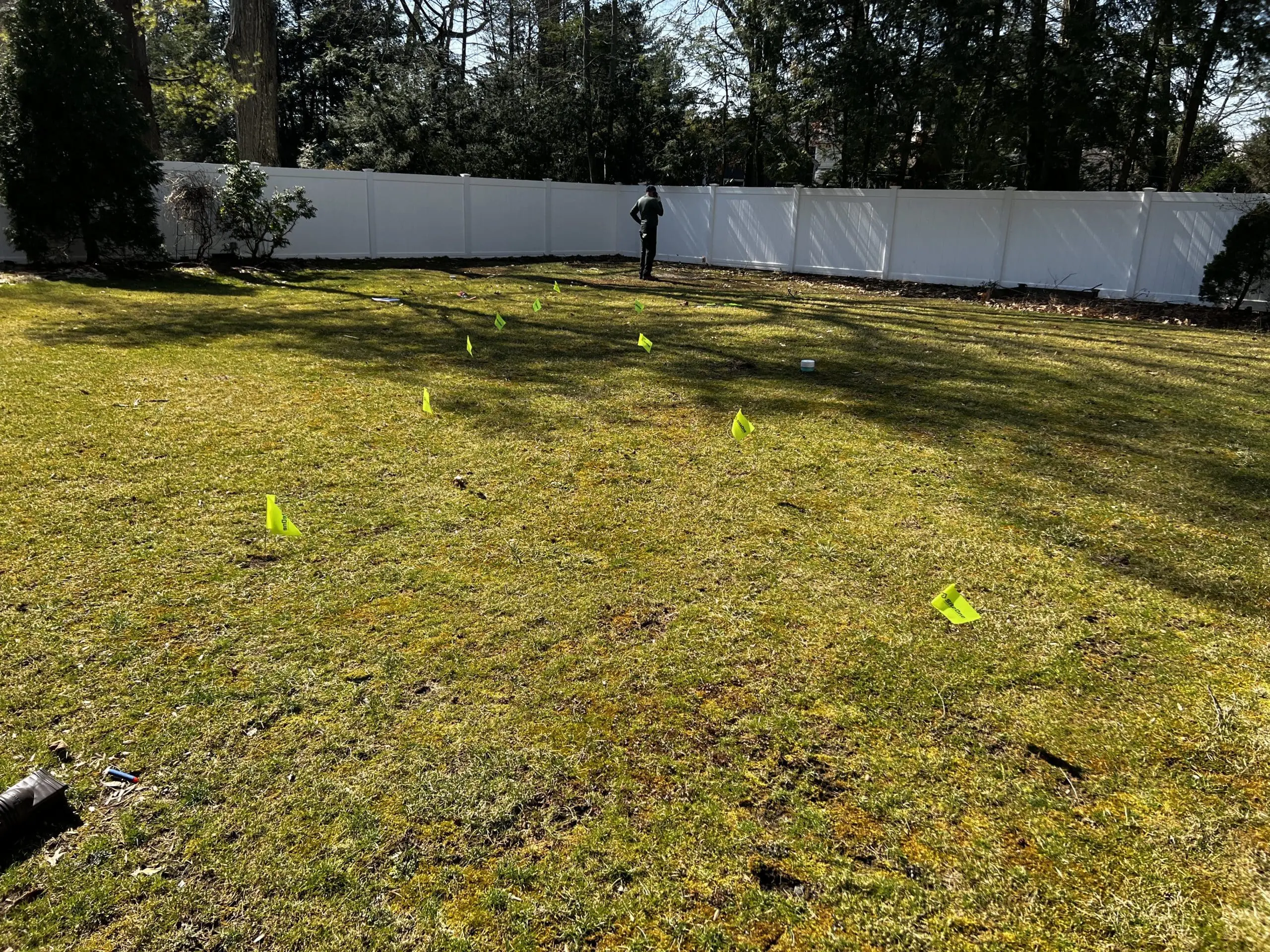
 

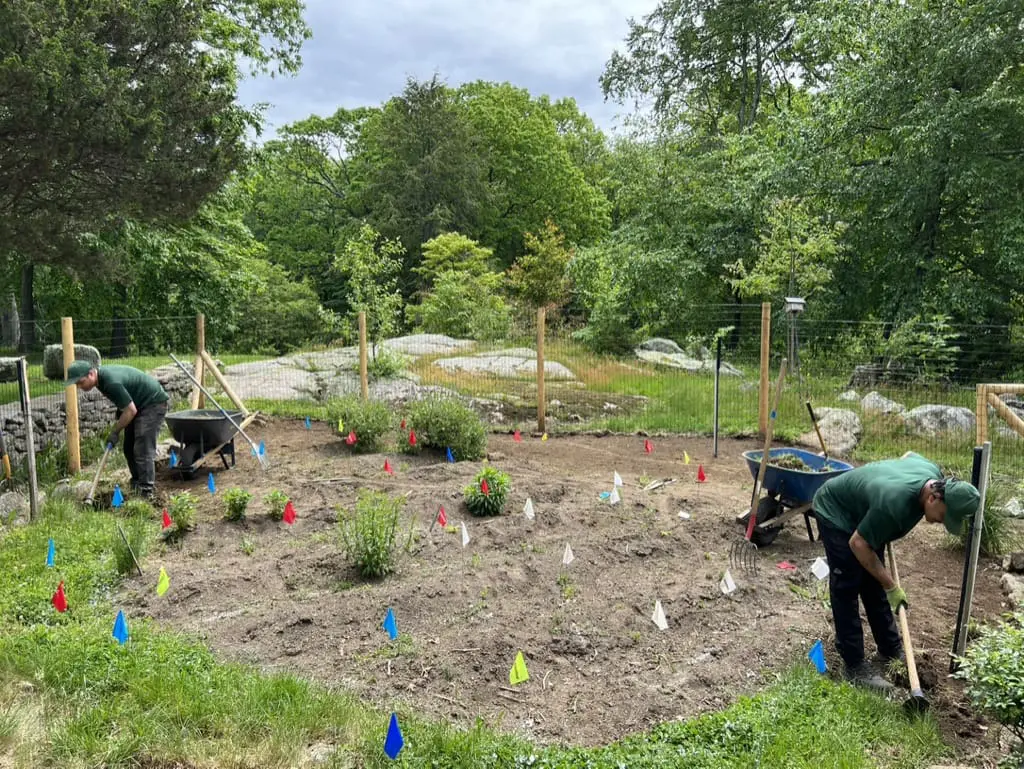
To redirect stormwater away from the house and lawn, we connected two leaders from the roof into underground pipes. We directed the pipes toward the corner of the yard into the newly designed rain garden.

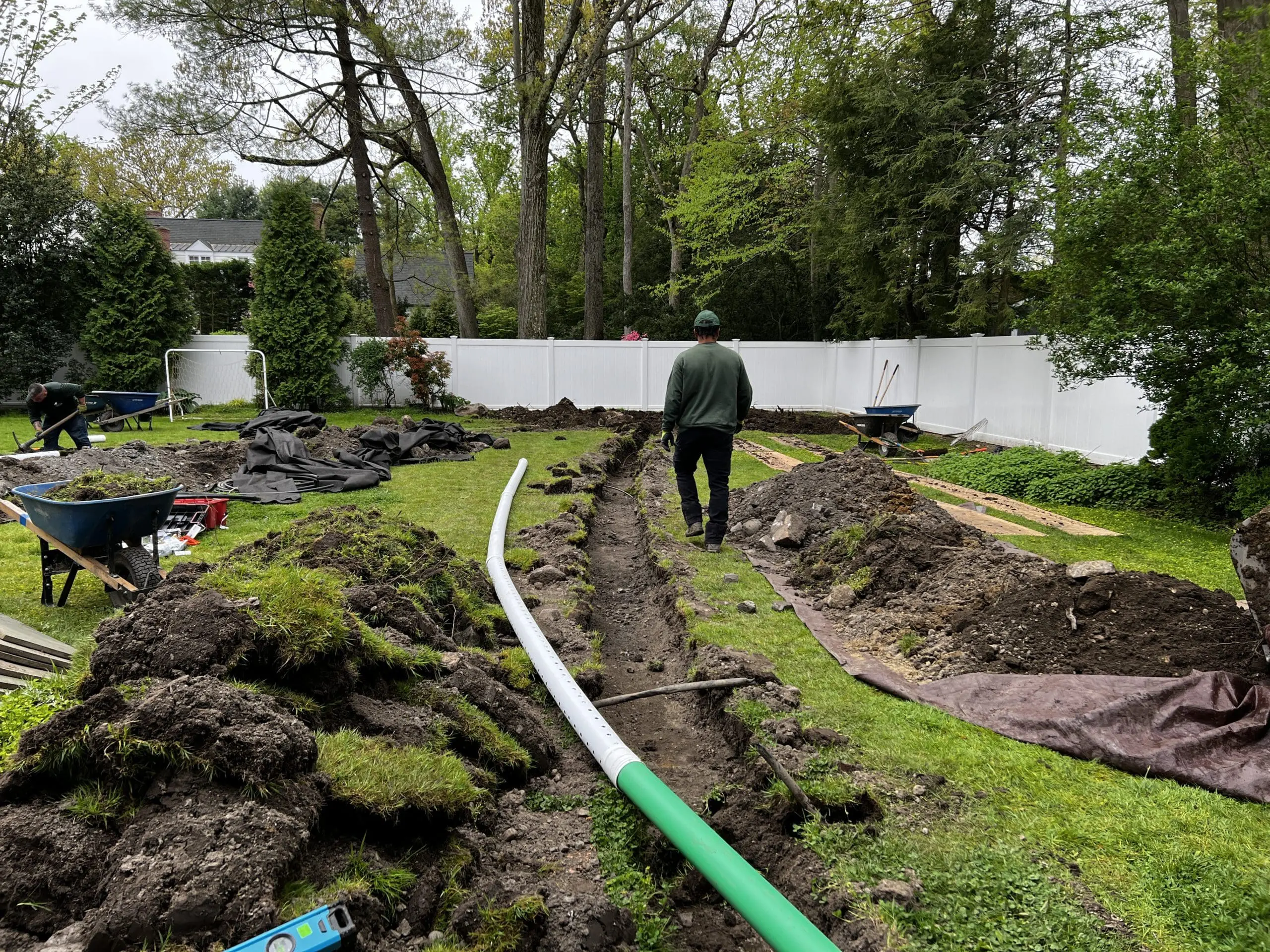
 

The rain garden area itself was excavated and filled with topsoil with a high drainage capacity. The pipes leading  to the rain garden are perforated at the bottom, allowing stormwater to seep out over a larger area, and come up through the pipe during periods of a higher water table.

Once the water reaches the rain garden, it is dispersed and absorbed by plants’ roots.

Rain Garden Design
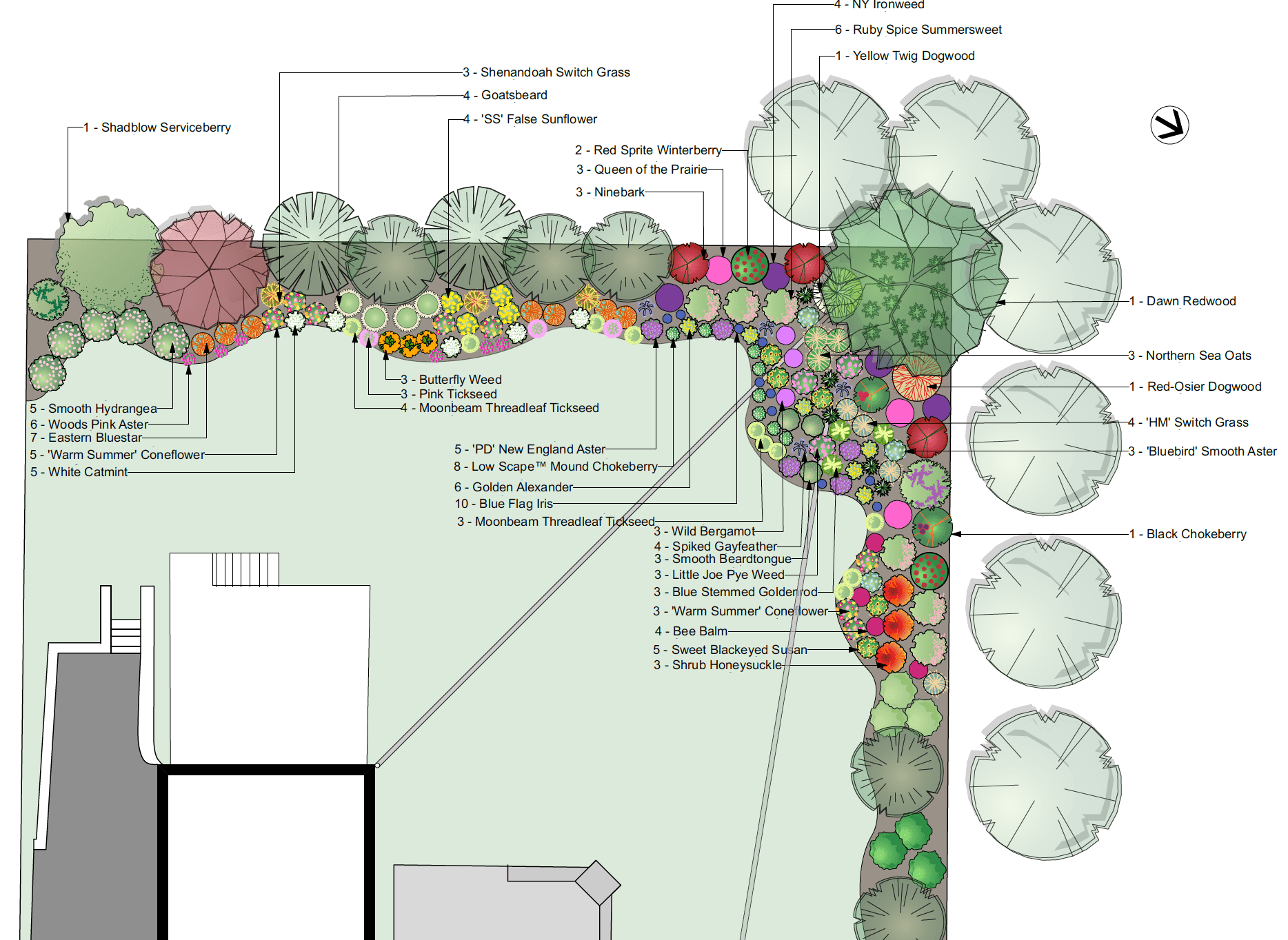
 Facultative plants are found in mesic zones usually on slopes or in well drained spots, occasionally exposed to drought or flood conditions.
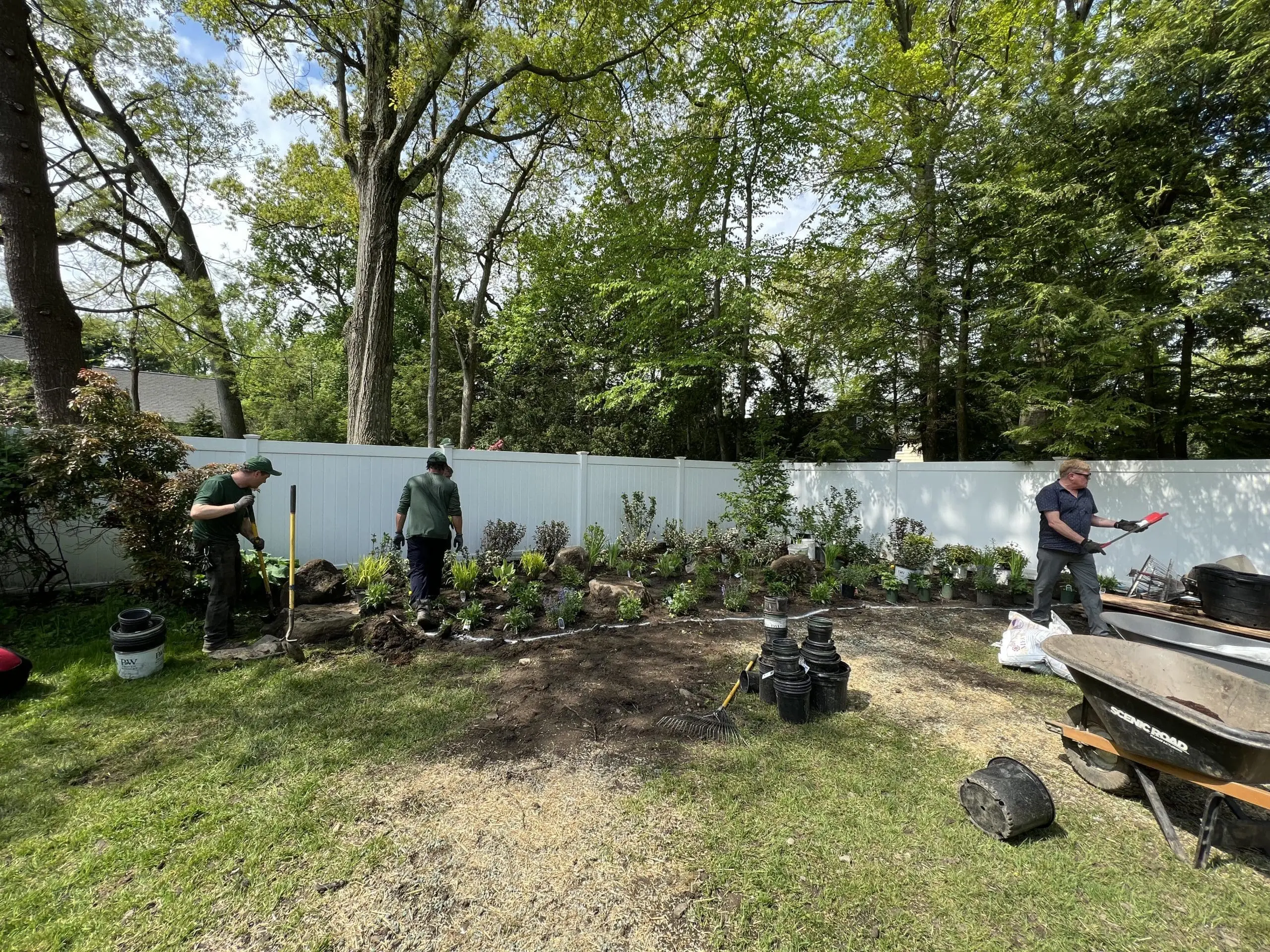
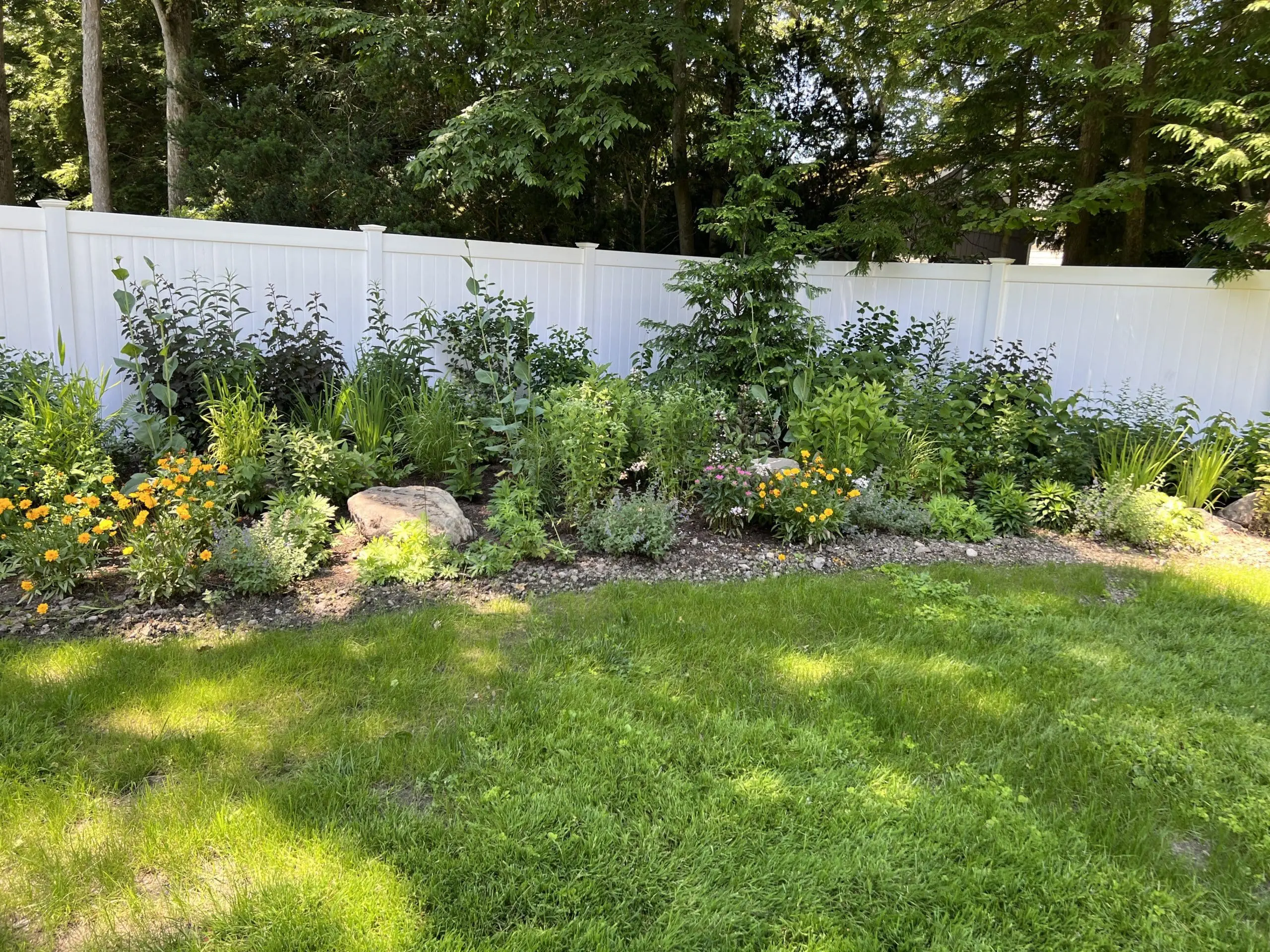
 

Native & Non-Native Plants for Rain Gardens

Many of our favorite native shrubs for wildlife also work in rain gardens: clethra, aronia, dogwood. Perennials in the rain garden can also create habitat: Eastern Red Columbine attracts hummingbirds, Blue Lobelia, Joe Pye Weed, and New York Ironweed are all pollinator magnets!
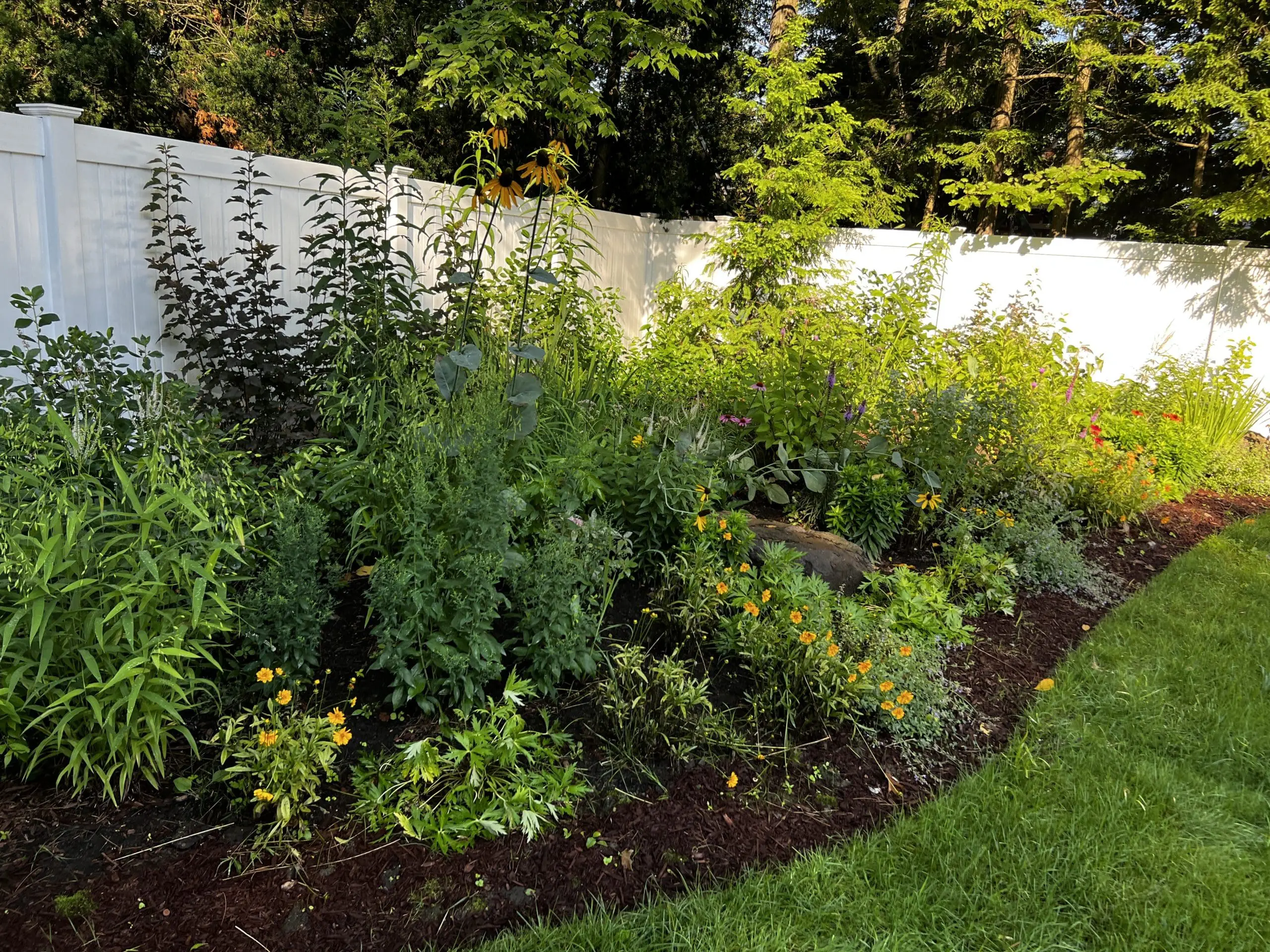
In this design, we also planted a non-native Dawn Redwood. This fast-growing tree absorbs large amounts of water and grows fast; it will be extremely effective in this context.

Start Your Landscape Drainage Solution

If you have a consistently soggy landscape, there are likely improvements to be had. Check out our Stormwater Management page for a detailed look at stormwater solutions and Contact Us to schedule an on-site consultation.

—

Green Jay Landscape Design

Where Design Meets Ecology

914-560-6570
 

Filed Under: Uncategorized Tagged With: backyard landscaping, ecological landscape design, ecological landscaping, Fairfield county landscape design, habitat garden, healthy yard, landscape construction, landscape designer, landscape drainage, rain garden, stormwater management

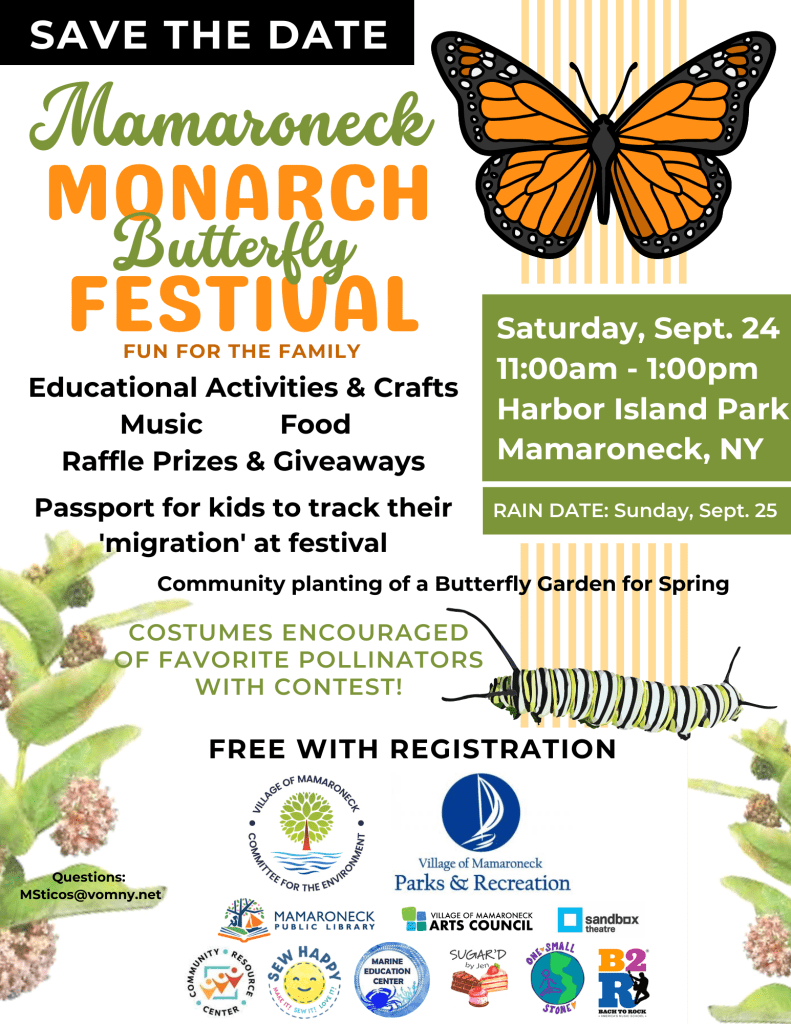
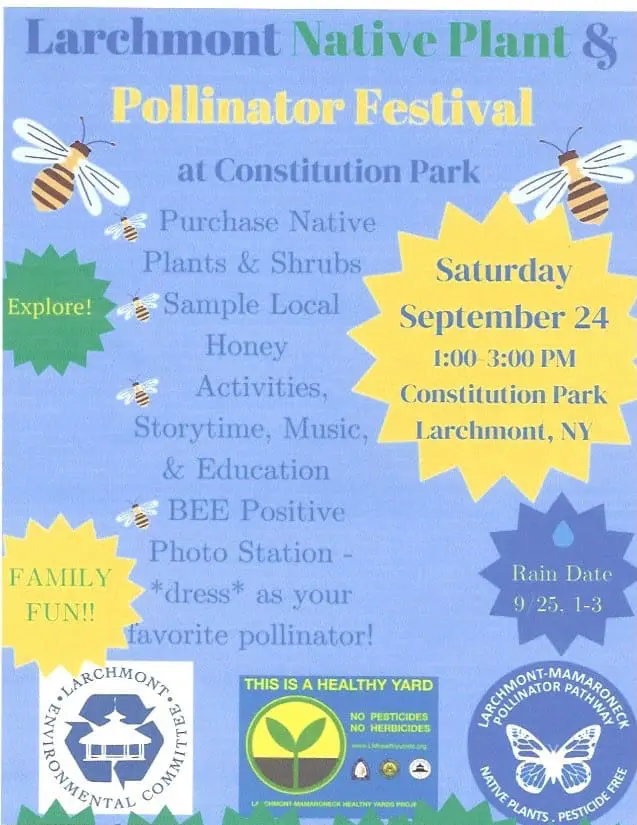
Mark your calendars, Westchester County, there are TWO great pollinator events coming up next month! We’re so grateful to work in communities with such strong grassroots enthusiasm and municipal support for spreading the mission of ecological restoration!

Mamaroneck Monarh Butterfly Festival

Saturday Sept 24th | 11 AM – 1 PM | Harbor Island Park, Mamaroneck

Fun for the whole family! Event includes: educational activities, crafts, music, food AND a community butterfly garden planting! *costumes encouraged* *winners will be chosen*

PS. Harbor Island Park is now maintained using NO pesticides. Thanks to Village Manager, Jerry Barberio and Foreman of the Parks Department, Jeff Ahne.

Hosted by the Mamaroneck Committee for the Environment & Recreation Dept. Free registration on here.

Larchmont Native Plant & Pollinator Festival

Saturday Sept 24 | 1 – 3 PM | Constitution Park, Larchmont

Family event featuring activities, story time, music, photo station (dress as your favorite pollinator!), buy native plants & sample local honey!

Hosted by the Larchmont Environmental Committee and Larchmont Pollinator Pathways.

—

Green Jay Landscape Design

914-560-6570

Where Design Meets Ecology

Filed Under: Ecological Education, Uncategorized Tagged With: butterfly festival, conservation, event, family event, family friendly, healthy yard, landscape designer, landscape ecologist, larchmont NY, larchmont pollinator festival, LOHUD, lower Hudson, mamaroneck NY, monarch, monarch butterfly, native plant garden, natural landscaping, organic garden, pollinator friendly, pollinator garden, pollinator pathway, pollinators, upcoming event, Westchester County NY

Don’t miss this chance to tour a private garden in Rye, designed and built by Jay Archer!

The event is Saturday, September 17th from 4:00 – 6:00 PM. Rubber boots are encouraged if you would like to tour the adjacent wetland. Thanks to the Ecological Landscape Alliance for organizing the event! Follow the link for all details.

Constructed waterfall, stream and natural stone patio in Rye, NY.

About The Secret Garden of Celestial Happiness

These nature immersion gardens represent a complete landscape renovation designed and built by Jay Archer. Explore the ever-evolving project!

At the heart of this project was the complete removal of the entire backyard – formerly a large lawn.

As with all of Jay’s projects, this design is based in nature-based principles and is rich with habitat features that are anchored with native plant material. This garden is a model of biodiversity, resource conservation and is a pollinator paradise!

There are four zones within this landscape:

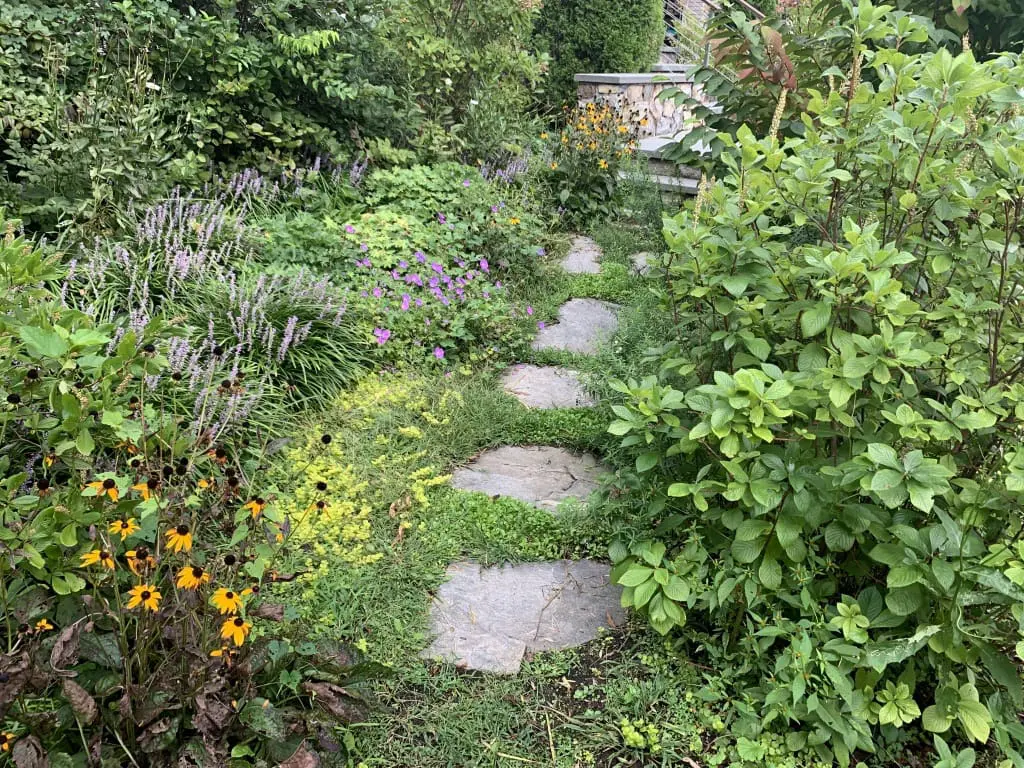
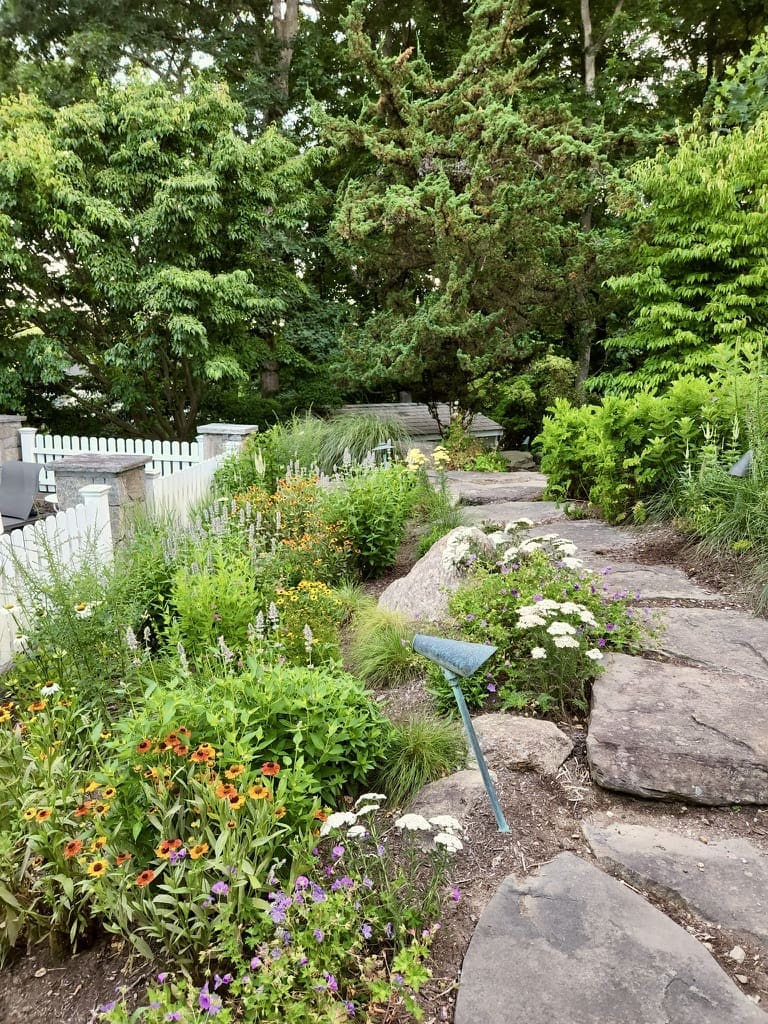
Stepping stone path and mixed garden border leads from the front entrance to the backyard.

Zone One: Eco-Hybrid Front Yard Landscape

Predominantly native plants mixed with traditional non-natives that also attract pollinators.

         Features: Mixed perennial curb border, Porous Pave driveway

Backyard features many natives, and a network of natural stone pathways.

Zone Two: ReWilding Zone

Evolved as a combination of plants that occur naturally from the adjacent wetlands, coupled with a design and planting composition. Formerly was a lawn with a mosquito problem.

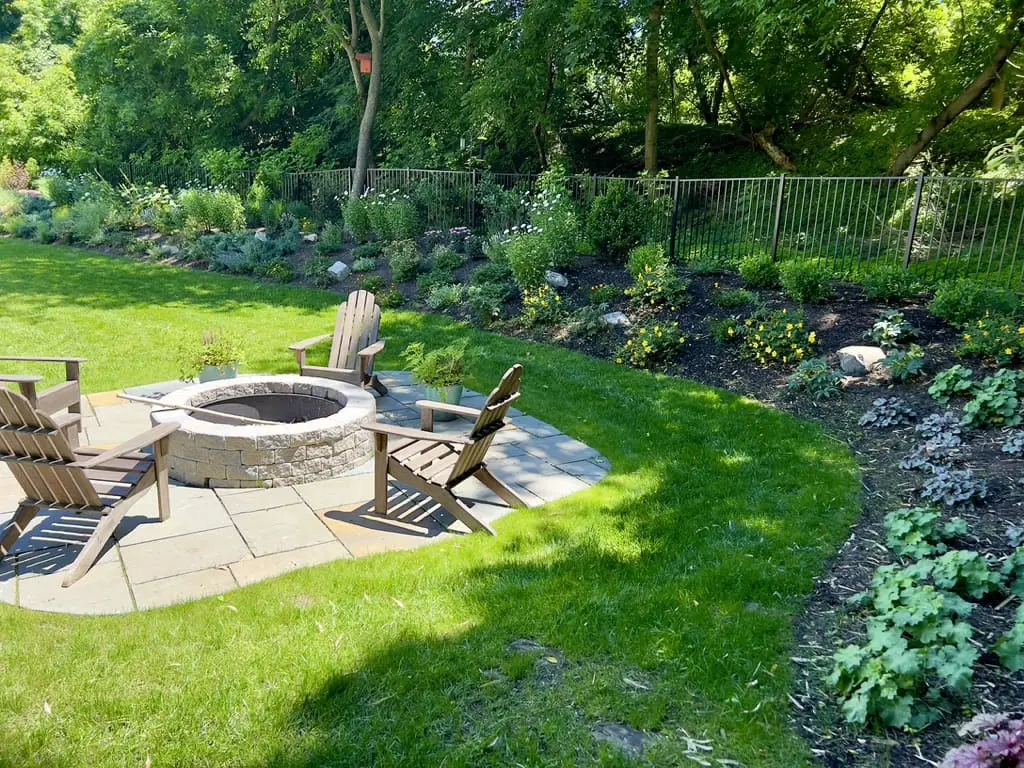
         Features: Rain Garden, Passive Irrigation, Natural Stone Patios, Fire Pit

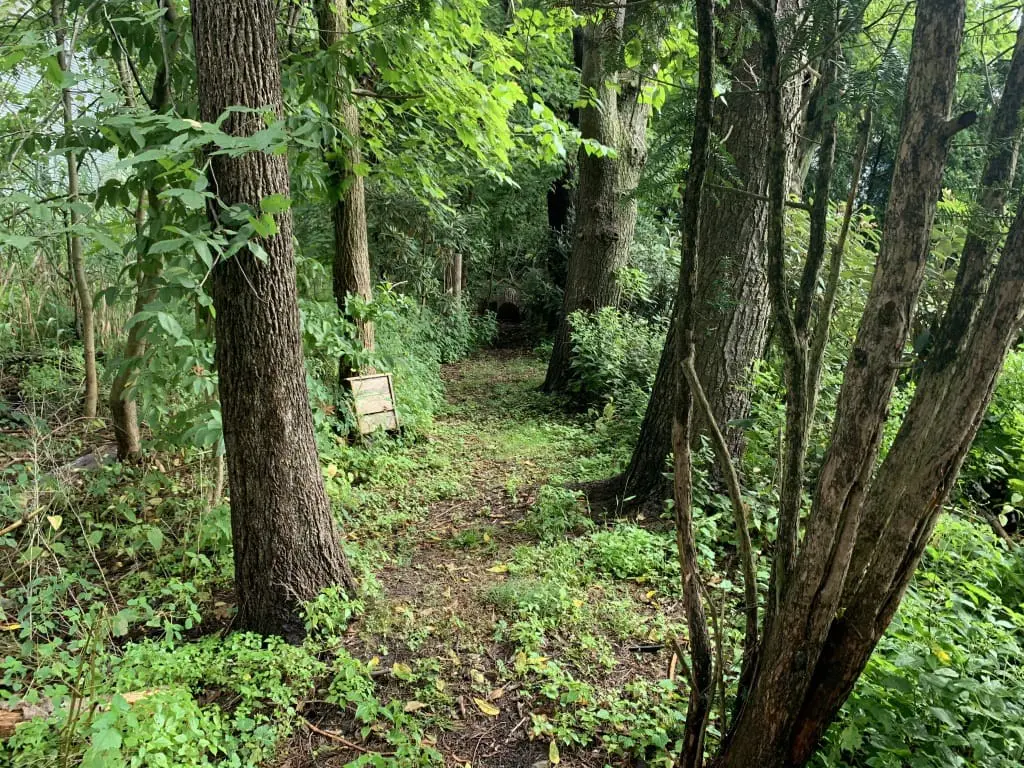
Trail to the wetland area has been managed to better absorb stormwater.

Zone Three: Transitional Zone

The buffer between the adjacent disturbed wetland and the designed landscape. A glimpse of the future, featuring assisted migration (Bald Cyprus) and naturalized foreigners (Dawn Redwood) that are eco-adapted to our region. We maintain a woodland trail to access and enjoy the wetland setting.

         Features: Woodchip Garden Paths and Woodland Planting

22-acre wetland borders the property. Past restoration projects by the municipality have been abandoned.

Zone Four: Disturbed Wetland

Previously was an aquatic restoration project by Westchester County.

Features: Managed Views, Log Bridges, Seating Areas

Design choices based upon ecological principles, plant selections, and maintenance practices are all critical elements in creating healthy ecosystems. As a landscape ecologist, Jay Archer has successfully combined all three elements and the resulting landscape is a model of biodiversity and resource conservation. The landscape is also inherently people-focused, designed to improve our health, quality of life and connection to nature.

View from zone two looking towards the wetland.

We look forward to seeing you on Saturday September 17th!

—

Green Jay Landscape Design

Where Design Meets Ecology

914-560-6570
Filed Under: Ecological Education Tagged With: ecological landscape alliance, ecological landscape design, ecological landscaping, garden for wildlife, garden tour, habitat design, healthy yard, landscape designer, landscape ecologist, landscape tour, national park at home, native plant garden, natural landscaping, organic garden, organic landscape, pollinator garden, pollinator pathway, rye NY, westchester county garden tour, Westchester county landscape design, Westchester County NY, Westchester NY

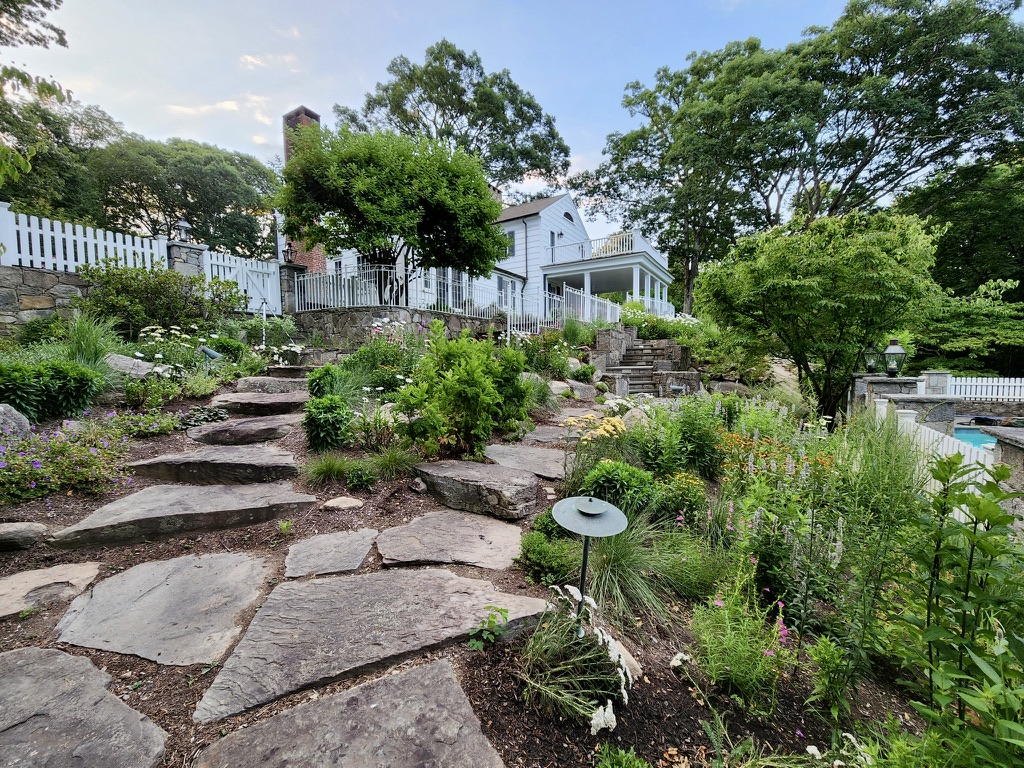
This Westchester County landscape was formerly dominated by overgrown, non-native ornamental grasses. They completely covered the network of natural stone walkways and steps. We removed most of the existing vegetation and replaced it with a contemporary meadow-style planting. The clients love their new native pool landscaping that accentuates the masonry rather than disguising it.

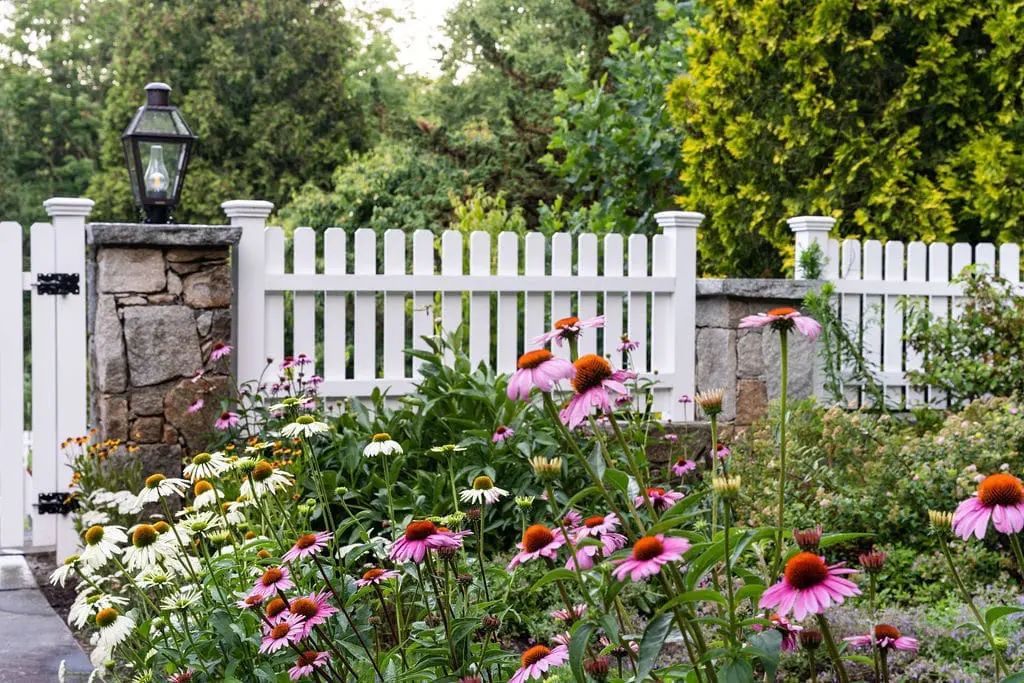
Liatris Daisies and Coneflower are a stunning summer combination.

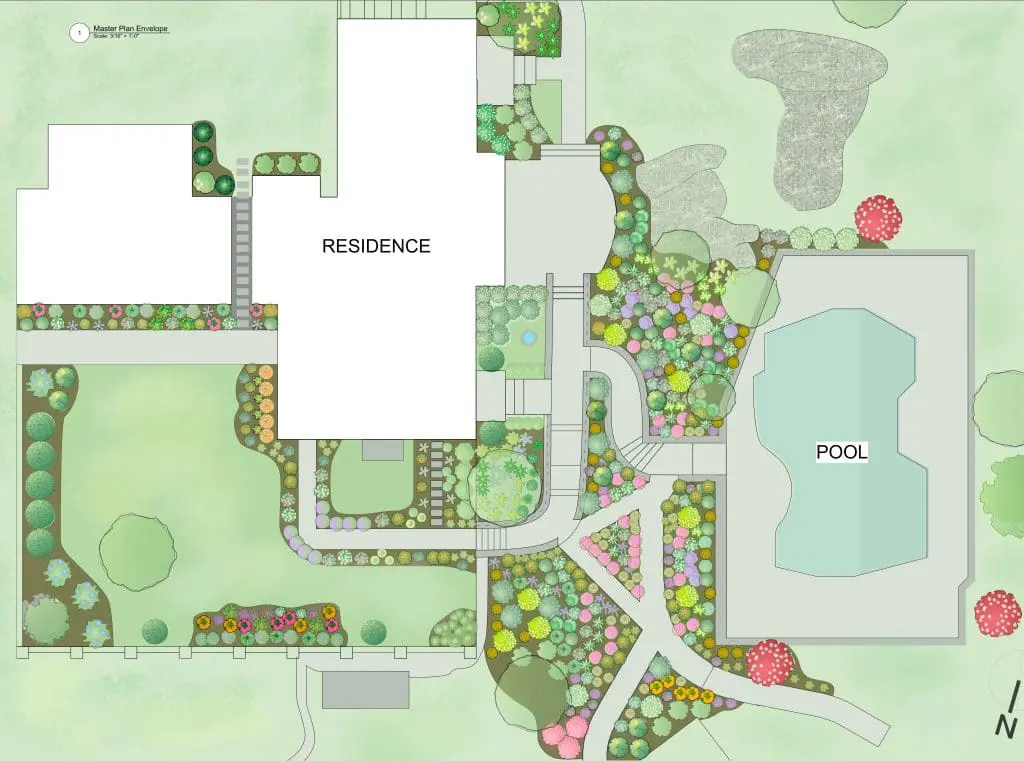
Landscape Design Master Plan for Native Pool Landscaping

We developed the Landscape Design Master Plan for this native pool landscaping over the winter and developed a rendered plan and planting plan. The inspiration for the pool landscape was native meadow and prairie environments.

The Landscape Design Master Plan included new pool landscaping, foundation plantings and an entry courtyard.

Most prairie plants bloom for long periods throughout the summer, and native prairie grasses are low-maintenance plants with year-round interest. Ornamental grasses provide nesting materials for birds and seed heads as food. This native pool landscape is a layered habitat for birds and pollinators.

The beautiful natural stone masonry is complemented, not hidden, by the landscaping.

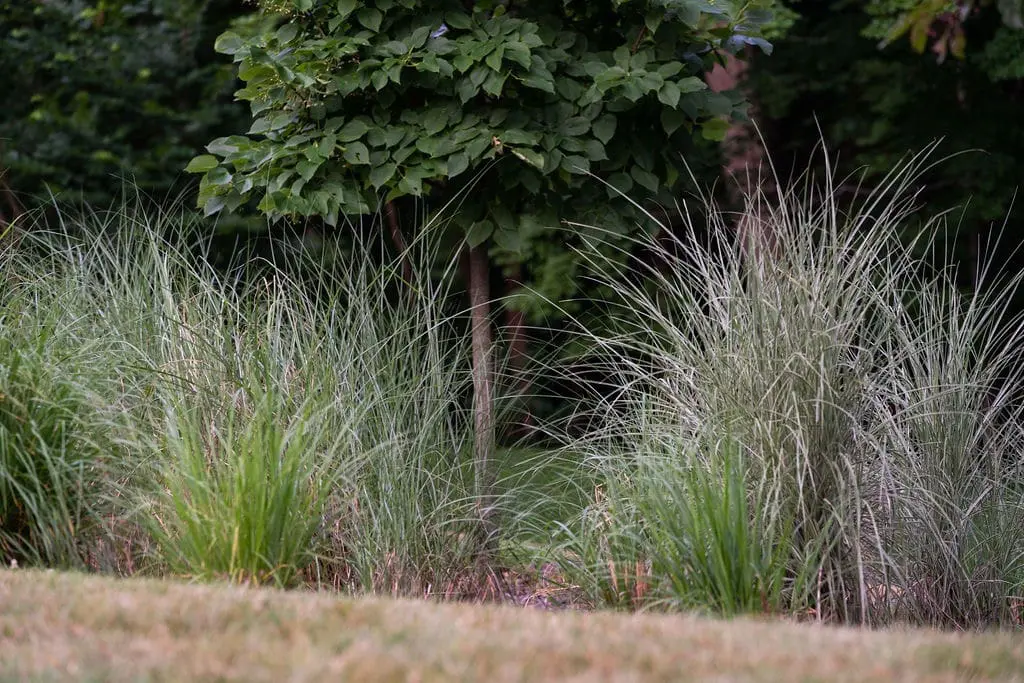
In this landscape, we utilized Switchgrass, Little Bluestem, Pink Muhly Grass and Prairie Dropseed. Each of these grasses puts on a unique show in fall – from fluffy pink and gold seed heads to striking red foliage.

Some of our favorite native perennials that bloom for weeks on end.

Perennial color – and pollinator food – comes from Agastache, Helenium, Coneflower, Yarrow, Penstemon and Yarrow. A selection of succulents fills in cracks of the newly revealed natural stone masonry.

Reimagining a Front Entry Courtyard

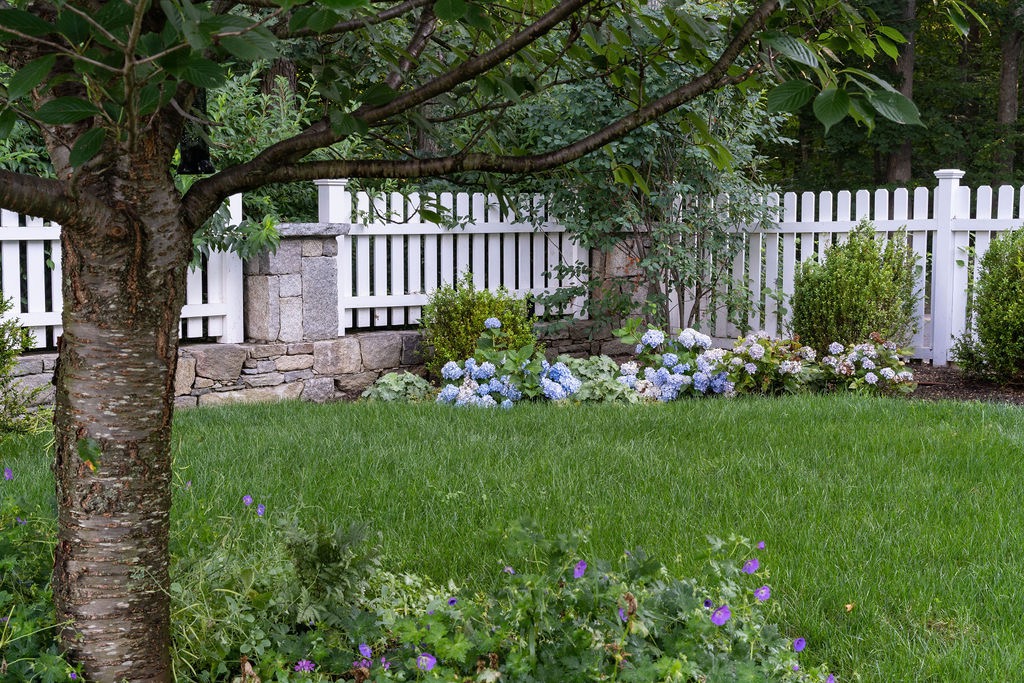
Classic Hydrangeas beneath an ecological superstar, Amelanchier.

The front entrance courtyard featured typical landscaping – boxwoods and hostas – but failed to “wow” or provide many ecosystem services.

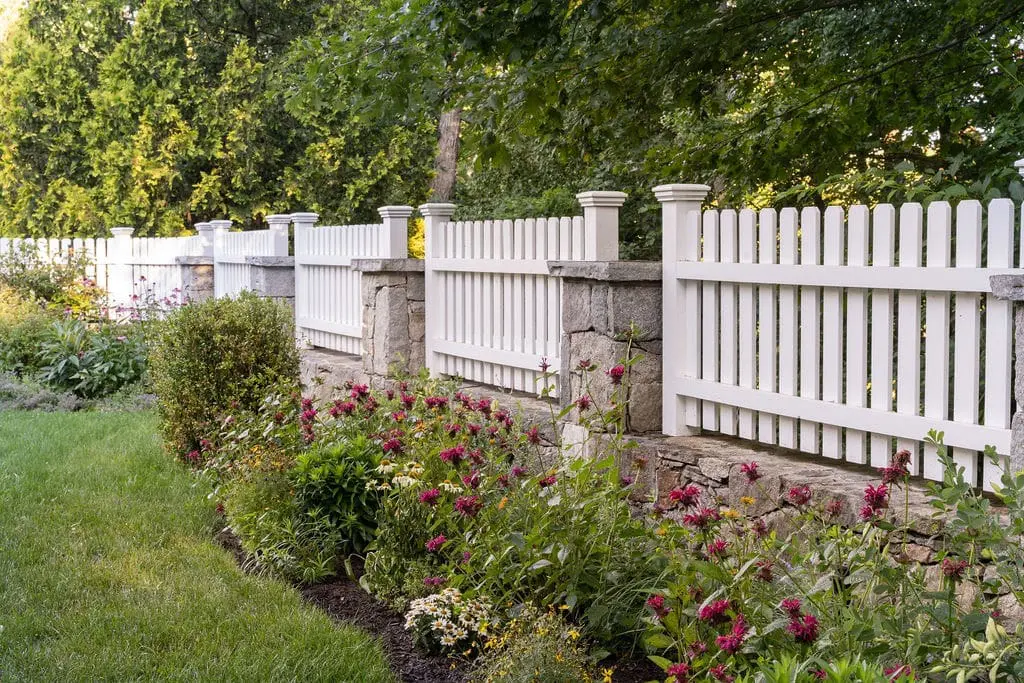
New pollinator garden pops against the stone and fence that enclose the courtyard.

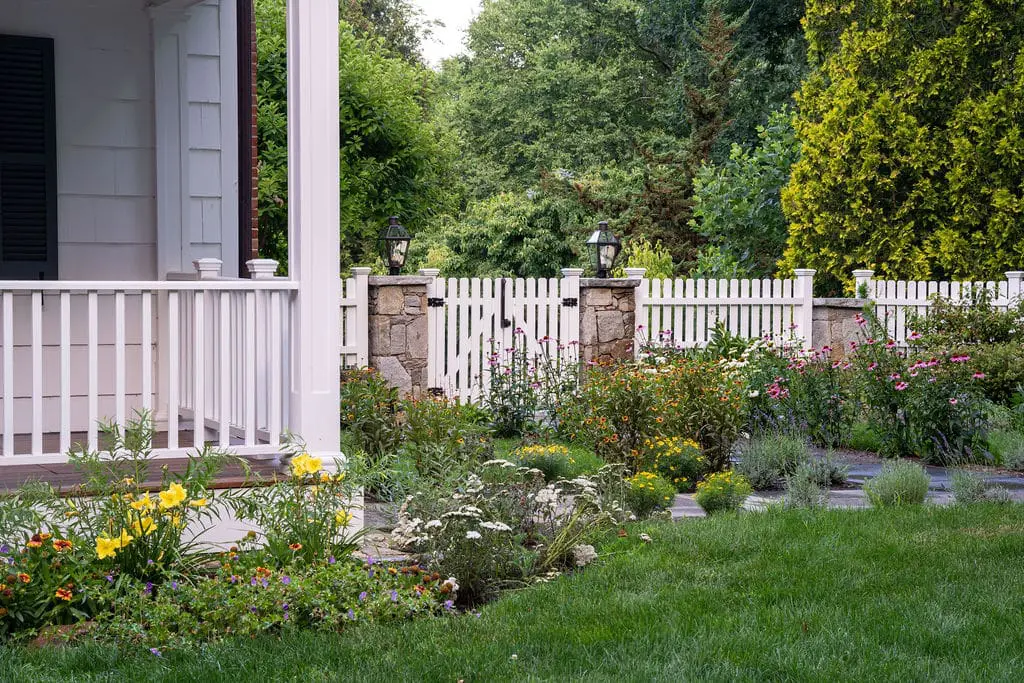
We created several new beds – pollinator gardens flanking the existing walkway and along the middle of the fence. Some of the perennials from the pool area are repeated here while new favorites are introduced – Coreopsis, Lavender, Geranium, and Beebalm.

New garden paths sweep from the foundation, along the walkway to the pool area.
Sweeps of Coneflower link the courtyard planting with the pool area planting.

The diversity of plant material ensures that something is always blooming, going to seed, losing its chlorophyll. The garden is never the same but it is always interesting and eye-catching. Plant diversity correlates to soil microbe diversity – the essential foundation to plant health, resilience, stormwater absorption and carbon sequestration.

Repurposing Existing Vegetation

New transplanted grass garden is less maintenance than a traditional lawn.

The existing Miscanthus grasses were overgrown and overcrowding the pool landscape. We transplanted many of the grasses to create a new grass garden in the expansive lawn. This will be a low maintenance garden, and by replacing a section of lawn, we are automatically reducing gas, water, and fertilizer inputs.

Transplant success!

Part of the project involved soil testing and installing a low maintenance 100% organically managed and maintained lawn. This requires proper irrigation and mulch mowing, provided by our outstanding partners and good friend Organic Landscapes of Bedford NY.

Designing a Veggie Garden

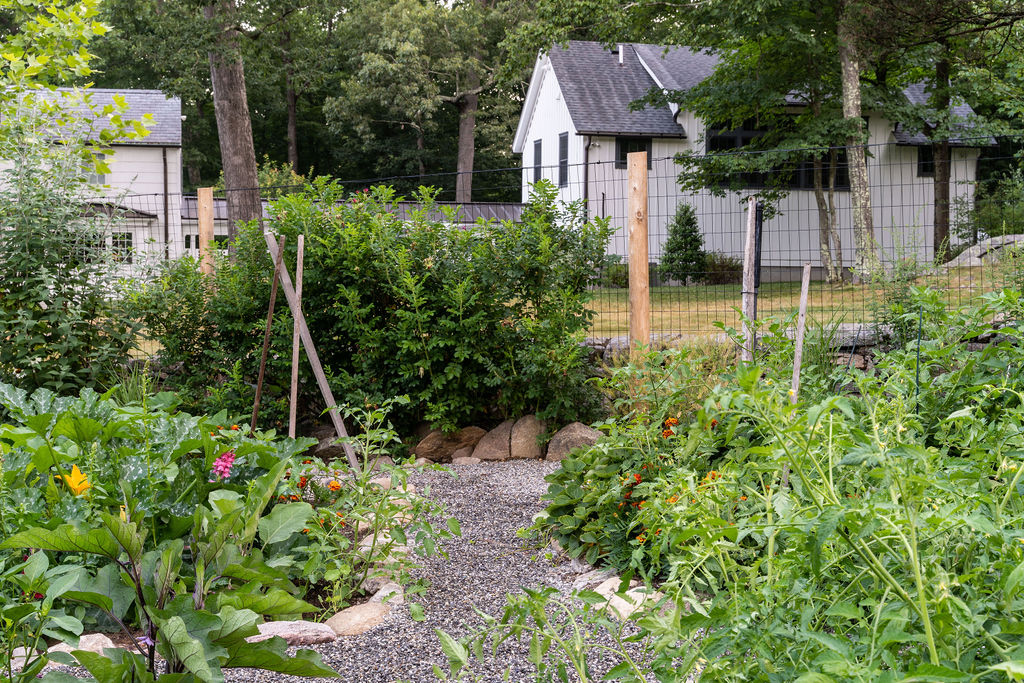
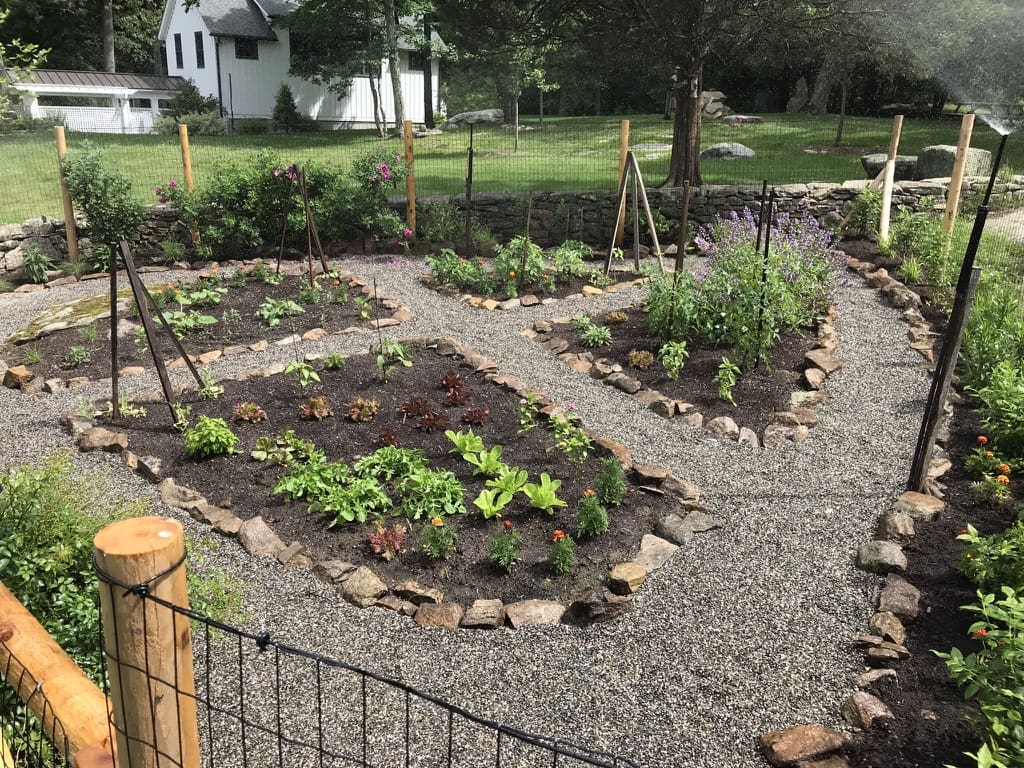
Newly divided veggie beds, accessible by gravel paths.

This client is a proud summer vegetable gardener. Their existing garden however, was one extra large bed with no thought for how to access the plants for weeding and harvesting.

The old design also had a narrow border of lawn between the fence and beds. This is poor planning and would create a maintenance nightmare — grass clippings always ending up in the veggie beds causing extra weeding! \

BEFORE PHOTO: previous veggie garden was too large and unorganized.

We removed the lawn and re-designed the garden into four quadrants, lined with small rocks. Gravel paths cross through the plots and around the perimeter.

AFTER PHOTO: Four quadrants with interior and exterior paths make maintaining the garden a breeze.
A pollinator border improves yields in a vegetable garden.

A border of pollinator-attracting perennials masks the fence surrounding the vegetable garden. A bench offers a resting place to admire the garden.

A simple stone bench creates a cohesive resting space.


To start your ecological landscape design, contact us to schedule a professional consultation or free 15-minute discovery call.

—

Green Jay Landscape Design

Where Design Meets Ecology

914.560.6570

Filed Under: Featured Work, Landscape Construction & Installation, Landscape Design, Uncategorized Tagged With: ecological landscape design, ecological landscaping, grass garden, landscape designer, native plant garden, native pool landscape, native pool landscaping, pool landsaping, vegetable garden

Current Climate: Cool Spring Turns to HOT Summer

Summer has finally arrived. Characteristics of this current year’s (as well as last several years’) weather have been an extended wet and rainy cool spring and uncharacteristically lower humidity levels.

As storm water management, sediment, and erosion control professionals, we have seen increased demand for drainage and grading plans, as well as integrating more bioengineering, permaculture, and agroforestry design development to address this influx of spring stormwater.


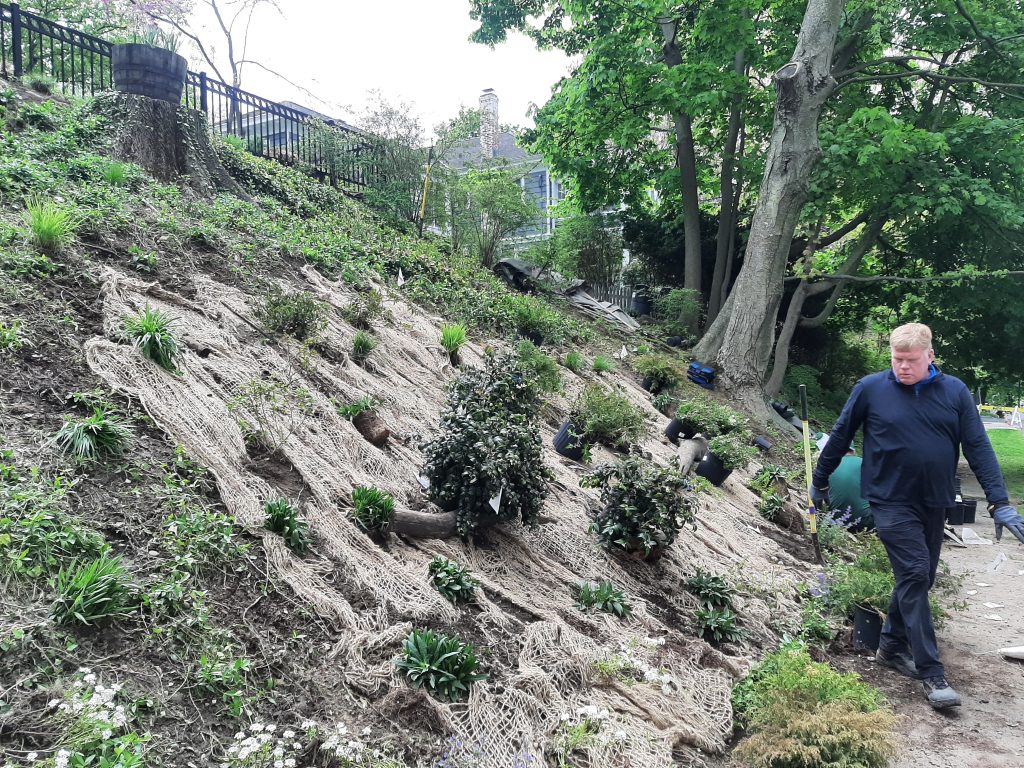
A steep slope replanted for erosion control through jutte netting. Dobbs Ferry, New York.


In the past few weeks, our cool spring has turned to a hot summer with abnormally dry conditions in our region. In response, our landscape stewardship protocols need to adapt. Below are our tips for maintaining your landscape in the peak of dry summer.

Newly planted summer poolscape in Westchester County, New York.

Maintenance Dos & Don’ts in Summer Heat

The water table has crashed and your spoiled plants thought they too were going to live in eternal spring. They are not ready to harden for brutal summer heat and drought.

Water them like their life depends on it…because it does!

  • Do water your lawn deeply and consistently (30-45 minutes, every other day; optimally between 4 and 9 AM)
    • If this is not feasible, let it go dormant until fall.
    • Most lawns are going dormant from the heat – many of the most popular turf grasses (ie Kentucky Bluegrass) are cool season grasses, meaning they grow most optimally at temperatures between 60 and 75 degrees F. Above 75 degrees, they go dormant until cooler temps arrive.
Organic lawn renovation in Rye, NY.
  • Don’t use irrigation if you have municipal restrictions except for new plantings (planted within the last three months).
    • As a general rule, new plantings should be watered every day for 20-30 minutes until established; your irrigation provider may further customize the schedule depending on plant composition and sun exposure in the bed.
    •  Only turn off or reduce irrigation for new plantings on days with heavy rain. (few and far between in summer)
  • Don’t mow or scalp turf grass, that’s torture!
    • When you mow, cut high (3 ½ – 4 inches) and recycle the clippings back into your lawn (mulch mowing). The moisture is in the plant not the soil.
  • Don’t prune your trees and shrubs unless you need to clear a line of sight.
    • Your plants are already stressed in the heat, pruning should wait until more hospitable temperatures in the fall.
  • Don’t spray to kill insects, there are precious few left! You can’t be sure you’re not taking out all other life by attempting to remove what you consider pests. Nature has natural pest control if we enable ecosystem restoration. Read more here.
  • Do use citronella plants (scented geraniums) to repel mosquitos on decks and patios.
Dragonflies are natural predators of mosquitos, eating mosquito eggs and larvae in standing water.
  • Do apply organic granular and liquid animal repellent regularly (once a month, like clockwork!) 
    • Do not spray anything at temperatures above 90 degrees F.
    • Granular applications around the perimeter of beds.
    • For commercial liquid applications, we mix formulation/active ingredients 20% stronger than label and spray leaves and buds of plants.
    • Recommended brands: I Must Garden, Repels All, Garden Girls, Milorganite
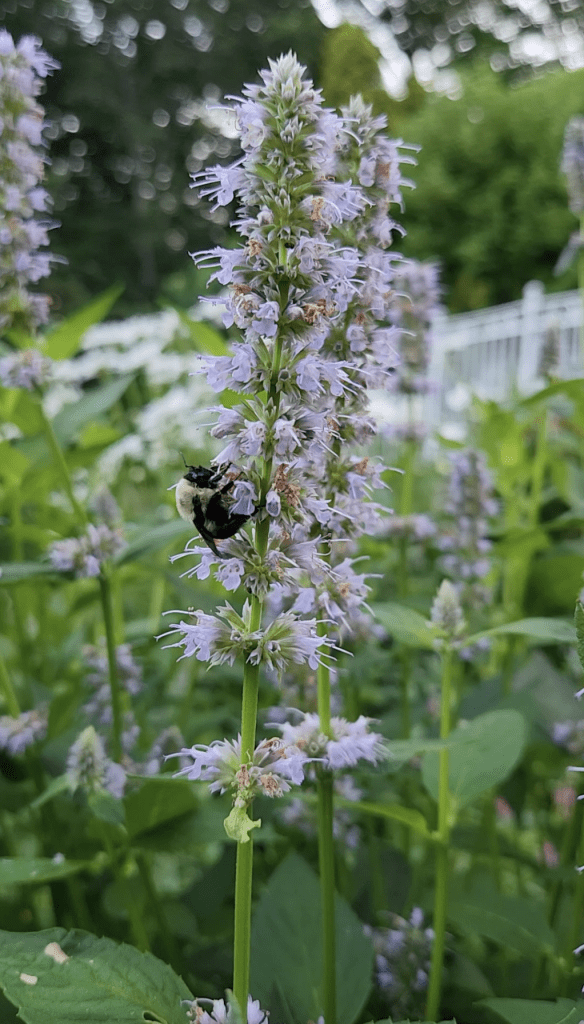
Bumblebee feeding on Agastache, a long-blooming perennial and pollinator favorite!

Protect Pollinators

We are finally seeing the pollinators arrive in the northeast…all the bugs! To our detriment the basic communal response is to attempt to eliminate insects (pesticides, tick and mosquito spraying). While we overconfidently presume to be able to identify and eradicate species that we consider pests, we manage to affect a continuum of imbalance in our natural world and the landscape environment which we depend on for air, water, food, shelter, and resources.

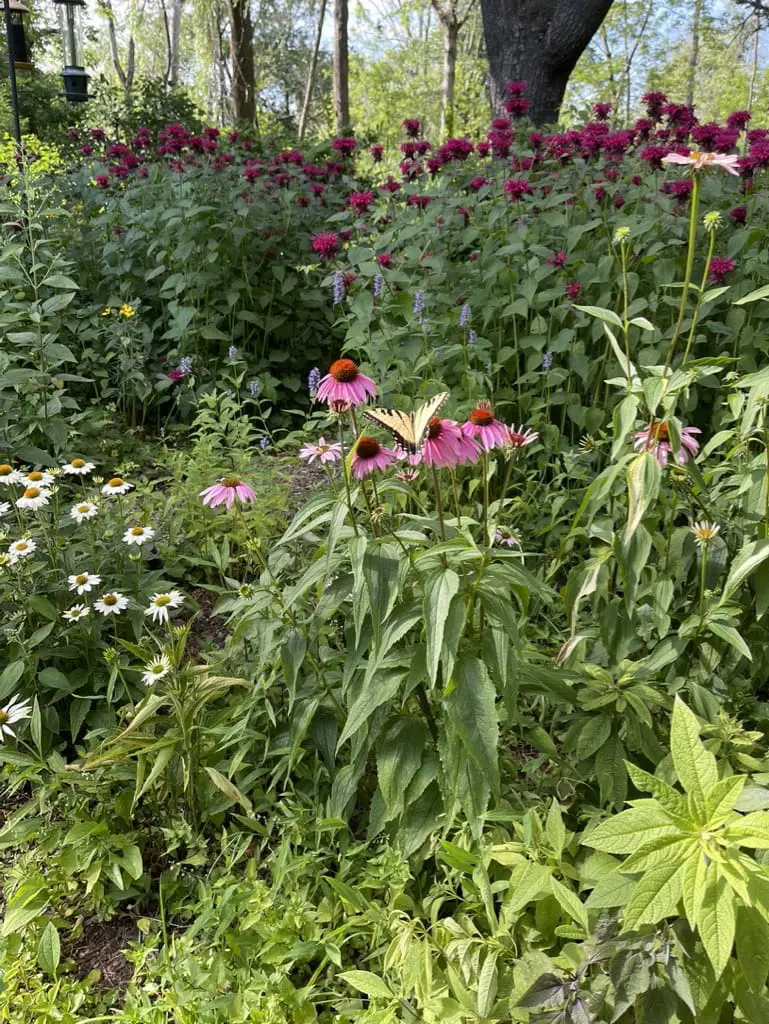
Swallowtail butterfly on pink coneflower, surrounded by white coneflower (Echinacea), bee balm (Monarda, and Hyssop (Agastache).

A recent study indicates that up to 80% of the population has traces of Glyphosate (the active ingredient in the herbicide RoundUp) in our urine!

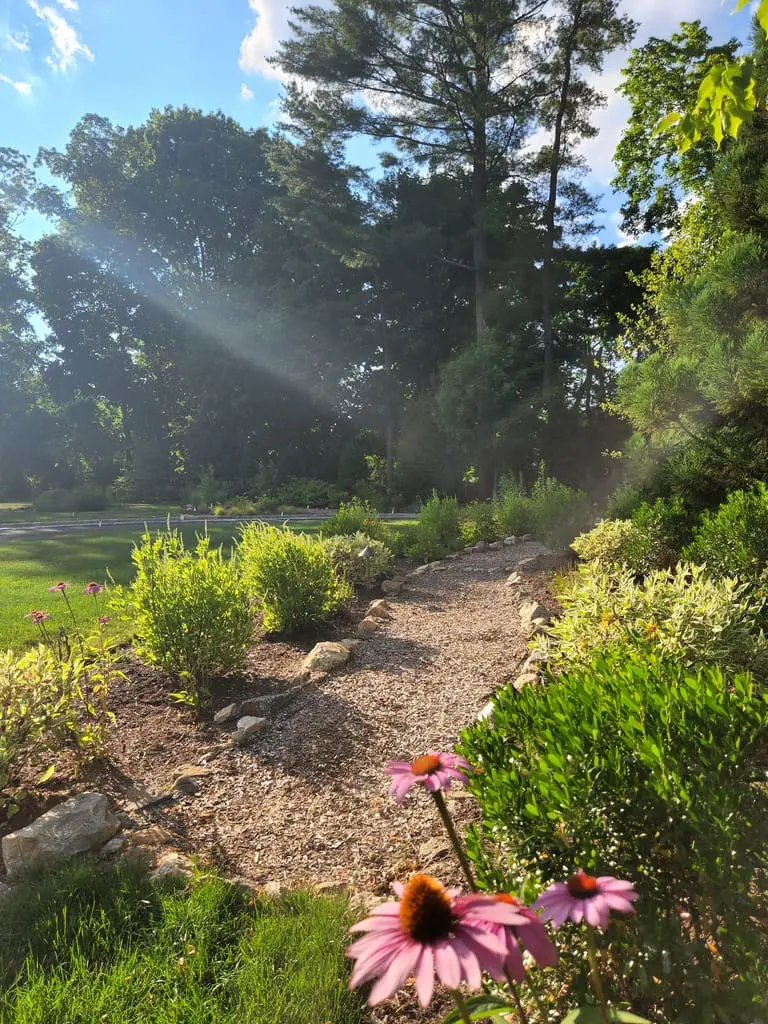
A designed garden stroll path lined with plantings of native shrubs and perennials.

Ecological Maintenance Summary

Progressive, creative sustainability strategies for land use in the big picture, and improvements in landscape management, organic land care, and better cultural grounds maintenance practices are producing a healthier, more optimistic, and holistic realization of living with nature in our everyday landscape environment.

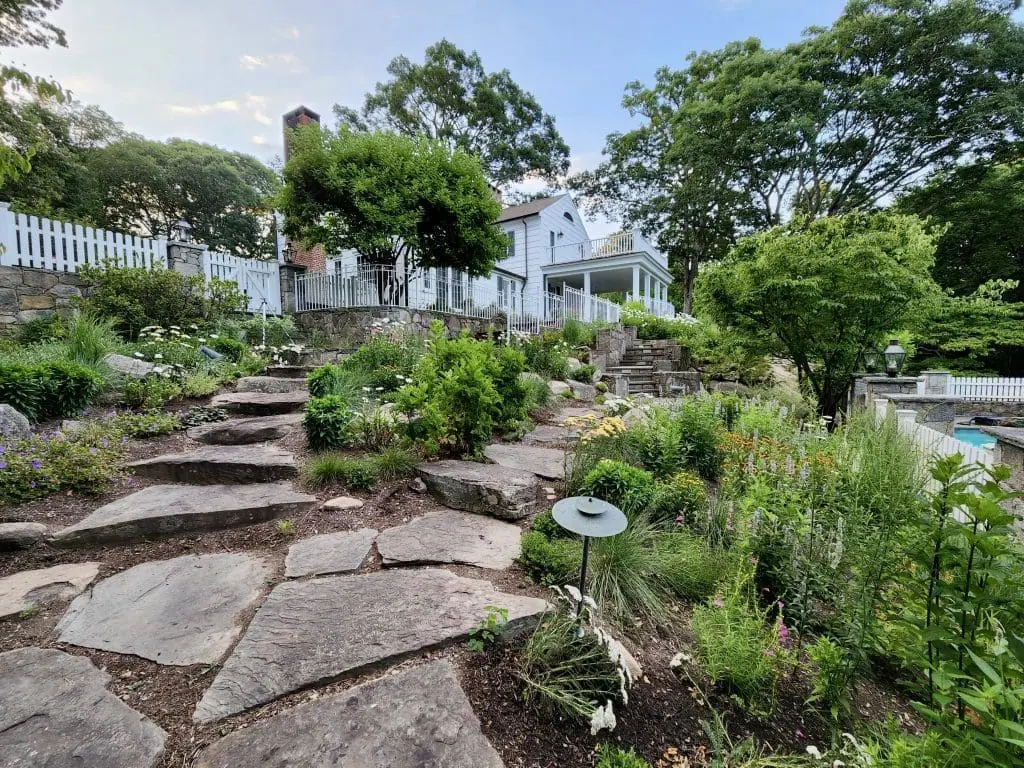
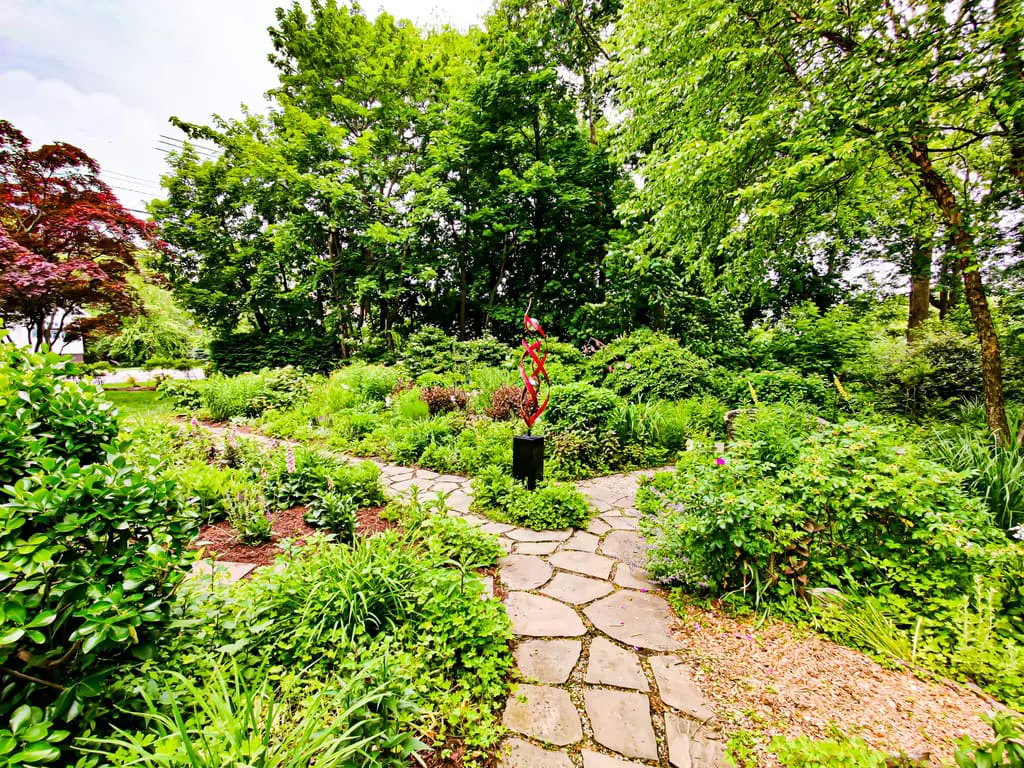
A new backyard garden complete with gravel and natural flagstone stroll paths, in Somers, New York.


Spend some quality time in your beautiful outdoor ecosystem, appreciate and value what the gifts of nature and her natural resources do for our bodies, mind and spirit!

—

Jay Archer

Green Jay Landscape Design

Where Design Meets Ecology

914-560-6570

Filed Under: Ecological Education, Uncategorized Tagged With: ecological landscape design, ecological landscaping, ecological mainteance, gardening tips, healthy yard, horitculture, horticulture tips, landscape designer, landscape ecologist, landscape maintenance, native plant garden, natural landscaping, organic garden, organic landscape, pollinator garden, summer garden, summer garden tips

Craving a garden tour this summer? We are excited to announce two upcoming garden tours of The Secret Garden of Celestial Happiness, designed by Jay Archer. This property formerly had a rear lawn that was removed and replaced with an ecological landscape featuring a constructed waterfall, stream, a network of stroll paths, and access to the adjacent wetland.

Eastern Swallowtail Butterfly visits a patch of Coneflower.

Sunday July 24th Garden Tour 10 – 1 PM – Hosted by Bedford 2030 Healthy Yards and Pollinator Pathways. Event details here. (There are many properties across Westchester participating in this event, find all participants on their map!)

Saturday September 17th Garden Tour 4 pm – Hosted by the Ecological Landscaping Alliance. Event details here.

Tour this nature immersion garden through four zones:

Natural stone stroll paths enable enjoyment of every corner of this backyard landscape.

Zone 1– Eco-Hybrid Front Yard Landscape: Predominantly native plants mixed with traditional non-natives that also attract pollinators. This slightly more formal landscape looks gorgeous year-round and still delivers on ecological objectives.

Zone 2 – ReWilding Zone – Evolved as a combination of plants that occur naturally from the adjacent wetlands, coupled with a design and planting composition. Formerly was a lawn with a mosquito problem.

Native Helenium (sneezeweed) is a favorite late-season perennial.

Zone 3 –Transitional Zone – the buffer between the adjacent disturbed wetland and the designed landscape. A glimpse of the future, featuring assisted migration (Bald Cyprus) and naturalized foreigners (Dawn Redwood) that are eco-adapted to our region. We maintain a woodland trail to access and enjoy the wetland setting.

Zone 4 – Disturbed Wetland – previously was an aquatic restoration project that has since been abandoned. The flora of the wetland migrates into the property and provides a good indication of seasonal weather patterns. Rubber boots recommended to tour the wetland.

Contact us to schedule your landscape design consultation.

—

Green Jay Landsaping

Where Design Meets Ecology

914.560.6570

Filed Under: Events & Garden Tours Tagged With: bedford 2030, ecological landscape design, ecological landscaping, garden tour, healthy yard, healthy yards, landscape designer, landscape ecologist, native plant garden, native plants, natural landscape, natural landscaping, organic garden, organic landscape, pollinator garden, pollinator pathways rye NY, rye garden tour, rye landscape design, rye landscape designer, rye NY, westchester county garden tour

  • « Go to Previous Page
  • Page 1
  • Interim pages omitted …
  • Page 8
  • Page 9
  • Page 10
  • Page 11
  • Page 12
  • Interim pages omitted …
  • Page 61
  • Go to Next Page »

Footer

Shop Address: 369 Bradhurst Ave, Hawthorne, NY 10532
(914) 560-6570
  • Facebook
  • Instagram
  • LinkedIn
  • Pinterest
  • YouTube
  • Houzz
  • Slide Share
  • Installation
  • Portfolio
  • Pricing
  • About
  • Contact

Copyright © 2026 · Green Jay Landscape Design. All Rights Reserved · Privacy Policy · Website and Local SEO by Ramblin Jackson