• Skip to main content
  • Skip to footer

Nassau County Residents

Green Jay Landscape Design is licensed and insured only for landscaping services in Nassau County.

All other services mentioned on this website are performed by independent contractors.

Green Jay Landscape Design

Green Jay Landscape Design

Green Jay Landscape Design

(914) 560-6570
  • Design
  • Installation
  • Portfolio
  • Pricing
  • About
    • Service Area
    • Meet Our Team
    • Our Process
    • Our Promise
    • Mission, Vision, & Core Values
    • FAQ
    • Press & Events
    • Blog
    • Reviews
    • Careers
    • Affiliations
    • Newsletter Sign-up
  • Contact

greenjayadmin

Storms and rainfall accumulation have gotten more extreme in our region; in fact, this is the fourth wettest year on record (so far). The Northeast is now approaching temperate rainforest levels of annual precipitation. That means our landscapes need to be designed to manage an increased quantity and frequency of extreme stormwater events. Green Infrastructure is our pejorative toolbox for dealing with stormwater as ecological landscape designers. Green Infrastructure refers to stormwater management strategies that mimic natural systems to direct and absorb stormwater; it is a form of bio-engineering or biomimicry. Below we outline some Green Infrastructure tools and strategies, with examples from our landscape design and construction projects. Contact us to discuss your green infrastructure stormwater management project!
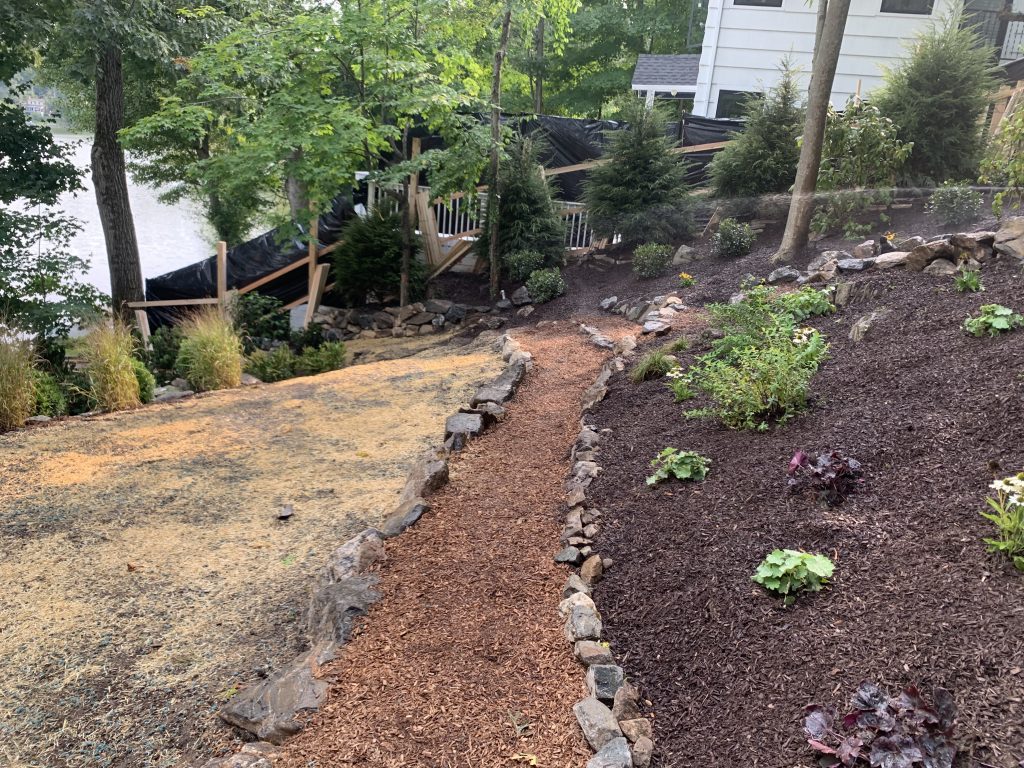
Finished terraces create both planting beds and walkways

Green Infrastructure on a Slope

Hillsides and steep slopes are common in our region and can often complicate and/or exacerbate drainage issues. Clients often tell us the slope on their property has been “unusable” for years, prone to erosion, fast flowing stormwater, and migrating landscape materials. We worked on several steep slope projects like this in Lake Peekskill, NY and Holmes, NY (click through to read full blogs on the projects!).

Terraces – to make steep slopes more functional as garden space, we often opt to construct stone terraces. Terraces allow for garden space and / or walkways, and also create the foundation for slowing down stormwater. We always use natural stone boulders and as many materials harvested on-site as possible.
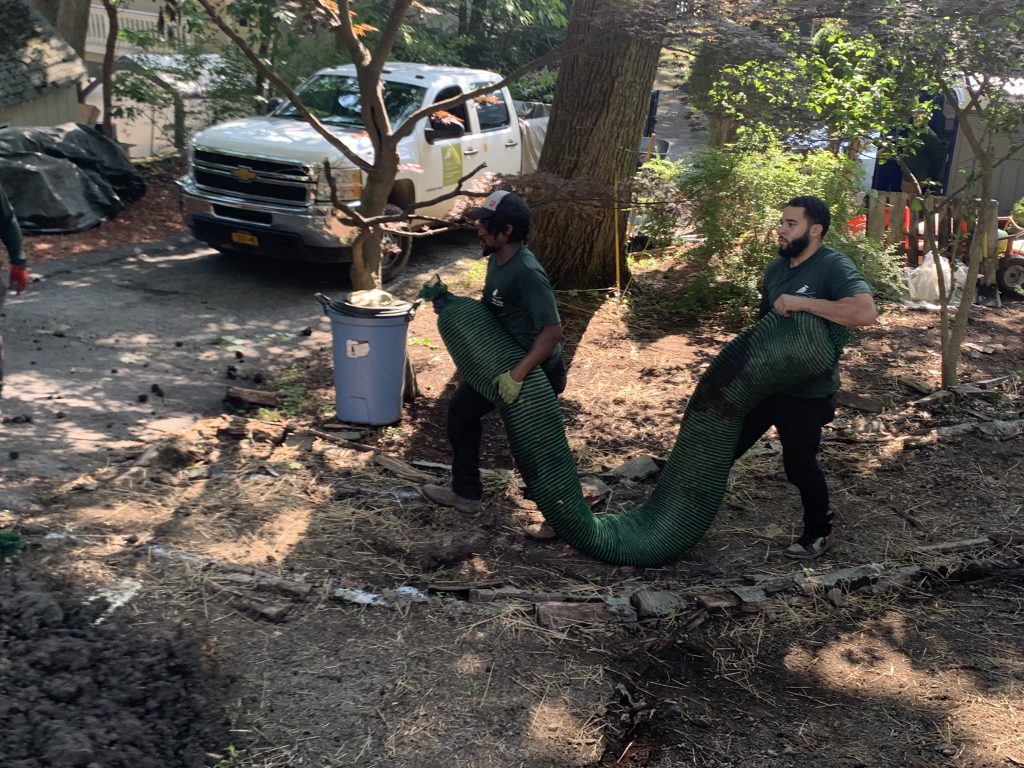
Installing biodegradable Filtrexx Siltsoxx in the stone terraces

Filtrexx SiltSoxx – We install Filtrexx Siltsoxx and the base of our terraces to capture silt and sediment in the stormwater and act as another barrier to slow down the flow. The Filtrexx SiltSoxx are biodegradable and filled with compost, so they gradually add nutrients to the garden terraces as they degrade.

Structural Soil – On steep slopes, we use a custom blend of engineered soil that is roughly 80% mineral and 20% organic matter. Most topsoil you buy is actually about 50% organic matter, mostly derived from leaf litter. This much organic matter will degrade quickly, and risks compromising the integrity of the slope. We opt for a more mineral blend to ensure the soil density is maintained for a longer period of time, protecting the grade of the slope.
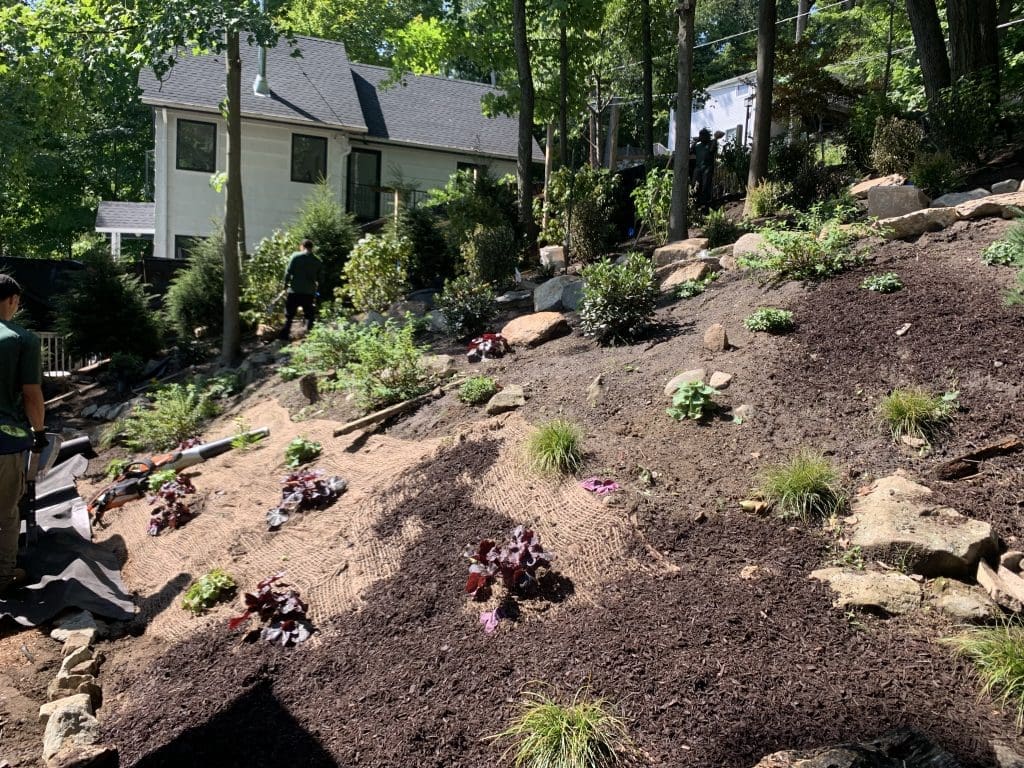
Jutte netting enables planting of steep slopes.

Jutte Netting – Finally, on steep hillsides, we opt to plant into Jutte netting. Jutte netting is natural-source (coir fiber) and biodegradable. The netting holds plants in place as their root system gets established.

Green Infrastructure for Residential Properties

If you don’t have a steep slope, there are still plenty of ways you can improve stormwater management on your property through green infrastructure. The aim is to conserve, direct and absorb as much stormwater as possible before it becomes polluted from developed areas and joins other valuable freshwater ways.
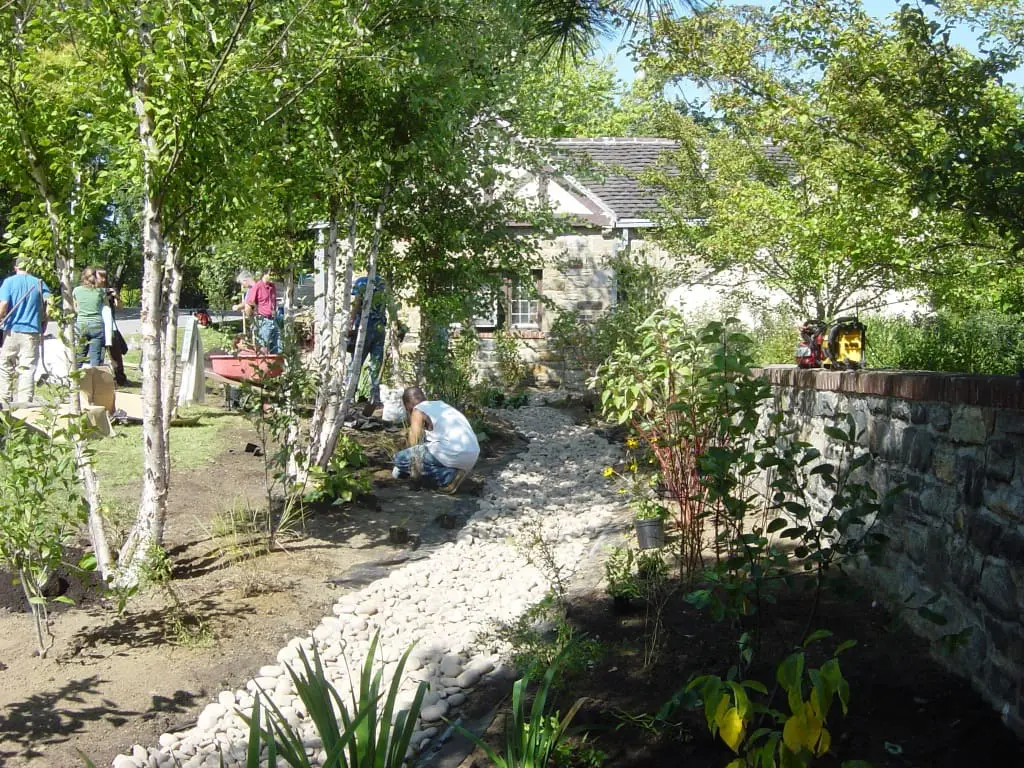
A vegetated bioswale under construction.

Swales – Swales are a form of land contouring that subtly directs stormwater by manipulating grades / topography. Swales are often designed to guide water away from buildings are flat surfaces like tennis courts or swimming pools.
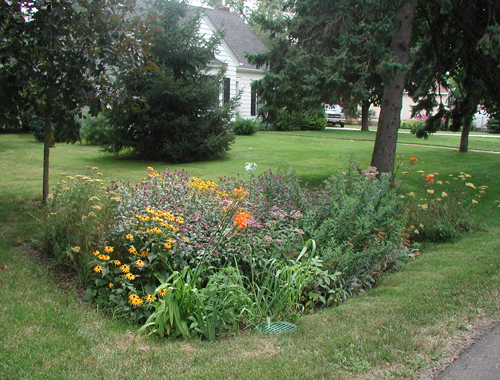
A residential rain garden.

Rain Gardens – Rain gardens are types of gardens that are designed to be inundated with storm water, contain the water within the bounds of the garden, and slowly allow it to percolate into the aquifer or evapotranspirate through the plants. Essentially, they slow down the water and allow it to recirculate in the water cycle. Rain gardens typically use native plants – that are adapted to our precipitation climate – and therefore have the added benefit of creating habitat for local wildlife and pollinators. When designing rain gardens, we opt for facultative plants – those that are found equally as much in wetlands and non-wetlands – because they will be able to handle both extreme flooding and drought. Learn more about rain gardens on our previous blog post and case study.

Passive Irrigation – Passive irrigation is a great way to repurpose stormwater into irrigation for your gardens! We typically design passive irrigation systems off of existing gutters. We connect the gutters to perforated pipes directed toward garden areas. The perforation allows the water to slowly leak out but still reach the desired area.
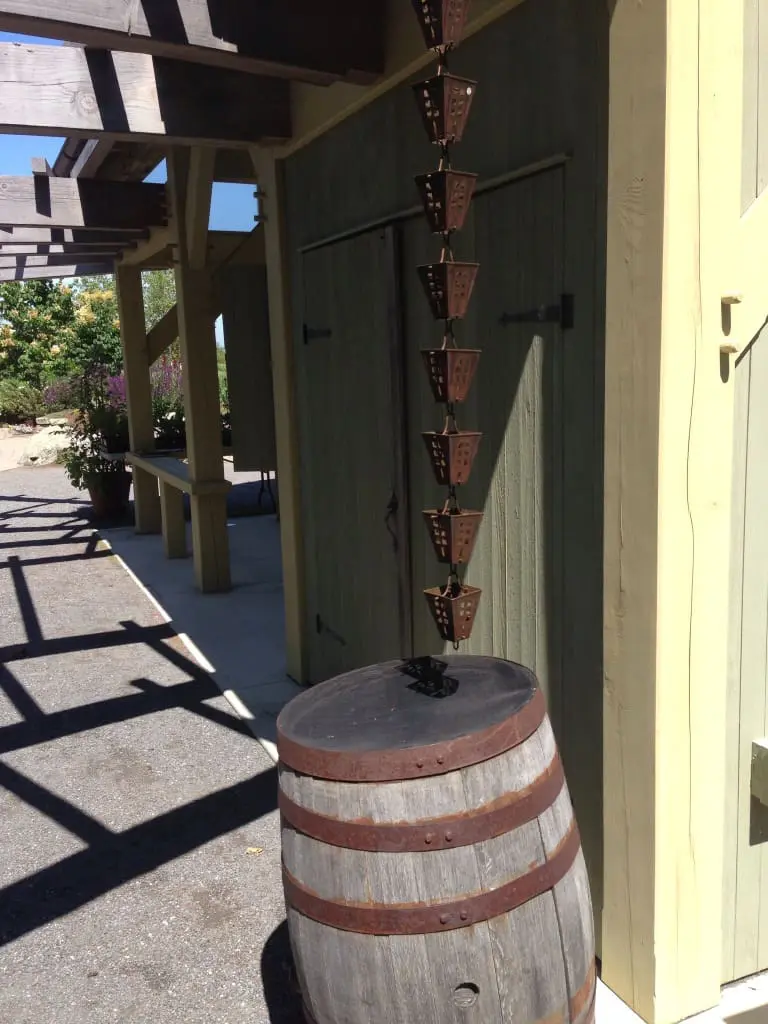
Rain chain leading to a rainwater harvesting barrel.

Rainwater Harvesting – Many of our clients keep rain barrels on-site to capture excess stormwater. Passive irrigation pipes can also be connected to rain barrels and ‘turned on’ during droughts. We love any application for recycling stormwater in the garden!

Need help with your stormwater management and landscape drainage? Contact us to schedule a consultation!

—

Green Jay Landscape Design

Where Design Meets Ecology

914-560-6570
Filed Under: Irrigation & Water Systems, Landscape Construction & Installation Tagged With: drainage, ecological landscape design, ecological landscaping, erosion control, green infrastructure, hillside landscaping, landscape designer, native plant garden, native plants, natural landscaping, pollinator garden, rain garden, rain garden design, rain garden plants, sloped landscaping, steep slope, stormwater, stormwater management, swale, terrace garden, water management

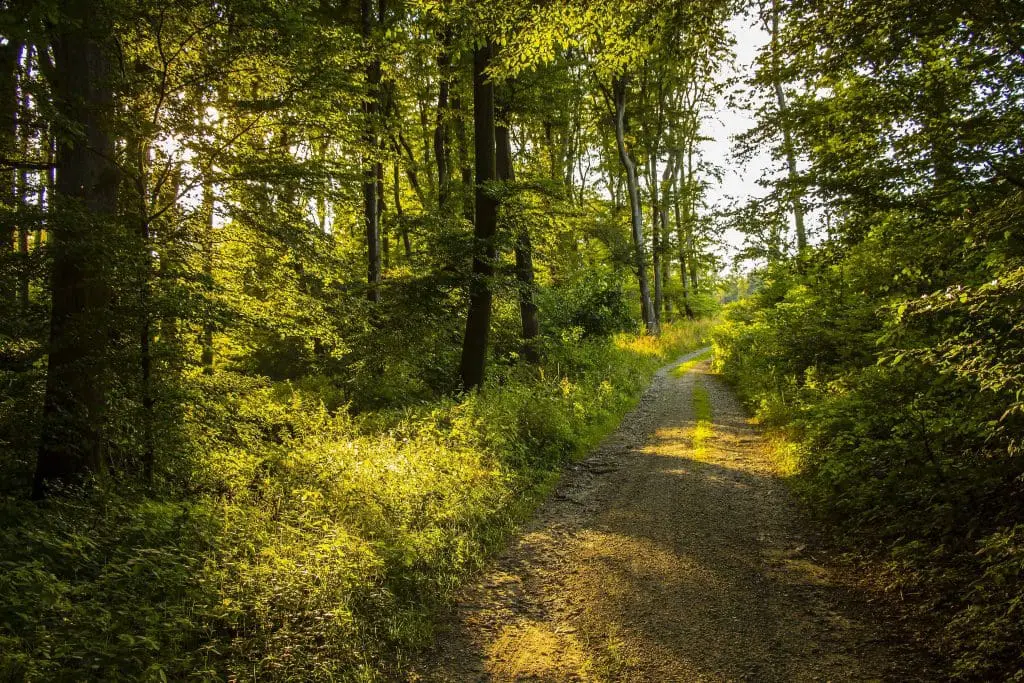
Recently, we have had more requests from clients to design and build hiking trails on their property. Often these are estate clients, part of our Sustainable Stewardship Program, who have five acres or more of property. As part of their design program, we assess and analyze the property to determine siting for the trails. Sometimes we are working from existing, abandoned woodland trails and sometimes we start from scratch.

In constructing trails, we aim to repurpose material on-site as much as possible. For example, logs and boulders to line the trail, create steps, and water bars; dead trees on-site can be cut down and ground into woodchips to define the trail, in some instances. We are always factoring in stormwater and designing erosion control measures as part of our trail construction process.

Having accessible trails right out your backyard is an incredible amenity! Fresh air, nature, and exercise right at your fingertips! Make evening strolls with your family a tradition and notice together how the natural world around you is changing.

Contact us to discuss your trail building or landscape design project! 914.560.6570

—

Green Jay Landscape Design

Where Design Meets Ecology

Filed Under: Landscape Construction & Installation, Uncategorized

Throughout our years as a landscape design and build business, we’ve had the opportunity to partner with professionals in every aspect of the home improvement industry. Below is a list of our favorite home improvement contractors and consultants based in Fairfield County, CT and Westchester County, NY. We have worked with all of these companies and can vouch for their excellence of service.

Architects

Trillium Architects – We have worked with the team at Trillium Architects on several home renovation projects for our clients, including additions and deck expansions. Trillium Architects have impeccable design sense, and it has been a breeze to communicate with them and coordinate installations.

Engineering

Bryan Hildebrand – We worked with Bryan on a project with a steep slope approaching a lake.  It required an erosion control plan, that we outsourced to Bryan Hildebrand. Submitting and executing Bryan’s erosion control plan enabled us to obtain a waiver for the wetland permit, a trajectory that kept the project on schedule and on-budget. Read more about that erosion control project on Lake Peekskill here.

David Lombardo, JMC – GJL worked with David Lombardo and the JMC team extensively on a freshwater dam project in South Salem, NY. The project required extensive permitting from the NY DEC. Read more about the project here.  David and his team are incredibly professional, smart people.

Arborists

Bill Davies, Westchester Tree Life – Bill Davies is the best arborist in the industry! His expertise at evaluating tree health and advising the next steps for pruning or removal are second to none. For any mature tree questions, call Bill at Westchester Tree Life.

Plant Health Care

CompostWerks – CompostWerks is a premier local provider of organic plant health care for trees and shrubs. We have used their products with great success for years!

Electric Lawn Mowing

Jeff Cordulack, Organic Ways & Means – Electric autonomous mowing is really taking off! You can have a zero-emission lawn through Jeff’s autonomous, daily mowing. Since the mowers run daily and only trim a bit of lawn, the clippings drop and return nutrients into the soil naturally. Learn more on the Organic Ways & Means website.

Fencing

Salem Fence ­– Salem Fence is a team of professional, responsive, and timely craftsmen and they are our top provider for fence installation in Putnam & Westchester County, NY (they are based in Mahopac, NY). Coordinating our installations with them has been seamless. For examples of their work on our design projects, view our previous blogs:

Terraced, Erosion-Proof Landscape in Lake Peekskill, NY

Summer Pool Landscape with Native Plants in Mamaroneck, NY

Contact us to schedule a 15-minute discovery call or on-site professional consultation to discuss your landscape design & build goals

—

Green Jay Landscape Design

Where Design Meets Ecology

915.560.6570


Filed Under: Ecological Education Tagged With: arborist, architect, ecological landscape design, ecological landscaping, electric mowing, engineer, fence installation, fencing, general contracting, home contractors, home improvement, home improvement contractor, home improvement contractors, landscape designer, local contractor, organic gardening, organic landscape, plant health care, recommendation, recommended service provider

A tangible shift is occurring in the way we view and value our landscapes. While we once revered immaculate, unchanging expanses of lawn and exotic evergreens, the trend in recent years is to use landscape design to effect real ecological restoration. No matter the size of your property, by following the principals of ecological landscape design, we can create habitats to support local wildlife. Linking together designed suburban habitats creates biotic corridors, safe, rewilded zones that bridge larger ecosystems through more developed areas. We discuss habitat design principals in our previous blog, Design For Biodiversity Pollinator & Wildlife Gardens.  After achieving your dream designed habitat, don’t forget to certify or register your property with one of the many grass roots organizations tracking our national efforts! We review our favorite ecological organizations for property certification below.

Why Certify Your Landscape?

To effect change, change must be observed, measured, and reported. Data informs knowledge, progress or decline, and policy decisions. There are many incredible non-profit organizations tackling ecological restoration and biodiversity from their respective niches. Whether they protect a specific species or wildlife habitat, or promote broader standards for land stewardship, these non-profits deserve our attention and participation, if we truly believe in their missions. By registering your property with one (or all!) of these organizations, you strengthen their dataset, promote their cause, and set an example for others (by posting the associated signage!). Below are some local and national organizations that track responsible residential land stewardship for biodiversity and ecological restoration.

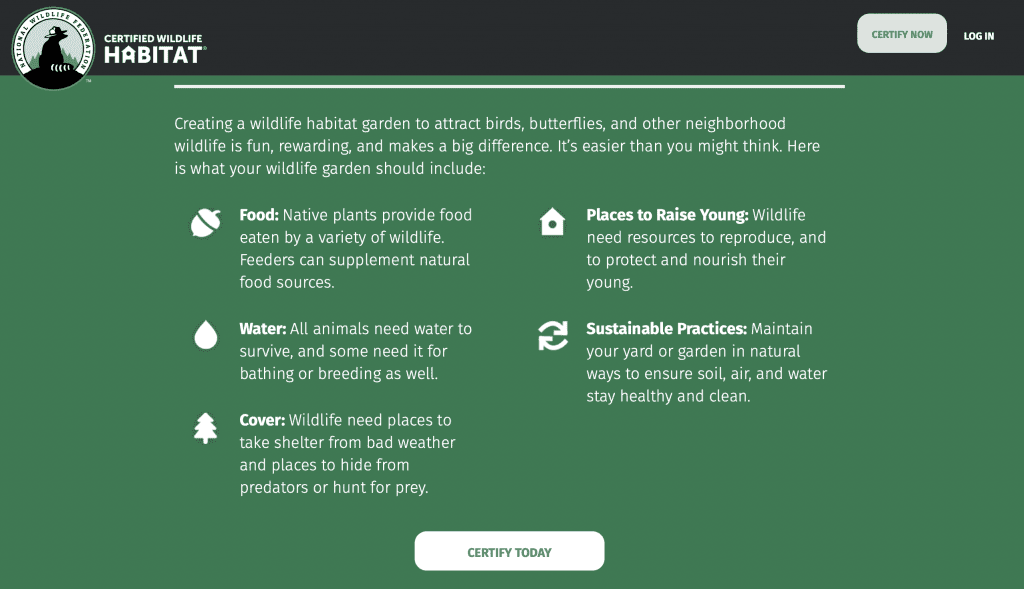
National Wildlife Federation Certified Wildlife Habitat

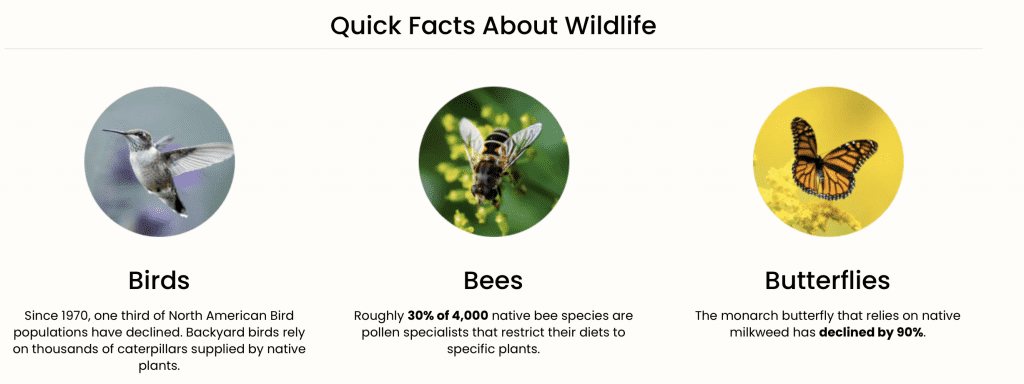
For decades the National Wildlife Federation has advocated for wildlife protection at the national level. You may not be aware of their site Garden for Wildlife, with information for property owners on planting native to support bees, butterflies, birds and more.

Through NWF, you can register your property as a Certified Wildlife Habitat, if you fulfill the below guidelines.

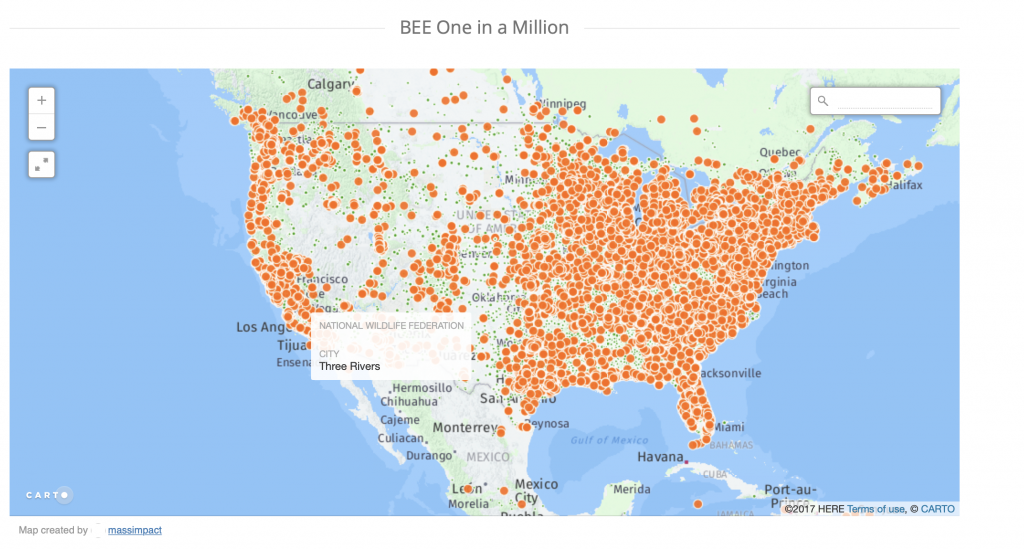
Once registered, you’ll see your property on their Garden for Wildlife Impact Map, a beautiful visual of the grassroots effort of property owners across the nation to support wildlife.

Pollinator Pathway

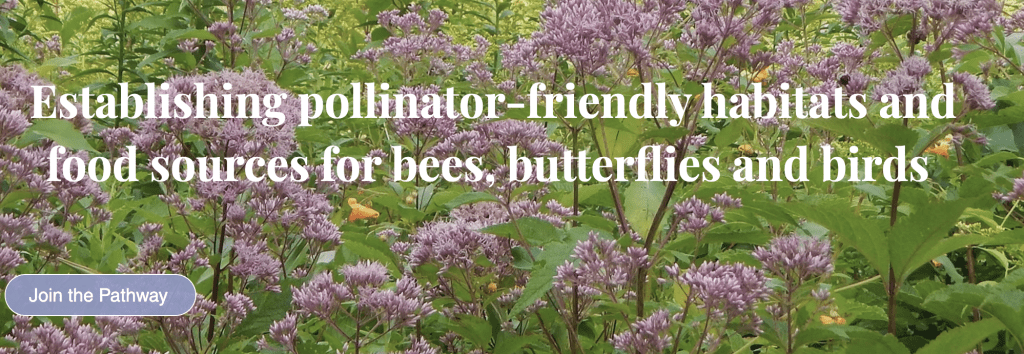
Pollinator Pathway is an organization that promotes, educates on, and tracks pollinator gardens. There are currently volunteer-run local chapters in Connecticut, New York, New Jersey, Massachusetts, Maryland, Vermont, Pennsylvania, Rhode Island, Oregon, Ontario.

We are beyond proud to have so many dedicated volunteers dedicated to pollinator conservation in our landscape design service area:

Fairfield County: Darien, Fairfield, Greenwich, New Canaan, Norwalk, Redding, Ridgefield, Stamford, Weston, Westport, Wilton

Westchester County: Bedford, Bronxville, Croton-on-Hudson, Dobbs Ferry, Elmsford, Hastings-on-Hudson, Irvington, Lewisboro, Mount Kisco, New Rochelle, North Salem, Pound Ridge, Rye, Sleepy Hollow, Somers, Tarrytown, White Plains

Putnam County:

Patterson, Putnam Valley

To qualify as a Pollinator Pathway, you must rethink your lawn, maintain your property organically, plant native plants, and remove invasive species where possible. By doing so, you create both pollinator and wildlife habitat.

Register your garden here, and be sure to check out their resources including a collection of Native Plant Lists and guides on Xeriscaping.

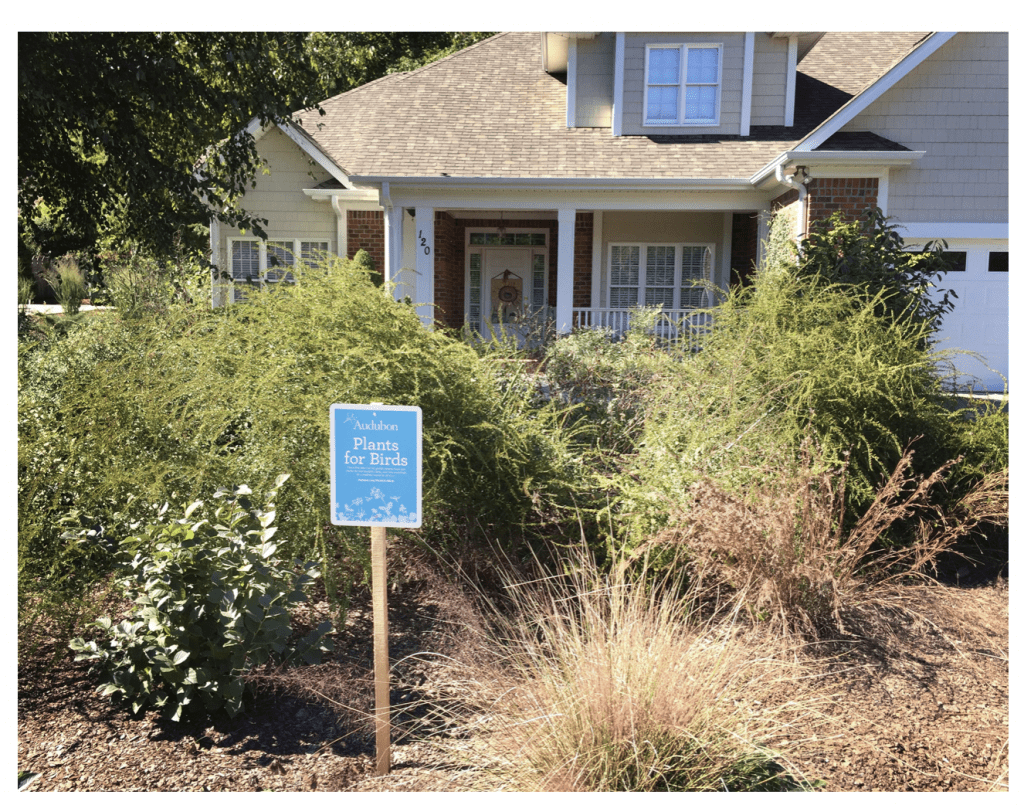
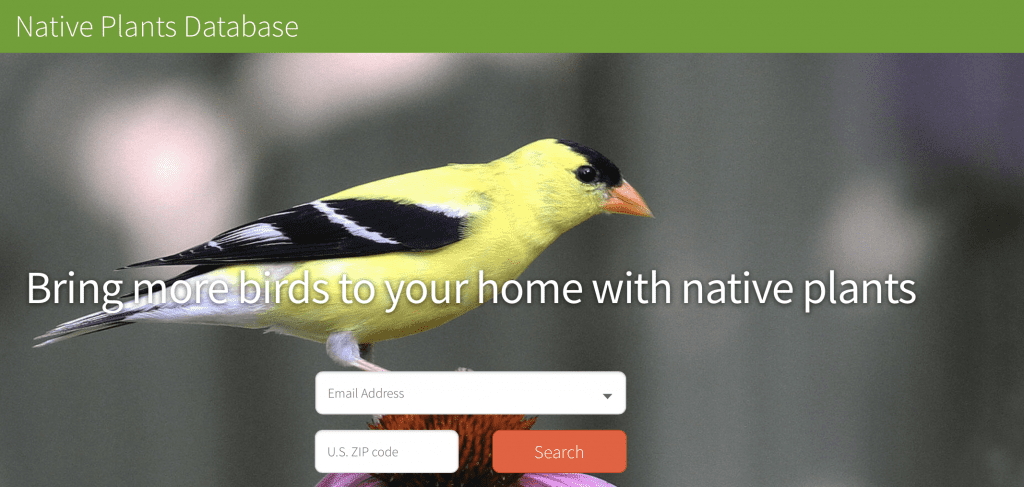
Audubon Plants for Birds

Audubon is an international organization that protects bird species through conservation efforts, climate mitigation policies, water conservation, and ornithology education. They have a fabulous zip code based native plant database and fun family-friendly activities for creating bird-friendly homes.

Order an Audubon Plants for Birds sign to educate your neighbors on your beautiful bird habitat. Your $25 order supports Audubon’s important advocacy work on behalf of bird biodiversity. Find your local Audubon chapter here.

While you’re at it, sign Audubon’s Pledge to Act on Climate, in support of their “call on elected leaders to create a brighter future for birds and people through durable and inclusive policies and climate solutions.”

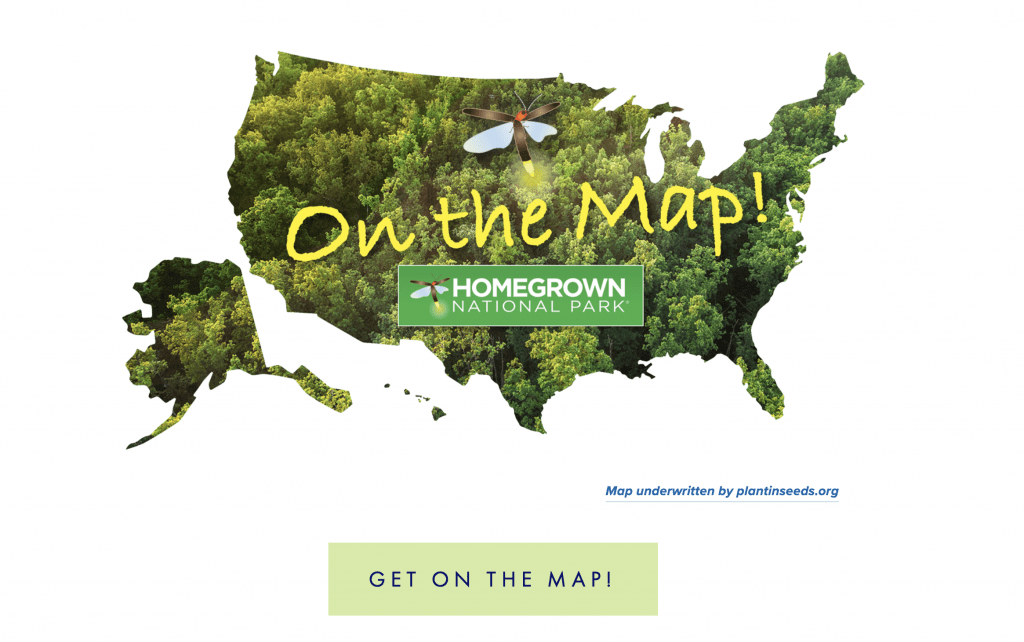
Homegrown National Park

Homegrown National Park is the brainchild of Doug Tallamy, an entomologist whose landmark book Bringing Nature Home sparked a national conversation about biodiversity and native landscapes. Homegrown National Park’s (initial) goal is to transform 20 million acres (about one half of privately-owned lawns in the country) into native landscapes. So far, they have over 44,000 planted acres.

Get your property On the Map. Find Doug Tallamy’s collection of excellent books here.

Million Pollinator Garden Challenge

The Million Pollinator Garden Challenge was founded in 2015 by the National Pollinator Garden Network, a collection of garden groups, conservation organizations, and volunteer associations, seeking to inspire communities to plant native to support pollinator habitats.

Their mission is to reach one million registered pollinator gardens.  Register your garden here.

Be sure to check out their collection of resources including native plant lists, curriculum & lesson plans for educators, examples of school garden programs, and examples of pollinator citizen science programs.

Monarch Waystation Program

Monarch Watch, a website that educates on Monarch butterfly life cycle, migration and habitat needs. Their Monarch Waystation Program encourages registering your property if you meet the following design criteria for Monarch habitats:

  • Exposure: Full sun site that receives at least 6 hours of sunlight each day.
  • Milkweed Plants: Milkweed (Ascelpias) is the host plant genus for Monarch caterpillars, meaning it is the only plant on which Monarch butterflies will lay their eggs. Monarch larvae are uniquely adapted to digest the toxins in Milkweed leaves, a defense adaptation that makes their bodies toxic to predators.
  • Shelter: A dense massing of Milkweed creates a safer habitat with greater protection for Monarchs.
  • Nectar Plants:  Monarch butterflies feed on a variety of native plants. The most important factor is to ensure that there are nectar sources throughout spring, summer and fall.
  • Organic Maintenance: Eliminate use of toxic pesticides that harm pollinators. Remove invasive weeds as necessary.

They will send you a Certificate of Appreciation and a Monarch Waystation outdoor sign to display.

Check out their compilation of butterfly and pollinator resources here.

Xerces Society Pollinator Protection Pledge

The Xerces Society for Invertebrate Conservation has been protecting pollinators and other endangered invertebrates for decades through conservation policy initiatives, grassroots educating, and field research.

As part of their Pollinator Protection Program, you can sign the Pollinator Protection Pledge.

Don’t miss their Pollinator Conservation Resource Center

Bumble Bee Watch

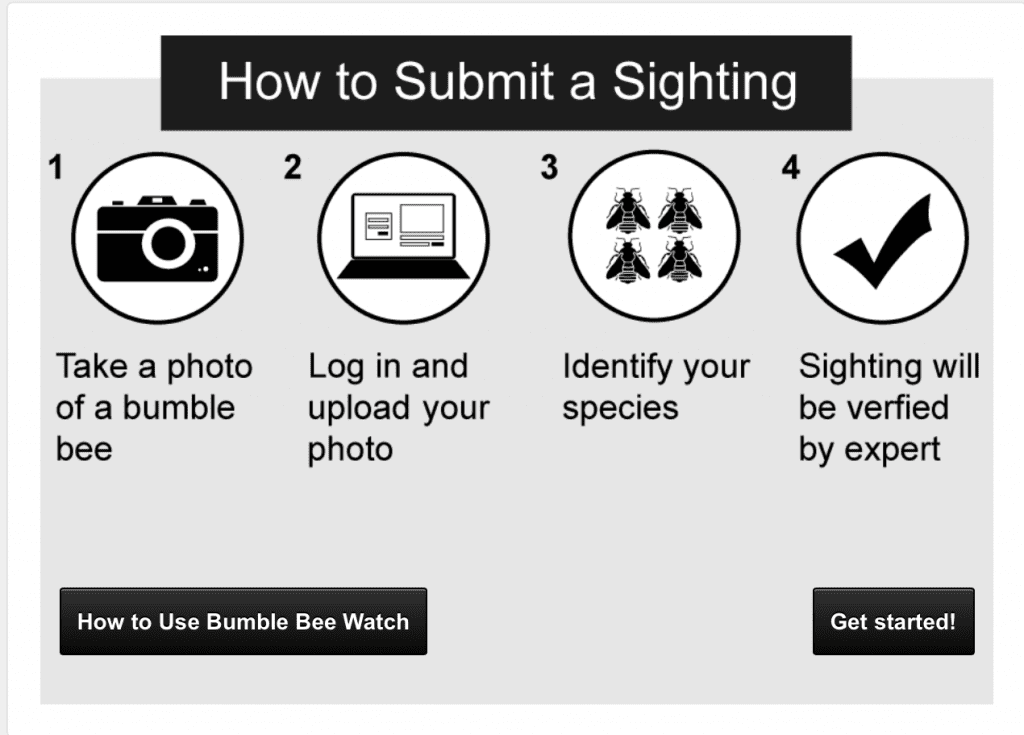
Bumble Bee Watch is a citizen science initiative aiming to track bumblebee sightings to gain data about population distributions and changes over time. All you need is an observant eye and a camera! Upload your photo of a bumblebee or nest, use the site to identify it, then an expert verifies your ID, and your sighting is added to the map!

Sign up to record your sighting and view the aggregated data.

You can find great resources on this site, especially their profile of the bee Species of the Month.

Healthy Yards Westchester

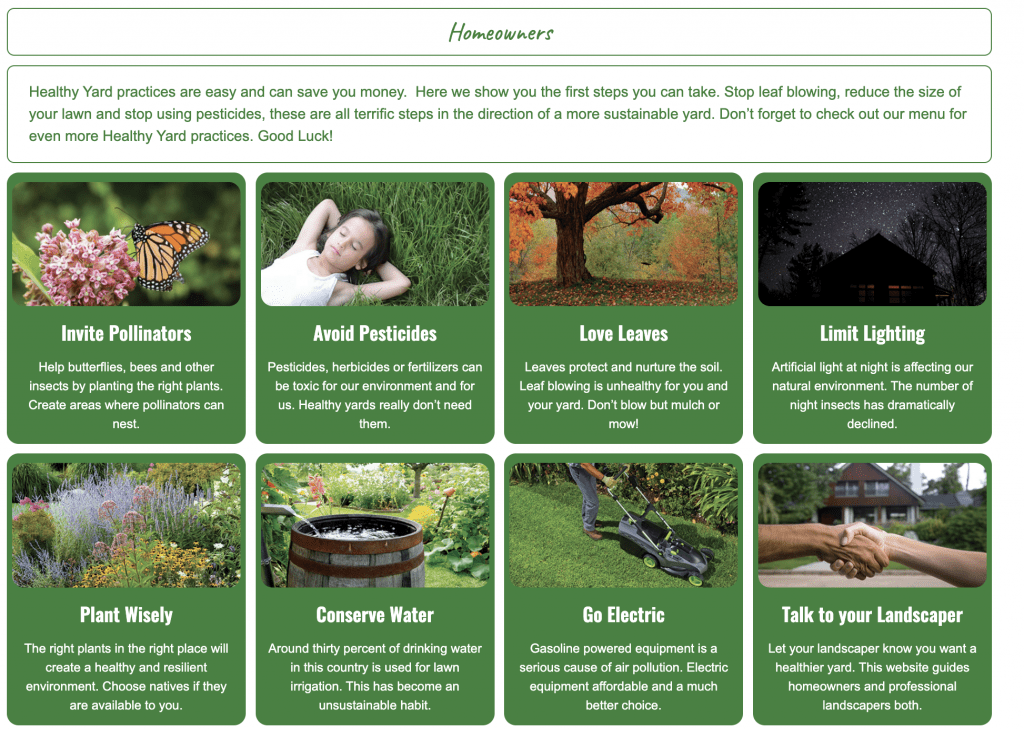
Healthy Yards is a Westchester-based non-profit that promotes responsible land stewardship at a residential level. They provide a wealth of resources and information, for both property owners and professionals, on practices such as: mulch mowing, organic maintenance, planting native, responsible water use, and more.

Check out their Checklist for a Healthy Yard, 10 steps to start your healthy yard journey! Be sure to read their full compilation of Resources for Homeowners too!


Filed Under: Ecological Education Tagged With: audubon, Audubon international, bee-friendly, biodiversity, bird-friendly, bird-friendly garden, bumblebee watch, certified wildlife habitat, climate mitigation, designed habitat, ecological landscape design, ecological landscaping, ecological restoration, healthy yard, healthy yards, homegrown national park, million pollinator project, monarch watch, on the map, organic garden, organic gardening, organic landscape, pollinator garden, pollinator pathway, pollinator pathway CT, pollinator pathway NY, restoration, wildlife habitat, xerces pollinator protection pledge

New video: client testimonial + project snapshots of this five-acre estate in Fairfield County, CT! We had a blast on this estate landscape design project!

This property has many microclimates and opportunities to design unique, native plants capes that provide a multitude of ecological services. Learn more about the project on our previous blog.

More project videos are posted on our YouTube channel and Instagram!

Schedule your estate landscape design consultation or free 15-minute discovery call! Now scheduling landscape design clients for spring & summer 2022.

—

Green Jay Landscape Design

Where Design Meets Ecology

Filed Under: Testimonials, Uncategorized Tagged With: bird habitat, certified wildlife habitat, client review, client testimonial, dream home, eco-friendly, ecological landscape design, ecological landscaping, ecological restoration, estate, estate landscape design, estate management, habitat, healthy yard, landscape designer, landscape ecologist, native plant garden, natural landscaping, organic garden, organic landscape, pollinator garden, pollinator habitat, pollinator pathway, review

Watch this client testimonial from our Landscape Design & Build clients in Hastings-on-Hudson, New York. We thoroughly enjoyed designing this terraced permaculture front yard garden, featuring native plants to support pollinators & birds, vegetables and berry-producing shrubs, a recirculating waterfall and custom natural stone patios & staircase.

Read more about this project on our previous blog: Permaculture Terrace Garden with Erosion Control

More project videos are posted on our YouTube channel and Instagram!

Shout out to Cooper Ponds for constructing the recirculating waterfall, a masterful centerpiece that produces a tranquil sound throughout the landscape.

Recirculating waterfall constructed beautifully by Cooper Ponds.

Read more landscape design & build client reviews. We love our clients!

Now accepting design & build clients! Schedule a free 15-minute discovery call or a professional on-site consultation here.

—

Green Jay Landscape Design

Where Design Meets Ecology

914.560.6570

Filed Under: Uncategorized Tagged With: client review, client testimonial, ecological landscape design, ecological landscaping, edible landscape, erosion control, healthy yard, landscape design client, landscape design review, landscape designer, landscape ecologist, landscaping a slope, native plant garden, natural landscaping, organic garden, organic landscape, permaculture, pollinator garden, review, terrace garden

  • « Go to Previous Page
  • Page 1
  • Interim pages omitted …
  • Page 10
  • Page 11
  • Page 12
  • Page 13
  • Page 14
  • Interim pages omitted …
  • Page 61
  • Go to Next Page »

Footer

Shop Address: 369 Bradhurst Ave, Hawthorne, NY 10532
(914) 560-6570
  • Facebook
  • Instagram
  • LinkedIn
  • Pinterest
  • YouTube
  • Houzz
  • Slide Share
  • Installation
  • Portfolio
  • Pricing
  • About
  • Contact

Copyright © 2026 · Green Jay Landscape Design. All Rights Reserved · Privacy Policy · Website and Local SEO by Ramblin Jackson