• Skip to main content
  • Skip to footer
Green Jay Landscape Design

Green Jay Landscape Design

Green Jay Landscape Design

(914) 560-6570
  • Design
  • Installation
  • Portfolio
  • Pricing
  • About
    • Service Area
    • Meet Our Team
    • Our Process
    • Our Promise
    • Mission, Vision, & Core Values
    • FAQ
    • Press & Events
    • Blog
    • Reviews
    • Careers
    • Affiliations
  • Contact

greenjayadmin

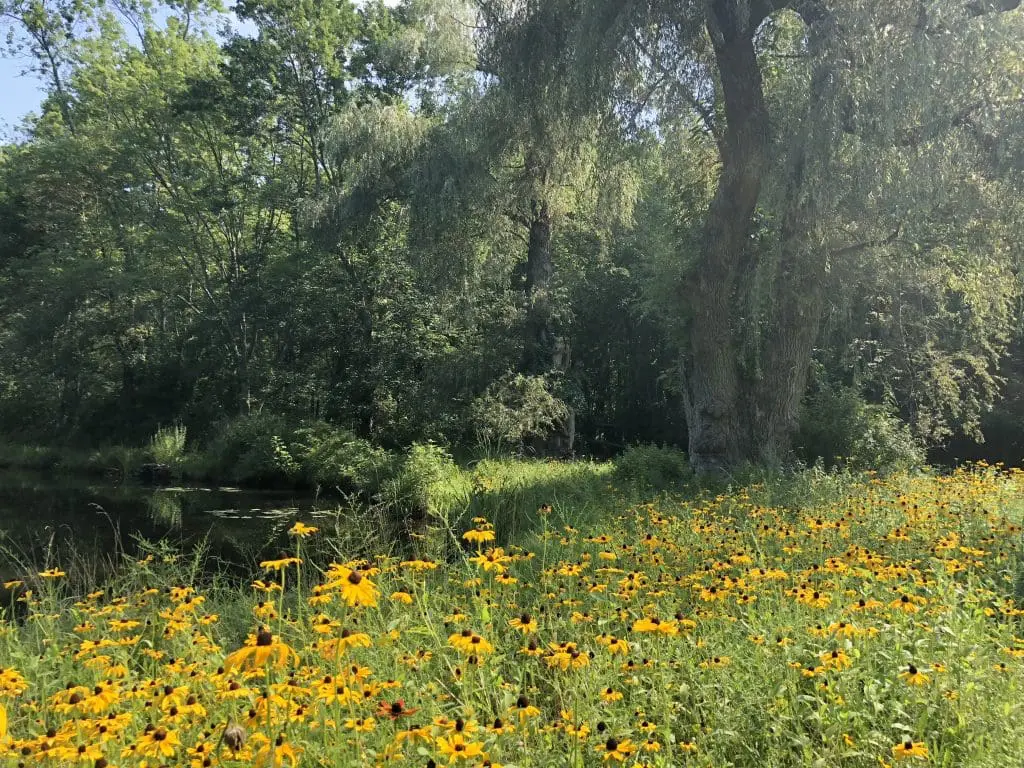
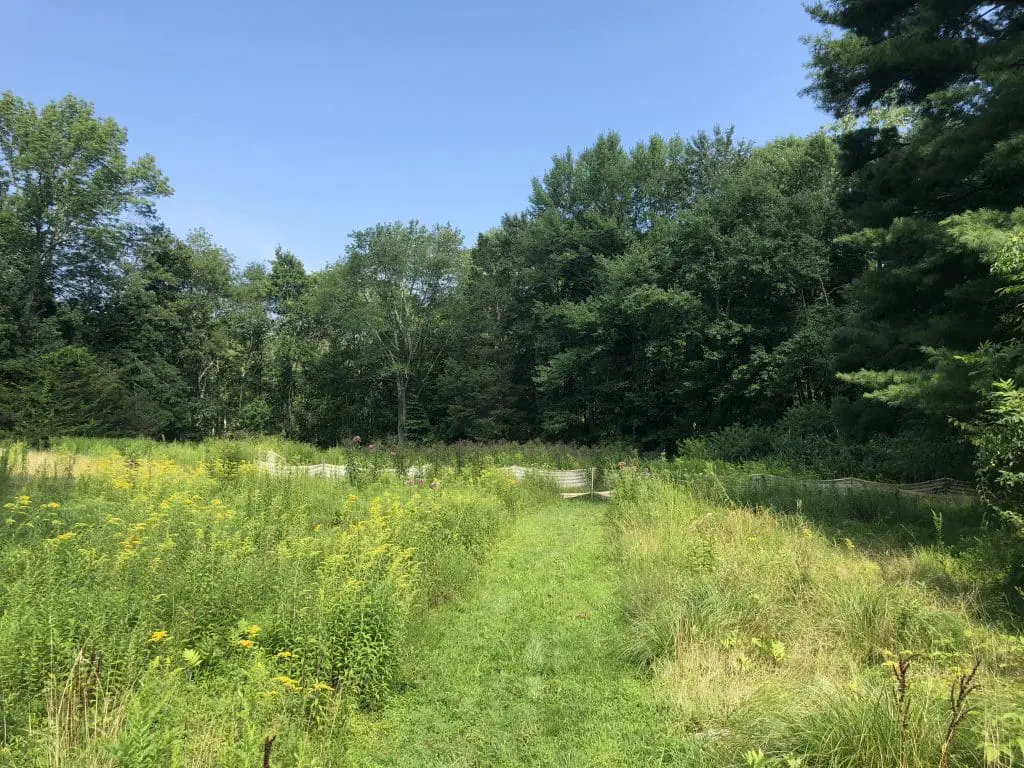
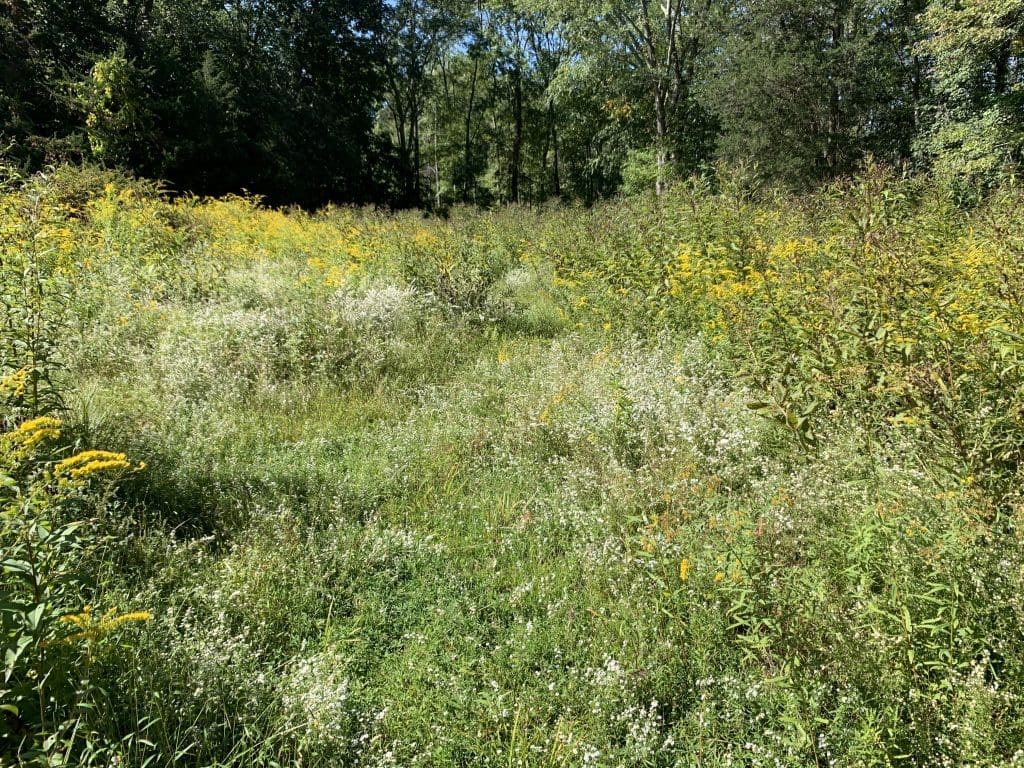
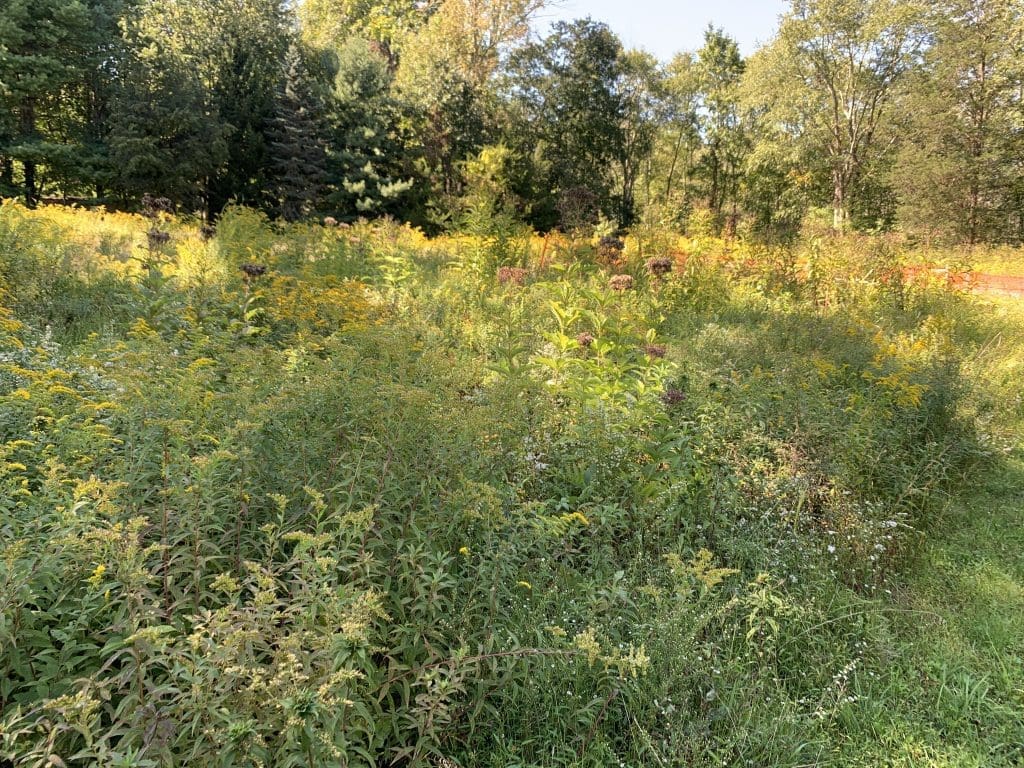
This organic meadow is now in its fourth year.  Before our change in management practices, this field was a manicured lawn, one of many on the North Salem estate. Jay and the client agreed the area, as a lawn, was squandered potential and decided to convert it to a meadow simply by stopping the weekly mowing practices.  

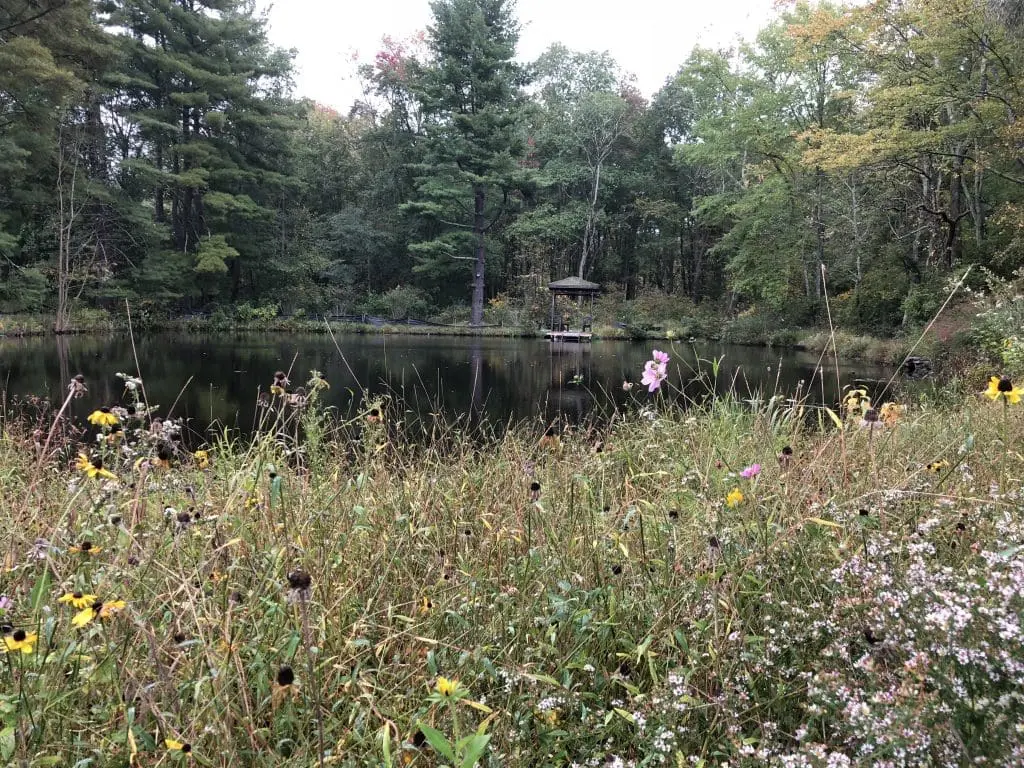
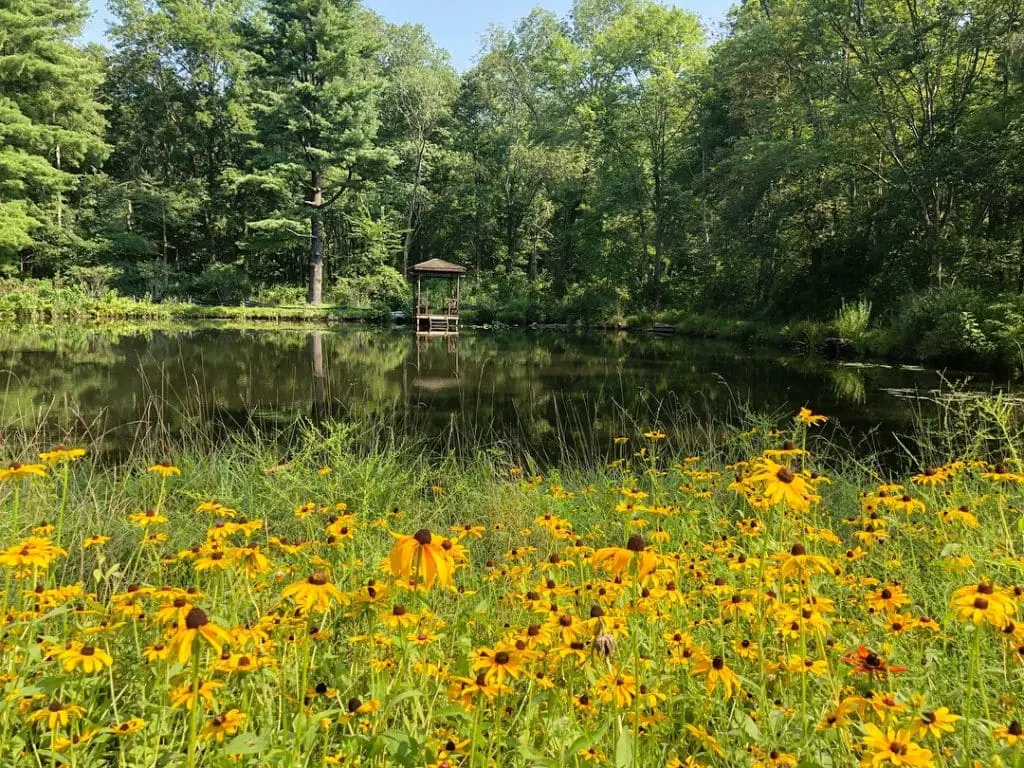
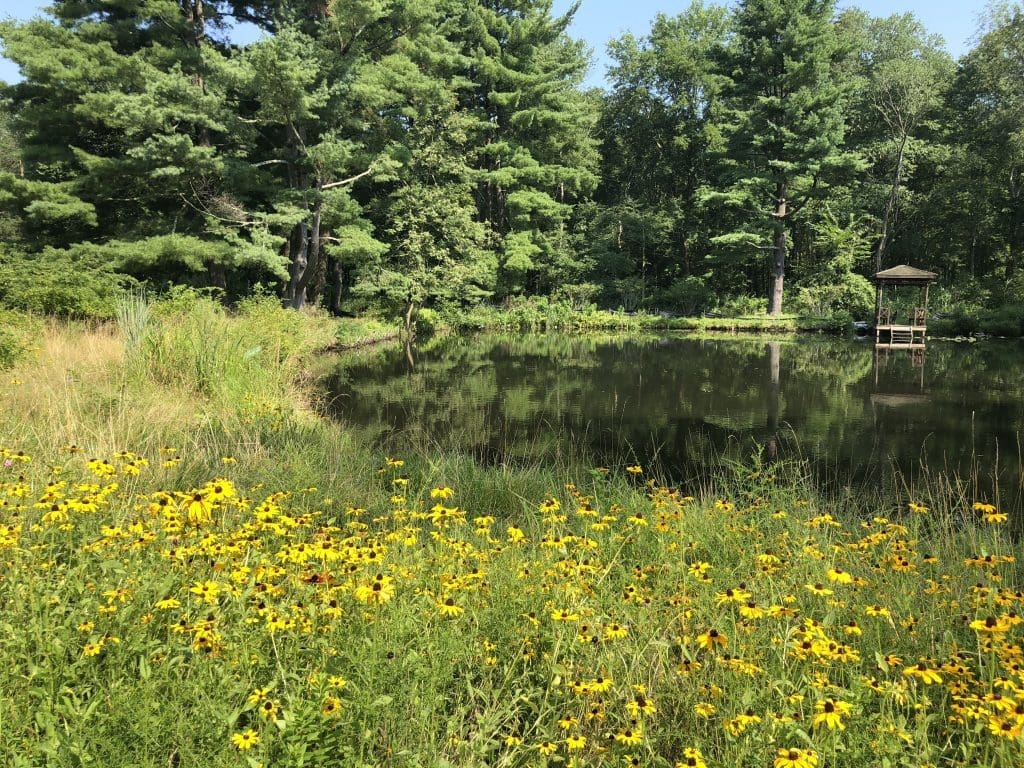
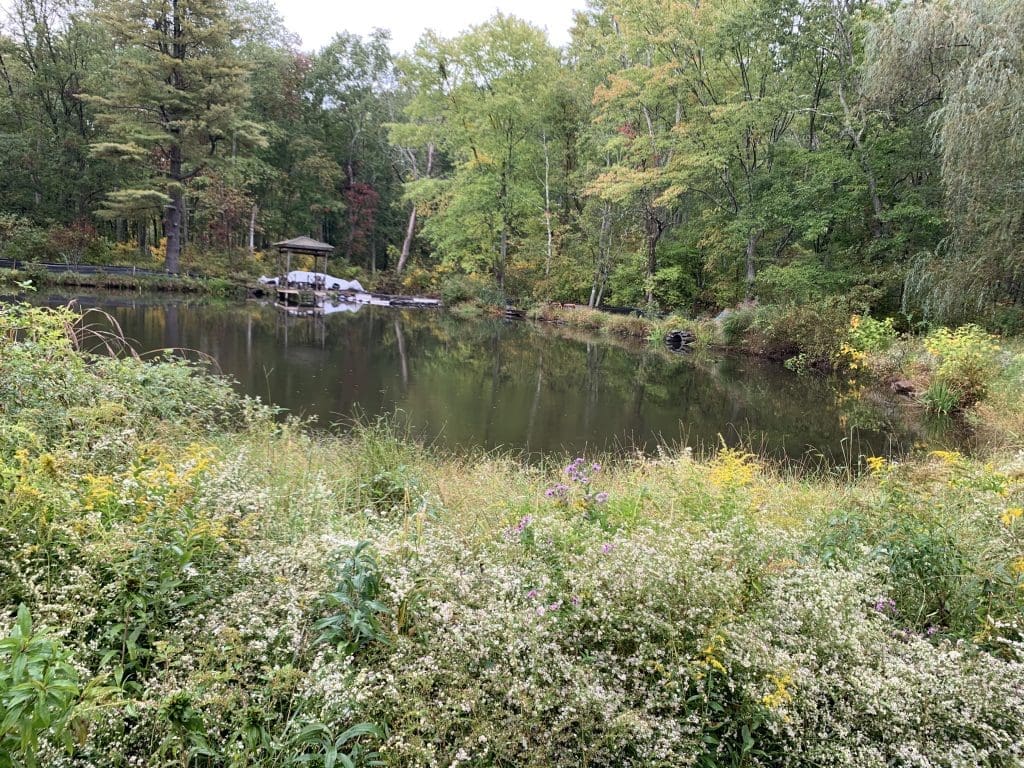
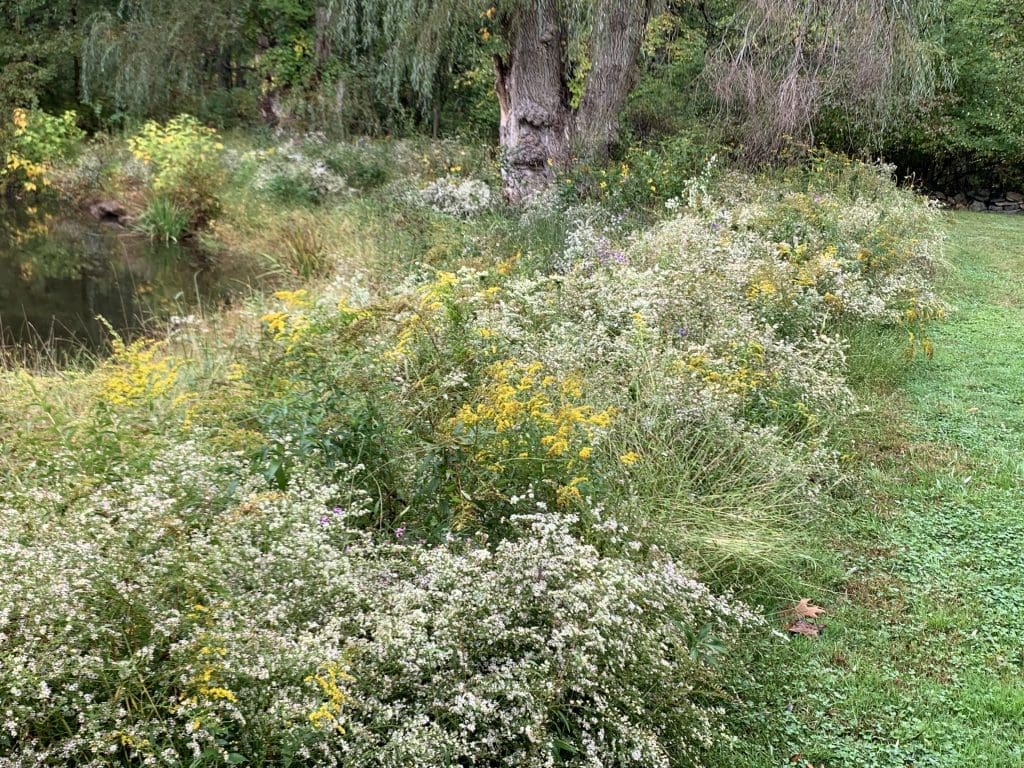
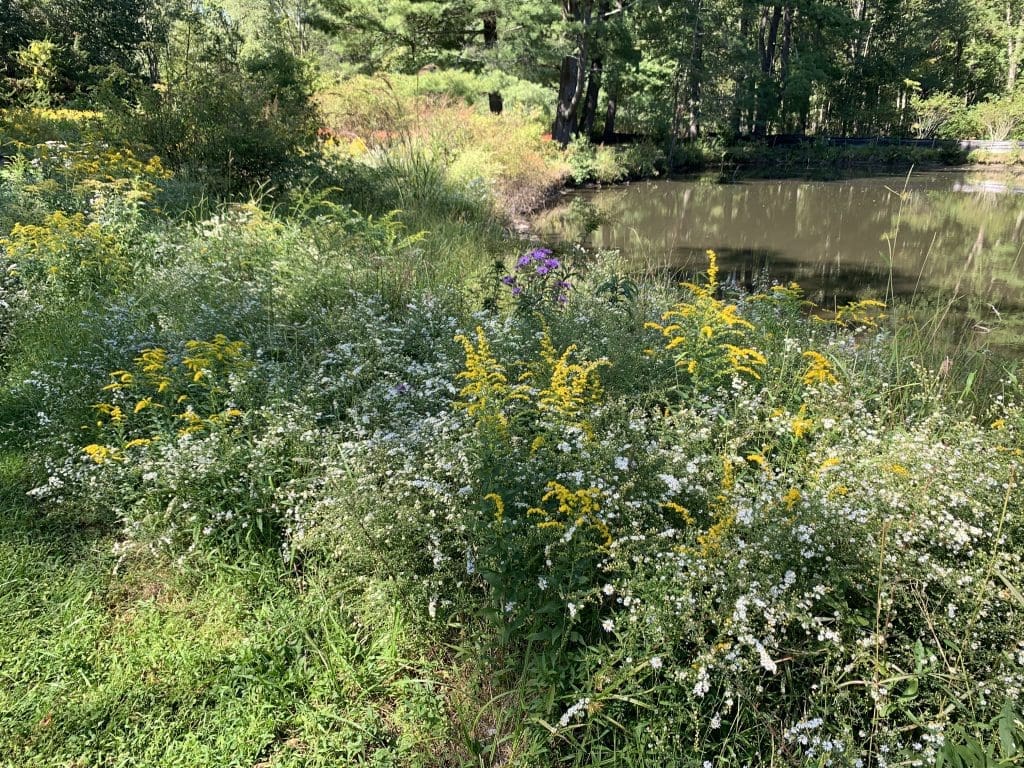
Native wildflowers act as a vegetative border between the lawn and the pond, an extension of the adjacent organic meadow.

Site Conditions for Meadow Making 

Said area is adjacent to a large pond and bordered by forest, the perfect plot to connect two important habitats. The germination potential from the existing seedbank, the wetland, and all the local birds spreading seeds from the surrounding habitats was both encouraging and exciting. The full sun and moist soils were ripe to foster a new, organic meadow habitat. GJL also designed a riparian buffer of native wildflowers, an extension of the adjacent wet meadow. Riparian buffers are effective plantings designed to intercept stormwater runoff from the lawn before it reaches the pond and threatens eutrophication.

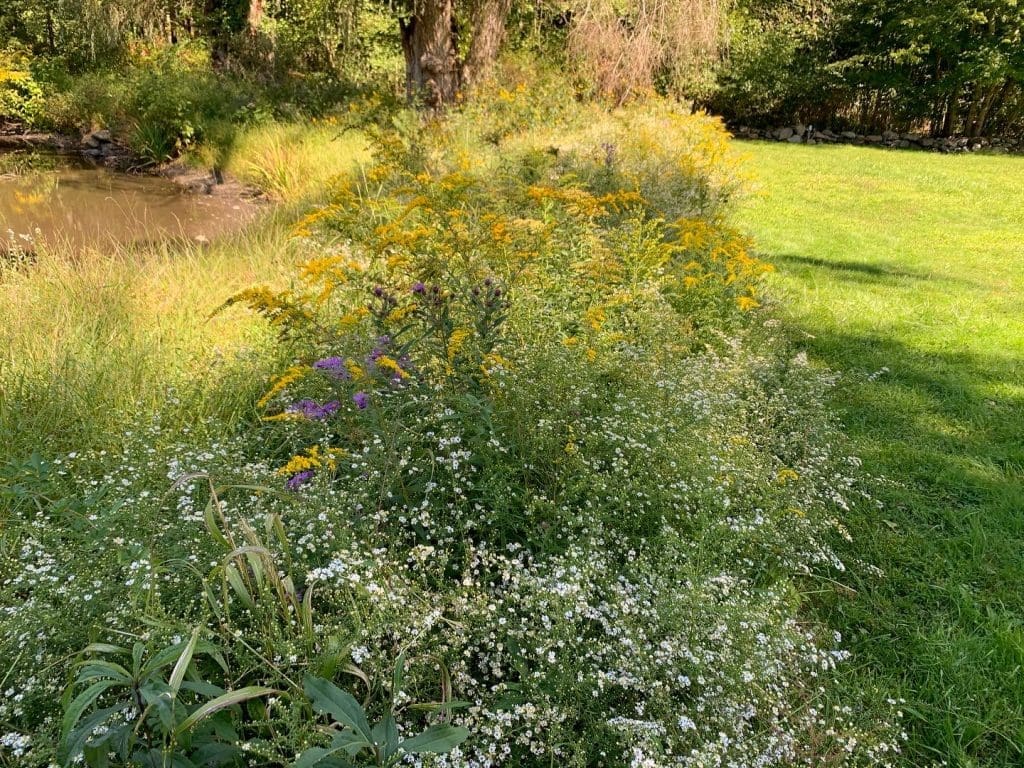
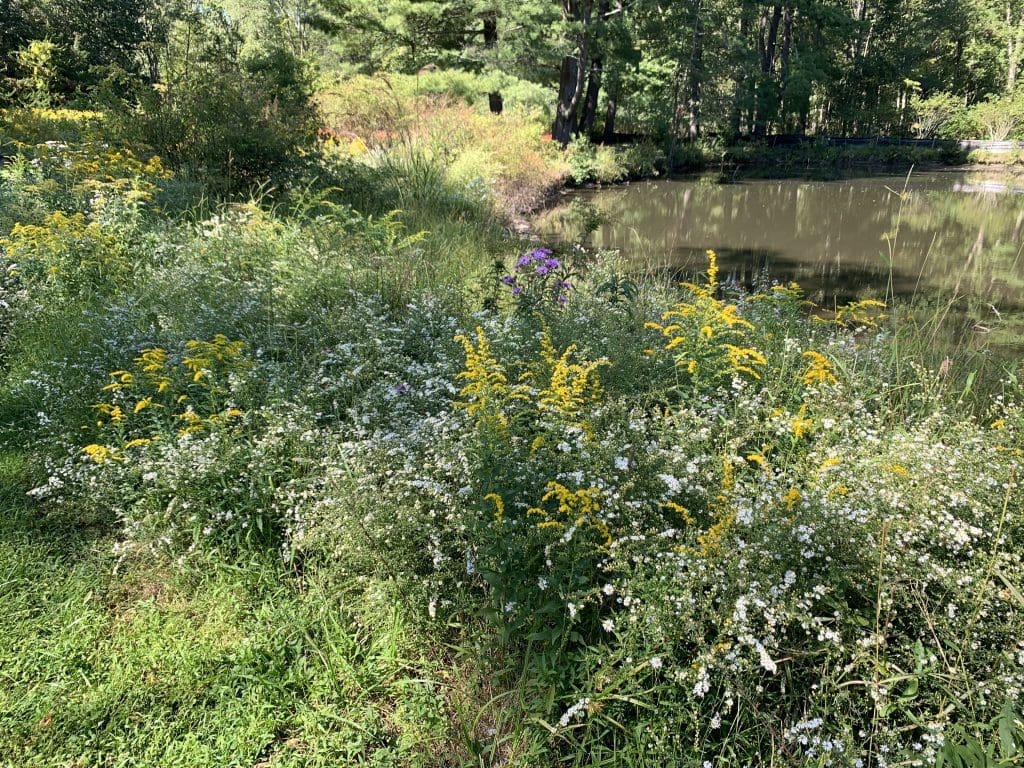
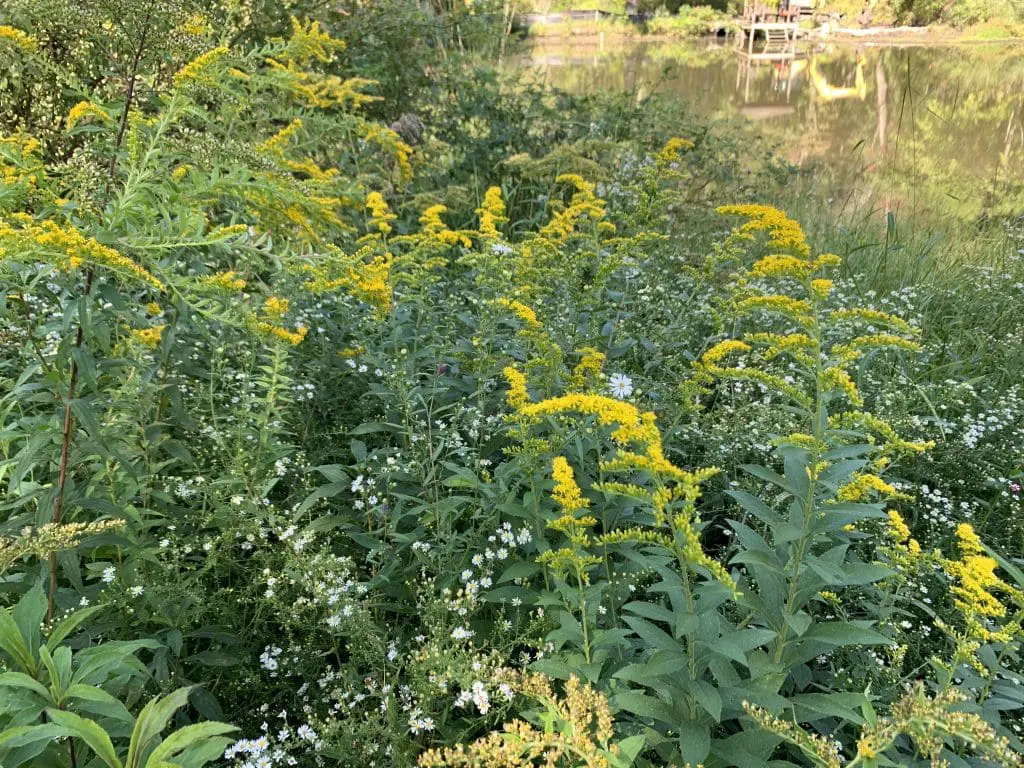
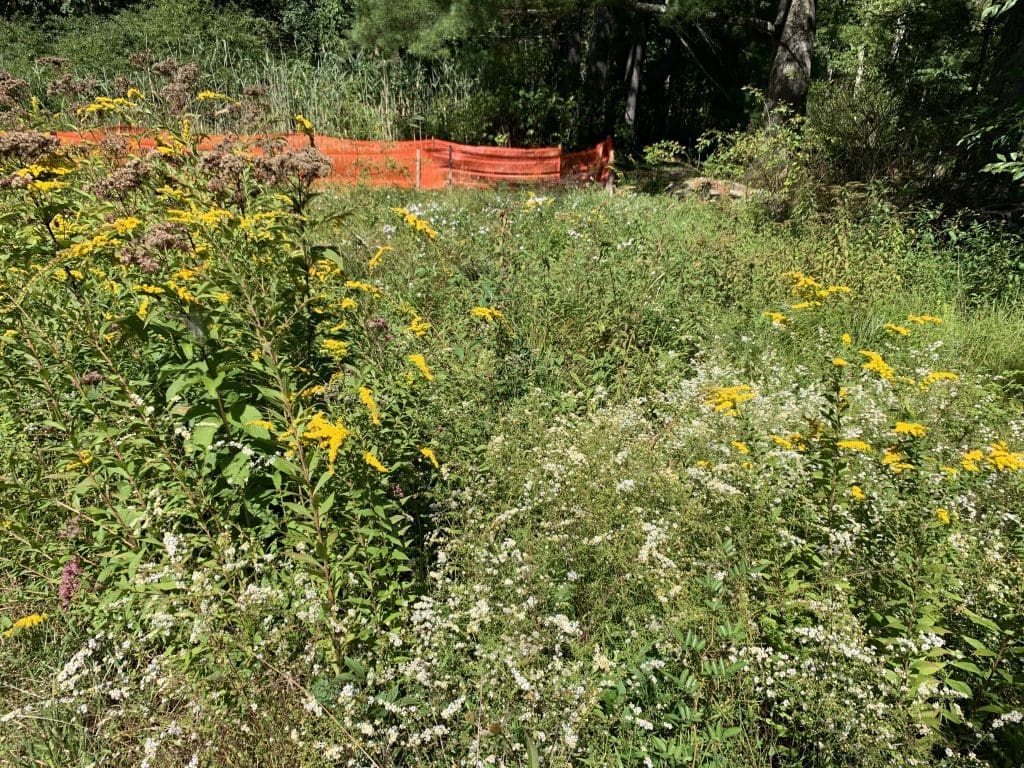
Goldenrod, aster and native grasses and forbs compose the late season meadow.

Converting a Lawn to Meadow

When converting to a meadow, it is crucial to disrupt the seedbank as little as possible, so as to not overwhelm the meadow with weeds. Within the first year of this North Salem native meadow, many ecologically beneficial native perennials appeared including: 

Goldenrod and tall white aster make a beautiful and impactful late summer / fall pairing.

Goldenrod – The New England Wildflower Society declares this native, late-blooming perennial to be the number one attractor of native bees! 

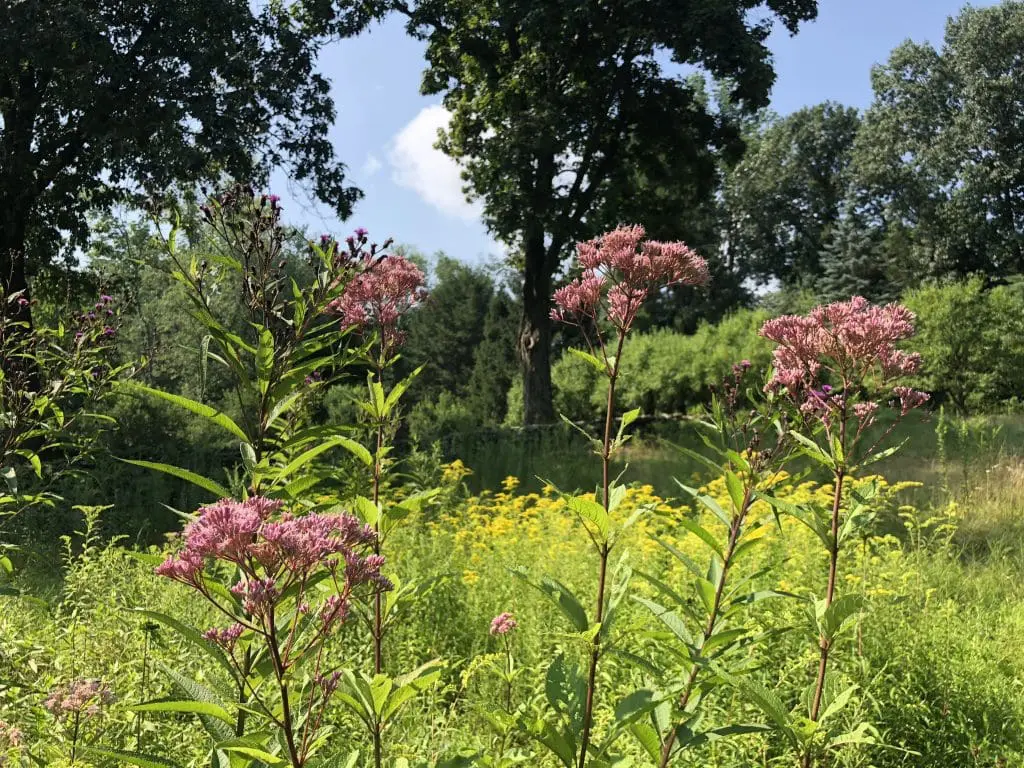
Joe Pye Weed has amazing stature and pairs well with fellow native goldenrod.

Joe Pye Weed – Tall and hardy, Joe Pye Weed is a favorite of bees, butterflies, and other valuable pollinators. Blooms at the same time as Goldenrod for a fabulous, habitat-building combination. Joe Pye Weed is also deer resistant, important in this part of Westchester. 

New York Ironweed and Goldenrod — two ecological powerhouses!

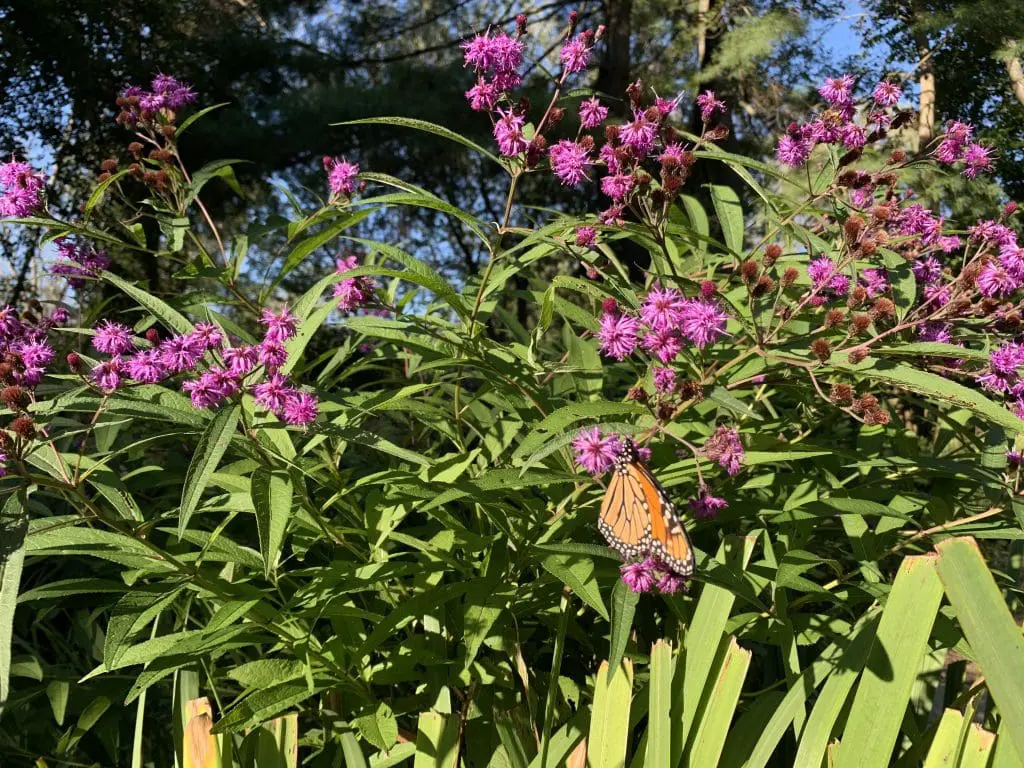
NY Ironweed – Ironweed prefers wet soils and is also a tall late-bloomer. It is a favorite of Monarchs and numerous other butterflies and pollinators. 

Monarch butterfly on native perennial New York Ironweed.

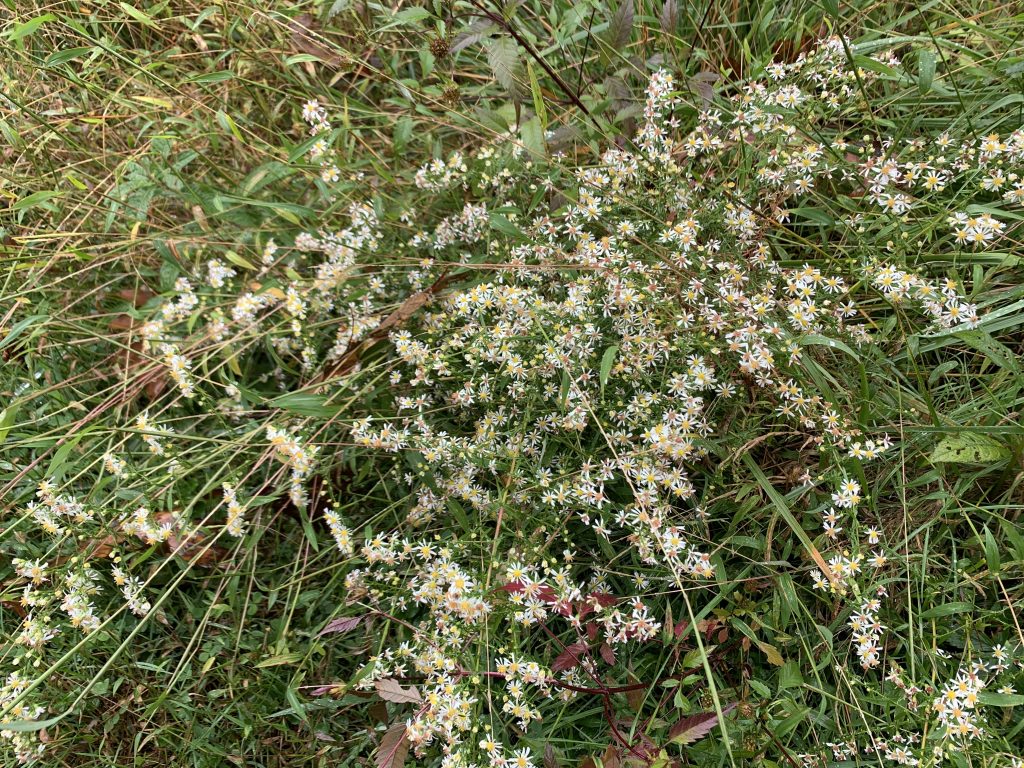
Asters — Several verities of asters emerged in this meadow including new England aster, tall white aster, and along the shadier riparian buffer section, white wood aster. Asters will attract bees, butterflies, and birds including: cardinals, chickadees, goldfinches, indigo buntings, nuthatches, sparrows, and towhees.

White wood aster along the riparian buffer that surrounds the pond.

Ecological Value of Meadows

Clearly, even the late-season snapshot of this meadow reveals how many functions each native plant provides when allowed to regenerate in its native environment. Not only do they attract numerous pollinators with their nectar, the overall meadow creates a fringe habitat between forest areas – creating safe spaces for birds to feed, gather nesting materials and transition safely between habitats. 

The meadow in early fall — evolving and ever-beautiful.

These native plants also naturally absorb, filter and let infiltrate stormwater that would otherwise become mostly run off in a lawn area. In ecological terms this is referred to as bioretention and biofiltration. 

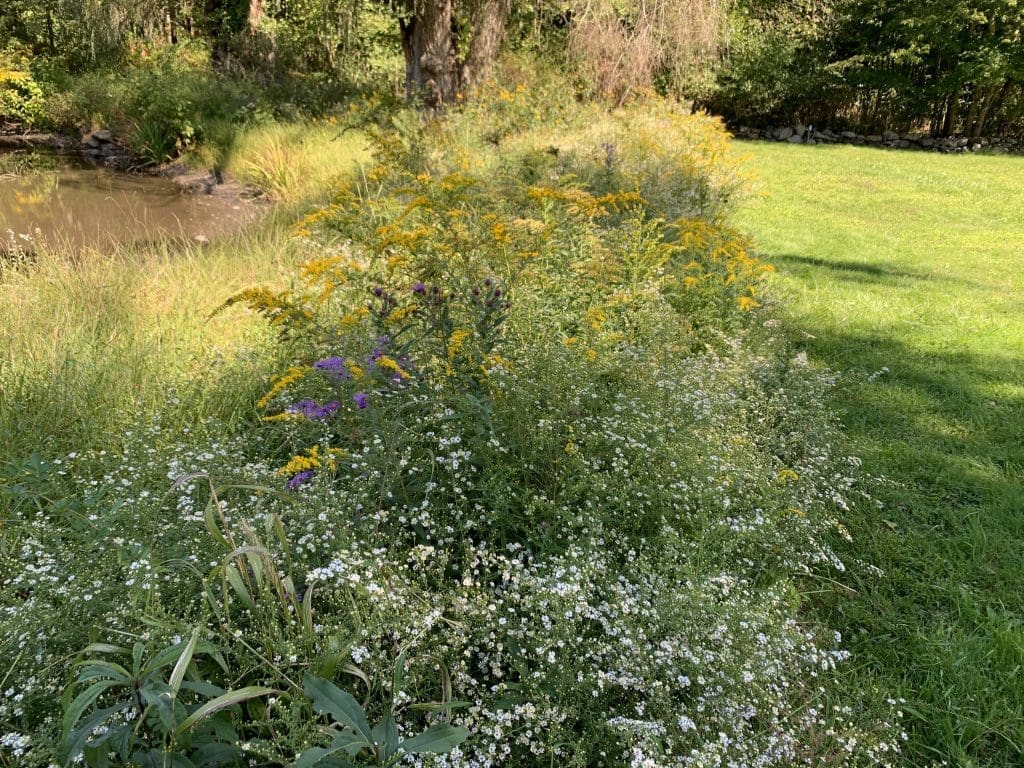
Riparian border of native perennials surrounds the pond.

Aside from a meadows intrinsic benefits, the environmental costs avoided by not maintaining a lawn (fertilizer, water, energy) are enormous.  Read up on our previous post on the cost of the suburban lawn, Lawnscaping Versus Ecoliogical Landscaping.  

Asters and goldenrod in the riparian border.

Organic Meadow Management & Maintenance 

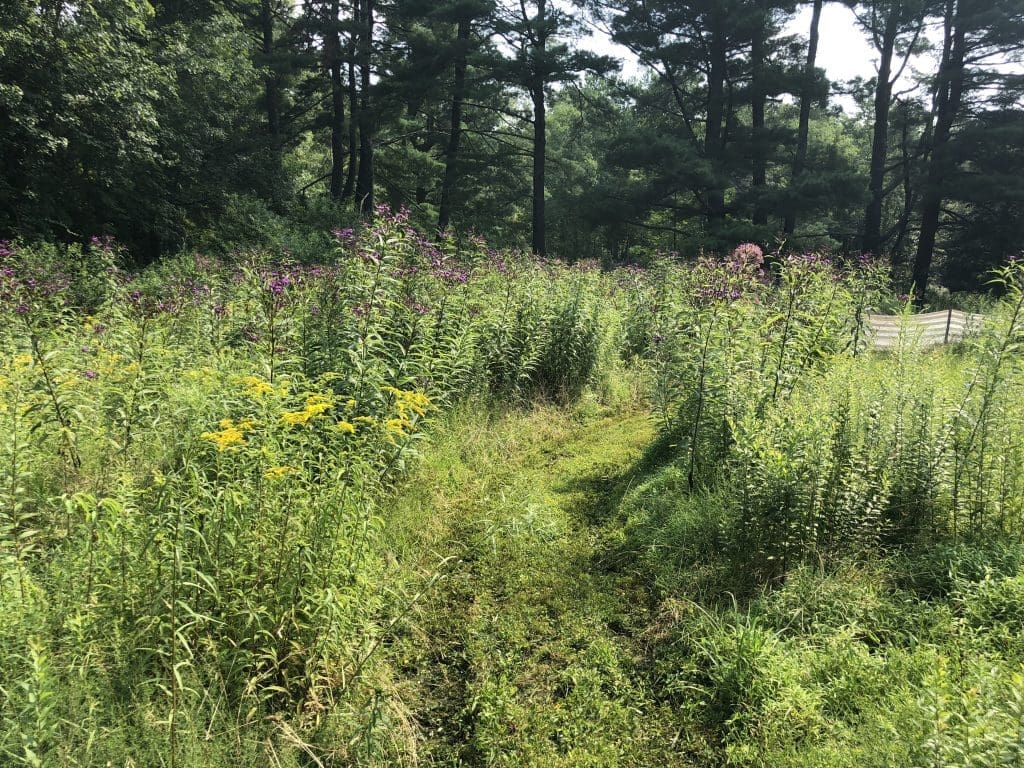
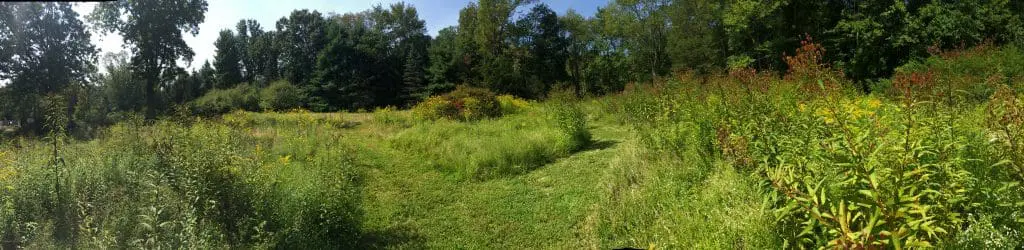
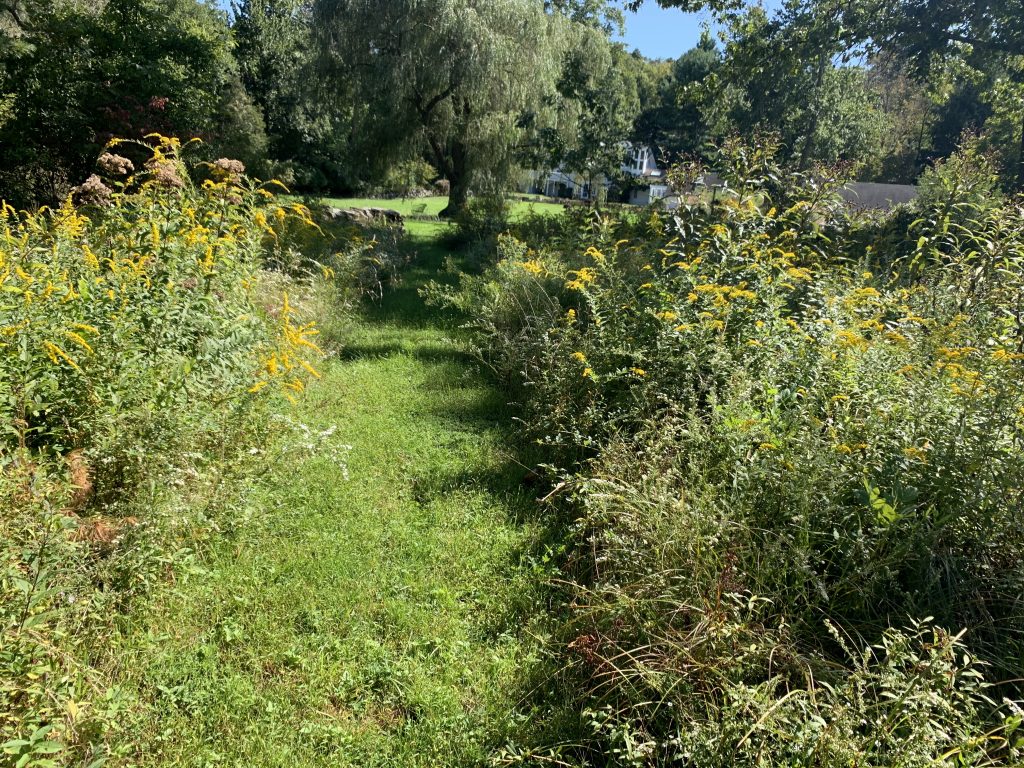
It is important to mow regularly in the first few years of the meadow, to allow sunlight to reach wildflower seeds that are slower to germinate.  GJL also mowed a walking path through the meadow – strolling the path and seeing the vibrancy of the meadow and all that it attracts is an inspiring reconnection with nature.  

We never tire of walking the mowed paths through the meadow.

In the third year we disturbed the meadow in March, before the songbirds come out, and again at the end of the summer. Prescribed burns are also effective, but difficult to obtain permits for.

Joe Pye Weed, Goldenrod and Aster — nature’s beautiful combo! (Fence in the background for an in-progress project)

We achieved the desired meadow disruption using a tractor with a spike aerator.  Afterwards, we reseeded with a northeastern wildflower meadow mix. 

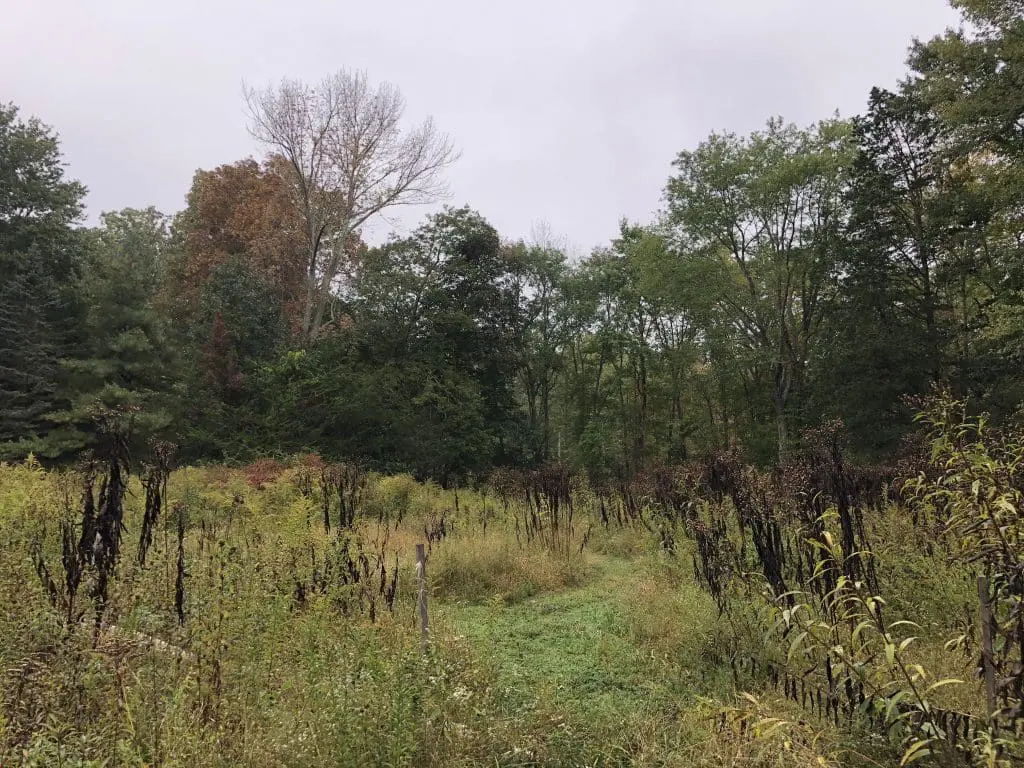
Mowed paths through the meadow are beautiful to roam any time of the year, like this early October shot.

This year, management was very minimal, as the new seeding began to fill in, bringing a fresh succession of wildflowers. We are pleased with the succession and for the time being only need to mow for access.  GJL will continue to monitor for woody species, as a meadow naturally wants to convert to a forest overtime. 

Meadow in fall, tall and dark NY Ironweed make a statement.

Thinking of converting your lawn to an organic meadow? We’d love to discuss your project! Contact us or reach out at 914-560-6570.

Filed Under: Featured Work, Wetland Restoration & Storm Water Tagged With: bird habitat, certified wildlife habitat, create habitat, designed habitat, ecological landscape design, ecological landscaping, garden designers, landscape designer, lawn alternatives, meadow design, meadow management, native meadow, native plant garden, NOFA organic, north Salem ny, organic, organic gardening, organic landscaping, organic meadow, pollinator garden, Westchester NY, wet meadow

The Organic Mechanics Soil Company is an organic compost and potting soil manufacturer using 100% organic and locally-sourced ingredients. We use their Biochar Blend featuring organic compost, worm casting and biochar, in virtually every one of our landscape installations. We believe it is a key ingredient in developing healthy soil microbial populations, in turn producing thriving. organic gardens.

In the Pro Spotlight series, we highlight our partners, colleagues, and respected players in the ecological landscaping industry via short video interviews.

Founder Mark Highland, ‘the Organic Mechanic’, has serious credentials, with a BS in Environmental Horticulture and a MS focusing on compost and potting soil. He also helped the famous Longwood Gardens develop their composting program to create their own potting soil. In 2006 he founded Organic Mechanics, and we have been huge fans of his products since we began using them several years ago!

Learn more about Mark and Organic Mechanics in our video interview, at a 2018 NOFA Conference.

Watch the whole Pro Spotlight series on our You Tube Channel Playlist.


Filed Under: Ecological Education Tagged With: biochar blend, ecological landscaping, garden installation, grow your own, interview, landscape installation, mark highland, organic compost, organic compost biochar, organic garden, organic gardening, organic landscaping, organic mechanics, organic potting soil, pro spotlight

Ever wonder what a landscape designer’s home landscape is like? Westchester homeowners gathered on September 13th at Jay Archer’s personal home to tour his ever-evolving wild landscape.  The tour was part of a larger healthy yard garden tour of Westchester organized by Bedford 2020’s Healthy Yard project, an initiative promoting natural and organic landscape practices that work to improve the environment, rather than degrade it.

www.healthyyards.org promotes natural, organic landscaping in Westchester, NY communities.

Healthy Yards & Bedford 2030

Healthy Yards’ grassroots efforts to promote ecological landscaping practices are extremely commendable and we feel fortunate to have such passionate and effective partners in the community. Bedford 2020, founded in 2010 set out to reduce the town of Bedford, NY’s greenhouse gas emissions by 2020 by promoting a broad range of environmental practices. In May of 2019 they announced a staggering 70% reduction in emissions! Read about the new goals set for 2030.

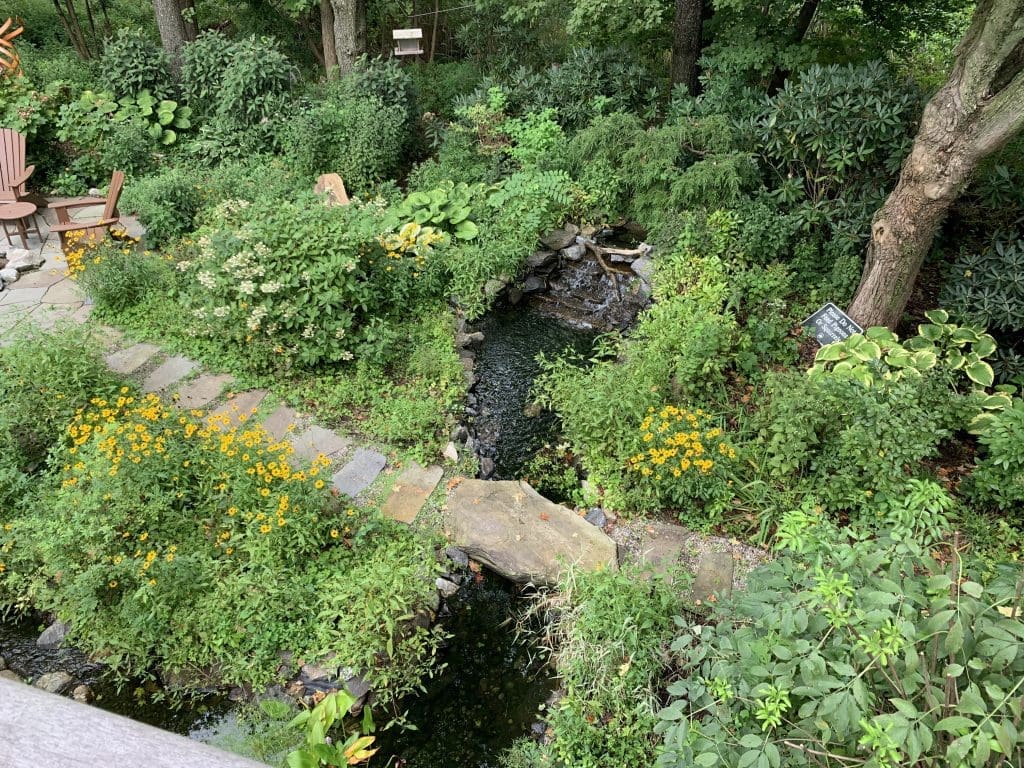
Deck-view of the constructed waterfall, stream and stone pathway and bridge.

Attendees of the Healthy Yards garden tour got to view first-hand the potential of turning a lawnscape into a thriving, ecological masterpiece.  Jay and Lora’s backyard used to be a lawn until they ripped it out and designed a waterfall, stream and fishpond surrounded completely by gardens.

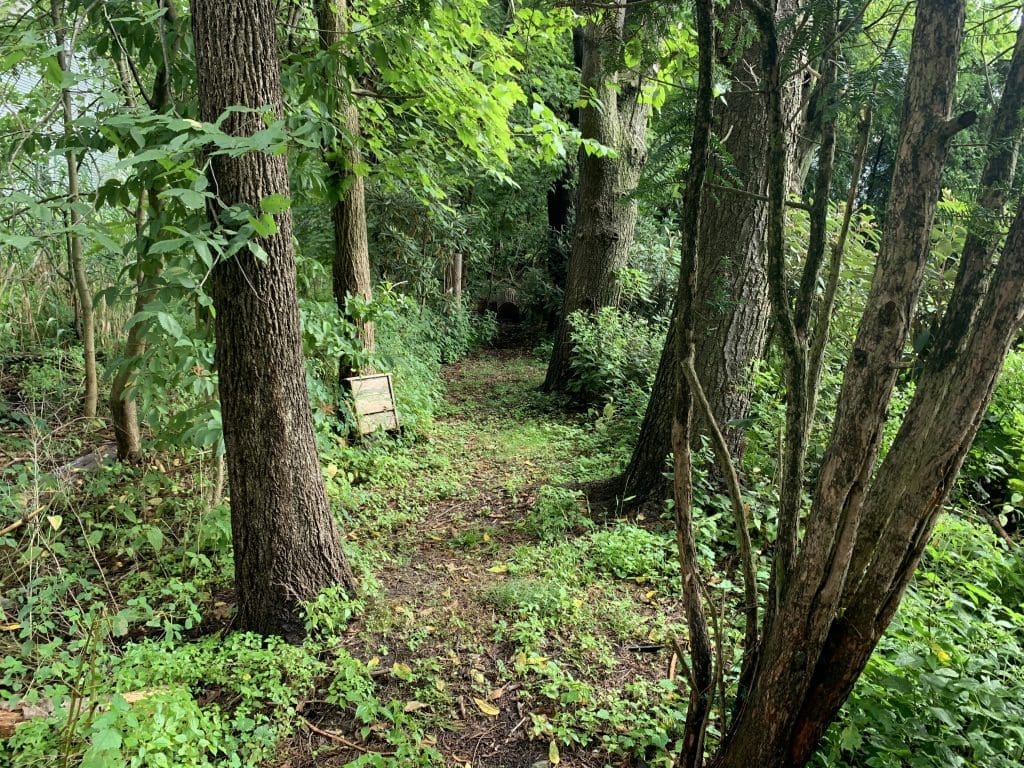
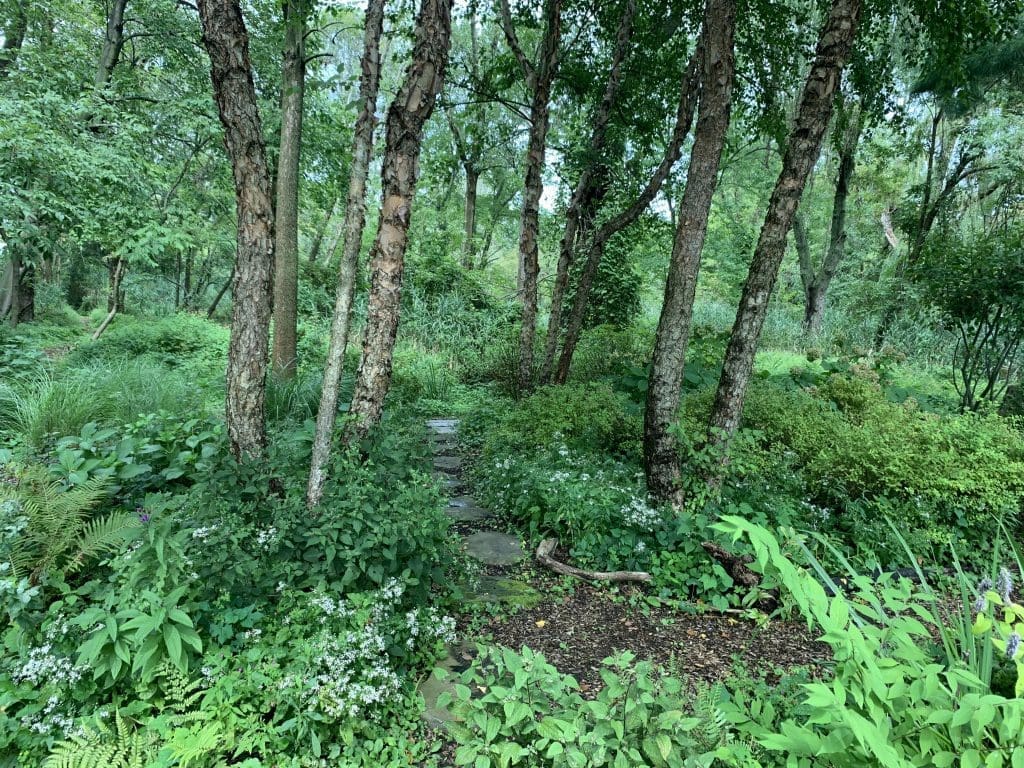
Woodland walk around the perimeter of property, beneath mature trees.
River Birch allee along the pathway leading to the wetland.
Fungus growing on stumps lining the pathway create a focal point that celebrates natures processes.

Site Conditions: Use to Inform & Enhance Design

The backyard is part shade, bordered by mature trees, and abutting by a twenty-two acre wetland. Stone and wood chip paths meander through the mostly-native garden areas, each designed with an ecological purpose –creating habitat for pollinators, birds, absorbing rainwater, and enriching the soil.

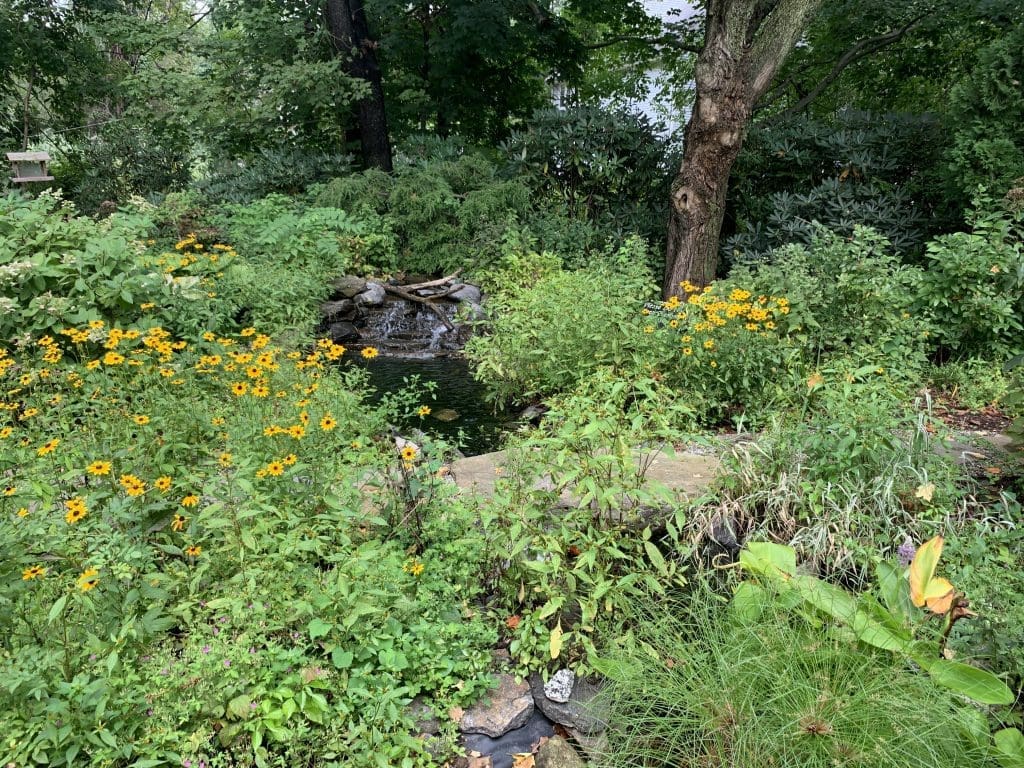
Constructed waterfall framed by black-eyed susan and an evergreen berm.

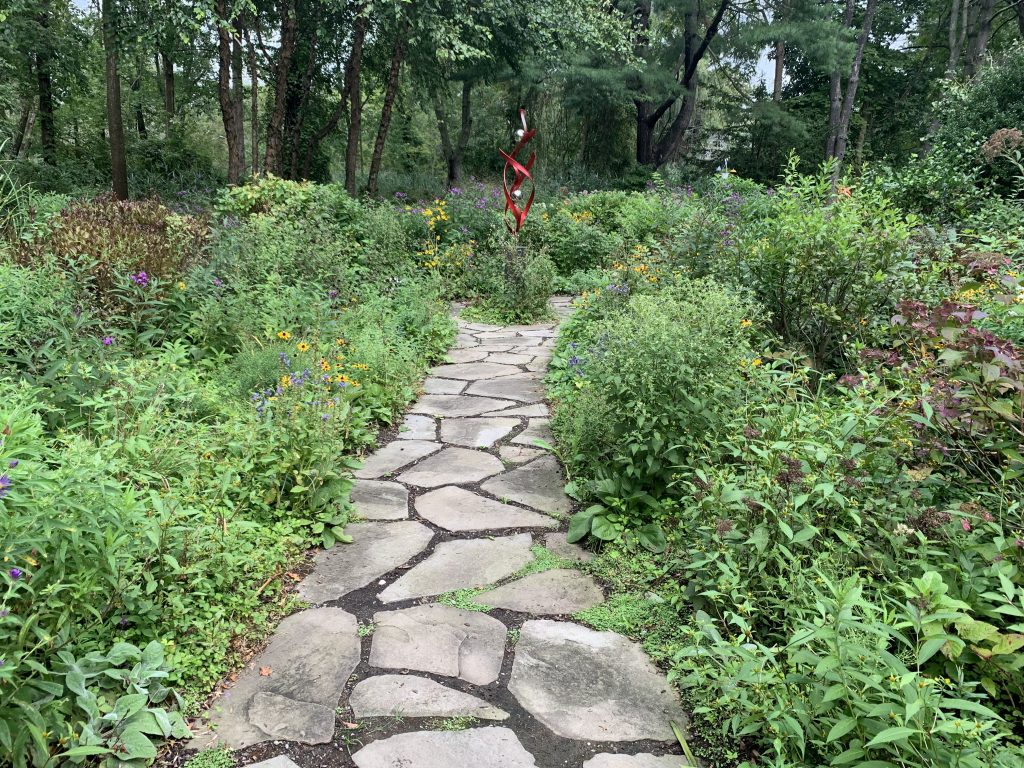
Kinetic sculptures create focal points, especially during the winter months, as does the allee of river birch trees leading to the wetland paths. A berm of evergreens provides a backdrop to the waterfall, who’s soothing trickling fills the landscape for seven months of the year.

Natural stone walkway forks at the kinetic sculpture, turn either way for a full walking loop of the backyard perennial garden.
Beauty in the early fall garden featuring black-eyed susan, New York ironweed and hydrangea.
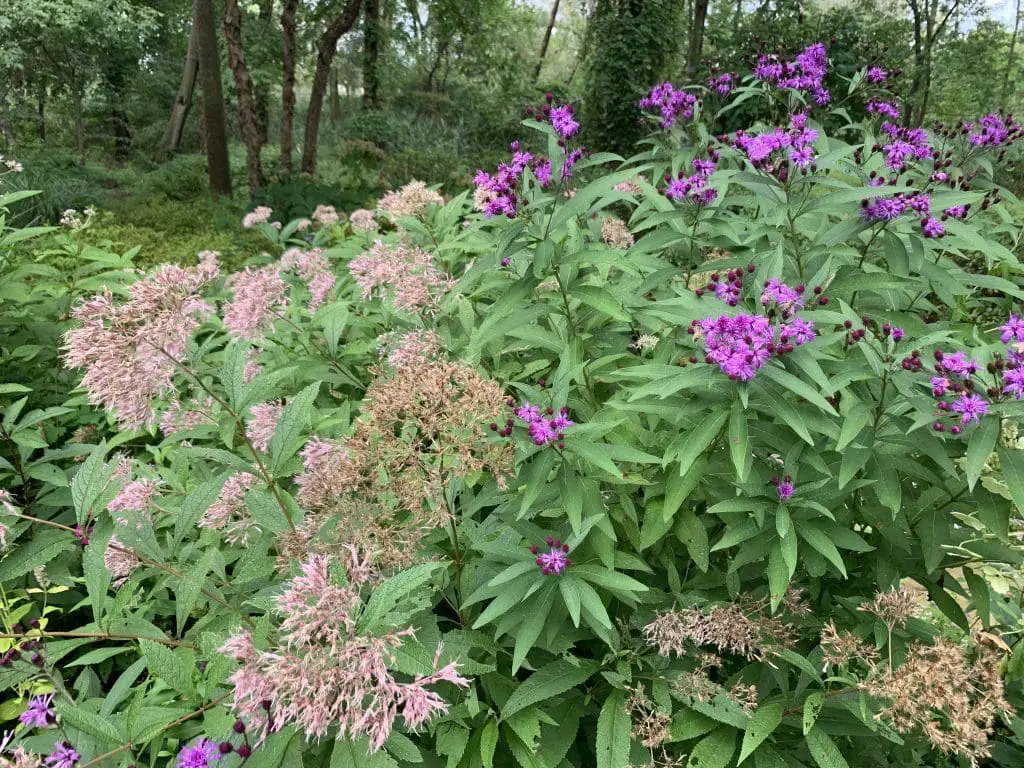
Joe Pye Weed and NY Ironweed — pollinator favorites in late summer / early fall.
This kinetic sculpture is a focal point at the culmination of three walkways. NY Ironweed and Black-eyed Susan make a fabulous pairing in the rear garden.

Pick Plants with Ecological Value

The shrubs and perennials were chose for the value to pollinators and birds – providing food sources, host sites, shelter and nesting materials for these essential species in need of protecting. Some native perennials, like New York Ironweed, migrated over from the wetland and returns in abundance every August.  Ironweed is a favorite of Monarchs, and a delight in the garden when well managed – its height and proclivity can make it easily overtake a garden left unattended.

Monarch feeding on NY Ironweed.

Design Spaces for Gathering, Observing, Touring

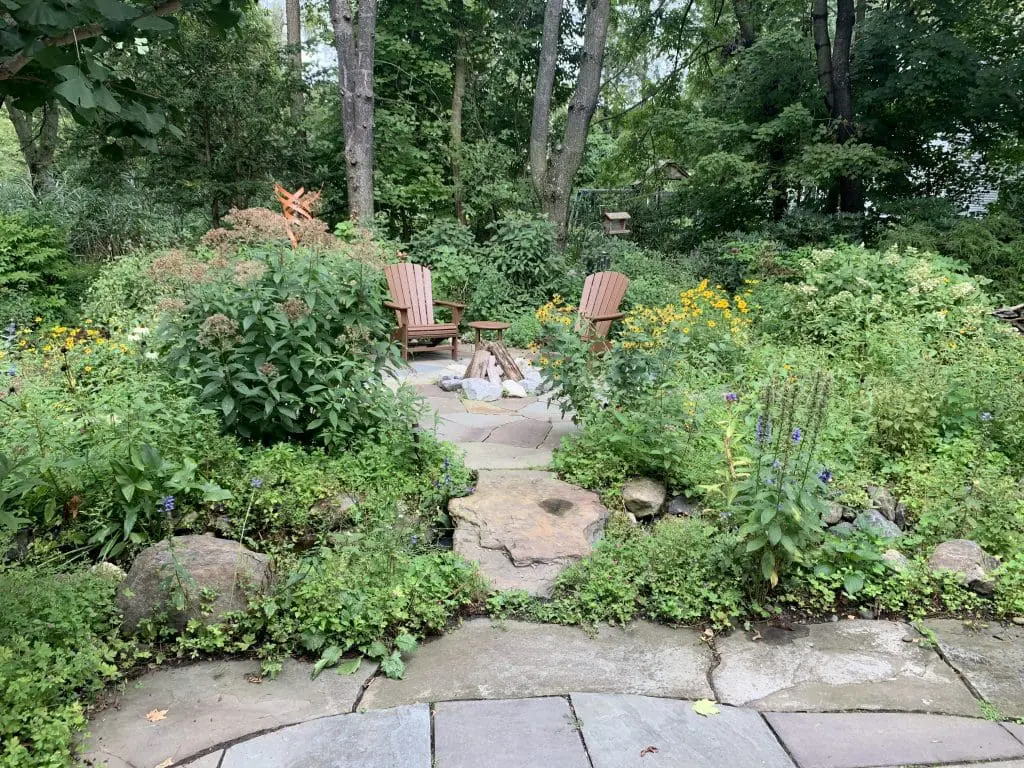
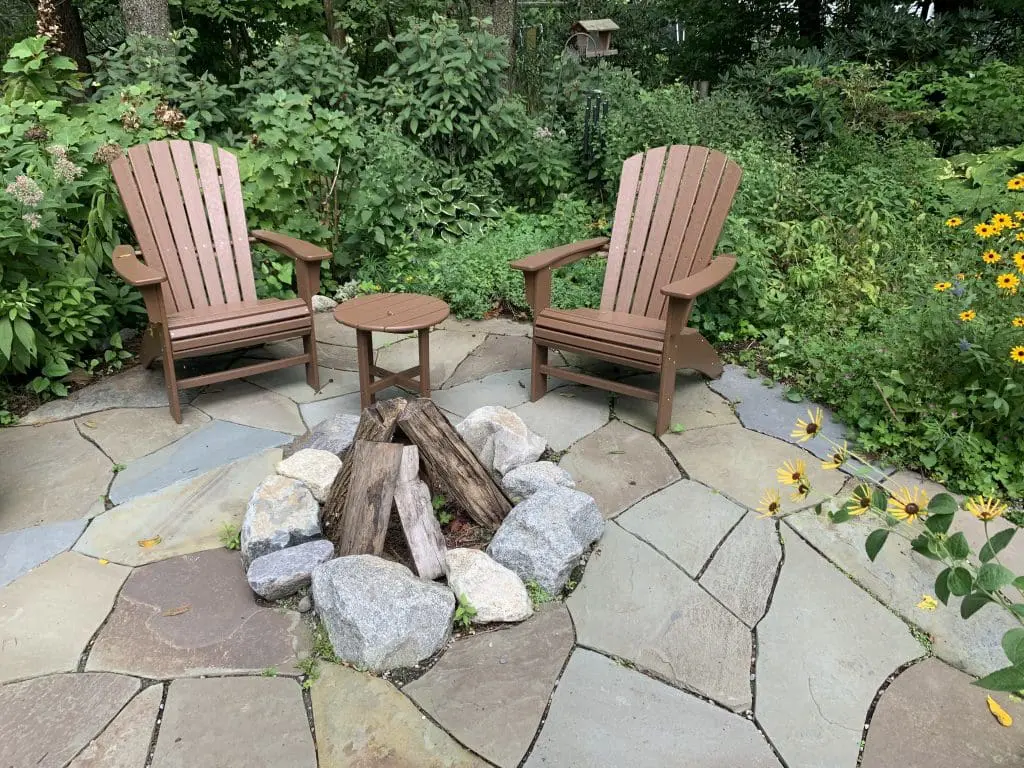
Fire pit patio & seating area, nestled among the woodland garden.
Natural stone and a simplistic fire pit design match the vibe of this wild garden.

d]]

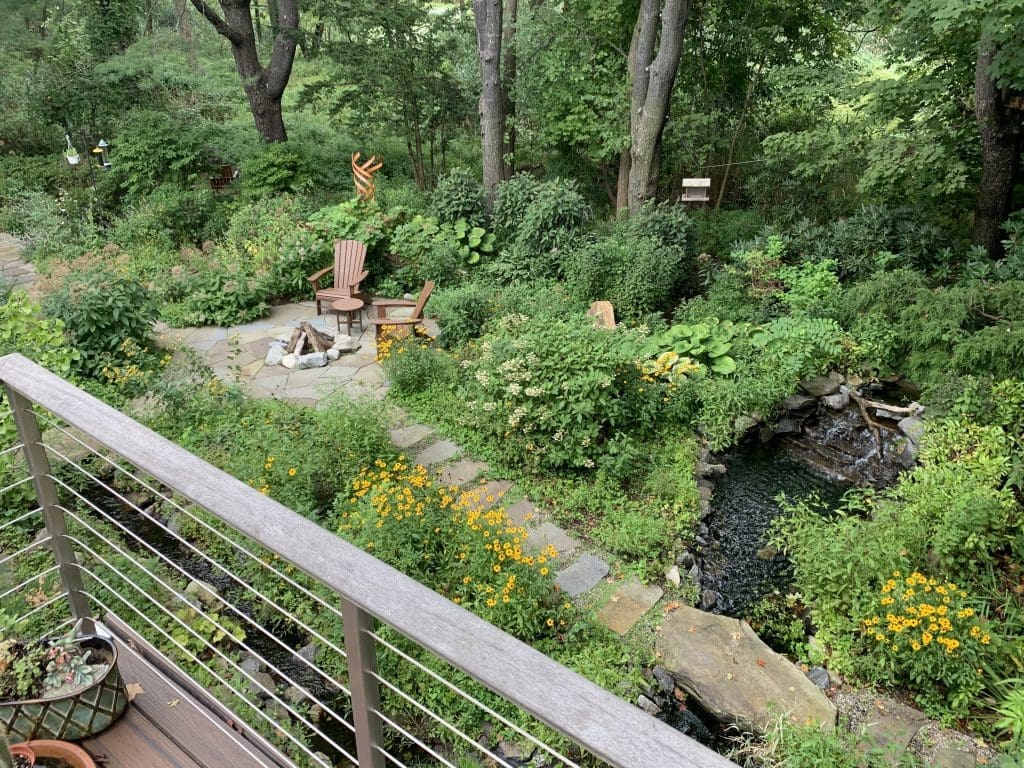
View from the balcony — a great atmosphere for entertaining!

Jay and Lora’s backyard features multiple seating areas, all with unique perspectives and experiences of the garden. The lower patio offers a direct view of the water feature and a ground-level perspective of the intricacies of a five-year-old, large native garden. Strolling along the gravel and stone path, you reach a natura stone firepit and Adirondack chairs. The second-story deck provides a birds-eye view of the entire layout, a direct sightline to the wetland, and a perfect birdwatching perch.

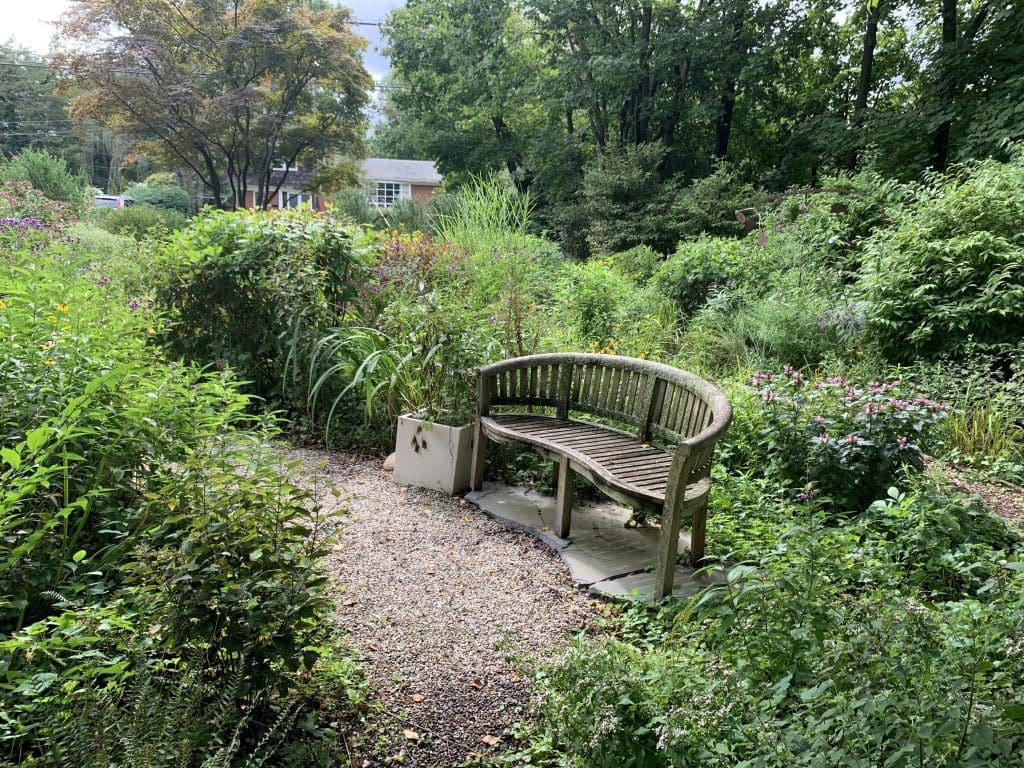
Bench tucked within the native perennials for a reflective, serene sit.

Ecologically Impactful Front Yard Landscape

The front landscape received a true facelift as well. The asphalt driveway was removed (4 layers!) and replaced with Porous Pave, a permeable asphalt substitute that allows stormwater to absorb through it and percolate into the aquifer.  Catch up on the Porous Pave install on our YouTube video Stormwater Lab: Porous Pave vs. Asphalt. The front walkway was completely renovated, with the help of Louis Fusco Landscape Architechts.  To the left, a pollinator garden frames a stone pathway leading to the backyard.

Native perennial garden borders the walkway from front stoop to rear yard.
Love this combination of colors and textures! This garden evolves and looks interesting throughout the seasons.

Contact us about your ecological landscape design project, or call us at 914-560-6570.

Filed Under: Events & Garden Tours Tagged With: backyard pond, ecological landscape design, ecological landscaping, fish pond, garden design, garden designer, garden tour, healthy yard garden tour, jay archers garden, landscape design, landscape designer, native plant garden, natural landscaping, naturalist tour, New York real estate, perennial garden, pond, pond construction, Rye New York, stream, water feature, waterfall, wetland tour, wetland walk, wild garden

When is the best time to start planning your new landscape design? What goes into the design process, site development, construction and installation? Jay Archer discusses the design process in creating a Landscape Design Master Plan, as well as the importance of a well-thought out and executed installation timeline, especially pertinent when coordinating with home construction.

Fall is a great time to initiate a landscape design plan, especially if you’d like to enjoy your new landscape by Summer 2021! Site development can occur in late fall, winter and early spring, setting the foundation for planting and finishing touches in spring.

Contact us to discuss your ecological landscape design or call us at 914-560-6570.

Filed Under: Featured Article, Landscape Design Tagged With: ecological landscape design, ecological landscaping, garden designer, habitat garden, landscape architecture, landscape construction, landscape design, landscape design master plan, landscape designer, landscape ecologist, landscape plan, natural landscaping, perennial garden, pollinator garden

The global pandemic has shifted (among many other things) our perspective on our living spaces. There have been anecdotal reports of urbanites fleeing to the suburbs since the beginning of the stay at home orders. Fairfield and Westchester County home prices increased, and inventory shrank during spring and summer, an obvious ripple effect of the severity of the virus in NYC.

The desire for more real estate, including outdoor space, makes perfect sense given how limited our social outings and engagements have become. Americans are seeking safe, relaxing outdoor spaces to seek respite in the age of covid-19.

The garden captivates all. Photo by Tetyana Kovyrina from Pexels

At Green Jay, we have long touted the benefits of spending time outdoors, especially in a setting that engages you with wildlife and the magic of nature. Below we’ve compiled some tips to help you make the most of your new landscape in the suburbs.

1. Maximize Your Landscape’s Human Health Benefits

Our first priority is always to make the landscape safe and healthy for human engagement.  This of course means using no toxic chemicals whatsoever, our landscapes are all 100% organic. Our landscapes are designed to be walked through, played in, touched, smelt, and eaten, not avoided because of a toxic pesticide application.

Air circulation is also of critical importance to prevent mold and maintain air quality.  Designing for improved air circulation often involves removing or dramatically pruning existing vegetation, especially if it was planted too close to the house. Now, more than ever, we must take care of our lungs and respiratory systems.

Finally, cultivating diverse soil microbes, and spending time in the soil, has shown to have dramatic benefits on our mood and mental health.  Read up on our previous blog post, How Can We Make Our Landscapes Safer and Healthier?

2. Observation Feeds the Soul – Design for Every Season

The reason we are in the landscape design business is because we are fully addicted and obsessed with the daily unfolding of nature in our landscapes. The constant evolution of a garden, day to day, week to week and season to season, begs us to slow down and take notice.  Take a daily stroll in the garden: observe what is new, what has passed, and the indicators of what’s to come.

Designing a landscape that looks beautiful year-round is of course desirable.  But designing a landscape that captures your interest and excitement year-round is another goal entirely.

Pay attention to what areas of your landscape will be most used when and plan your design accordingly – for example, a summer-blooming pollinator garden around the pool area will probably get maximum facetime and enjoyment from your family. (Does it get much better than butterflies by the pool on a summer day?)

Modern pool area with summer-blooming perennial pollinator garden.

We extend the blooms into fall with perennials like asters, phlox, and goldenrod – all natives that will keep the bees and butterflies happy!

A curbside perennial pollinator garden in all its late-summer glory! (Darien, CT)

As the temperatures drop, your maintenance choices become more critical.  We leave up hollow stemmed perennials all winter for insects like native bees to overwinter in.  Other native perennials like Coneflower provide food when they turn to seed for Goldfinches and other birds.

Native ornamental grass Northern Sea Oats (Chasmanthium latifolium) looks stunning in fall and the seed heads provide food for birds!

For the winter months, we make sure to have native berry-producing shrubs like Winterberry and Aronia which provide valuable food resources for migrating and local birds. Landscape architectural elements become more significant in winter, for example, evergreen trees, trees with unique bark (birches, dogwood), boulders and sculptures carry greater impact in winter.

River Birch makes a dramatic statement in winter.

3. Extend your Outdoor Living Season

As the days get shorter, our need for outdoor interaction does not diminish. Simple design elements can enable you to enjoy your landscape through fall and winter and encourage you out into the fresh air daily! For example, we have designed garden stroll paths that meander through mature trees and understory shrubs, a walk that is just as delightful in fall and winter as in summer.

Spring bulbs brighten up a landscape in early spring when not much else is awake yet!

Many of our landscapes include fire pit areas, which can be a great congregating spot for entertaining in the colder months. Our clients that love to entertain will opt for a full-scale outdoor kitchen, equipped with a fireplace and mobile heat lamps, to truly extend the outdoor living lifestyle throughout the seasons.


Design a landscape that can do both: pool area for summer and patio bbq area with outdoor fireplace for those cooler nights.

Simple & functional outdoor kitchen featuring built-in grill and mini fridge, perfect for entertaining!

4. Create a Dynamic Landscape with Water

Nothing quite beats the ambiance of softly trickling water – it is both energizing and soothing, mesmerizing and grounding.  We almost always encourage a water feature of sorts to create a relaxing atmosphere, whether that be a smaller fountain or pond-less water feature, or a constructed waterfall, stream or pond! Even the simplest water feature will have a beneficial effect for wildlife. Birds seek shallow waters to bathe in, dragonflies will lay eggs in water and eat mosquito larvae, and a pond allows for a wonderful aquatic habitat at home!

Fish pond with constructed waterfall (not shown) brings a tranquil habitat to your landscape.

This pond-less basalt bubbler is easily switched on or off and adds a delightful trickling sound to your yard! (Honeysuckle will eventually cover the shadow box in rear, this photo is post planting!)

 5. Invite Pollinators and Wildlife

Time and again we receive feedback from our clients about how vibrant and alive their landscape is – always buzzing with bees, butterflies, hummingbirds, songbirds, frogs, the list goes on! Once you have a yard that attracts wildlife and pollinators, you’ll never want to go back to the foreign, sterile plants of traditional landscapes.  We invite you to find serenity in the suburbs by reconnecting with the natural world, taking time to observe the visitors in your garden, and recognizing the importance of the critical habitat you’ve created on your property. Learn more about Designing for Biodiversity and Designing an Organic Pollinator Garden on our previous blogs!


Contact us about your landscape design project, or call us at 914-560-6570.

Filed Under: Landscape Design Tagged With: backyard pond, butterfly garden, certified wildlife habitat, design for year-round interest, ecological landscape design, ecological landscaping, Fairfield county, fairfield county real estate, habitat garden, healthy yard, landscape design, landscape design master plan, landscape designer, native plant garden, natural landscaping, organic garden, perennial garden, pollinator garden, suburban living, suburban real estate, westchester county, westchester county real estate

This new home construction in Greenwich, CT required a Landscape Design Master Plan as it was completely bare yet abutted a wetland—a blank design slate that necessitated careful planning and minimal impact.

Joining the project early on, Green Jay Landscape Design developed the ecological design plan that included modern bluestone walkways in the front yard, a patio along the pool area, numerous garden areas, a raised bed vegetable garden, wetland restoration plantings, and a sod installation. Learn more about our Ecological Landscape Design services. 

Rectilinear, modern bluestone walkway planted with creeping ground covers. Vegetable garden in the background.

Modern & geometric bluestone patio off the deck in the pool area.

Poolside bliss!

As landscape design and build firm, we always prefer to become involved as early on in the new home construction process as possible.  In this case, we were able to coordinate our hardscape (walkways and patio) construction and landscape installation appropriately with the final phases of the home construction.

Poolside native perennial garden in full bloom (pre sod-installation).

The client hired us during the winter, allowing ample time for the design to be finalized and the project to be built on a timely schedule – they were able to enjoy their new, organic landscape sanctuary all summer long!

Bluestone walkway to main patio, pool area in the background.

The scale of this project might initially make you think it would require a landscape architect.  However, Jay Archer has a unique expertise in wetland mitigation, as well as a seasoned eye in designing native and ecological perennial gardens. Our master mason Aztlan can realize any and all of your custom masonry dreams with artistic expertise.

As a design & build firm, we see to it that the design is realized accurately, with expert craftsmanship and attention to detail. With Jay as both lead designer and senior project manager, we are also able to adapt and respond quickly when site conditions bring about new challenges.

Front entrance bluestone walkway with sweeping native perennial gardens.

Curvilinear garden beds line the front yard, grounding mature trees and framing the property.

Poolside with the bird and butterfly garden. This is what summer dreams are made of!

Contact us about your landscape design project, or give us a call – 914-560-6570

Filed Under: Landscape Design Tagged With: bluestone, bluestone patio, bluestone walkway, butterfly garden, curb appeal, custom masonry, ecological landscape design, ecological landscaping, hardscaping, healthy yard, landscape construction, landscape design, landscape design master plan, landscape designer, landscape development, landscape installation, masonry, native landscaping, native plant garden, natural landscaping, organic landscape, patio, pool, pool garden, pool landscaping, pool patio

  • « Go to Previous Page
  • Page 1
  • Interim pages omitted …
  • Page 21
  • Page 22
  • Page 23
  • Page 24
  • Page 25
  • Interim pages omitted …
  • Page 60
  • Go to Next Page »

Footer

Mailing Address: 222 Purchase Street, #144 Rye, NY 10580
Shop Address: 369 Bradhurst Ave, Hawthorne, NY 10532
(914) 560-6570
  • Facebook
  • Instagram
  • LinkedIn
  • Pinterest
  • YouTube
  • Houzz
  • Slide Share
  • Installation
  • Portfolio
  • Pricing
  • About
  • Contact

Copyright © 2025 · Green Jay Landscape Design. All Rights Reserved · Privacy Policy · Website and Local SEO by Ramblin Jackson