• Skip to main content
  • Skip to footer
Green Jay Landscape Design

Green Jay Landscape Design

Green Jay Landscape Design

(914) 560-6570
  • Design
  • Installation
  • Portfolio
  • Pricing
  • About
    • Service Area
    • Meet Our Team
    • Our Process
    • Our Promise
    • Mission, Vision, & Core Values
    • FAQ
    • Press & Events
    • Blog
    • Reviews
    • Careers
    • Affiliations
  • Contact

greenjayadmin

First of all, Happy Earth Day! We’re celebrating our favorite holiday with a deep dive into one of our main raison d’être for working in our field – pollinators!

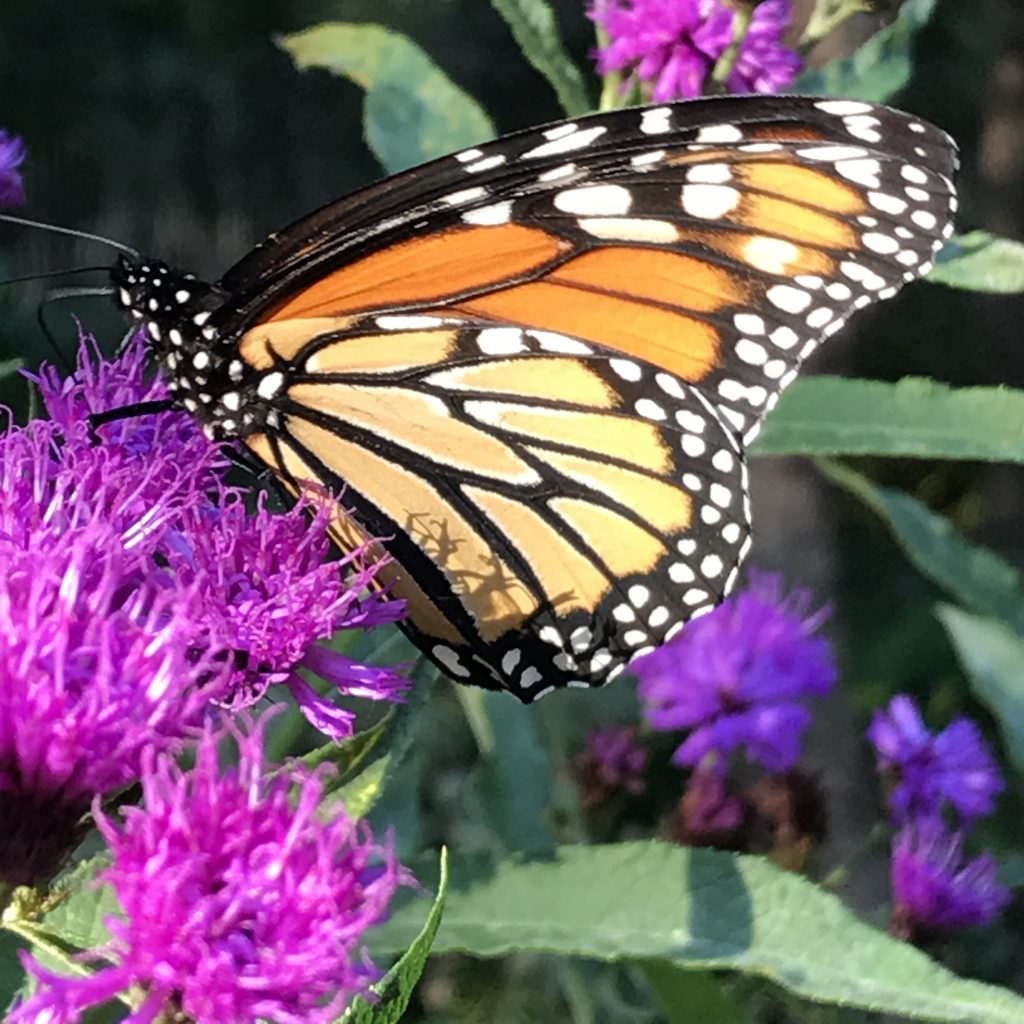
We are so thrilled by the growing cultural shift toward awareness and appreciation for our native bees, butterflies, dragonflies, wasps, syrphid flies and other ecological superstars in the pollinator family.  Local support has been particularly impressive, with the growing Pollinator Pathways movement in Westchester County and Fairfield County.

(Check out our previous post: Uniting the Buzz: The Case for Pollinator Pathways in Westchester County and Fairfield County).

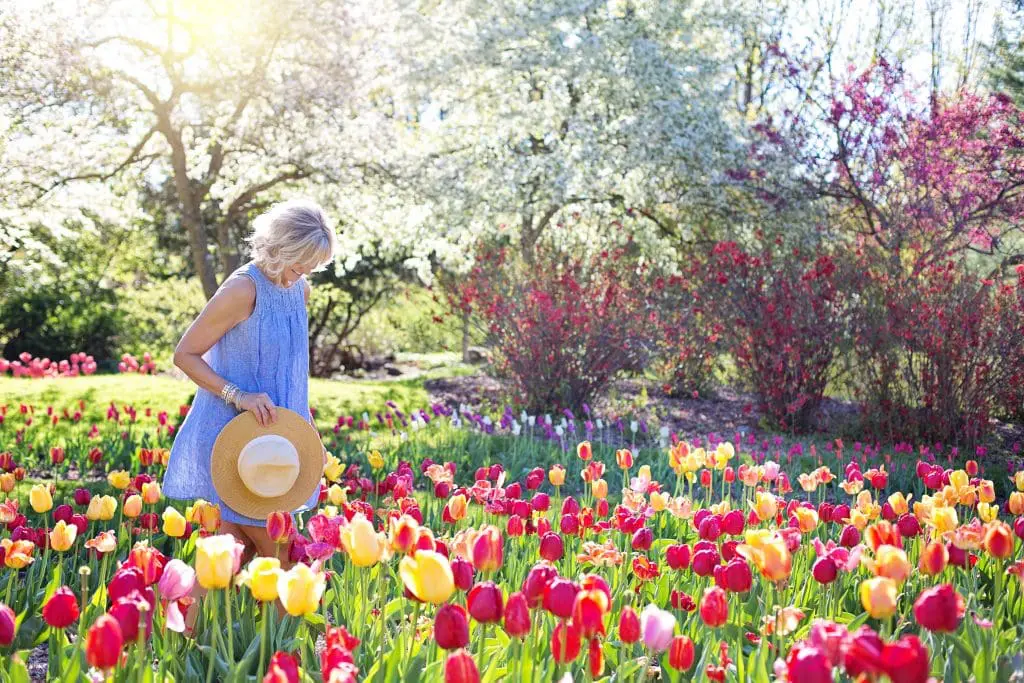
There’s no better way to commemorate our pollinator friends than to design a habitat that invites them to your own yard! With insect populations in decline globally, every square foot of land we can convert into a useful and productive habitat is worthwhile.  Trust us when we say, plant it and they will come!

Site Evaluation: Work With What You’ve Got!

When we think of a pollinator habitat, we often picture vast sunny meadows of wildflowers.  These are certainly important habitats for pollinators, but there are plants for every light requirement that provide habitat for local wildlife. Check out our Native Woodland Pollinator Garden blog post.

Tips from a Landscape Ecologist:

  • Monitor how much light your site gets. Six hours or more is considered full sun. Some plants are more sensitive to strong afternoon sun, so take note if your site faces West.
  • Get your hands in the soil (it’s good for you!) and determine the soil texture. Is it sandy or thick and clay-like?  If it is heavy clay, many of the meadow plants will not work without serious soil amending, as those plants evolved in lean prairie soils.
  • Observe topography: is your site on a slope? Will storm water drain quickly from your site at the hilltop, or will it collect sheet flow in the basin? Is any part of your site a wetland? Pay attention to moisture requirements when selecting plants.

Picking Plants: Succession, Shelter & Biodiversity

We’ve said it before and we’ll say it again: plan your planting for bloom succession! Pollinators don’t just eat in spring or mid-summer.  They need pollen and nectar from late winter to fall, and without careful planning, you can leave gaps in their pollen buffet!

Succession doesn’t just apply to flowers.  Late season berries and seeds, and early-season branches and leaves provide critical food and shelter sources; as such, be sure to consider shrubs, trees, grasses, ground cover and bulbs as well as flowering perennials.

There are numerous sources of information on native pollinator and bird-attracting plants.

Some of our Favorite Online Resources for Pollinators & Native Plants:

Xerces Society

Audubon Society Native Plant Database

NRCS Wildlife Habitat in Your Back Yard

NWF Certified Wildlife Habitat Guide

EcoBeneficial with Kim Eierman

US Forest Service Pollinator of the Month – fascinating details on Pollinator lifestyles!

Our Top Pollinator Book Resources:

Pollinator Victory Garden – Kim Eirman

Bringing Nature Home – Doug Tallamy & Rick Darke – appendices in the back are very helpful!

Attracting Native Pollinators — Xerces Society

Some of our Favorite Pollinator Plants

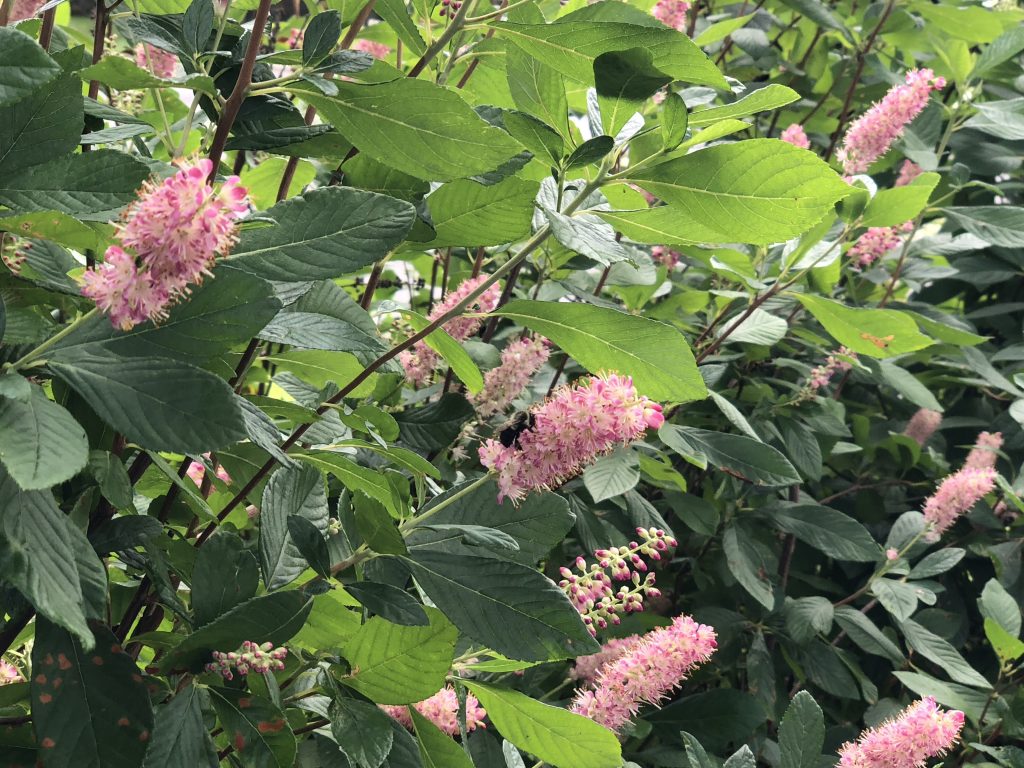
Clethra alnifolia ‘Ruby Spice’ — a native shrub and favorite of bees!
New England Aster — fall blooming perennial
St John’s Wort (Hypericum) is a repeat blooming shrub, begining in early spring. It has interesting foliage and the bees love it!
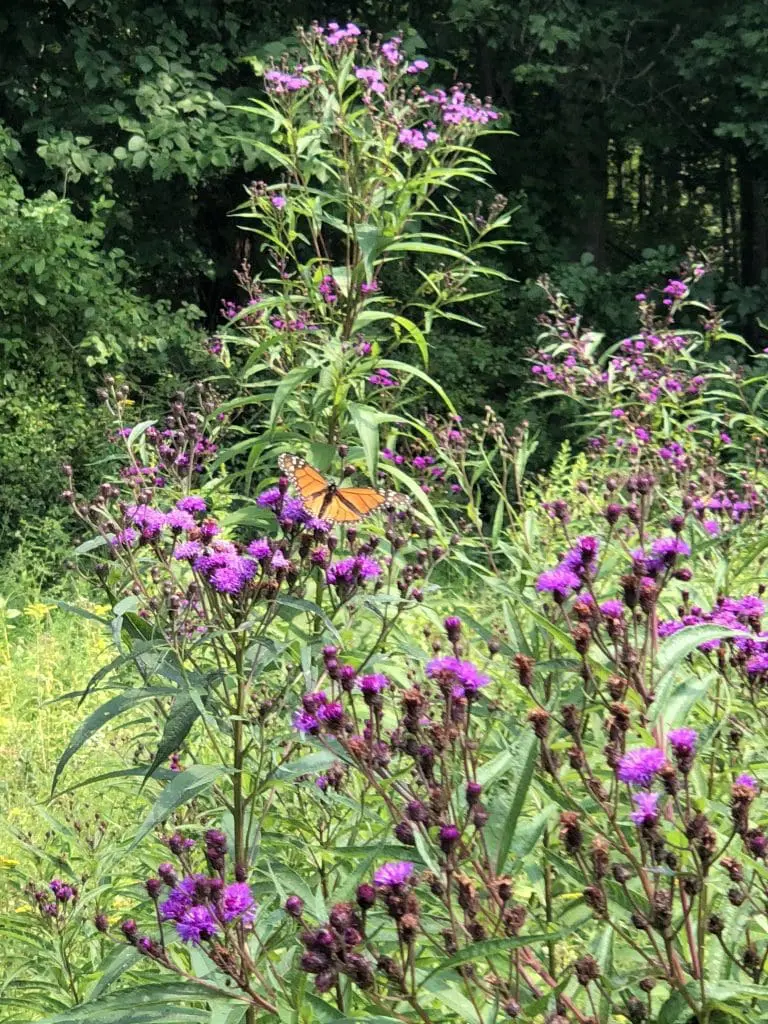
New York Ironweed — a tall, late-summer wetland native.  Self-seeds easily so you will need to edit (weed) to keep it in place.
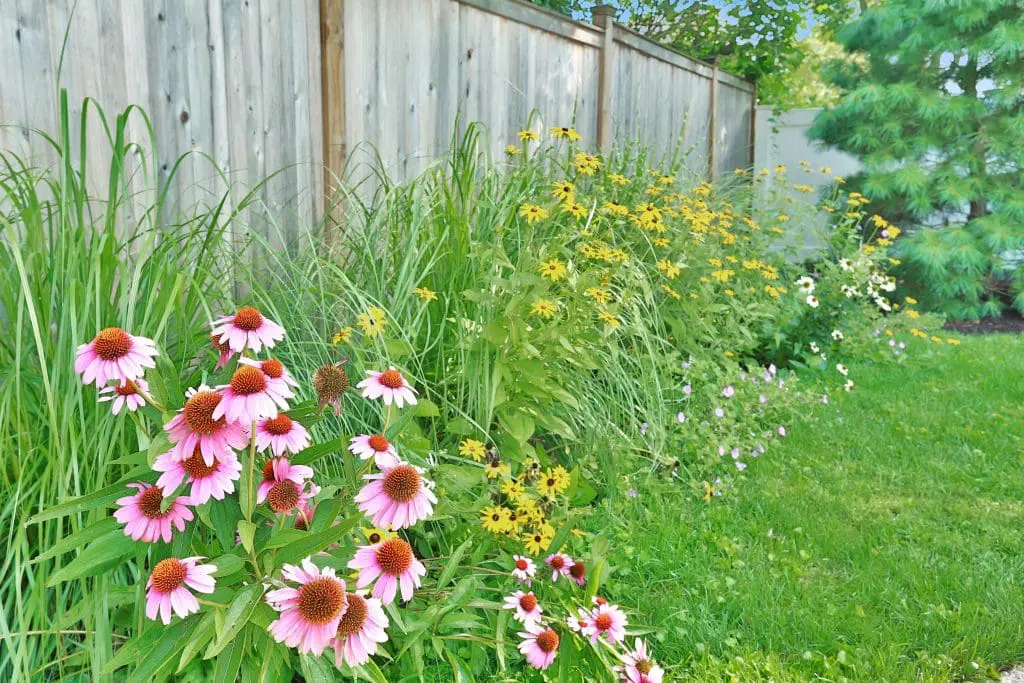
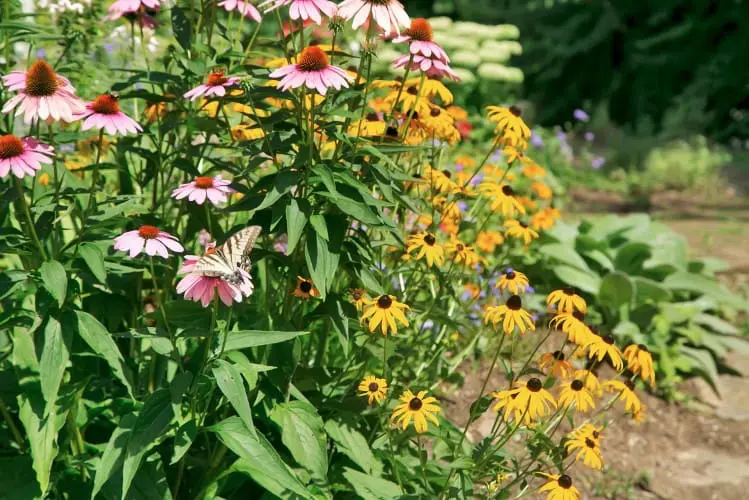
Coneflower (Echinacea) with Black-eyed Susan (Rudbeckia) and Geranium — all native, long-blooming perennials!
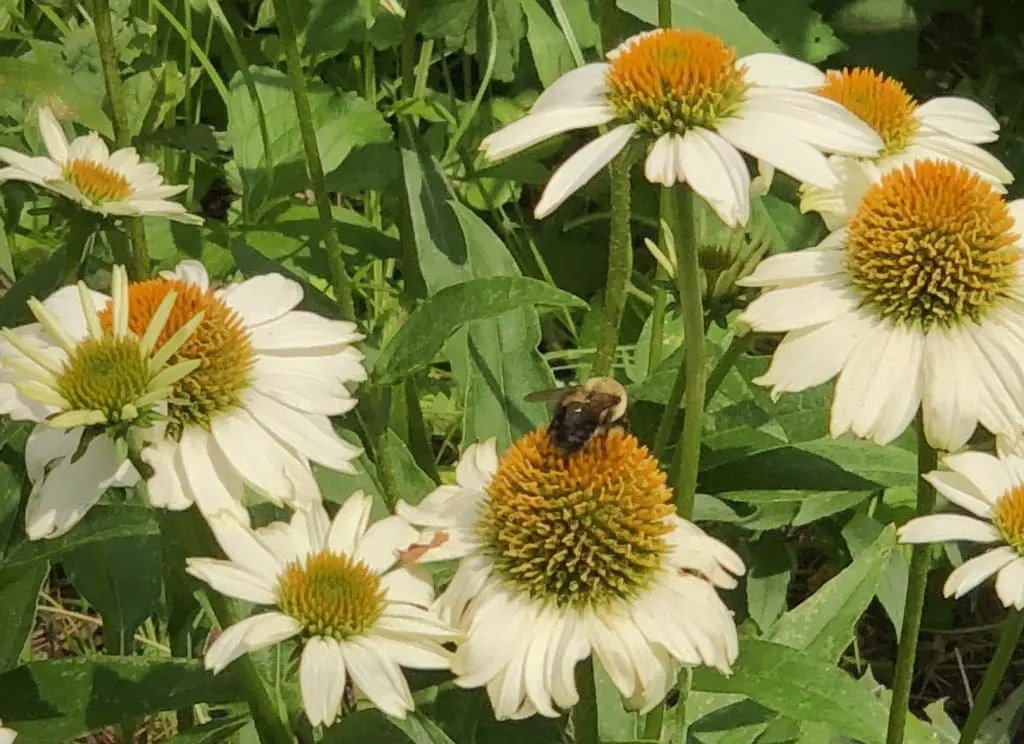
White Coneflower (Echinacea) compliments many planting combinations.
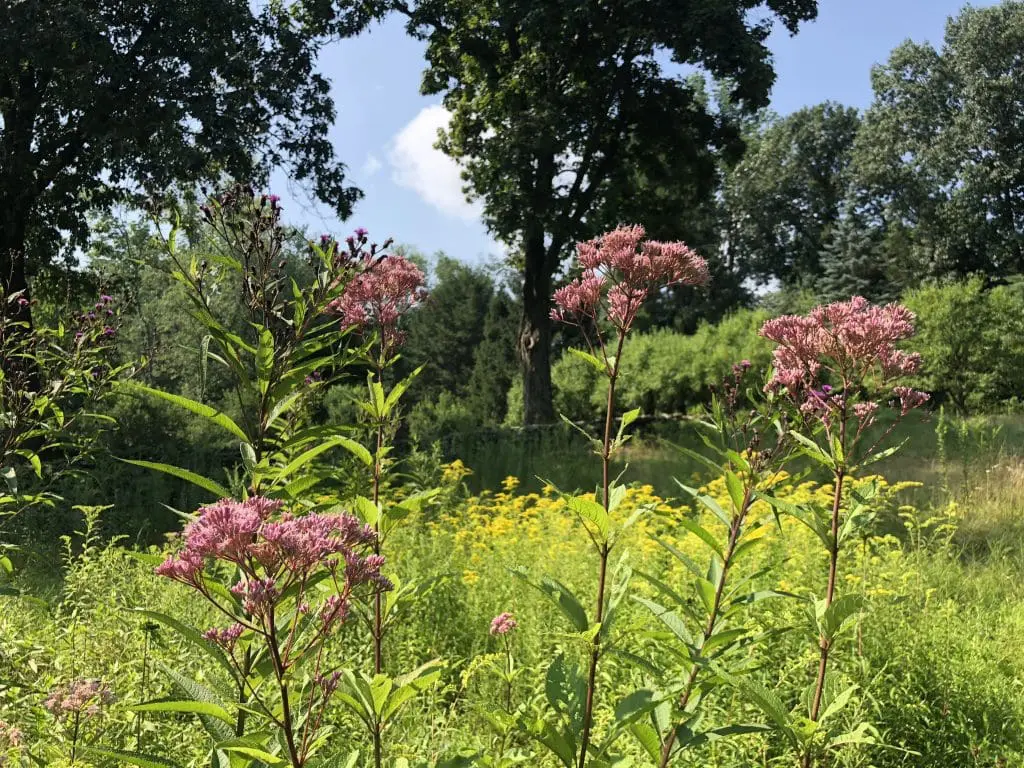
Joe Pye Weed (Eupatorium) and Goldenrod (Solidago) are insane pollinator-attractors for late summer / early fall.
Blue Mist Spirea (Caryopteris) is not native but does attract numerous butterflies and bees from July – September.
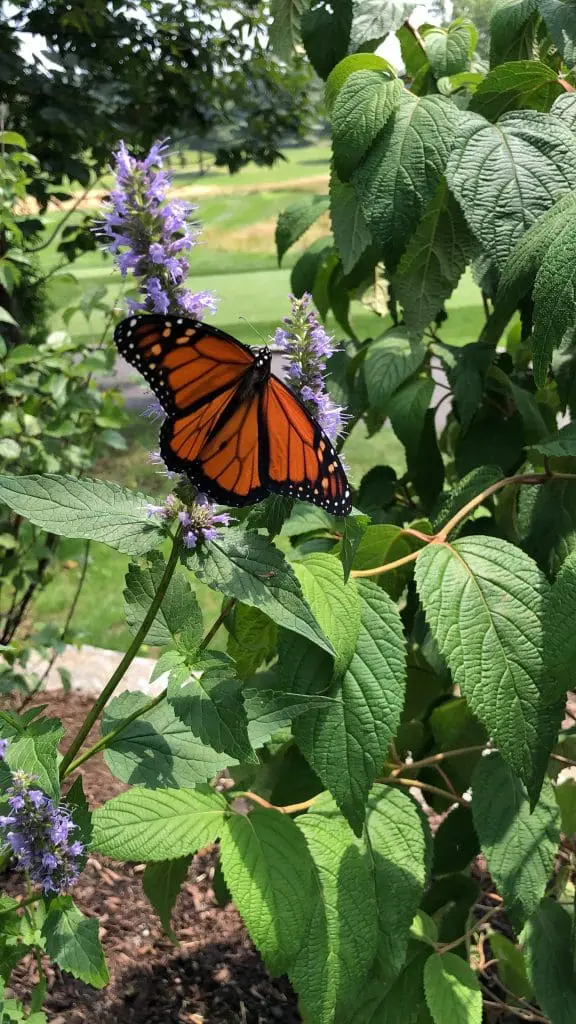
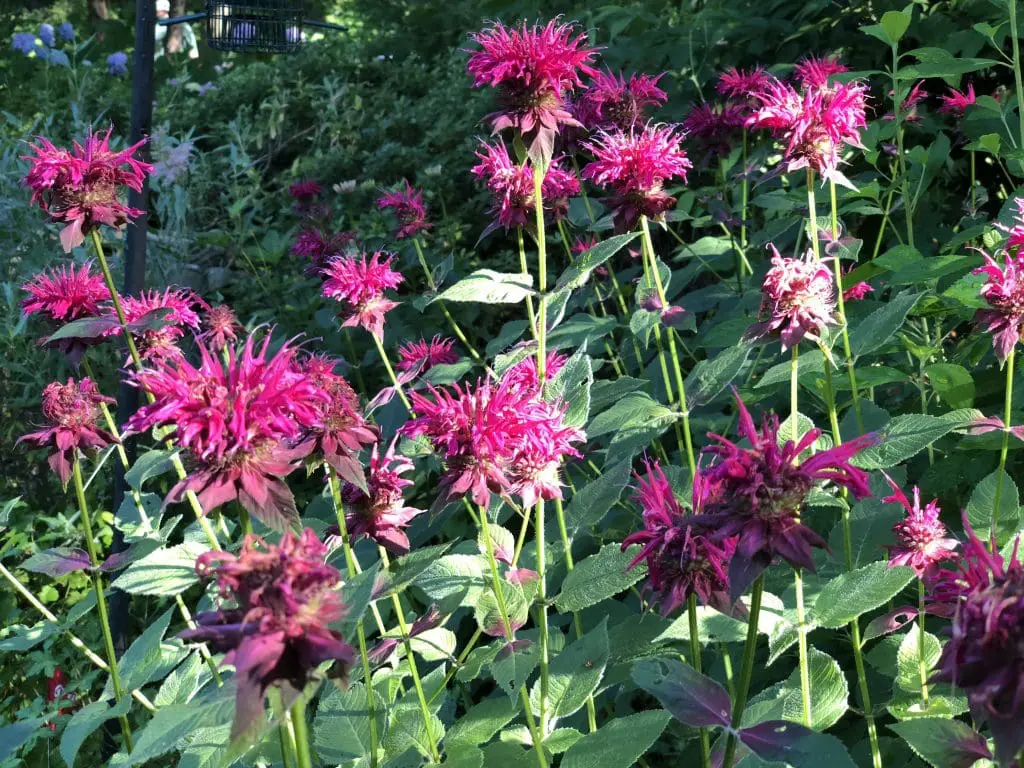
Bee Balm (Monarda) can tolerate part-shade and can be pruned for multiple blooming periods.
Winterberry (Ilex verticilata) is a favorite winter food source of birds like this Northern Mockingbird. Photo courtesy of Audubon Society.

Prepare for Organic Success

A successful organic garden does not stop at the garden bed border; rather, your entire landscape should be organic! We cringe every time we see exterminators, tick treatments, and mosquito spraying…these chemicals are indiscriminate and kill beneficial insects, as well as being ineffective at their purpose! We are strong believers in attracting biodiversity and letting Mother Nature correct itself.

For example, parasitic wasps (especially the larvae) naturally control numerous pests including aphids, gypsy moths, mealy bugs and scales. Ladybugs also feed on aphids and provide a natural pest control.  If you notice a pest outbreak in your organic pollinator garden, be patient… infested plants release air-born herbivore-induced plant volatiles (HIPV) to attract insect predators, and it may take a few days for the predators to arrive in full force.  Mother Nature has a system for everything!

Read this book for more information on beneficial insects and plant profiles:Attracting Beneficial Bugs – Jessica Walliser.

Also check out our previous post on The Truth About Pollinator Pathways and Organics.   

Encourage Soil Microbes

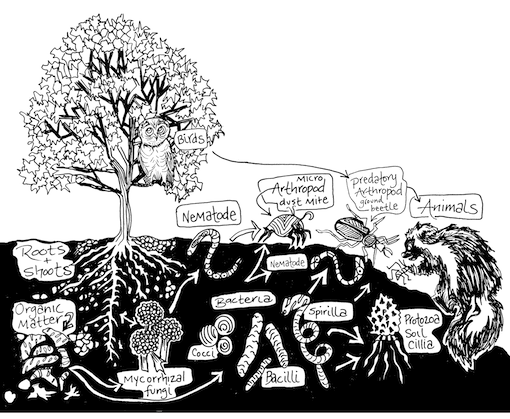
We begin every installation with a soil test and on-site evaluation. All of our gardens receive (at a minimum) a topdressing of organic, natural-source compost with biochar.  We particularly like Organic Mechanics. Many prairie plants, as mentioned above, adapted to grow in lean soils, so we generally reduce the amount of compost for plants from that ecoregion.  However at least some compost is essential for providing host conditions for soil microbes – they key to healthy, thriving gardens! If you are including woody trees and shrubs, they will need a more fungal-dominant soil microbial community.

Garden Evolution & Maintenance

Nature’s beauty is in its evolution; your pollinator garden should be the same! Sometimes it is impossible to know if the microclimate conditions will favor one perennial you selected over another. For example, last year was particularly wet, and our gardens saw an abundance of growth form moisture-loving plants and the lost some others that weren’t as well adapted.

Prepare to edit, add and/or subtract in subsequent years to achieve your desired aesthetic and optimal bloom/seed/berry succession. Pruning certain tall perennials mid-season can encourage a second bloom and prevent them from shading out shorter plants nearby.

Lastly, always leave hollow-stemmed perennials on-site through winter!  Many pollinators lay eggs to over-winter in hollow stems.  Winter habitat is just as essential as spring and summer in supporting pollinator populations.

For more information on how to start your organic pollinator garden, contact us for a landscape design consultation.

—

Jay Archer

Landscape Ecologist, Designer & President

Green Jay Landscape Design

914-560-6570


Filed Under: Ecological Education, Landscape Design Tagged With: biochar, bird sanctuary, butterfly garden, certified wildlife habitat, CT landscape design, CT landscapes, designed habitat, designing a pollinator garden, earth day, ecological landscape design, ecological landscaping, Fairfield County Connecticut, garden evolution, healthy yard, healthy yards, landscape design, landscape designer, landscape installation, landscaping for birds, landscaping for pollinators, New Canaan Connecticut, organic garden, organic gardening, organic landscape, pesticide-free, pollinator garden, toxin-free

A familiar, common reoccurring problem in pond and lake management is nutrient loading causing duckweed or algae blooms.
The best solution or remedy for these problems usually lays in the overall land management practices. If fertilizer and pesticides are running directly into a water body we identify this as point source pollution, a primary cause of the duckweed or algae.

The second most common problem is sediment loading, which reduces the depth of the water body and raises the average summer water temperature. Sediment loading may be a result of poor storm water management. To determine depth a bathymetric survey must be performed and charted to create a depth profile to inform the efficacy and economics of dredging and aeration systems.

This condition may require mechanical or hydraulic dredging to establish greater depth and to restore proper inversion on the laminar flow (of the water column) to sustain cooler summer temperatures.

Some relief can be realized by installation of bottom aeration systems (see https://lake-savers.com) in conjunction with biological applications. These very effective systems of course require electric service.  Pesticide solutions are not recommended, as they are temporary fixes and must continually be applied, placing other aquatic and terrestrial organisms at risk.

In a perfect world, analysis and inventory of the watershed provides information necessary to develop a workable plan or design to improve both the water quality and appearance of your pond or lake. Consult a professional before you commit resources ($) to fix your problem.

—

Jay Archer

Landscape Ecologist, Designer & President

Green Jay Landscape Design

914-560-6570


Filed Under: Uncategorized, Wetland Restoration & Storm Water Tagged With: algae, backyard pond, duckweed, ecological landscape design, estate management, lake, lake restoration, pond, pond restoration, purchase new york, storm water management, stormwater management, wetland restoration

The challenge was to create an attractive contemporary landscape with the flavor of a Early American, post Thomas Jefferson era landscape for the United Methodist Center in White Plains, New York.

Early American landscapes necessarily shared features consistent with permaculture and ecological landscape design. This was a time when pesticides and man-made contaminants were not an issue. There was regular processing and recycling of natural material resources on site: composting, cover crops to improve soil etc.

We started with a suggested list of historically traditional shrubs, perennials and annuals. A landscape design was produced for the entire property. Once again, in anticipation of planting,
We tested the water pressure and determined a deficiency in delivery of sufficient pressure. This was surprising (not in a good way) since this commercial building in downtown, urban, White Plains is serviced by city water. The plumbing was reconfigured to accommodate.

The soil condition posed challenges. Starting with a Rutgers chemical soil test,  we found low calcium, high pH, etc. This was probably a result of buried construction debris surrounding the foundation of the structure. To alleviate these conditions, we amended the soil with a combination of gypsum, Stone Barns Compost, Organic Mechanics BioChar Mix, Soilutions Organic Soil Enhancer, and natural, organic source fertilizers.

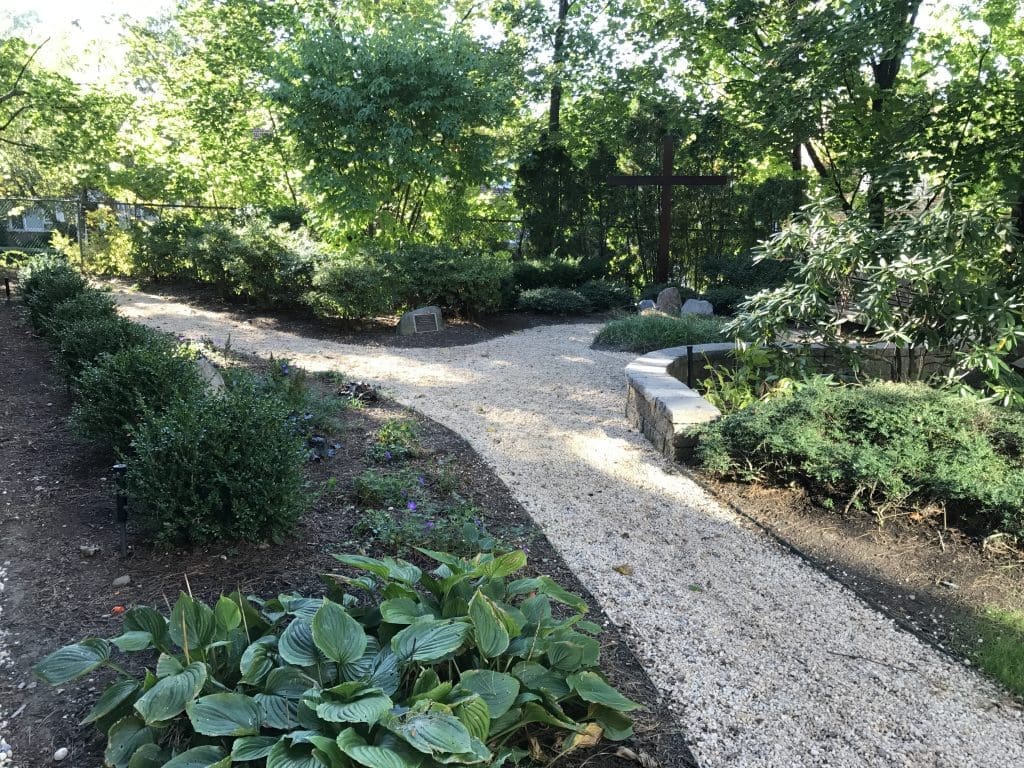
To ensure successful sustainability, low maintenance and what we refer to as enduring longevity, we incorporated aggressive ground covers as green mulch to gradually replace the need to re-mulch year after year (where appropriate), introduced selected long-blooming perennials to attract pollinators and employed river rock and gravel mulch in a splash pad/apron surrounding the gutter/leaderless structure.

This attractive, decorative border was underlaid with a EPDM pond liner. The apron/border was pitched towards the landscape planting beds. This helped to conserve water in passive irrigation. This turned out to be useful to cool the planting due to excessive summer reflective heat from the cement and blacktop dominating the commercial site. Grades were changed with a morterless, natural retaining wall with gravel under drains.

Existing trees and shrubs were pruned to regenerate heath and improve appearance. Existing plants were salvaged and repurposed wherever possible. A metal landscape border edging was installed to contain the decorative gravel paths in the rear landscape.

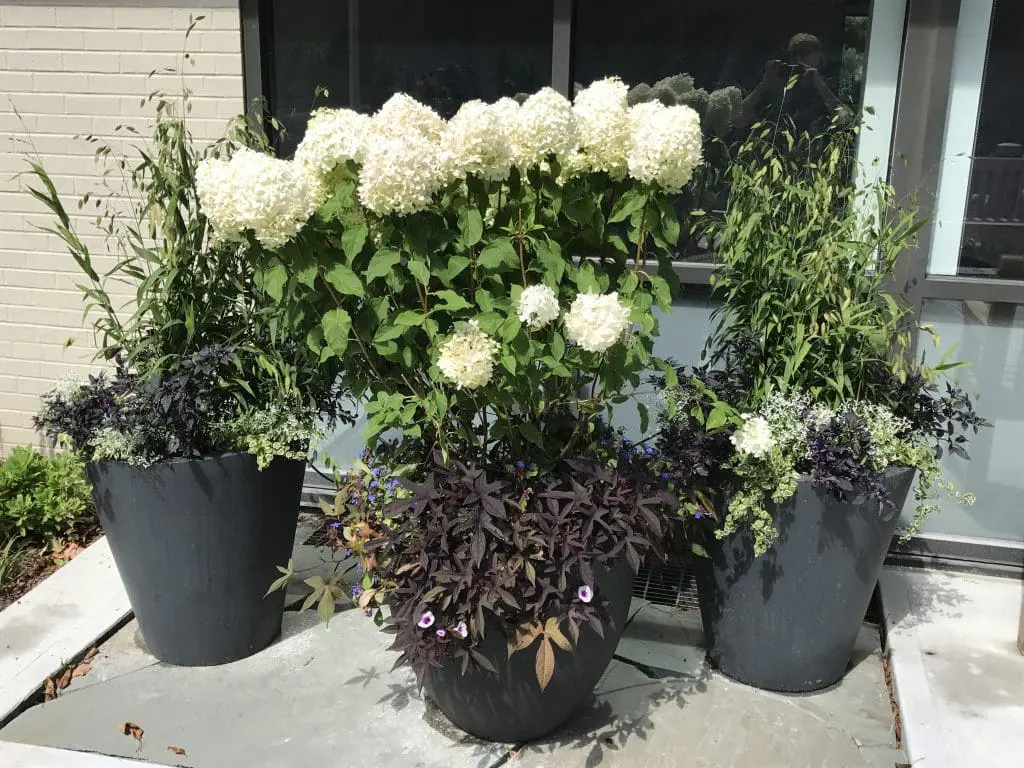
Seasonal color was supplied by placing containers above an exposed grate which was partially covered with removable flagging.
The deliverable result was a dramatic increase in appearance and health of the immediately surrounding landscape environment.

—

Jay Archer

Landscape Ecologist, Designer, President

Green Jay Landscape Design

914-560-6570

Filed Under: Landscape Design, Uncategorized Tagged With: contemporary garden, contemporary landscape, ecological landscape, ecological landscape design, ecological landscaping, garden design, garden designer, gardening, gravel walkway, hardscape, landscape design, landscape designer, new American garden, organic garden, organic landscape, pollinator garden, soil test, tree pruning

What are the dominant characteristics of your landscape? Do you have mature trees to accentuate, or a sunny area to take advantage of?

What is your preference in terms of landscape styles, color etc.? I suggest you use Instagram, Pinterest, Facebook and any other sources for ideas and particular images you like. In addition, a very important layer and consideration for design are the environmental considerations.

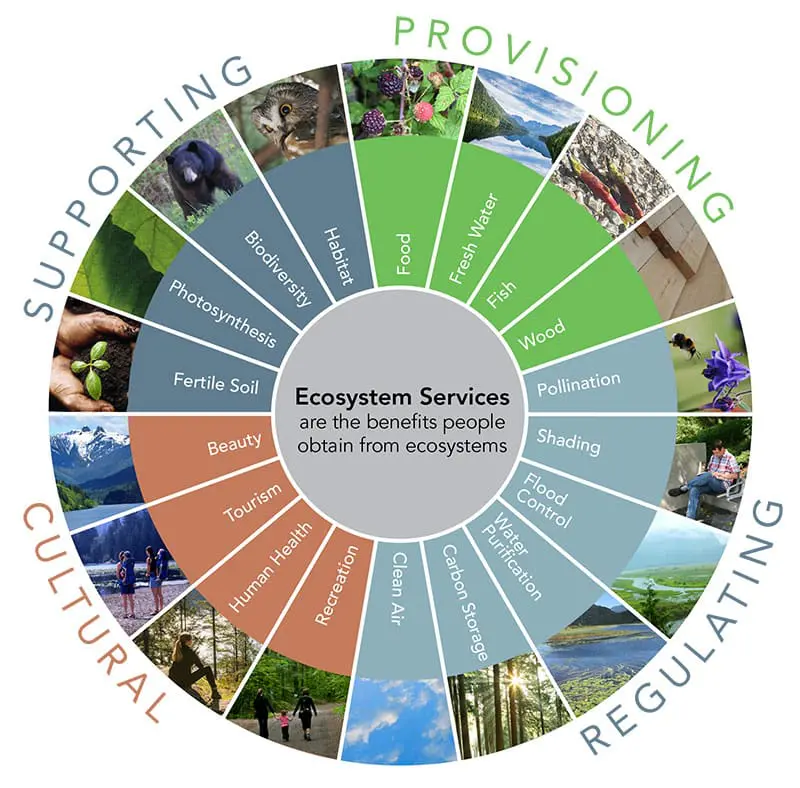
How can we create a beautiful space that also provides ecological services, like filtering stormwater and allowing it to infiltrate to the aquifer; designing a front entry garden that also attracts pollinators; and fostering healthy soil microbial communities that break down nutrients and sequester carbon dioxide?

Designing with Ecological Services in Mind

In this case, new construction, compact soil, full sun and hardscape in front, and lots of shade and bare soil in rear were the existing conditions.

The scope of work included a full-property ecological landscape design, natural-source soil amendments, organic lawn installation, perennial planting, irrigation, and marking out a footprint for a future vegetable garden.

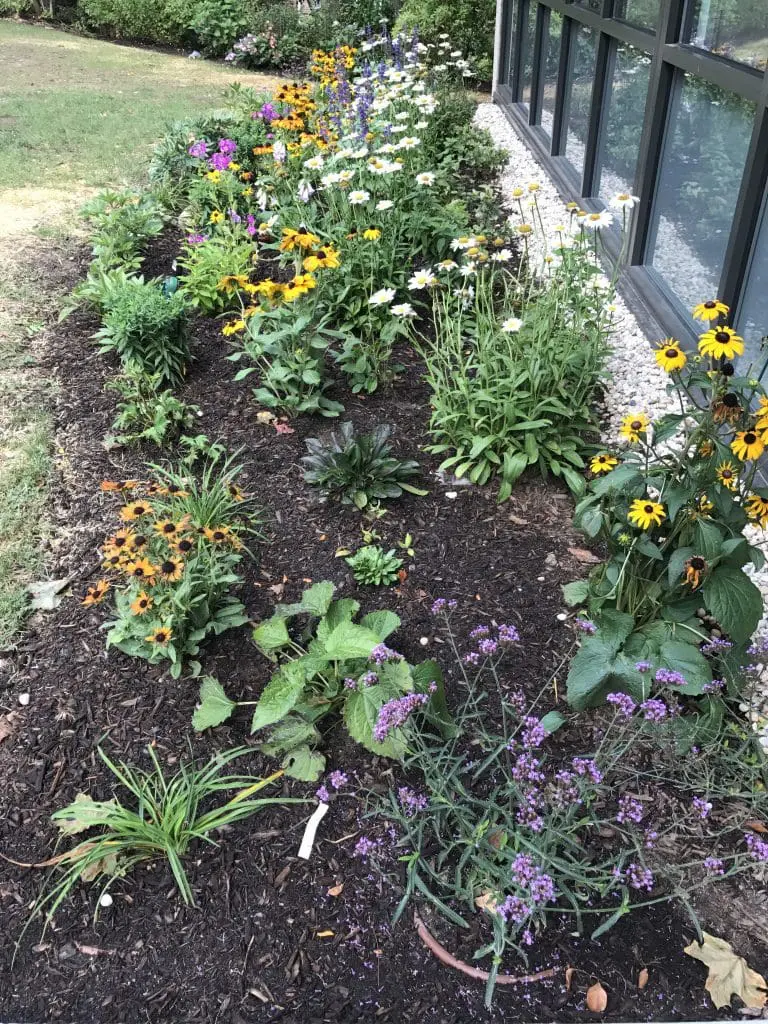
The above front-entry garden features bird-attracting ornamental grasses, including our native Panicum — also a known hero in carbon sequestration — as well as pollinator-attracting perennials like Nepeta and native Geranium. 

Above: Before photos of the backyard, pre-lawn installation.

This lawn installation required quite a bit of premium topsoil and organic compost and amendments such as gypsum to rebuild the soil after intense compaction and disruption during the home’s construction. We followed Green Jay’s Magic Wand Program and the results speak for themselves!

Above: organic lawn installation, plush and thriving!

Special attention was given to creating a landscape that would grow and mature with the young family who would enjoy the evolution, development and changes in the landscape through the seasons and through the years.

Contact us about your environmentally-conscious landscape design project!
—

Jay Archer

Landscape Ecologist, Designer & President

Green Jay Landscape Design

914-560-6570

Filed Under: Featured Work, Landscape Construction & Installation, Landscape Design Tagged With: ecological landscape design, ecological landscaping, environmentally-friendly landscape design, food garden, front entry garden, green design, landscape construction, landscape design, landscape designer, lawn installation, mamaroneck landscape design, Mamaroneck New York, native landscaping, native plant garden, native plants, natural landscaping, organic garden, organic lawn, organic lawn installation, organic vegetable garden, perennial garden, permaculture, sustainable landscape design, veggie garden, Westchester landscape design, Westchester new york

This beautiful no-lawn landscape, originally designed by Larry Weaner Associates, was augmented to include a variety of flowering bulbs to increase curb appeal in this native plant landscape. Early blooming spring perennials and ground covers (green mulch) were added to invite pollinators and reduce the need for expensive, labor-heavy weeding and removal of invasive species.


This is a fabulous example of a hybrid native/non-native landscape planting. In the first photo at the top of this post, the yellow flowers are Packera aurea (golden ragwort), a perennial native to eastern United States woodland and bog environments.  It is a fabulous spring bloomer that supports local pollinators and wildlife.  For early spring bulbs, we planted a mixture of native (above white flower is our native trout lily – Erythronium albidum) and non-natives like daffodils and hyacinths to maximize the sequence of early spring blooms.

Not quite a novel landscape, this garden endures as a most productive ecosystem in a part of town where most properties are chemical-dependent lawns with little to no native plants or potential habitat for birds and pollinators. This property is a shining example of a joint effort between design, education and sustainable management in the anthropogenic age of resilience.

—

Jay Archer

Landscape Ecologist, Designer, President

914-560-6570


Filed Under: Featured Work, Landscape Design, Organics - Lawn, Tree & Shrub Care Tagged With: ecological landscape design, ecological landscaping, front yard garden, habitat garden, healthy yard, landscape designer, landscape ecologist, lawn removal, lawn replacement, native landscape, native plant garden, natural landscaping, organic garden, organic landscape, spring bulbs, spring flowering bulbs

Even with the best laid plans, you can never anticipate everything. However, due diligence and following a well developed ritual of site analysis translates into a proper punch list for budgeting.

In this case, as part of the initial site analysis, irrigation for future planting was considered.  By using a flow meter to determine delivery of gallons per minute/flow, we discovered a potential problem with the water line.

The remedy was for Green Jay Landscape Design to communicate with the water department, Westchester Water Works, to shut the water off. Then, we excavated and replace the main line, carefully backfilled, tamped to compact and remove air space, regraded and repaired the lawn organically.

This lead to a successful, although somewhat complicated, landscape design construction and installation. Oh yes, we also created a beautiful flowering ecosystem attracting birds, bees and butterflies. Read more about the full project, from Landscape Design Master Plan to our fully in-house installation on our previous blog.

—

Jay Archer

Landscape Ecologist, Designer & President

Green Jay Landscape Design

914-560-6570


Filed Under: Irrigation & Water Systems Tagged With: ecological landscape design, ecological landscaping, estate management, irrigation, irrigation repair, landscape construction, landscape design master plan, landscape designer, landscape ecologist, lawn repair, Mamaroneck New York, native landscaping, native plant garden, natural landscaping, organic lawn, organic lawn repair, project management, storm water management, water line replacement

  • « Go to Previous Page
  • Page 1
  • Interim pages omitted …
  • Page 25
  • Page 26
  • Page 27
  • Page 28
  • Page 29
  • Interim pages omitted …
  • Page 60
  • Go to Next Page »

Footer

Mailing Address: 222 Purchase Street, #144 Rye, NY 10580
Shop Address: 369 Bradhurst Ave, Hawthorne, NY 10532
(914) 560-6570
  • Facebook
  • Instagram
  • LinkedIn
  • Pinterest
  • YouTube
  • Houzz
  • Slide Share
  • Installation
  • Portfolio
  • Pricing
  • About
  • Contact

Copyright © 2025 · Green Jay Landscape Design. All Rights Reserved · Privacy Policy · Website and Local SEO by Ramblin Jackson