• Skip to main content
  • Skip to footer
Green Jay Landscape Design

Green Jay Landscape Design

Green Jay Landscape Design

(914) 560-6570
  • Design
  • Installation
  • Portfolio
  • Pricing
  • About
    • Service Area
    • Meet Our Team
    • Our Process
    • Our Promise
    • Mission, Vision, & Core Values
    • FAQ
    • Press & Events
    • Blog
    • Reviews
    • Careers
    • Affiliations
  • Contact

greenjayadmin

Recently I was invited to consult on the landscape management and grounds maintenance of a large condominium complex.

The progressive management company was aware of studies that show how continued use of leaf blowers could potentially elevate blood pressure in the elderly. Pretty interesting!

See:

https://www.alternet.org/2014/08/modern-pestilence-leaf-blowers-generate-infuriating-noise-toxic-gases-and-hazardous-dust/

https://www.salon.com/2017/10/08/noisy-but-that-is-not-all_partner/

https://www.kqed.org/news/11310630/more-pollution-than-cars-gas-powered-gardening-equipment-poses-the-next-air-quality-threat

https://www.seattleglobalist.com/2017/09/25/leaf-blowers-flagged-as-polluters-possible-health-threat/68802

In addition to the annoyance factor with the high decibel sound produced, the air quality was polluted by emissions. Leaf blowers’ two-stroke engines are even more polluting than cars, because gasoline and oil are combined in one system and emissions from both are released during use.  These toxic emissions are especially harmful to children and the elderly.

In 2010, doctors at Mt Sinai Hospital wrote a letter detailing the health effects of leaf blowers, in support of a proposed leaf blower ban in Eastchester, NY.

Some key points from their letter:

  • “Inhalation of these small airborne particles can provoke asthma and other respiratory diseases in children and can increase the severity of chronic lung disease in our elderly.”
  • “Some of the other potential pollutants from leaf blowers and internal combustion power tools are carbon monoxide, nitrogen oxides, hydrocarbons, and, even, ozone formed from some of these other pollutants. Even lower level exposures have been associated with respiratory and central nervous system effects.”
  • “Manufacturer estimates of noise levels from leaf blowers for bystanders 50 feet away are about 70 dB and, of course, the noise is louder if residents are closer. The World Health Organization recommends general daytime outdoor noise levels of 55 dB or less. Noise may affect quality of life by impairing communication, reducing accuracy of complex tasks, and increasing stress.”

The extreme speed of air produced by leaf blowers also makes them a less than ideal maintenance tool. In the process of blowing lawn clippings or leaves, you are also inevitably blowing away topsoil, disrupting microbiology, and spreading particulates and any toxic applications applied in traditional landscaping.

There is a solution to each and every problem we face.

In this case, switching to an ecological maintenance program, using mulching mowers and electric backpack blowers was a start.

Even better, reducing the need to continue the practice of blowing helps. This requires training existing grounds crews or starting over with a new provider of services.

Reducing lawn care by better landscape design—including reducing lawn area, establishing no-mow areas, expanding perennial beds, etc—alters cultural practices for better conditions in the day to day experience of homeowners.

Planting fragrant herbs/plants for healing improves air quality and increases the health benefit for all concerned. Establishing native plants and wildflowers to attract birds, bees and butterflies not only increases biodiversity but also generates calm and interest/investment in the property. This promotes an awareness and appreciation of nature and our connectedness.

By building models of ecologically sustainable landscapes we see, time and time again, the most life-affirming healthful benefits for ourselves, our clients and our communities.

—

Jay Archer

President, Landscape Ecologist

914-560-6570

Filed Under: Ecological Education Tagged With: elevated blood pressure, health hazard, leaf blower hazard, leaf blowers, quiet landscaping

All landscapes are considered ‘disturbed’ compared to a natural environment. Some more than others.

The challenge is to reverse the eutrophication process in this man-made Earth pond with a half-moon dam. This shallow, half-acre pond was constructed in the mid-19th century by damming the outlet with a poured concrete wall and spillway which discharged into a brook which was buried and piped during early stages of development of housing lots.

We assume that the original hydrology and storm water fed and recharged the pond from surface sheet flow primarily. Subsequent development drained the surface and ground water bypassing the envelope of the pond on both sides of the property.

Over time the concrete became cracked and porous and the pond level dropped while correspondingly silt and vegetation choked the pond.  The pond is surrounded on the back and both sides by large, aggressive bamboo, which provided some shade but contributed a tremendous amount of unwanted organic debris into the aquatic zone. Poor land-use practices, including mowing and fertilizing to the water’s edge contributed to the nutrient loading as well as the asphalt roadway which was uphill, draining towards the pond.

Two main issues were the low water level due to leakage at the outflow, and lack of oxygen, stagnation coupled with the nutrient loading, created an ideal environment for duck weed. Without a proper inflow and outflow, mosquito breeding was a possible public health hazard and the pond was unattractive and uninviting.

This landscape was ecologically poor, lacked ecosystem service function, or aesthetic appeal. First step to correct, address, or improve any of these issues, we develop a plan with specifications including reinforcement of the concrete dam with an impervious clay ramp within the pond, bottom aeration provided by diffusers, and extensive wetland biofiltration planting extending form the terrestrial to establishing a littoral shelf and marginal bog filter to naturally improve water quality.

Just before work was commenced on the project, the landscaper employed by the client cut the bamboo stalks/shoots down to 6” above ground, more critically important is the cut was made at an angle, thus weaponizing and creating a serious liability and threat.

Part of the project involved de-watering and hand-dredging significant amounts of organic material, mainly brush, bamboo, trees, vegetation etc.  This is necessary to install the aeration disks, and add biologicals (MuckAway) to increase the dissolved oxygen and healthy bacteria to reduce the sludge and sedimentation as much as possible.

While the de-watering process was performed with diesel pumps discharging to a containment area constructed of geotextile fabric, hay bales and fence post, cracks were repaired on both sides of the now exposed concrete dam to limit leakage.

Wetland systems are the lifeblood of our landscape and freshwater is a precious natural resource not unlike the complicated systems which make up the human body, a landscape environment should be treated holistically in terms of design, development and land use management/maintenance practices.

We suggest identifying the flow paths and issues critically important to the client while being a sensitive and responsible steward of the ecology of the water shed for the greater community.

—

Jay Archer

Landscape Ecologist, President

914-560-6570


Filed Under: Landscape Construction & Installation, Water Features, Wetland Restoration & Storm Water Tagged With: backyard pond, bamboo, duck weed, pond restoration, storm water management, vegetative border, water quality

Just one week into spring and there is already a noticeable buzz in our communities about an exciting initiative: creating Pollinator Pathways through Fairfield and Westchester counties. Many thanks to the organizers in each town who put together a staggering number of informative events across many towns (see the upcoming events calendar!!).

As an ecological landscape service, we thoroughly applaud and support this effort. We have installed hundreds of organic pollinator gardens, meadows, and Certified National Wildlife Habitats on behalf of our clients, but this initiative goes further.

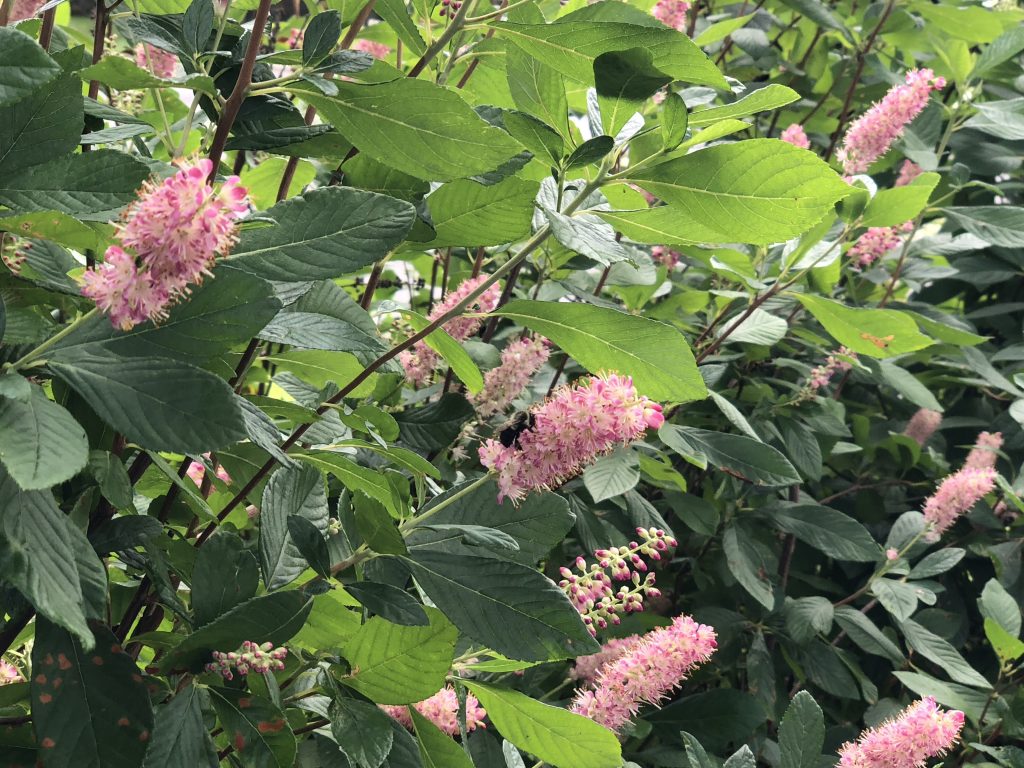
[Above: Native Bee on Clethra alnifolia ‘Ruby Spice’.]

A Pollinator Pathway is designed to create a corridor for pollinators to link larger habitats together.  These connected, streamlined habitats mitigate the current habitat fragmentation from urban and suburban development. With a focus on planting known nectar/pollen sources for adults AND host plants for larvae, the initiative increases plant biodiversity, reclaiming ubiquitous lawns for a more vibrant array of flora (and fauna!).

[Above: Monarch Butterfly on New York Ironweed]

In regards to habitat restoration, the sum is greater than its parts. Creating Pollinator Pathways mapped to include households with pollinator gardens is an important ecosystem-level expansion of the vision; more than any of our individual efforts could achieve. Westchester and Fairfield counties represent important flyways.  To link preserved areas of Pound Ridge, Wilton, and Ridgefield with coastal areas of Westport, Darien and Rye, for example, is a huge improvement from current patchwork preservation efforts.

Pollinator Pathways are an exciting unifying force of homeowners, non-profits, municipalities and private sector businesses toward a like-minded goal of counteracting biodiversity loss, particularly of pollinators and native plants.

Why do we need Pollinator Pathways?  

If you’ve been following the news (or our social media) you may have noticed the reports that insect populations are declining. The Insect Apocalypse Article in NY Times Magazine is a must read. Some startling summaries:

“The [2016] German study found that, measured simply by weight, the overall abundance of flying insects in German nature reserves had decreased by 75 percent over just 27 years. If you looked at midsummer population peaks, the drop was 82 percent.” 

Habitat loss and fragmentation from climate change and development, plus an increase in the use of landscape pesticides are thought to be leading factors in the ‘insect apocalypse.’  Two large studies in Canada and Europe published in 2017 confirmed that neonicotinoids, found in many pesticides, fungicides and herbicides contribute to colony collapse in bees. Neonicotinoids were also found to persist in the environment long after the growing season and affect uptake from plants outside of the sprayed area.

[Above: Native Bee on New England Aster]

Joseph Wilson, of Utah State University, reported to The Atlantic that “Habitat connectivity at that scale [of Pollinator Pathways] could help these smaller bees disperse more efficiently, and contribute to a more diverse and healthy community of species,”

Why You Should Care About Bugs

Insects are the foundation of the food chain, and they require specific food sources as larvae and adults. Most native pollinator species have evolved alongside native plants for habitat and food sources.

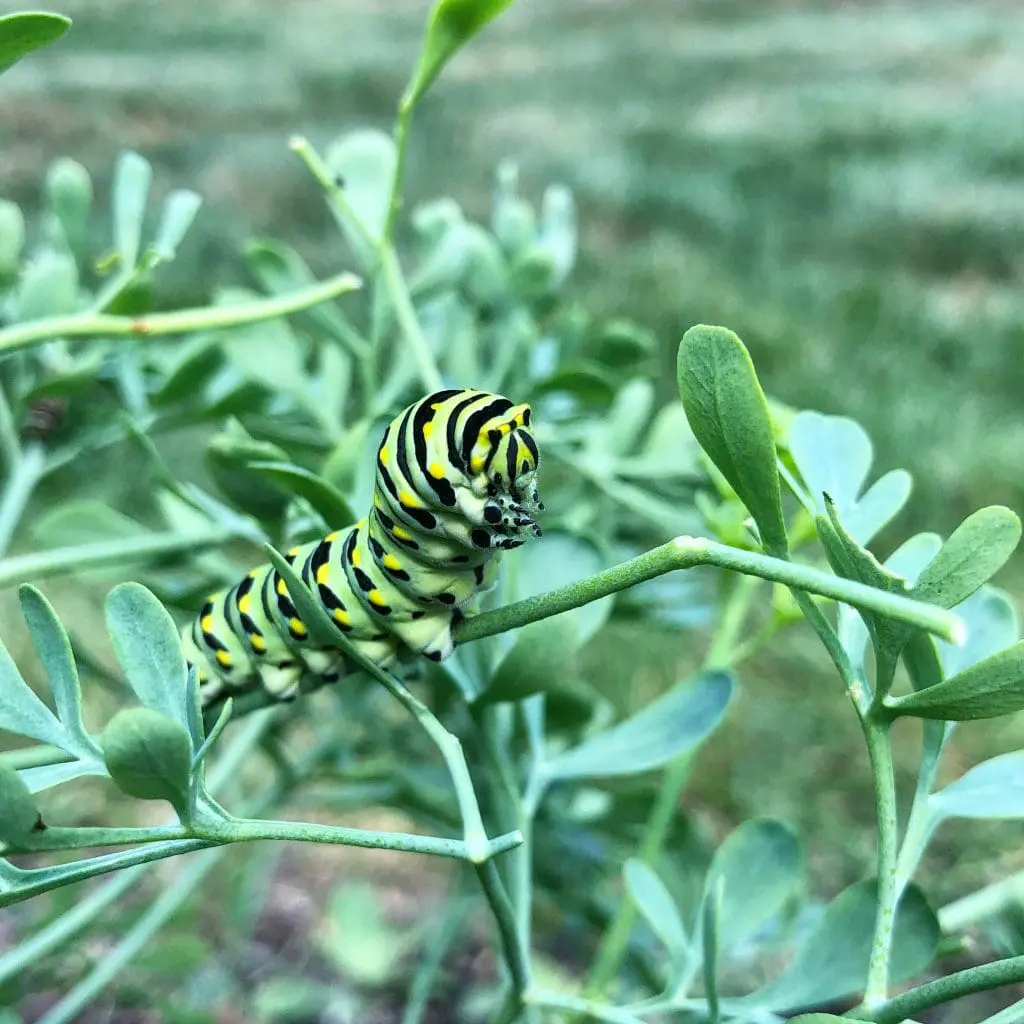
[Above: Monarch Butterfly Caterpillar on Baptisia australis (right next to the Asclepias tuberosa!)]

Insect and animal pollinators play key roles in the ecosystem; they are responsible for 90% of plant pollination, and 30% of agricultural production! Insects also are a main food source for birds, demanding staggering quantities.  As entomologist Dr. Doug Tallamy writes in Bringing Nature Home, it takes an amazing 6,000 – 9,000 caterpillars to raise one clutch of chickadees!  (Each chick eats approximately 350 – 570 caterpillars PER DAY!). We must protect these foundational species before we see dire ecosystem consequences.

What About Organics? 

Of course, planting the right plants has little effect if they are covered in synthetic pesticides! Stay tuned for our upcoming blog post on the Truth About Pollinator Pathways and Organics! And follow us on Instagram and Facebook for more photos & videos of pollinator friends in our gardens! @GreenJayLandscaping

Love the idea of the Pollinator Pathway? We can help you turn your yard or property into an organic pollinator habitat.  Contact us for landscape design and installation services: (914)-560-6570.

—

Kathryn Saphire

VP of Landscape Development & Marketing

914-560-6570


Filed Under: Ecological Education Tagged With: ecological landscaping, habitat gardening, monarch caterpillar, native bees, native plant garden, organic gardens, organic landscapes, pollinator, pollinator garden, pollinator pathways

Subsidence is a process by which the ground collapses. This often causes depressions or sink holes. It may be caused by decaying organic matter like tree stumps or ground water piping through the soil underground or creating voids below the surface of the ground. Not always easily identified or apparent. Probing may be necessary.

So what can you do about it?

First I recommend a little hand digging or excavating with a machine. It’s not unusual to find buried trash, construction debris, organic or inorganic material dumped underground, covered over and hidden.

Couple of examples:

1) While hand digging in backyard to install my small garden pond featuring a stream and waterfall, I discovered a truck-full of brick was buried during the construction of our home.

This was probably done by the builder to save cost of carting and dumping. This significantly added cost to the project.

2) During site development involving excavation to install/construct a gunite/in-ground swimming pool, we unearthed a significant amount of stumps buried in a pit and covered with fill. This poses a serious environmental problem as buried stumps and decaying organic matter which is covered by soil, not exposed to the air, contaminates the ground water by trapping gases. This is a federal violation of the Clean Water Act. In this case the original builder was notified of their responsibility to restore the site to pre-construction condition. The State DEC agency was notified. A mitigation plan was required before any work could resume.

Once the process of excavation had begun several automobiles and auto parts were discovered to be buried as well. Once everything was removed from the proposed site/location for the pool it was determined that a stream was buried/diverted in that spot. This involved alteration in design, required full grade beam engineering, (to lift the pool above ground water table), expanding new permit and board approval etc. This project involved a real team effort in communication and cooperation between contractors, licensed professional services, local and state agencies as well as the client and family.

These issues affect cost, environmental impact, and timeline for construction, to say nothing about the disruption to the client’s emotional state!

You can never be completely sure to anticipate every contingency but conducting test excavating or a perk test in lieu of expensive ground penetrating radar services can save much time, money, headaches and disruption in the project. Identifying flow paths, locating existing drainage features, wetlands, overall watershed profile, historical land use, adjacent property impacts, all can contribute useful information for design, planning, cost estimating, budgeting etc.

Solutions may involve design, engineering, bioengineering, grading, terraforming, land-contouring, soil amending, structural soil work, biological enhancements with compost or biostimulants, landscape planting, rain gardens etc.

The fabulously exciting part of ecological landscaping and ecological restoration is employing creativity and imagination to utilize natural resources (as well as financial) to invent beautiful, ecologically productive and efficient landscape system which provide an atmosphere and environment beneficial to our human health, happiness and well being.

—

Jay Archer, President

914-560-6570

greenjaylandscapedesign.com

Filed Under: Landscape Construction & Installation, Wetland Restoration & Storm Water Tagged With: bio-engineering, landscape drainage, landscape erosion, landscape repair, landscape sink holes, lawn repair, sink holes, subsidence

All our landscapes require maintenance. Yours and mine!

Plants aren’t furniture! We even replace or renew our furniture every 10-20 years, hopefully!

Things change, grow, evolve etc. that includes our taste and sensibilities. Keep it fresh! Don’t wait until everything is so overgrown or outdated that you don’t know where to start.

(See video at.bottom of post to see how we divided ornamental grasses and created new beds).

Renovating the landscape gives us an opportunity to go native, to go organic!

What can you do to improve the health of your landscape while also improving the appearance?

For myself, as a naturalist and landscape ecologist, wildlife is as important as plant life!

I couldn’t imagine a world without the birds and butterflies I see everyday in my gardens.

I love the California poolscape look. Ornamental grasses with fragrant perennial flowers with an evergreen shrub backdrop…love it!

Every season brings something new to the garden. Especially the birdlife!

The stunning natural scenery of tall trees in the far background makes the layered look in the foreground composition so much more attractive.

So each year we prune, divide the grasses and perennials as needed (when the time is right), test the soil and apply organic fertilizer. That’s gardening…professional gardening.

Sustainability and resilience are achieved by tender loving care and a continued commitment to both the original design as well as the development of succession and maturity.

For our client that means not worrying or stressing over care. Change happens, we work with it to achieve continued satisfaction and maximum pleasure.

It doesn’t take a lot… just showing up…before we are really needed!

—

Jay Archer

President, Landscape Ecologist & Designer

914-560-6570

Filed Under: Gardening & Grounds Maintenance, Landscape Construction & Installation, Landscape Design Tagged With: dividing hydrangea, dividing ornamental grasses, landscape design master plan, landscape designer, landscape maintenance, landscape renovation, ornamental grass garden, perennial garden, poolscape

This book is a great example of how we are losing ground in environmental literacy and education especially for children.

What kind of world are we exposing our children to if we are eliminating words like dandelion, otter, bramble, acorn etc.

[Above: Photo by Alex Smith]

We need to reconnect with the natural world and teach our children the value of the wonders and mysteries of nature so they may experience and connect to their own beauty within.

Studies show children who learn in outdoor classroom demonstrate better social skills and behavior as well as reaping lifelong benefits by their peaceful, stress free exposure and encounters with plants, trees, soil and fresh air in outdoor environment

Filed Under: Ecological Education Tagged With: book club, book recommendation, ecological education, environmental books, the lost words

  • « Go to Previous Page
  • Page 1
  • Interim pages omitted …
  • Page 34
  • Page 35
  • Page 36
  • Page 37
  • Page 38
  • Interim pages omitted …
  • Page 60
  • Go to Next Page »

Footer

Mailing Address: 222 Purchase Street, #144 Rye, NY 10580
Shop Address: 369 Bradhurst Ave, Hawthorne, NY 10532
(914) 560-6570
  • Facebook
  • Instagram
  • LinkedIn
  • Pinterest
  • YouTube
  • Houzz
  • Slide Share
  • Installation
  • Portfolio
  • Pricing
  • About
  • Contact

Copyright © 2025 · Green Jay Landscape Design. All Rights Reserved · Privacy Policy · Website and Local SEO by Ramblin Jackson